Weekly Cleaning Schedule Printable
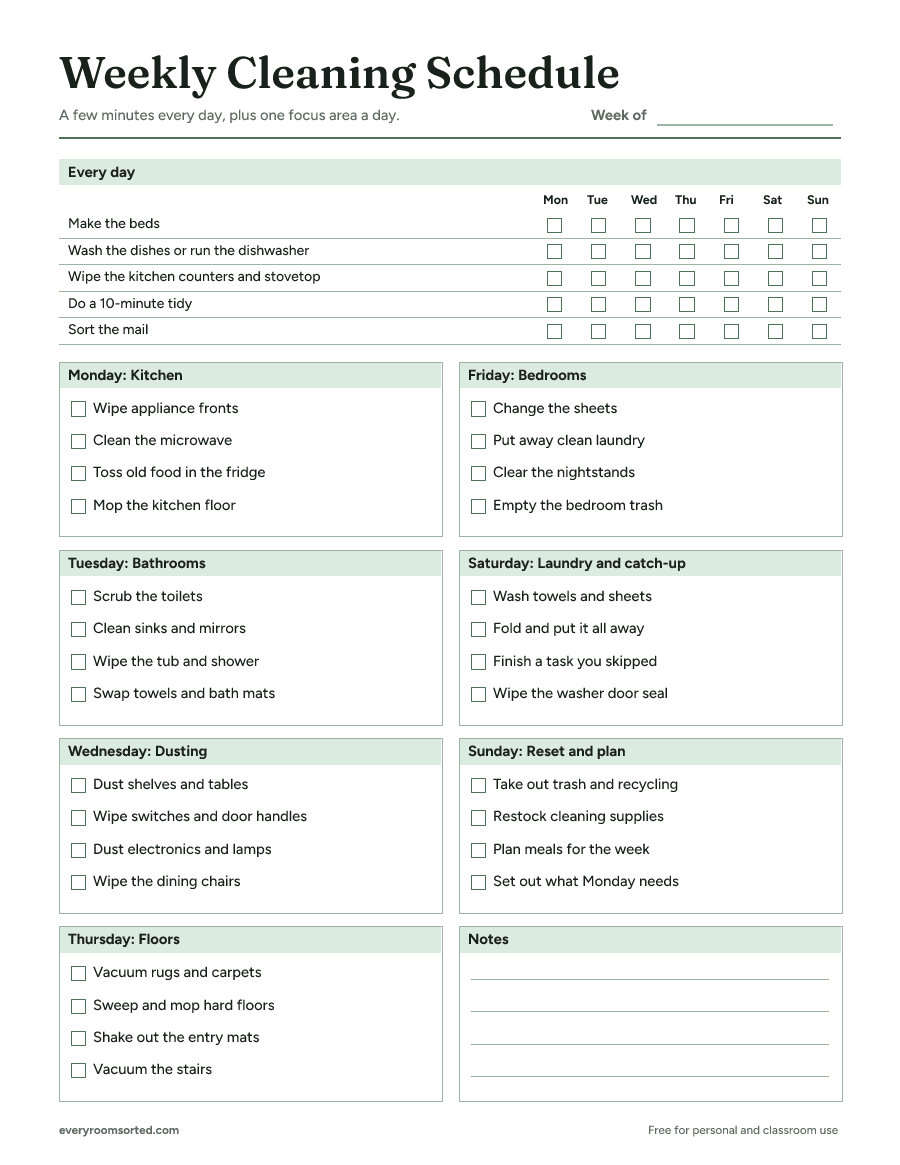
A one-page weekly cleaning schedule: a few quick jobs every day, plus one focus area a day, so the whole house gets done without a cleaning marathon.
Updated
Download the free PDF
One US Letter page with light lines that are easy on ink. No sign-up, no email.
Download the PDFFree for personal and classroom use. Please share a link to this page rather than the file. Terms of use

Who it’s for
This schedule is for busy households that want a clean house without giving up a whole day to it. Instead of cleaning everything at once, you do a few small jobs every day and one bigger area each day of the week. Nothing gets more than a week behind, and no single day takes long.
It works in a studio apartment, a family house or a shared rental. The jobs are the same; only the time each one takes changes.
What’s on the page
- Every day: 5 quick jobs, each with a box to tick for every day of the week, starting with “Make the beds.”
- One focus a day: a box for each day with its own area, from the kitchen on Monday to resetting and planning on Sunday, and the tasks that go with it.
- Notes: room to jot down what’s running low or what got skipped.
How to use it
- Print a fresh copy each week and write the date at the top.
- Put it where you’ll see it, like the fridge or inside a kitchen cabinet door.
- Do the daily jobs first. They’re the ones that make a house feel clean.
- Do the day’s focus area in one go, or split it between morning and evening.
- Tick each box as you finish. If a task gets skipped, leave it for Saturday’s catch-up.
Why one focus a day works
A weekly clean done all at once asks for a long block of time, and that block is the first thing a busy week takes away. Spread over seven days, the same work fits into the gaps: while dinner cooks, after the kids are in bed, before you leave in the morning.

Each area also gets cleaned before it gets bad. A bathroom wiped every week takes a fraction of the effort of one left for a month, because soap scum and grime haven’t had time to set.
The daily jobs carry the rest. Clear counters, empty sinks and made beds are what make a room look clean, so the house stays presentable even on the day its focus area is somewhere else.
What each day covers
Here is what each focus area means in practice, and how to keep it short.
Monday: Kitchen
The weekend leaves the kitchen with the most mess, so it starts the week. Wipe the appliance fronts and the microwave first and mop last, so crumbs from higher up end up on the floor you clean at the end.
Check the fridge on the way. Anything past its date goes, and the space it leaves makes the week’s groceries easier to put away.
Tuesday: Bathrooms
Spray the toilet, sink and shower first, then let the cleaner sit while you clear the counter and swap the towels. By the time you come back to scrub, most of the work is done for you.
Keep a brush and cleaner in each bathroom if you have more than one, so you never carry supplies up and down the stairs.
Wednesday: Dusting
A dry microfiber cloth picks up dust instead of pushing it around. Start high (shelves, lamps, the tops of frames), finish low, and wipe the switches and door handles everyone touches all day.
Electronics only need a dry cloth. Unplug what you can before you wipe it.
Thursday: Floors
Floors come the day after dusting, so the dust you knocked down gets picked up. Vacuum first and mop second, and shake the entry mats outside before you vacuum the hall.
If you have pets, this is the day to empty the vacuum and clear the hair from its brush, so it keeps picking up well.
Friday: Bedrooms
Fresh sheets on Friday mean the weekend starts in a made bed. Strip the beds in the morning, and the sheets can go straight into Saturday’s wash if Friday is full.
Clear the nightstands while the bed is bare. A cup, a stack of books and a charger are all it takes to make a bedroom feel cluttered.
Saturday: Laundry and catch-up
Saturday has the lightest list on purpose. Wash the towels and sheets, put everything away the same day, and use the time left over for anything the week pushed aside.
Sunday: Reset and plan
Sunday sets up the next week rather than cleaning. Take out the trash, note what’s running low on supplies, plan the meals and lay out what Monday needs, so the week starts without a scramble.
Fitting it to your home
The schedule is a starting point. Change any day that doesn’t fit your week, and keep the rest.
A small apartment
With one bathroom and a small kitchen, some days take only a few minutes. Pair them up: dusting and floors on one day, for example, and leave the spare day free.
A big family
More people means more dishes, laundry and floors. Give laundry its own short daily slot (one load, washed, dried and put away) and keep Saturday for sheets, towels and catch-up.
Kids and pets
Give children the easy daily jobs, like making beds or sorting the mail, and track them on the kids chore chart. With pets, add a quick sweep or vacuum of the busiest room to the daily list.
Shift work and odd hours
The days don’t have to be Monday to Sunday. Start the list on your first day off, or move the longest areas (bathrooms, floors) to the days you’re home earliest.
Roommates and shared homes
Print one copy for the shared spaces and split the focus days between you. Initials in a ticked box show who did what, without anyone keeping score out loud.
When you fall behind
Everyone misses a day. Skip it, do the next day’s area as planned, and let Saturday’s catch-up take the job that got skipped.
If a whole week goes wrong, start over with a fresh copy and do the daily jobs only. They bring the house back to a livable state in a day or two, and the focus areas can pick up again the following week.
Don’t try to do two days at once. Doubling up is how a short routine turns back into a weekend marathon.
Supplies to keep on hand
A short list covers the whole schedule:
- An all-purpose cleaner and dish soap
- A bathroom cleaner and a toilet brush
- Microfiber cloths, a few for each room
- A scrub brush and a sponge
- A vacuum with a brush attachment
- A mop and a bucket, or a spray mop
- Trash bags and liners

Read each product’s label, and never mix cleaners. Bleach mixed with ammonia or with acidic cleaners gives off dangerous gases, so use one product at a time, rinse between them and open a window while you work.
Tips for sticking with it
- Keep supplies close to where you use them, such as a caddy under the bathroom sink, so the day’s job starts without a hunt. The under-sink organizing guide shows how to fit them in.
- Share the page. Anyone in the house can tick a box, and kids can take the easy jobs.
- Save the big jobs for a deep clean. Ovens, grout and windows don’t belong on a weekly list; the deep cleaning checklist covers them.
- Clear clutter first. Cleaning goes faster with less on the surfaces, so a pass with the declutter checklist pays off every week after.
- Plan the week beside it. Sunday’s planning goes faster with the weekly planner on the fridge next to the schedule.
Save this for later
Pin it to a board so it's there when you're ready to start.
Save to Pinterest(opens in a new tab)Frequently asked questions
What should be on a weekly cleaning schedule?
The jobs that keep a house livable every day (dishes, counters, a quick tidy) and the bigger jobs that only need doing once a week: bathrooms, floors, dusting, sheets and laundry. Giving each bigger job its own day keeps every day short.
How long should weekly cleaning take?
With one focus a day, most days take a short block of time rather than a whole Saturday. Time yourself for a week and you'll know what fits your schedule, then move tasks around until every day feels doable.
What if I miss a day?
Skip it and move on. Saturday on this schedule is set aside for laundry and catching up, so a missed task has a place to land. Trying to double up the next day is how schedules get abandoned.
Can I change the days around?
Yes. The focus areas are a starting point. Put bathrooms on the day you're home earliest, or floors after the day the kids track in the most mud. Cross out a day's heading and write your own.
More free printables
A room-by-room deep cleaning checklist for the jobs a weekly clean skips, from the oven and the grout to the vents and baseboards.
A room-by-room declutter checklist that tells you exactly what to look for, with four piles to sort into so nothing ends up back on the shelf.
A free kids chore chart with a box to tick for every day of the week. Print it as it is, or add your child's name and their own chores first.