Kids Chore Chart Printable
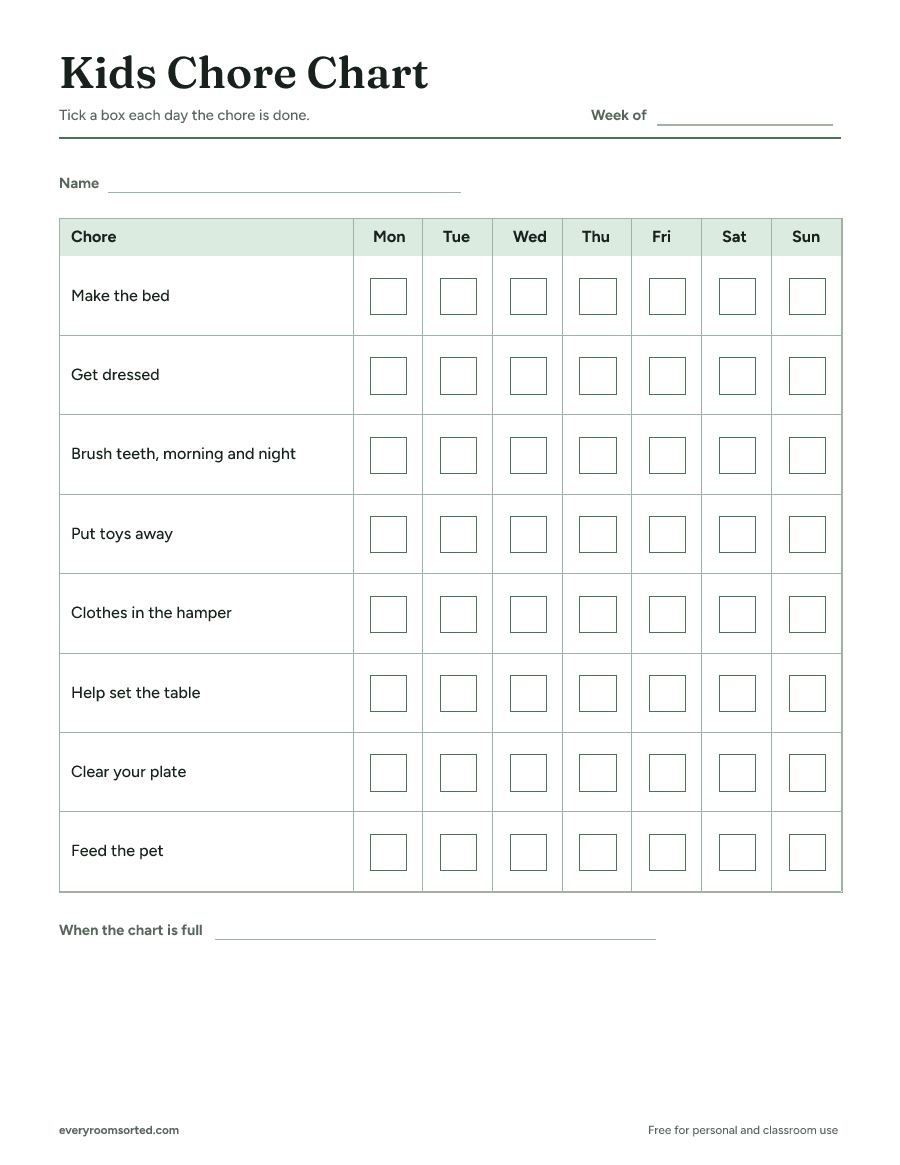
A free kids chore chart with a box to tick for every day of the week. Print it as it is, or add your child's name and their own chores first.
Updated
Download the free PDF
One US Letter page with light lines that are easy on ink. No sign-up, no email.
Download the PDFFree for personal and classroom use. Please share a link to this page rather than the file. Terms of use
Make it your own
Add your child's name and their chores, then download a chart made for them. What you type stays in this page and is never sent anywhere.

Who it’s for
This chart is for families who want kids to pitch in without daily reminders. Each chore gets a row and each day gets a box, so kids can see what’s done and what’s left, and so can you.
It suits kids who are just starting to help as well as older kids taking on more. Print one chart for each child, so everyone has their own boxes to tick.
What’s on the page
- A name line, so each child has a chart of their own.
- The chores: the ready PDF starts with everyday jobs like “make the bed” and “put toys away.” In the form above you can write up to 10 of your own.
- A box for each day, big enough for a check mark or a sticker.
- A reward line for what happens when the chart is full, if you use one.
How to use it
- Choose the chores together. Kids stick with jobs they helped pick.
- Fill in the form above with their name and chores, or print the ready PDF.
- Put the chart at kid height, on the fridge or a bedroom door.
- Let them tick their own boxes when each chore is done.
- Print a fresh chart each week and talk about how the last one went.
Making a chart for your child
The form above turns your entries into a chart made for one child. Type their name, then write each chore on its own line, in the order they’ll do them.
When you press “Download my chore chart,” the PDF is drawn right in your browser. Nothing you type is sent anywhere or saved, so keep the downloaded file if you want to print the same chart again next week.
A few things make the finished chart easier to use:
- Keep each chore short. “Feed the cat” reads faster than a full sentence, and a short line is easier for a young reader to follow.
- Start each chore with a verb, like “make,” “put” or “help,” so it’s clear what doing it looks like.
- Order chores by the day, morning jobs first and evening jobs last, so the chart reads like the routine.
- Keep the chores already filled in if they fit your family. They’re the same list as the ready PDF, so you only need to add a name.
Choosing the right chores
Good chores are ones your child can finish without you doing it for them. A job they can’t manage yet turns the chart into a list of things they failed at.
Start with chores that look after their own things. Making the bed, putting clothes in the hamper and packing a school bag teach kids that their space is theirs to keep.
Then add a small job that helps the whole family. Setting the table, clearing plates, feeding a pet or matching socks from the laundry all show kids that the house runs because everyone pitches in.
Younger kids
Younger kids do best with simple, physical jobs they can see the end of. Putting toys in a bin, carrying a plate to the counter or wiping up a spill with a cloth are all good starts.
Keep the list short and the steps small. “Put toys away” might mean one bin at first, then the whole floor once that’s easy.
Older kids
Older kids can take on chores with a few steps, or ones that need a little judgment. Loading the dishwasher, sorting laundry by color, taking out the recycling or tidying a shared room all fit.
Let them have a say in which jobs they take on. A chore they chose is one they’re more likely to finish without a reminder.
Rewards or no rewards
The reward line at the bottom of the chart is there if you want it. Leave it blank if your family treats chores as part of living together.
If you do use rewards, small and simple works best. Picking dinner, choosing the weekend movie, extra time at the park or staying up a little later on a weekend night all give a full chart a nice finish.
Tie the reward to the week, not to every single box. A week with a few missed boxes can still earn it, so one bad morning doesn’t make the rest of the week feel pointless.
Keeping kids motivated
Kids lose interest when the chart stops changing. A few small habits keep it fresh week after week.
- Let them tick the boxes themselves. Marking a chore done is half the fun, and it shows them their own progress.
- Notice the effort out loud. A quick “thanks for clearing your plate” means more than a sticker.
- Look at the chart together at the end of the week, and point out what went well before what didn’t.
- Swap one chore once a job has become a habit, so there’s always something new to learn.
Charts for more than one child
Give each child their own chart, even when they share a room. A shared chart turns into an argument about who did what.
Fill in the form once for each child and download each chart in turn. Shared jobs, like tidying a playroom, can go on every chart, with each child ticking their own box once they’ve done their part.
Hang the charts side by side, at a height every child can reach. Compare each chart with last week’s, not with a brother’s or sister’s.
When the chart stops working
Every chore chart runs into a slow week. When boxes start staying empty, look at the chart before you look at your child.
- Too many chores? Cut the list back to the ones that matter most, and add the rest back later.
- A chore that’s too hard? Go back to doing it together for a while, then hand it back.
- The chart out of sight? Move it to where your child walks past it every day, at their eye level.
- Lost interest? Let them pick a new reward, add a new chore they ask for, or start a fresh chart on a new day.
A chart that gets used most days is doing its job. It’s a tool to help the habit grow, not a score.
Tips for chores that stick
- Show, then help, then watch. Do a new chore together a few times before they do it alone.
- Make it easy to do right. Low hooks, open bins and a hamper in the room make tidying up something kids can manage.
- Clear out before you set up. A room with fewer toys is a room kids can tidy, and the declutter checklist has a section for kids’ rooms.
- Keep the grown-up jobs in view too. The weekly cleaning schedule shows what the rest of the house is doing.
- Plan the week together with the weekly planner, so chores fit around school and activities.
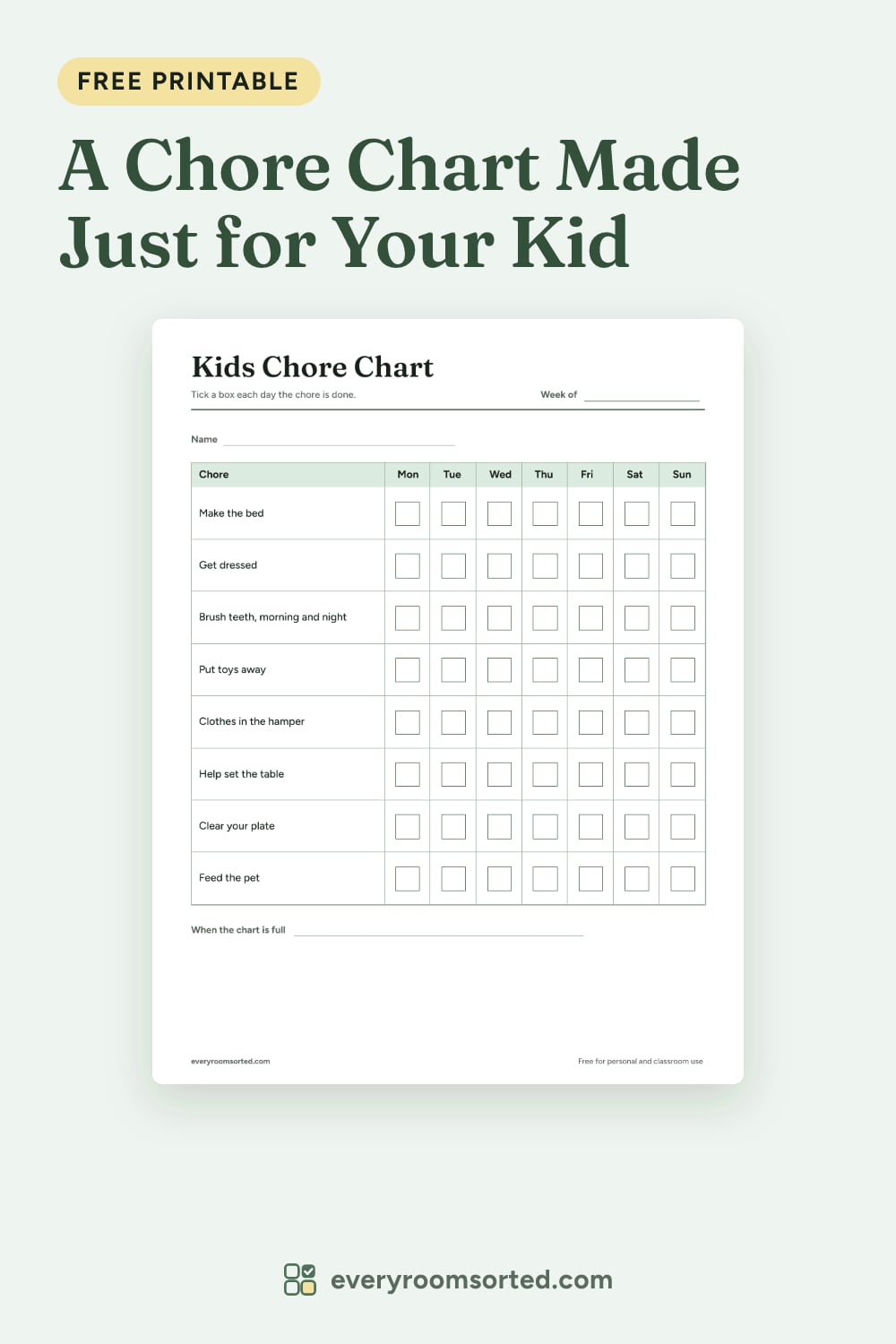
Save this for later
Pin it to a board so it's there when you're ready to start.
Save to Pinterest(opens in a new tab)Frequently asked questions
What chores can kids do?
Start with chores that look after their own things: making the bed, putting toys and clothes away, packing a school bag. Then add small jobs for the family, like setting the table or feeding a pet. Pick chores your child can finish without help most of the time.
How many chores should be on a chart?
Fewer than you think. A short list a child can finish every day works better than a long one they give up on. Start with a few, and add one more once those are a habit.
Should kids get a reward for chores?
That's up to your family. The chart has a line at the bottom for a reward when the week is full, which can be anything from picking dinner to a trip to the park. Some families skip rewards and treat chores as part of living together.
Is what I type into the chart saved anywhere?
No. The chart is made in your browser, and nothing you type is sent to us or anyone else or kept after you leave the page. Save the downloaded PDF if you want to print the same chart again.
More free printables
Weekly Cleaning Schedule Printable
A one-page weekly cleaning schedule: a few quick jobs every day, plus one focus area a day, so the whole house gets done without a cleaning marathon.
A simple one-page weekly planner with the week's top three priorities, a box for each day and room for notes.
A one-page to-do list with today's top three at the top, plenty of lines to tick off underneath and a little room for notes.