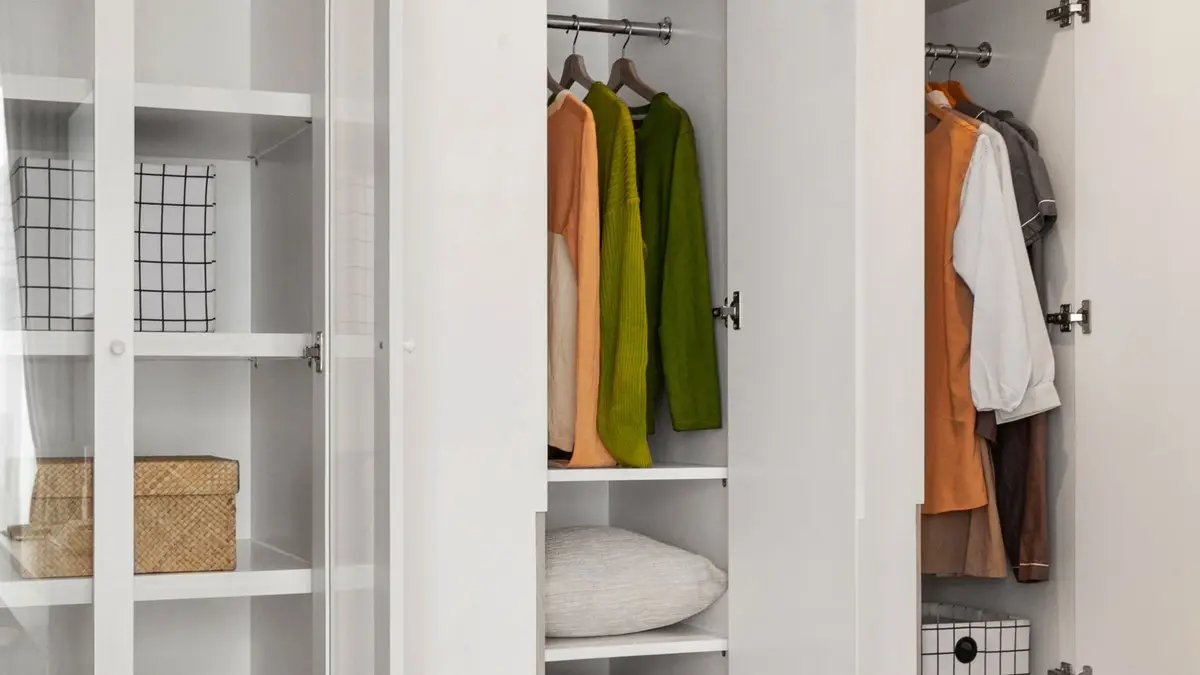
12 Storage Ideas for Small Spaces That Win Back Floor Space
Tight apartment or tiny room? Build up the walls, use the space under the bed and behind doors, and pick furniture that stores more than it takes up.

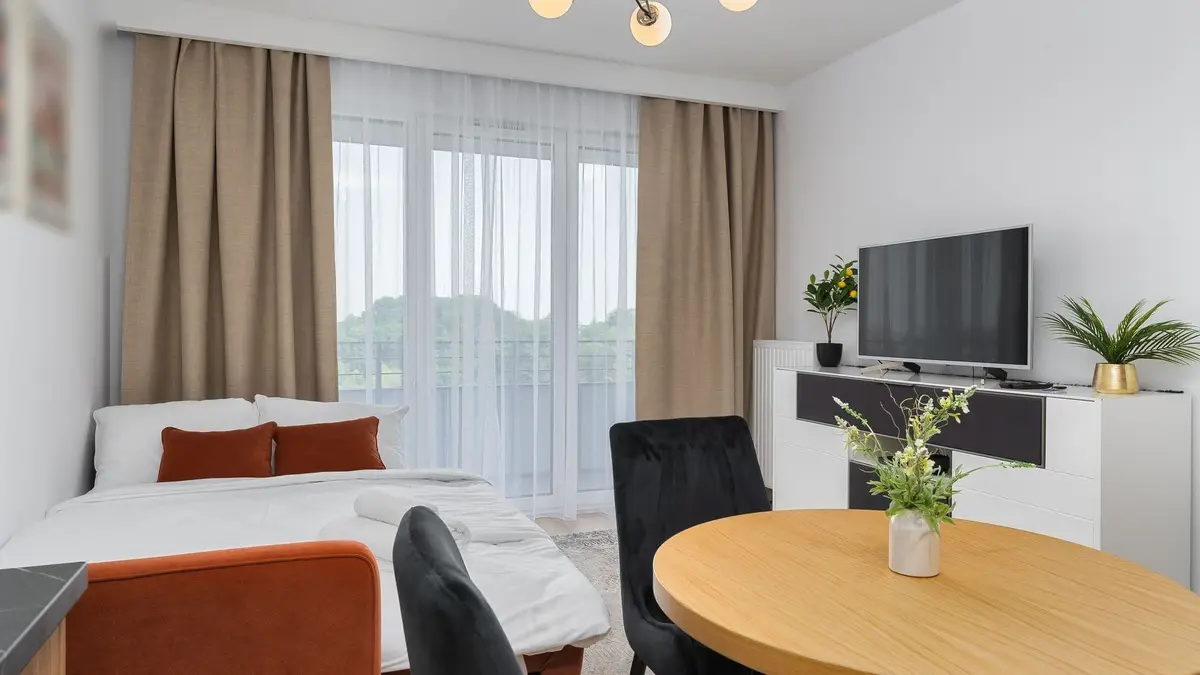
The best storage ideas for small spaces work with the room you already have: build up the walls instead of out across the floor, use the space under the bed and behind every door, and choose furniture that holds things while it does its main job. Keep the flat surfaces clear, and even a tight room feels calmer.
These 12 ideas fit apartments, studios and small bedrooms, and many need no drilling at all. Before you buy anything, let go of what you no longer use with the declutter checklist, since every idea here works better with less to store.
1. Go vertical with tall shelves
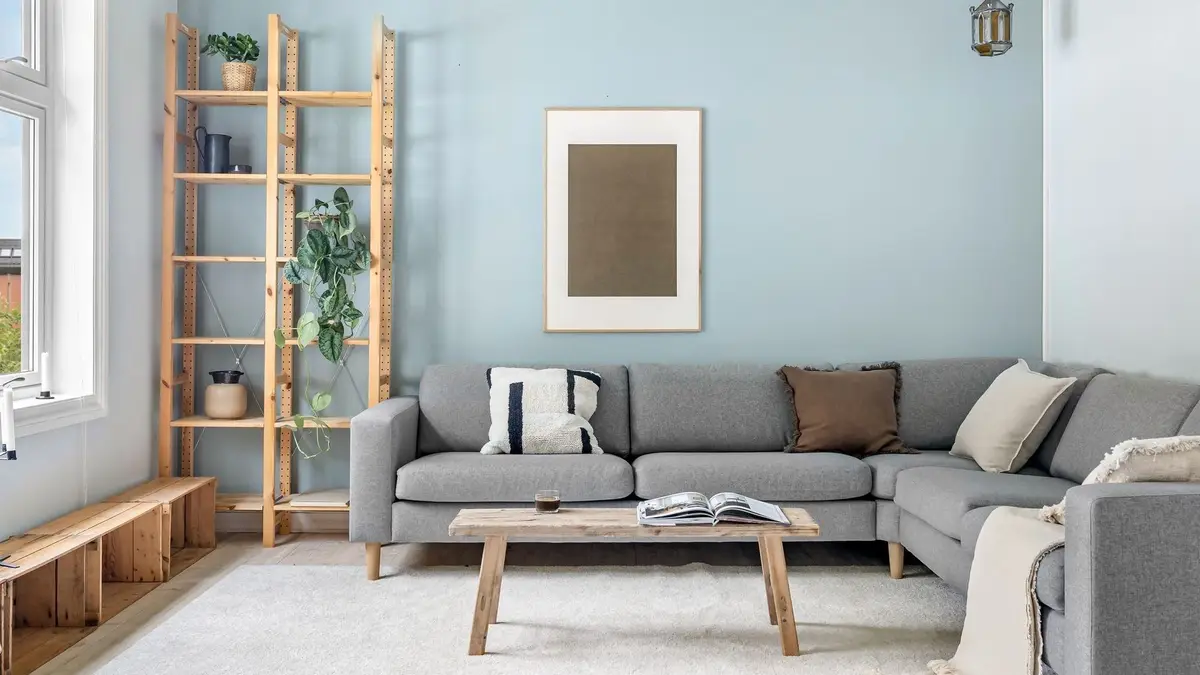
In a small room the floor fills up fast, but the wall above it usually sits empty. A tall, narrow bookcase or a shelving unit that runs close to the ceiling holds far more than a low cabinet with the same footprint.
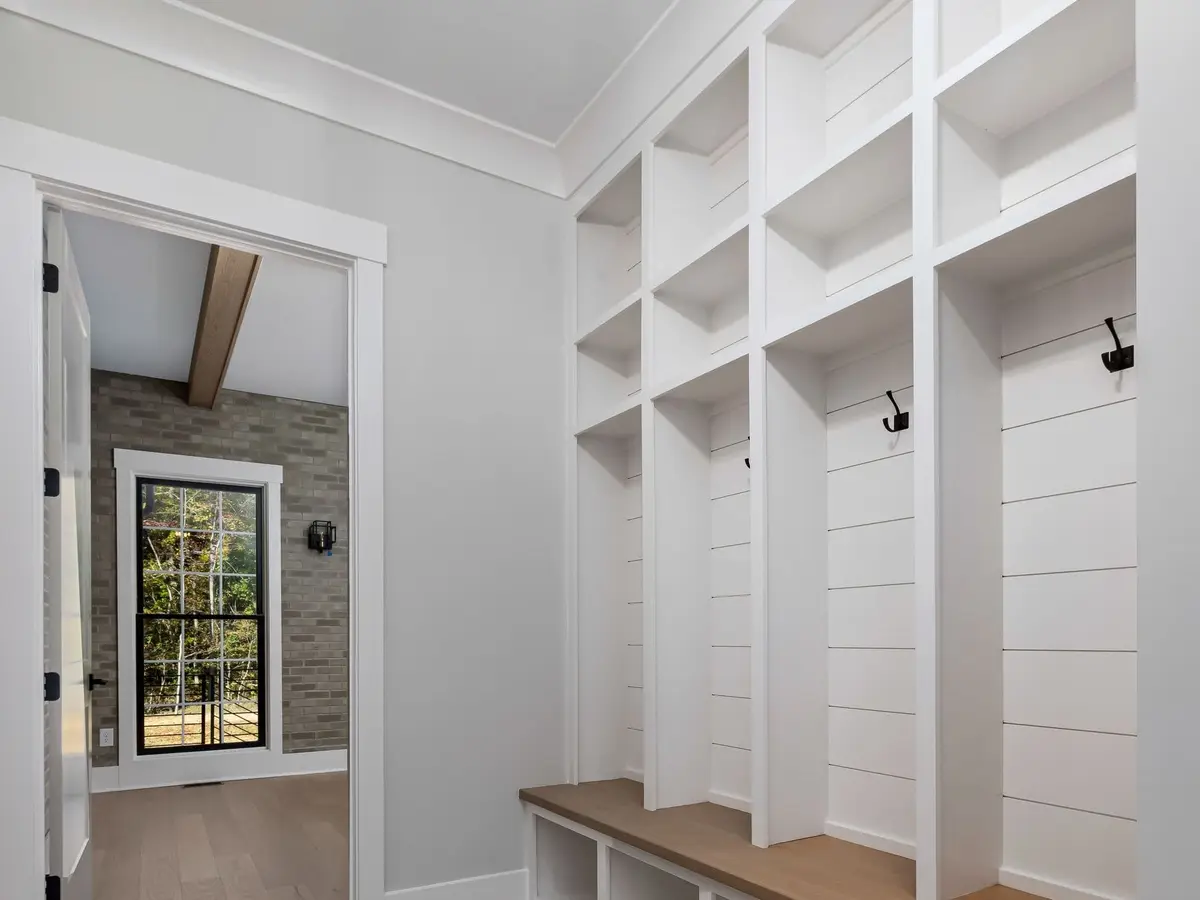
Put what you use every day between your shoulders and your waist, and save the top shelves for things you reach for a few times a year. Keep the heaviest things on the lowest shelves, so the unit stays steady and nothing heavy sits overhead.
Anchor every tall bookcase, dresser and shelving unit to the wall with an anti-tip strap or bracket, even if no children live with you. If your unit didn’t come with an anti-tip kit, buy one and install it before you load the shelves.
Don’t store toys, remotes or treats on top of a tall unit, where a child might climb to reach them.
A step stool that folds flat makes the top shelves easy to use without standing on a chair. It can hang on a hook or slide into a gap beside the unit when you’re done.
2. Use the space under the bed
The space under a bed is one of the largest storage spots in a small home. Lidded boxes or bins that slide out hold off-season clothes, spare sheets and extra towels, and the lids keep the dust out.
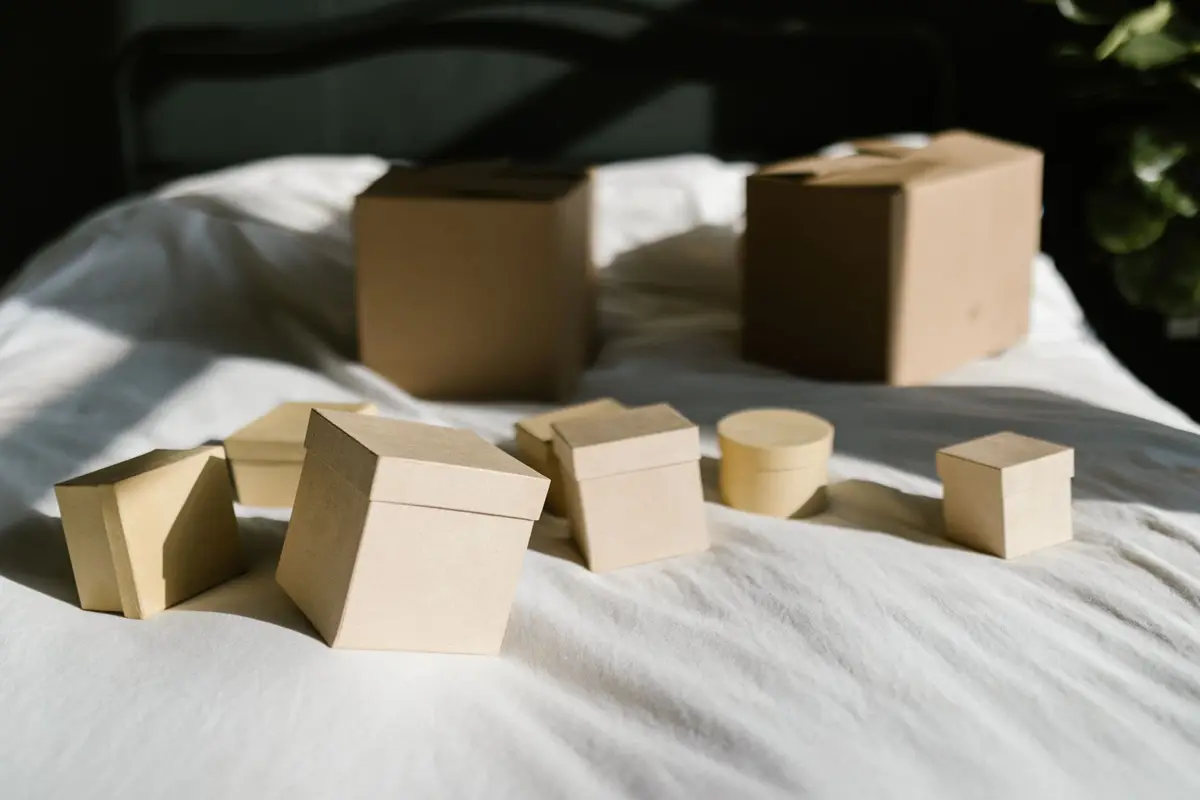
Measure the gap between the floor and the bed frame before you buy, then use the bin and basket size calculator to see which sizes fit and how many line up side by side.
If the gap is too low, sturdy bed risers lift the frame and make room for taller bins. Set all four on a level floor and check that the bed feels steady before you slide anything under it.
A bed with built-in drawers does the same job without bins, which suits a room where the bed is already the biggest piece of furniture.
Keep one category in each box, like winter sweaters in one and guest sheets in another. Label the short end, the side you see when you pull a box out, so you can find what you need without unpacking everything onto the bed.
3. Choose furniture that stores
In a small space, every piece of furniture should hold something. A storage ottoman doubles as a footrest and a coffee table, a bench with a shoe shelf gives the entry a place to sit, and a lidded trunk at the foot of the bed holds blankets.
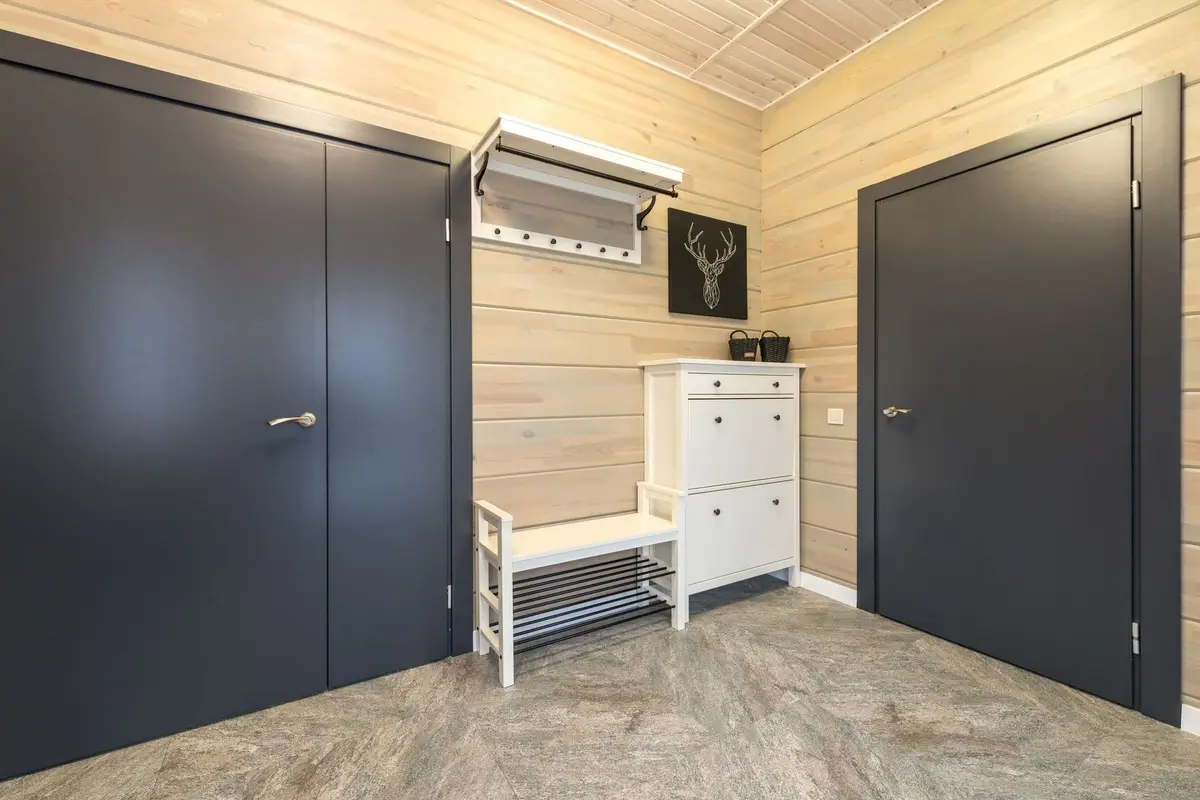
Look for pieces with hidden space: a coffee table with a shelf underneath, a nightstand with a drawer instead of open legs, a slim shoe cabinet with tilt-out bins. Each one replaces a separate bin that would otherwise sit on the floor.
Before you buy, decide what the piece will hold and measure that pile. A bench that looks roomy in the store can turn out too shallow for boots or a stack of throws.
If you’re furnishing a new place, the apartment essentials list keeps the shopping to what you actually need, so the money goes to pieces that work twice.
Choose closed storage for things that look messy, like cords, shoes and paperwork, and open shelves for the few things you like to see every day.
4. Hang an over-the-door rack
The back of a door is free storage in almost every room. An over-the-door rack hooks over the top edge with no drilling, which suits a rental, and holds coats, bags, towels or shoes.
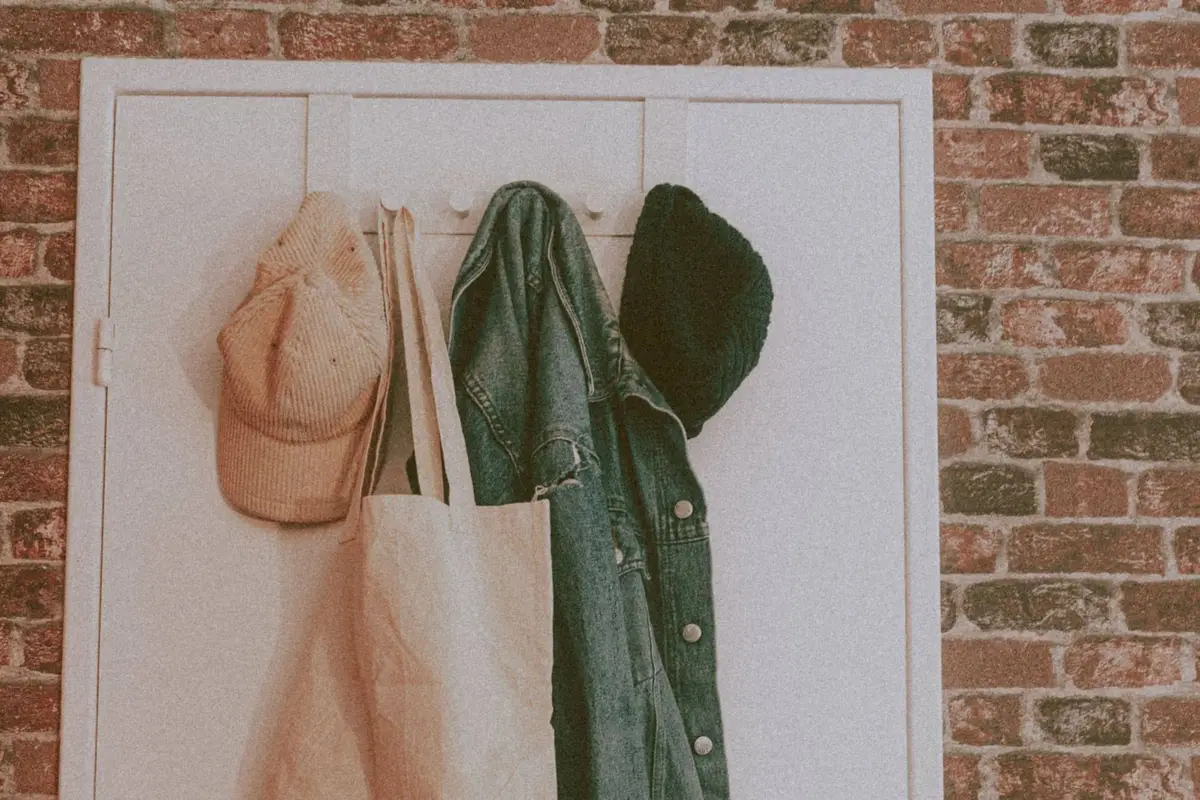
Check the door’s thickness and the gap between the top of the door and the frame first. Hooks that are too thick for the gap can stop the door from closing.
Match the rack to the room: hooks for bags and jackets by the front door, a pocket shoe organizer on a closet door, a slim rack with small baskets for cleaning supplies on a pantry or laundry door.
Keep the load sensible, especially on a hollow door. Heavy things swing and bang every time the door moves, and that strain can loosen the hinges over time.
Stick a felt pad or a strip of soft fabric where the rack touches the door, so it doesn’t scratch the paint. If the door gets heavy use, check the rack now and then to make sure it still sits snugly on the edge.
5. Roll in a cart
A rolling cart is storage that moves to wherever you need it. A few tiers of baskets hold produce in the kitchen, towels and toiletries in the bathroom, or school and craft supplies beside a desk.
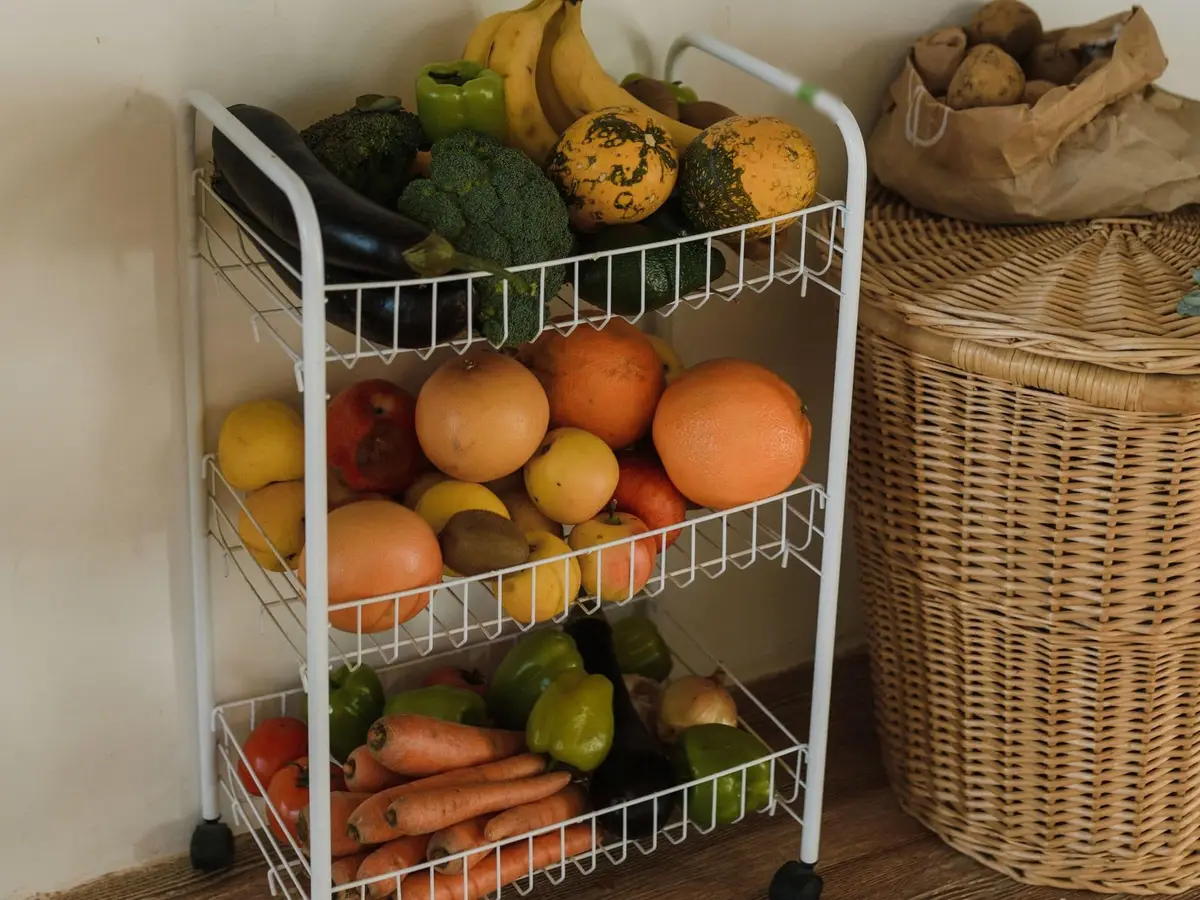
When you’re done, roll it into a corner, a closet or the gap beside a cabinet. In a studio, the same cart can work as a bedside table at night and a coffee station in the morning.
Choose a cart with locking wheels if it lives on a hard floor, so it stays put when you lean on it. Wire or mesh baskets let produce breathe and show you what’s inside at a glance.
Give the cart one job. A cart that holds a little of everything turns into a rolling junk drawer within a few weeks.
Keep heavier things on the bottom tier and lighter ones on top. The cart rolls more smoothly that way and feels steadier when you push it over the edge of a rug or a threshold.
6. Hang a pegboard
A pegboard turns a bare stretch of wall into storage you can rearrange anytime. Hooks, small shelves and wire cups hold tools, craft supplies, kitchen utensils or office odds and ends, all where you can see them.
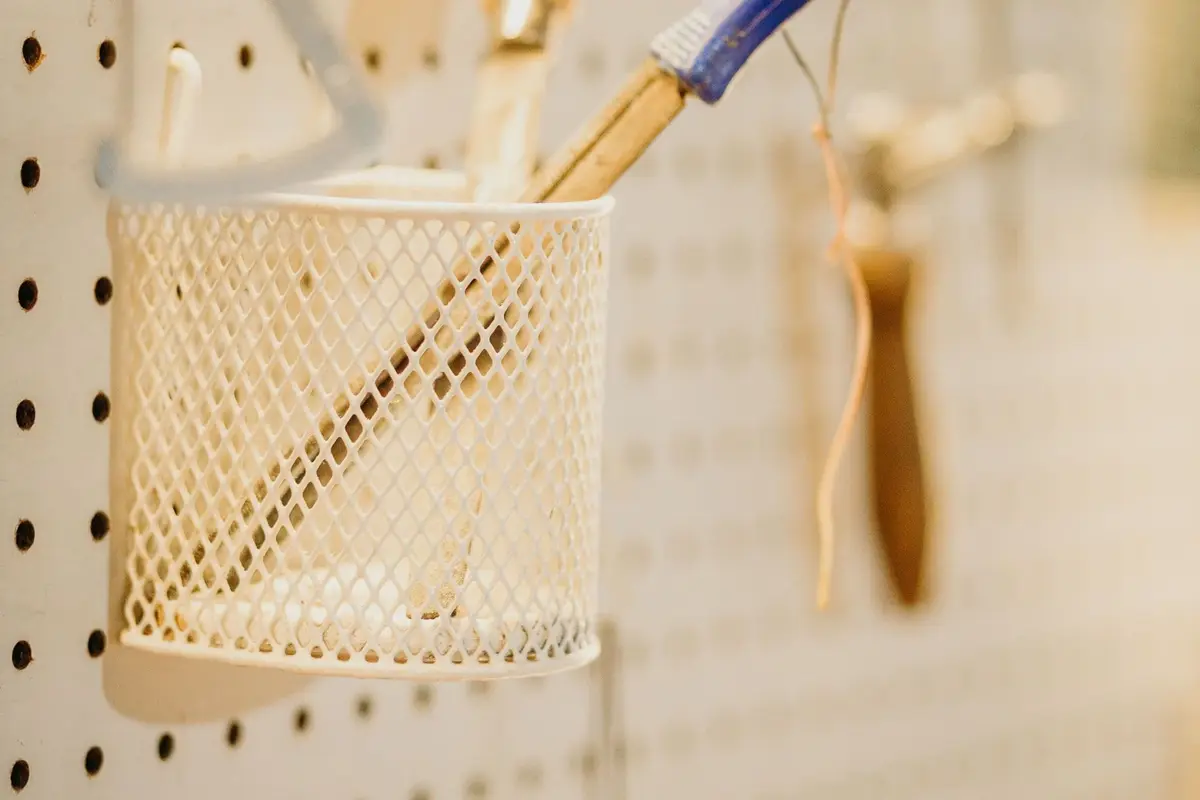
Mount the board on spacers, so there’s room behind it for the hooks to slot in. Screw into the wall studs where you can, and check the weight rating on any wall anchors you use instead.
Lay out the board on the floor before you hang anything. Put what you use most at eye level and in the middle, and leave a little empty space to grow into.
Hooks that lift out every time you grab something get annoying fast, so look for clips or locking hooks that hold them in place.
Trace a light pencil outline around each tool once it’s hung, so you can see at a glance where it goes back. It sounds fussy, but it keeps a pegboard tidy in a busy household, especially when several people borrow from it.
7. Put floating shelves up high
The strip of wall above a door, a window or a desk is easy to overlook, and it’s often the emptiest space in a small room. A floating shelf there holds books, baskets of spare supplies or things you only need now and then.
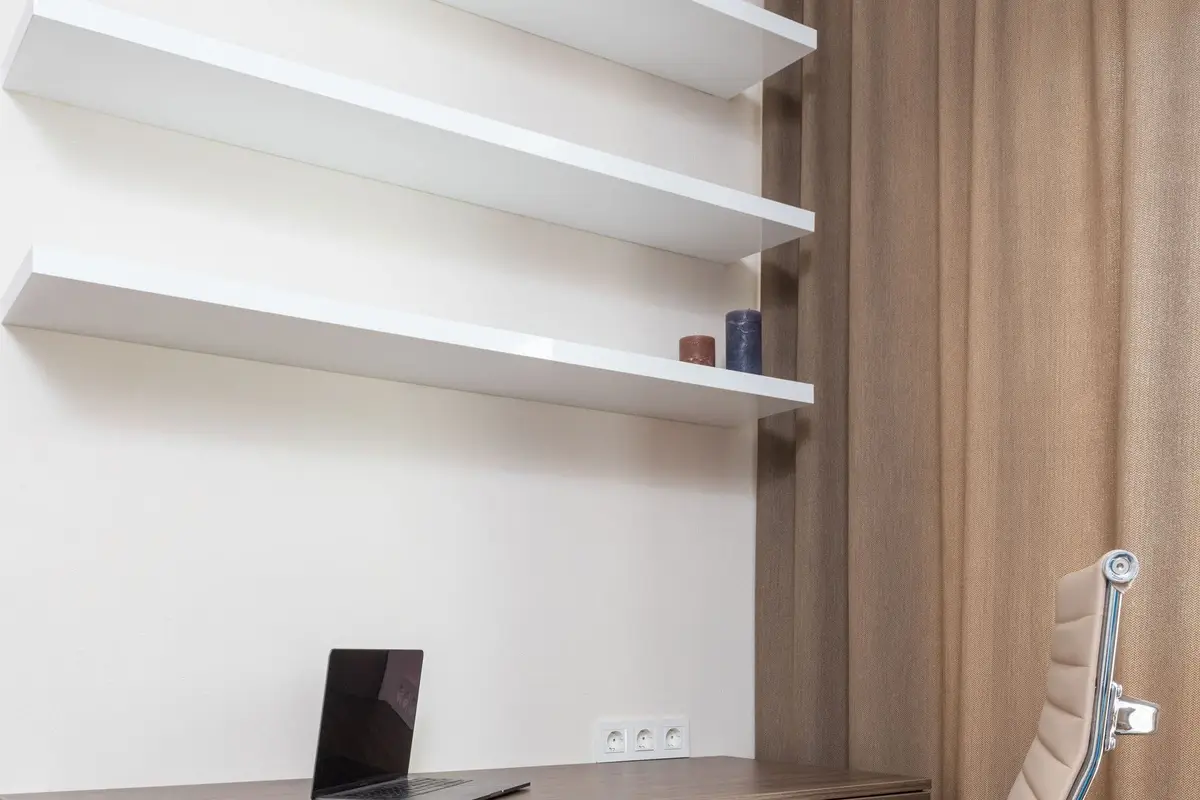
Shelves above a desk keep the work surface clear, while a shelf above a bathroom or closet door holds extra towels or paper goods out of the way.
Find the studs before you drill, and screw the shelf into them where you can. If you have to use wall anchors, pick ones rated for several times the weight the shelf will carry, since a loaded shelf pulls outward on them.
Keep heavy things off high shelves. Store light, soft things up there, like spare linens in a lidded basket, so nothing heavy can fall on someone below.
Use matching baskets on a high shelf and label the fronts, so you can tell what’s inside from the floor. A shelf above a door also makes a good home for things you want out of reach of small children.
8. Fill the slim gaps
Almost every small home has a few narrow gaps: between the fridge and the wall, beside the washer, next to the toilet or at the end of a counter. A slim rolling shelf or a narrow tower turns that dead space into storage.

Measure the width, depth and height of the gap, and leave a little room on each side so the unit slides in and out easily. Next to an appliance, check its manual for the clearance it needs around it before you fill the space.
A pull-out rack beside the fridge holds spices, cans and jars, and one beside the washer holds detergent, stain spray and clothespins.
A narrow open shelf next to a bed or a bathroom sink works the same way, holding a plant, a basket of toiletries or a short stack of books.
Keep the lightest, most-used things at the top, where you can see them without pulling the whole unit out. Small baskets on each shelf stop little things from rolling off the back.
9. Work the inside of cabinet doors
Cabinet doors have a flat side that faces in, and it’s usually bare. Small hooks or a slim rack on the inside of a door hold measuring spoons, pot lids, oven mitts, cleaning gloves or a roll of bags.
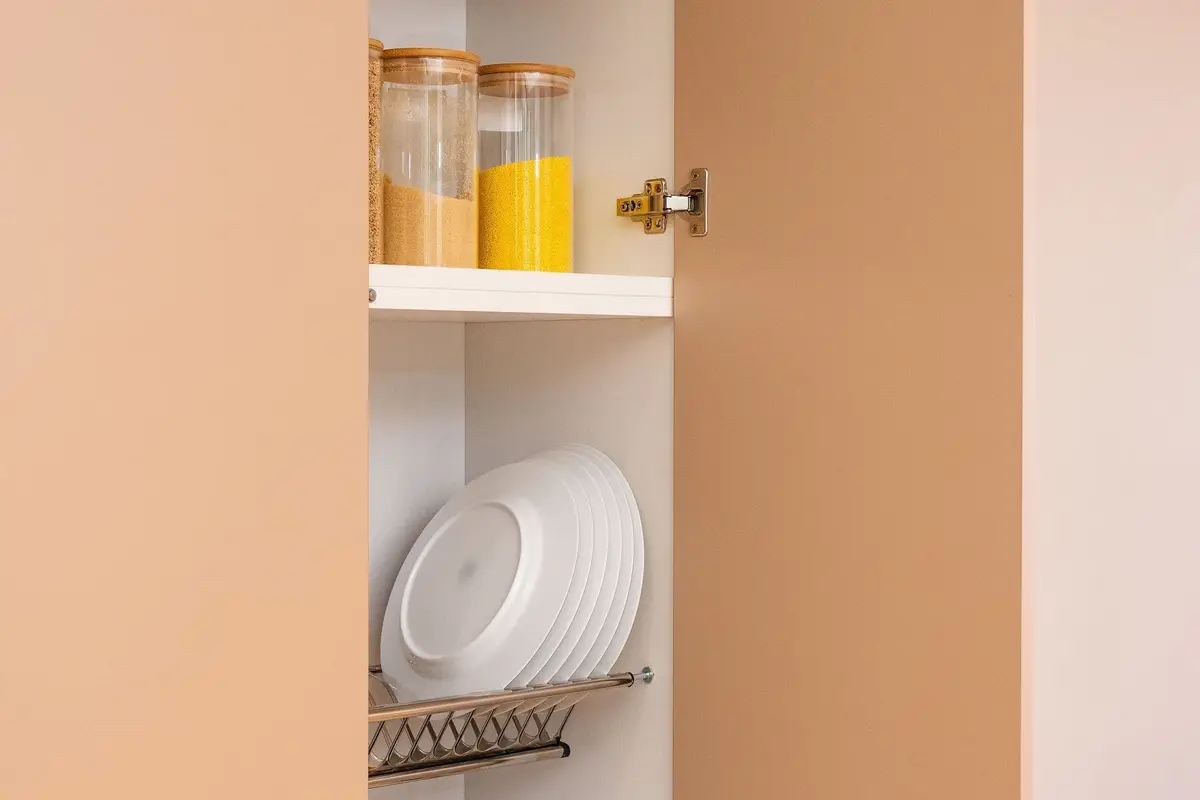
Check how much room the door has when it’s closed. Measure from the back of the door to the front edge of the shelves, so anything you hang still clears them.
Adhesive hooks work for light things and come off cleanly in a rental. Check the weight limit on the package and stay well under it.
Inside the cabinet, use the height too. A shelf riser makes two layers out of one tall shelf, and an upright rack holds plates or baking sheets on their edges, so you can pull one out without lifting the rest.
Group things by task: everything for baking in one cabinet, everything for cleaning in another. You’ll reach into fewer cabinets, and the door storage stays matched to what’s behind it.
10. Pick a table that folds or nests
A table that’s always open takes up floor you could use for something else. A wall-mounted table that folds down, a drop-leaf table or a set of nesting tables gives you a surface when you need it and space when you don’t.
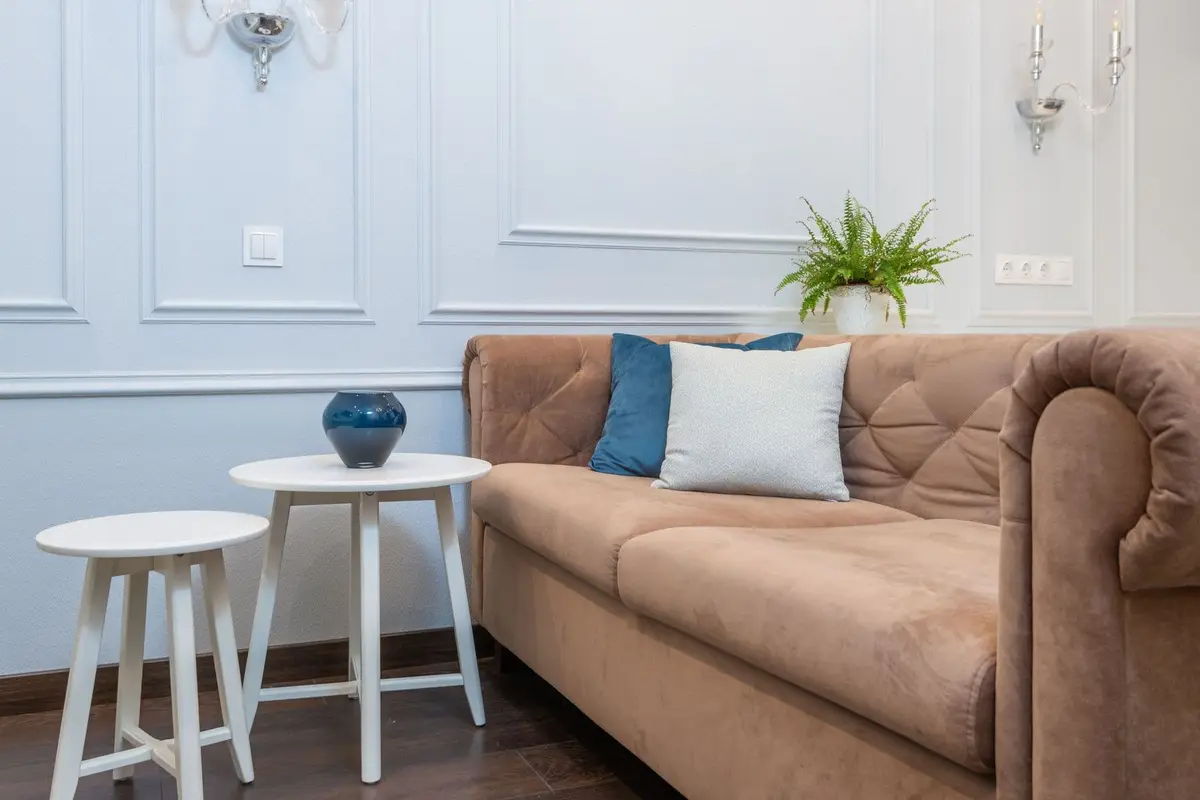
Nesting tables tuck one under the other beside a sofa, then pull apart when friends come over. A fold-down table on a kitchen or bedroom wall works as a desk or a breakfast spot.
Mount a fold-down table into the wall studs, since it has to hold plates, a laptop and someone leaning on it.
Look for a drop-leaf or extending table with a shelf or drawer underneath, so it stores placemats, napkins or chargers too.
Fold it up or push it back at the end of each day. The habit takes a few seconds and gives the room its floor back every night, which matters most in a studio where one room does every job.
11. Corral open shelves with baskets
Open shelves make a small room feel airy, but loose things on them quickly look cluttered. Baskets and bins group small items together, so a shelf looks calm even when it’s full.
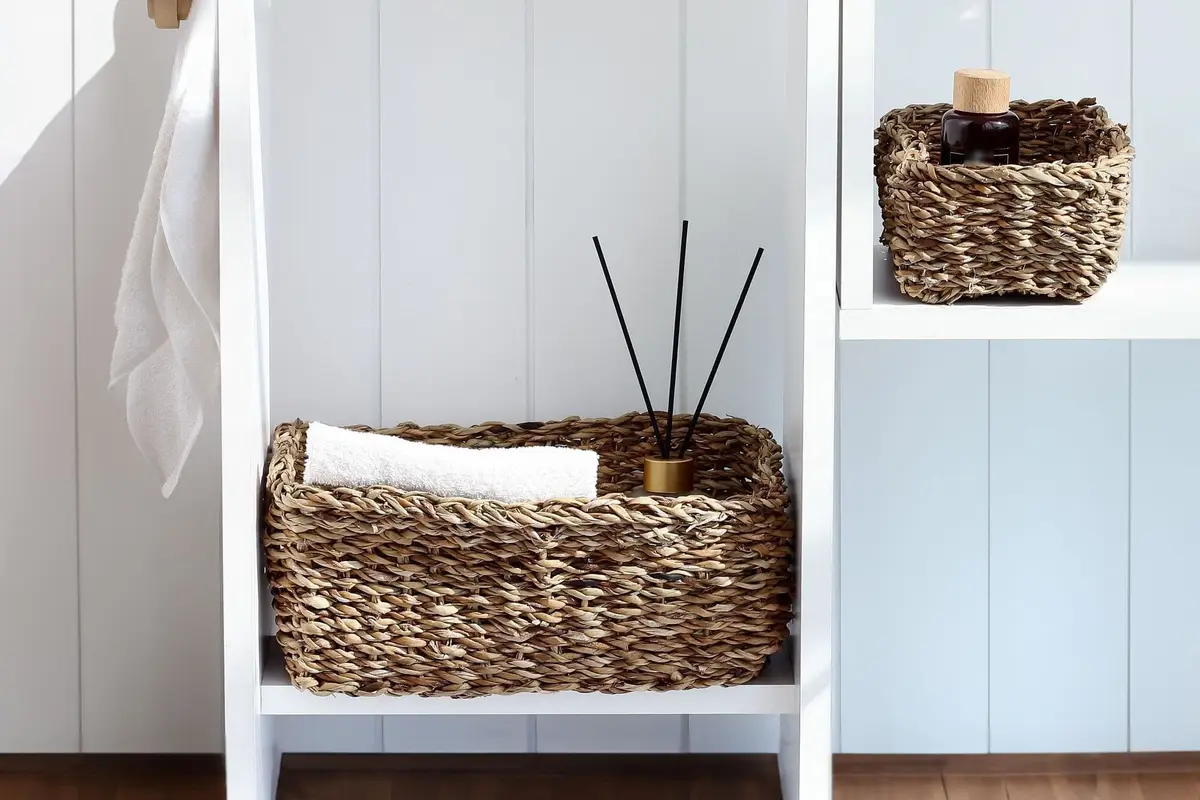
Use one basket for each category: hand towels, toiletries, chargers, snacks or art supplies. Matching baskets in a natural material or a single color look tidiest.
Choose baskets that fit the shelf depth and leave a little room above them, so they slide out without scraping. Measure each shelf before you buy, since a basket that’s a little too deep hangs off the front edge.
Label the fronts if more than one person uses the shelves. A small tag on each basket helps everyone put things back in the right spot.
Pick lightweight baskets for high shelves and sturdier ones for heavier things below. Handles or cutouts make them easier to pull down and carry to wherever you need them.
12. Keep surfaces clear
Counters, dressers and tables are where clutter lands first, and in a small room a busy surface makes the whole space feel crowded. Clear surfaces make a room look bigger and make it quicker to clean.
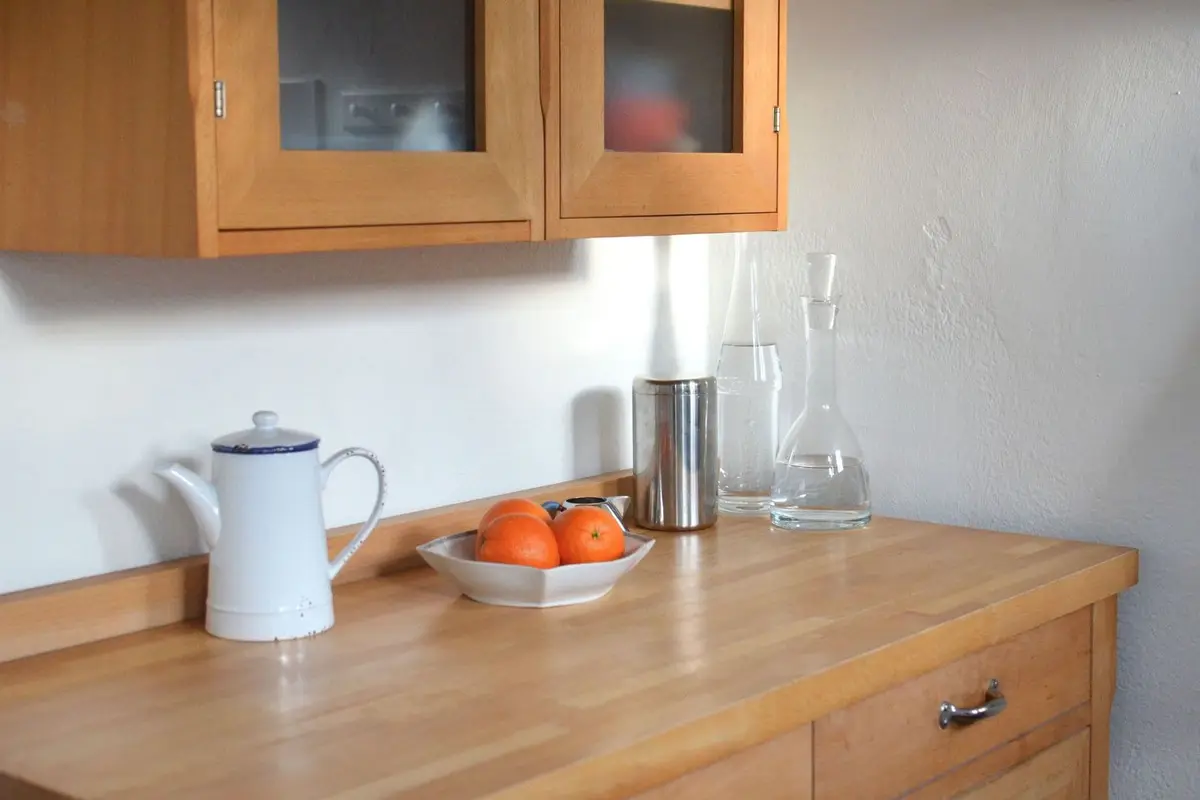
Decide what earns a spot on each surface: a few things you use every day, plus one thing you like to look at. Everything else gets a home in a drawer, a cabinet or one of the ideas above.
Give the things that pile up a landing spot of their own: a tray by the door for keys, a basket for mail, a drawer for chargers.
Spend a few minutes each evening putting things back, and do a fuller reset once a week with the Sunday reset checklist.
When something new comes in, look for something that can go. In a small home, that one habit keeps your storage from filling up again, and it keeps every idea on this list working long after the first weekend.
Save this for later
Pin it to a board so it's there when you're ready to start.
Save to Pinterest(opens in a new tab)Make it easier
Free printable
Apartment Essentials List Printable
A one-page apartment essentials list, room by room: the everyday things a new home needs, to tick off as you buy them or find one you already own.
Free tool
Enter the width, depth and height of a shelf, a drawer or a cube cubby, and see which standard bins and baskets fit, how many, and how they line up.
Frequently asked questions
How can I add storage to a small apartment without drilling?
Lean on pieces that stand or hang on their own: an over-the-door rack, a rolling cart, freestanding shelves and furniture with storage inside. Adhesive hooks hold light things and come off cleanly when you stay under the weight limit on the package. Anchoring a tall shelf to the wall does take a few small holes, so ask your landlord before you start.
What should I store under my bed?
Things you need now and then but not every day: off-season clothes, spare sheets and blankets, extra towels and travel bags. Use lidded bins or boxes to keep the dust out, and label the end you see when you slide them out.
How do I make a small room feel less cluttered?
Clear the flat surfaces first, then give everything a home in closed storage or matching baskets. Keep as much of the floor open as you can and move storage onto the walls instead, since open floor makes a room feel larger.
Do I really need to anchor tall furniture to the wall?
Yes. Bookcases, dressers and other furniture with drawers, doors or shelves can tip over when someone climbs on them or pulls on a drawer, so strap or bracket them to the wall. Keep heavy things on the lowest shelves and treats or toys off the top, where a child might climb to reach them.