12 Small Closet Organization Ideas That Free Up Rod Space
Fit more into a reach-in closet: declutter first, add a second rod and slim hangers, then put the top shelf, door, floor and walls to work.

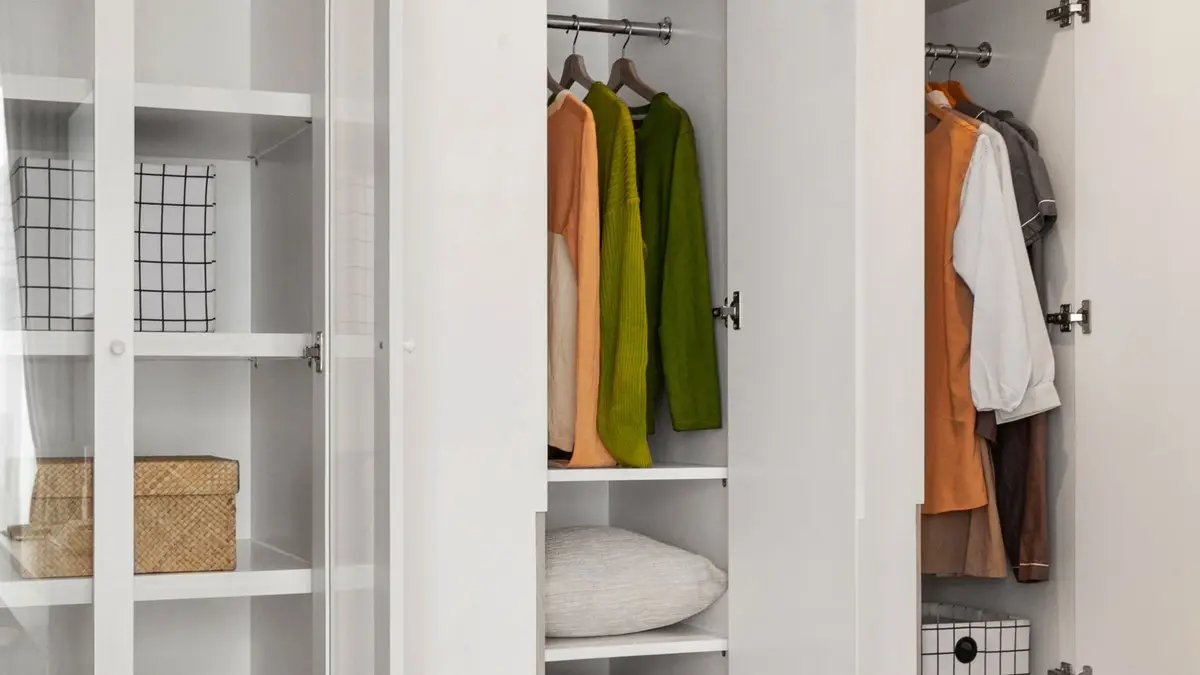
A small closet holds more when you clear out what you don’t wear, measure the space, then use every surface: a second rod under the first, slim matching hangers, bins on the top shelf, and the door, floor and side walls. Store off-season clothes somewhere else, so the rod only holds what you wear right now.
These 12 ideas work in a standard reach-in closet in a bedroom, an apartment or a kid’s room. Start with the first two, since every idea after them depends on knowing what you keep and how much room you have.
1. Declutter before you buy anything
Take everything out of the closet and lay it on the bed. Sort it into what you wear, what needs a repair, what goes to donation and what belongs in another room.

A crowded rod hides the clothes you love behind the ones you never reach for. Be honest about fit, comfort and how often you actually wear each piece, and let go of anything you’ve been saving for someday.
If one big clean-out feels like too much, go a little at a time. The month-long declutter challenge breaks the job into small daily tasks, so the closet gets lighter without taking over a whole weekend.
Check the shelves and the floor too: old shoe boxes, bags you never use, wire hangers from the dry cleaner and things that were only put there to get them out of sight. Each one takes space a sweater could use.
Wipe down the shelves and vacuum the floor while the closet is empty. Then put back only what earned its place, and you’ll see how much room you really have before you plan anything else.
2. Measure the closet before you shop
Measure the length of the rod, the depth from the back wall to the door frame, and the height from the floor to the shelf and from the shelf to the ceiling. Write every number down.
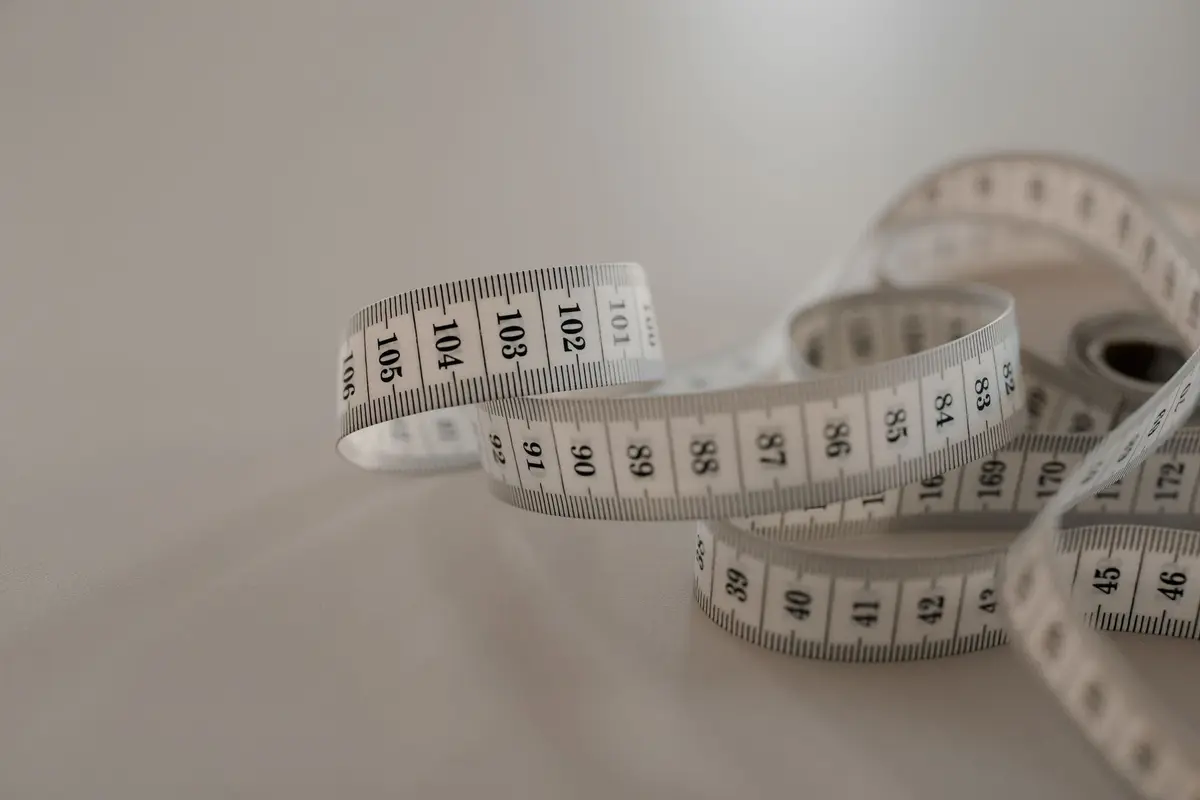
Measure the door opening too. Some reach-in closets are wider inside than the opening, which leaves corners at each end that are hard to reach but fine for things you rarely use.
Take the numbers with you when you shop, or enter them into the bin and basket size calculator to see which bin sizes fit your shelf and how many line up side by side.
Measure in a few spots on each shelf and use the smallest number, since walls and shelves aren’t always square. Note anything that cuts into the space, like a light fixture, a vent or the trim around the door.
Check what’s behind the walls before you drill. A stud finder shows where the framing is, which gives the screws for a new rod or shelf something solid to hold.
3. Add a second hanging rod
Much of what hangs in a closet is short: shirts, blouses, skirts and pants folded over a hanger. A second rod below the first doubles the hanging space for those clothes in the same width.
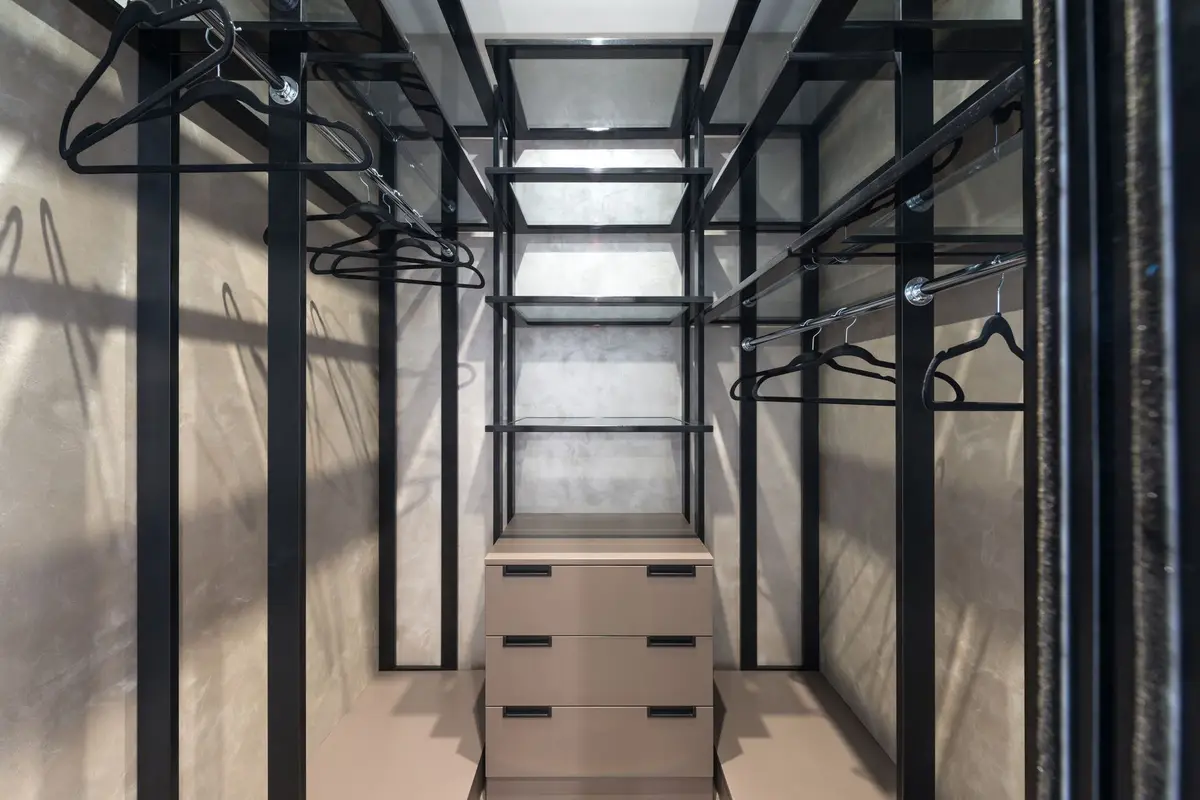
A hanging rod that hooks over the existing one needs no tools and goes up in a minute, which suits a rental. A rod mounted to the side walls is sturdier for a closet full of heavy jackets.
Keep one end of the closet single height for dresses, long coats and anything that would brush the floor. Put the double rods at the other end, where the short pieces live.
Hang the top rod high enough that the clothes on it clear the lower rod, and the lower rod high enough that its clothes don’t pile up on the floor. Measure your longest shirt before you set the heights.
Group the clothes on each rod by type, then by color. Shirts together, pants together, light to dark, so you can see at a glance what’s clean and what’s still in the laundry.
4. Switch to slim matching hangers
Bulky plastic and wooden hangers take up room on the rod before you hang a single thing. Slim hangers of the same style and color sit closer together, so the same rod holds more.
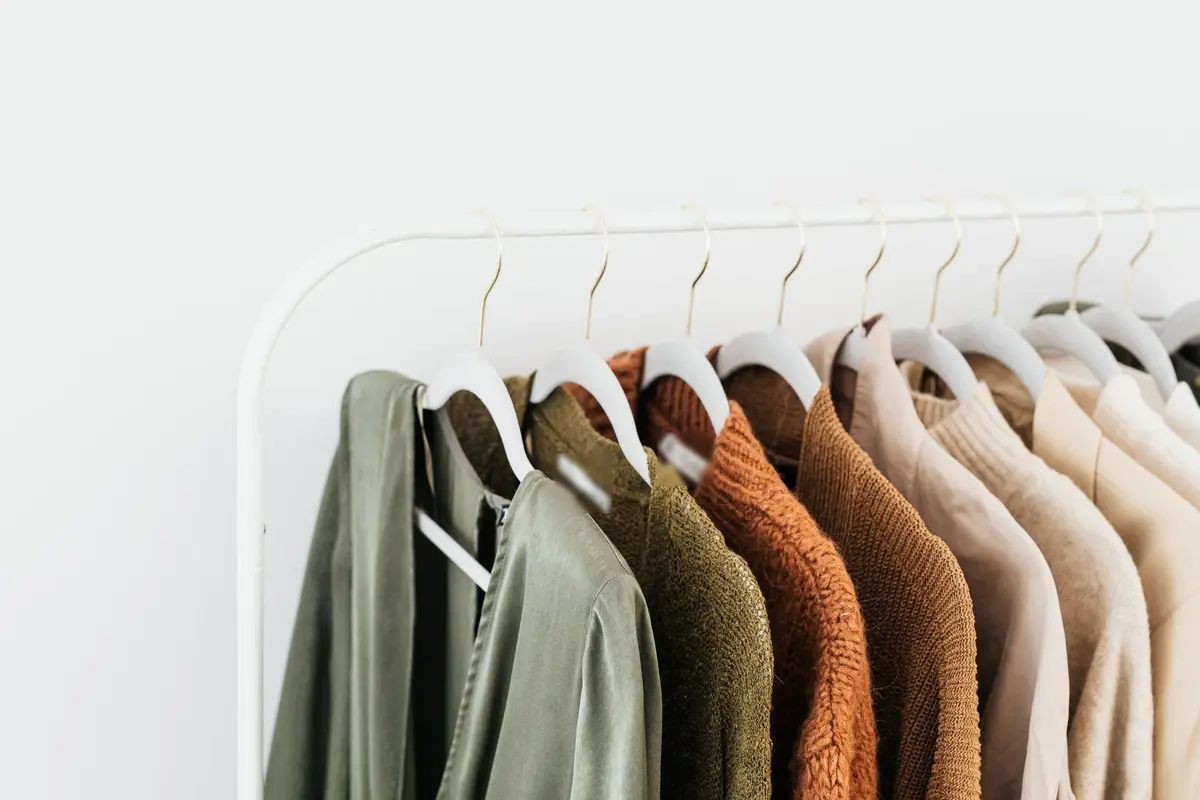
Matching hangers also line up at the same height, so the closet looks calmer and you can flip through clothes like pages in a book. Velvet or flocked hangers grip silky tops and wide necklines, so they don’t slide off.
Swap hangers a few at a time as you do laundry, so the change happens without a big project. Recycle or donate the old ones instead of stuffing them back into the closet.
Keep heavy coats and suits on sturdier hangers with wider shoulders, so they hold their shape. Everything else can go on slim ones.
To spot what you never wear, turn every hanger backward at the start of a season. When you wear something, hang it back the right way, and after a few months the backward hangers show you what’s ready for the donate bag.
5. Keep folded stacks in line with shelf dividers
Sweaters, jeans and sweatshirts take up less rod space folded, but tall stacks on a deep shelf tend to slump into each other. Shelf dividers clip onto the shelf and keep each stack standing on its own.
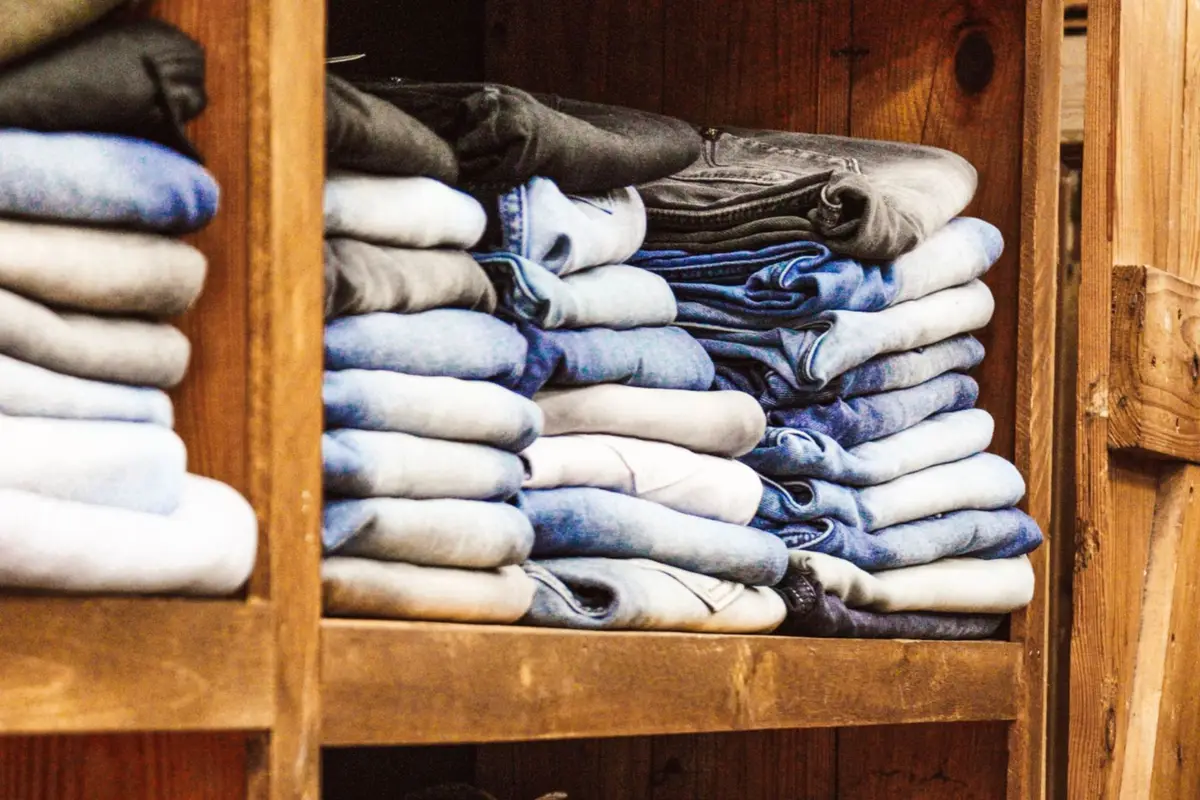
Give each section one kind of clothing: jeans in one, sweaters in another, workout clothes in the next. Pull from the top, put back on the top, and the stack stays neat.
Keep stacks to a height you can lift without the pile toppling, and fold each piece to the same size so the stacks are even. Turn the folded edge to face out, so you can tell what’s in a stack at a glance.
Dividers work best on solid shelves. On a wire shelf, lay a thin board or a shelf liner on top first, so folded clothes don’t sag through the gaps.
If the closet has no shelves at all, a hanging fabric organizer with cubbies hooks over the rod and gives you shelves without any drilling. It takes some rod width, so hang it where the rod has room to spare.
6. Put bins on the top shelf
The shelf above the rod is often the most wasted space in a small closet, because loose things up high topple over or get forgotten. Bins or baskets with a handle at the front turn it into neat drawers you can pull down.
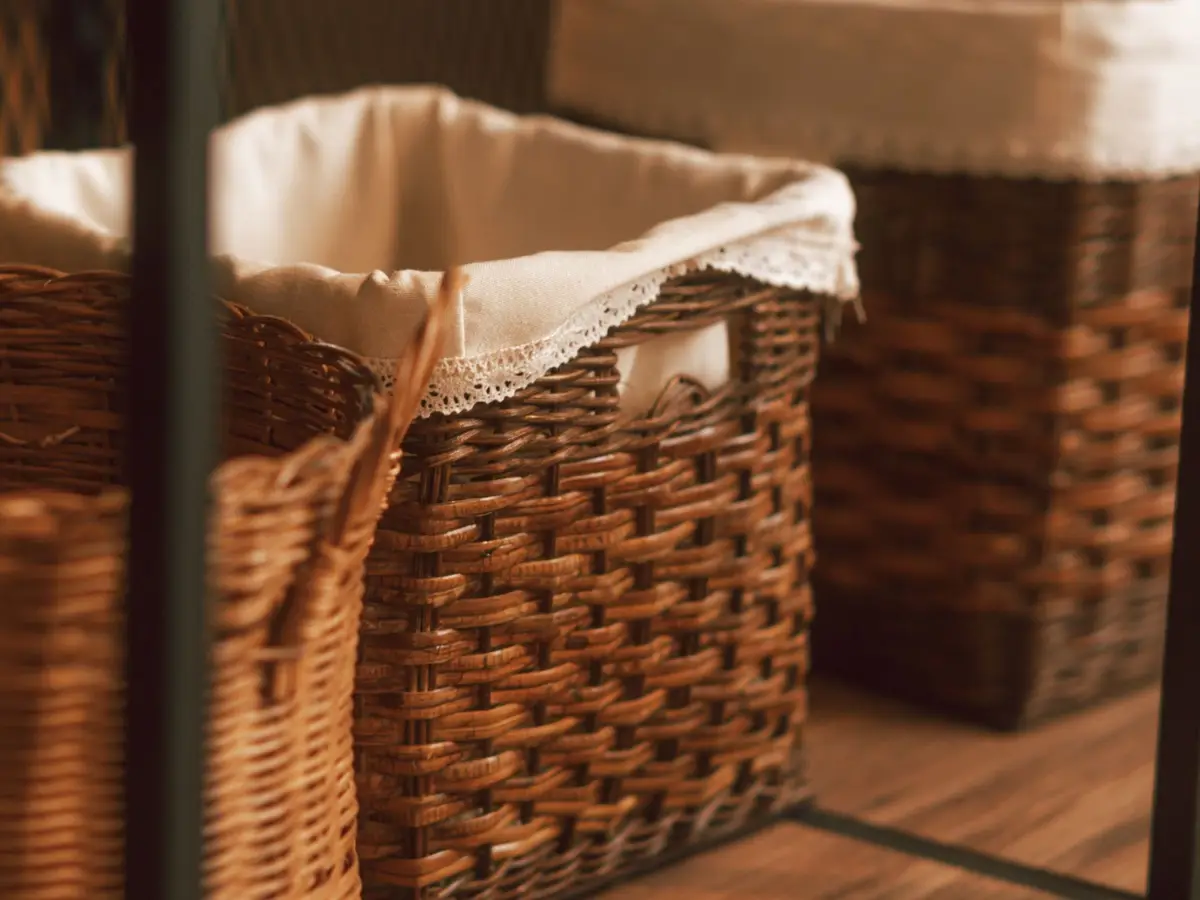
Give each bin one job and a label on the front: swimsuits, hats and scarves, spare bedding, keepsakes. Choose bins that fit the shelf depth, so they slide all the way back and don’t hang over the edge.
Keep only light things up high. Heavy items belong on lower shelves, and anything the kids want belongs within their reach, so nobody is tempted to climb the shelves to get it.
Keep a sturdy step stool nearby for this shelf instead of standing on a chair. A slim folding one fits in the gap beside the shoes or hangs on a hook.
If the space above the shelf is tall, a shelf riser can split it in two. Measure the gap first, and leave enough room to tip a bin forward and lift it out.
7. Use the back of the door
The inside of a hinged closet door is free storage that often goes unused. An over-the-door rack or hook rail holds bags, robes, belts and tomorrow’s outfit without drilling a single hole.
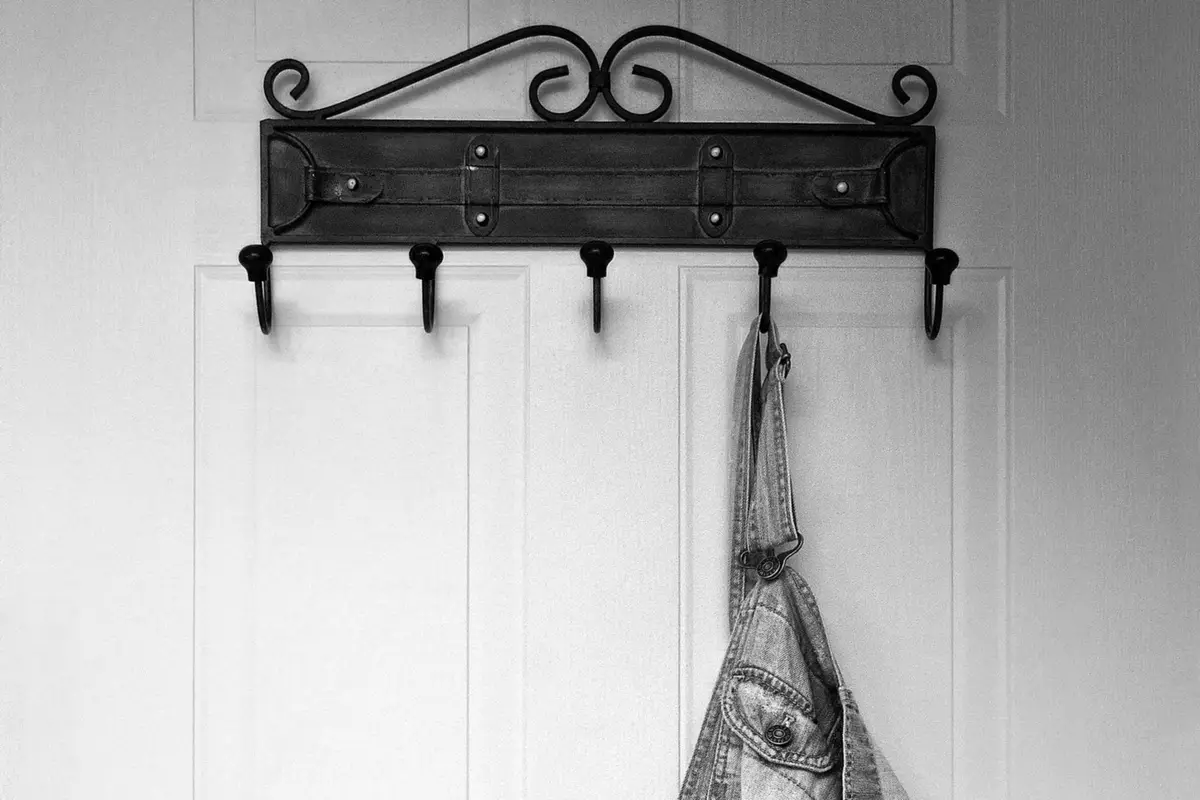
A clear over-the-door organizer with pockets is good for shoes, socks, scarves or small accessories. Clear pockets let you see what’s inside without opening anything.
Check that the door still closes with everything on it, and measure the gap between the door and the frame before you buy. A rack with thick hooks can stop a door from latching.
Keep the load light, especially on a hollow door, so the hinges aren’t strained. Hang bags and light jackets there and leave heavy coats on the rod.
On a sliding or bifold door, hang the organizer on a wall inside the closet instead, or on the back of the bedroom door, where it stays out of sight while the door is open.
A hook at eye level also gives you a place for the outfit you set out the night before. It’s one less decision on a busy morning.
8. Give shoes a rack on the floor
Shoes piled on the closet floor get scuffed, mismatched and buried. A low shoe rack or a set of shoe shelves lifts them up, so every pair has a spot and you can see them all at once.
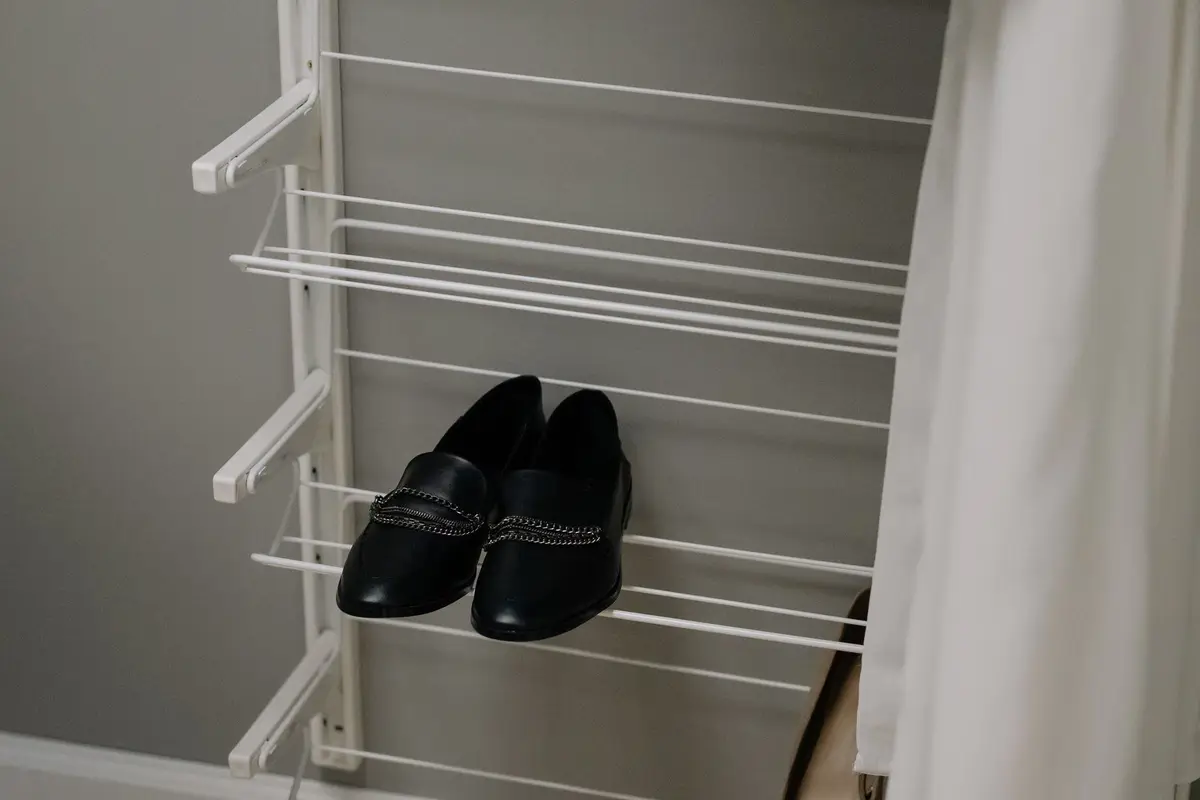
Put the shoes you wear most at the front and on the top tier, and keep dress shoes and boots toward the back. Pairs you only wear once in a while can go in a bin on the top shelf.
Under the short clothes on a double rod, there’s room for a taller rack or even a small chest of drawers. If you add a freestanding shelf unit or a dresser, anchor it to the wall so it can’t tip over.
Leave a little space between the rack and the clothes above, so shirt tails don’t drag on shoe soles. A boot shaper or a rolled towel keeps tall boots standing instead of flopping over.
Wipe the floor before the rack goes in, and set a washable mat or tray under muddy or wet shoes, so the dirt stays off everything else.
9. Add hooks to the side walls
The side walls of a reach-in closet are often bare, and they’re a good spot for things that hang well: belts, bags, hats, scarves and the robe you use every morning.
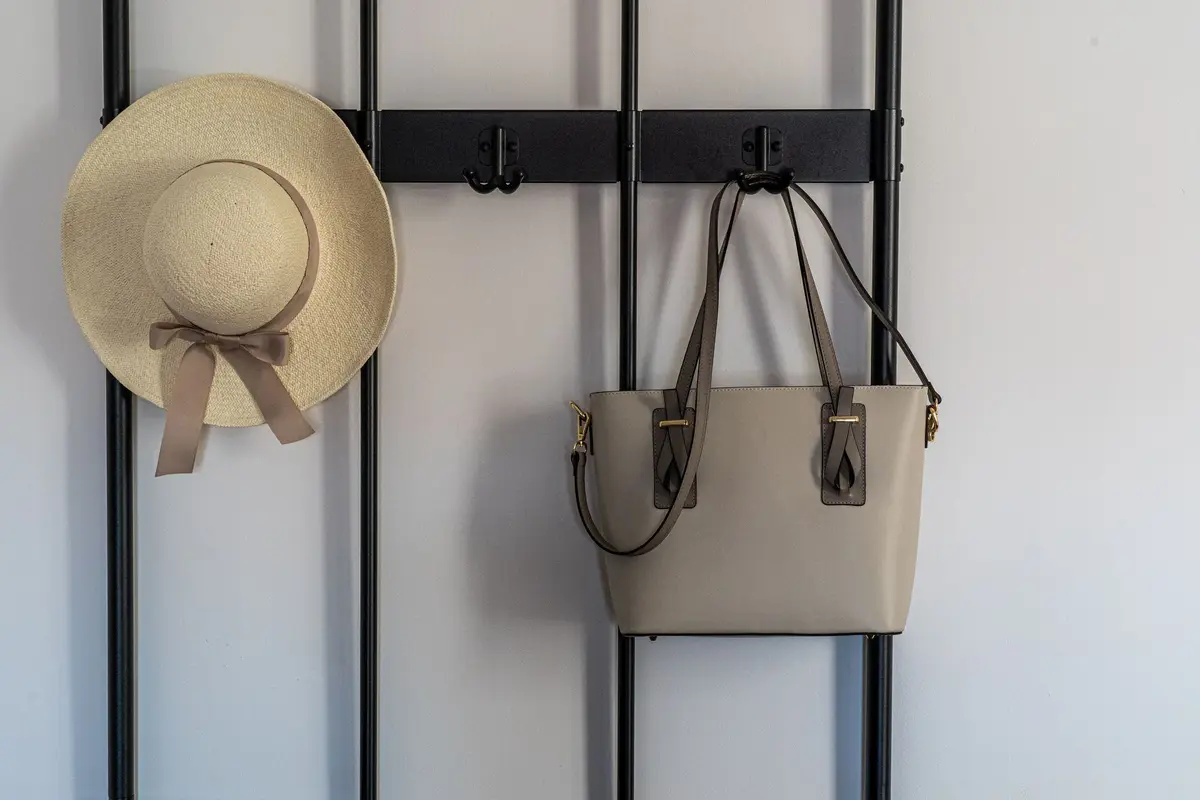
A short rail with several hooks fits the narrow wall at each end of the rod. Adhesive hooks suit a rental; follow the package directions when you take them down, so the paint stays put.
Hang each bag on its own hook instead of stacking several on one, so they keep their shape and you can grab one without pulling down the rest.
Use the corners too. A narrow tension pole or a tall hook rack can hold necklaces, ties or a week of outfits in a space too slim for anything else.
Match the hook to the weight. Light adhesive hooks suit hats and scarves, while a full handbag needs a hook screwed into a stud or a wall anchor.
Keep each hook to one or two things, so the wall stays tidy instead of turning into a second pile.
10. Swap clothes by season
A small closet can’t hold every season at once. Keep only what fits the weather right now on the rod and shelves, and store the rest until the season turns.
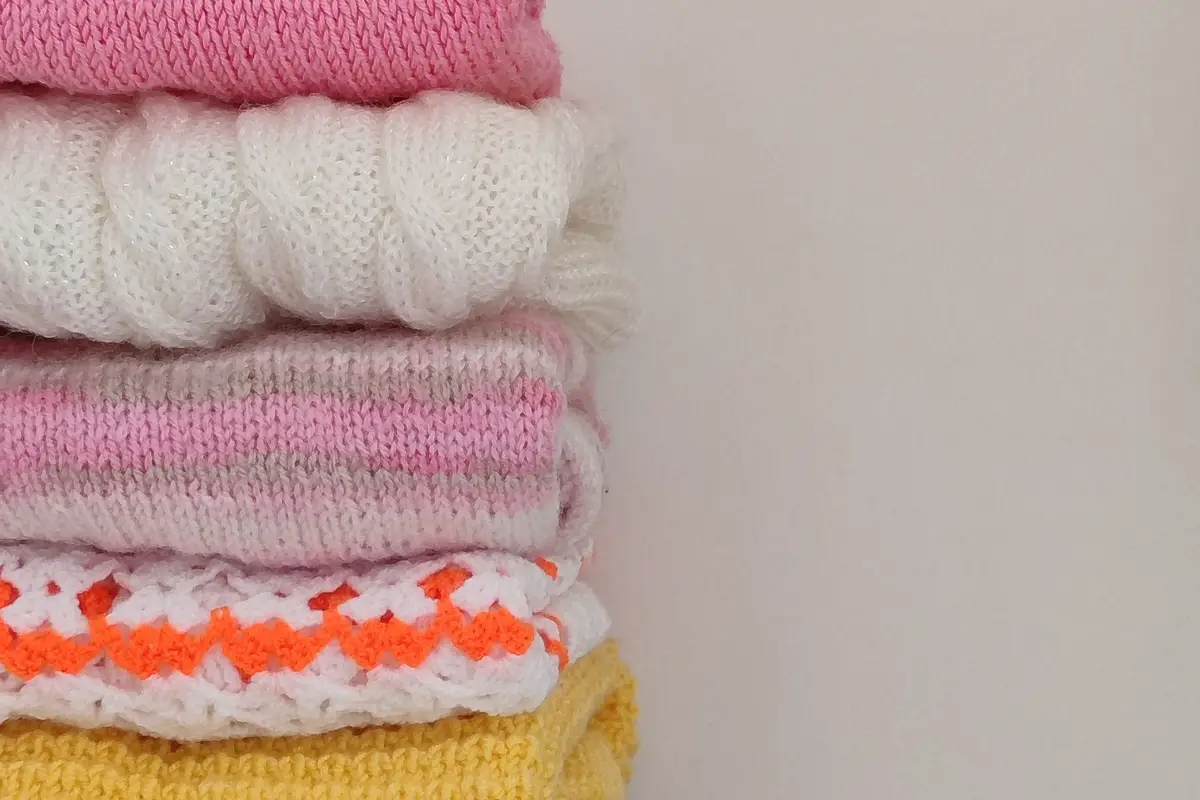
When you put a season away, wash or clean everything first, so nothing goes into storage with stains or odors.
Fold sweaters and knits instead of hanging them, since hangers can stretch the shoulders out of shape. Store them in lidded bins or fabric boxes, and label each one with the season and whose clothes are inside.
Twice a year, make the swap a small event: bring the stored bin out, try things on, and pass on anything that no longer fits or that you didn’t miss. Then the outgoing season goes into the bin.
Use the swap to look at what you actually wore. Anything that stayed on its hanger all season is a good candidate for the donate bag before it goes back into storage.
Keep a few in-between pieces, like a light jacket and a cardigan, in the closet all year. The weather rarely changes on schedule.
11. Send the overflow under the bed
Not everything has to live in the closet. The space under the bed, a dresser drawer or a pair of baskets beside the bed can take the overflow, from off-season clothes to spare sheets.
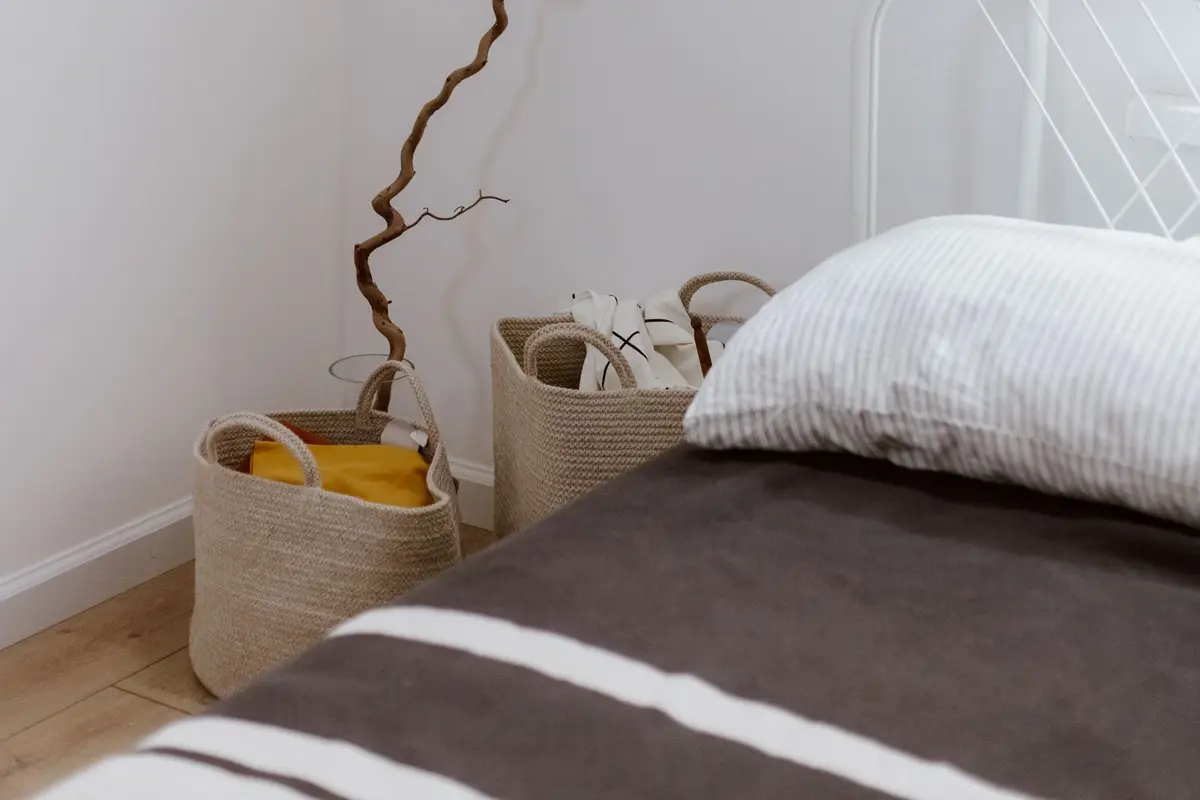
Use low, lidded bins or zippered bags with handles under the bed, so you can slide them out from one side. Measure the clearance under the bed frame first, then leave a little room so the bins slide without scraping.
Label the end of each bin that faces out. You’ll find the right one without pulling everything out, and you’ll know what’s stored there before you buy more.
Baskets beside the bed or at the foot of it work for things you reach for often, like extra blankets, pajamas or clothes you’ll wear again before they need a wash.
Keep this storage for clothes and linens. Shoes and dusty things are better off in a closed bin of their own, so nothing dirty ends up under the place you sleep.
Vacuum under the bed each time you swap seasons, since dust collects fast in a space you can’t see.
12. Keep a donate bag in the closet
Keep a bag or a basket on the closet floor or the top shelf just for clothes that are leaving. When something doesn’t fit, feels uncomfortable or hasn’t been worn in a long time, it goes straight in.
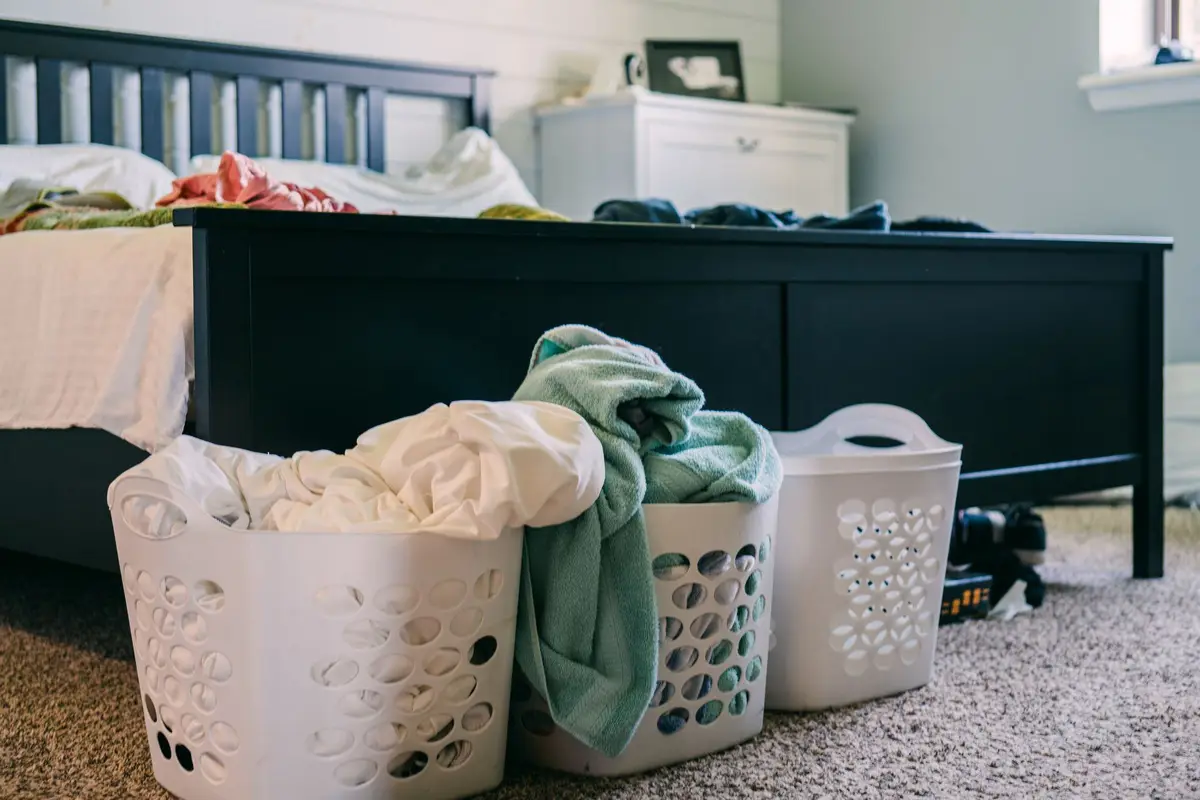
When the bag is full, put it in the car right away, so it actually leaves the house. Drop it off the next time you’re out running errands.
Set a simple rule to stop the closet from filling back up: when something new comes in, something old goes in the bag. It keeps your wardrobe at the size of your closet.
Give everyone in the house a spot to drop outgrown clothes, especially kids, who outgrow things fast. A small basket in each closet makes it easy.
Once a month, take a quick pass through the closet with the declutter checklist and pull anything that drifted back in.
A closet that only holds clothes you wear and like is far easier to keep tidy, whatever its size.
Save this for later
Pin it to a board so it's there when you're ready to start.
Save to Pinterest(opens in a new tab)Make it easier
Free printable
30-Day Declutter Challenge Printable
A one-page declutter challenge for a month: one small spot to clear each day, easiest first, so the whole house gets a pass in short sessions.
Free tool
Enter the width, depth and height of a shelf, a drawer or a cube cubby, and see which standard bins and baskets fit, how many, and how they line up.
Frequently asked questions
How do I organize a small closet with no shelves?
Add a second rod for short clothes, then use the floor and the door: a shoe rack below and an over-the-door organizer for small things. A hanging fabric organizer with cubbies hooks over the rod and gives you shelves for folded clothes without any drilling.
What should go on the top shelf of a small closet?
Light things you don't need every day, like spare bedding, swimsuits, keepsakes and off-season hats and scarves, in bins with a handle at the front. Keep heavy items on lower shelves, where they're safe to lift.
Do slim hangers really save space?
Yes, because they're thinner than bulky plastic or wooden hangers, so more of them fit along the same rod. Matching hangers also hang at the same height, which makes clothes easier to see and flip through.
How often should I clean out my closet?
Pull out anything that doesn't fit as soon as you notice it, and keep a donate bag handy for it. A bigger clean-out at each change of season, when you swap your clothes, keeps a small closet from filling up again.