Grocery List Printable
A one-page grocery list sorted by store section, with a box to tick for every item, so you write the list once and shop the store in one loop.
Published
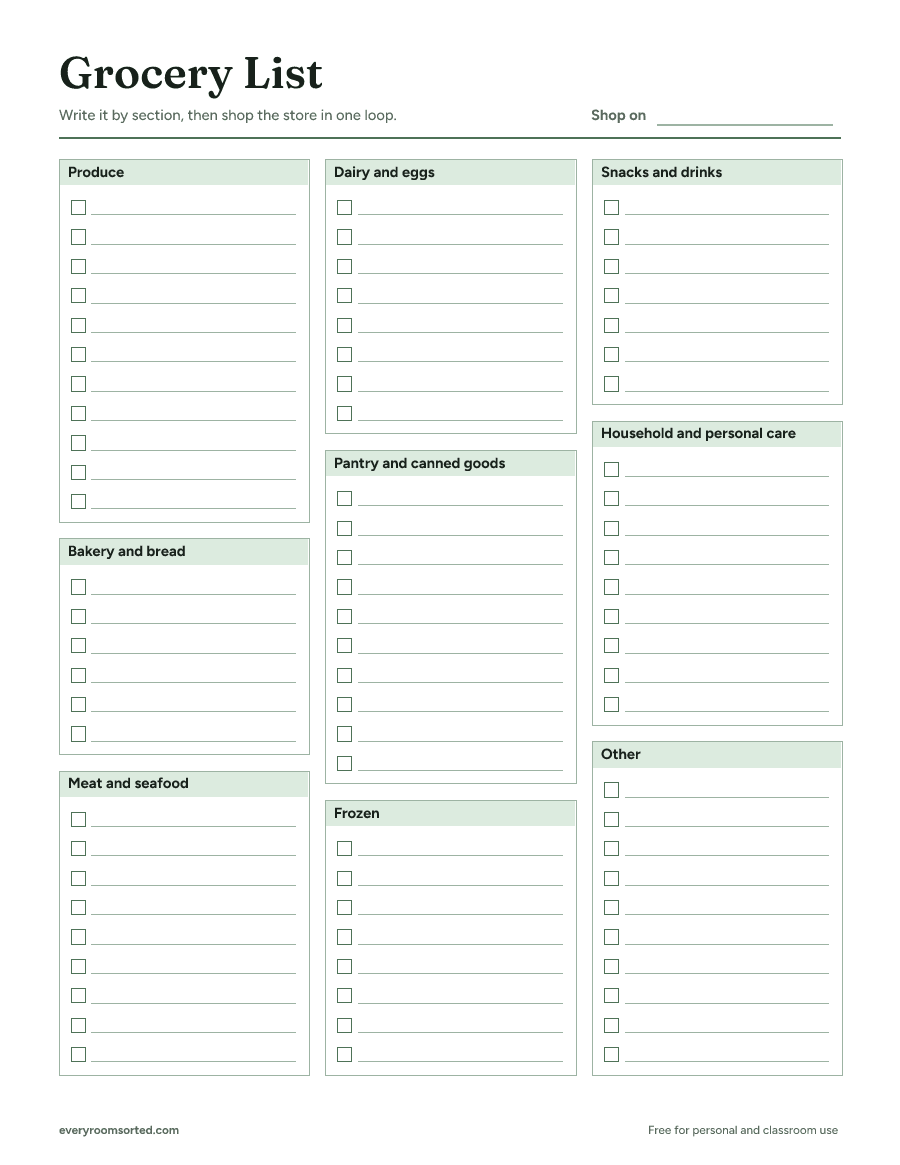
Download the free PDF
One US Letter page with light lines that are easy on ink. No sign-up, no email.
Download the PDFFree for personal and classroom use. Please share a link to this page rather than the file. Terms of use
Who it’s for
This grocery list is for anyone who shops for a household and is tired of forgotten items and extra trips for one thing. Its lines are grouped by store section, so you write the list in the same order you’ll walk the store.
It works for a big weekly shop, a quick top-up or a shared list on the fridge that the whole house adds to.
What’s on the page
- 9 sections: produce, bakery and bread, meat and seafood, dairy and eggs, pantry and canned goods, frozen, snacks and drinks, household and personal care, plus Other for anything that doesn’t fit.
- 78 lines in all, each with a box to tick as the item goes in the cart. The most room goes to produce, with 11 lines.
- A “Shop on” line at the top for the day of the trip.
How to use it
- Plan the meals first. The meal planner lays out the week’s dinners, and each one turns into a few items on this list.
- Check what you already have. Look in the fridge, freezer and pantry before you write, so you don’t buy a third jar of the same thing.
- Write each item under its section, with the amount if it matters, like “two onions” or “large yogurt.”
- Shop the store in one loop, section by section, ticking each box as the item goes in the cart.
- Hang a fresh copy on the fridge as soon as you’re home, so next week’s list starts right away.
Why a list by section works
A list written as things come to mind ends up in random order. In the store, that means walking from produce to the back wall and back again for the lemons you missed.
Sorted by section, the list follows your path through the store. You finish one area before you move on, and an empty section tells you which aisles to skip entirely.
The boxes help at the end of the trip. One look before checkout shows anything still unticked, while you’re still in the store to grab it.
What goes in each section
The sections follow the order most stores are laid out in, from the fresh food near the entrance to the household goods at the far end.
Produce
Fruit, vegetables and fresh herbs get the most lines, because fresh food runs out fastest. Write how many you need for each meal, like three peppers for fajitas, so you buy enough without extras that wilt in the drawer.
Plan the meals that use the most delicate produce for early in the week, and the sturdy vegetables for later.
Bakery, meat and seafood
Bread, rolls and tortillas go in the bakery lines. For meat and seafood, note which meal each one is for, so you buy the amount the recipe needs.
Keep raw meat, poultry and seafood away from other foods in the cart and in the bags. A separate bag for them keeps any juices off the rest of your groceries.
Dairy and eggs
Milk, yogurt, cheese, butter and eggs. Check the dates on what’s already in the fridge before you write, so the new carton doesn’t end up behind the old one.
Pantry and canned goods
Rice, pasta, beans, canned tomatoes, baking supplies and spices all go here. A pantry you can see into makes this section quick to fill, and the small pantry organization ideas show how to set up shelves so every jar is in view.
Frozen
Frozen vegetables, fruit, meals and ice cream. The section comes near the end of the loop, so cold food spends less time in the cart.
Once you’re home, put perishable food in the fridge or freezer before anything else, and be quicker still on a hot day.
Snacks and drinks
Lunchbox snacks, crackers, coffee, tea and drinks. If kids pick their own snacks, give them a line or two to fill in themselves.
Household and personal care
Paper towels, dish soap, trash bags, toothpaste and shampoo. These run out quietly, so write each one down the day you open the last one.
Other
Anything that doesn’t fit a section: a second store, a pharmacy pickup, a special order or a gift. It’s also the overflow when another section runs out of lines.
Keeping a master list
If you buy the same staples most weeks, keep a master list. Fill in one copy with everything you usually buy, section by section, and keep it in a kitchen drawer.
Before each trip, read down the master and copy only what you need onto a fresh sheet. It takes moments, and the staples never slip your mind.
Update the master when your habits change, like a new breakfast or a new school lunch, so it stays a true picture of what your home uses.
Fitting it to your home
The sections suit most homes as they are. Change how you use them to match the way you shop.
Cooking for one or two
You may need only a few lines in each section. Shop every other week for pantry and household items, and use a short top-up trip for fresh food in between. Buy loose produce in the amounts your recipes call for, rather than a big bag that goes soft before you finish it.
A big family
Big households fill the produce, dairy and snack lines first. Keep the list on the fridge with a pen tied to it, so everyone adds what they finish instead of telling you in the car.
Allergies and special diets
Write a short note beside any item that needs checking, like “nut-free” or “gluten-free,” so whoever shops reads the label before it goes in the cart.
Shared homes and roommates
Use initials beside each item to show whose it is. Shared basics like dish soap and trash bags can go in the household section with no initials at all.
When the list stops working
If you keep forgetting things, the list probably lives in the wrong place. Move it next to where things run out, like the fridge door or inside the pantry.
If you come home with things that aren’t on the list, write the list before you get hungry and plan the week first. Anything new can wait for next week’s list.
If a section fills up every week while another stays empty, that’s useful too. It shows what your home really eats and uses, and where to put your pantry space.
Tips for faster shopping
- Write it as you go. Add an item the moment you open the last one, and the list is nearly done by shopping day.
- Take a photo of the list before you leave, as a backup in case the paper stays in the car.
- Shop at a quiet time when you can, so you can move through the store in one loop without crowded aisles.
- Carry over what you missed. If an item was out of stock, write it at the top of its section on next week’s list, so it doesn’t drop off.
- Put groceries away by section. The fridge, freezer and pantry fill faster when the bags are packed the same way the list is written.
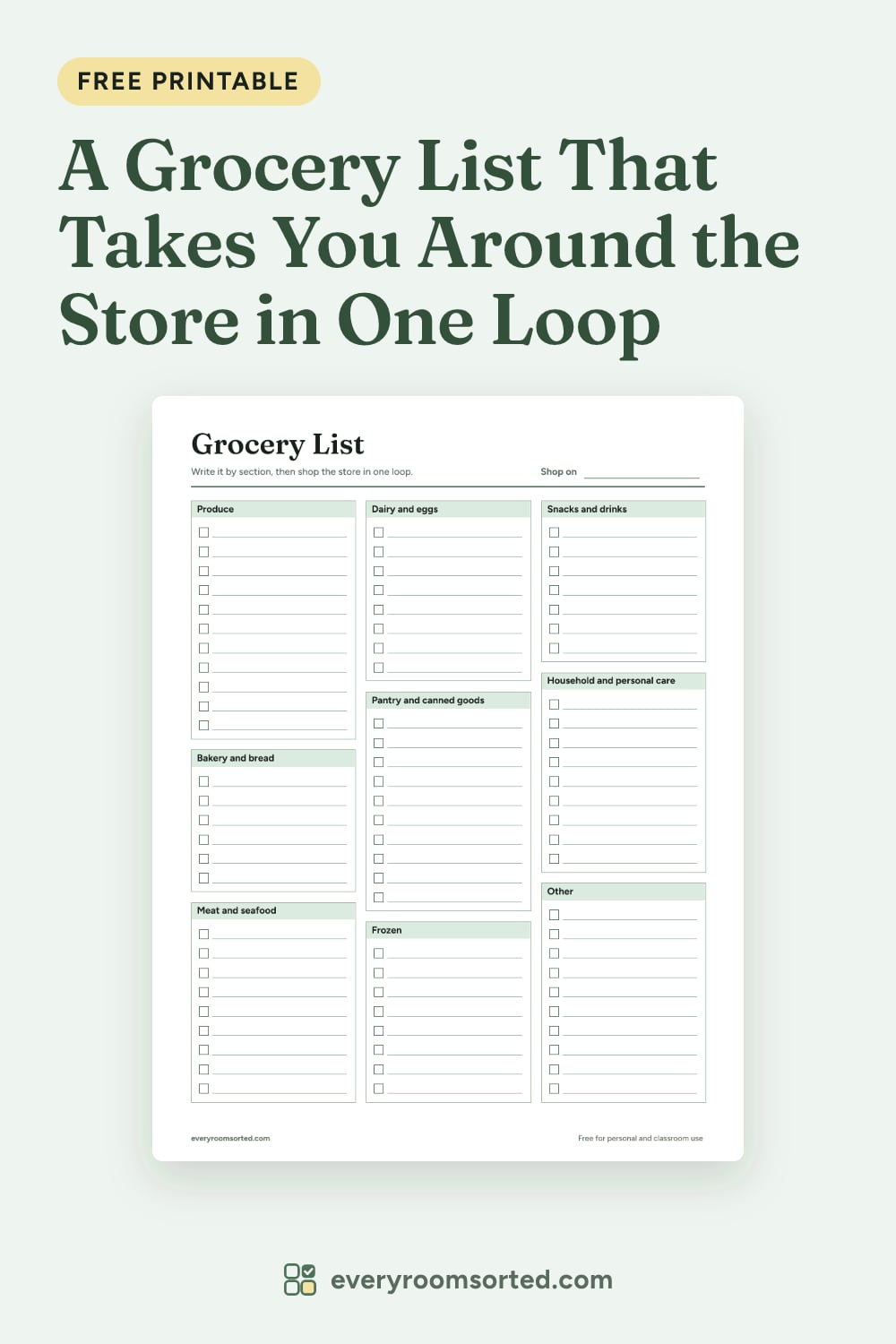
Save this for later
Pin it to a board so it's there when you're ready to start.
Save to Pinterest(opens in a new tab)Frequently asked questions
How do I organize a grocery list?
Group items by the section of the store they're in, in the order you walk through it. You stop doubling back for a forgotten item, and you can see at a glance which aisles to skip.
Should I keep a master grocery list?
Yes, if you buy the same staples most weeks. Fill in one copy with everything you usually buy, then copy what you need onto a fresh sheet before each trip.
What if a section runs out of lines?
Use the Other section at the end for the overflow, or write two short items on one line. If the same section runs out every week, it's a sign to plan a few meals that use what you already have.
Can I use one list for more than one store?
Yes. Put the second stop's items in the Other section, or mark them with a different color pen. Shop the first store in one loop, then the second.
More free printables
A one-page to-do list with today's top three at the top, plenty of lines to tick off underneath and a little room for notes.
A free one-page meal planner with a row for each day, a column for each meal, and room for the shopping list and the prep. Plan the week once, then shop once.
Free printable spice jar labels to cut out and stick on. Print the ready sheet of common spices, or type your own list and download labels made for your shelf.