12 Nursery Organization Ideas That Put Every Diaper Within Reach
Set up a nursery that works at night, with a changing station in reach, diaper bins, clothes sorted by size, a bare crib and an anchored dresser.

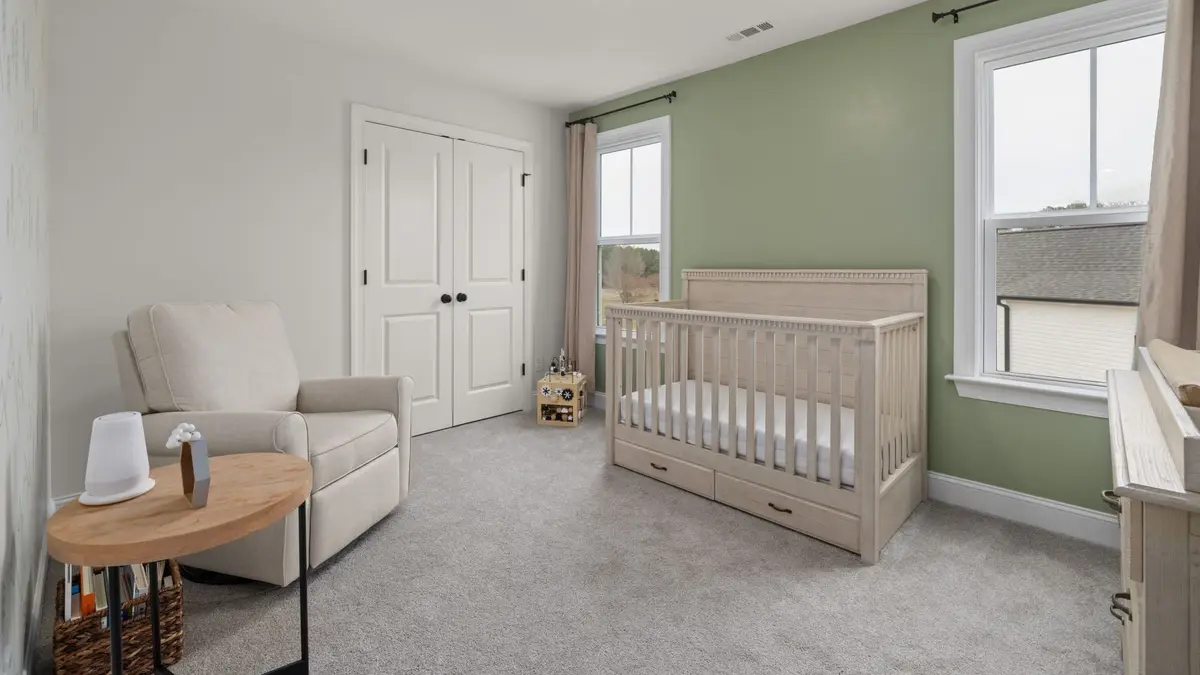
Nursery organization comes down to a few simple moves: keep diapering supplies within arm’s reach of the changing pad, give tiny clothes small containers so they stay sorted, and keep the crib bare. Add a hamper, a feeding spot and a soft lamp by the chair, and night changes and feeds get much easier.
These 12 ideas work in a dedicated nursery, a shared bedroom or a corner of your own room. Start with the changing station, since it gets used most, then work through clothes, storage and the safety basics.
1. Set up a changing station with everything in reach
Pick one spot for diaper changes, either a changing table or a dresser with a changing pad on top, and stock it so you never have to step away. Diapers, wipes, cream, a spare outfit and a few burp cloths should all sit within arm’s reach.
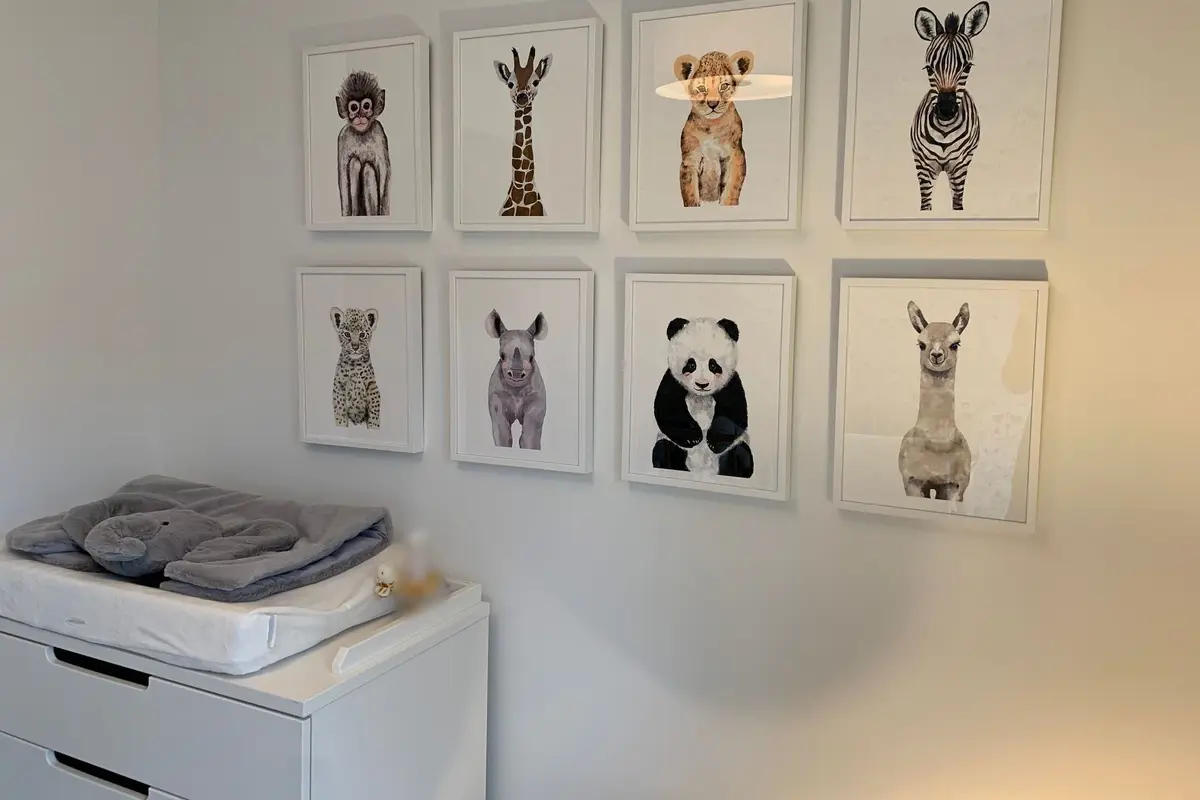
Never leave a baby alone on a changing surface, not even for a moment, and keep one hand on your baby the whole time. Use the safety strap if the pad has one, but treat it as a backup to your hand, never a replacement.
That rule is why the setup matters so much. If something you need is across the room, the safe move is to pick up your baby and take them with you.
Keep supplies within your reach but out of your baby’s. A caddy or shallow tray on the side away from little hands works well, and creams and lotions stay out of grabbing range.
Restock the station once a day, ideally during the evening tidy, so the middle of the night never starts with an empty wipes container.
2. Keep diapers and wipes in open bins
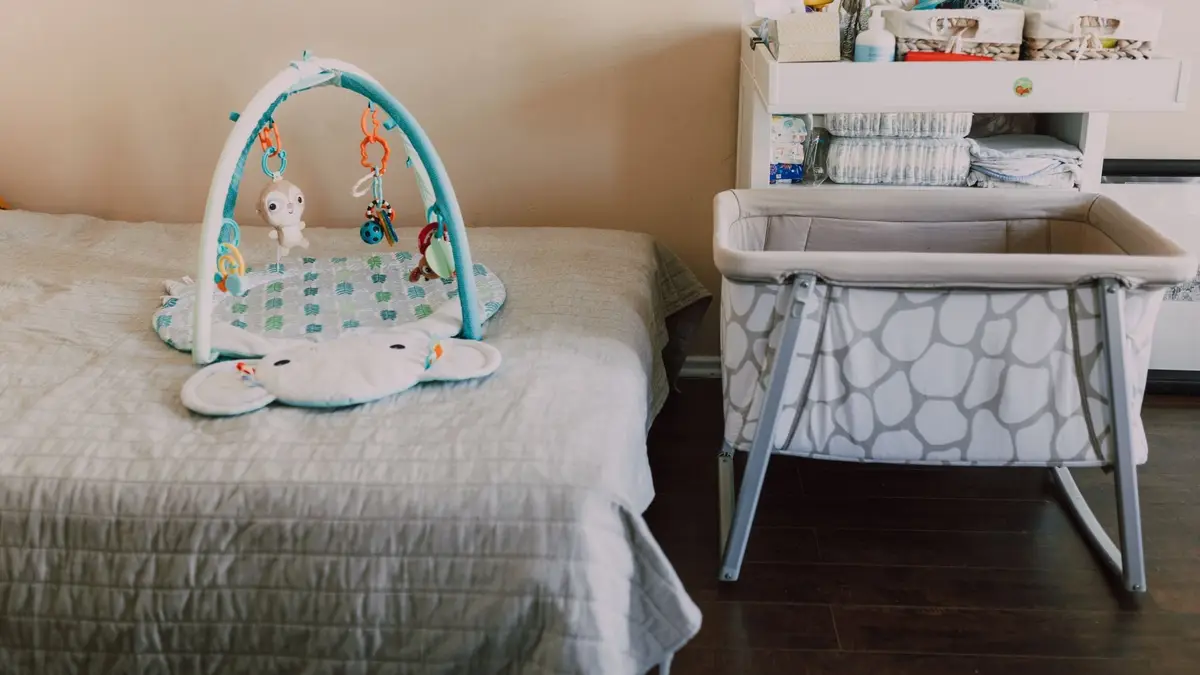
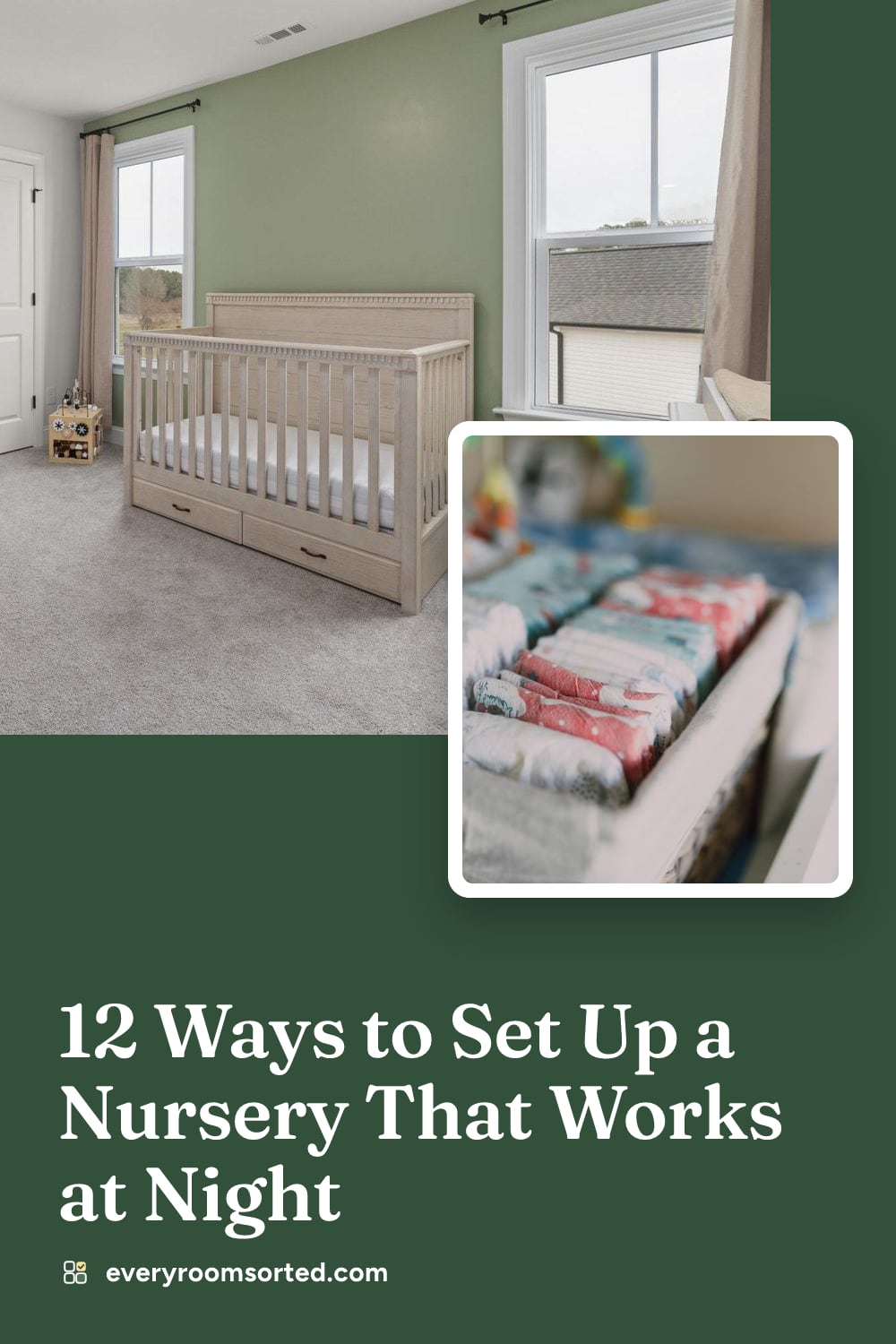
Unpacked diapers take up less room than a bulky package, and an open bin lets you grab one with one hand. Line them up in rows in a fabric-lined basket or a drawer bin, so you can see at a glance when you’re running low.
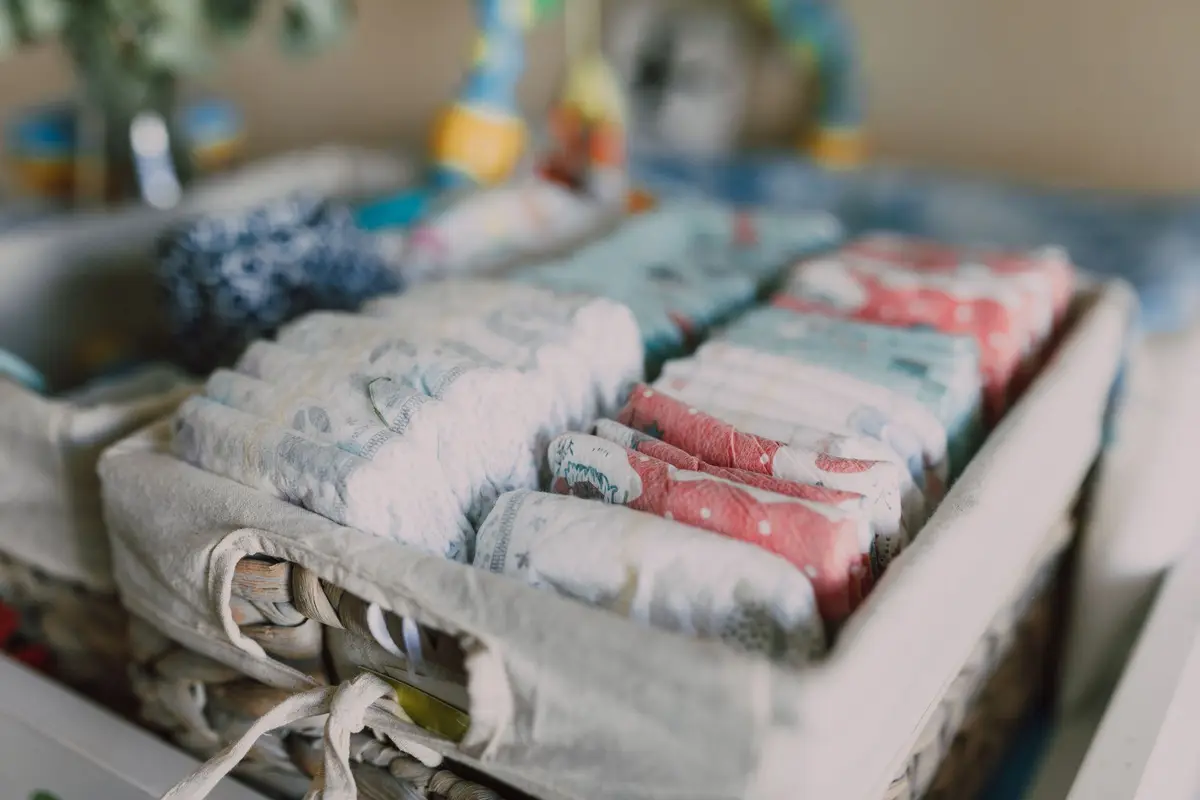
Measure the drawer or shelf before you buy bins, then use the bin and basket size calculator to see which sizes fit and how many line up side by side.
Give the next diaper size a bin of its own, stored nearby but out of the way. Babies often move up a size suddenly, and a ready bin saves a late-night store run.
Keep backup packs somewhere else entirely, like a closet shelf or the drawer under the crib. The changing station only needs a day or two of diapers at a time.
Wipes, cream and a small lidded trash can belong in the same zone. With the can right beside the pad, a used diaper goes straight in and your other hand never leaves your baby.
3. Divide drawers for tiny clothes
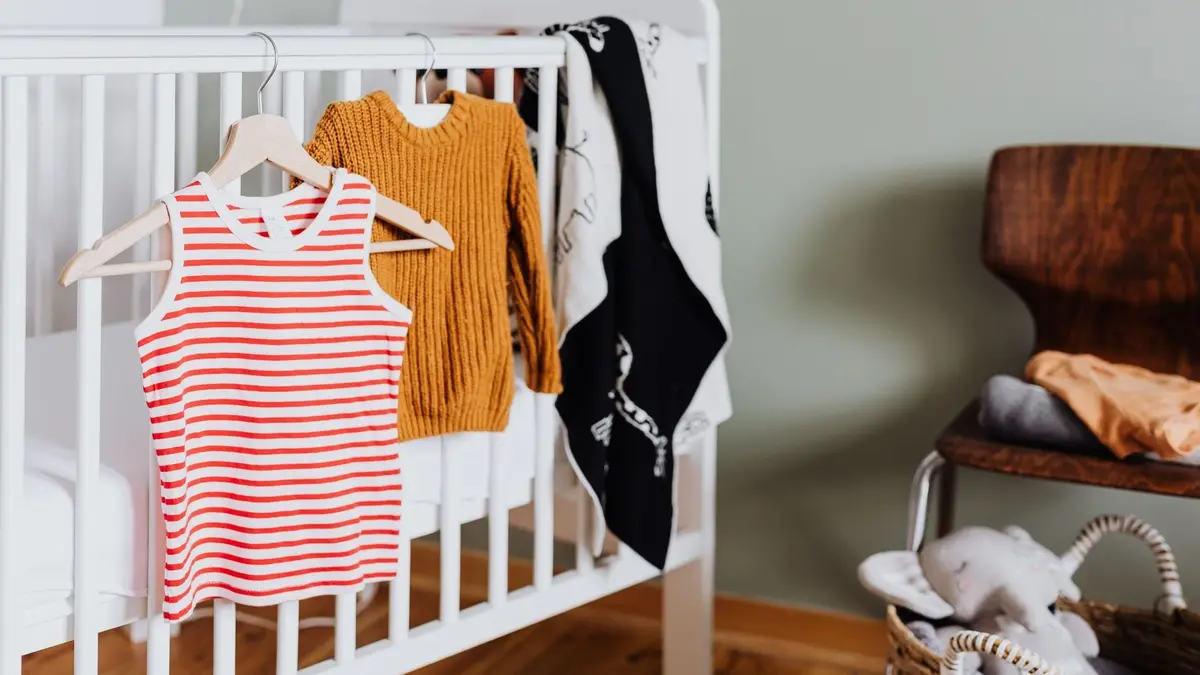
Baby clothes are small enough to slide into one jumbled pile the moment a drawer opens. Drawer dividers or a few small bins give each kind of item its own lane, so the drawer stays sorted even after a rushed search.
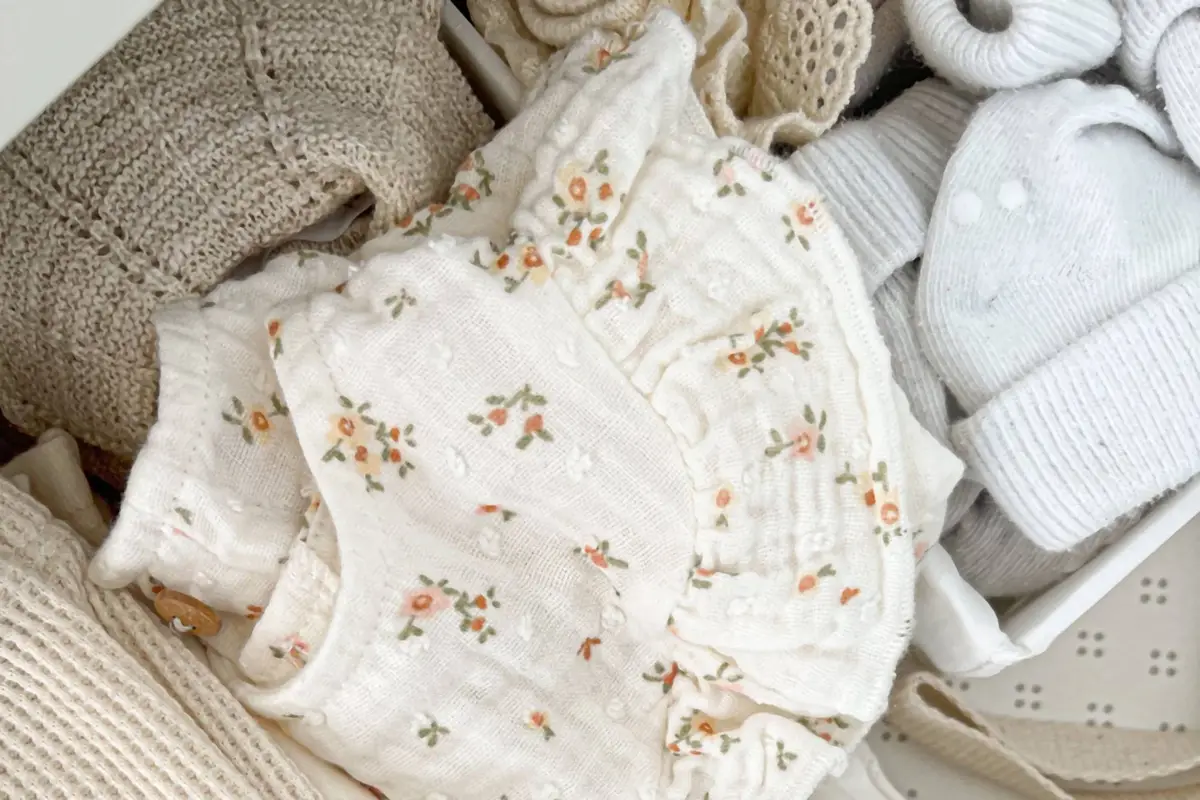
Sort by type: bodysuits in one section, pants and leggings in another, sleepers in a third. Socks, hats and mittens disappear fastest, so they get the smallest bin of all.
File clothes upright instead of stacking them. A folded bodysuit standing on its edge shows you every option at once, and pulling one out doesn’t topple the rest.
Put everyday items in the top drawer, the one you can open while standing at the changing pad. Spare blankets, special outfits and anything you only need now and then can go lower down.
Adjustable dividers that press between the drawer sides are worth it here. You’ll change the sections as your baby grows and the clothes get bigger, and they move without any tools.
4. Sort clothes by size and keep a bin for outgrown ones
Babies outgrow clothes fast, sometimes before a few pieces have been worn at all. Sort everything by size and keep only the current size in the dresser and closet, with the next size boxed and labeled nearby.
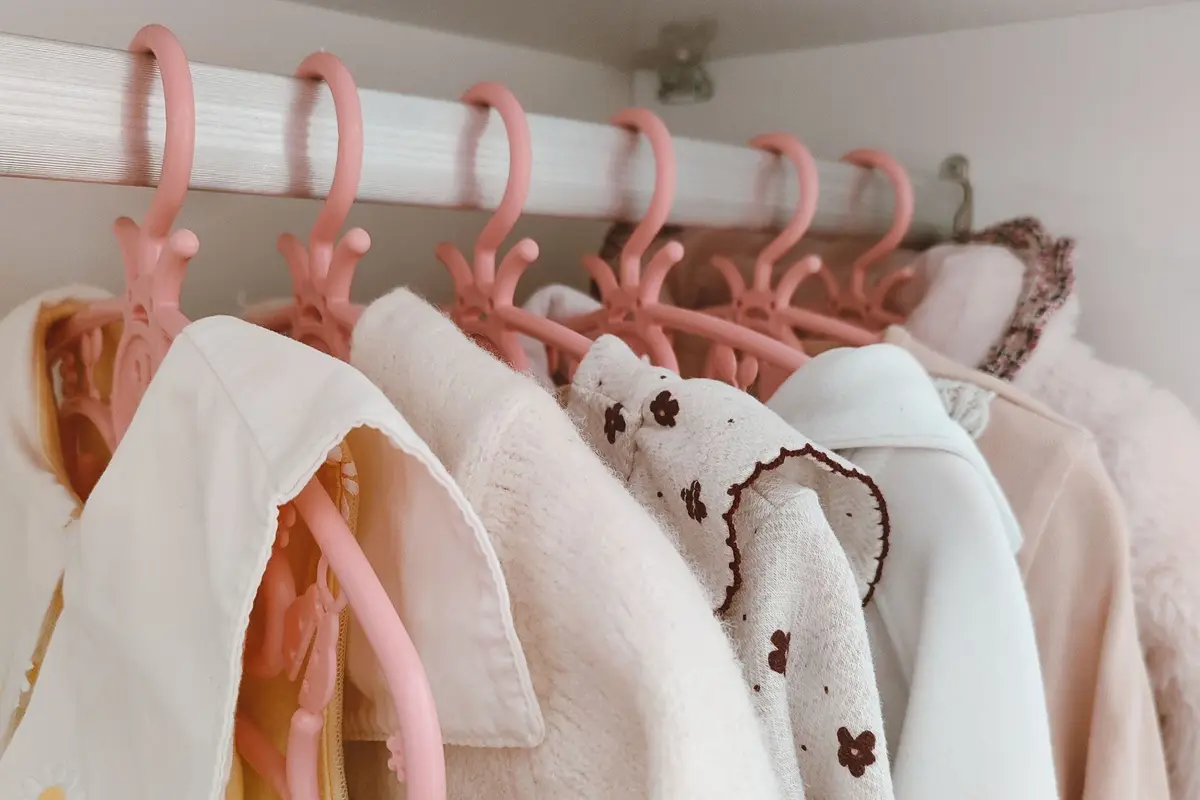
Size dividers on the closet rod make this easy. A small tag between groups shows where one size ends and the next begins, and the current size hangs closest to the door.
Keep an open bin or bag in the closet just for outgrown clothes. The moment something is too snug, it goes straight in, instead of back into the drawer for another frustrating try.
When the bin fills up, sort it into four piles: keep for a younger sibling, pass on, donate and toss. The declutter checklist walks through the same keep or let go questions for the rest of the house.
Label each box with the size and the season before it goes into storage. Later, you’ll know exactly what’s inside without opening every box on the shelf.
5. Hang closet rods at two heights
Baby clothes are short, so a single closet rod at adult height leaves a lot of empty space below it. Adding a second rod lower down doubles the hanging room without taking up any more floor.
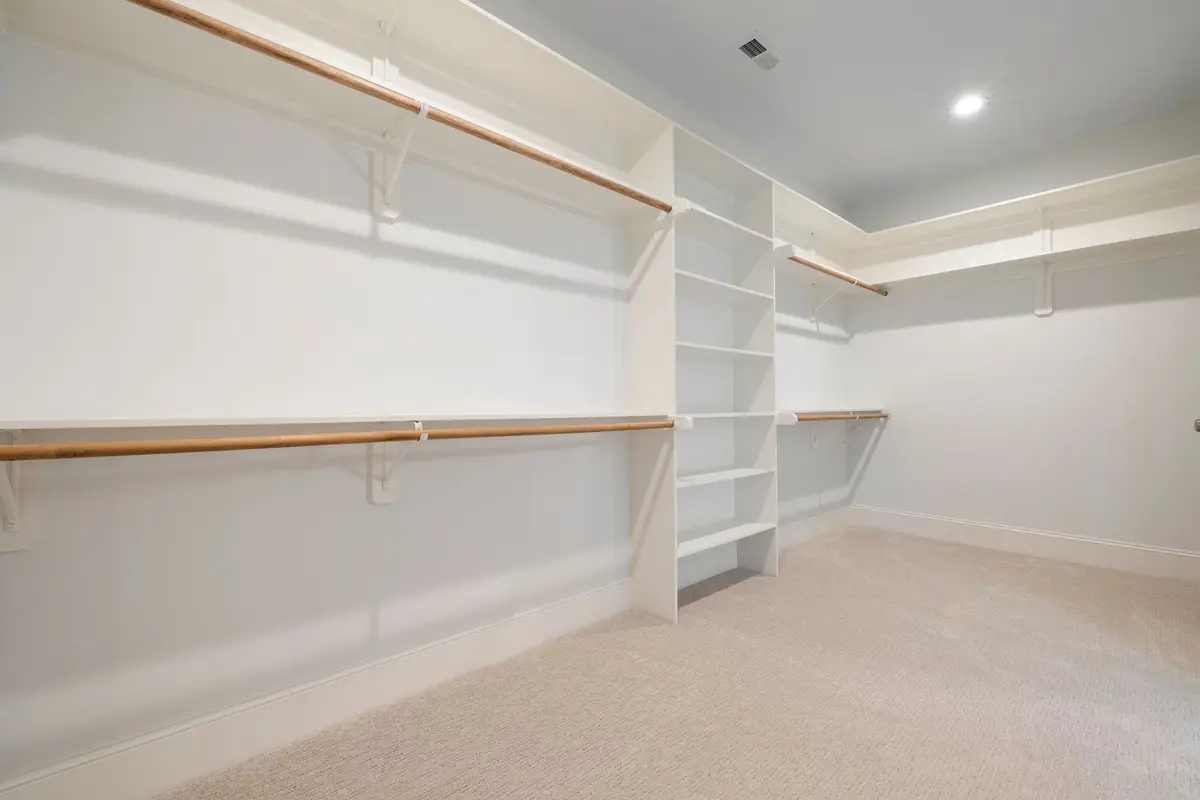
An adjustable rod that hangs from the top rod is the easiest option, with nothing to drill. A rod mounted to the closet walls is sturdier and stays level as the clothes get heavier.
Use the upper rod for things you reach for less often: jackets in the next size, special occasion outfits and gifts that don’t fit yet. Everyday clothes go on the lower rod, where they’re easy to see and grab.
Child-size hangers keep tiny shoulders from slipping off and take up less width, so more fits on each rod. Pick one style and color, and the closet looks calm even when it’s full.
As your child grows, raise the lower rod or take it out to make room for longer clothes. The small closet organization ideas cover shelves, bins and door space if the closet is tight.
6. Give the nursery its own hamper
Babies go through outfits, bibs and sheets quickly, and those pile up fast when they have to travel to a hamper down the hall. A hamper right in the nursery catches everything where it comes off.
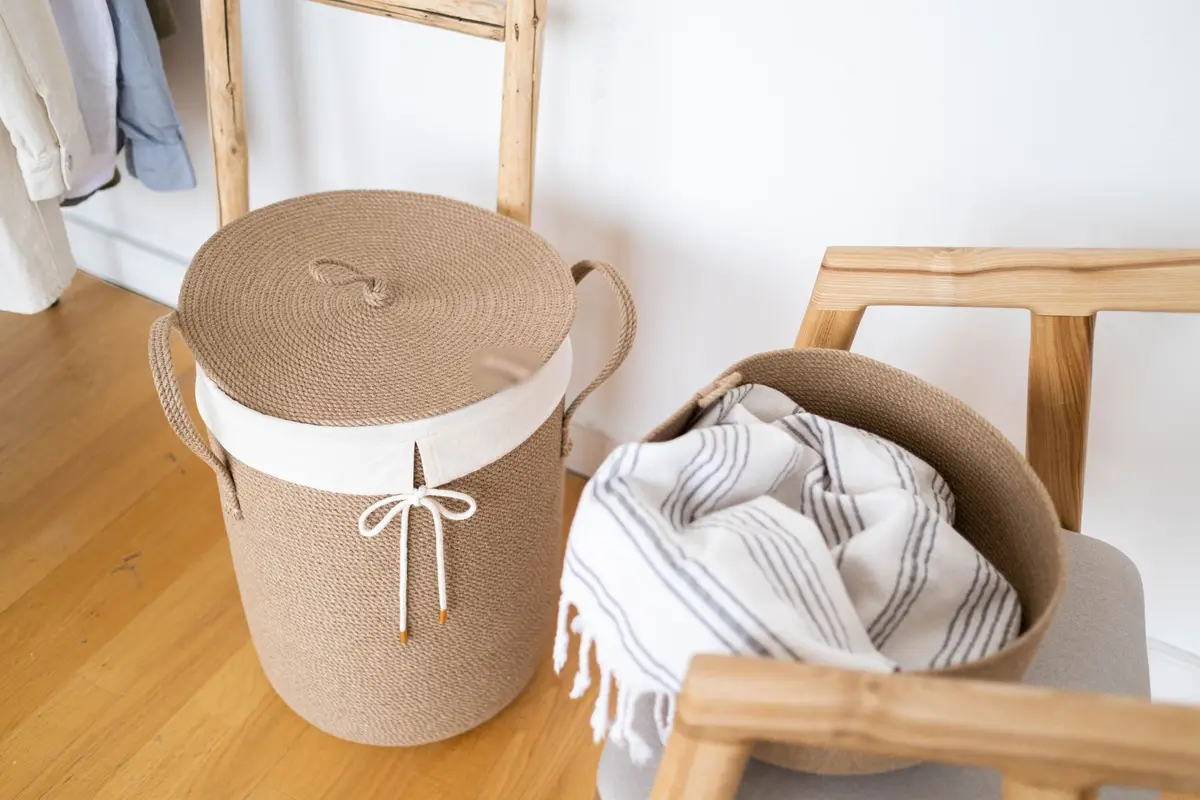
Pick one with a lid, which keeps a curious pet or a crawling baby out, and with handles, so you can carry the whole thing to the washer. A fabric liner that lifts out is easy to wash too.
Set it near the changing station, since that’s where most clothes come off. If the room is tight, a narrow hamper fits in a corner or on the closet floor below the lower rod.
Baby laundry is small, so it’s easy to let it wait. Running a load every couple of days keeps you from running out of sleepers and keeps the hamper from overflowing.
A second small bin for stained items is worth adding. It lets you pre-treat the stains before those clothes go in with everything else, instead of finding them again after the dryer.
7. Anchor the dresser to the wall
Any dresser, bookcase or shelf in the nursery should be anchored to the wall, even if it feels heavy and solid. Furniture with drawers, doors or shelves can tip over onto a child, and anchoring it is a simple way to prevent that.
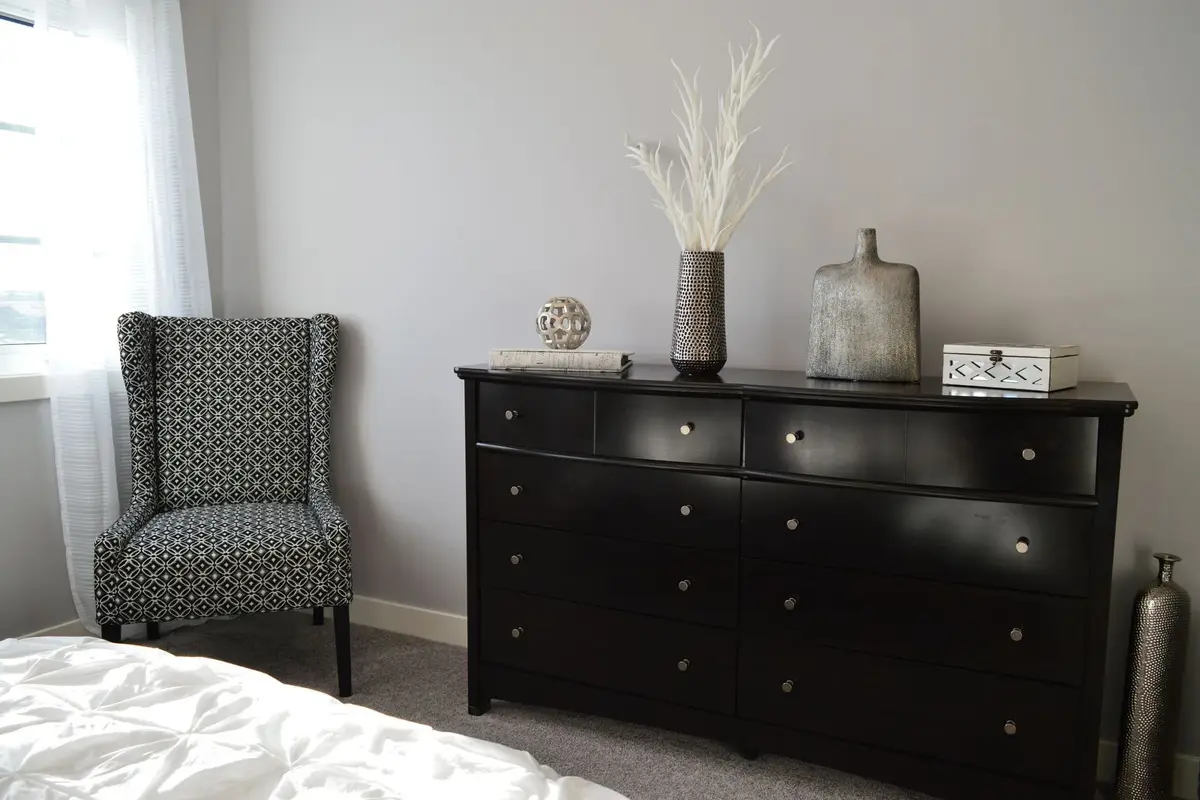
An anchor kit has a bracket for the wall, a bracket for the furniture and a strap that connects them. Fasten the wall bracket securely, move the dresser close to the wall, then tighten the strap and give it a firm tug to check that it holds.
Do it before the baby arrives. Pulling up on drawers and climbing start sooner than you might expect, and an empty room is much easier to work in.
If the changing pad sits on top of the dresser, this matters even more. You’ll lean on it and pull drawers open many times a day, often with one hand.
Anchor a TV, a tall lamp base or a wall shelf the same way if the room has one. Check every strap now and then, especially after moving furniture, and tighten anything that has worked loose.
8. Keep the crib bare
A safe crib holds a firm, flat mattress covered with a fitted sheet, and nothing else. That means no blankets, pillows, bumpers, positioners or stuffed toys, however cozy they look in a nursery photo.
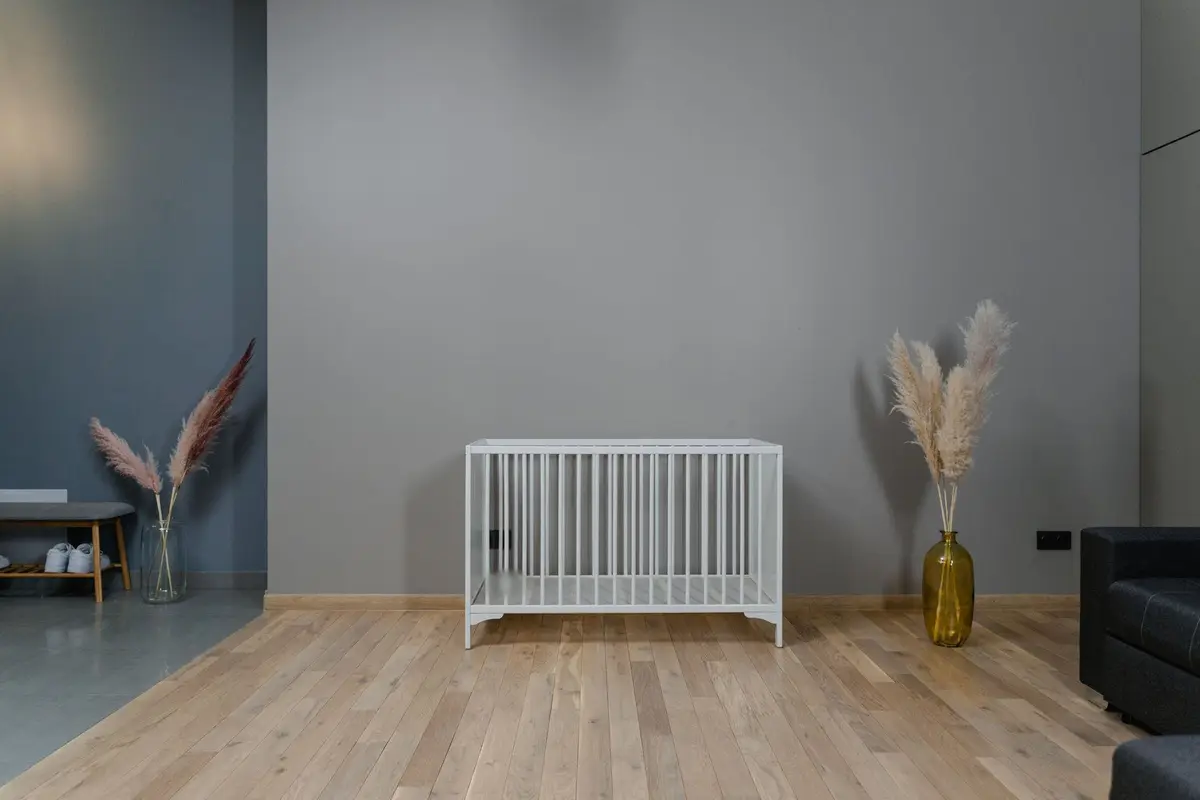
It also makes the crib the easiest thing in the room to organize. Everything people give you for it, from quilts to plush animals, simply needs a home somewhere else.
Keep spare fitted sheets in the drawer closest to the crib, so a middle-of-the-night change takes a minute instead of a search. A waterproof mattress cover goes under the sheet, and a spare one can live in the same drawer.
Place the crib away from windows, and keep blind and curtain cords well out of its reach. If the cords are long, tie them up high or switch to cordless window coverings.
Decorative pillows, quilts and soft toys can sit on a shelf or in a basket across the room. They still make the nursery feel warm and finished without ever going into the crib.
9. Set up a feeding cart
A small rolling cart keeps everything for feeding in one place and goes wherever you feed the baby. Park it next to the chair at night, then roll it back to its corner in the morning.
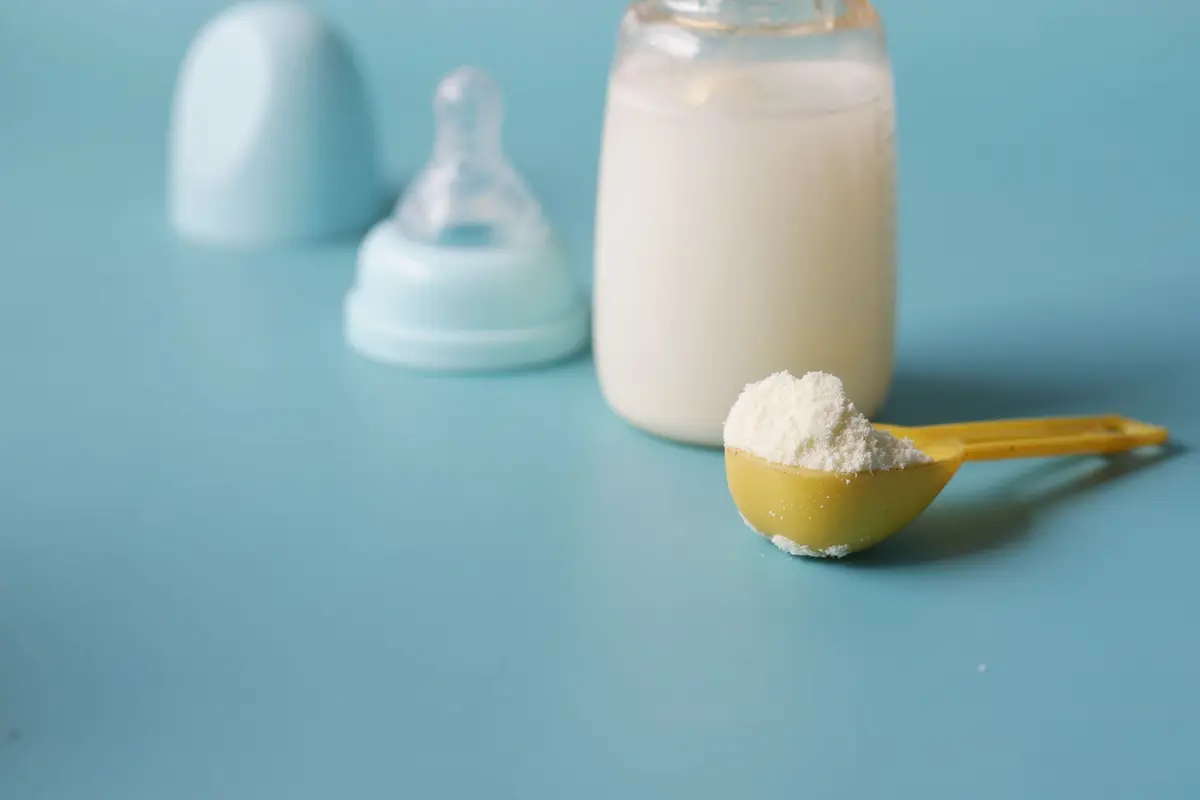
Use the top shelf for what you need during a feed: burp cloths, a water bottle for you, a snack and either bottles or nursing supplies. The middle shelf holds refills, and the bottom shelf takes bulkier things like spare bibs and covers.
If you bottle-feed, keep clean bottles, nipples and the formula container together. Night feeds then don’t involve a trip to the kitchen for every single piece.
Clear the cart once a day. Used bottles, damp cloths and empty wrappers go out each morning, so the cart never turns into a second catch-all for the room.
A cart with a lip around each shelf keeps things from sliding off as it rolls. Locking wheels help too, keeping it steady while you’re feeding and your hands are full.
10. Roll blankets and swaddles into a basket
Swaddles, receiving blankets and burp cloths pile up fast, and folded stacks topple the minute you pull one out. Rolled and standing upright in an open basket, every one stays visible and easy to grab with one hand.
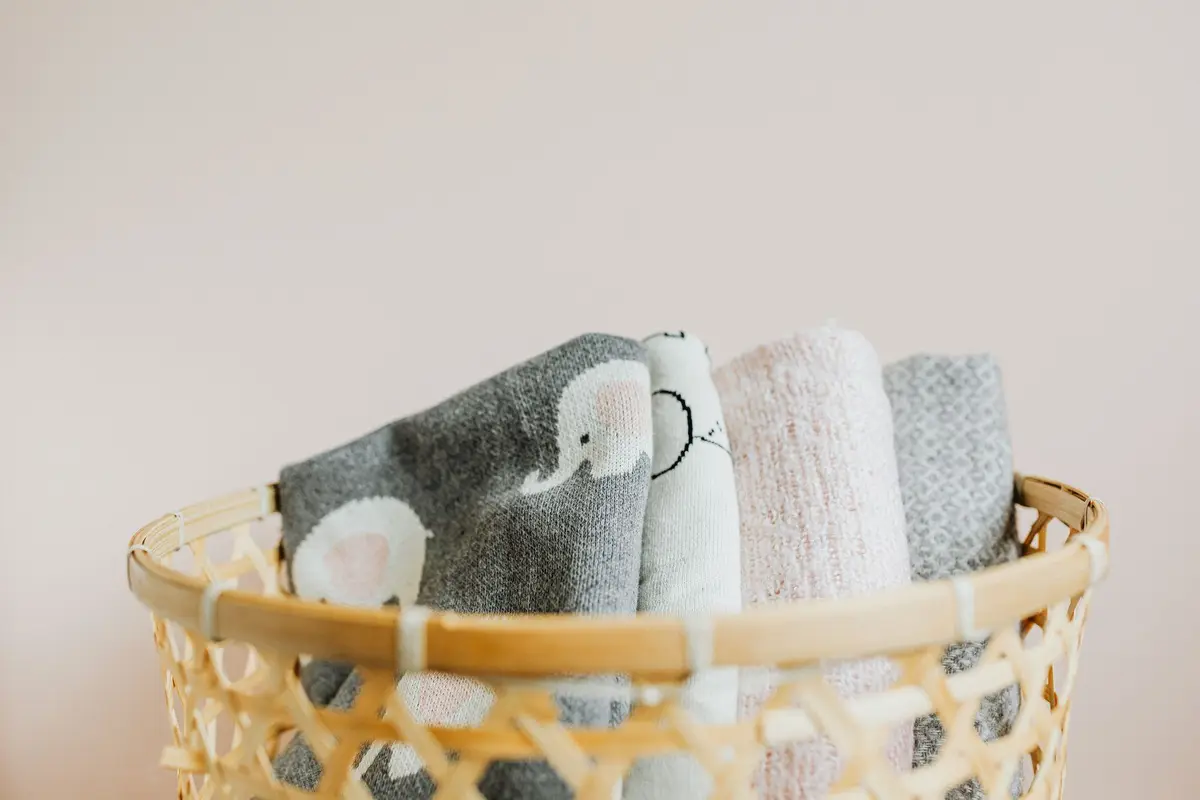
Keep the basket near the chair or the changing station, where you reach for them most. A basket with a sturdy rim holds its shape even when it’s only half full.
Sort by use if you have a lot of them: swaddles in one basket, burp cloths in another. Gift blankets you love but rarely use can move up to a closet shelf.
Edit the collection now and then. Once your baby is done with swaddling, those swaddles can go into the outgrown bin or be passed on to a friend.
Remember the bare crib rule from earlier. These blankets are for holding, burping and floor time with you nearby, never for the crib, so the basket is their only home.
11. Keep toys and books low in open baskets
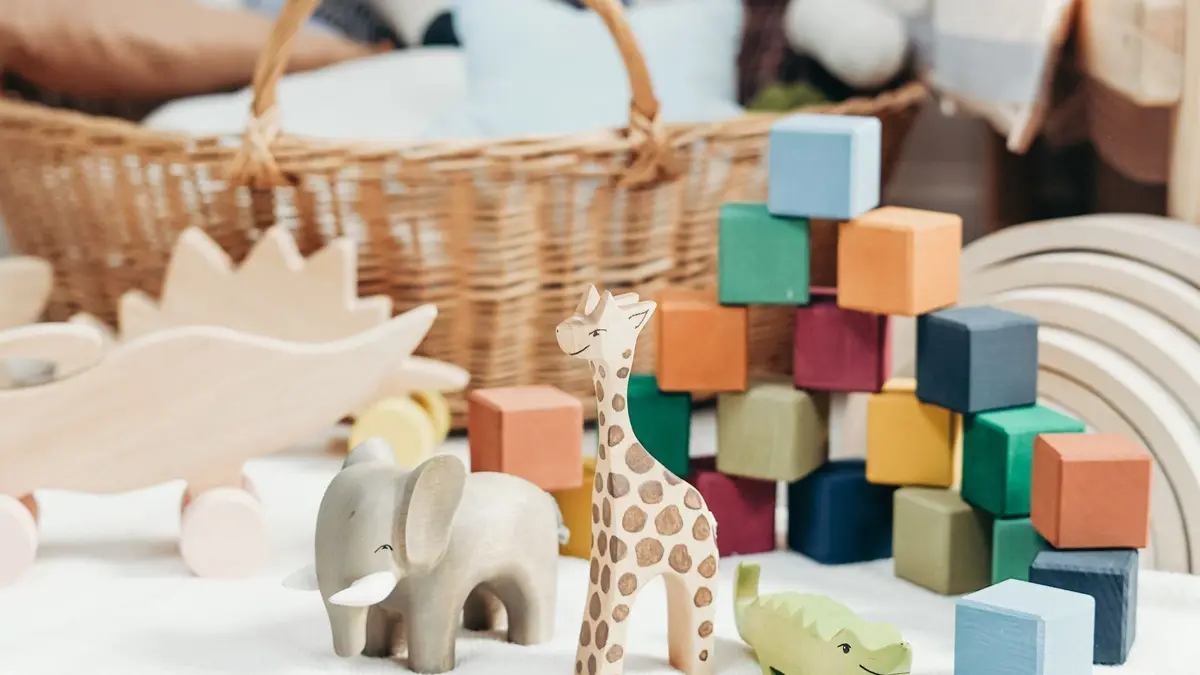
A nursery doesn’t need many toys, but the ones you have are easier to keep tidy in a low, open basket. Soft toys, rattles and teething rings can all go in together, ready for floor time.
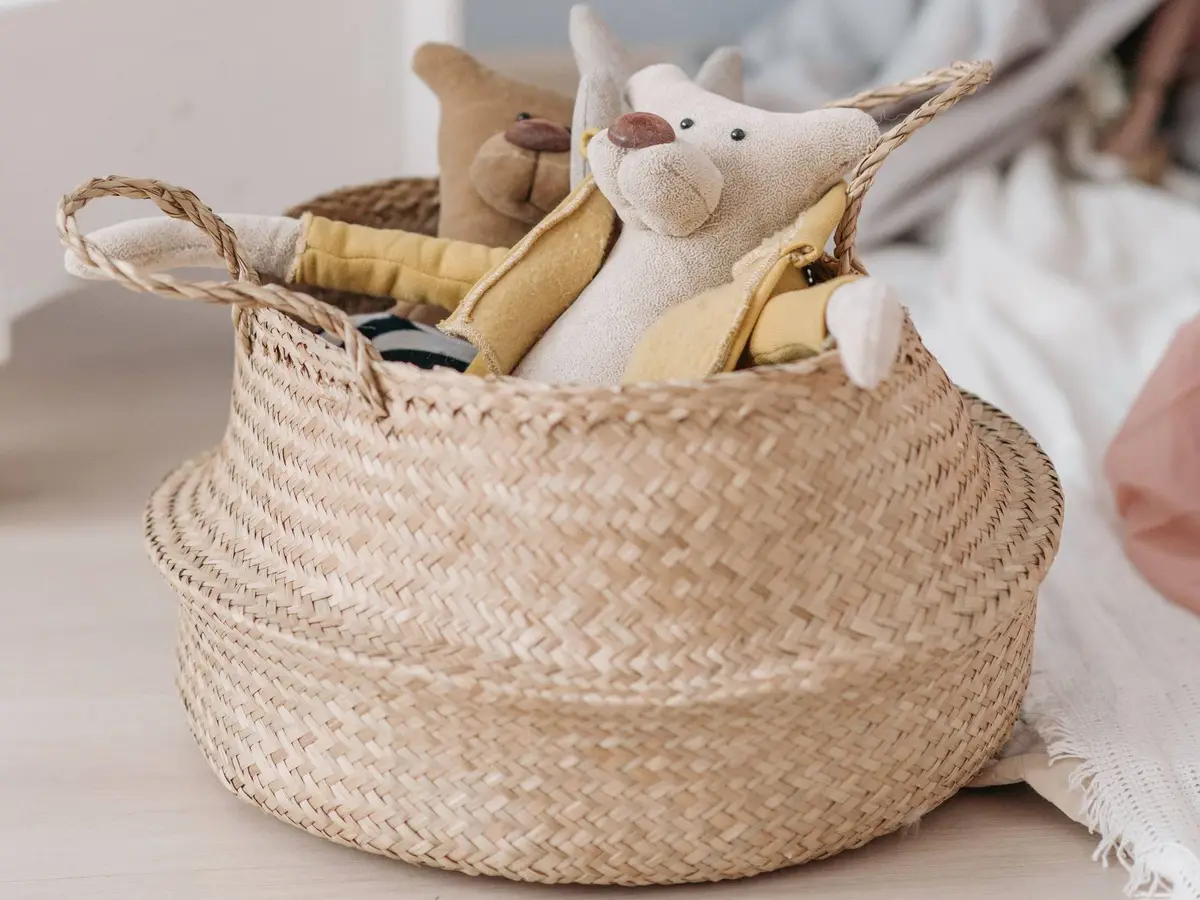
Skip lids for now. An open basket is simpler to toss things into, and later it’s easy for a toddler to empty and fill again on their own.
Board books work the same way: a basket or a low ledge by the chair, covers facing out, so it’s easy to pick one for a bedtime story.
Rotate toys instead of keeping everything out. Store most of them in a closet bin and swap a few in every week or two, which keeps the basket from overflowing.
Keep older siblings’ toys with small parts out of the nursery, since small objects are a choking hazard for babies. The kids organization hacks cover toy storage once your baby starts to play on their own.
12. Put a night light and supplies by the chair
Night feeds and wake-ups happen in the dark, so give the chair a small lamp or night light with a soft, warm glow. It lets you see what you’re doing without flipping on the overhead light.
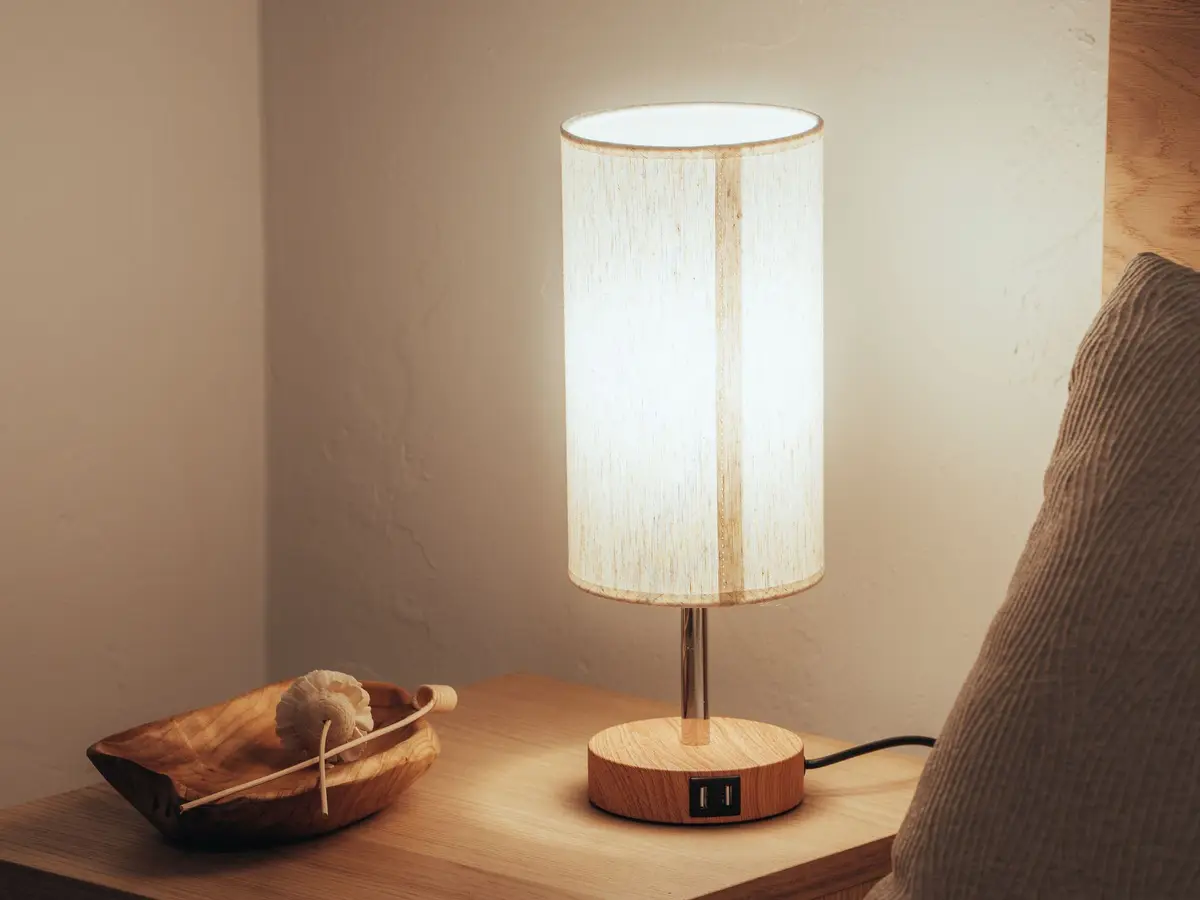
Set a small table or a wall shelf beside the chair for what you reach for during a feed: a burp cloth, water, lip balm, a phone charger and something to read.
A lamp with a dimmer or a low setting is worth looking for. It lets you keep the light soft for a quick diaper check and turn it up when you need to find something.
Run every cord behind the furniture and away from the crib, so nothing dangles where little hands can reach later. A lamp with a charging port in its base saves you a second cord.
Tidy this spot at the end of the day along with the changing station. A clear table and a stocked cart make the first wake-up of the night go much more smoothly.
Save this for later
Pin it to a board so it's there when you're ready to start.
Save to Pinterest(opens in a new tab)Make it easier
Free printable
A room-by-room declutter checklist that tells you exactly what to look for, with four piles to sort into so nothing ends up back on the shelf.
Free tool
Enter the width, depth and height of a shelf, a drawer or a cube cubby, and see which standard bins and baskets fit, how many, and how they line up.
Frequently asked questions
What do I need for a nursery changing station?
Diapers, wipes, diaper cream, a changing pad with a washable cover, a few burp cloths, a spare outfit and a small lidded trash can. Keep it all within your reach but away from your baby's hands, so you never have to step away in the middle of a change.
How do I organize baby clothes in a dresser?
Keep only the current size in the dresser and give each type of clothing its own section with drawer dividers or small bins. File items upright so you can see everything at once, and keep the next size in a labeled box nearby.
Where should blankets and stuffed animals go if not in the crib?
Give them a home somewhere else in the room: a basket by the chair, a closet shelf or a low toy basket on the floor. The crib itself should hold only a firm, flat mattress and a fitted sheet.
How do I organize a small nursery?
Use vertical space first: a second closet rod, a wall shelf by the chair and a dresser that doubles as the changing station. A rolling cart and a few baskets keep supplies close without adding more furniture.