13 Purse Organization Ideas From the Closet Shelf to the Zip Pocket
Store bags upright, help them keep their shape and find your keys fast: purse organization ideas for closet shelves, hooks, doors and inside every bag.

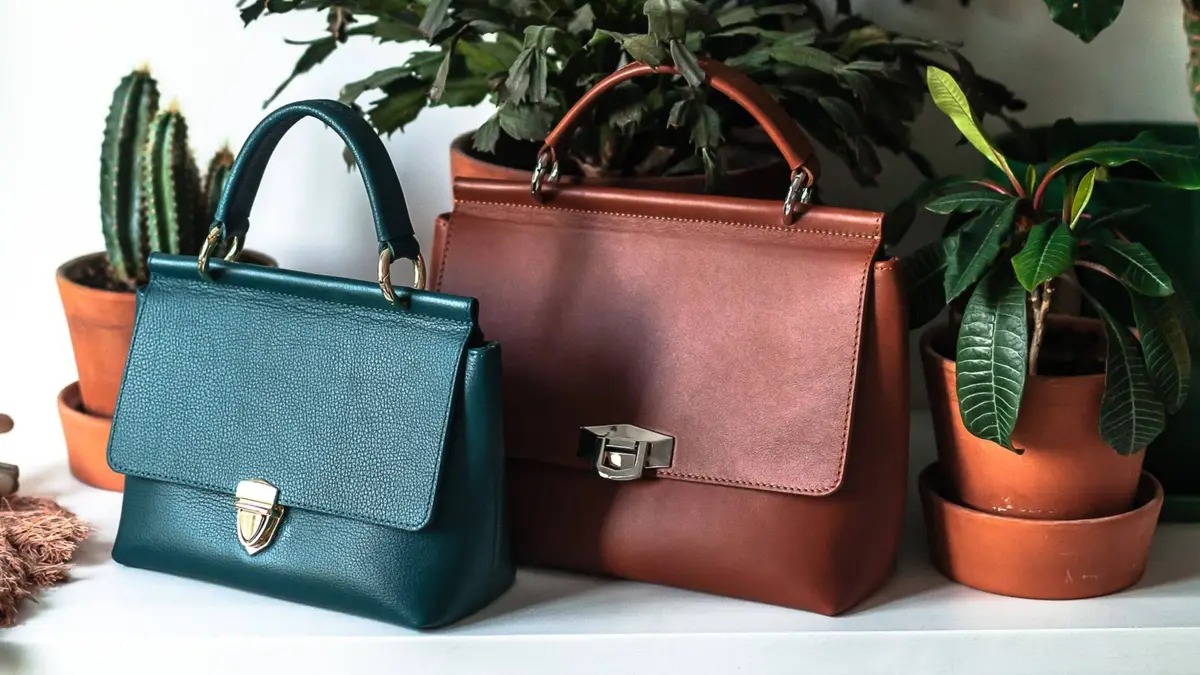
Purse organization comes down to two jobs: give every bag a home where it keeps its shape, and give everything inside the bag its own spot. Stand structured bags upright on a shelf, hang everyday bags on hooks, tuck special ones into dust bags, and use small pouches so keys and cards never sink to the bottom.
These 13 ideas start in the closet and end inside the bag you carry today. Begin with the sort, since every idea after it is easier once you know which bags you really keep.
1. Pull out every bag and sort them
Gather every purse, tote, crossbody, clutch and backpack from closets, hooks, door knobs and the car, and line them up on the bed or the floor. Seeing them side by side shows you how many you own and which ones look alike.
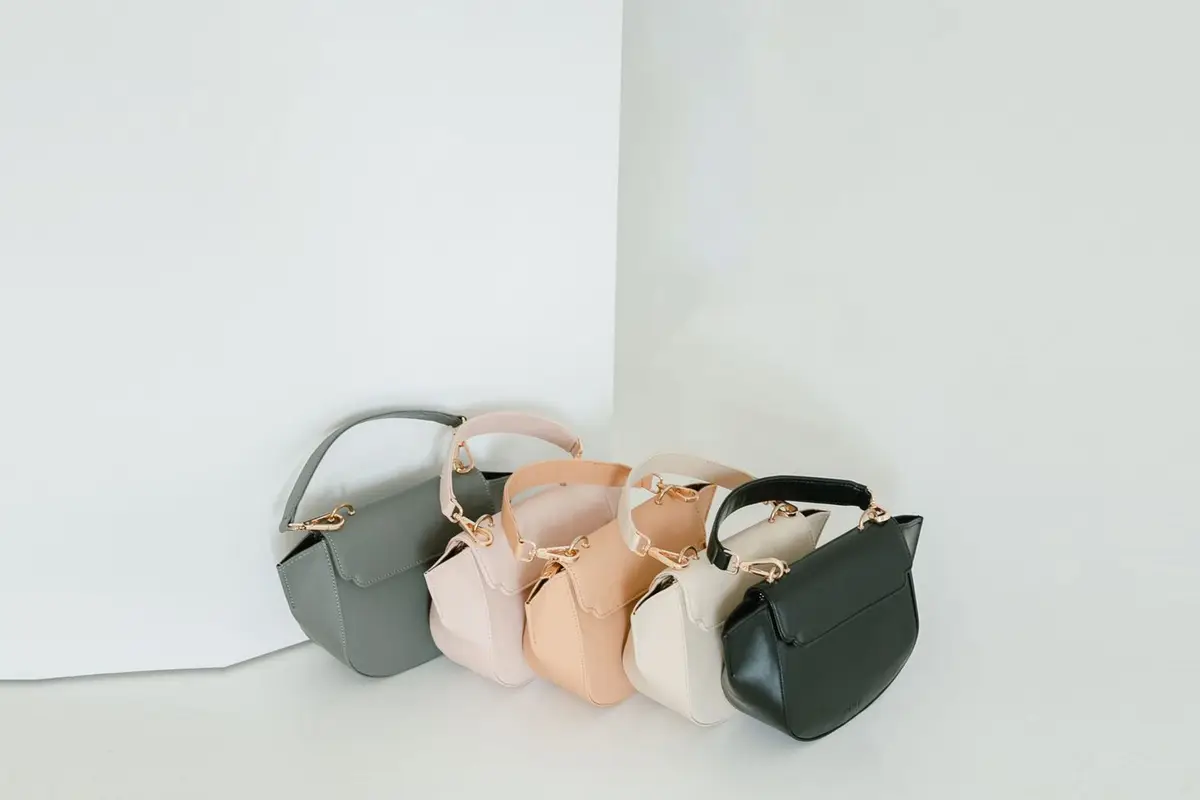
Empty each bag as it joins the line. Receipts, old lip balm, loose change and hair ties come out now, so the sorting starts clean.
Group the bags by how you use them: everyday bags, work bags, weekend totes, evening clutches and travel bags. The groups tell you where each kind will live later, since the bag you grab daily needs a very different spot from the one you carry a couple of times a year.
Set aside any bag that needs a repair, like a broken strap, a stuck zipper or a torn lining. Give it a date to get fixed, or let it go if that date keeps slipping.
Take a quick photo of the lineup if it helps you decide. Seeing the whole group at once makes look-alikes easy to spot.
2. Keep the bags you actually carry
For each bag, ask when you last carried it and whether you’d reach for it next week. If the answer has been no for a long stretch, it’s taking up shelf space a favorite could use.
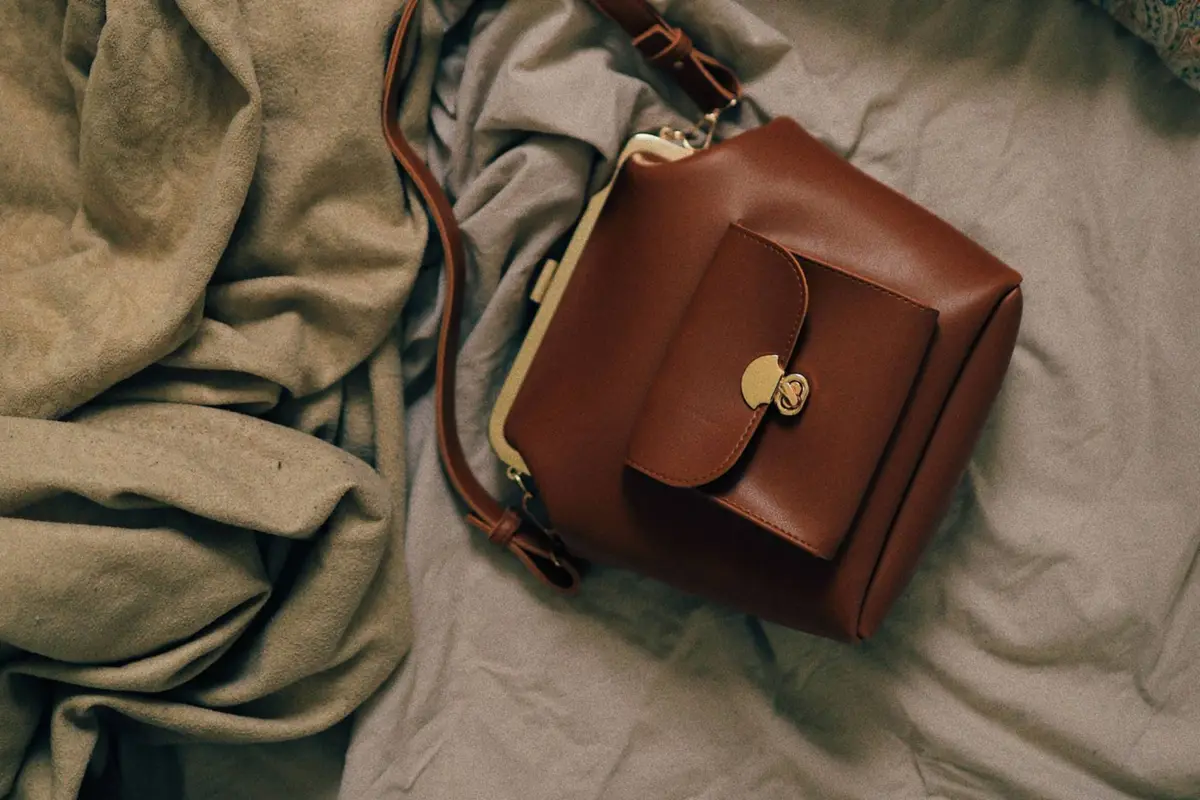
Watch for duplicates. Two black crossbody bags of a similar size do the same job, so keep the one that’s more comfortable and in better shape.
Check the practical details too: a strap that digs into your shoulder, a bag too small for your phone, a clasp that won’t stay shut. A bag that annoys you every time stays on the shelf, no matter how much you liked it in the store.
Bags in good condition can go to a donation center, a friend or a resale shop. Put them straight into the car so they leave the house this week.
The declutter checklist walks through the closet and the rest of the house the same way, if bags are only the start. Keep the pile small enough that your favorites fit with room to breathe.
3. Stand bags upright with shelf dividers
Bags stacked on top of each other crush, crease and slide off the shelf. Standing them upright in a row, like books, keeps their shape and lets you see every one at a glance.
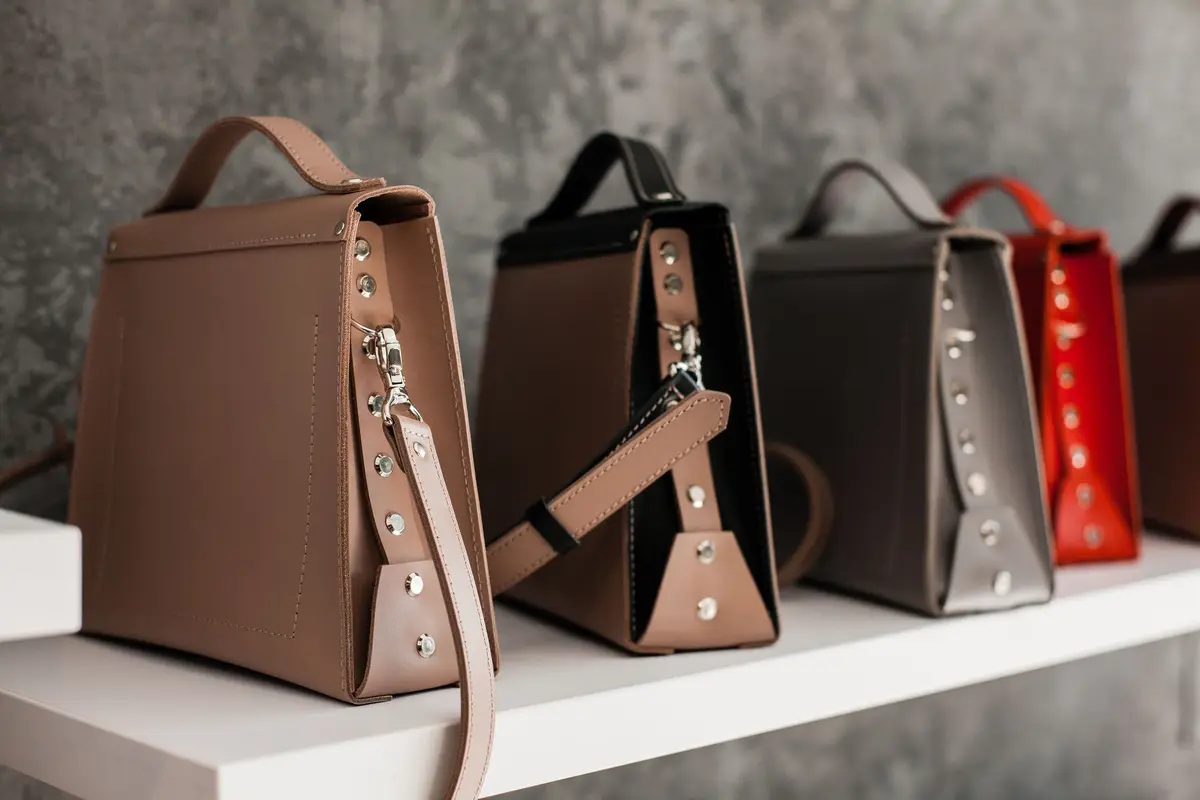
Shelf dividers make the row work. Clear acrylic or wire dividers clip onto the shelf or stand on it and keep each bag in its own section, so pulling one out doesn’t topple its neighbors.
Measure the shelf depth and the space between shelves before you buy dividers, and measure your tallest bag with its handle up. The bin and basket size calculator helps if you’d rather use open bins as dividers, one bag per bin.
Put the bags you carry most at eye level and in the middle of the row. Larger totes go on a lower shelf, where they’re easy to lift, and small bags sit up high.
Leave a little room on each side of every bag. A row packed edge to edge rubs the leather and scuffs the hardware every time you reach in.
4. Stuff bags so they keep their shape
An empty structured bag slowly sags, creases and loses its corners on the shelf. Filling it lightly before you store it helps it hold its shape between uses.
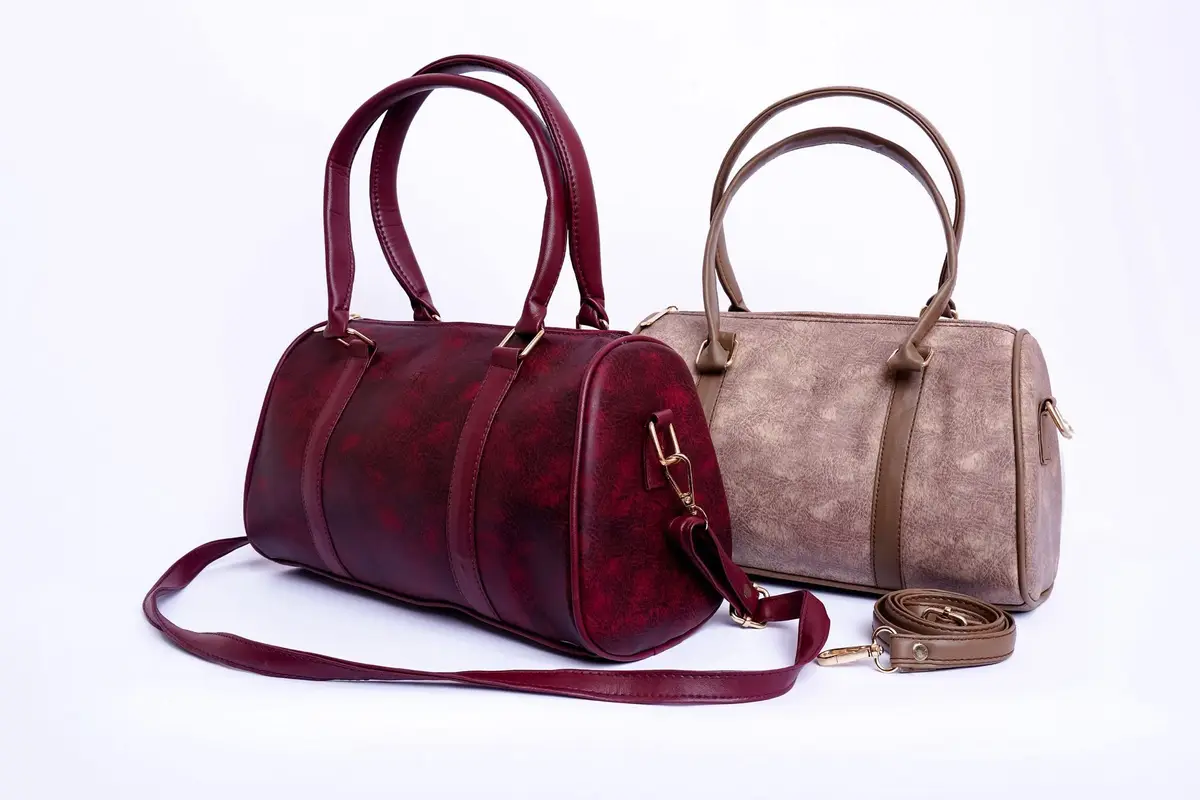
Use acid-free tissue paper, a rolled cotton scarf or a clean, soft pillowcase. Crumple the paper loosely and fill the bag until its sides stand up on their own, without stretching the seams.
Skip newspaper, which can rub ink onto a light lining, and don’t pack a bag so tight that the zipper strains.
Tuck long shoulder straps inside the bag rather than draping them over the shelf edge. A strap left hanging over an edge for months can keep the bend where it folds.
Wrap chain straps in a small cloth before you tuck them in, so the metal doesn’t scratch the lining or the outside of the bag.
Refresh the stuffing when you pull a bag out to carry it. Keep a small bundle of tissue on the closet shelf, so you can fill a bag the moment you empty it and put it back.
5. Hang everyday bags on hooks
The bag you carry every day shouldn’t live behind a closed door. A sturdy wall hook or a hook rack inside the closet keeps it in sight and lets you grab it in a second.
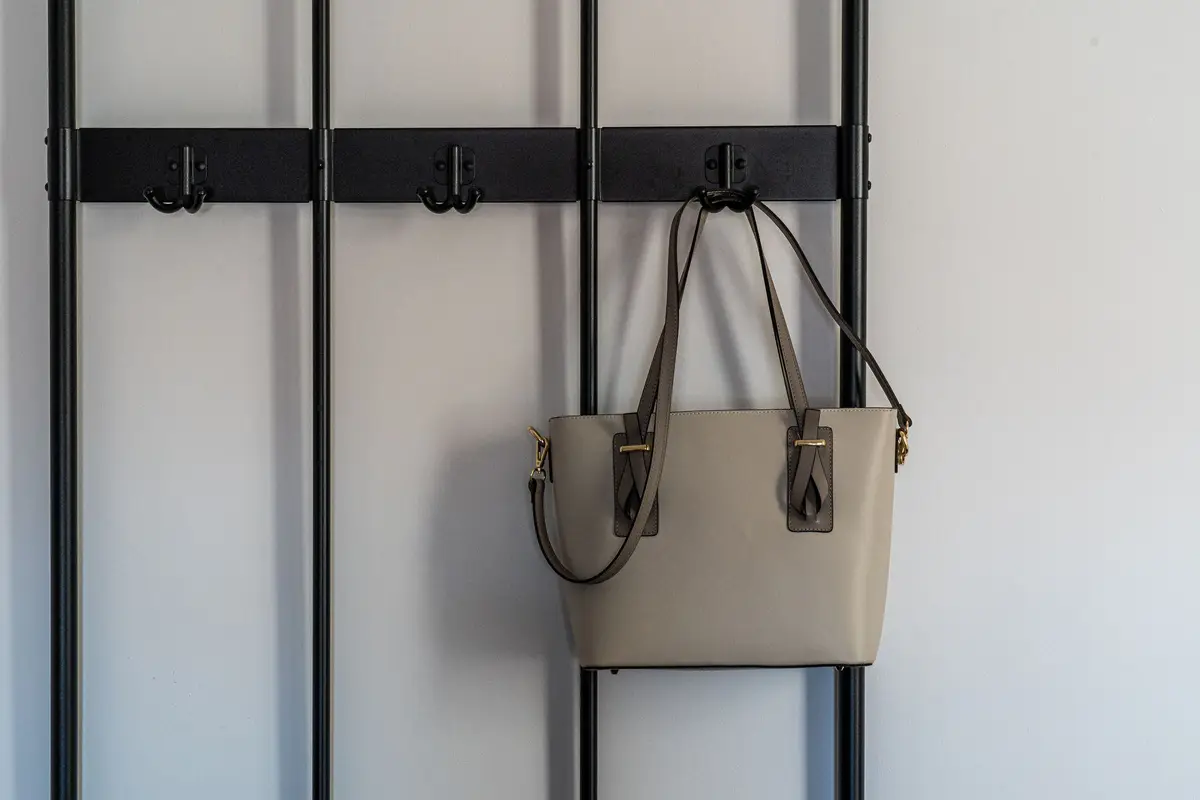
Hooks suit soft totes, canvas bags and crossbody bags with sturdy straps. Hang them by both handles, so the weight spreads evenly and the bag hangs straight.
Check how much weight a hook is made to hold before you hang a heavy work bag on it, and screw it into a stud or use a wall anchor that matches the load. Adhesive hooks are for light bags only.
Space the hooks so bags don’t press into each other, and leave room for each bag to hang without hitting the floor or a shelf below.
Save hooks for the few bags in daily rotation. Structured leather bags with stiff handles keep their shape better on a shelf, since weeks of hanging put all the weight on the handles.
If the closet has no free wall, a freestanding coat stand in the bedroom corner does the same job.
6. Add a rail with S-hooks
A closet rod or a wall rail with S-hooks holds a whole row of bags in very little space. Each bag gets its own hook, and you slide them along the rail to find the one you want.
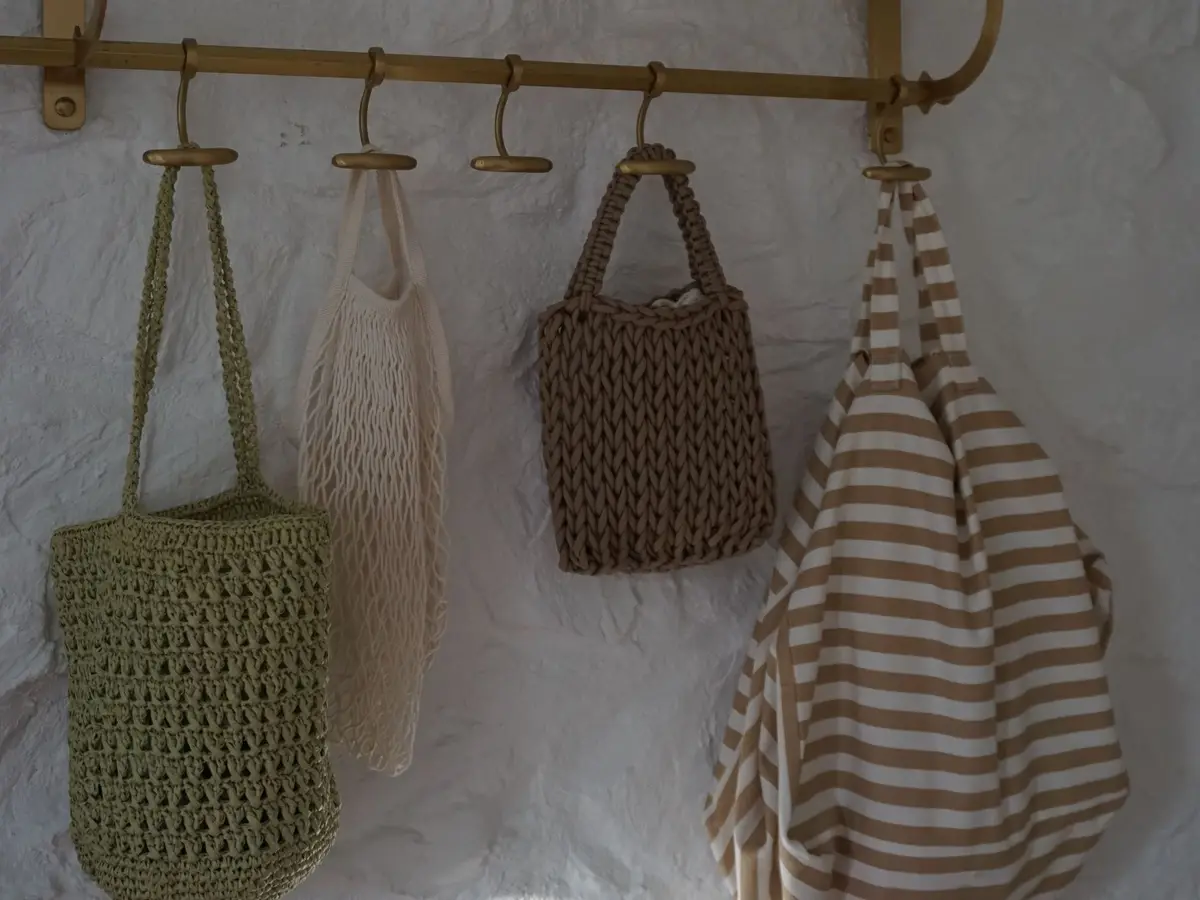
S-hooks with a wide, smooth curve are gentlest on straps. Choose ones that close slightly at the top, so a bag doesn’t slip off when you reach for its neighbor.
A short tension rod inside the closet, an unused end of the clothes rod or a rail along the closet wall all work. Hang the bags you use often at the front and the rest farther back.
This works best for soft and woven bags, canvas totes and market bags, which fold easily and don’t mind hanging.
Keep the rail to a single row. Doubling bags on a hook hides the one underneath, and soon it’s a pile again, only higher up.
Measure the space below the rail before you hang anything, so the longest bag clears the floor or the shoe rack beneath it.
7. Keep special bags in dust bags or boxes
Bags you carry a few times a year deserve more protection than an open shelf gives. A breathable cotton dust bag keeps off dust and light, and a lidded box on a high shelf adds another layer.
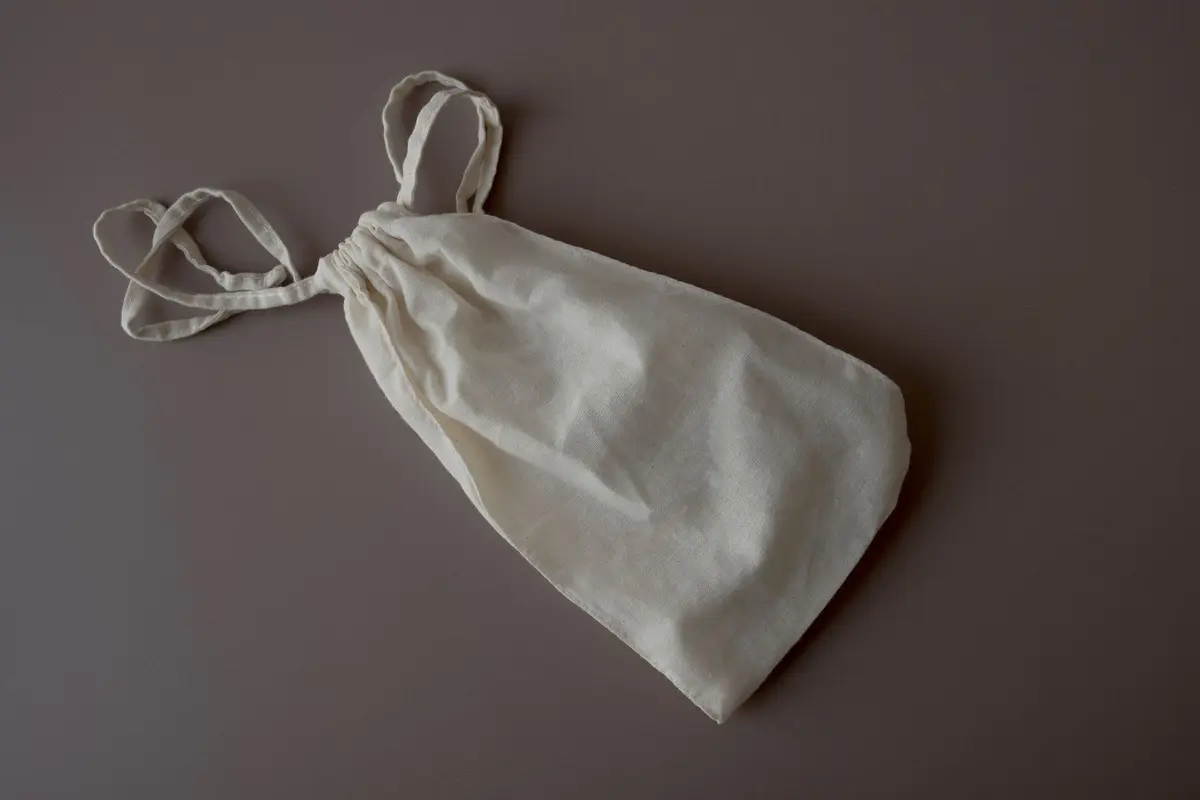
Wrap leather bags in cotton, not plastic, so air can still move around them. A clean cotton pillowcase does the job when a bag didn’t come with its own dust bag.
Store the box somewhere cool, dry and dark. Leather keeps best away from radiators, heating vents, sunny windows and damp basements, where heat dries it out and damp invites mold.
If you use clear boxes so you can see what’s inside, put each bag in its dust bag first and keep the box out of the sun, since light fades dyed leather over time.
Don’t seal the boxes airtight. A lid that sits loosely lets air move and keeps moisture from building up inside.
Label the front of each box with the bag inside, or tape a photo of the bag to it. You’ll find the one you want without opening every box.
8. Put a rack on the back of the door
The back of a closet door or bedroom door is free storage that usually goes unused. An over-the-door rack with hooks holds several bags without drilling a single hole.
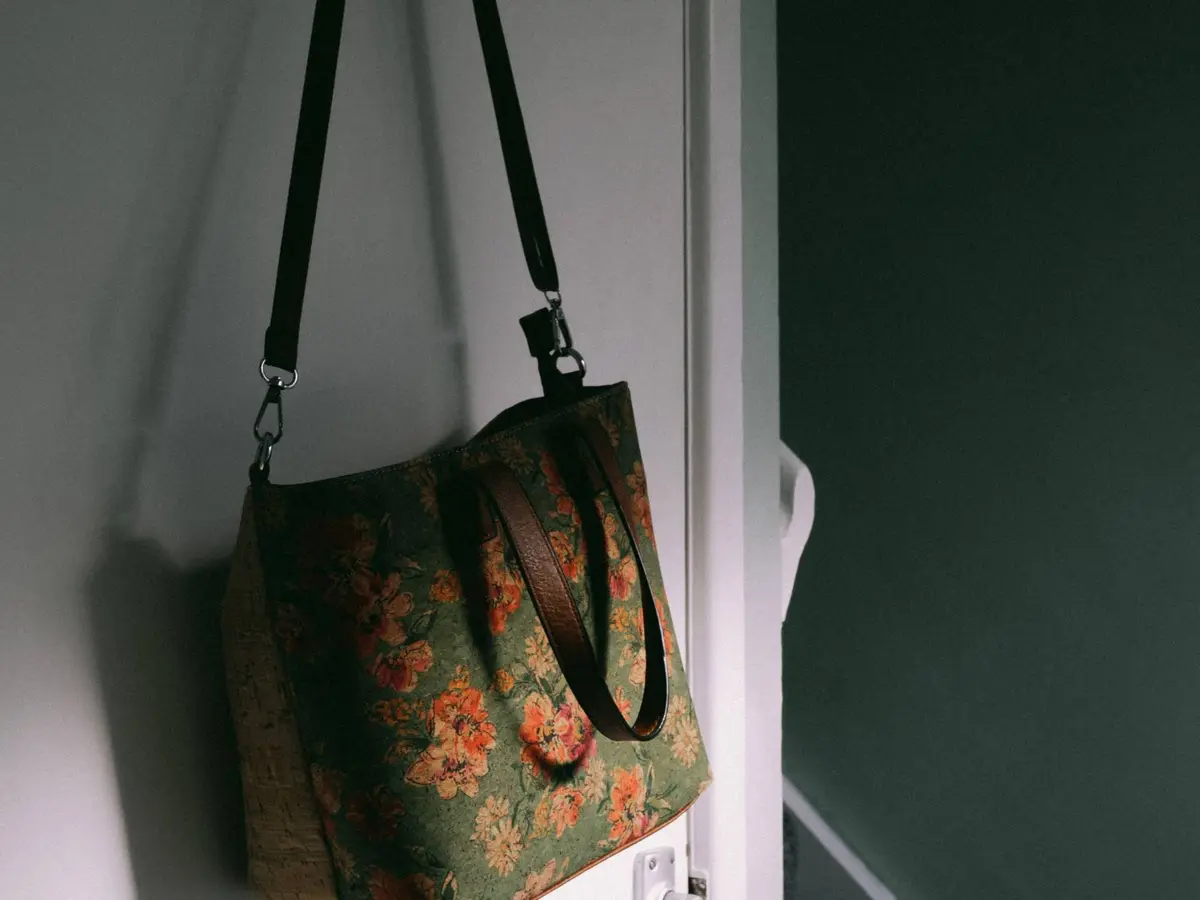
Measure the gap between the door and the frame before you buy, so the rack’s top hooks don’t keep the door from closing. Check the depth behind the door too, so hanging bags clear the closet shelves.
Choose a rack with hooks spaced far enough apart that bags hang side by side instead of stacking on each other.
A hollow door can’t take much weight, so keep heavy work bags and full totes off it. Light crossbody bags, wristlets and canvas totes are the right fit.
Add felt pads behind the rack where it touches the door, so it doesn’t scratch the paint or rattle every time the door swings.
A door rack suits a rental well, since it lifts off and leaves no marks when you move. It also works on a pantry or laundry room door for reusable shopping bags.
9. File clutches in a drawer or box
Clutches and small evening bags are too small to stand on a shelf and too delicate to hang. Filed on end in a drawer or a shallow box, like folders in a file cabinet, they take up little room and you see each one at once.
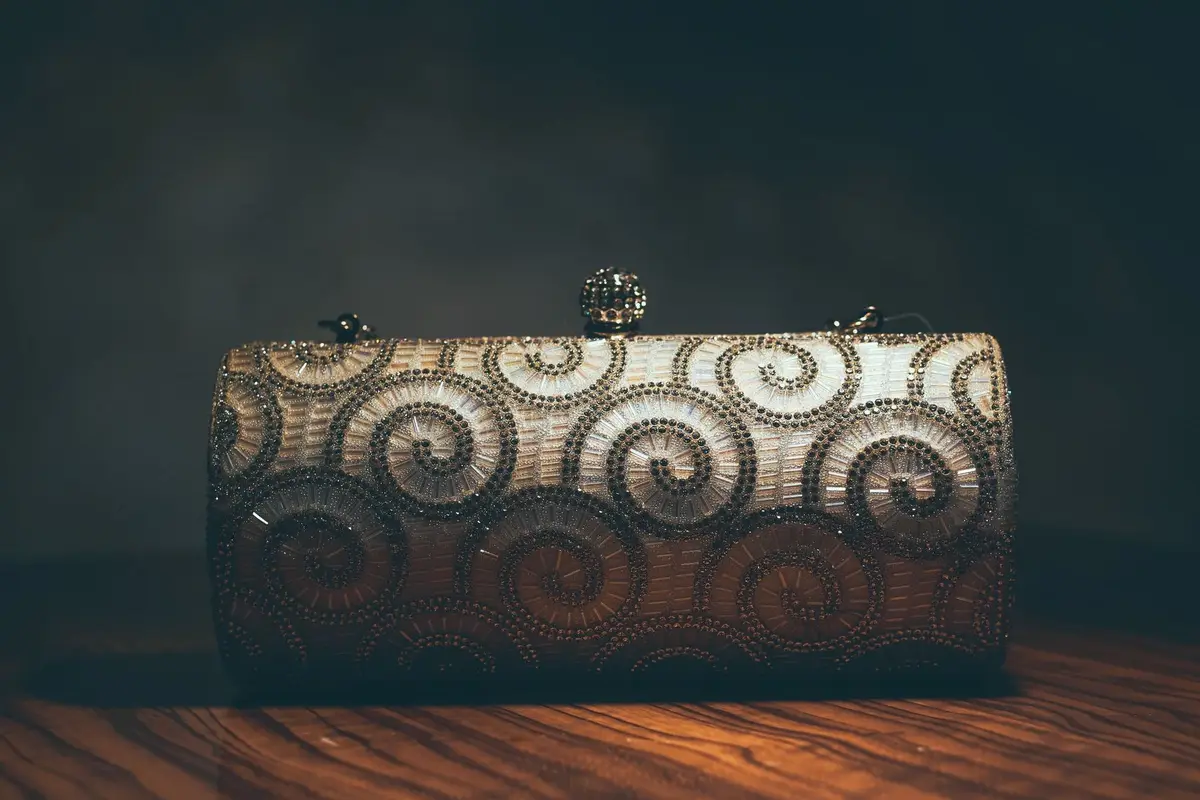
Stand them with the top edge facing up, and flip through the row to choose instead of digging through a pile.
Small bins or drawer dividers keep the row from falling over as you take one out. Measure the drawer’s inside height before you buy them, since many clutches are taller than they look.
Keep beaded and sequined clutches in their own cloth pouch, or wrap them in a soft cloth, so the beads don’t snag on zippers and chains.
Tuck each chain strap inside its clutch rather than leaving it loose in the drawer, where it tangles with the next one.
A shallow box with a lid works on a closet shelf if you have no drawer to spare. Line the bottom with a folded towel, so the clutches don’t slide around when you pull the box down.
10. Give your bag a spot by the door
The bag you carry every day needs one home near the door you use most. Hang it on the same hook or set it on the same shelf each time you walk in, and it’s never missing when you’re running late.
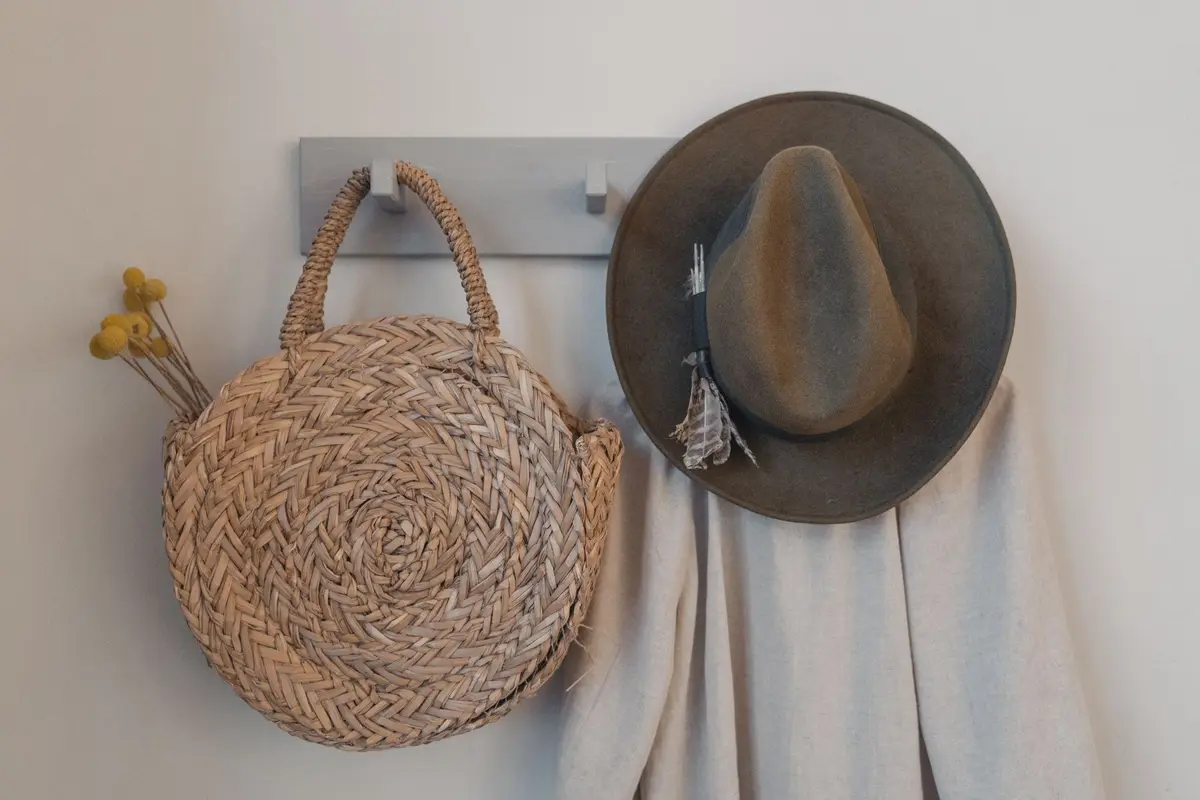
A peg rail, a wall hook or a small basket on an entry table all work. Pick a spot you pass every time you come home, not one around the corner.
Keep the spot for bags in use this week only. When the season changes or you switch bags, the old one goes back to the closet.
Add a small tray or dish nearby for the things that leave your bag at night, like sunglasses or a work badge, so they go back in the next morning.
If more than one person carries a bag, give each person a hook of their own. Kids’ backpacks need a low hook they can reach on their own.
Clear the spot during your Sunday reset, so it doesn’t collect jackets, mail and shopping bags.
11. Use a pouch system inside your bag
A bag with no order inside turns into one deep pocket where keys, lip balm and receipts all sink to the bottom. Small zipper or drawstring pouches give each group of things its own home.
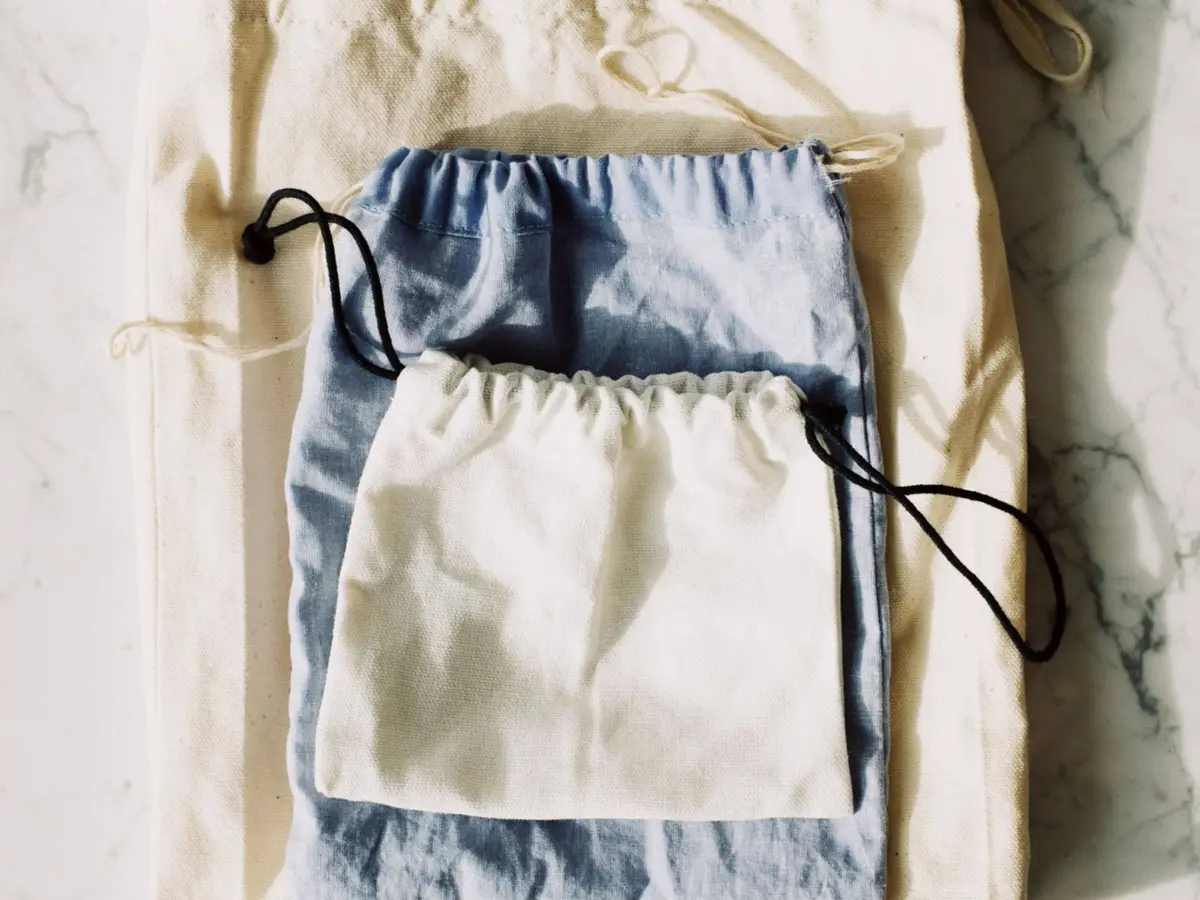
Sort what you carry into a few groups: money and cards, beauty and grooming, tech like a charger and earbuds, and small first-aid things like bandages. Each group gets its own pouch.
Pick pouches in different colors or fabrics, so you can find the right one by feel or at a glance without pulling them all out.
A pouch system makes switching bags quick. Lift the pouches out of one bag, drop them into the next, and nothing gets left behind.
Keep the pouches small and soft, so they fit your smallest everyday bag as well as your biggest tote.
Use the bag’s own pockets for what you reach for most, like keys and your phone, and let the pouches hold the rest. A bright pouch is easier to spot in a dark lining than a black one.
12. Make a daily-carry checklist
Write down what really needs to go with you every day, and keep the list short. A wallet, keys, a phone, sunglasses and lip balm cover most days; everything else is an extra.
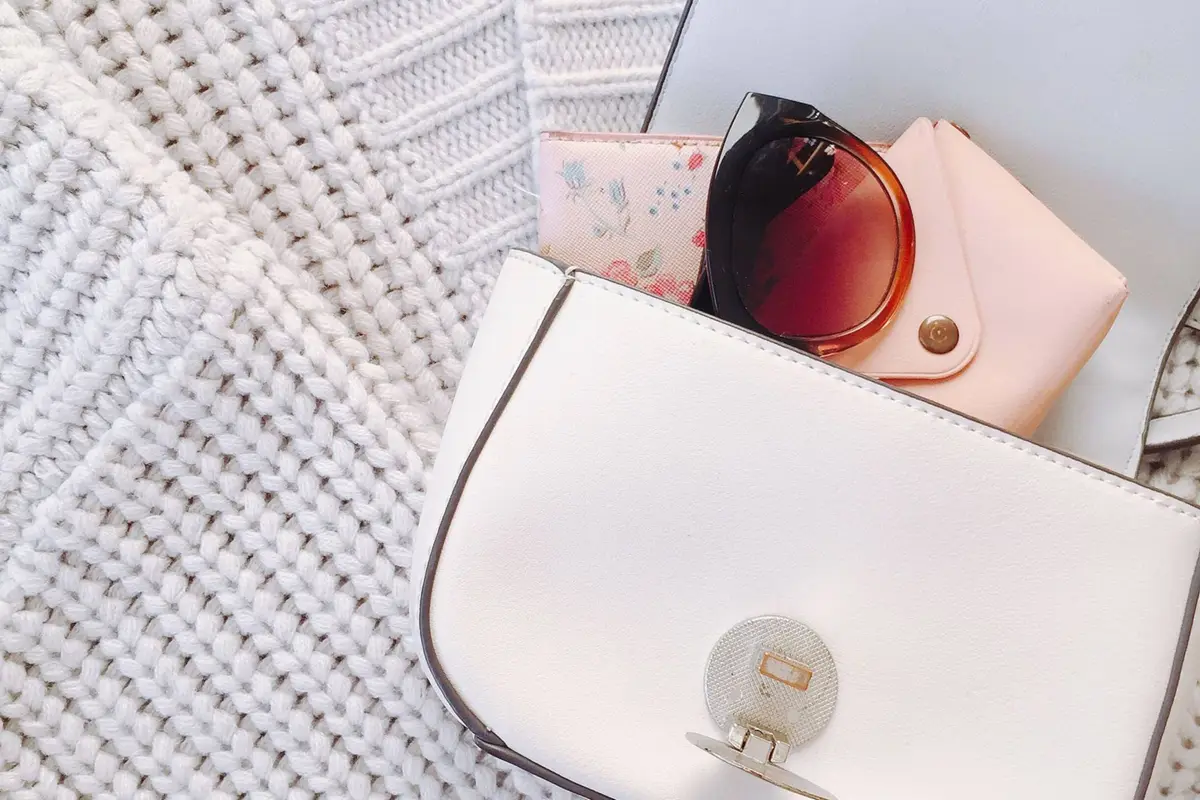
Tape the list inside the closet door or near your bag’s spot by the door, or keep it on your phone. Run through it before you leave until it turns into a habit.
Make a second short list for days that need more: a work day, a gym day, a day out with the kids. Those extras live in a pouch you add only when you need it.
A short list keeps a bag light and easier on your shoulder. It also makes the bag faster to search, since there’s less to dig through.
When something new keeps showing up in your bag, decide whether it belongs on the list or back at home.
The to-do list printable works well as a checklist, with a line for each item you carry and room for the extras on busier days.
13. Empty your bag once a week
Once a week, tip everything out of the bag you carry most. Receipts, wrappers, loose change and things that wandered in from the car all come out, and the bag starts the week clean.
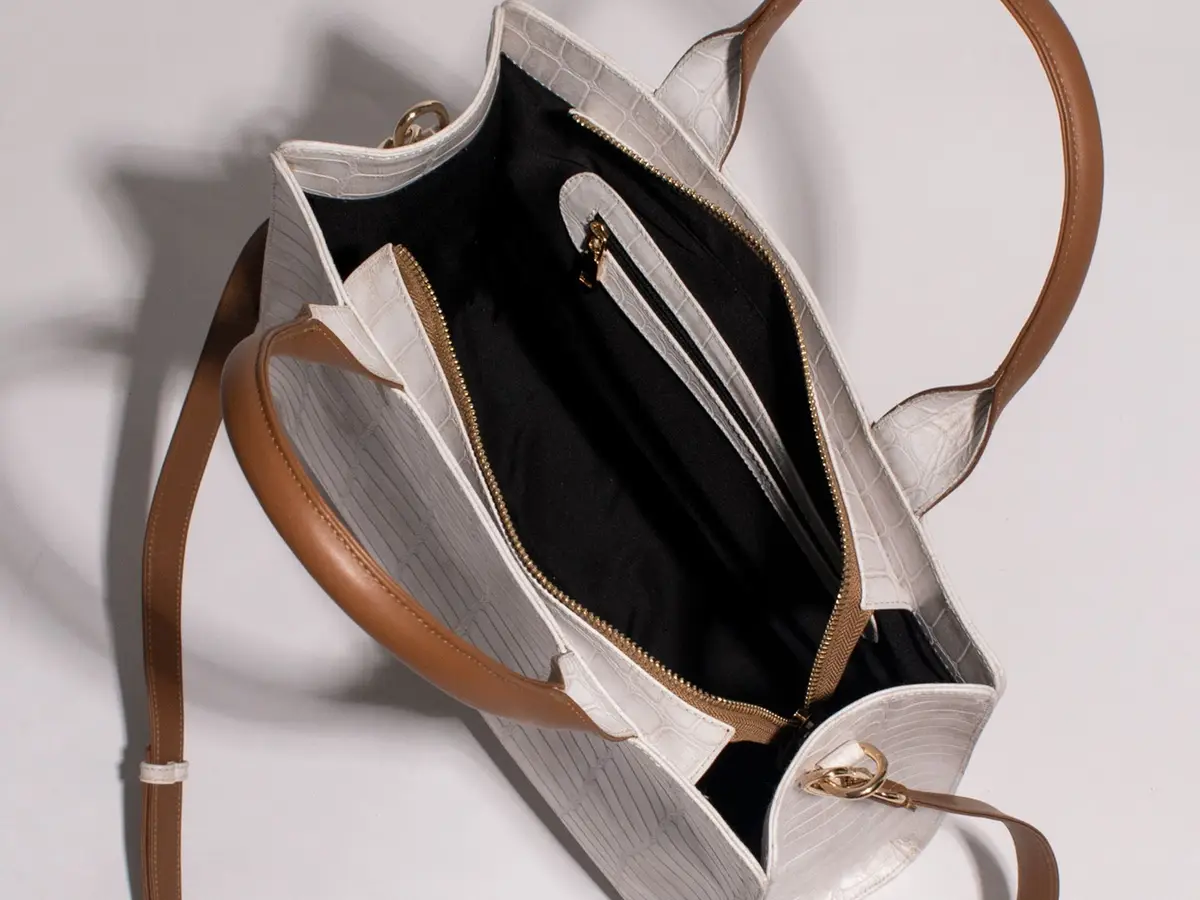
Do it on the same day each week, like Sunday evening or Friday after work, so it becomes routine. The whole job takes only a few minutes.
Sort what comes out into three piles: back in the bag, back where it belongs at home, and trash or recycling. File the receipts you need and toss the rest.
Shake out crumbs and wipe the lining with a barely damp cloth if it needs it, then let the bag dry with the top open before you fill it again.
Check your pouches as you put them back. Refill the tissues and bandages, charge anything that runs on a battery and toss the pen that stopped writing.
Put the bag back in its spot by the door when you’re done, packed and ready for the morning.
Save this for later
Pin it to a board so it's there when you're ready to start.
Save to Pinterest(opens in a new tab)Make it easier
Free printable
A room-by-room declutter checklist that tells you exactly what to look for, with four piles to sort into so nothing ends up back on the shelf.
Free tool
Enter the width, depth and height of a shelf, a drawer or a cube cubby, and see which standard bins and baskets fit, how many, and how they line up.
Frequently asked questions
How do I store purses so they don't lose their shape?
Stuff structured bags loosely with acid-free tissue paper or a soft scarf, then stand them upright on a shelf with a little room on each side. Tuck the straps inside and keep leather away from heat, damp and sunlight.
Is it bad to hang purses on hooks?
Hooks are fine for soft totes, canvas bags and crossbody bags you carry every day. For structured leather bags that sit for weeks at a time, a shelf is gentler on the handles and the shape.
What's the best way to organize the inside of my purse?
Group what you carry into a few small pouches, such as money and cards, beauty and tech, and keep your keys and phone in the bag's own pockets. Empty the bag once a week so it stays light and easy to search.
How many purses should I keep?
There's no right number. Keep the bags you carry and like, as many as fit your space without stacking, and let go of duplicates and bags that bother you every time you use them.