12 Budget Closet Organization Ideas Using What's Already in Your Home
Sort and sell first, match hangers slowly, turn old boxes into dividers and build closet storage from baskets, crates and spare wood you already have.

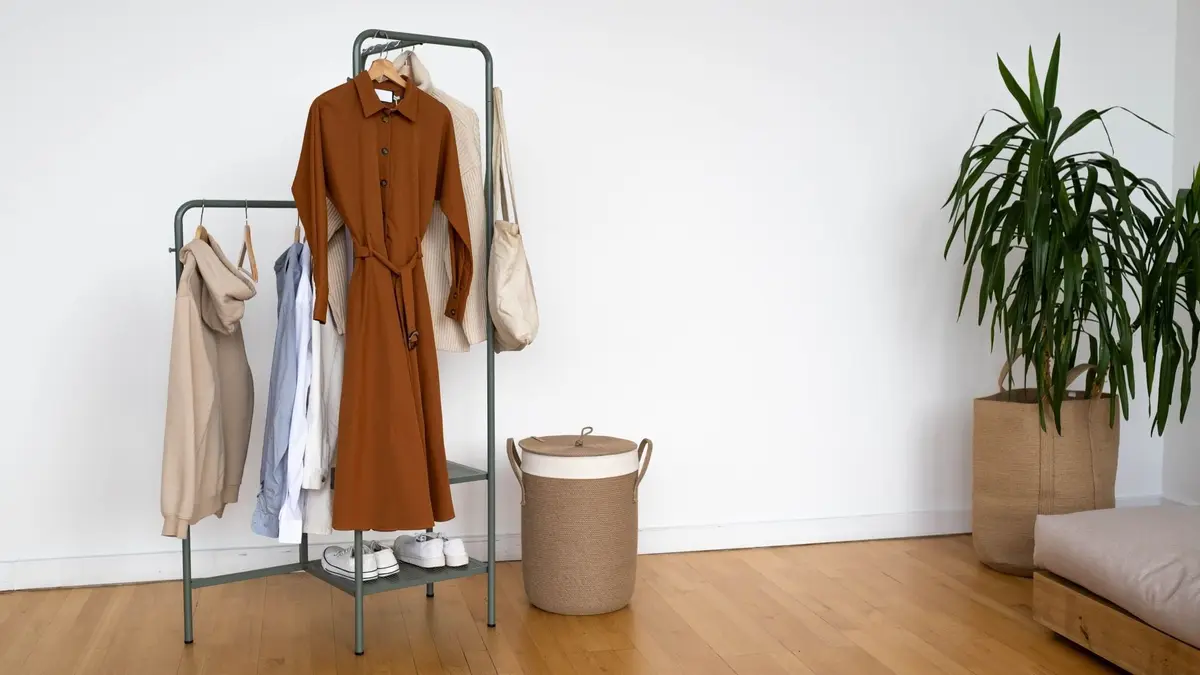
Budget closet organization starts with what you already own. Clear out the clothes you don’t wear, then reuse boxes, baskets, crates, hangers and tape from around the house before you buy anything at all.
Save your spending for the one or two problems nothing at home can solve, like a missing rod or a shelf. These 12 ideas run in that order: plan, clear out, reuse, then add only what’s still missing.
1. Make a free plan before you buy a thing
The fastest way to waste money on a closet is to buy organizers before you know what the closet needs. A plan on paper costs nothing and stops impulse buys.
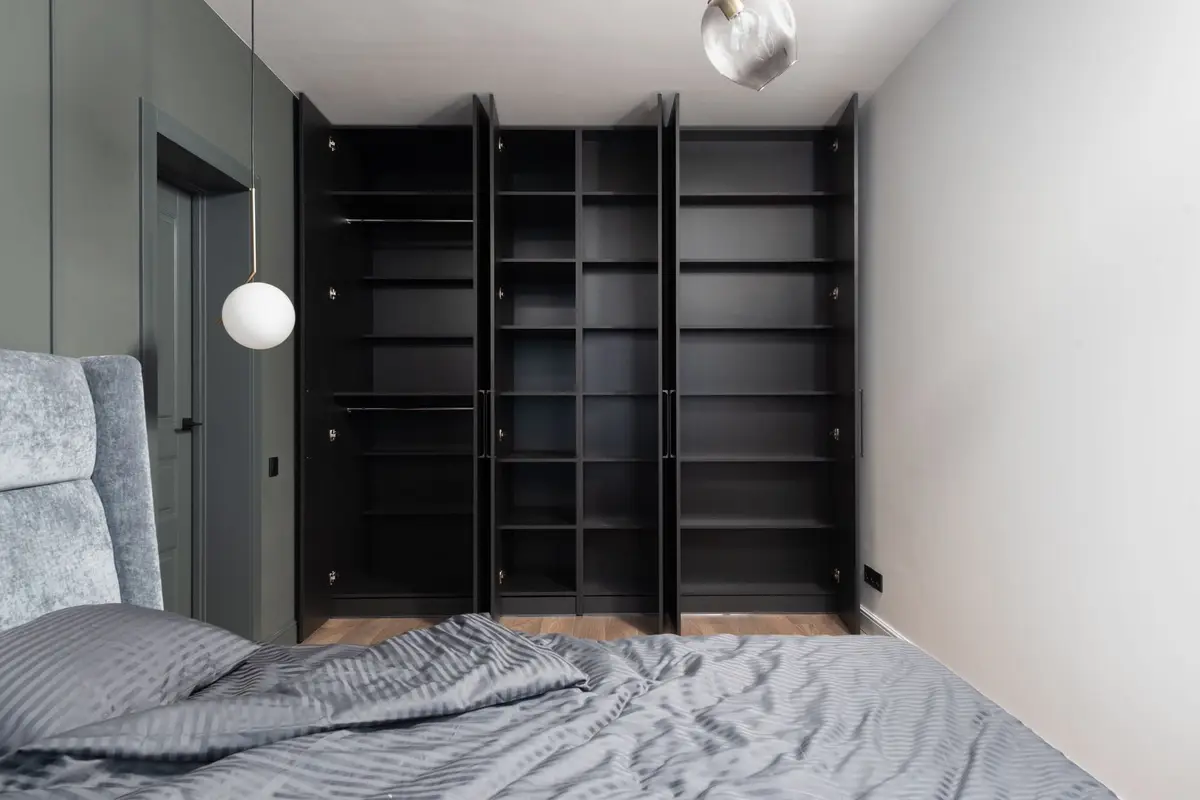
Open the doors and take a photo of the closet as it is now. Then write down the three things that bother you most, such as shoes piled on the floor, a rod too full to slide hangers or a top shelf nobody can reach.
Next, tally what you store by category: hanging tops, pants, dresses, folded knits, shoes, bags and accessories. Measure the rod, the shelf and the floor space while you’re there.
Last, make a list of every empty container already in the house: shoeboxes, baskets, crates, spare hangers and suitcases. Match each problem on your list to something from that list first.
Only the problems left over go on a shopping list. That short list is your whole budget.
2. Clear out, then sell or donate what goes
Every piece you remove frees space you’d otherwise pay to organize. Take everything out and sort it into four piles: keep, sell, donate and repair or toss.

The sell pile is for clothes in good condition that someone would want now: current styles, coats, shoes and bags that still look new. Wash or air them out, fold them neatly and photograph each piece against a plain wall in daylight.
Give the sell pile a deadline. Anything not sold by that date moves straight to the donate box, so it never drifts back into the closet.
Donate clean, wearable clothes, and pair shoes with a rubber band so they stay together. Torn or stained pieces that can’t be mended can become cleaning rags.
The declutter checklist takes you through the closet one category at a time, so the job doesn’t stall halfway. If you want the closet to stay pared down for good, these minimalist closet organization ideas build on this step.
3. Gather every hanger and keep the biggest matching set
Many homes already own more hangers than they think, scattered across rooms and mixed in style. Gather them before you think about buying new ones.
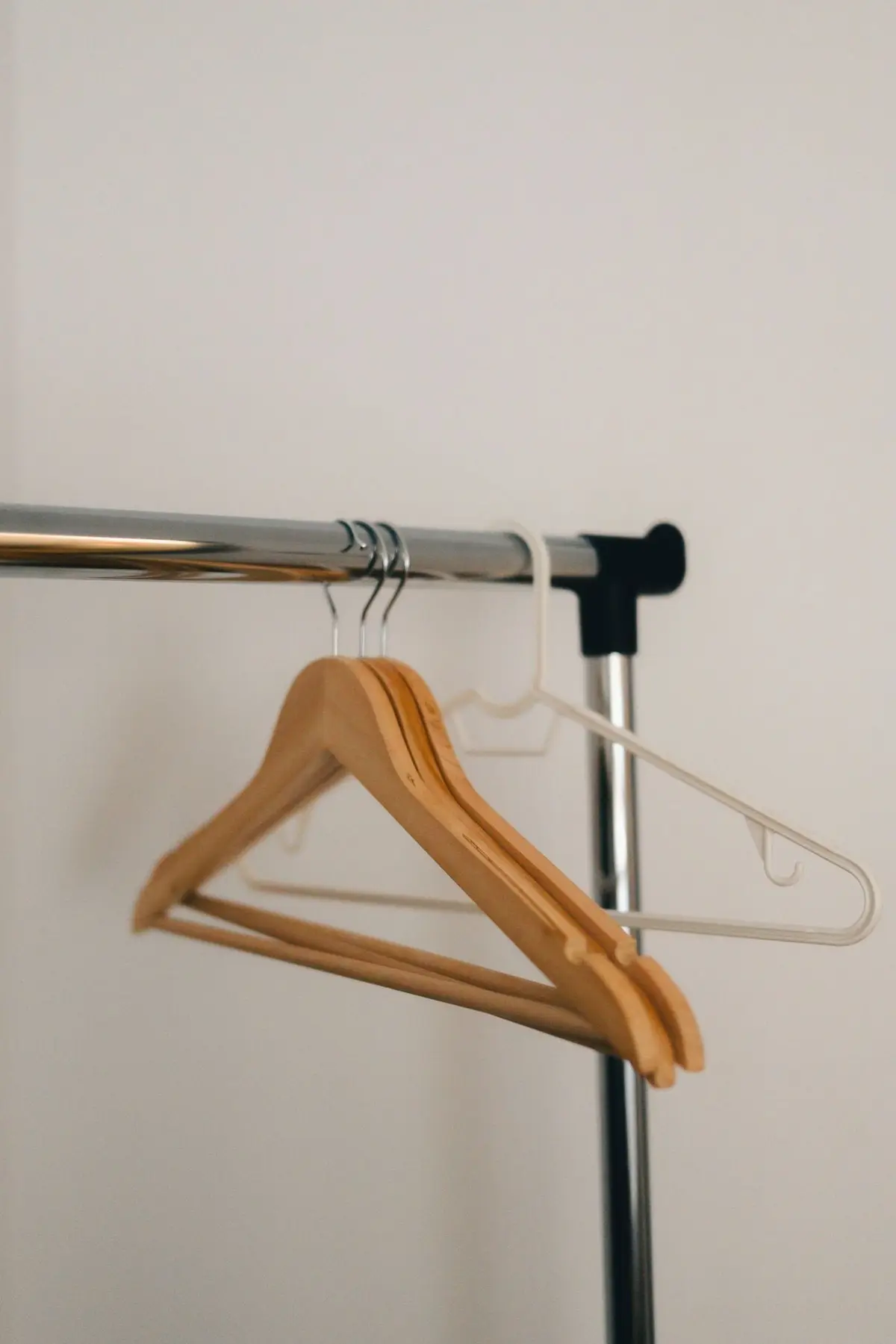
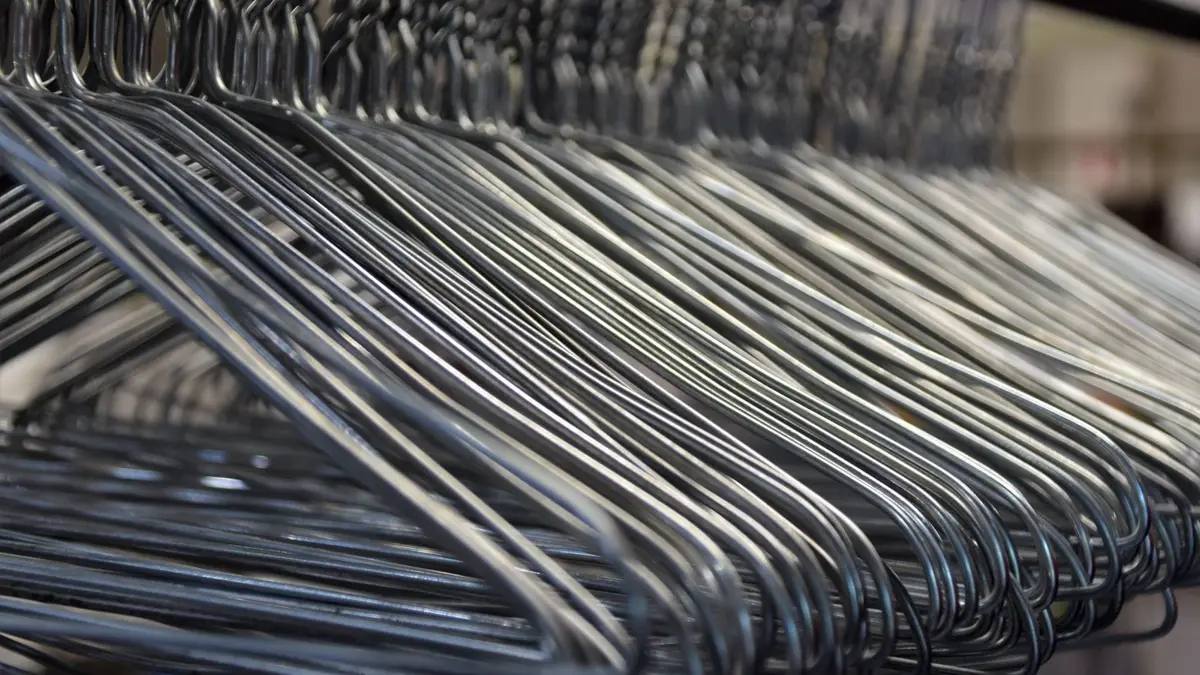
Collect hangers from every closet, the laundry area and the back of the coat closet. Sort them into piles by type: wood, plastic, slim, wire and any odd ones.
Keep the largest group that matches, and use it for the part of the rod you see first. Put the next-best group behind it, so the front of the closet looks calm right away.
Recycle bent wire hangers, or take them back to a dry cleaner that reuses them. If you decide to buy, pick up a few matching hangers at a time and swap them in on laundry day, retiring the oddest ones first.
Once the hangers line up, sorting gets easier. These tips to color code your closet work best on a rod where every hanger sits at the same height.
4. Turn shoeboxes and cereal boxes into a matching set
Shoeboxes and cereal boxes do the job of store-bought bins and shelf files. The trick is making them look like they belong together.
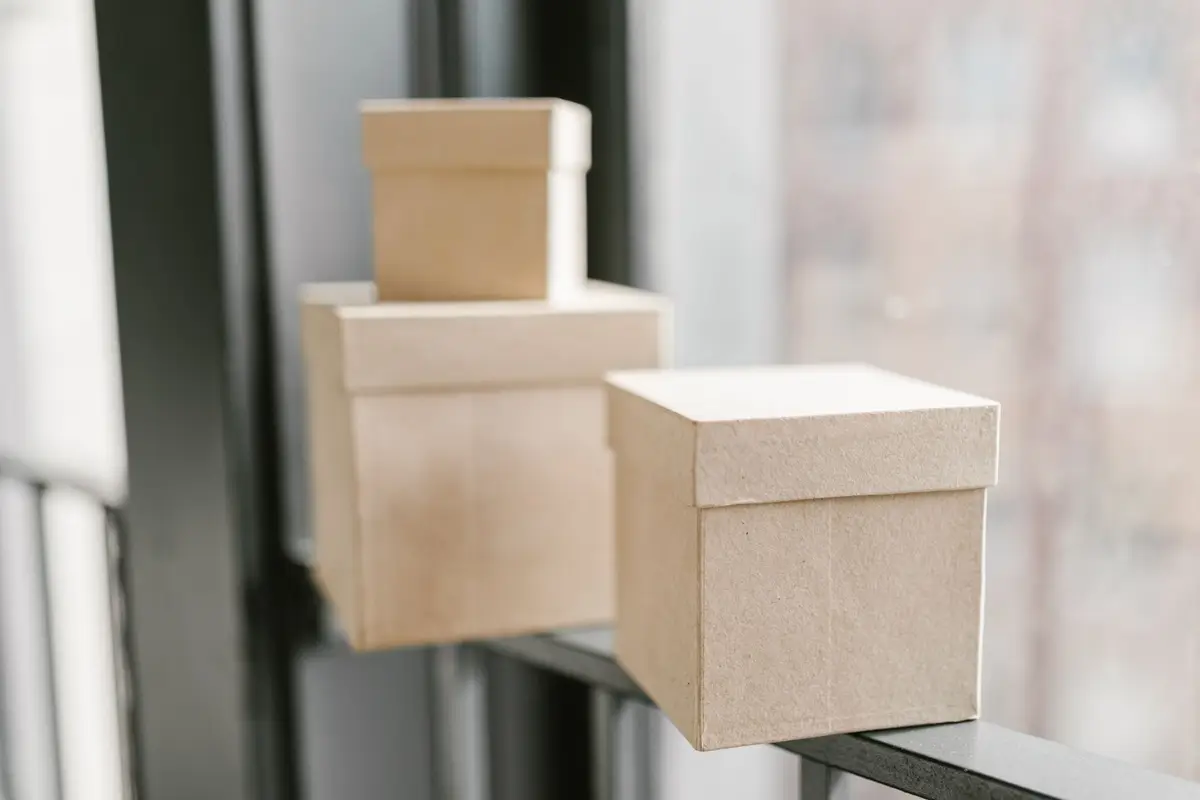
For shelf files, cut a cereal box on a slant: leave the back panel full height and cut the front down low. Stand it on the shelf to hold clutches, rolled leggings, tank tops or a row of slim bags upright.
Use shoebox bottoms as open bins for belts, socks and hats on a shelf, and keep the lids as shallow trays for jewelry or sunglasses. Inside a drawer, a few boxes side by side split one jumble into tidy sections.
Cover every box in the same material, so they read as a set: plain brown paper, leftover wallpaper, fabric scraps or old maps. A glue stick or double-sided tape holds it on.
If you replace the boxes with matching bins later, measure the shelf first. The bin size calculator shows how many of a given size fit across it.
5. Shop your own house for baskets
Baskets are easy to find at home, often sitting empty in a cupboard or holding things nobody uses. Before buying any, take a lap through the house.
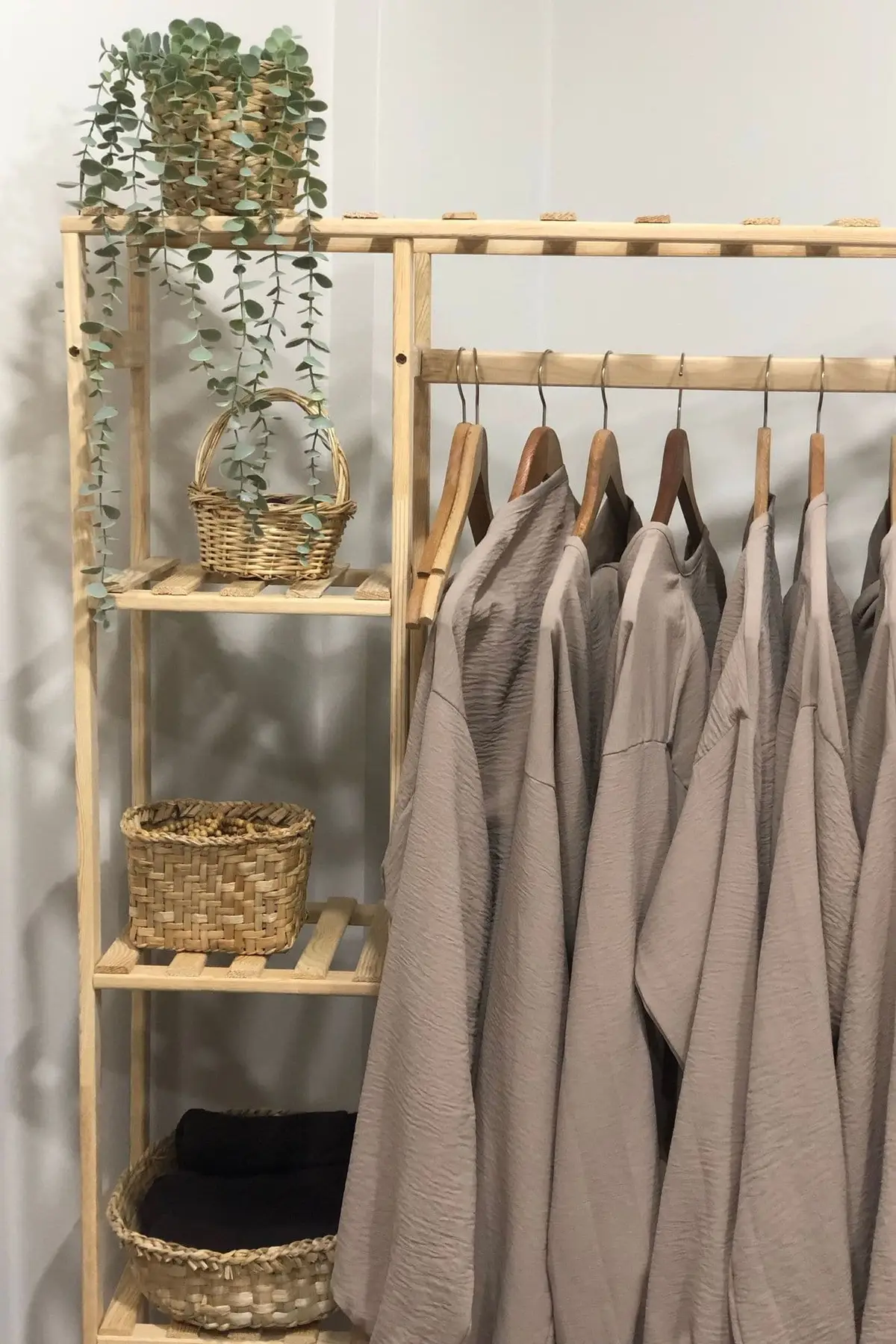
Carry an empty laundry basket from room to room and collect every basket and fabric bin that isn’t doing a job. Look under sinks, on top of the fridge, in kids’ rooms, in the garage and in the gift-wrap stash.
Bring them all to the closet and group them by material or color. Two or three that match go on the most visible shelf; the odd ones can work on the floor or inside a cabinet where nobody sees them.
Give each basket one job: scarves and hats, swimsuits, workout clothes or spare socks. Line a rough or loose-woven basket with a pillowcase or a dish towel, so knits don’t snag.
A basket that won’t fit anywhere goes back in the donate box. It isn’t a bargain if it crowds the shelf.
6. Stand wooden crates on their sides as cubbies
A wooden crate turned on its side becomes an open cubby with a shelf in it. Two side by side on the closet floor make a low shoe and sweater unit.
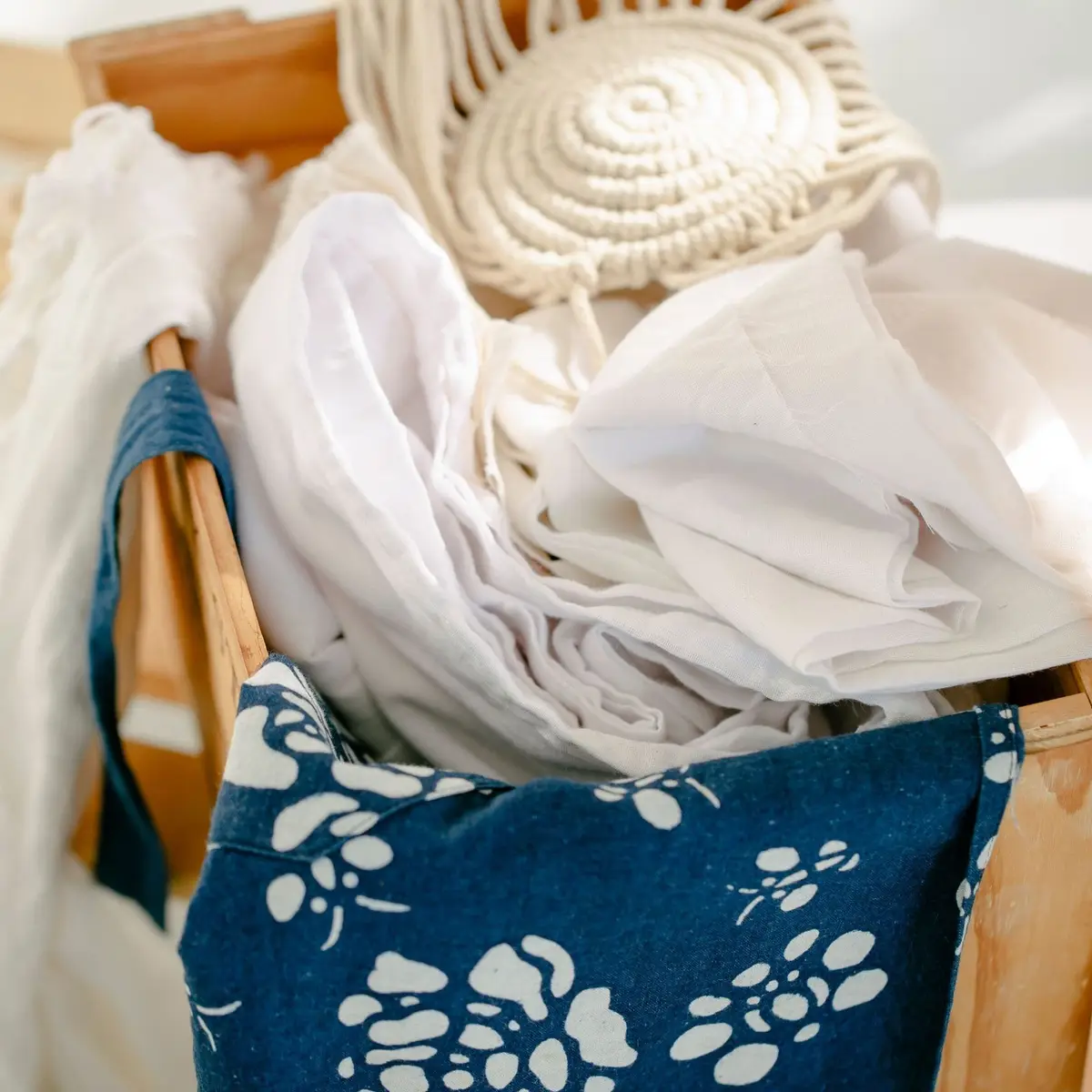
Check for crates you already have from produce or a past move, and look out for ones neighbors are giving away. Sand any rough edges and splinters, then wipe the crate clean before clothes go near it.
On its side, a crate holds two rows of shoes, a stack of jeans or a few folded sweaters. Upright, it works as a bin for bulky things like a spare blanket, a yoga mat or the gym bag.
Keep a stack to two crates high, and screw or bracket them to each other so the top one can’t slide. Anything taller than that is a small shelf unit, and furniture with shelves should be anchored to the wall so it can’t tip over.
Crates also suit a closet with no doors. These open closet organization ideas show how to keep visible storage looking tidy.
7. Add a tension rod wherever you need a rod
A tension rod needs no drilling and moves with you, which makes it one of the best low-cost additions to a closet. It’s useful in more places than just under the main rod.

In a kid’s closet or a narrow end of a reach-in, a tension rod set at child height gives a second hanging spot for short clothes. In a shelf-only closet or a wall nook, it adds hanging space with no hardware at all.
Two tension rods set low between the side walls, one a little higher and set back, make a shoe ledge: heels hook over the front rod and the toes rest on the back one.
A rod set under a shelf can also hold a row of S-hooks for bags and belts. These small closet organization ideas show other ways to win back hanging space.
Measure the width first, twist the rod until it’s snug, and keep its load light. A tension rod holds by pressure alone, so check its listed weight limit and keep heavy coats on a fixed rod.
8. Use S-hooks and spare rings for bags and belts
S-hooks cost very little, and you may already have a few in the kitchen or garage. They turn any rod or hanger into a hook rack.
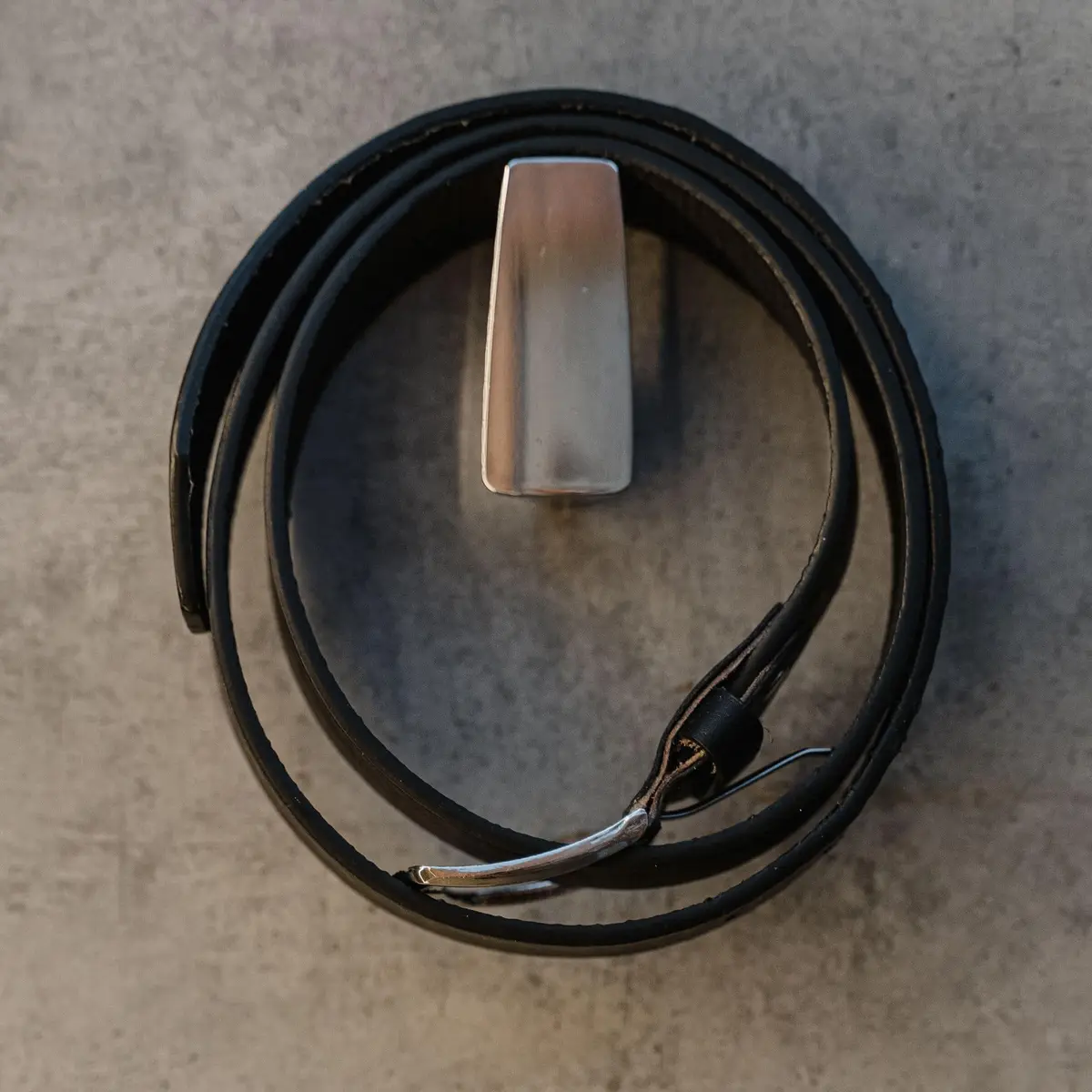
Hang bags by their handles from S-hooks at the end of the rod, one bag per hook, so they keep their shape and don’t pile up on a shelf. Hats on a ribbon loop can hang the same way.
For belts, hook a few S-hooks over the bar of a sturdy hanger and hang each belt by its buckle. Spare shower-curtain rings or key rings work the same way for scarves, one scarf per ring.
You can also link hangers in a chain with S-hooks to hang an outfit top to bottom. It takes the width of a single hanger, which helps on a crowded rod.
Keep the bag hooks to light bags. A heavy tote pulling on one spot of a rod can bend a thin one over time.
9. Put hooks over the door
An over-the-door hook strip needs no tools and turns a bare door into storage for the things you grab every day. If you already own one on another door, move it here first.

Use the hooks for a robe, tomorrow’s outfit, a bag or a jacket you’ll wear again before washing. Give each hook one thing, so the door doesn’t turn into a second pile.
A pillowcase on a hook makes a free laundry bag for one person’s clothes, and it goes straight into the wash when it’s full. A second one can hold clothes on their way to the donate box.
Check that the door still closes with everything on it. A small felt pad stuck behind the hook strip stops it from rattling or marking the paint.
On a sliding or bifold door, hang the hook strip on the back of the bedroom door instead, or screw a short hook rail to the side wall of the closet.
10. Label with masking tape and a marker
Labels keep a closet sorted because everyone knows where things go back. Masking tape and a marker make labels for almost nothing, and they’re easy to change.
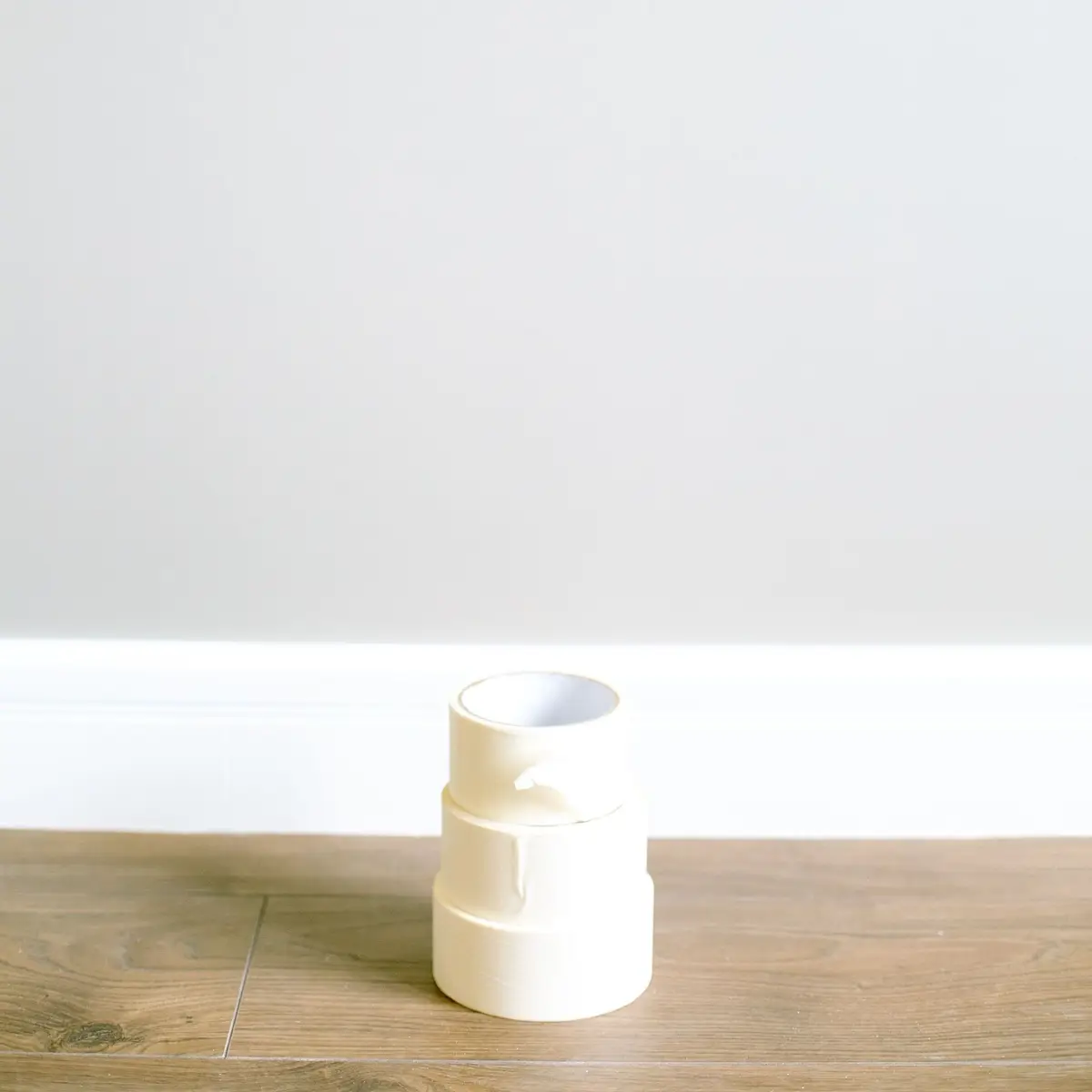
Tear a strip for the edge of each shelf and write what lives there: jeans, sweaters, workout clothes. Do the same on the front of every box and basket, facing out so you can read it from the doorway.
On the rod, wrap a small tape flag around it to mark where each section starts: work clothes, casual tops, dresses. It keeps the order even when the closet is busy.
Masking tape peels off cleanly from most surfaces, so you can move things around until the system feels right. Test a small piece on painted wood first, since some paint can lift.
Once the labels haven’t changed for a season, the system works. That’s the time to make neater ones, if you want them, and not before.
11. Make a shelf or a rod from spare wood
A spare board or a sturdy pole from the garage can add a shelf or a rod where a closet has none. It’s a weekend job with basic tools.

For a shelf, cut a leftover board to the closet’s width, sand the edges and seal or paint it so it won’t snag clothes. Set it on two sturdy brackets, or on wood strips screwed to the side walls.
Above the rod, a shelf like this holds baskets and folded sweaters. Below a high rod, it can hold shoes or a row of boxes.
For a rod, a solid wooden pole or a length of old curtain rod works in a nook or an open corner. Hang it from brackets, or from strong rope tied to hooks in the ceiling for light clothes only.
Screw brackets and hooks into studs, ceiling joists or solid blocking, not just drywall, and keep the load to what the hardware is made for. A loaded shelf weighs far more than it looks.
12. Move off-season clothes into suitcases and under the bed
Suitcases sit empty most of the year and already take up space, so let them hold the clothes you won’t wear until the season turns. Under the bed is the next free spot.
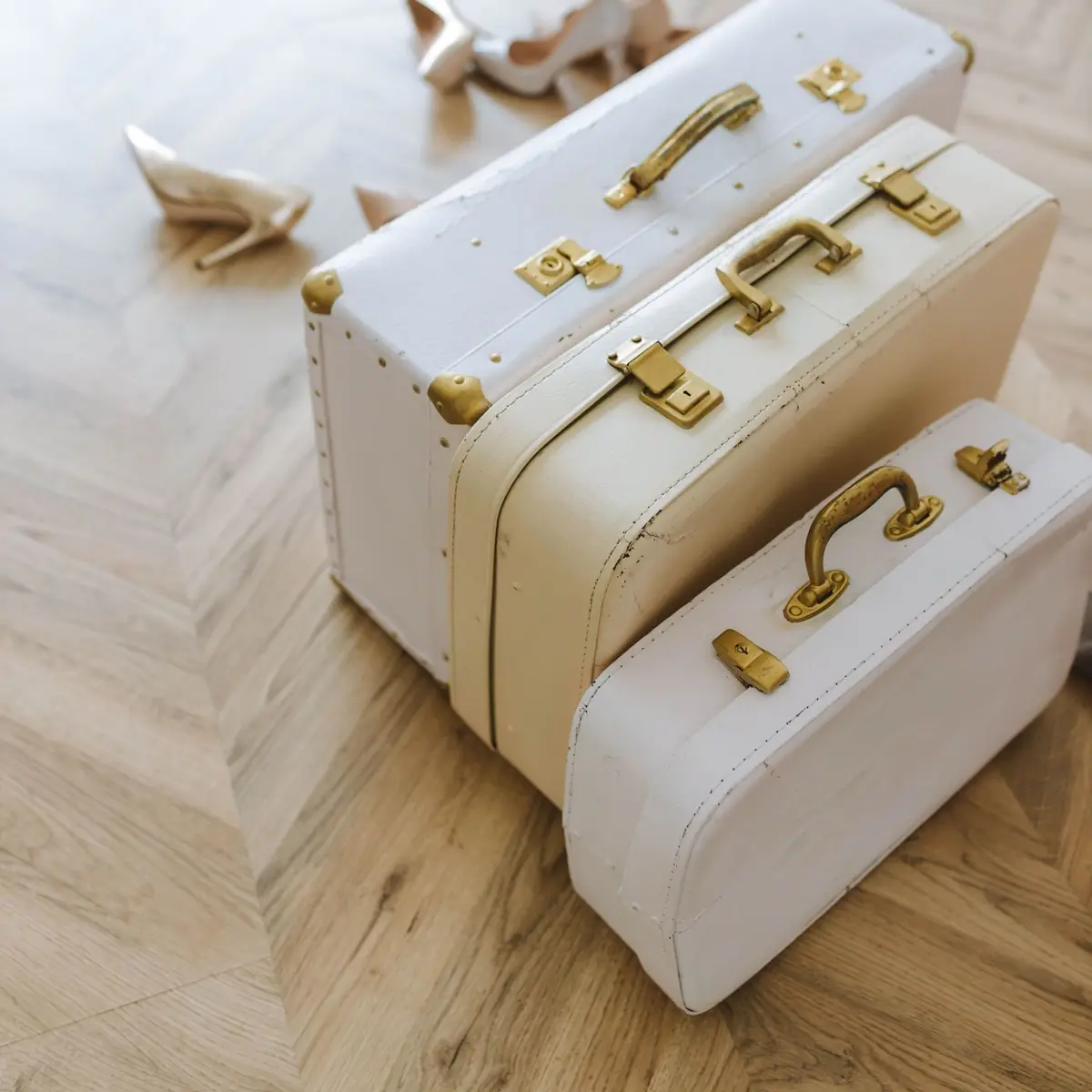
Wash or clean everything before it goes away. Clothes moths feed on wool and other animal fibers, so clean pieces sealed in an airtight container or bag are much better protected than ones packed after a few wears.
Make sure everything is completely dry, too. Damp clothes in a closed case are what mildew needs, so let anything worn or washed air out first.
Slide shallow boxes with lids under the bed for the rest, labeled on the end that faces out. Tape a list of what’s inside each suitcase to the inside of its lid.
When the weather turns, swap the cases: the stored season comes out, and the outgoing one goes in. You’ll need the suitcases empty for a trip, so plan the swap around travel.
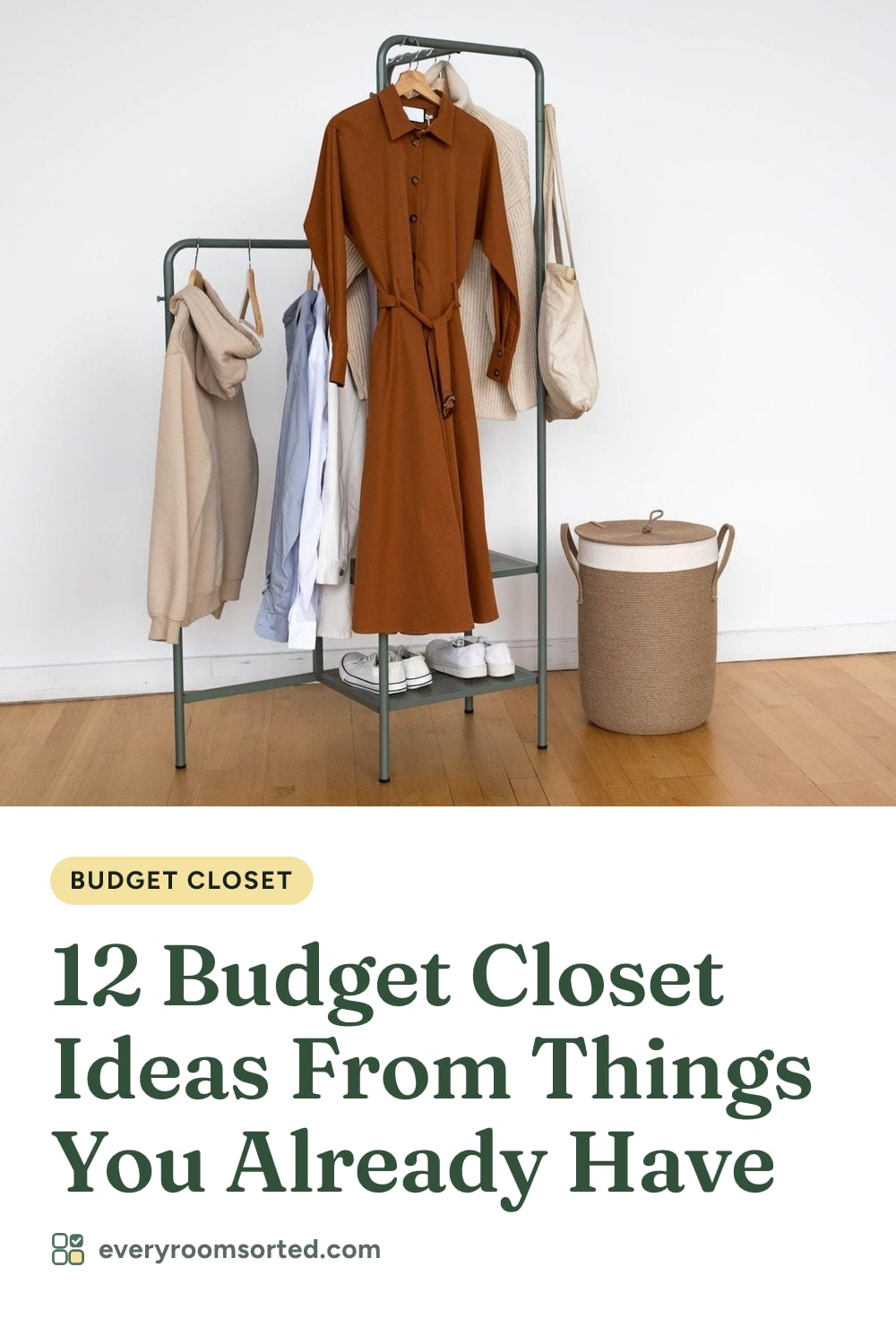
Save this for later
Pin it to a board so it's there when you're ready to start.
Save to Pinterest(opens in a new tab)Make it easier
Free printable
A room-by-room declutter checklist that tells you exactly what to look for, with four piles to sort into so nothing ends up back on the shelf.
Free tool
Enter the width, depth and height of a shelf, a drawer or a cube cubby, and see which standard bins and baskets fit, how many, and how they line up.
Frequently asked questions
How can I organize my closet with no money?
Start by taking out everything you don't wear, since the space it frees is the biggest gain. Then reuse what the house already holds: shoeboxes and cereal boxes as dividers, baskets from other rooms, spare hangers gathered into one matching set and masking tape for labels.
What can I use instead of closet organizers?
Shoeboxes, cereal boxes, baskets, wooden crates, suitcases and spare hangers all do the job of store-bought organizers. Cover mismatched boxes in the same paper or fabric so they look like a set, and give each container one kind of thing.
How do you do DIY closet organization on a budget?
Make a plan first: list what bothers you about the closet and what containers you already have. Then fix each problem with the cheapest tool that works, such as a tension rod for a second row, S-hooks for bags or a spare board on two brackets for a shelf.
Are matching hangers worth it on a budget?
They help, because matching hangers sit at one height and take up less room than a mix. You don't have to buy a full set at once: gather the hangers you already own, keep the largest matching group and replace the rest a few at a time.