12 Shoe Storage Ideas That Tame Every Last Pair
Get pairs off the floor with door trays, benches, slim cabinets, wall shelves, door organizers, boot cubbies and habits that keep shoes dry and sorted.

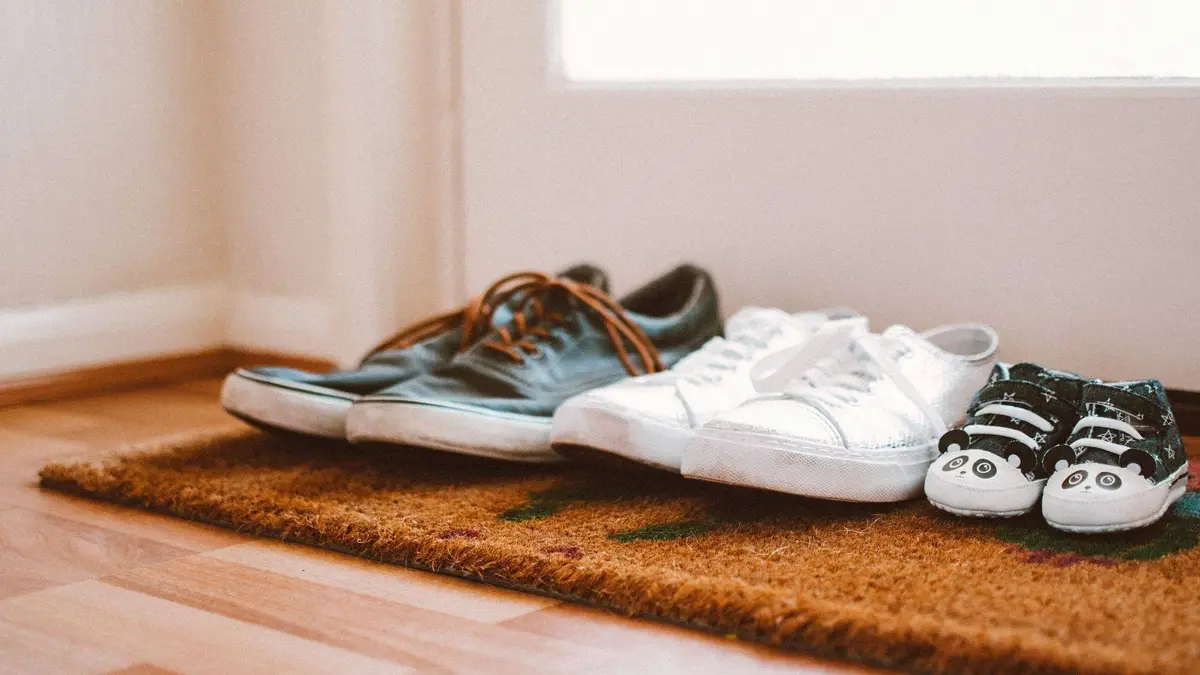
Good shoe storage gives every pair a home close to where you take it off: a tray or a slim rack by the door for the shoes you wear every day, and shelves, cubbies or boxes in the closet for the rest. Count what you have first, keep only what fits, and stand tall boots upright so they don’t swallow a whole shelf.
These 12 ideas work for a narrow entry, a reach-in closet or a busy family mudroom. Start with the first one, since it’s much easier to store shoes once you know how many pairs you’re actually keeping.
1. Count your pairs and let some go
Gather every shoe in the house in one spot: the pile by the door, the closet floor, under the beds and the back of the car. Match each shoe with its partner and set any loners aside.
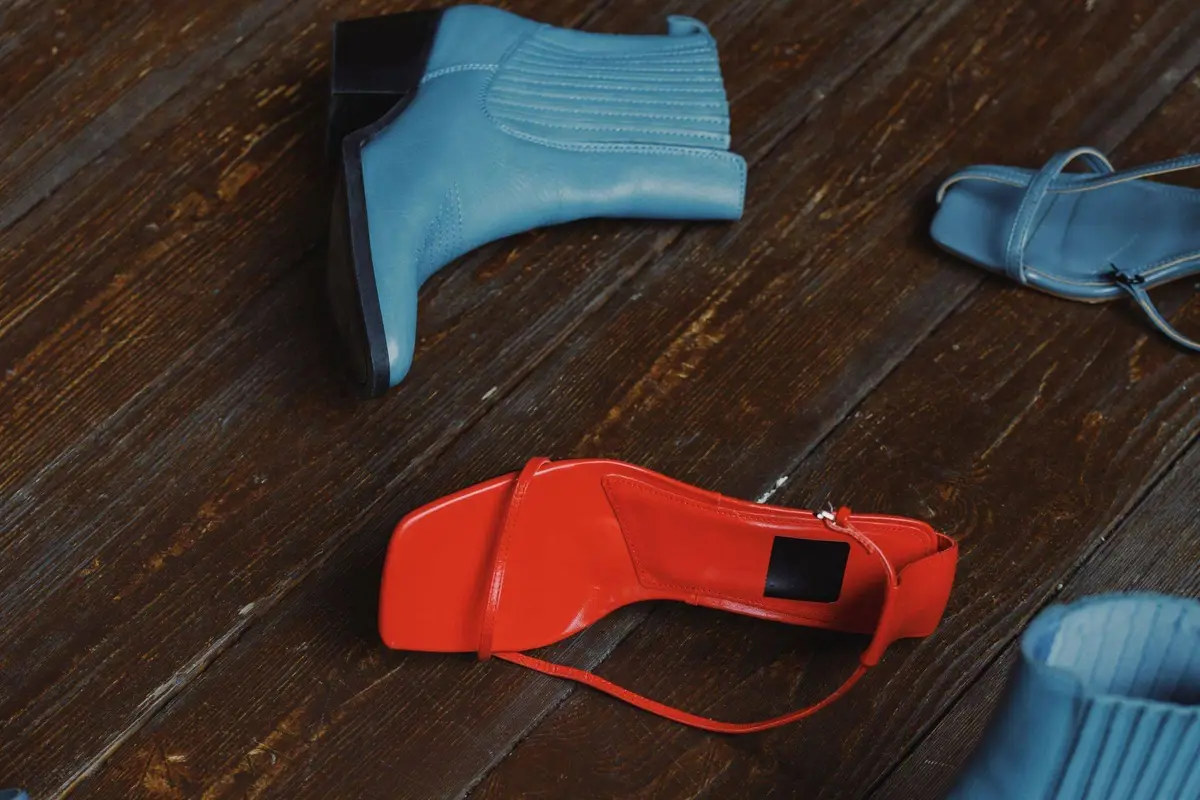
Now sort the pairs into three groups: the ones you wear every week, the ones you wear for a season or an occasion, and the ones you never reach for. The last group is where most of the room comes from.
Let go of pairs that hurt, don’t fit, can’t be repaired or haven’t left the closet in a year. Shoes in good shape can go to a donation spot, and worn-out ones go in the trash.
If outgrown kids’ shoes are part of the pile, hand them down or donate them right away, so they don’t drift back into the closet. The declutter checklist walks through the rest of the house the same way.
Once you’re done, count the pairs you’re keeping for each person. That number tells you how much storage you need, and keeps you from buying a rack that’s already too small.
2. Put a tray by the door for daily pairs
A boot tray or a sturdy mat right inside the door catches the shoes everyone kicks off, along with the mud, water and grit they carry in. It keeps the floor clean and gives the pile a clear edge.
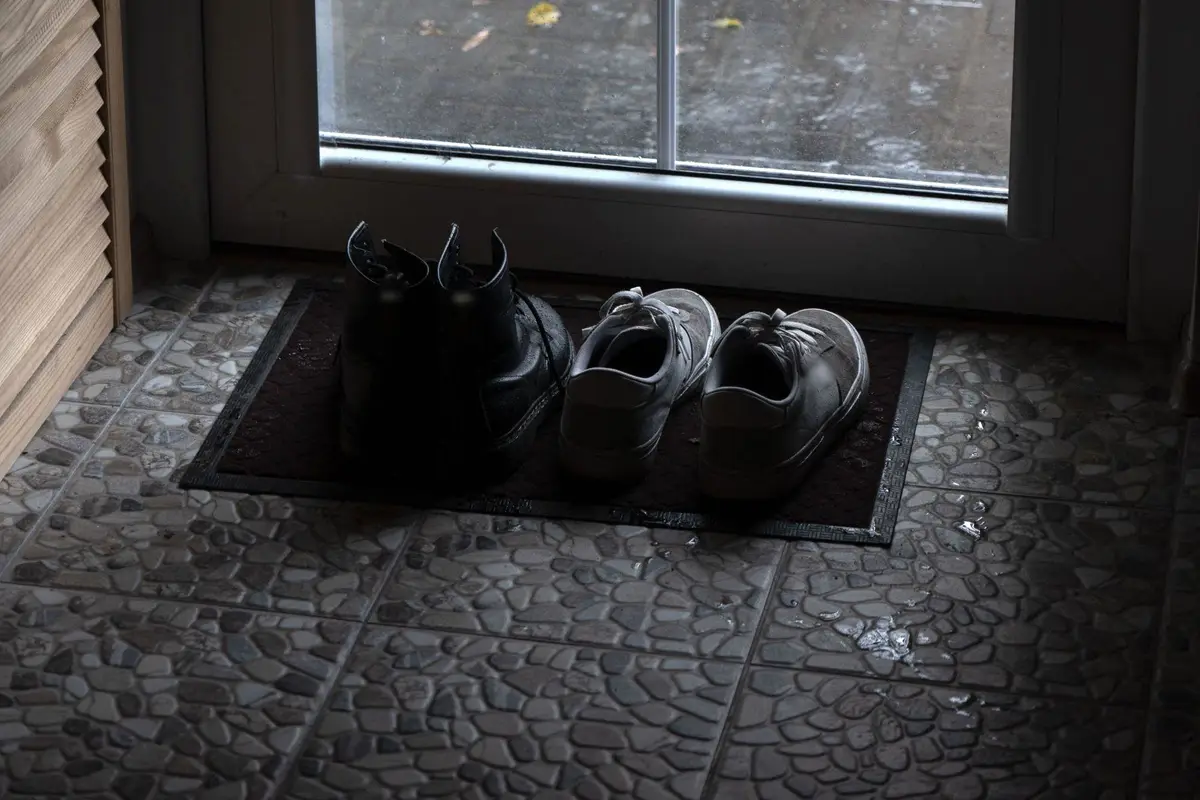
Limit the tray to the pairs people wear every day, one or two per person. Anything that hasn’t moved in a week goes back to its closet or bedroom.
A tray with a raised rim holds melting snow and rain until it dries, so puddles don’t spread across the floor. A rubber mat with ridges works too and is easy to rinse.
Measure the space before you buy. The door should open all the way without catching the tray, and there should be room to step past it with an armful of groceries.
Once a week, tip out the grit, wipe the tray and let it dry. It takes a minute and keeps the entry from smelling like wet sneakers.
3. Add a bench with a shelf underneath
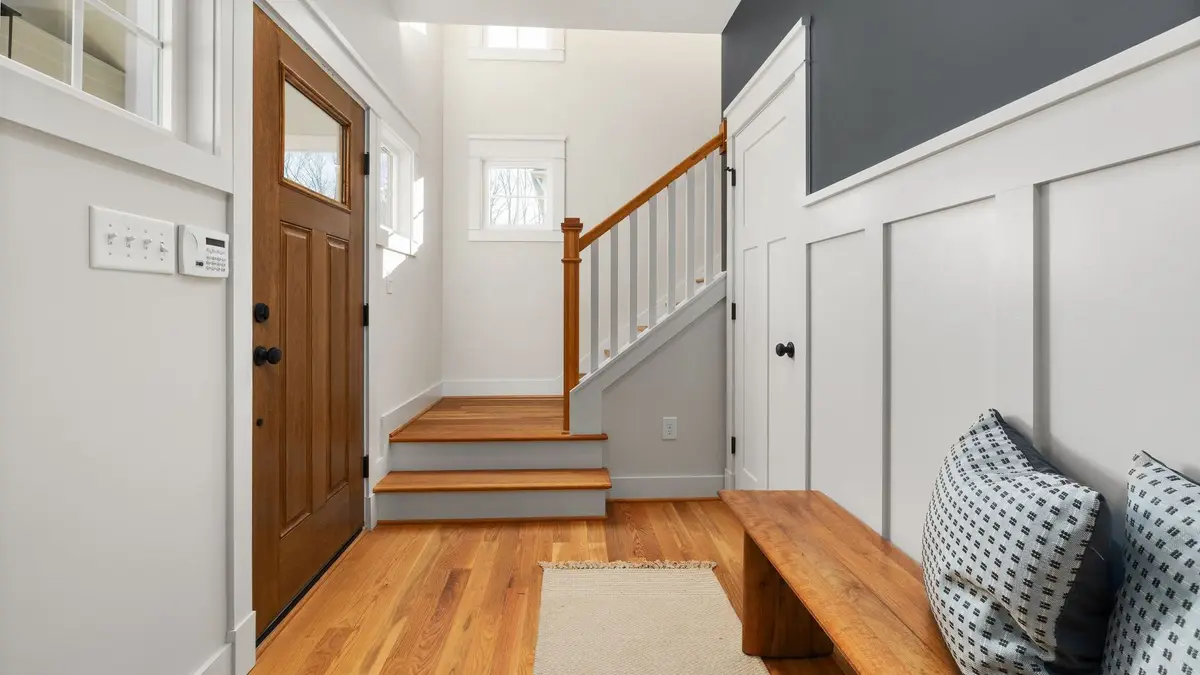
A bench by the door gives everyone a place to sit while they pull boots on, and the shelf below holds the shoes they’ll grab next. It turns a loose pile into one neat row.
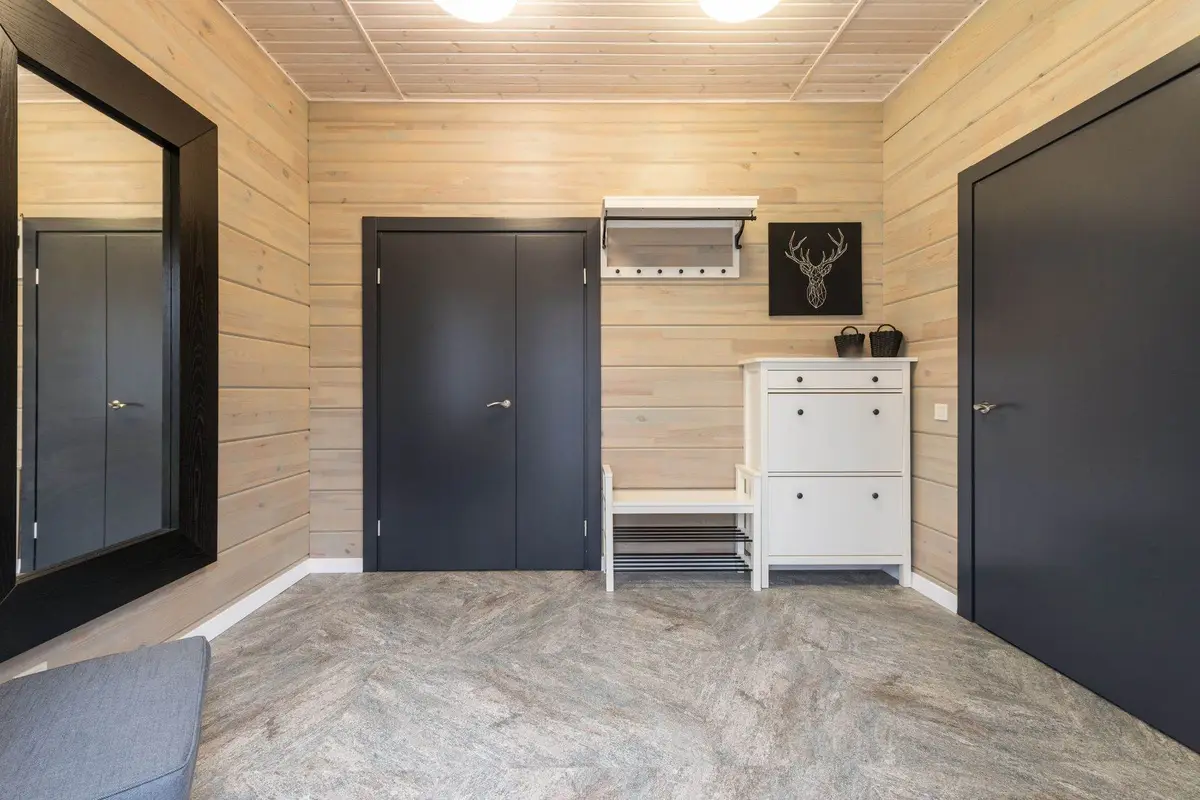
Look for a bench with a slatted or wire shelf underneath. Air moves through the gaps, so damp soles dry faster than they would on a solid board.
Pick a height that’s comfortable to sit on and deep enough for the largest shoes in the house. Measure the longest pair and compare it with the shelf depth before you buy.
If you’d like a simple build, a sturdy plank on two short cubby units makes a bench with storage on both ends. Sand the edges smooth and seal the wood so wet shoes don’t stain it.
Give each person a section of the shelf, or a basket for kids’ small shoes and flip-flops. Hooks on the wall above the bench hold coats, bags and umbrellas, so the whole entry works as one drop zone.
4. Try a slim tilt-out cabinet
A tilt-out shoe cabinet stands only a few inches deep, yet each flip-down drawer holds a row of pairs on their toes. It fits a narrow hallway where a bench or rack would block the way.
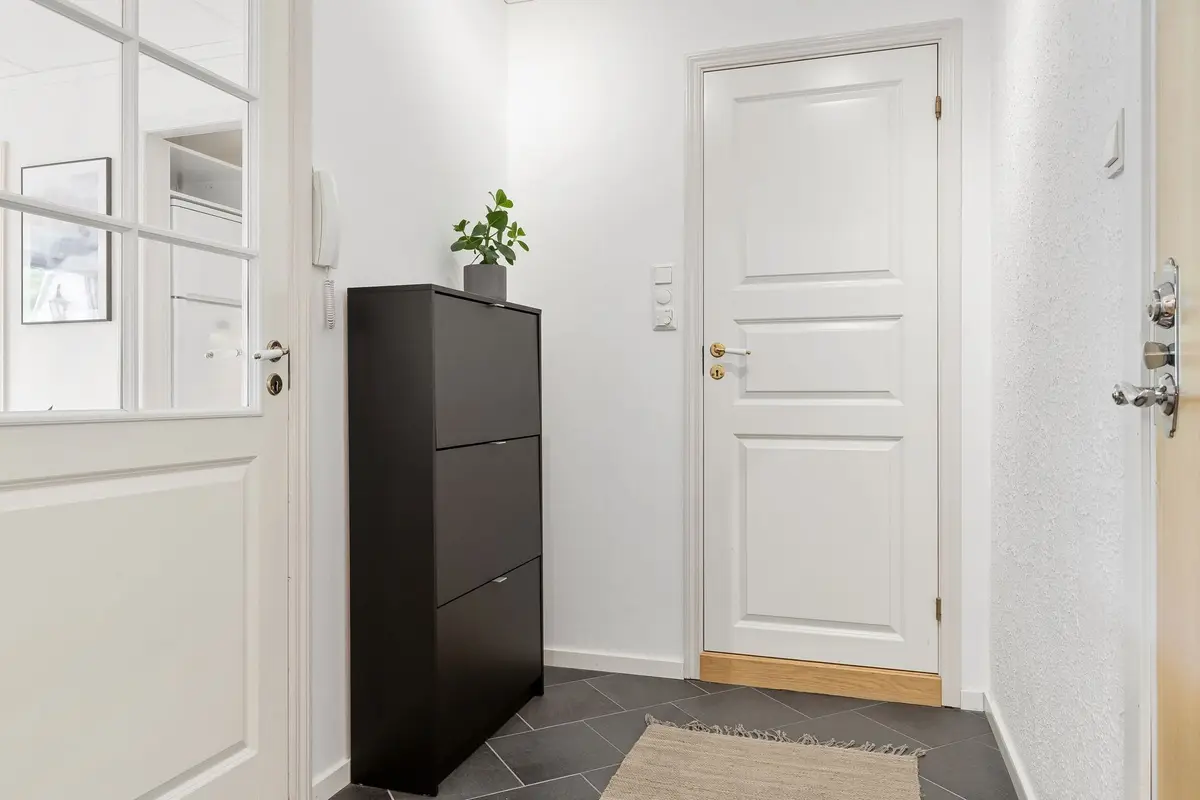
Because the shoes stand at an angle, they take up less depth, and the closed fronts hide everything from view. The top works as a small shelf for keys, mail or a plant.
Anchor a tall, narrow cabinet to the wall with the strap or bracket it comes with. Furniture with drawers, doors or shelves can tip over, and anchoring it prevents that.
Check how the pairs fit before you load it. High heels, bulky sneakers and boots may not tilt in, so save the cabinet for flats, slip-ons and everyday sneakers.
Open each drawer now and then and let the shoes breathe. A closed cabinet stays fresher when the pairs going into it are dry, so let wet shoes sit on the tray first.
5. Use wall shelves or ledges
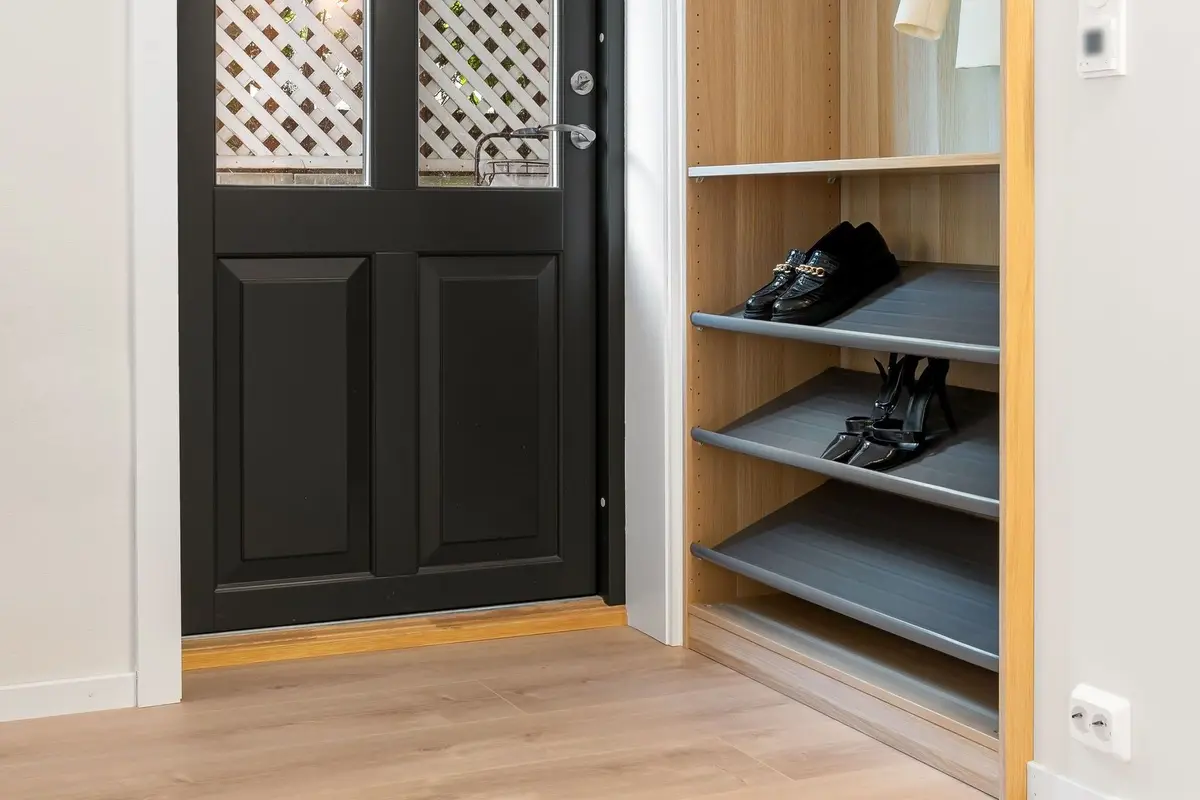
Wall shelves turn bare wall into shoe storage and keep the floor clear for cleaning. Narrow ledges, a few inches deep, hold a row of flats or sneakers at eye level, where every pair is easy to see.
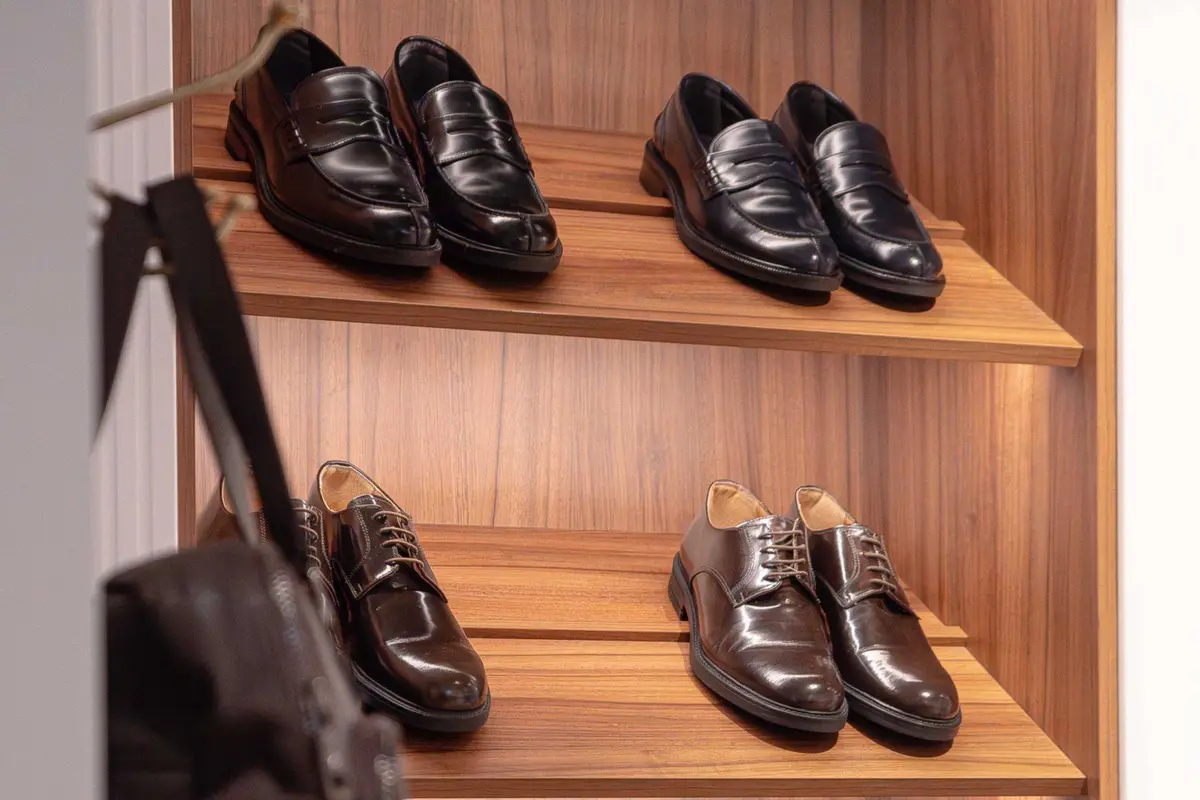
Angled shelves with a lip at the front show off the toes and fit more pairs on a shallow wall. Space them so the tallest shoes slide in without bumping the shelf above.
Screw the brackets into wall studs or use anchors rated for the weight, and follow the shelf’s weight limit. A full row of boots is heavier than it looks.
For a simple project, a wooden crate or a length of molding mounted on the wall makes a sturdy ledge. Paint it the wall color for a built-in look, or leave the wood bare.
Keep the lowest shelf a little off the floor, so you can sweep under it. Save the top shelf for pairs you wear less often, and keep everyday shoes between knee and shoulder height.
6. Hang an organizer over the door
The back of a closet or bedroom door is free storage. An over-the-door organizer with pockets or wire rungs holds a dozen or more pairs of flats, sandals and sneakers without using a single shelf.
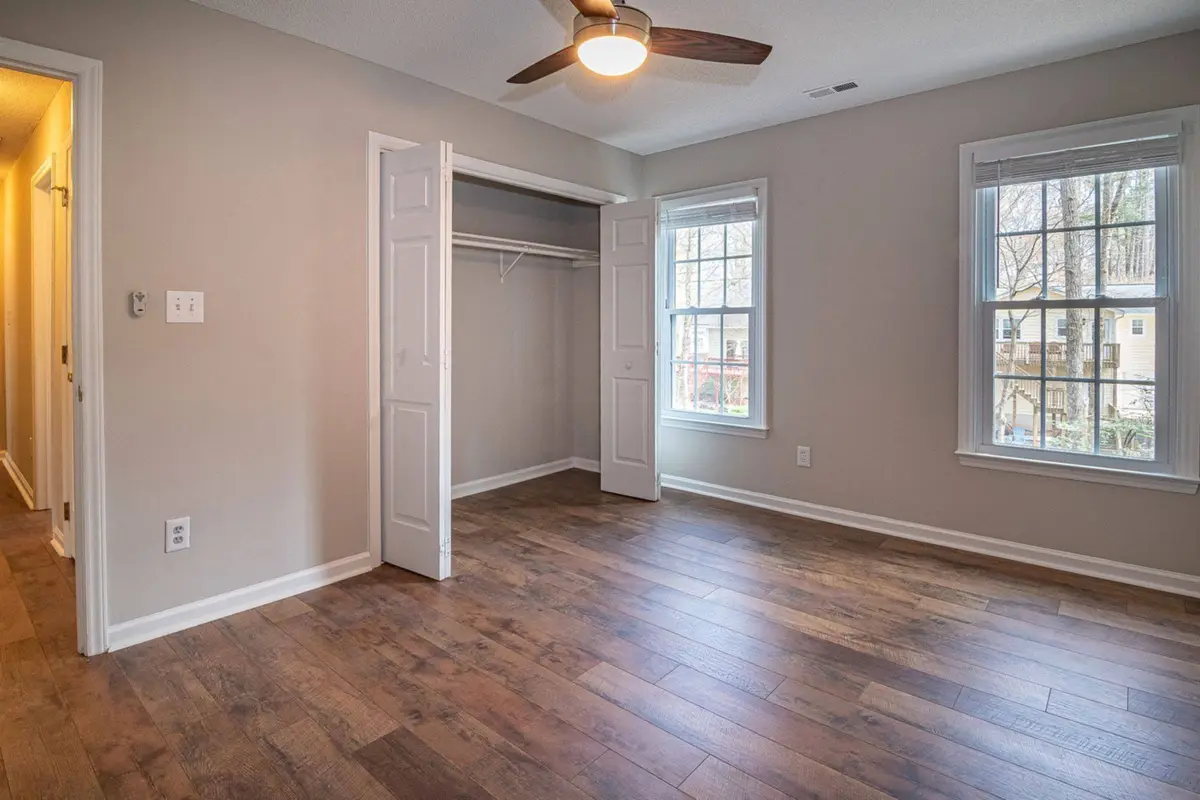
Clear pockets let you see every pair at a glance. Wire racks suit heavier shoes and let them air out.
Check that the door still closes with the organizer full, and that the hooks don’t scratch the top of the door. Felt pads on the hooks protect the paint.
Hinged doors work best. On bifold or sliding closet doors, hang a fabric shoe organizer from the closet rod instead, so it rests against the wall.
Put the lightest shoes in the top rows and the heaviest at the bottom, where they’re easier to lift out and put back, and give each person their own rows. An over-the-door organizer is also a good home for slippers, kids’ shoes and small items like shoe polish and spare laces.
7. Slide off-season pairs under the bed
Sandals in winter and snow boots in summer don’t need prime closet space. Under-bed boxes or rolling drawers keep them out of the way and still easy to reach when the weather turns.
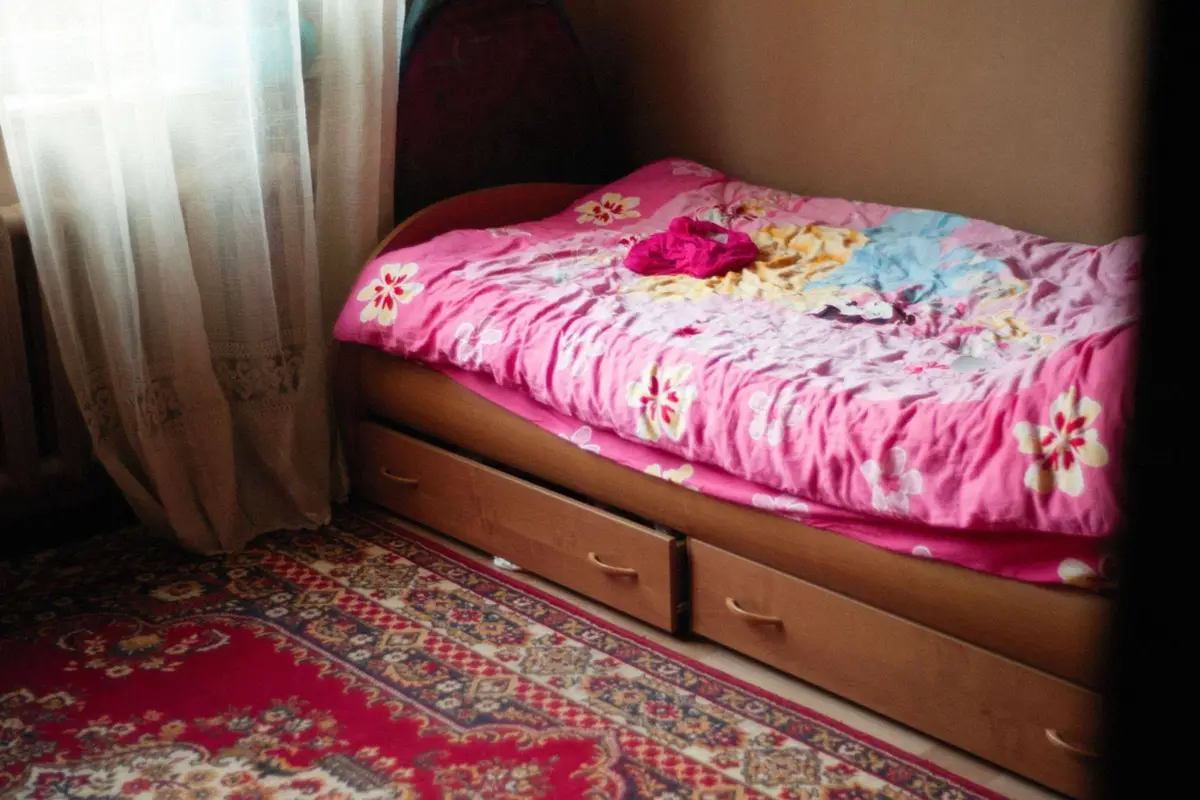
Measure the clearance under the bed before you buy anything, including the height of the frame and any center supports. The bin and basket size calculator shows which standard sizes fit the space.
Clean and repair every pair before it goes into storage. Brush off dirt, wipe the soles, and fix a broken strap now rather than on the first warm morning you need the shoes.
Pick boxes that let air in, like fabric bins or boxes with vents, rather than tightly sealed plastic. Leather shoes in an airtight box can pick up mildew.
Label the front of each box with what’s inside and who it belongs to. When the season changes, pull the box out, swap the pairs and slide it back.
8. Stand boots up on a rack or in cubbies
Tall boots that lie on their side take up a whole shelf and crease at the ankle. Standing upright, they use a fraction of the space and keep their shape.
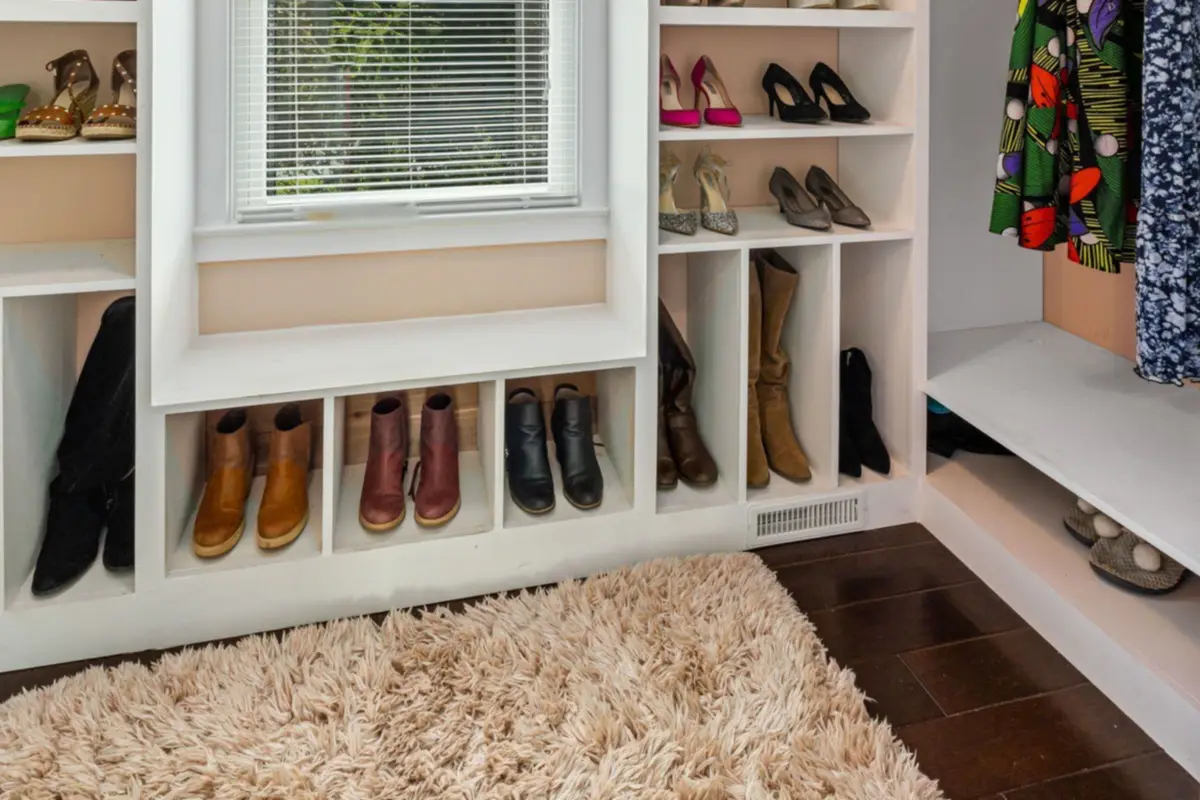
A boot rack with upright prongs holds them in a tidy row by the door or on the closet floor. Tall cubbies work too, one pair to a cubby.
Boot hangers clip the tops of tall boots and hang them from the closet rod, which frees the floor completely. They suit soft leather and suede boots that slouch.
Slip a boot shaper or a rolled towel inside each boot so it stays upright. Rolled magazines or pool noodles cut to length make a simple homemade version.
Let wet boots dry completely before they go back on the rack. Wipe off mud and salt first, and stand them where air can reach the inside.
In a small closet, a boot rack on the floor under short hanging clothes uses space that usually sits empty. Keep the tallest boots at the ends, so they don’t block the shorter pairs.
9. Store special pairs in breathable boxes
Shoes you wear only a few times a year, like dress shoes and formal heels, stay protected in boxes on a closet shelf. Boxes also stack, so a tall shelf holds more.
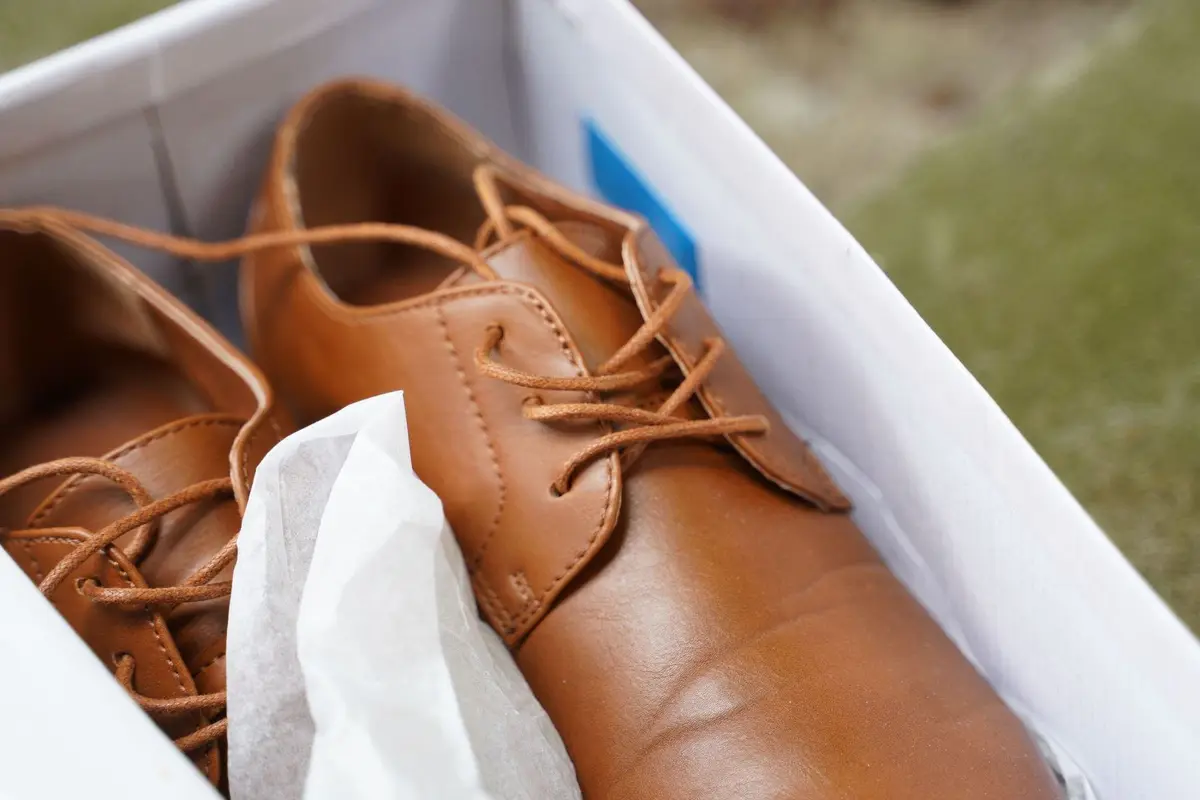
Choose boxes that let the shoes breathe: the original cardboard box, a cloth shoe bag or a clear box with air holes. Tightly sealed plastic boxes can trap moisture and let mildew grow on leather.
Clear drop-front boxes are handy because you can see each pair and open the front without unstacking the whole column. Pick one size that fits your largest pair, so the stack stays even.
Stuff the toes with acid-free tissue or a shoe tree to hold the shape. Put the shoes in only when they’re clean and completely dry.
Label any box you can’t see into, or tape a photo of the pair to the front. You’ll find the right shoes on the first try, even in a hurry.
10. Give kids cubbies at their height
Kids put shoes away when the spot is easy to reach and clearly theirs. A low cubby unit by the door, with one open square for each child, makes the rule simple: shoes off, shoes in your cubby.
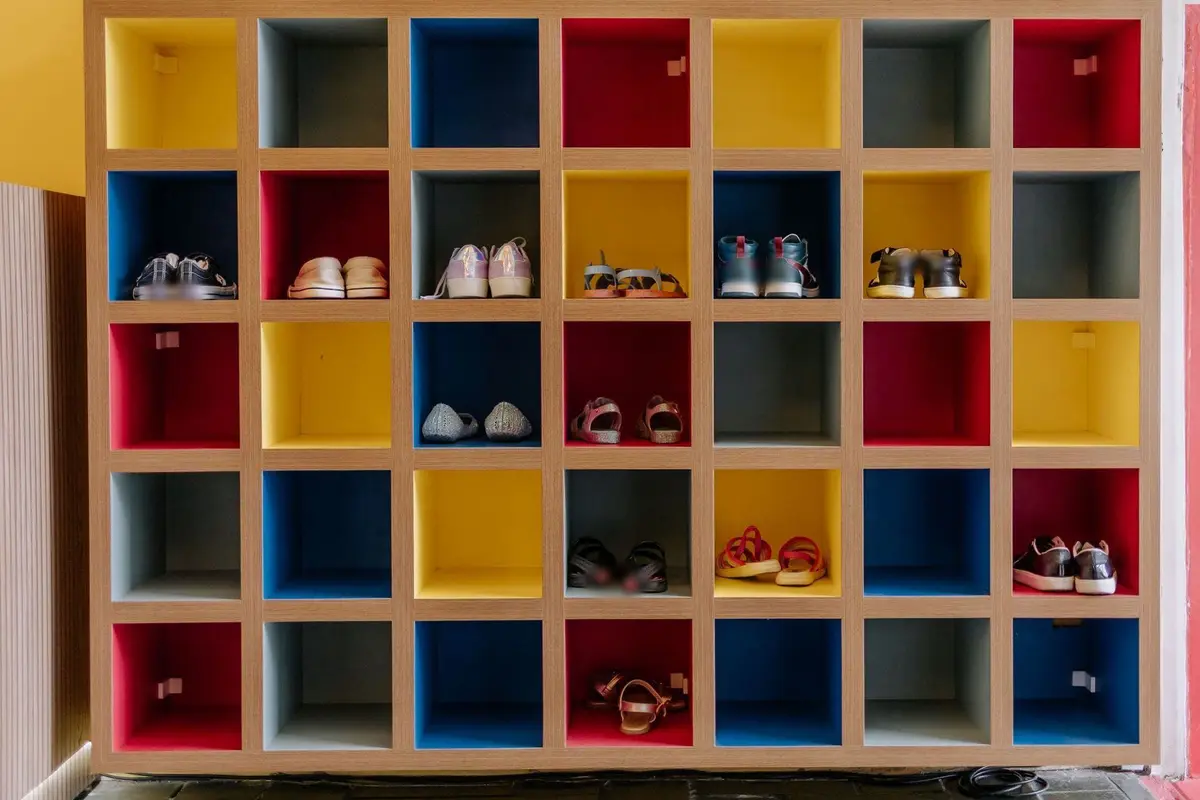
Give each child a color or a picture label, so even little ones who can’t read yet know which cubby is theirs. Keep it low enough that they never need to climb.
Limit each cubby to the pairs they wear right now. Outgrown shoes and off-season pairs move to a bin in the closet until they’re handed down or donated.
A small basket in each cubby holds socks, hats and mittens in cold weather. Add “put shoes in your cubby” to the kids chore chart so it becomes part of coming home.
Anchor any tall cubby unit to the wall. Children climb, and a loaded shelf can tip.
If you have room, give each child a hook above their cubby for a backpack and coat. Everything they need in the morning then lives in one spot by the door.
11. Rotate pairs with the seasons
You don’t need every pair out all year. Keep the shoes that suit this season on the open shelves and store the rest, so the pairs you reach for every day have room.
Twice a year, when the weather turns, swap the boxes. It’s a good moment to check each pair for wear and decide what stays.
Rotate your everyday shoes, too. Giving each pair a full day of rest between wearings lets them air out and dry inside, so they last longer and stay fresher.
Keep a small spot in the closet for the pairs waiting their turn, like a shelf or a bin, so they don’t end up on the floor or back in the pile by the door.
When you bring a new pair home, store or let go of an old one. One in, one out keeps the shoe count close to the number you settled on when you sorted, and the closet never fills up again.
12. Keep pairs dry and aired
Damp shoes put away in a closed closet are the start of odors and mildew. A few habits keep shoes fresh and make them last longer.
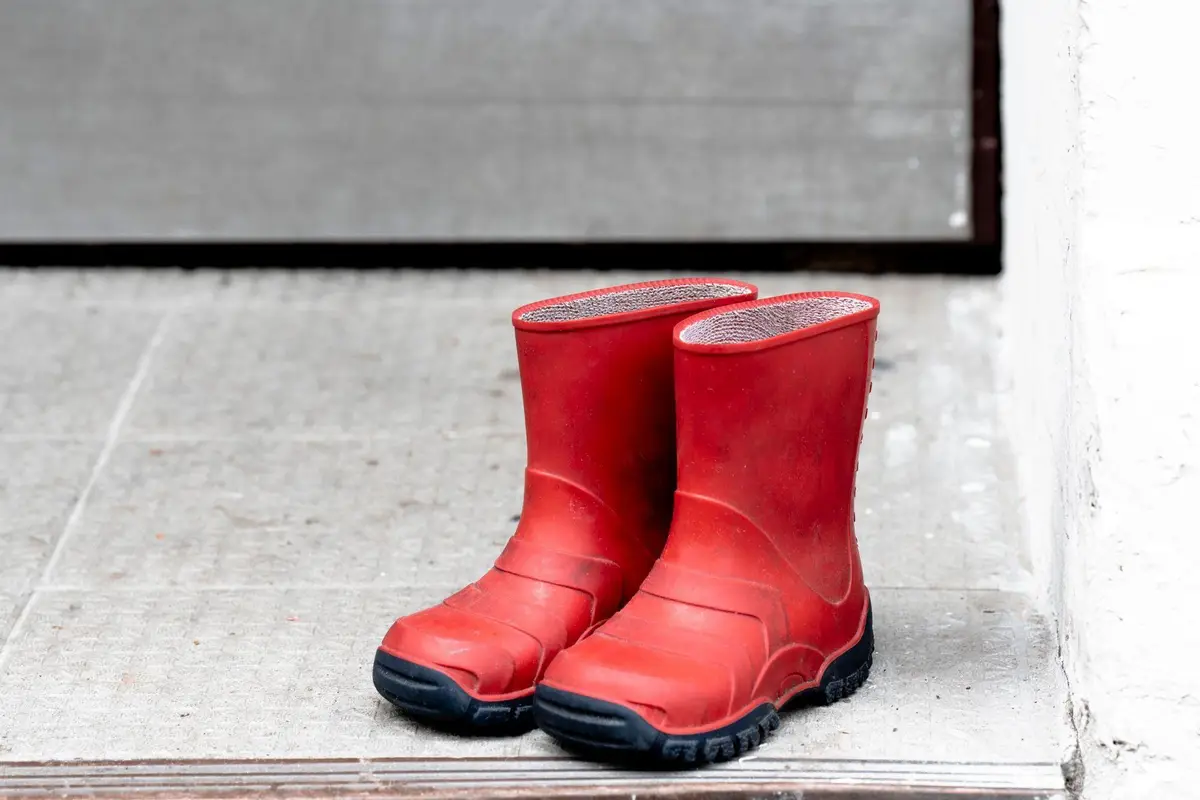
Let shoes air out after you wear them, for several hours or overnight, before they go back into a closet or a box. Pull out the insoles of wet sneakers and stuff the toes with plain paper to soak up water.
Dry wet shoes at room temperature, where air moves around them. Swap the paper when it’s soaked through, and wait until the insides feel completely dry.
Don’t pack shoes into a closet so tight that air can’t move between them. Leave the closet door open now and then to let it air out.
Once or twice a year, empty the shoe shelves, vacuum the closet floor and wipe everything down. The weekly cleaning schedule is a good place to add a quick wipe of the boot tray, so mud and salt never build up.
Save this for later
Pin it to a board so it's there when you're ready to start.
Save to Pinterest(opens in a new tab)Make it easier
Free printable
A room-by-room declutter checklist that tells you exactly what to look for, with four piles to sort into so nothing ends up back on the shelf.
Free tool
Enter the width, depth and height of a shelf, a drawer or a cube cubby, and see which standard bins and baskets fit, how many, and how they line up.
Frequently asked questions
How do I store shoes in a small entryway?
Keep only the pairs each person wears this week by the door, on a tray or a slim rack, and move the rest to a closet or bedroom. A narrow tilt-out cabinet or a bench with a shoe shelf underneath holds a lot without taking much floor space.
Is it bad to store shoes in plastic bins?
Tightly sealed plastic boxes can trap moisture and let mildew grow on leather shoes and boots. Choose a cardboard box, a cloth bag or a container with air holes, and make sure every pair is clean and completely dry before it goes in.
How do I keep tall boots from flopping over?
Stand them upright in a tall cubby, clip them to a boot hanger on the closet rod, or slip a rolled towel or boot shaper inside each one. Upright boots keep their shape and take up far less shelf space than boots lying on their side.
How many pairs of shoes should I keep by the front door?
One or two pairs per person is usually plenty: the everyday shoes and, in wet or snowy weather, the boots. Everything else has a home in a closet or bedroom, so the entry stays clear enough to walk through.