13 Dresser Top Organization Ideas for Keys, Rings and Chargers
Give the top of your dresser one job, then add a tray, a jewelry dish, a lamp and a charging spot, keep a clear patch and anchor the dresser to the wall.

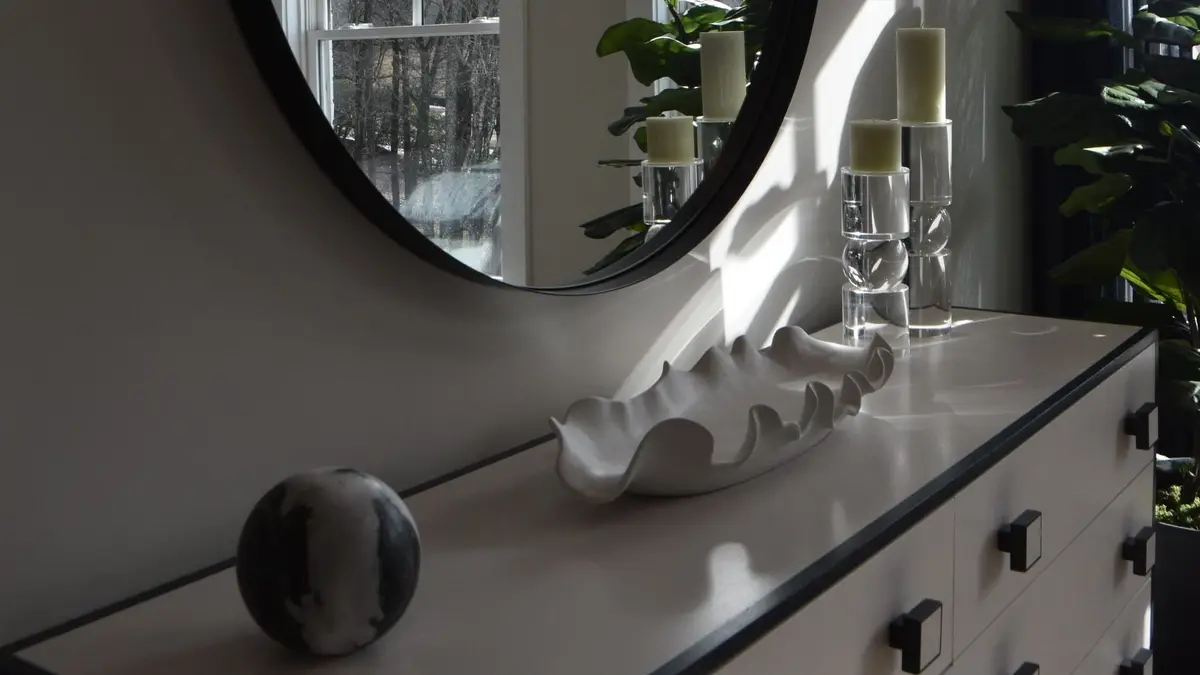
Dresser top organization starts with one decision: what the surface is for. Clear everything off, choose its job (a landing spot for pockets, a small display or a getting-ready station), then put back only what serves that job, each thing in its own tray, dish or basket, with an open patch left for setting things down.
These 13 ideas are about the top of the dresser and the wall just above it. For the drawers themselves, the dresser organization ideas cover folding, dividers and what goes in which drawer.
1. Clear it off and decide its job
Take everything off the top of the dresser and wipe it down. Then look at the empty surface and decide what it’s mainly for, because a dresser top that tries to do everything ends up doing nothing well.
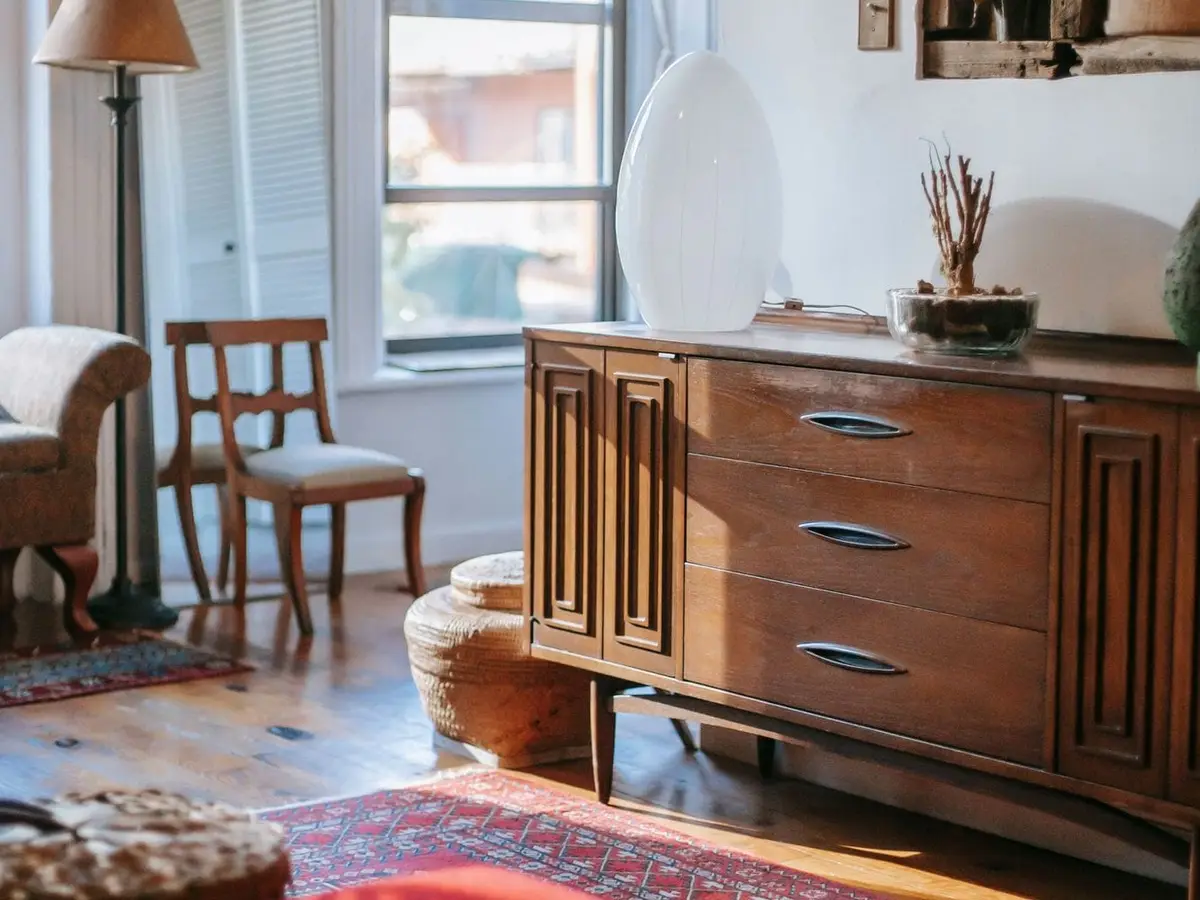
There are three common jobs. A landing spot holds what comes out of your pockets and off your wrists each night. A display shows a few pieces you love, and a getting-ready station holds a mirror, perfume and the few products you use daily.
Most dressers can handle one main job and a little of a second. A landing spot with a lamp and one plant works, while a full vanity plus a key drop plus a display shelf rarely does.
Now sort the pile you took off. Anything that belongs in another room goes back there today, papers go to wherever you handle mail, and clothes go in a drawer or the hamper.
What’s left is the short list that earns a place on top. Everything in the steps below is a way to give those few things a home.
2. Add a tray for the things you take off every night
A tray is the simplest way to stop small things from spreading across the whole top. A watch, glasses, a hair clip and your keys all land in one place, and the rest of the surface stays clear.
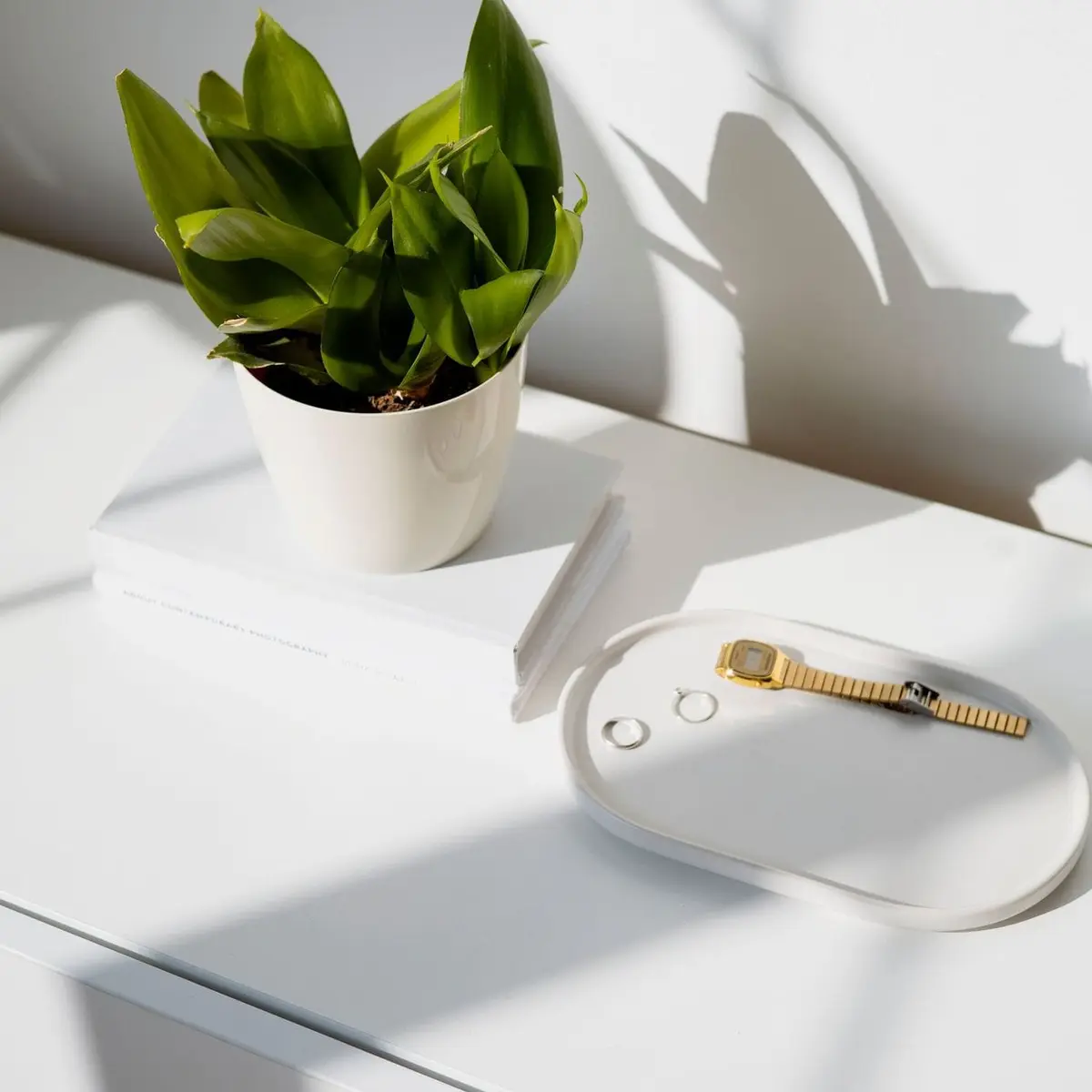
Pick a tray with a low rim, so things don’t roll off but you can still slide a hand in and pick them up. Wood, ceramic, stone and lacquer all work, and a light color makes dark items easy to spot first thing in the morning.
Size matters more than style. Lay out what you actually drop each night and choose a tray just big enough to hold it, with a little room to spare. A tray that’s too big invites extra things, and one that’s too small overflows by midweek.
Set it toward the front corner on the side you walk up to, so dropping things in takes no thought. If you measure the space first, the bin size calculator shows what fits without crowding the lamp or the edge.
Empty the tray once a week. Anything that hasn’t moved in that time probably belongs in a drawer.
3. Keep rings and earrings in a dish or a small box
Jewelry you wear every day needs a spot of its own on top of the dresser. Rings, studs and a favorite bracelet tangle and vanish when they share the everyday tray with keys and coins.
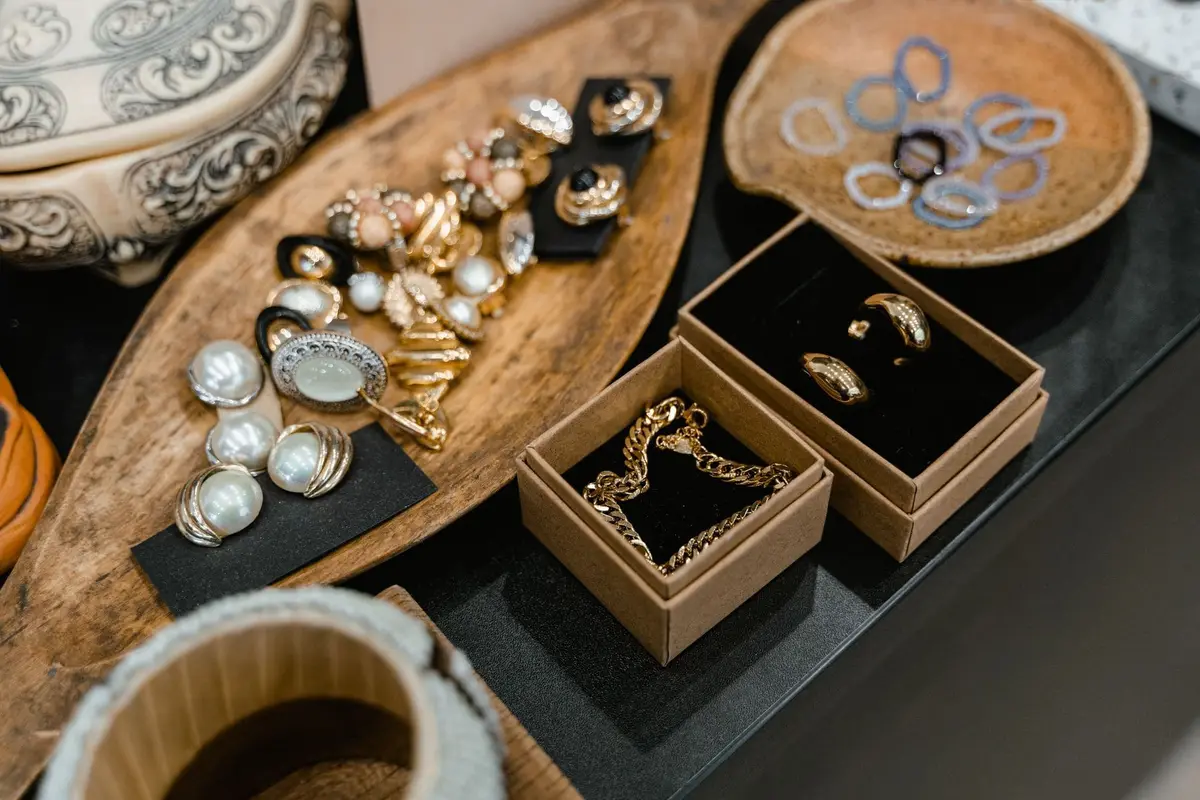
A shallow dish is enough for the pieces you rotate through daily. Choose one with a smooth inside, so posts and chains don’t snag, and keep it away from the edge, where a sleeve can knock it to the floor.
Pieces you wear less often go in a small lidded box. A lid keeps dust off, keeps a curious toddler or cat out, and lets you stack the box neatly beside the dish.
Keep earring pairs together by pushing studs through a small square of felt or card, or by giving each pair its own little ring box. Necklaces lie flat with the clasp closed, or hang from a small stand so the chains don’t knot.
When the dish starts to fill up, move the pieces you haven’t worn lately into the box or a drawer. The dish only works when it holds just a few things.
4. Set a valet bowl for everything in your pockets
Pockets empty onto the dresser every evening: coins, receipts, a wallet, earbuds, a folded note. A valet bowl gives those things a home of their own, separate from the jewelry and the daily tray.
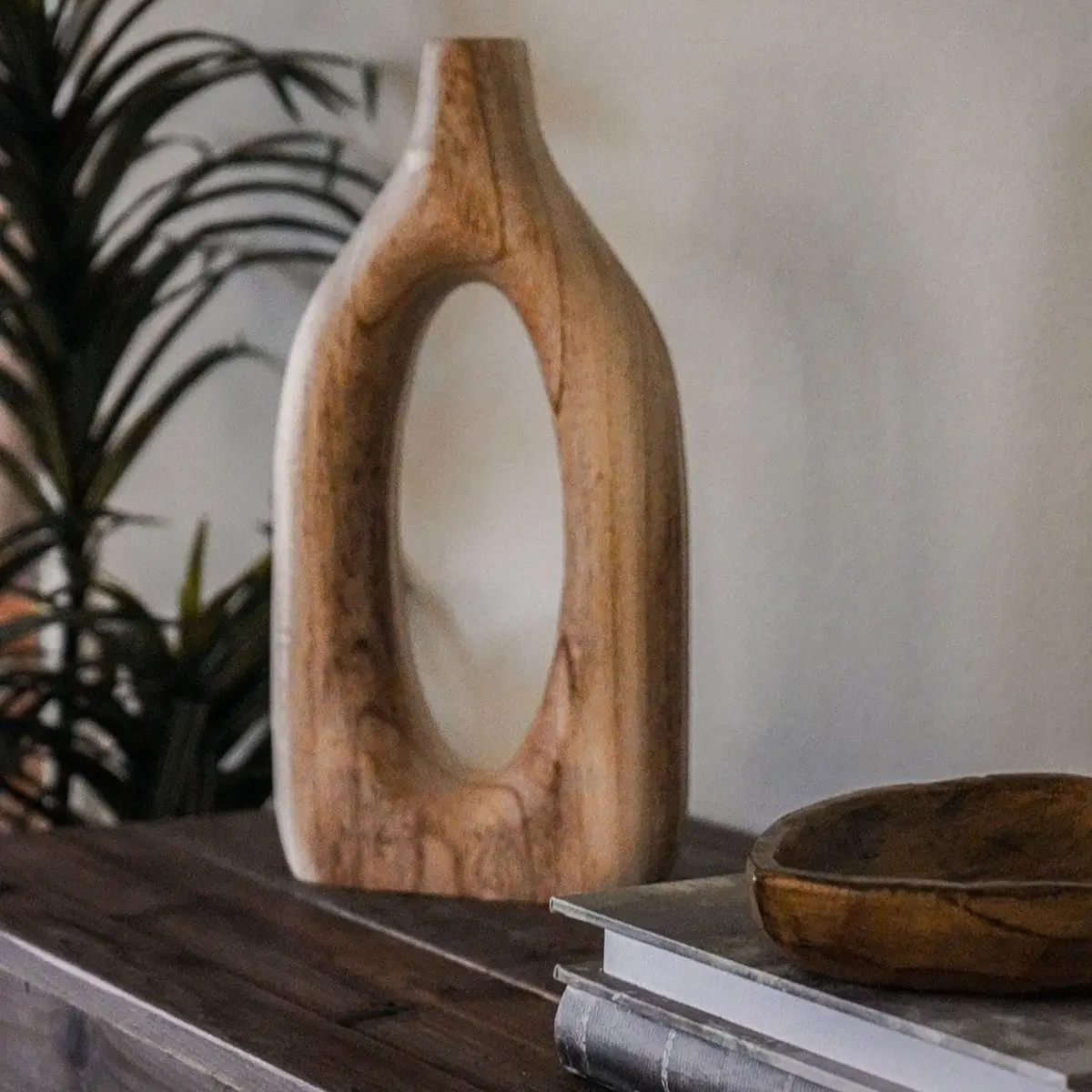
A wide wooden or ceramic bowl works well, since loose coins and a wallet sit in it without sliding. Choose something sturdy enough that a set of keys landing in it won’t chip it.
The key is what happens next. Once a week, sort the bowl: coins go into a jar, receipts get filed or tossed, and anything that belongs to someone else goes back to them.
If more than one person drops things on the same dresser, give each person a bowl. Two small bowls side by side keep a partner’s wallet from disappearing under a pile of your hair clips.
A hook on the wall beside the dresser, or on the closet door, can hold the bag or jacket that would otherwise end up draped over the corner. These closet organization hacks have more ways to catch the things that pile up between the closet and the bed.
5. Light it with a small lamp
A lamp turns the dresser top into a place you can use after dark, whether you’re finding a ring in the morning or setting down your watch at night.
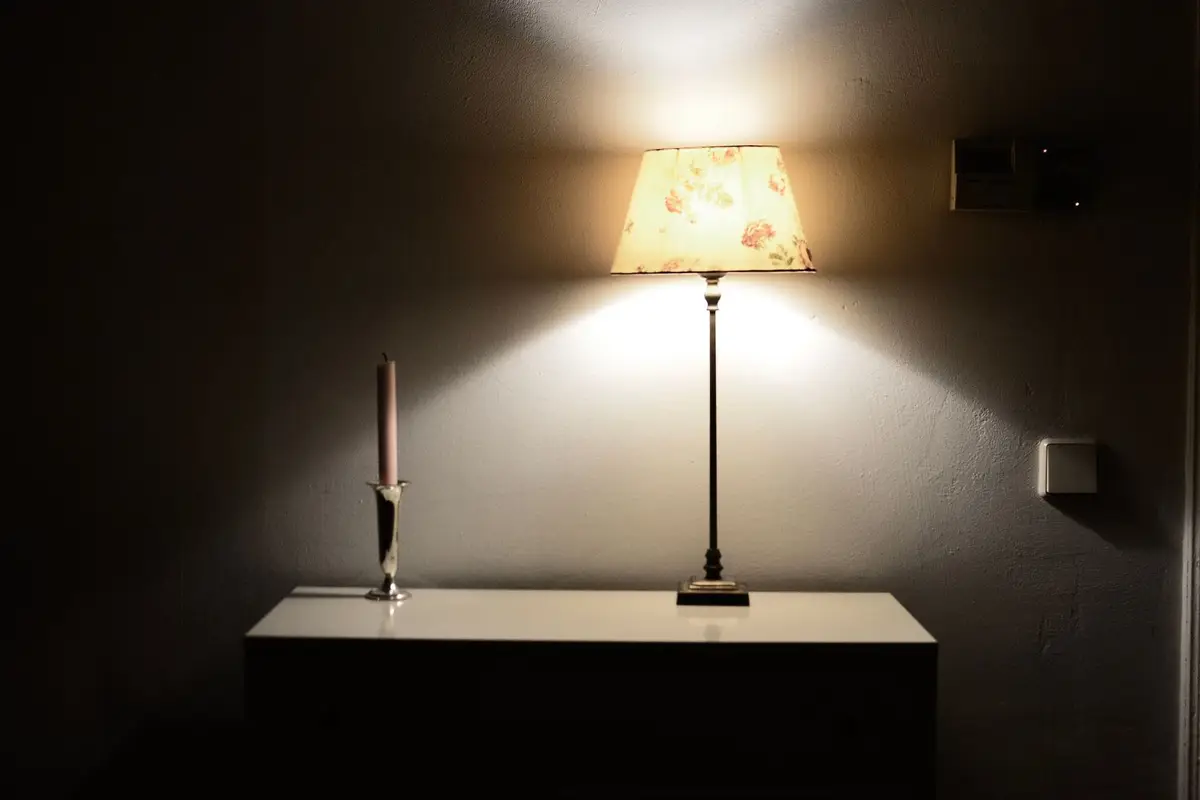
Put the lamp at one end, usually the end nearest an outlet. That way the cord runs straight down the back of the dresser instead of across the top, and the lamp anchors one side of the arrangement.
Choose a base that’s steady and not too heavy. A lamp that’s tall enough to light the whole surface but narrow at the base leaves room for the tray and the dish.
A shade in white or linen gives a soft, even light that’s kind first thing in the morning. A warm bulb makes the bedroom feel calm in the evening.
If your dresser sits where a ceiling light leaves it in shadow, a small lamp makes a bigger difference than any tray. You can see what’s there, so it’s easier to keep it tidy.
6. Add a small mirror above or on top
A mirror on or above the dresser is handy for a last check before you leave, and it bounces light around the room, which makes a small bedroom feel brighter.
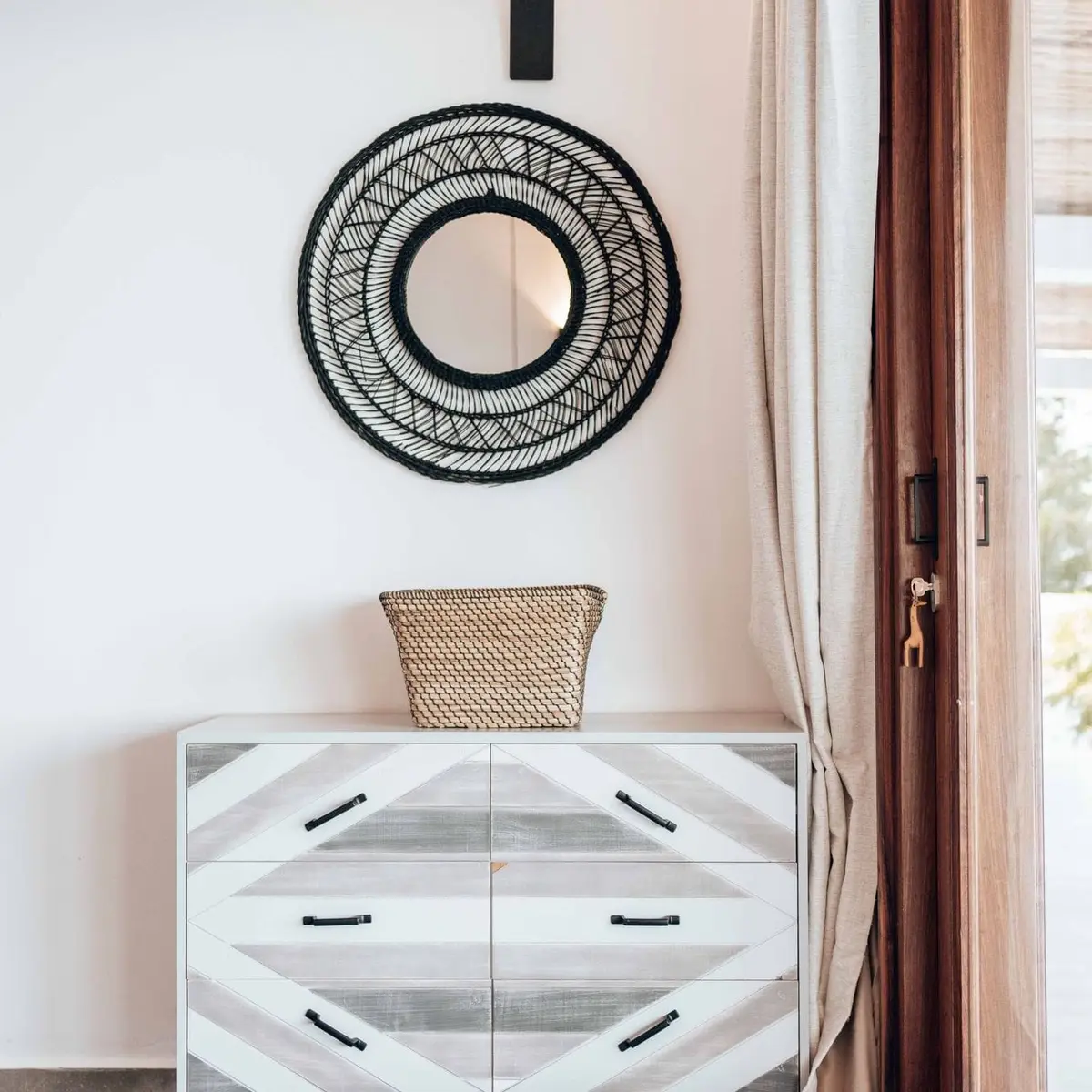
Hang it on the wall above the dresser, centered or set toward one end, with the bottom edge a little above the tallest thing on top. Hung that way, it frames the arrangement instead of hiding behind it.
A mirror leaning on the dresser top looks relaxed, but it takes up surface space and can slide. If you lean one, keep it light, set it against the wall and put something heavy enough in front of the base to stop it from slipping forward.
Hang anything heavy with hardware rated for its weight, screwed into a stud or a wall anchor made for your wall. A mirror that falls onto a dresser can break more than itself.
For getting ready, a small tabletop mirror on a stand can sit near the tray and fold away when the dresser is acting as a display.
7. Group things by height: tall, medium and low
A dresser top looks calm when things are grouped, not scattered. The easiest rule is to put one tall thing, one or two medium things and one low thing together in a cluster.
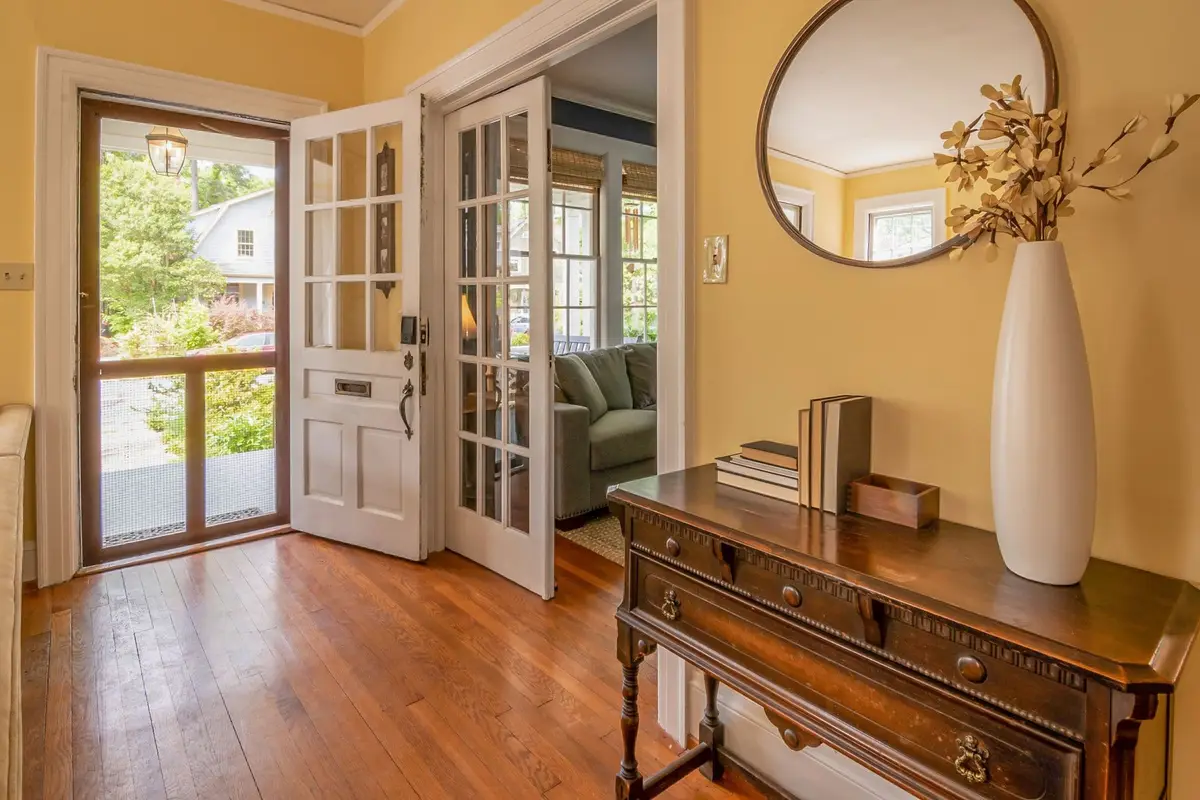
The tall piece might be the lamp, a vase of branches or a leaning frame. Medium pieces are a stack of books, a plant or a candleholder, and the low piece is the tray, a dish or a small box.
Set the tallest piece toward the back and the lowest toward the front, so you can see everything from where you stand. Overlap the pieces slightly, so they read as one group rather than a row.
Most dressers look best with one main group at one end and a smaller one at the other, with open space between. A long dresser can take two groups, but resist filling the middle.
Repeating one material or color, like warm wood or white ceramic, pulls the group together. The aesthetic look people pin comes mostly from that: fewer things, grouped by height, in a few colors that match.
8. Keep decor to one or two pieces
Decor makes a dresser feel like yours, but it’s also what turns a tidy top into a crowded one. Choose one or two pieces you really love and let them have the space.
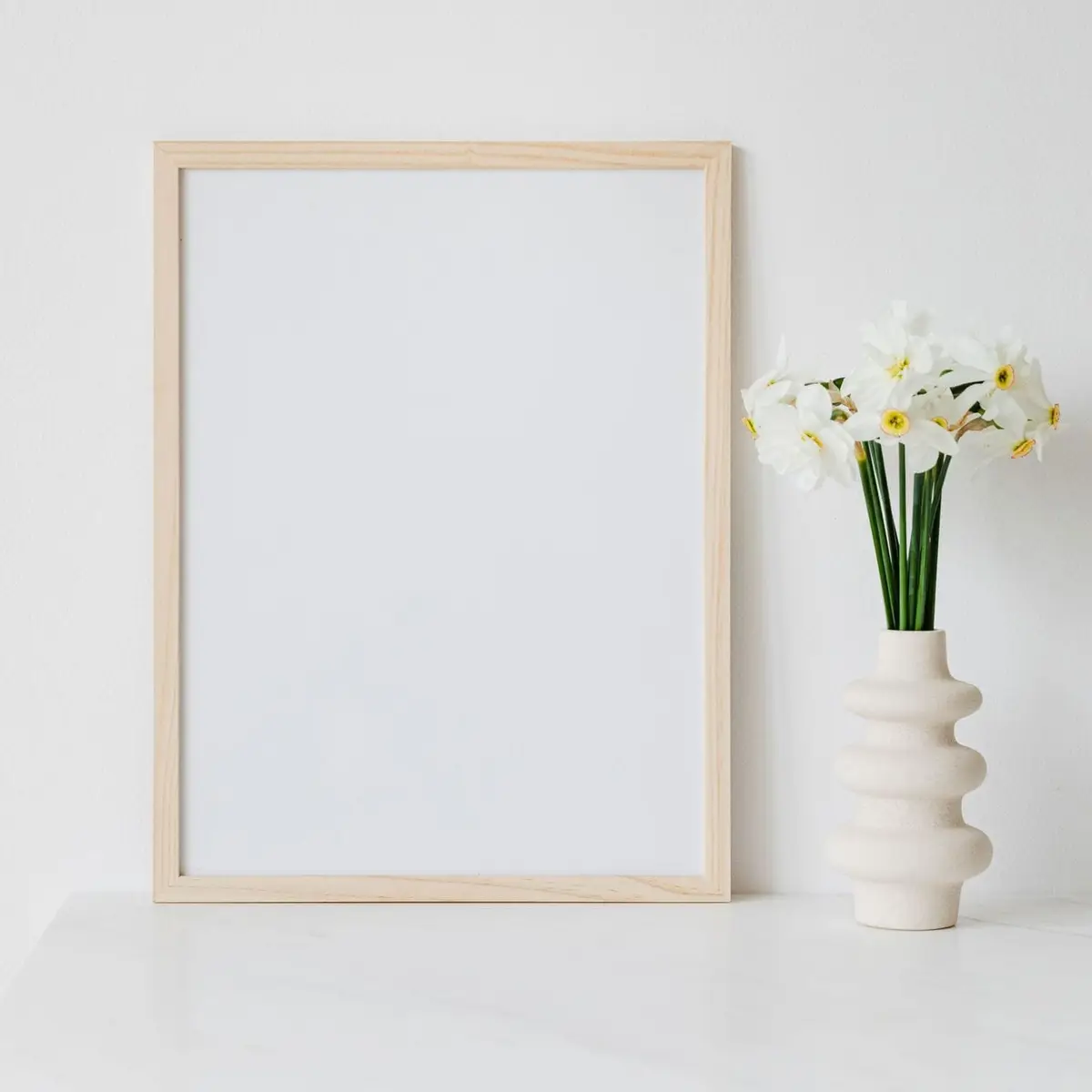
A framed photo, a small vase of flowers or a plant, a bowl you brought home from a trip: each one says more on its own than it does in a crowd of ten.
Keep heavy decor low or off the dresser. A heavy vase or a big stack of books adds weight up high, where it doesn’t help the dresser stay steady.
Rotate instead of adding. When a new piece comes in, an old one goes into a drawer or a box, and you can swap them back in a few months.
Keepsakes that don’t make the cut can go into a lidded, labeled box on the closet shelf, where they’re safe and easy to find. The dresser stays clear, and the things you love aren’t lost.
9. Make a charging spot and tame the cords
If your phone, watch or earbuds charge overnight on the dresser, give them one spot instead of letting cords trail across the top.
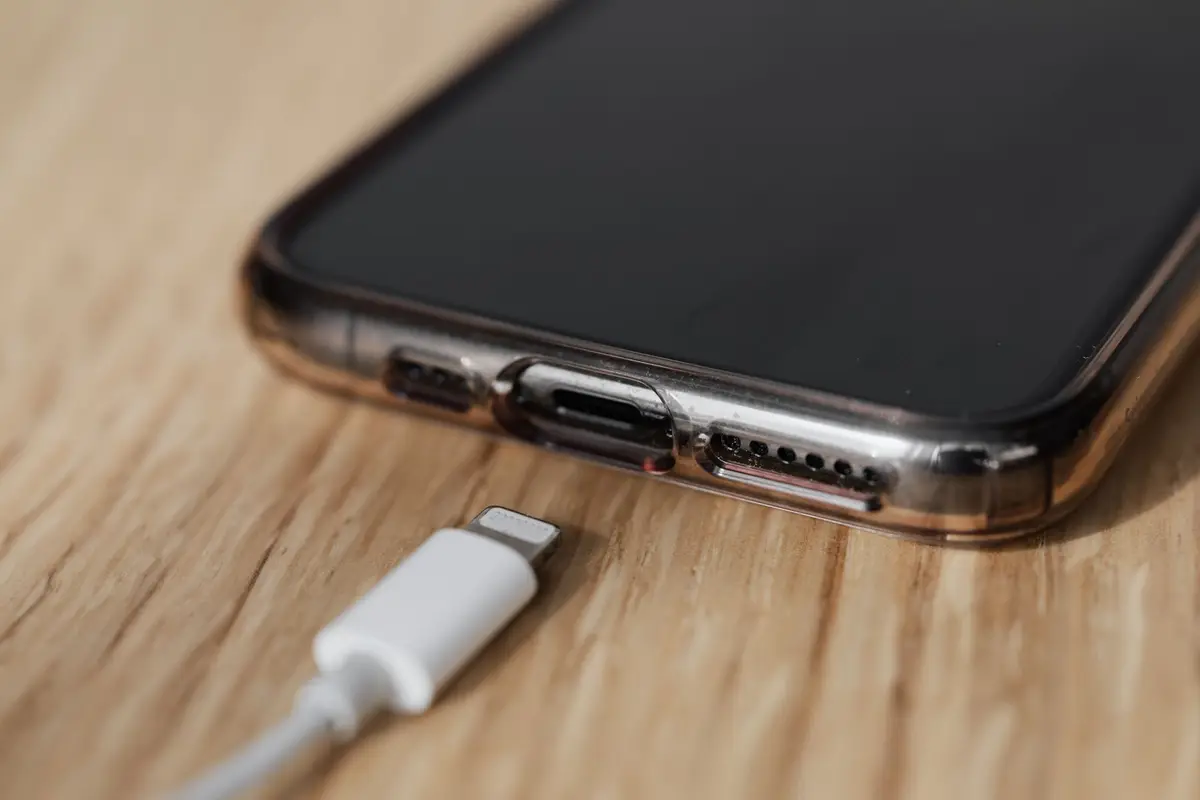
Choose the end nearest the outlet and set a small tray or dish there for the devices. A short cord, or a cord wrapped neatly with a reusable tie, keeps the top looking clean.
Run cords down the back of the dresser instead of across the front. A couple of adhesive cord clips on the back edge hold them in place, so a cord doesn’t slide off every time you unplug.
Charge devices on a solid, flat surface like the dresser top, not on the bed, a pillow or a pile of clothes. Charging on soft surfaces or covering a device while it charges lets heat build up, which raises the risk of fire.
In a dorm room or a studio, the dresser often doubles as a nightstand and desk, so the charging spot matters even more. These dorm closet organization ideas help when the closet and the dresser share a very small room.
10. Give perfume its own small tray
Perfume bottles look lovely on a dresser, but a row of them spread across the top quickly turns into clutter. A small tray gathers them into one tidy group.
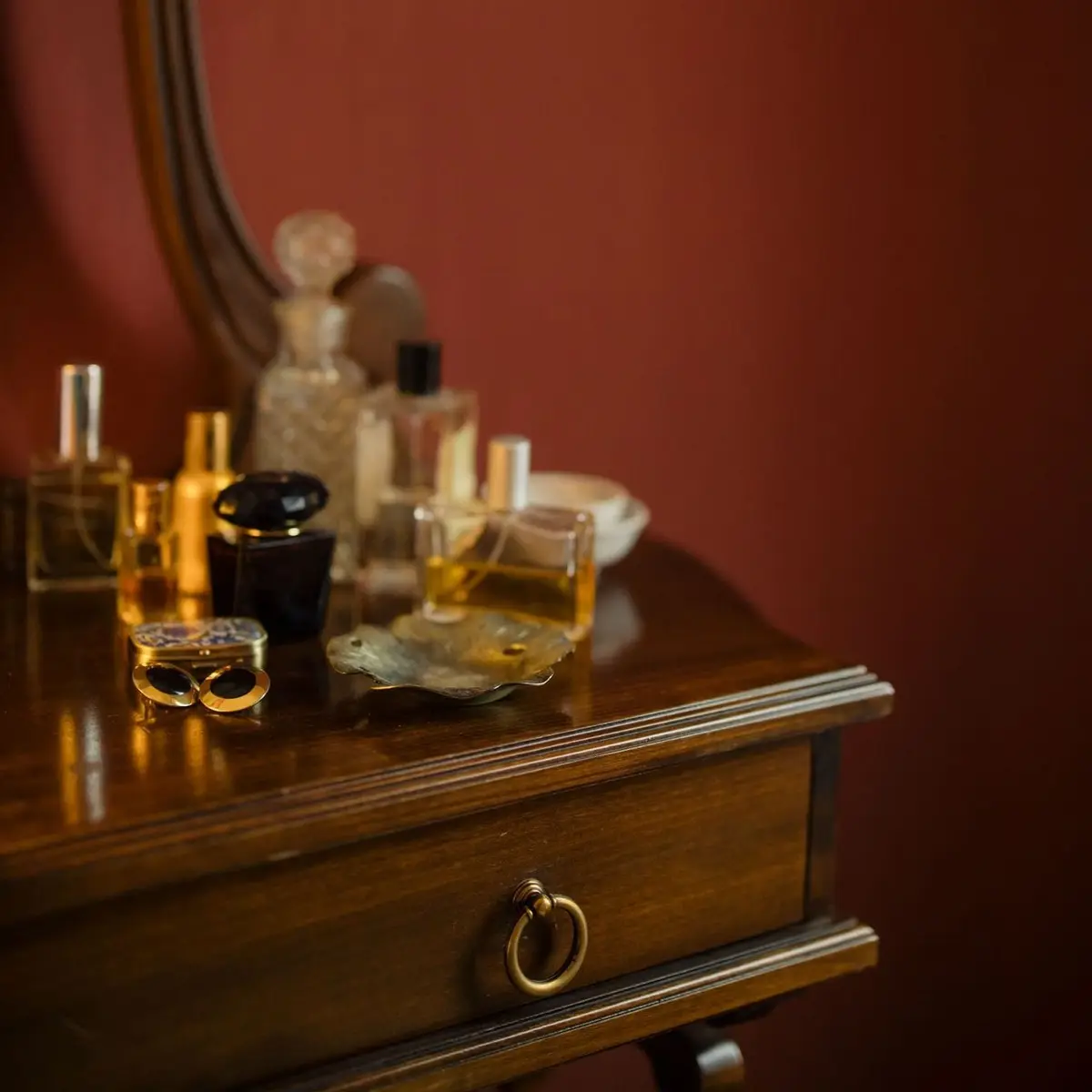
A mirrored, glass or metal tray suits perfume because it wipes clean if a bottle drips. Set it at the back of the dresser, where the bottles won’t get knocked over when you reach for the lamp.
Keep only the scents you wear now on the tray. Bottles you’re saving for later can wait in a drawer or the box they came in.
Stand the tallest bottle at the back and the smaller ones in front, like the height groups above. A tray of three or four bottles looks intentional, while ten in a row looks like storage.
If young children are in the house, keep perfume, nail polish remover and anything else that shouldn’t be tasted up high and out of reach, not on a low dresser.
11. Use a small lidded basket for hair ties and lotion
Small getting-ready things, like hair ties, bobby pins, lip balm and hand lotion, end up loose on the dresser because they’re used every day. A small basket with a lid hides them and keeps them together.
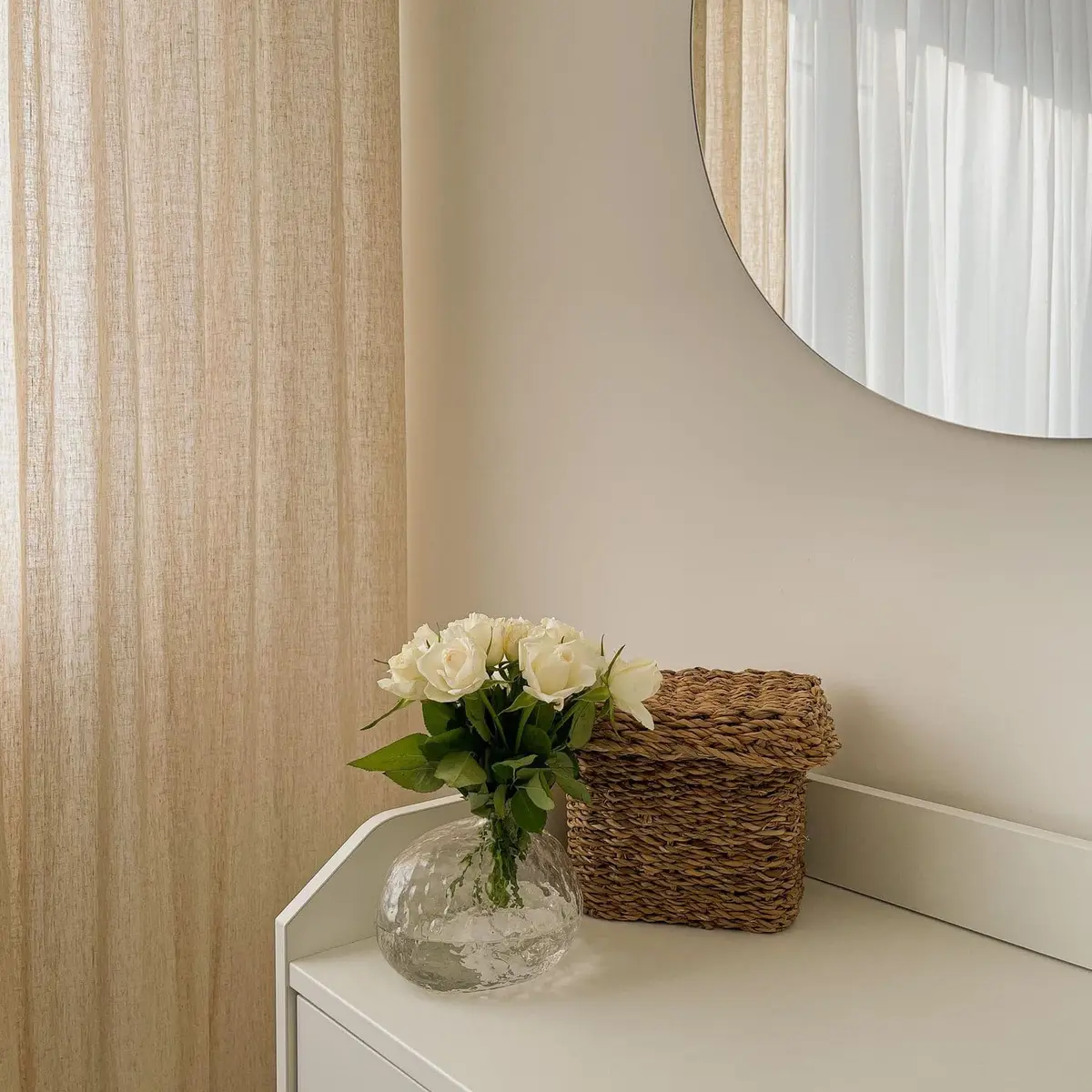
A woven basket adds texture to the top and keeps the jumble out of sight. Choose one about the size of a shoebox or smaller, so it doesn’t take over the surface.
Inside, a couple of small pouches or tins keep things sorted: one for hair things, one for lip balm and lotion. You can grab the right one without tipping out the whole basket.
Keep only what you use each day. Spare bottles, travel sizes and products you’re trying go in a bathroom cabinet or a drawer, so the basket never overflows.
Set the basket at the end you stand at while getting ready, close to the mirror if there is one. It doubles as a medium-height piece in your height group.
12. Keep a clear patch and reset it once a week
Leave one stretch of the dresser top completely empty. A clear patch gives you room to set down a folded shirt, a cup or a bag for a moment, without the moment turning into a pile.
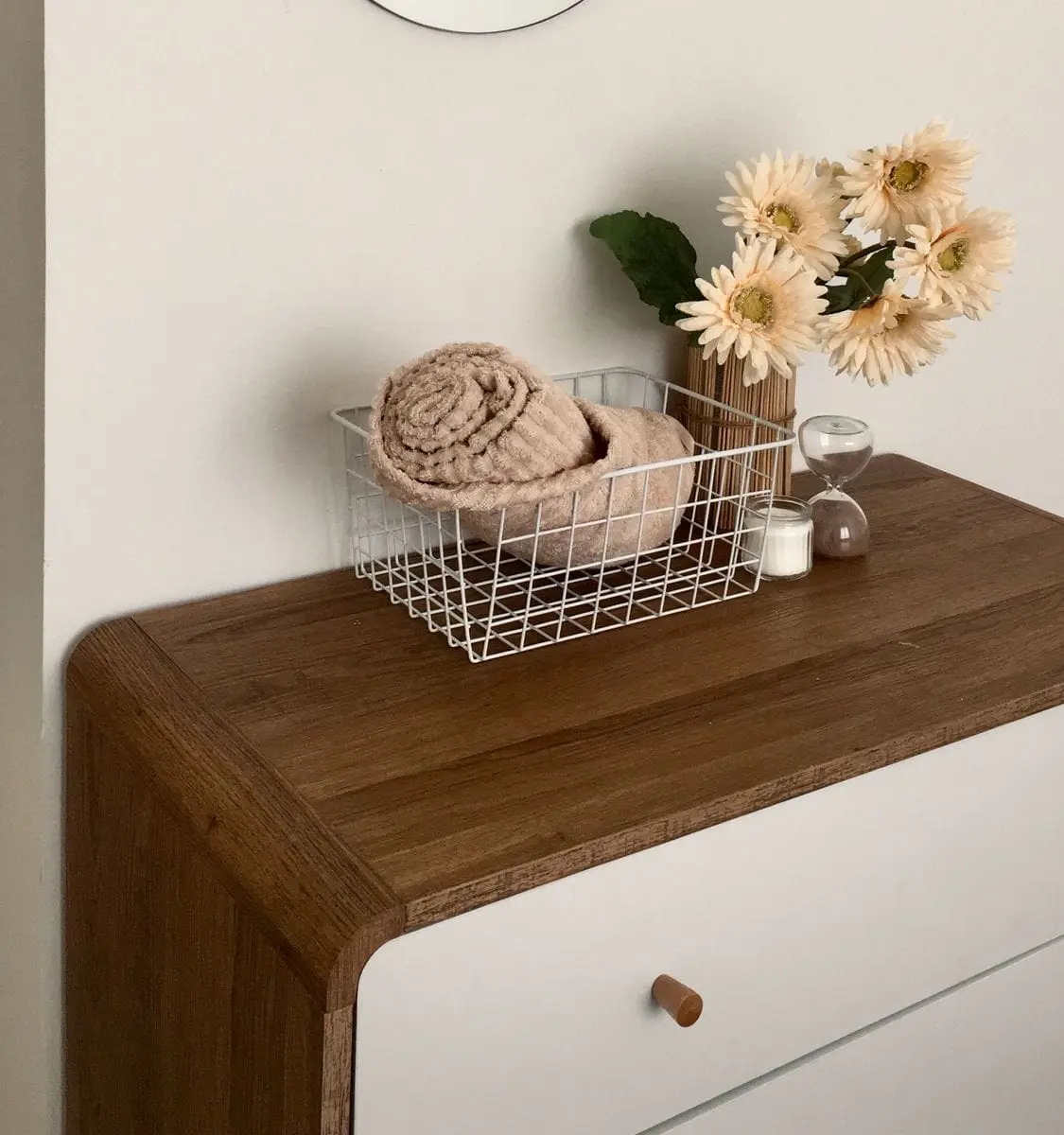
Decide where the patch is, usually in the middle or at the end farthest from the lamp, and treat it as part of the plan. Empty space is what makes the rest of the top look organized.
Once a week, reset the whole top. Empty the tray and the valet bowl, put jewelry back in the dish or box, return stray cups and mail, and wipe the surface.
Tie it to something you already do, like changing the sheets or putting away laundry. The Sunday reset checklist includes small jobs like this, so the dresser gets a reset along with the rest of the house.
A reset takes a few minutes when you do it weekly, and much longer when you skip a month. Keep it short and steady.
13. Anchor the dresser and keep the top safe for kids
Anything on top of a dresser matters less than the dresser staying upright. Anchoring it to the wall is the most important step on this list, especially in a home with young children.
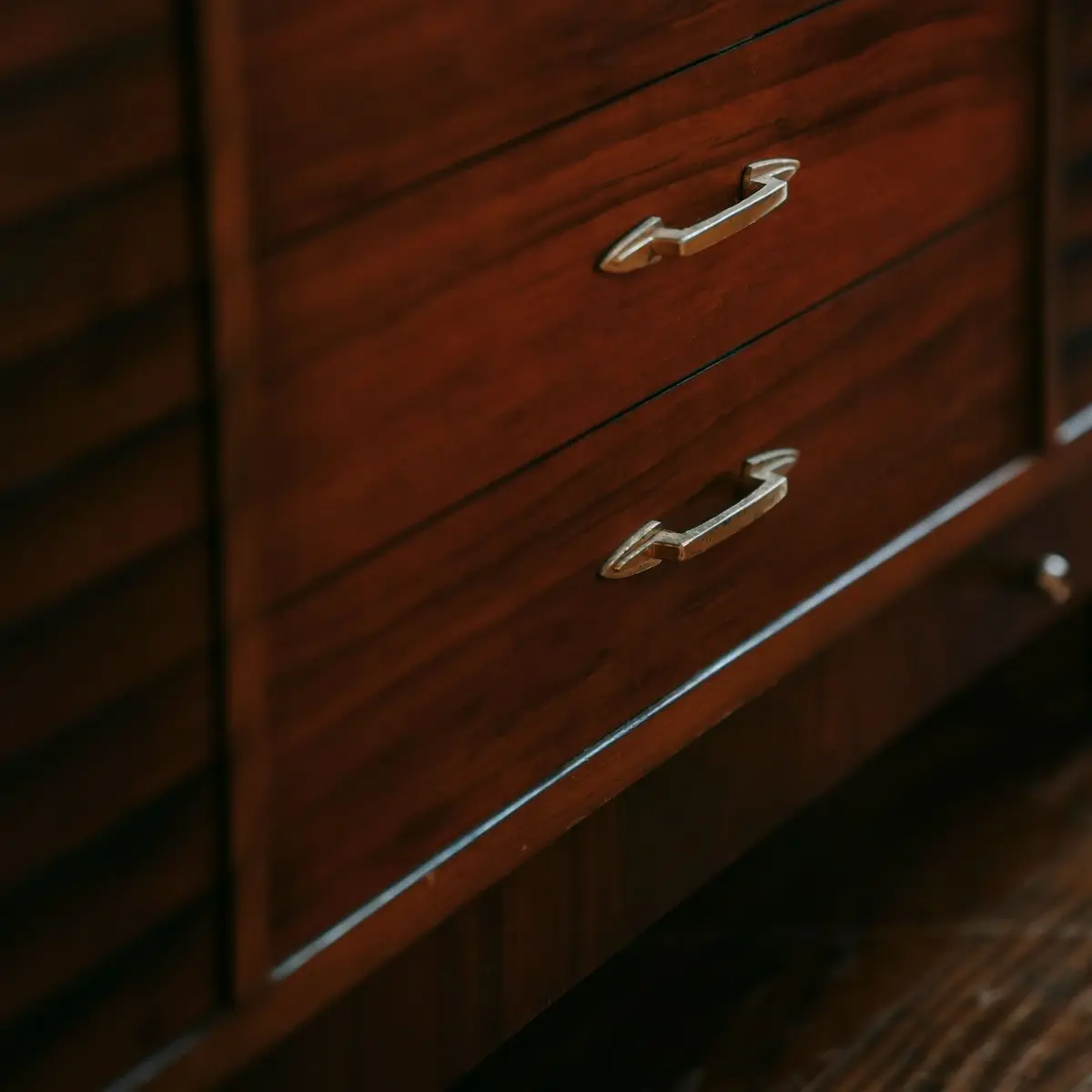
Furniture with drawers can tip forward when drawers are pulled out or climbed like steps. Anchor the dresser to the wall with an anti-tip kit, into a stud where you can, then tug on the straps to make sure they hold.
Keep heavier things on lower shelves and in lower drawers, not on top. A dresser that’s heavy at the top is easier to tip than one that’s heavy at the bottom.
Don’t keep things kids want, like toys, remotes, snacks or a tablet, on top of the dresser, where they might climb the drawers to reach them. A TV on a dresser needs anchoring too, or a sturdy, low base of its own.
Check the anchor whenever you move the dresser or rearrange the room. Once it’s secure, the top can hold the lamp, the tray and the few things you love without worry.
Save this for later
Pin it to a board so it's there when you're ready to start.
Save to Pinterest(opens in a new tab)Make it easier
Free printable
Sunday Reset Checklist Printable
A one-page Sunday reset routine: clear the kitchen, the laundry and the living spaces, then get ready for Monday and plan the week, so the week starts calm instead of in a scramble.
Free tool
Enter the width, depth and height of a shelf, a drawer or a cube cubby, and see which standard bins and baskets fit, how many, and how they line up.
Frequently asked questions
What should I put on top of my dresser?
Start with what you use there every day: a tray for your watch and keys, a dish for rings, a lamp and maybe a charging spot. Add one or two things you love to look at, and leave the rest of the surface open.
How do I keep the top of my dresser from getting cluttered?
Give every item on top a fixed home, like a tray, a dish or a small basket, so anything without a home stands out right away. A quick reset once a week sends stray mail, laundry and cups back where they belong.
How do I make my dresser top look nice without it looking busy?
Group things by height, with one tall piece, a couple of medium ones and a low tray, and keep them close together instead of spread along the whole top. Repeat one color or material, and leave an empty stretch so the arrangement has room to breathe.
Is it safe to put a TV on a dresser?
Only if both the dresser and the TV are anchored to the wall, since a TV on top adds weight up high and can tempt a child to climb. If anchoring isn't possible, set the TV on a sturdy, low base instead, pushed back as far as it goes, with the cords out of reach.