12 Closet Shelf Organization Ideas for Sweaters, Bins and Bags
Keep sweater stacks upright with dividers, fold to one size, label bins facing out, store the off season up top and reach the high shelf safely.


Closet shelves stay organized when everything on them is either stacked neatly or contained. Fold clothes to one size and keep the stacks short, put dividers between them so they stay upright, and corral everything else in bins and baskets with labels facing out. The things you use daily go at eye level, and the off season goes up top.
These 12 closet shelf organization ideas cover the shelf above the rod and the shelving units inside a closet, from folding to bins to reaching the top safely.
1. Use shelf dividers to keep stacks upright
A stack of sweaters with nothing beside it slowly leans, slides and topples into the next stack. Shelf dividers give each stack its own walls, so one pile stays one pile.
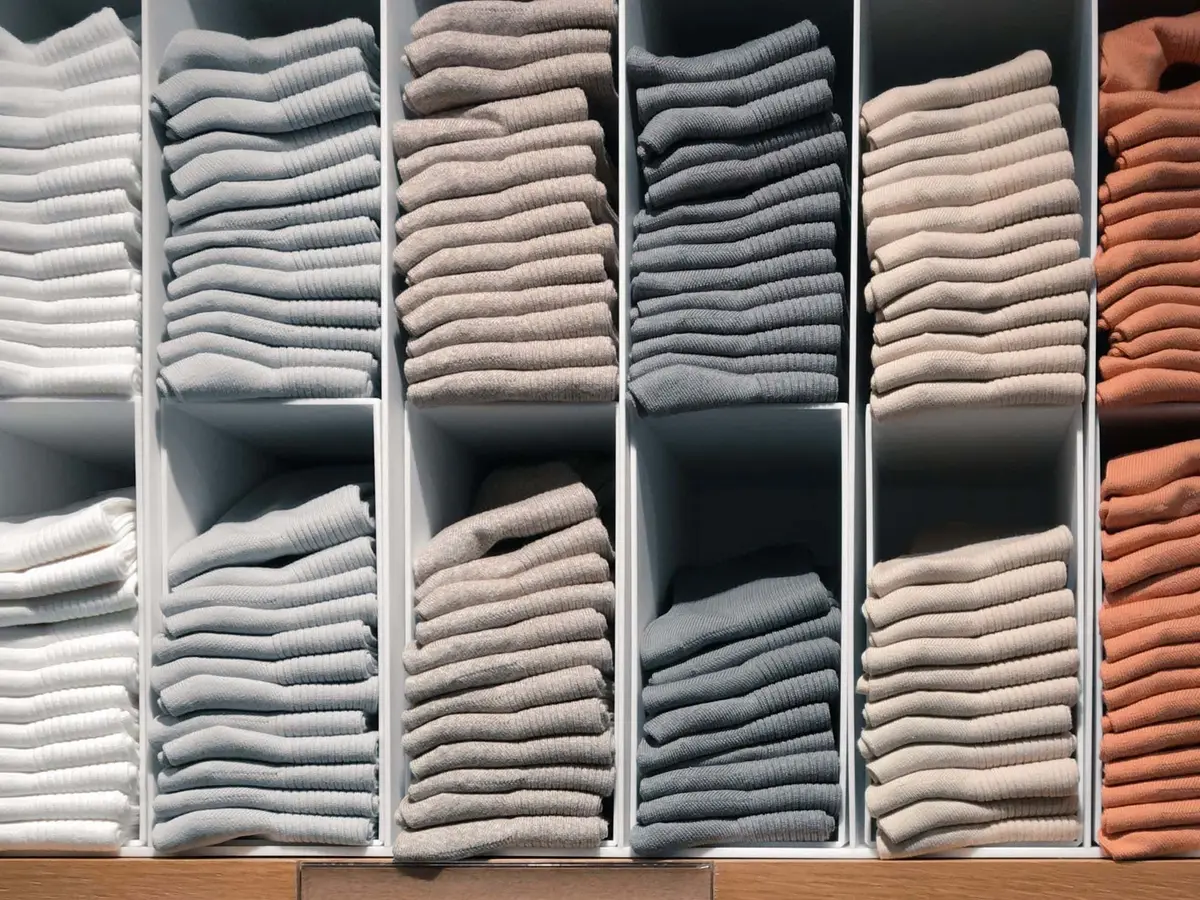
Clip-on dividers slide over the front edge of a shelf and need no tools, which makes them a good fit for a rental. Space them about the width of one folded sweater, plus a little room on each side for your hand.
Dividers work best for soft, bulky things: sweaters, sweatshirts, jeans and folded blankets. Thin tees and leggings stack better in a bin or a drawer, since they slip under a divider.
Plan one category per section, such as work sweaters, weekend sweaters and sweatshirts. When you’re looking for something, you only have to search one stack.
If a section is always overfull, that’s a sign to clear some of it out rather than add another divider. The dividers only help when every stack is short enough to stay neat on its own.
2. Fold to one size and keep stacks low
Stacks look tidy and stay up when everything in them is folded to the same width and depth. Pick one fold for each kind of clothing and use it every time you put laundry away.
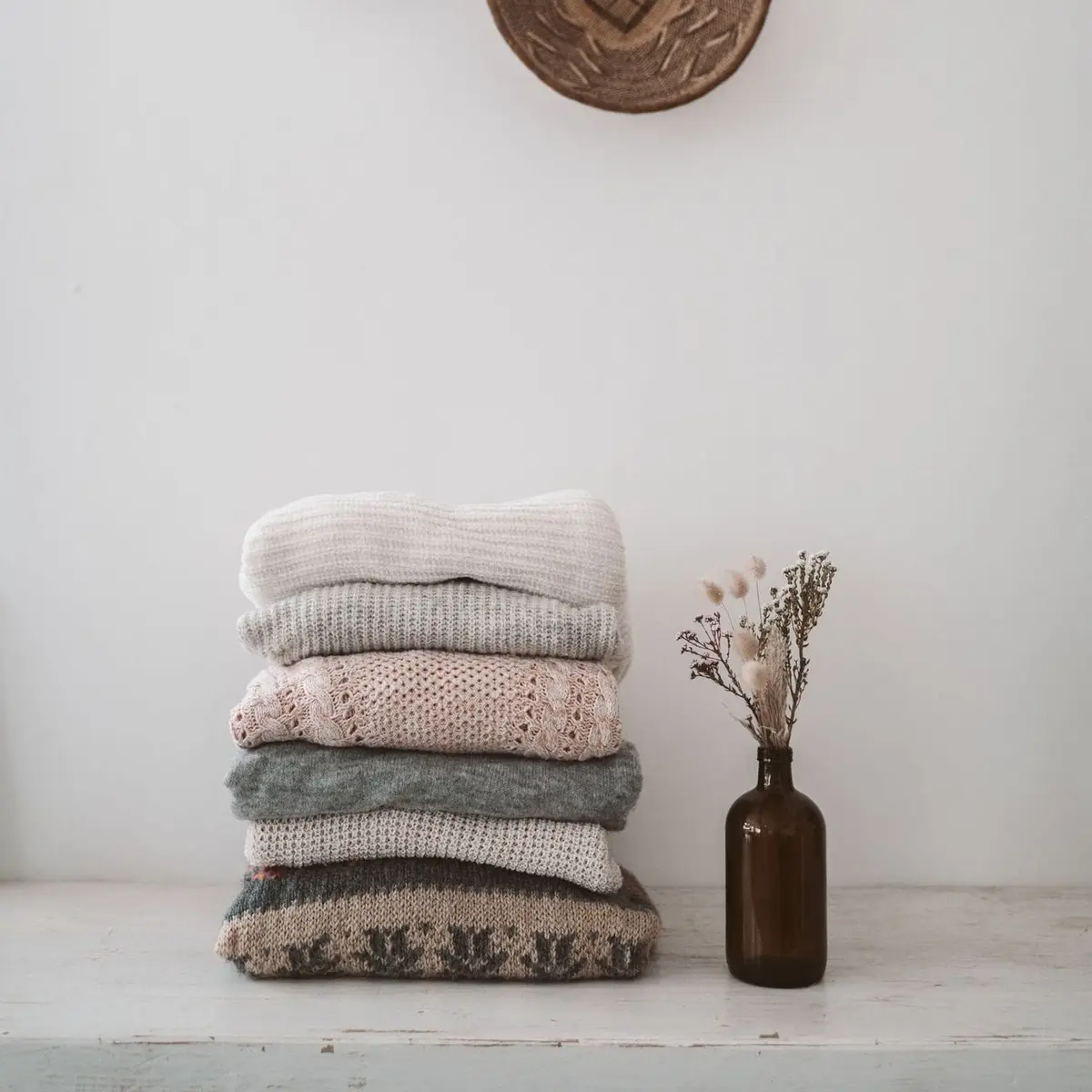
A simple rule is to match the fold to the shelf. Fold sweaters so their depth is a little less than the depth of the shelf, and their width fits neatly between dividers.
Keep each stack low enough that you can lift the top half with one hand and slide a piece out with the other. A very tall stack looks efficient, but it falls over the first time you pull from the middle.
Heavier things, like jeans and thick sweaters, go at the bottom of a stack or on a lower shelf. Lighter pieces sit on top.
If your closet has wire shelves, lay a liner over the wire first, so the bottom of each stack sits flat and doesn’t pick up lines. These wire closet organization ideas cover liners, baskets and other ways to work with wire shelving.
3. Put things in bins with the labels facing out
Small, loose things, like scarves, belts, swimsuits and gloves, never stay put on an open shelf. Bins and baskets give each category a container, and the shelf stays tidy even when the bin inside isn’t.
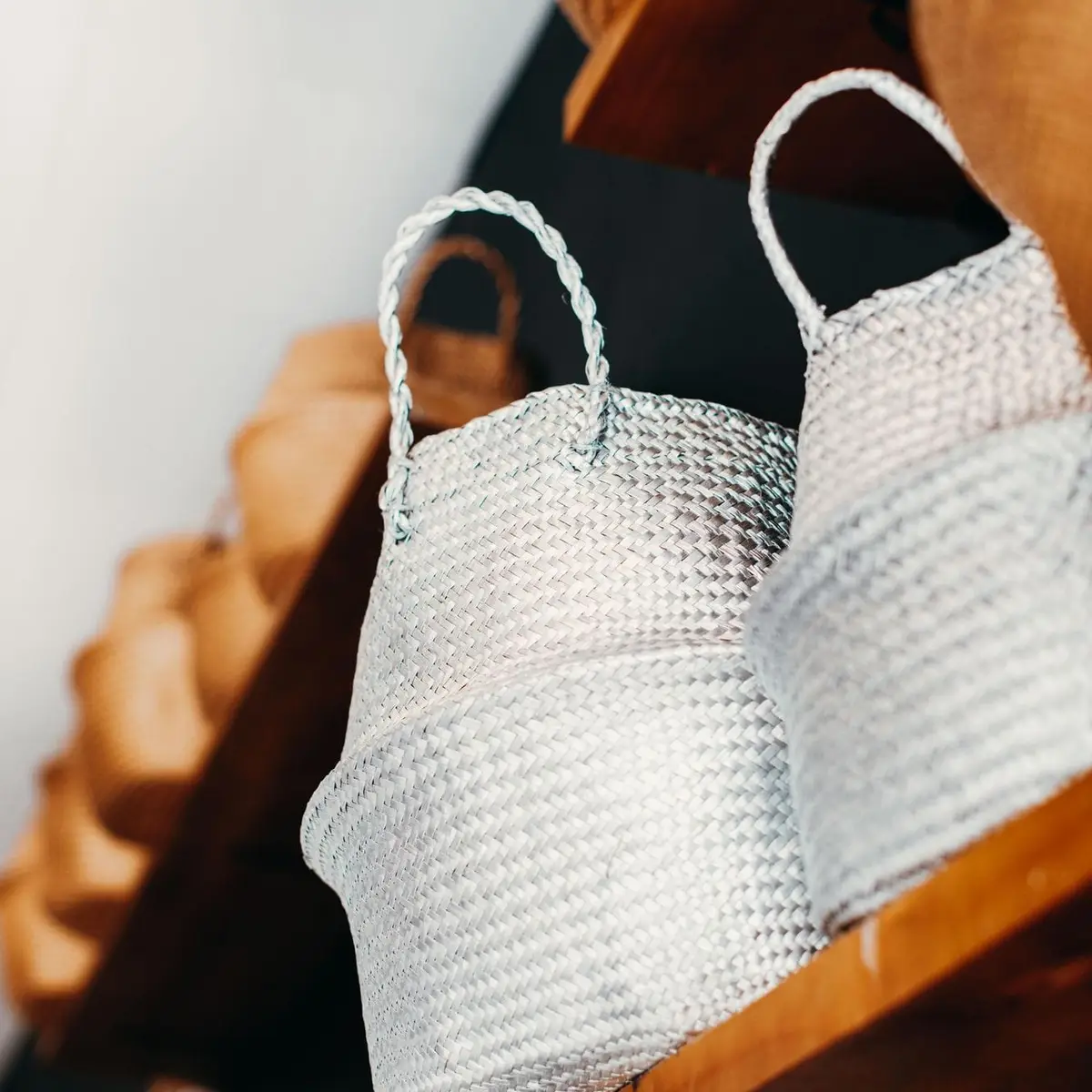
Choose one category per bin and label the front, so you can read it from where you stand. A clip-on tag, a hang tag on the handle or a strip of masking tape all work.
Measure the shelf before you buy anything. Note its depth, its width and the height up to the next shelf or the ceiling, then use the bin size calculator to see which bins fit side by side without wasted space.
Bins that are a little shorter than the space above them are easier to pull down. A bin that just fits has to be tipped and wiggled every time.
Matching bins look calm along a shelf, but they don’t all need to be the same size. Two shallow bins and one deep one in the same color still look like a set.
4. Choose clear bins or woven baskets for the job
Clear bins and woven baskets both work on closet shelves. The right one depends on how high the shelf is and how often you open it.
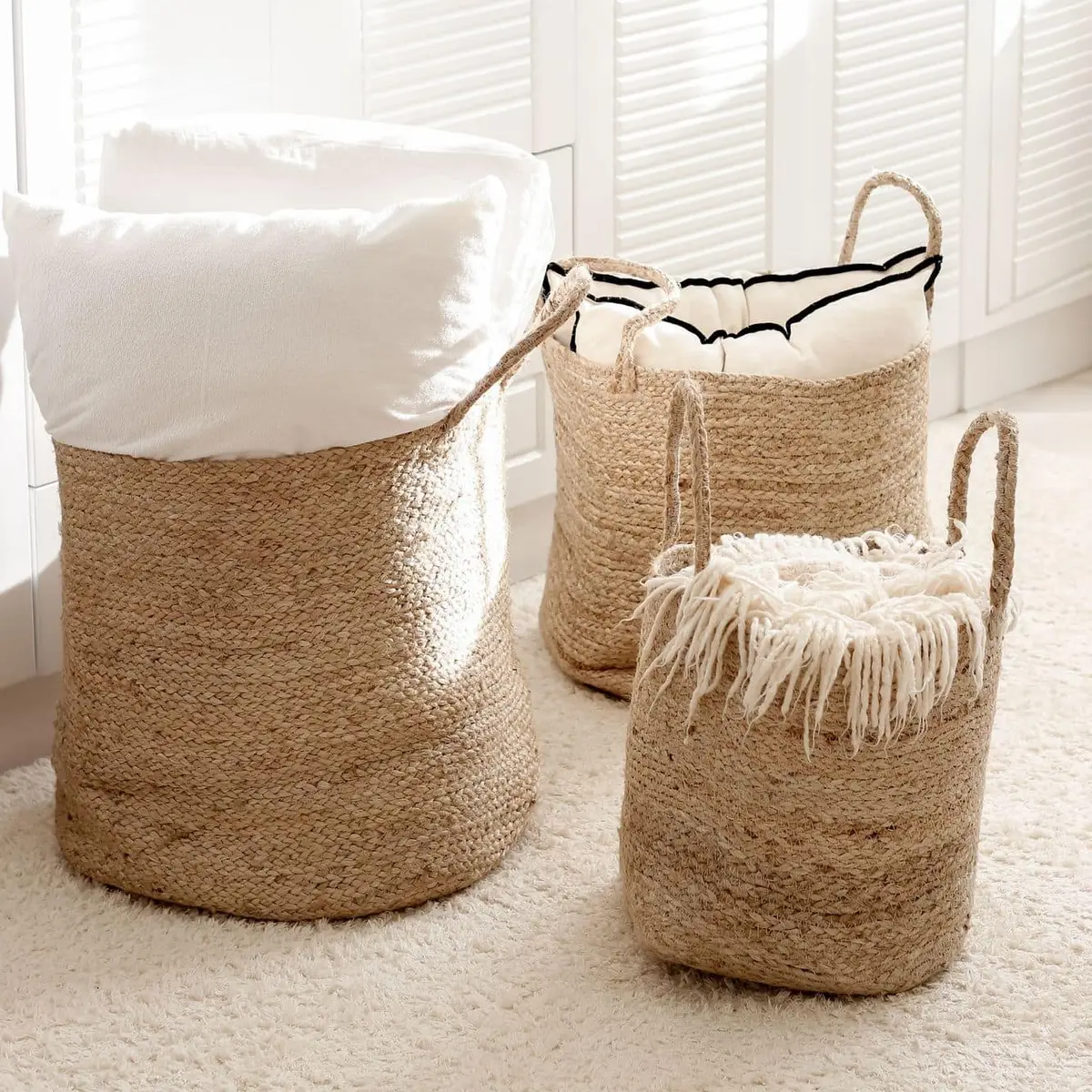
Clear bins let you see what’s inside without taking them down. They suit high shelves and anything you rotate, like seasonal clothes, spare bedding and kids’ clothes in the next size up.
Woven baskets hide a jumble and look softer on open shelves you see every day. Line them with fabric if the weave snags knits, and put a tag on the front so the contents aren’t a mystery.
Lidded bins keep dust off and stack two high. Open baskets are quicker to use, so keep them for things you reach for every week.
Many closets use both: woven baskets at eye level, where they’re on display, and clear lidded bins up top, where seeing the contents matters more than how they look.
5. Store the off season on the top shelf
The top shelf is the hardest one to reach, so give it to things you need only a few times a year. Off-season clothes are the perfect fit.
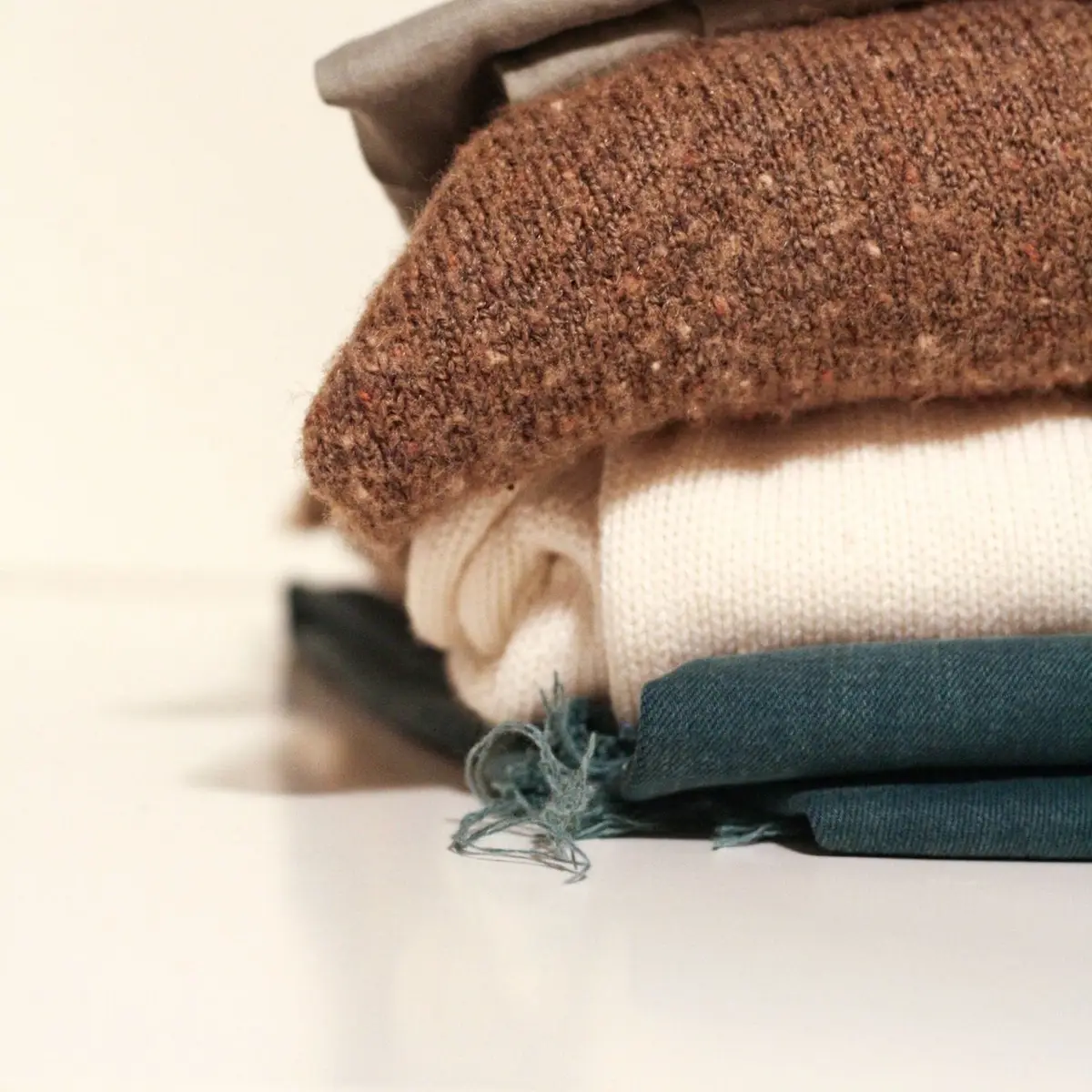
When the season turns, wash or clean everything before it goes into storage. Clothes moths feed on wool, feathers and other animal fibers, and clean clothes in an airtight container are well protected.
Use lidded bins that close tightly, and label each one with the season and whose clothes are inside. A bin for each person makes the next swap faster.
Keep the bins light enough to lift down over your head without straining. Two medium bins are safer and easier than one huge one.
Swap the bins twice a year. Bring the stored bin down, try things on, and pass along anything that no longer fits before the outgoing season goes up in its place.
6. Add a second shelf above the first
Many reach-in and walk-in closets have one shelf above the rod and a big empty gap above that. A second shelf in that gap can nearly double the storage on that wall.
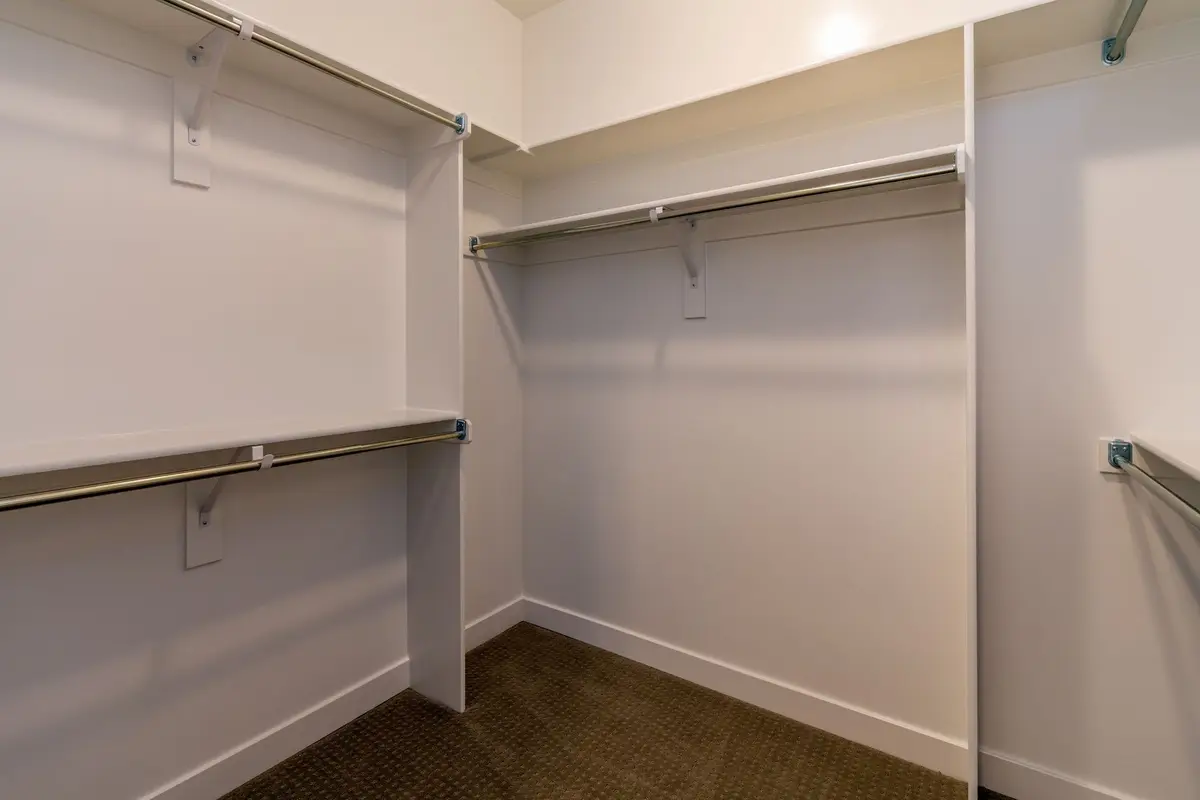
Measure from the top of the existing shelf to the ceiling. If there’s room for a bin plus a few inches to lift it out, there’s room for another shelf.
A simple shelf on brackets, or a freestanding shelf riser set on top of the existing shelf, both work. A riser needs no drilling and moves with you, while brackets screwed into studs hold more weight.
Keep the second shelf for light, rarely used things: keepsakes, spare pillows, gift bags and empty luggage. The heavier bins stay on the lower shelf.
In a small walk-in, shelves stacked up the wall are often the best way to add storage without crowding the floor. These small walk-in closet organization ideas show how to plan every wall of a closet you can just step into.
7. Stand handbags up with dividers between them
Handbags slump, crease and tangle when they’re piled on a shelf. Standing them upright in a row, with a divider between each one, keeps their shape and lets you see every bag.
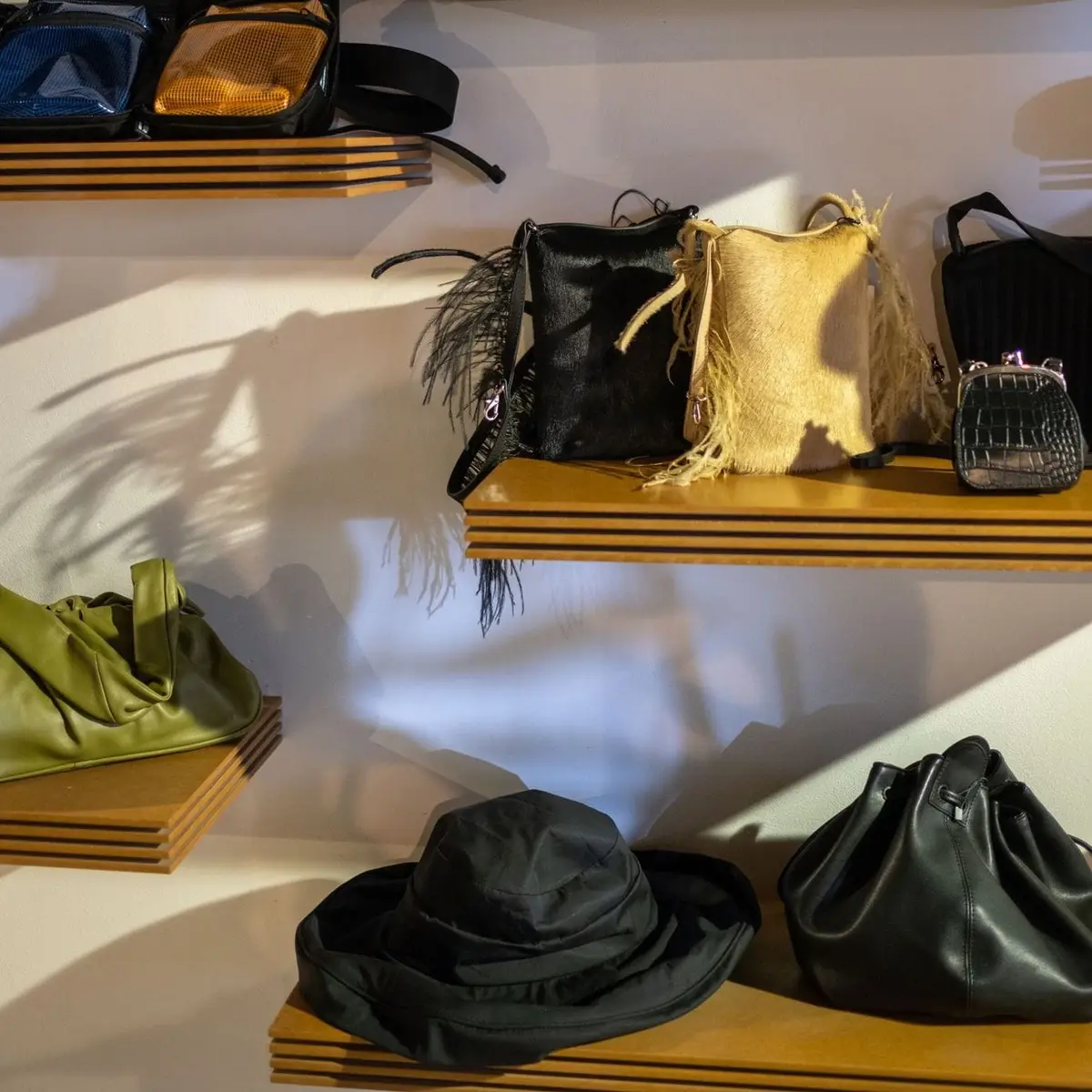
Clip-on shelf dividers work well, or use a few sturdy file sorters. Give larger bags a section of their own and let small bags share one.
Stuff soft bags with tissue or a scarf before they go on the shelf, so they don’t fold in on themselves. Tuck long straps inside the bag, so they don’t catch on the bag next door.
Keep the bags you carry most at eye level and the special-occasion ones higher up, in dust bags if you have them.
These purse organization ideas go further, from hooks for everyday bags to filing clutches in a drawer. On the shelf, the rule is simple: one bag per section, standing up, with a little air around it.
8. Give hats and small accessories a spot
Hats get crushed and small accessories get lost on a shelf full of sweaters. Give them a section or a container of their own.

Stack hats with structured brims crown to crown, or keep them in a round box so the brims stay flat. Soft knit hats and caps can share a basket.
Hooks under a shelf, or on the side wall of the closet, hold a couple of everyday hats where you can grab them on the way out. They keep their shape better hanging than squashed in a bin.
Belts roll neatly into a shallow box or a divided tray, and scarves fold into a basket with a label on the front. Small things like gloves pair up in a zippered pouch.
Jewelry and watches you wear every day are usually better off on the dresser than on a closet shelf. These dresser top organization ideas show how to give them a tray or a dish of their own.
9. Use pull-out bins on a deep shelf
Deep shelves hide things at the back, and you end up forgetting what’s there. Pull-out bins turn a deep shelf into something more like a drawer.
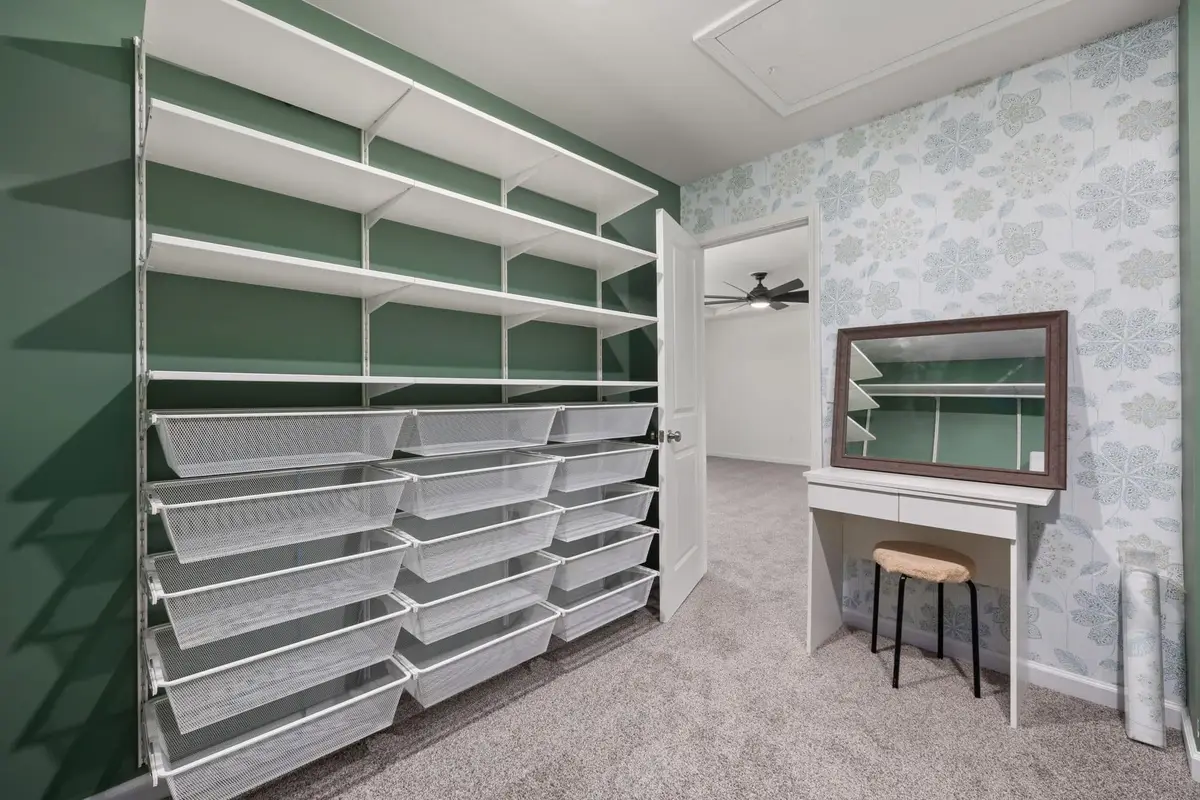
Choose bins that are almost as deep as the shelf, with a handle or a grip on the front. You pull the whole bin forward, find what you need and slide it back.
Mesh or wire bins let air move around clothes and let you see what’s in them. Solid bins hold small things better, since nothing falls through.
Gliding baskets on runners work like drawers and fit into many shelving systems. For a simpler fix, a long, narrow bin with a handle does the same job on any shelf.
Keep similar things together in each bin and label the front. These deep closet organization ideas cover deep closets as a whole, from the back wall to the corners.
10. Reach the top shelf with a sturdy step stool
The top shelf only works if you can reach it safely. Keep a sturdy step stool in or near the closet, so you aren’t tempted to stand on a chair or stretch on tiptoe.
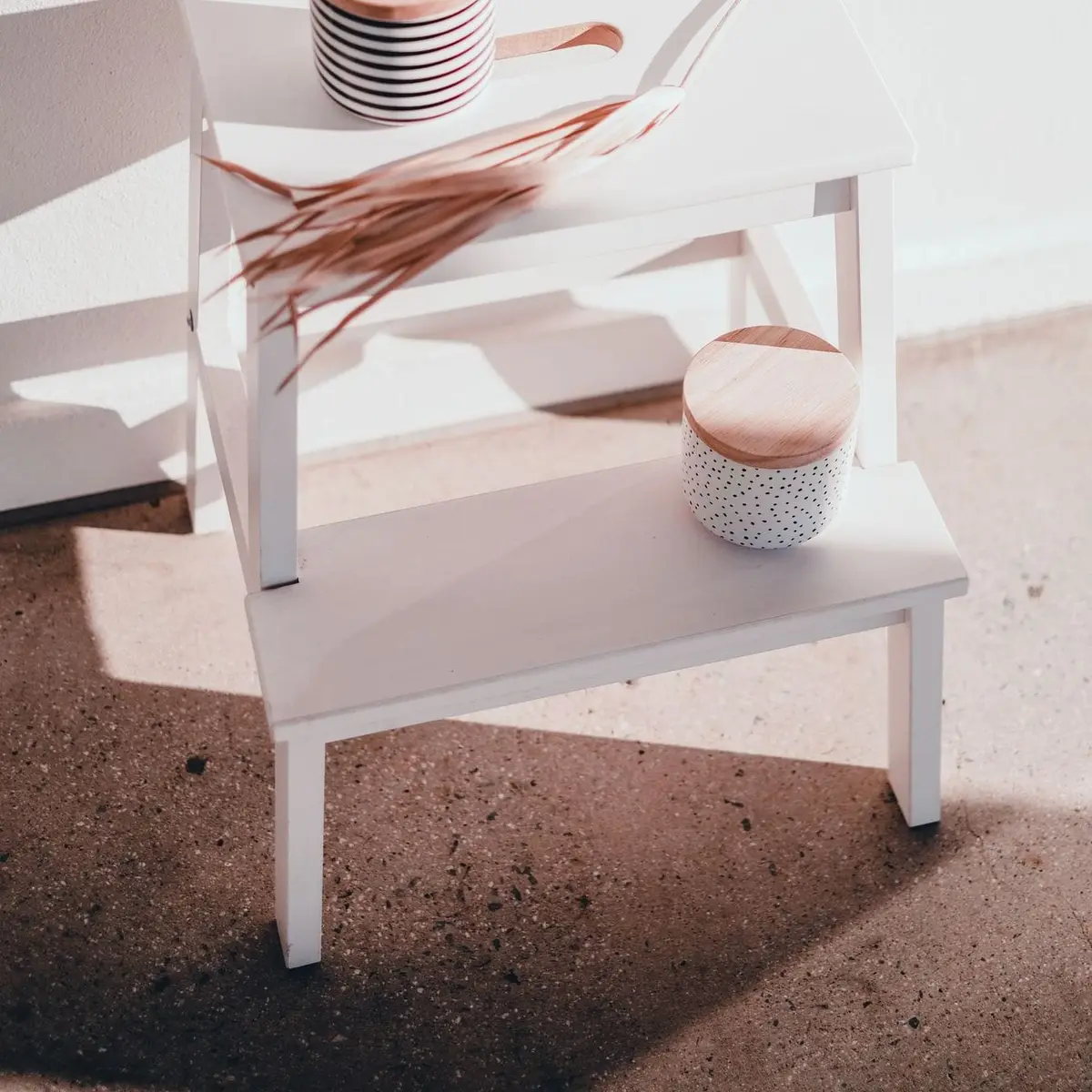
If you need a step stool, choose one with a bar to hold on to, and never use a chair in its place. A folding stool tucks into a gap beside the shelves or behind the door.
Put things you use often on lower shelves, about waist high, so the stool is only for the occasional trip up. That’s the reason the off season goes up top and the everyday stacks stay low.
Lift bins down with both hands and step down before you open them. A bin that’s too heavy to lift from a stool belongs on a lower shelf.
Keep the floor in front of the shelves clear, so the stool sits flat and there’s nothing to trip over when you step down.
11. Keep one shelf for overflow
A closet that’s packed edge to edge has no room for anything new. Leave one shelf, or one section of a shelf, empty on purpose.
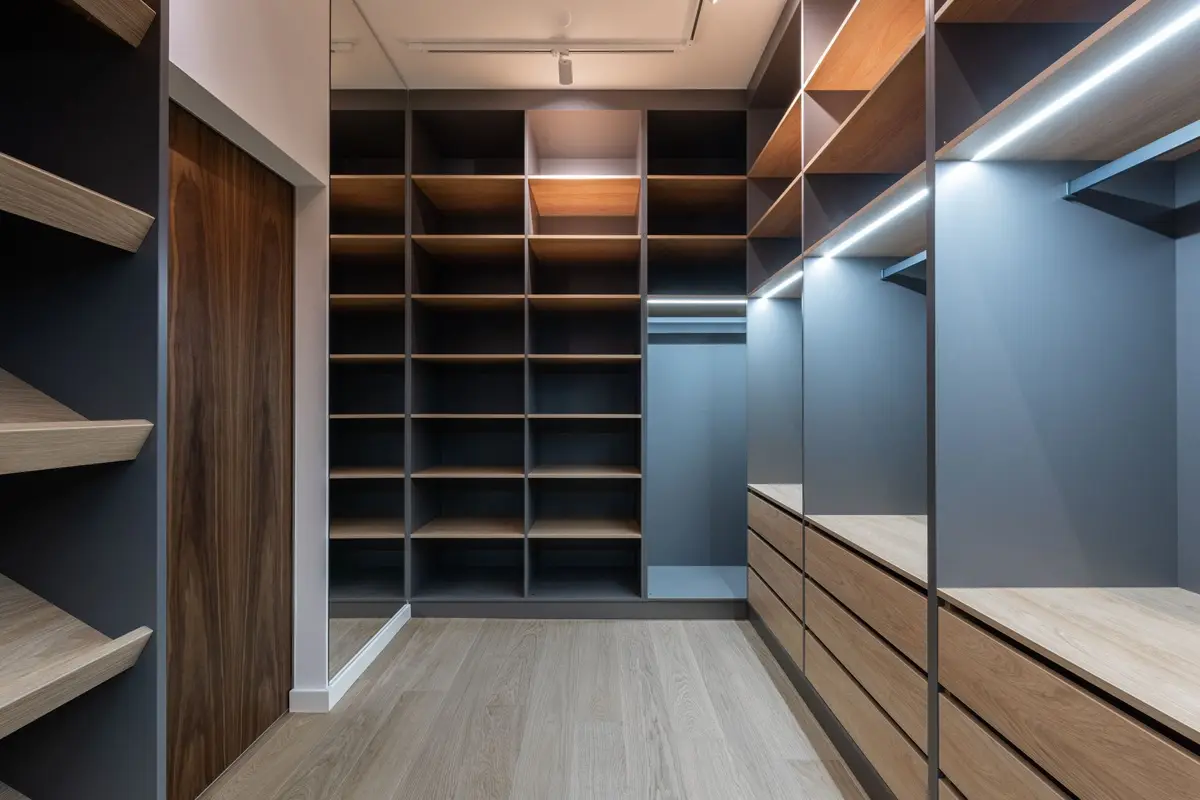
That spare space catches the things that don’t have a home yet: a new sweater, clothes waiting to be mended, a borrowed jacket or a bag of things to return.
Give the overflow shelf one rule: nothing stays there longer than a couple of weeks. Once a week, move each item to its real home or out of the closet.
If you add a freestanding shelving unit to a closet for more space, anchor it to the wall. Tall units with shelves can tip, especially when the top shelves are loaded.
When the overflow shelf is always full, the closet holds more than it can, and it’s time for the edit in the next step.
12. Edit the shelves twice a year
Even a well-organized shelf fills back up over time. A short edit twice a year keeps it working, and the seasonal swap is the natural time to do it.
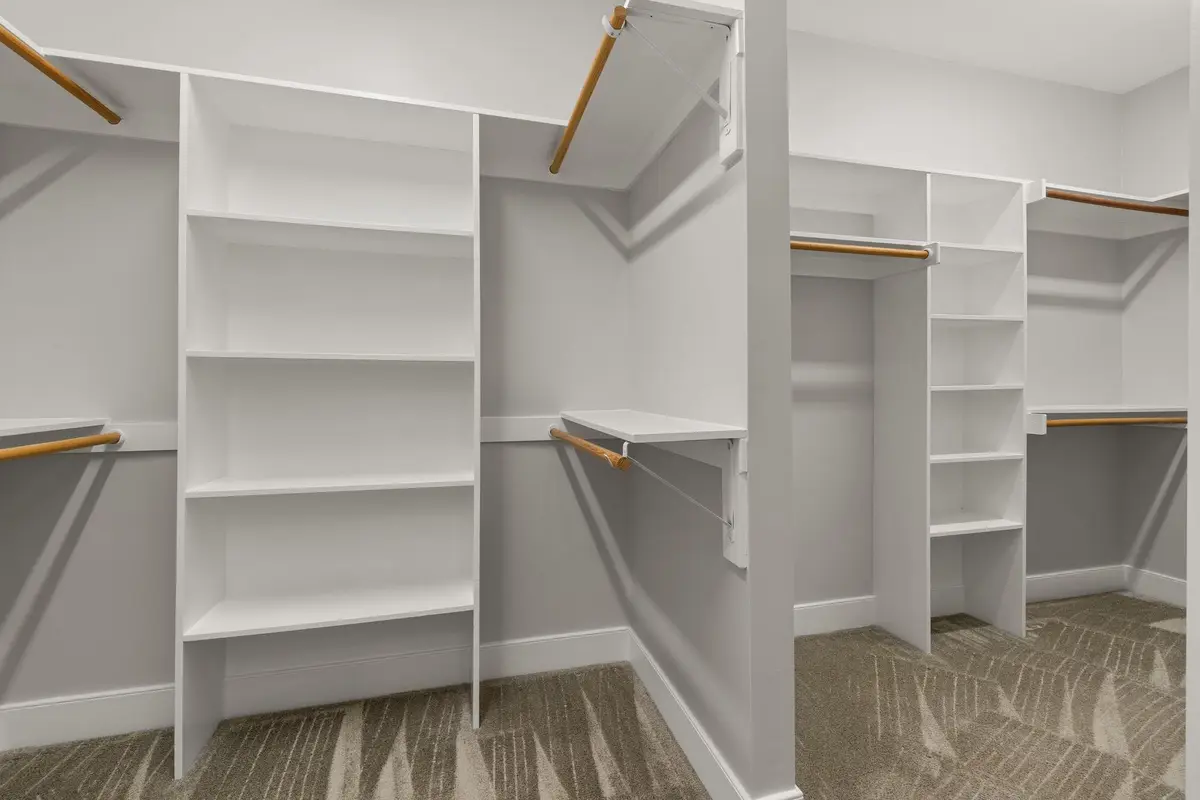
Take everything off one shelf at a time and wipe it down. Only put back what you’ve worn or used since the last edit, and set the rest aside.
Sort what’s left into three piles: donate, toss and put away elsewhere. The declutter checklist walks you through a closet and the rest of the house one area at a time.
Check the bins on the top shelf while you’re up there. Kids’ clothes that are now too small, keepsakes that can be trimmed and bags you haven’t carried in a year are easy wins.
Take the donate pile out of the house the same day. Then refold, restack and relabel, so each shelf starts the season tidy.
Save this for later
Pin it to a board so it's there when you're ready to start.
Save to Pinterest(opens in a new tab)Make it easier
Free printable
A room-by-room declutter checklist that tells you exactly what to look for, with four piles to sort into so nothing ends up back on the shelf.
Free tool
Enter the width, depth and height of a shelf, a drawer or a cube cubby, and see which standard bins and baskets fit, how many, and how they line up.
Frequently asked questions
How do I keep folded clothes from falling over on a closet shelf?
Fold each kind of clothing to the same width and depth, keep stacks short enough to pull from, and put a divider between stacks so each one has a wall to lean on. On a wire shelf, a liner underneath keeps the bottom layer flat.
What should go on the top shelf of a closet?
Things you reach for a few times a year: off-season clothes in lidded bins, spare bedding, keepsakes and travel bags. Keep heavy items lower, and use a sturdy step stool with a bar to hold on to when you reach up there.
Are clear bins or baskets better for closet shelves?
Clear bins let you see what's inside, which helps on high shelves and for things you rotate by season. Woven baskets look softer and hide a jumble, so they suit open shelves you see every day, as long as each one has a label facing out.
How high should I stack sweaters on a shelf?
Low enough that you can lift the top of the stack and pull one out without the rest toppling, which for most sweaters means only a handful per stack. If a stack keeps falling over, split it in two or move some of it to a bin.