12 Closet Organization Hacks With Hangers, Rings and Old Boxes
Cheap fixes for a crowded closet: a hanger test that finds unworn clothes, a hanger limit, a tension rod, shoe-box dividers and a donate basket by the door.

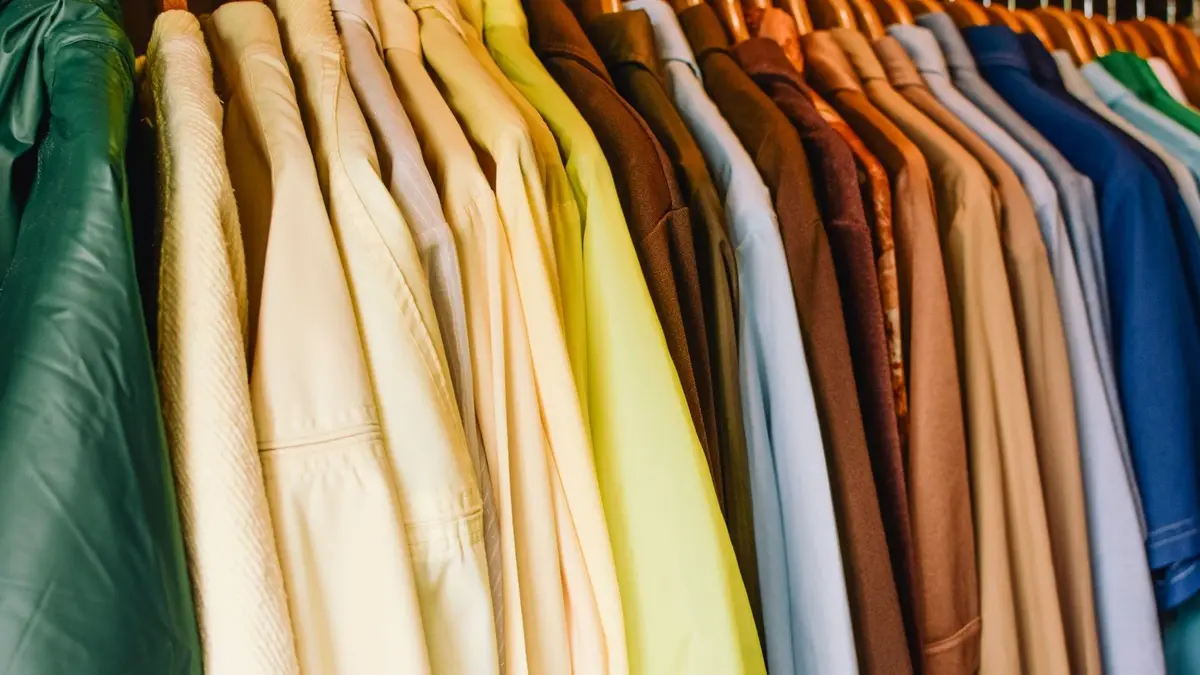
The best closet organization hacks cost almost nothing: turn your hangers around to find what you never wear, cap the rod with a set number of hangers, add a tension rod for a second row and stand small things up in shoe boxes. Each one frees space you already have before you buy a single bin.
These 12 hacks use things most homes already hold, like shower-curtain rings, old boxes, a spare basket and the hangers in the closet now. Start with the first two, since every other hack works better once the clothes you don’t wear are gone.
1. Turn every hanger backward for one season
This is the easiest way to learn what you actually wear. Hang everything with the hook facing out toward you, the opposite of how you usually hang clothes.

When you wear something and wash it, hang it back the normal way. Over the next few months, the rod sorts itself into two groups without any effort from you.
Pick an end date and write it on a sticky note inside the closet door, so the test doesn’t drift on forever. The start of the next season works well.
On that date, pull every piece still hanging backward. Try each one on and ask whether you skipped it for a reason: it doesn’t fit, it needs mending or it doesn’t go with anything.
Clothes you skipped only because the weather was wrong can stay for another round. Everything else goes in the donate basket, and the rod gains space without a single new product.
Run the same test on folded clothes by stacking them upside down or turning a drawer’s contents backward, then flipping each piece the right way as you wear it.
2. Give the rod a fixed number of hangers
A rod fills up because there’s always one more hanger to squeeze in. Decide how many hangers your rod holds comfortably, keep exactly that many and get rid of the extras.
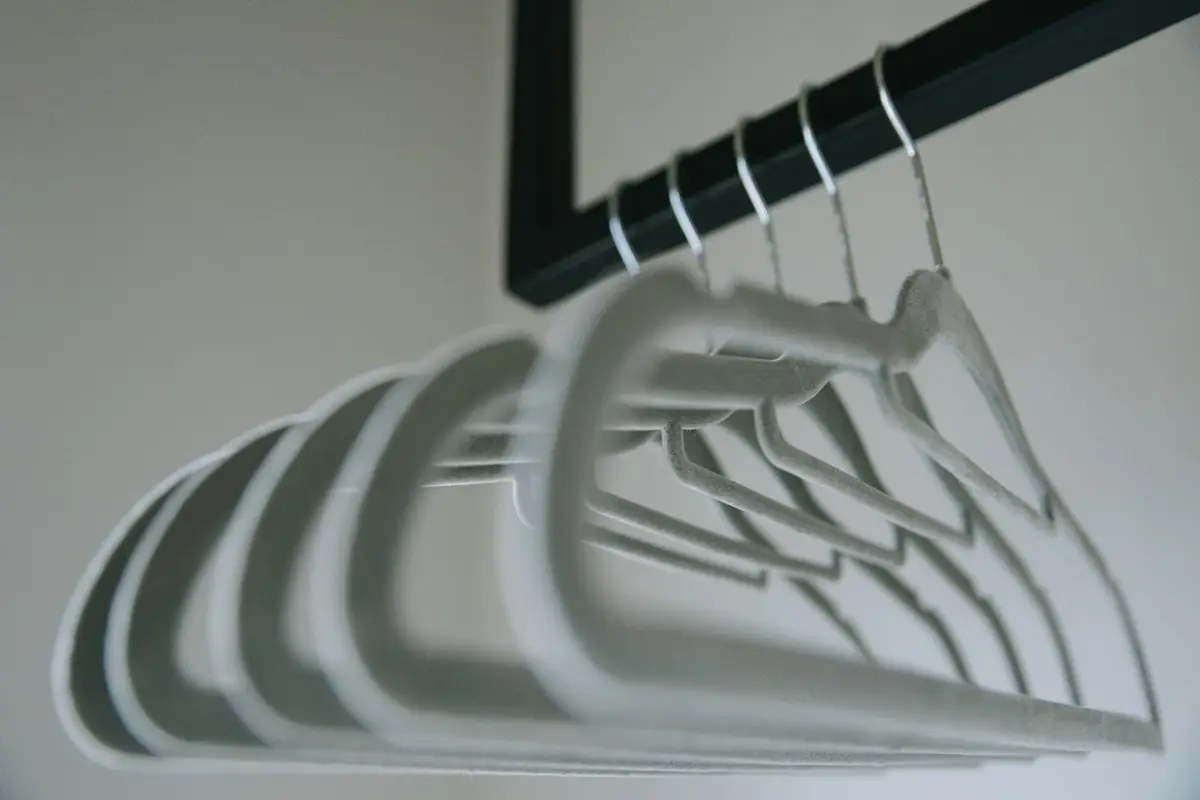
To find the number, slide clothes along the rod until you can flip through them easily with one hand. Count the hangers on that stretch, and that’s your limit.
When every hanger is full and something new comes home, something old has to come off the rod first. The limit makes the decision for you, so it’s easier than arguing with yourself.
Matching slim hangers make the limit go further, since they sit closer together than bulky plastic or wire ones. Swap them in a few at a time as you do laundry, rather than all at once.
Take wire hangers from the dry cleaner back to the cleaner or out of the house. They bend, snag and tangle, and they’re exactly the kind of extra hanger the limit is meant to stop.
Keep a sturdier hanger or two for heavy coats and suits, and count those toward the total.
3. Park empty hangers at one end of the rod
Empty hangers scattered between clothes make the rod look fuller than it is and catch on everything you pull out. Give them one home instead: the far end of the rod, all facing the same way.
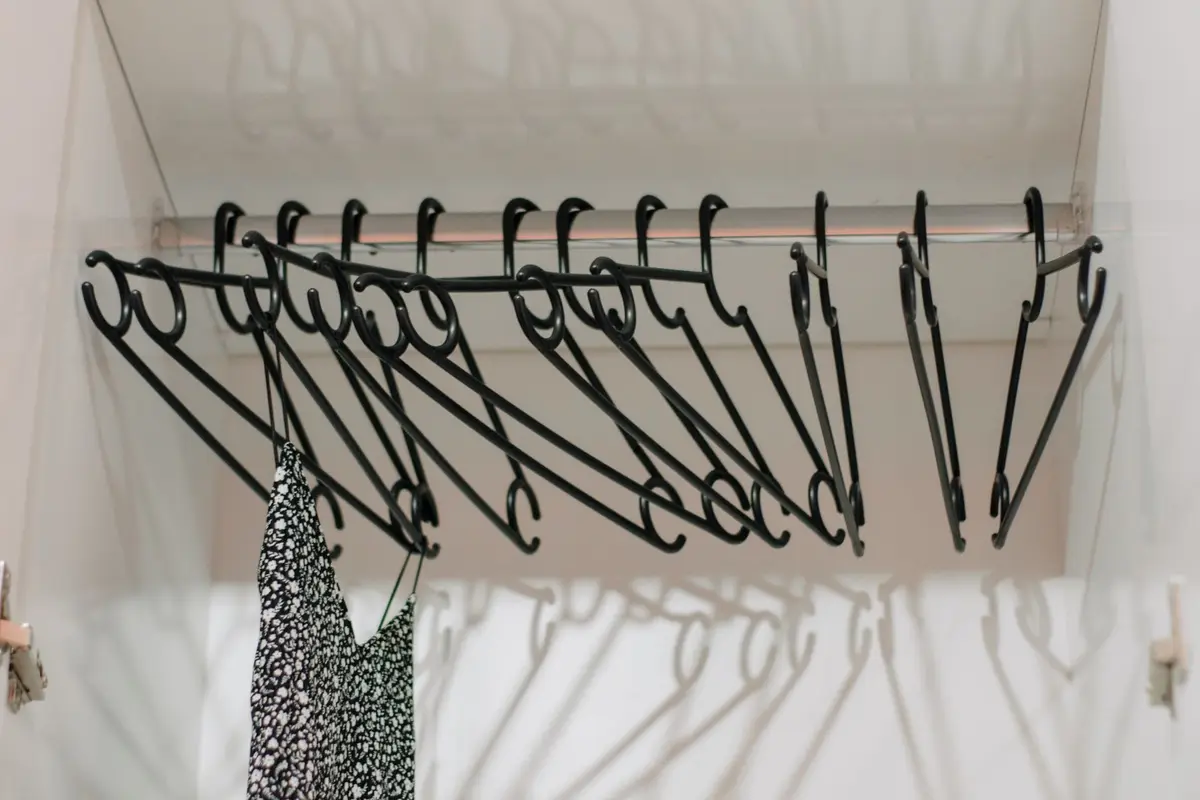
When you take something out to wear, move its hanger straight to that end. When clean laundry comes in, grab hangers from the same spot, so putting clothes away is quick.
The bundle doubles as a gauge. A big pile of empty hangers means the laundry is waiting somewhere, and no empty hangers at all means the rod is at its limit.
If hangers keep tangling in the pile, hook them together in a short chain on the rod, nested one inside the next. They lift off one at a time and stay tidy.
Children can use the same system. Show them where the empty hangers live, and putting away their own clean clothes becomes a job they can do without help.
4. Hang a tension rod for a second row
Most shirts, skirts and folded pants hang far above the closet floor, which leaves a wide gap below them. A tension rod set lower turns that gap into a second row of hanging space with no drilling at all.
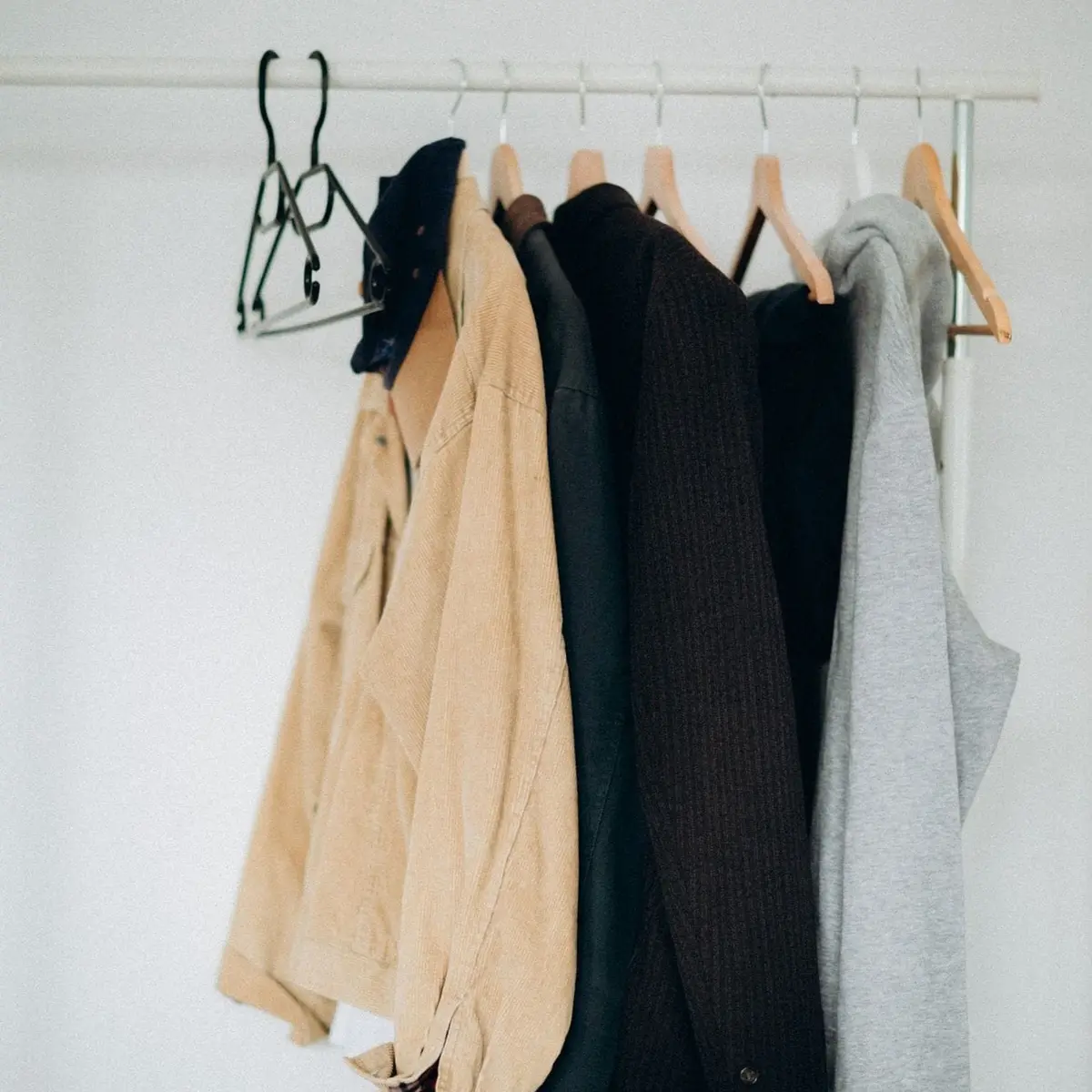
In a reach-in closet, wedge the rod between the side walls under the main rod, with room for your shortest pieces above it. In a closet with an open side, it can also span a narrow alcove for a few jackets.
Measure the width first and choose a rod that adjusts to it. Twist it until it’s snug and won’t slide when you push down on it.
Keep the lower rod for light clothes like shirts, tops and folded pants. A tension rod holds by pressure alone, so heavy coats and a long row of jeans can pull it down, and each rod lists how much weight it’s made to hold.
If your closet has wire shelving with a rod built in, these wire closet organization ideas show other ways to add hanging space along the same wall.
5. Loop scarves and belts on shower-curtain rings
Scarves and belts slide off hooks and tangle in drawers. A spare hanger with a row of shower-curtain rings gives each one its own loop, all in the space of one shirt.
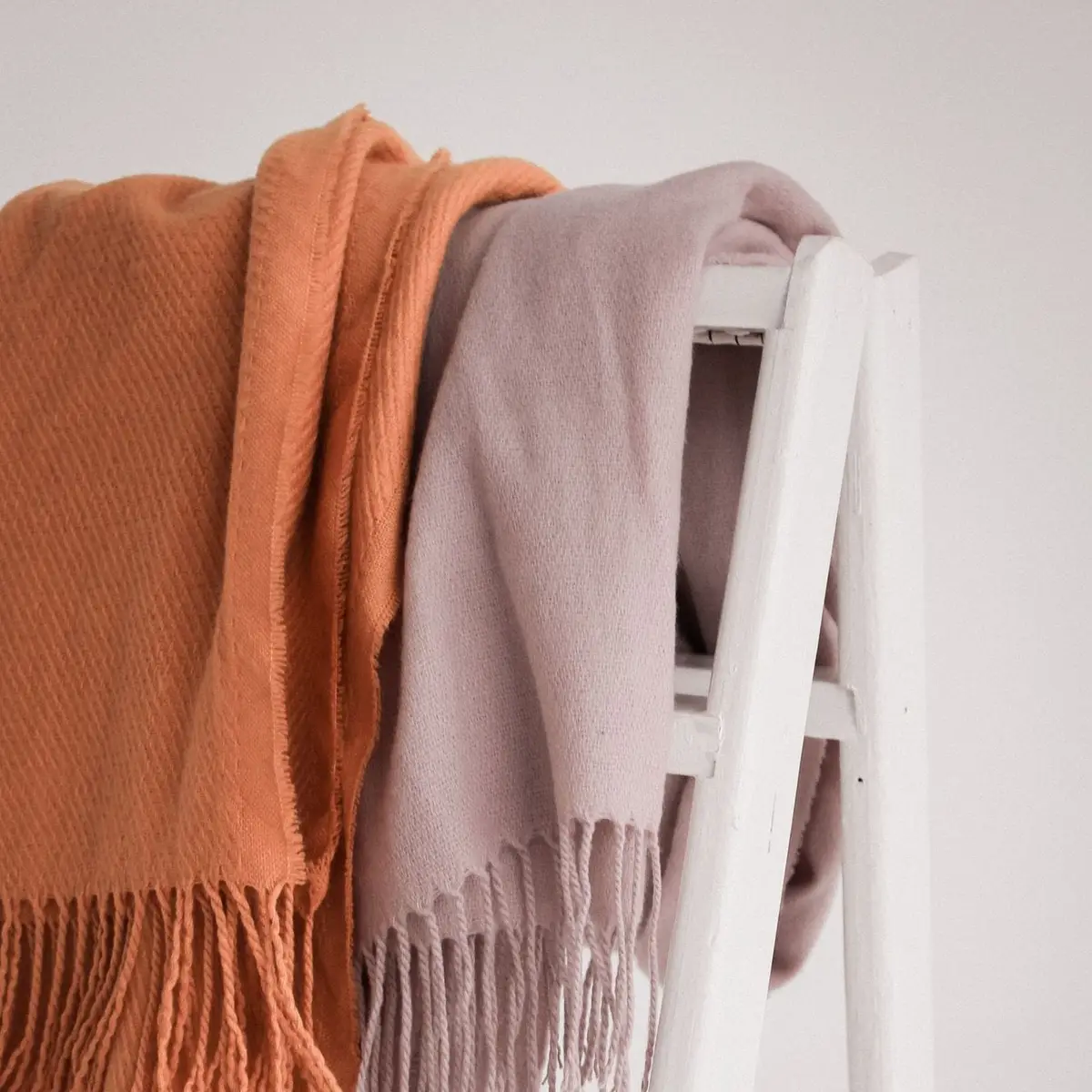
Slip the rings over the bottom bar of a sturdy hanger, then thread one scarf through each ring. A wooden hanger or a trouser hanger with a solid bar works best, since a thin wire one sags.
For belts, hang each one by its buckle from its own ring. You can see every belt at once and pull one free without unhooking the rest.
Group them by color or by how often you wear them, with everyday pieces on the rings closest to the hook.
No spare rings? A towel bar or a ladder rack on the closet wall works too, with scarves folded over the rungs side by side.
Keep it to one hanger for scarves and one for belts, so this hack doesn’t turn into another crowded rod. If the rings are full, a scarf has to go before a new one goes on.
6. Use a pocket organizer for accessories, not shoes
An over-the-door shoe organizer is one of the best closet hacks, but it doesn’t have to hold shoes. Its clear pockets suit small things that get lost on shelves: sunglasses, gloves, hats, tights and phone chargers.
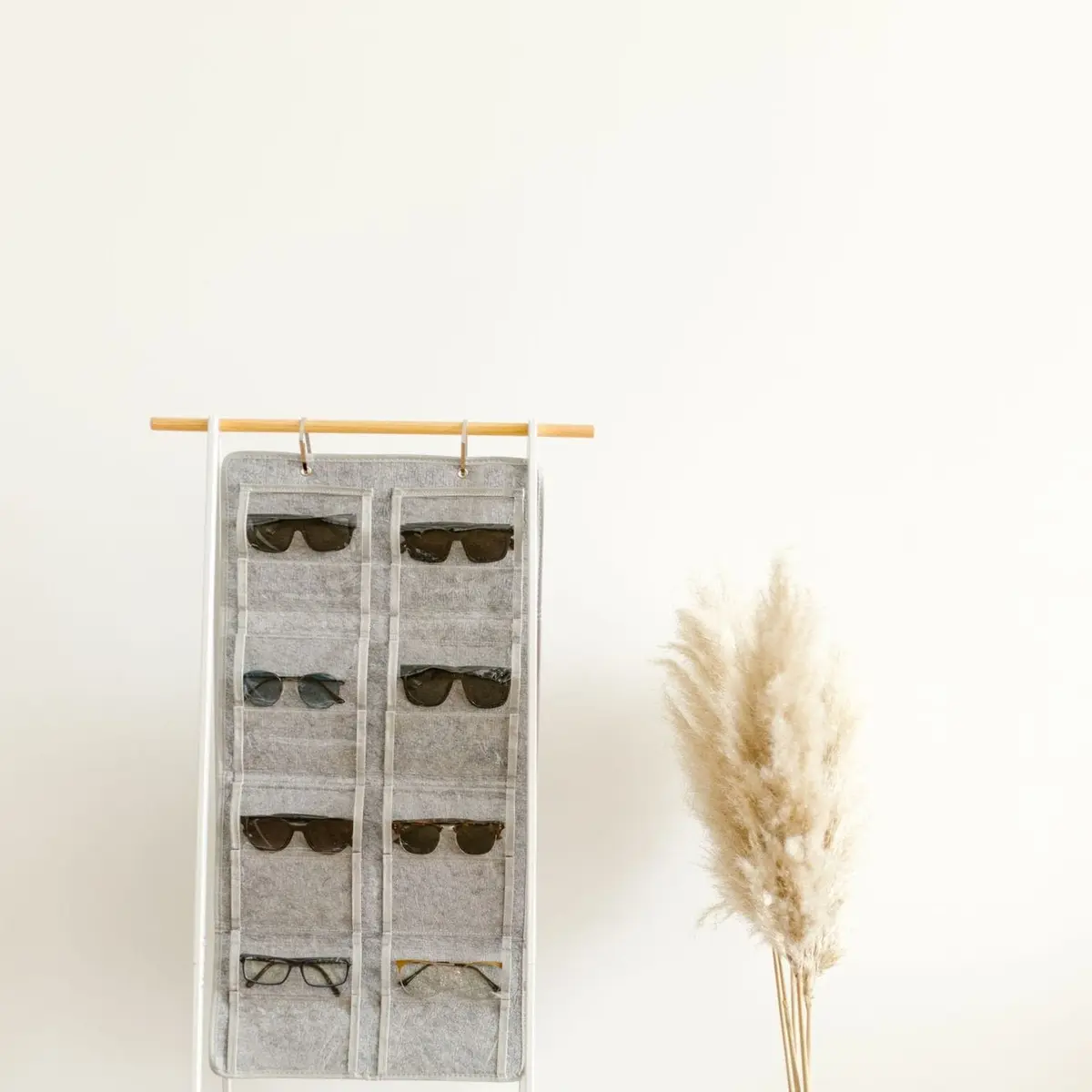
Hang it on the inside of the closet door, or on the end of a rod if the door slides. Give each pocket one kind of thing, so you can tell at a glance where everything goes back.
Put everyday pieces in the pockets between your waist and your shoulders. Seasonal gloves, spare laces and travel pouches go at the top or the bottom.
Pockets suit soft and light things best. Heavy items pull the organizer down and make the door swing harder.
Organizers that hook over the top of the door need no screws or nails, so they work well in a rental or a shared space like these dorm closet organization ideas. Check that the door still closes fully once the organizer is filled, since thick hooks can stop it from latching.
7. Divide closet drawers with shoe boxes
A drawer in a closet dresser or a built-in unit turns into a jumble when socks, underwear and belts share it. Shoe boxes, cut down to fit, split one drawer into neat sections for free.
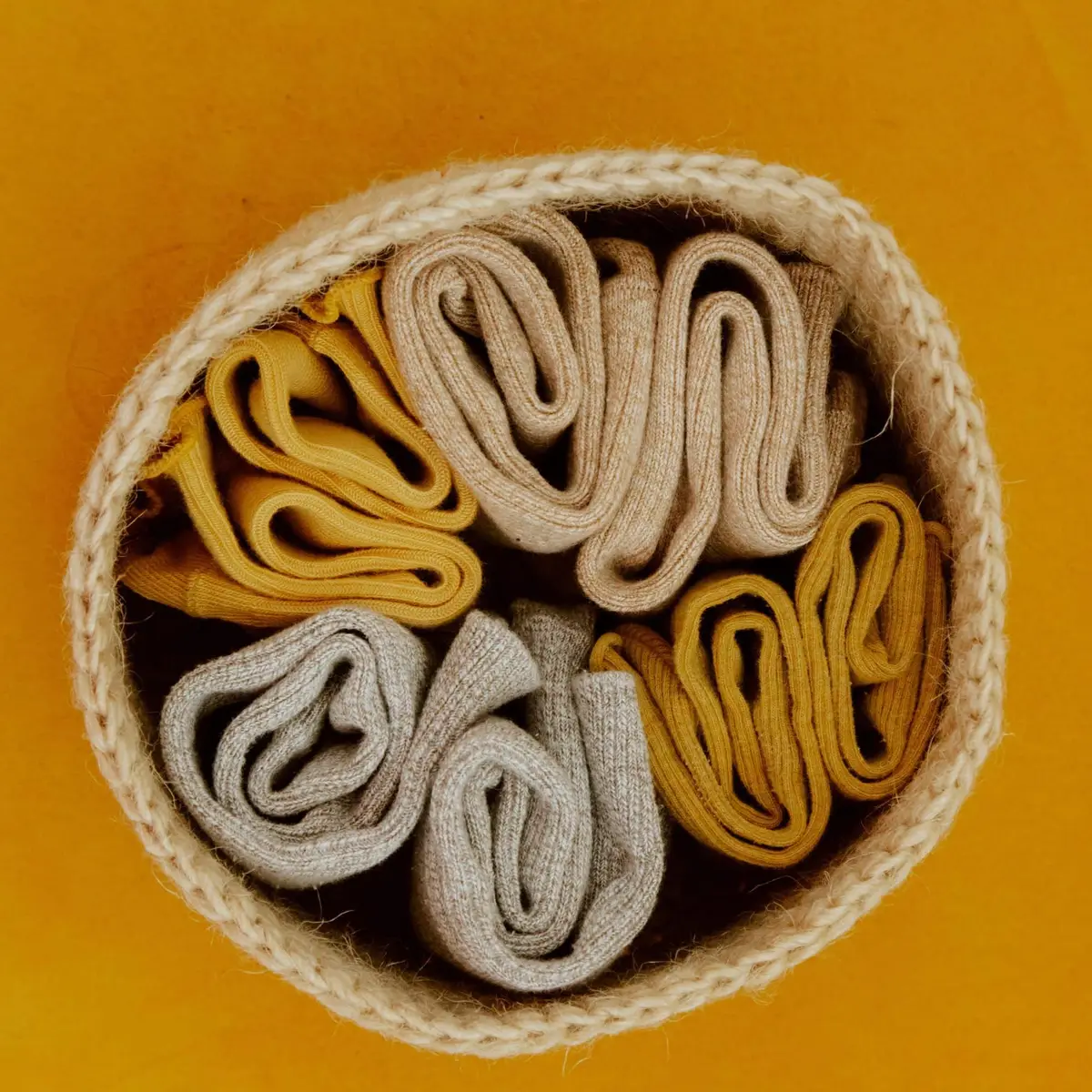
Roll socks and stand them up in one box, so you see every pair from above. Fold underwear into small squares and line them up in another box, the same way.
Trim each box so it sits just below the top of the drawer, or the drawer won’t close. Lids make shallow trays for watches, hair ties and small jewelry.
This hack is one of the home organization hacks that works in every room, and in a closet it turns one messy drawer into several tidy ones.
Measure the inside of the drawer first. The bin size calculator shows how many boxes of a given size fit side by side, which helps if you decide to replace the boxes with matching bins later.
When a box wears out, swap in another one.
8. File-fold jeans and tees to one size
Shelf stacks topple when every piece is folded to a different size. Fold everything in a category to the same rectangle, and stacks stay straight and drawers hold more.
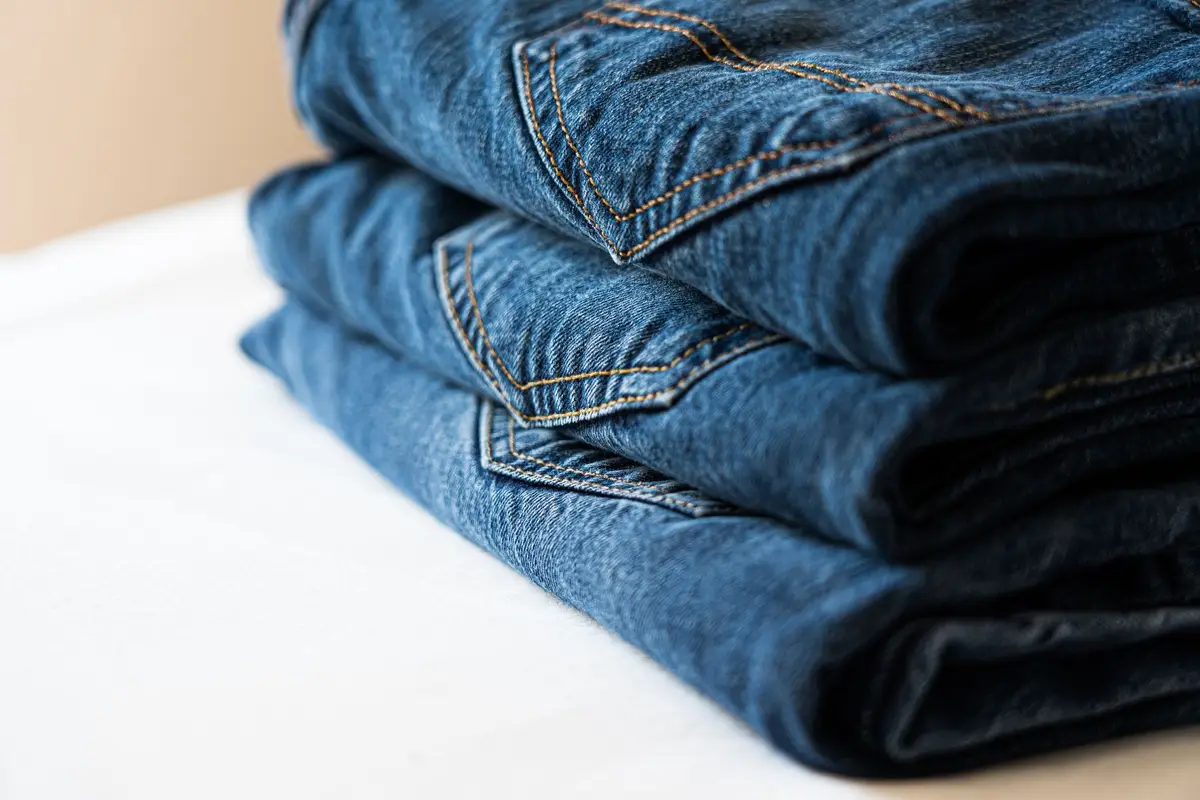
For shelves, fold jeans in half lengthwise, then in half again, so every pair is the same width. Keep each stack short enough to lift the top piece without the rest sliding.
For drawers, try file folding instead. Fold each tee or pair of pants into a small rectangle that stands on its edge, then line them up front to back like files in a cabinet.
Everything shows at once, so you pick a shirt without lifting the pile. Pulling one out leaves the rest standing.
On a shelf, stand clutches, wallets and slim bags upright in a magazine file, the same way, so they don’t flop over or slide behind the stacks.
Use a piece of cardboard cut to the size you want as a folding guide. Fold each shirt around it, slide it out, and every piece in the stack matches.
9. Fold sweaters instead of hanging them
Knit sweaters stretch on hangers. The weight of the knit pulls on the shoulders, and over time you get bumps at the shoulders and a longer, looser shape.
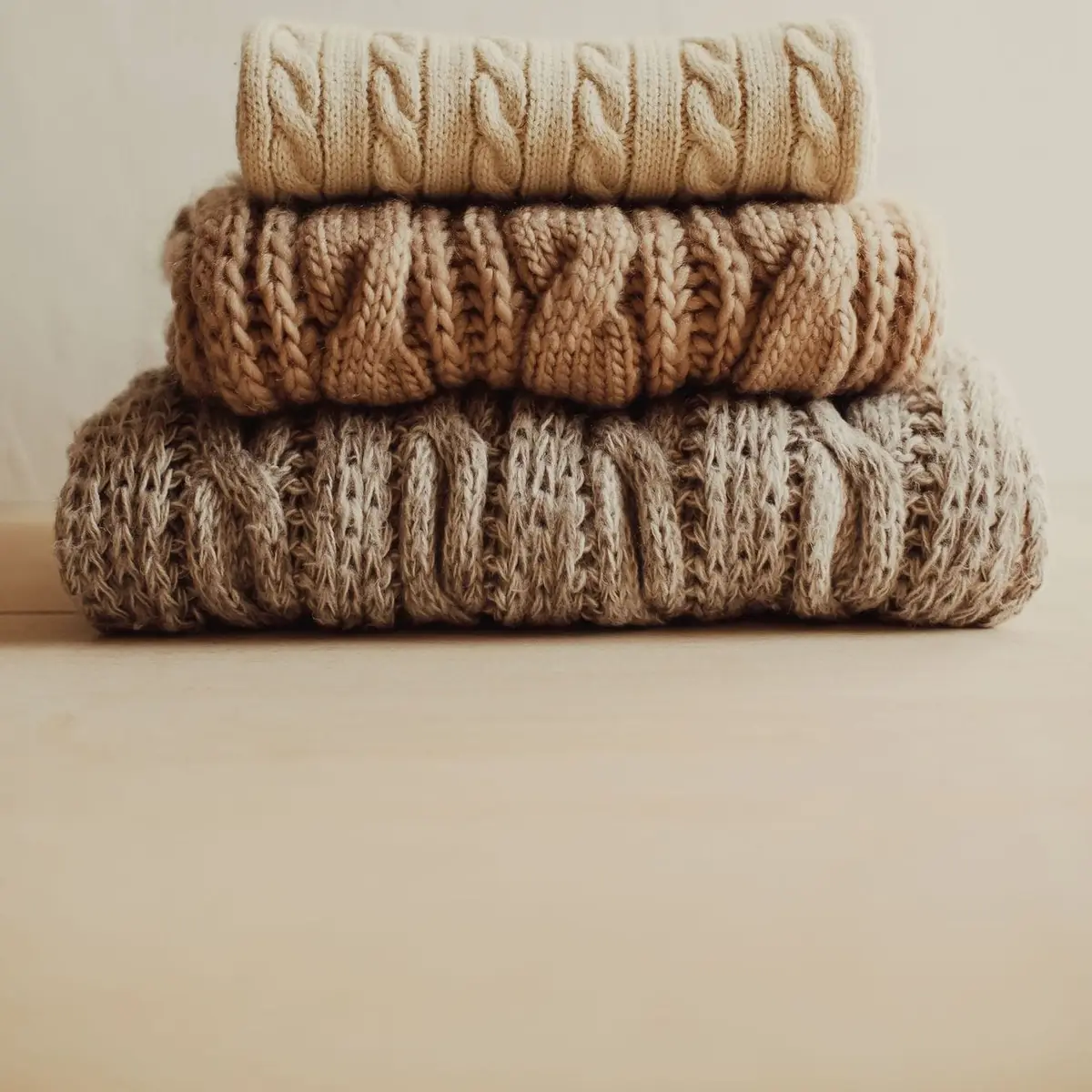
Fold sweaters and give them a shelf or a drawer of their own. Heavier knits go on the bottom of the stack and lighter ones on top, so nothing gets crushed.
Moving sweaters off the rod frees a surprising amount of hanging space, since thick knits take up far more room on hangers than shirts do.
If a sweater must hang, fold it in half lengthwise and drape it over the bar of a hanger, so the weight rests on the bar instead of the shoulders.
Keep sweaters clean before they go away for a season. Clothes moths feed on animal fibers like wool, and clean pieces sealed in an airtight bin or bag are much better protected than ones put away after a few wears.
10. Vacuum-pack bulky bedding, not your wool
Spare comforters, puffy jackets and extra pillows take up whole shelves. Vacuum storage bags squeeze the air out of them, so a stack that filled a shelf fits in a slim bag.
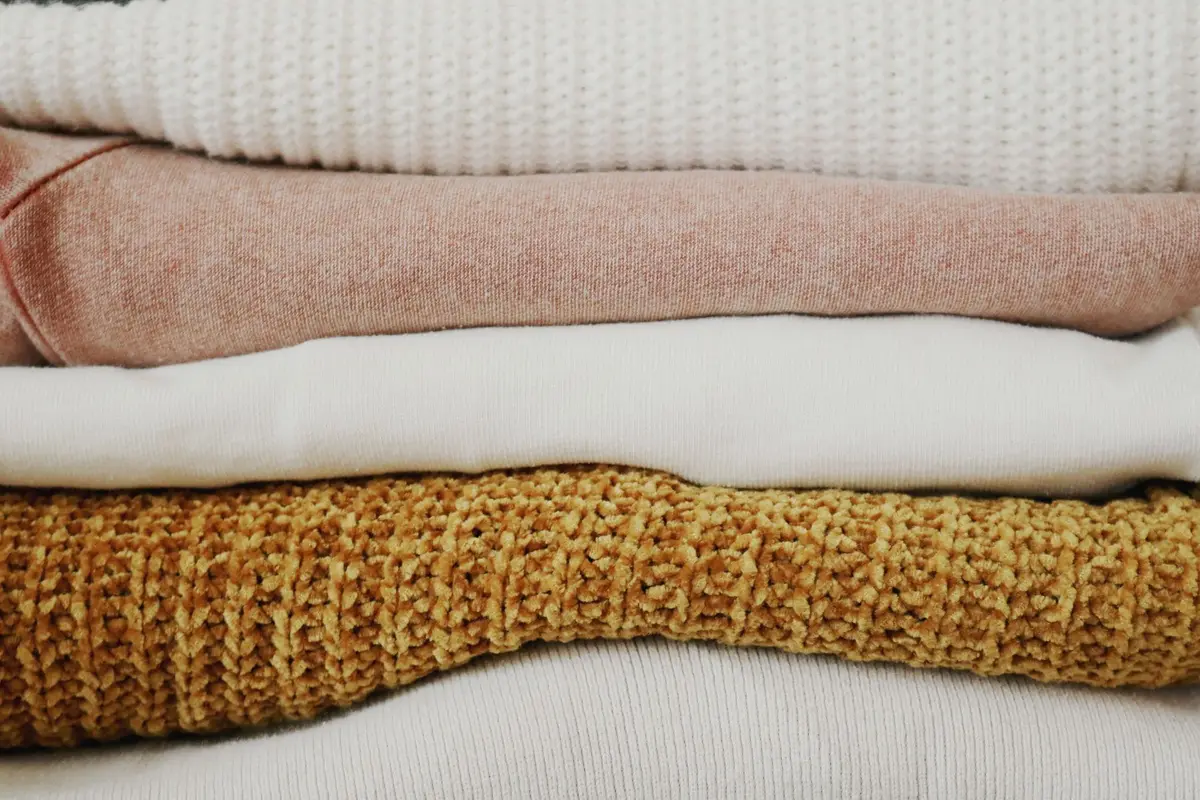
Wash everything before it goes in, and let it dry completely. A closed bag holding damp fabric is just what mildew needs, and clean fabric is less likely to mildew than soiled fabric.
Label each bag with what’s inside and which bed or season it’s for. Lay the bags flat on a high shelf or slide them under the bed.
Keep wool sweaters and down pieces out of the bags for long stretches, since being squeezed flat for months is hard on their loft. A lidded bin keeps them clean and protected without crushing them.
Open and refold the bags once a season to check for any musty smell. If you notice one, wash the piece, dry it fully and repack it.
11. Add a hook for clothes worn once
A sweater worn for an evening or jeans worn for a day aren’t dirty, but they aren’t clean enough to go back with the rest. They end up on a chair, the bed or the floor.
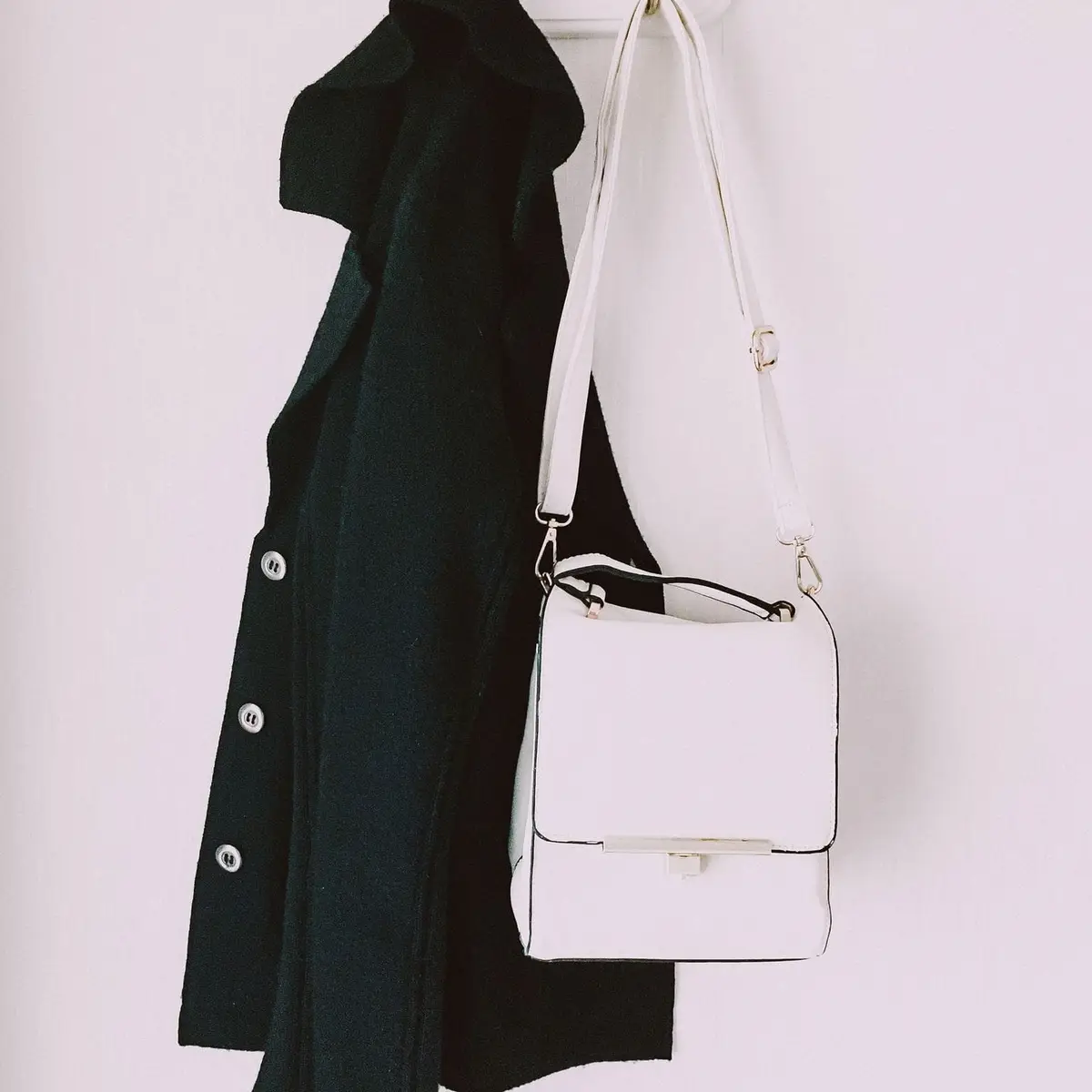
Give them a hook of their own on the side wall of the closet or the inside of the door. That one hook catches the pile before it starts.
Let worn clothes air out on the hook before they go back on the rod or into the wash. Damp clothes, even from sweat, shouldn’t go back into a closed closet until they’re dry.
Keep the hook to two or three things. When it’s full, something gets washed or put away, so the hook never turns into a second closet.
It keeps the bedroom tidier too, since these pieces no longer land on surfaces like the ones in these dresser top organization ideas.
A screw-in hook in a stud or a wall anchor holds the most weight, while an adhesive hook suits a rental and a light load.
12. Keep a mini donation basket in the closet
Most of the clothes you decide to let go of are found while you’re getting dressed: a top that pulls, pants that never fit right. If there’s nowhere to put them, they go straight back on the rod.
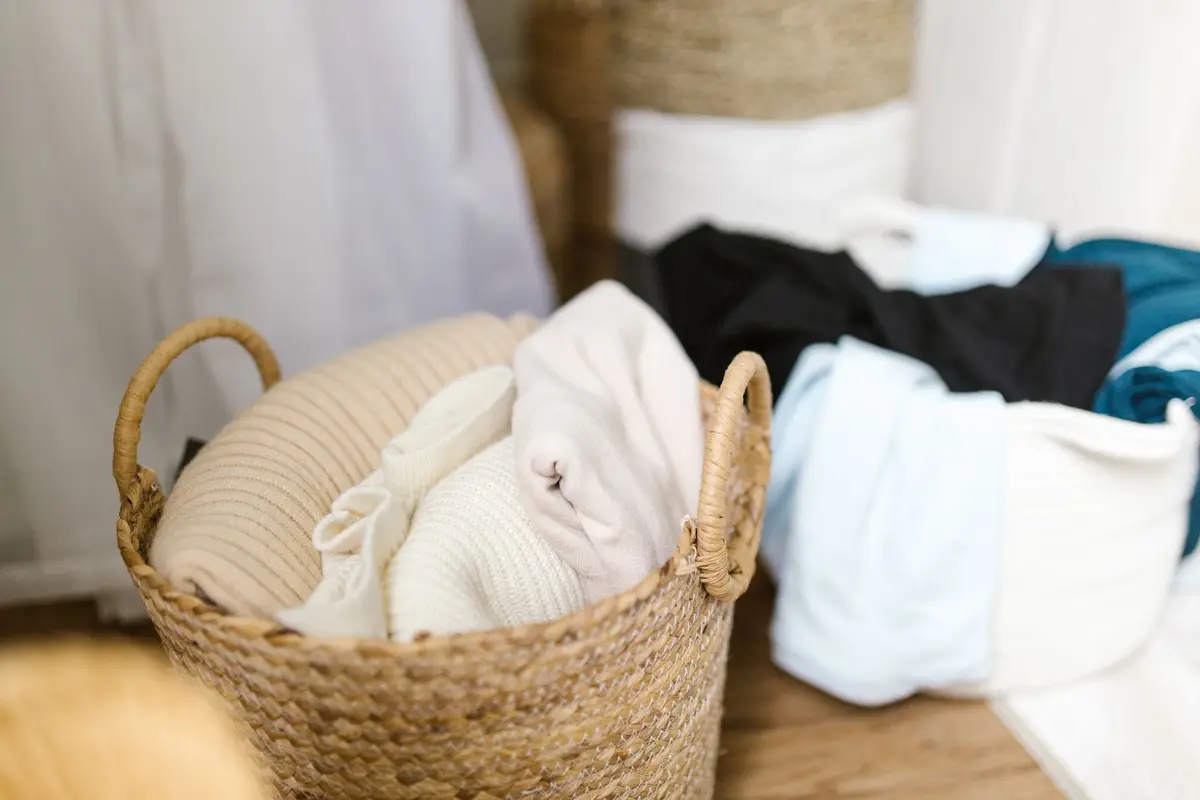
Set a small basket or a bag on the closet floor or a low shelf, just for clothes that are leaving. When something doesn’t work, it goes in right away.
When the basket is full, bag it up and put it in the car the same day, so it leaves the house instead of moving to the garage.
The basket also catches the results of the backward-hanger test and the hanger limit, so it ties all these hacks together.
For a bigger sort, the declutter checklist walks through the closet one category at a time.
Wash or air out clothes before you donate them, and pair up shoes with a rubber band, so everything you pass along is ready for its next owner.
Save this for later
Pin it to a board so it's there when you're ready to start.
Save to Pinterest(opens in a new tab)Make it easier
Free printable
A room-by-room declutter checklist that tells you exactly what to look for, with four piles to sort into so nothing ends up back on the shelf.
Free tool
Enter the width, depth and height of a shelf, a drawer or a cube cubby, and see which standard bins and baskets fit, how many, and how they line up.
Frequently asked questions
What is the cheapest way to organize a closet?
Take out what you no longer wear, then reuse what's already in the house: shoe boxes as drawer dividers, a spare basket for donations and the hangers you own, kept to a set number. Most of the hacks here cost nothing, and the rest need one small purchase like a tension rod or a pack of hooks.
How do I make more hanging space without tools?
A tension rod set lower in the closet, or between the side walls under the main rod, adds a second row for shirts, skirts and folded pants. Keep it to light pieces and check how much weight it's made to hold.
Are vacuum storage bags safe for clothes?
They suit bulky, sturdy things like synthetic comforters, puffy jackets and spare pillows, as long as everything goes in clean and completely dry. Trapped dampness can lead to mildew, so skip them for anything still slightly damp from the wash.
How do I keep scarves and belts from getting tangled?
Give each one its own spot: a ring on a hanger, a hook or a pocket. When scarves and belts are piled in a drawer or a bin, they knot together and the one you want is always at the bottom.
How often should I clear out my closet?
A quick look once a month keeps things from piling up, and a bigger sort at the change of each season catches what you've stopped wearing. A donate basket inside the closet makes both jobs faster.