13 Small Bedroom Organization Ideas That Clear the Floor Around the Bed
Make a small bedroom hold more: store under the bed, choose a tall dresser, float the nightstands, swap lamps for sconces and put the door to work.

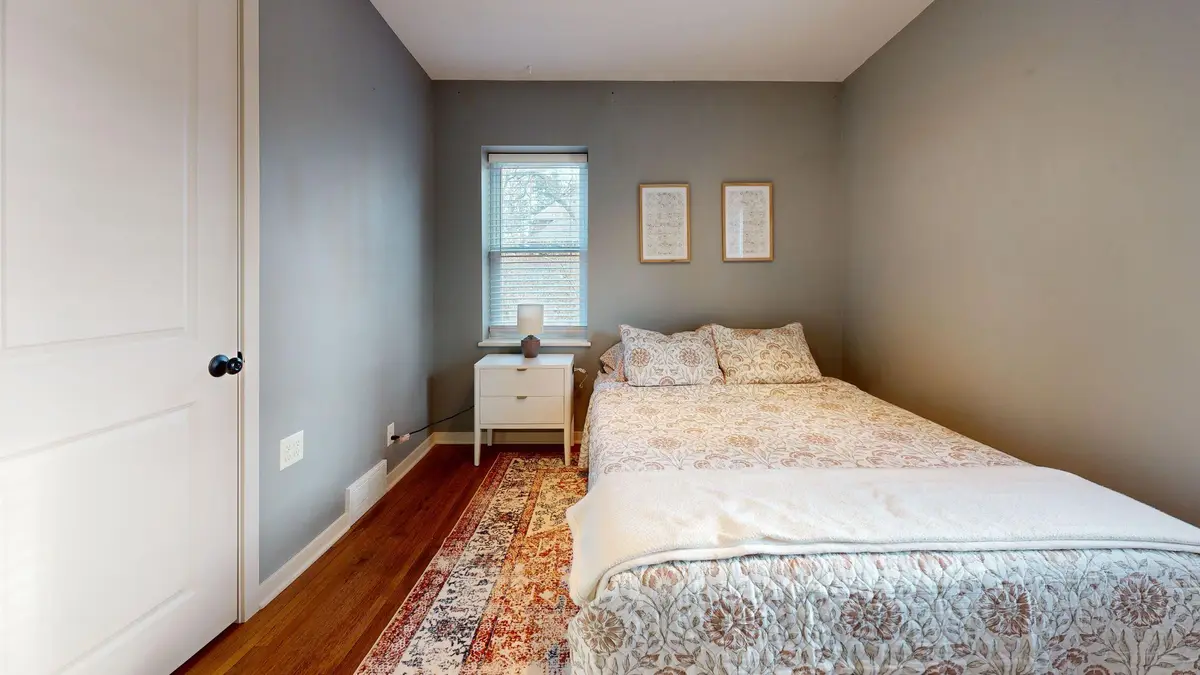
A small bedroom holds more when the bed, the walls and the door share the storing: use the space under the bed, choose furniture that’s tall and slim instead of wide, hang the lights and nightstands on the wall, and keep the floor clear. Start by taking out everything that doesn’t belong in a bedroom, so the storage you add goes to things you actually use there.
These 13 ideas are for a grown-up bedroom where the bed takes up most of the floor. For the rest of a small home, from studios to entryways, the storage ideas for small spaces pick up where this list ends.
1. Clear out what doesn’t belong in a bedroom
Before you buy a single bin, walk around the room with a laundry basket and a bag. Anything that belongs in another room goes in the basket, and anything you no longer use goes in the bag.
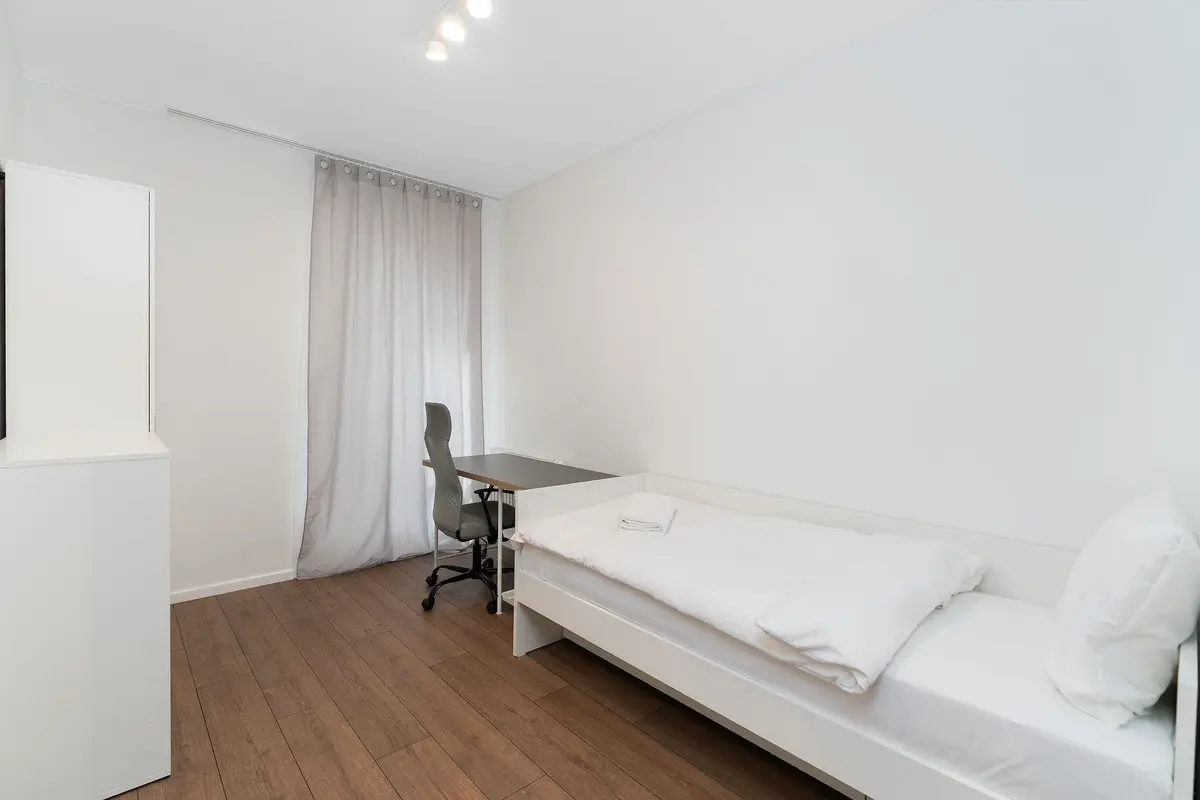
Small bedrooms collect the overflow from the rest of the house: mail, gym gear, gift wrap and the chair that holds yesterday’s clothes. Each one takes a little floor or a little drawer, and together they make the room feel full before you even open the closet.
Work in this order: the floor, then flat surfaces, then drawers, then the closet. Clearing the floor first gives you room to sort the rest, and it’s an early win that keeps you going.
The declutter checklist walks through the bedroom and every other room the same way, so you know what to look for in each spot.
Put the basket’s contents back where they belong the same day, and take the donate bag to the car right away. A bag that waits by the bedroom door tends to get unpacked again, one sweater at a time.
2. Use the space under the bed
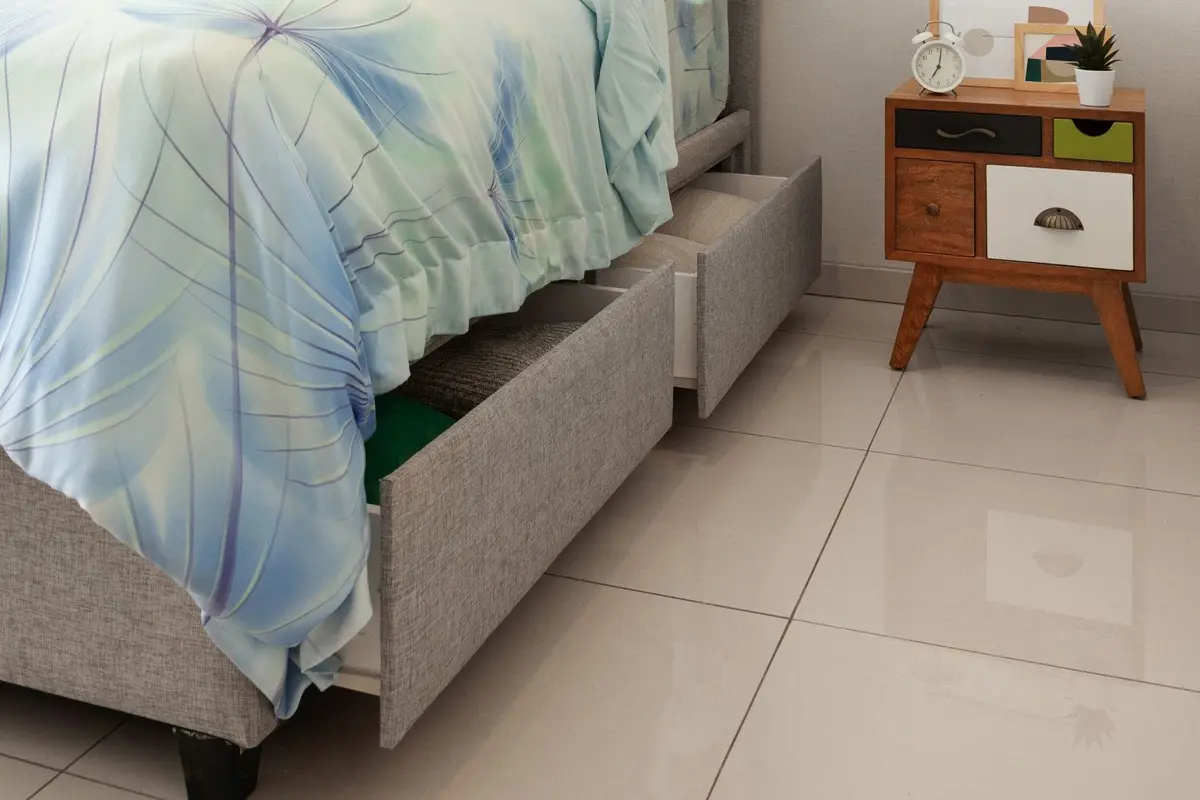
The space under the bed is the biggest storage spot in most small bedrooms, and it’s easy to waste on dust and lost socks. Low bins with lids, or a bed with drawers built in, turn it into a home for things you need now and then but not every day.
Measure the clearance between the floor and the bed frame before you buy anything, then measure from the side of the bed to the wall. Enter both into the bin and basket size calculator to see which sizes fit and how many line up side by side.
Good things to store under there: off-season clothes, spare sheets and blankets, extra shoes and gift supplies. Lidded bins keep out dust, and bins with wheels or handles slide out without a struggle.
If you’re shopping for a new bed anyway, a frame with drawers saves you buying bins at all. Check that the drawers can open fully, since a nightstand or a wall right beside the bed can block them.
Leave a strip clear near the head of the bed for slippers and a book, so you’re not shoving bins aside every night.
3. Put a long shelf above the bed
The wall above the headboard sits empty in most bedrooms. A long, sturdy shelf mounted high, or a headboard with shelves built in, holds folded throws, spare pillows and small baskets without using any floor at all.
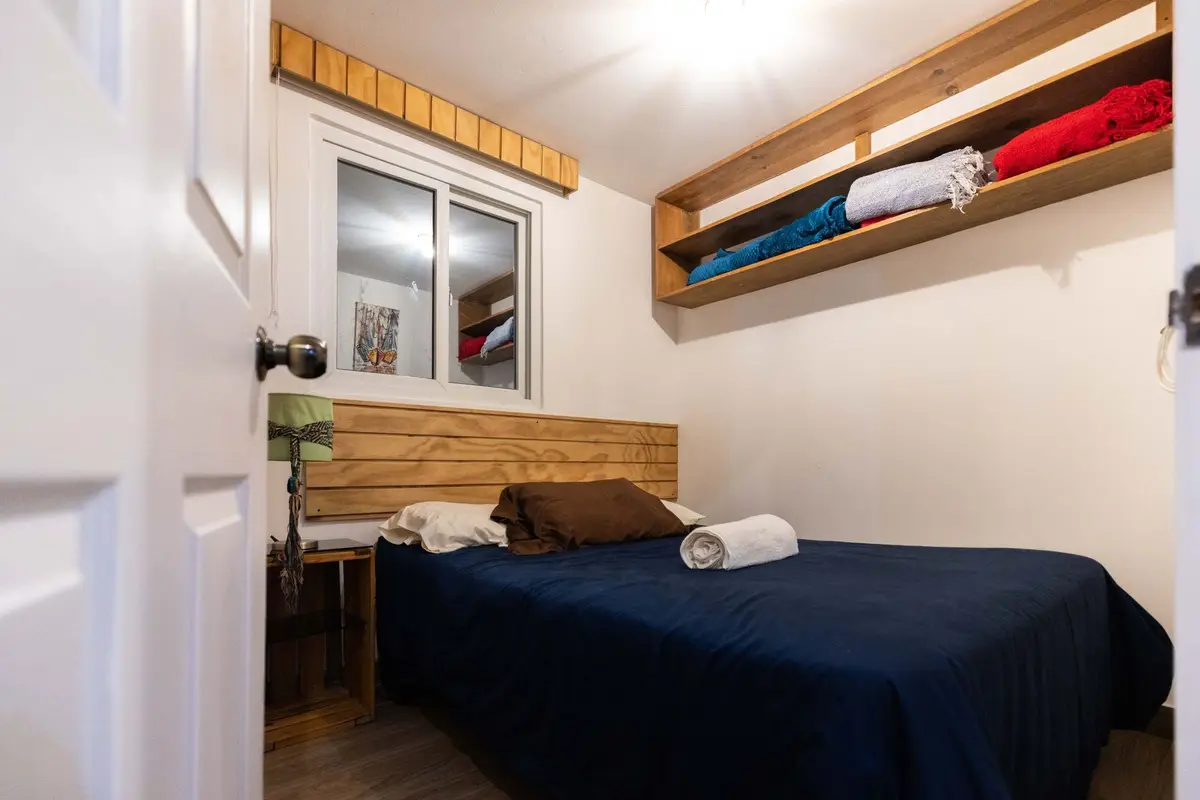
Keep what goes up there light and soft. Folded blankets, pillows and lidded fabric boxes are fine; heavy books, glass and anything sharp aren’t, since the shelf hangs right over your head.
Mount the shelf into wall studs or with anchors rated for the weight, and stay under the weight limit that comes with the brackets. In a rental, ask before you drill, or look for a headboard with a shelf that stands on the floor.
Set the shelf high enough that you can sit up in bed without bumping your head, and deep enough to hold a folded blanket without it hanging over the edge.
A shelf like this can also stand in for a nightstand in a room too narrow for one. Keep a small dish on it for a watch or glasses, and run the charger cord neatly down the wall below.
4. Swap a wide dresser for a tall, narrow one
A long, low dresser takes a whole wall of floor in a small bedroom. A tall, narrow dresser or wardrobe stores clothes upward instead, so it fits in a corner or beside the closet and leaves more of the wall free.
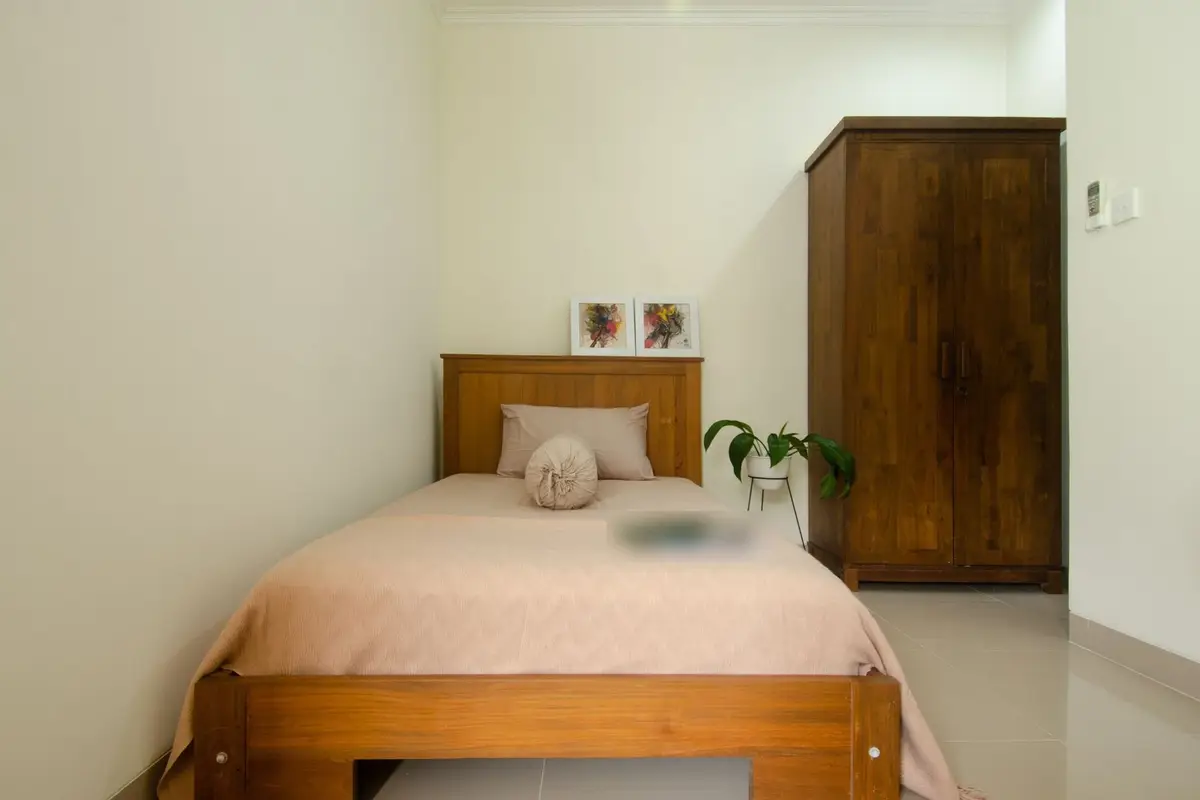
Measure the spot you want to fill before you shop, and allow for the swing of the drawers or doors. Drawers that open into the bed or bump the closet door make a room feel tighter, not roomier.
Anchor any dresser, wardrobe or bookcase to the wall with a tip-over kit. Furniture with drawers or doors can tip when drawers are pulled out or a child climbs it, and anchoring it prevents that. A kit needs only a few simple tools, like a drill, a screwdriver and a stud finder.
Store the heaviest clothes, like jeans and sweaters, in the bottom drawers and lighter things up top. Keep the top of the dresser clear of toys, remotes and anything else that might tempt a child to climb.
Give the top drawers to what you reach for daily, like socks and underwear, and the lower ones to folded clothes you wear less often.
5. Float the nightstands
A nightstand on legs takes floor space and gathers clutter underneath. A wall-mounted nightstand, or a small floating shelf with a drawer, holds a glass of water and a book while leaving the floor open below.
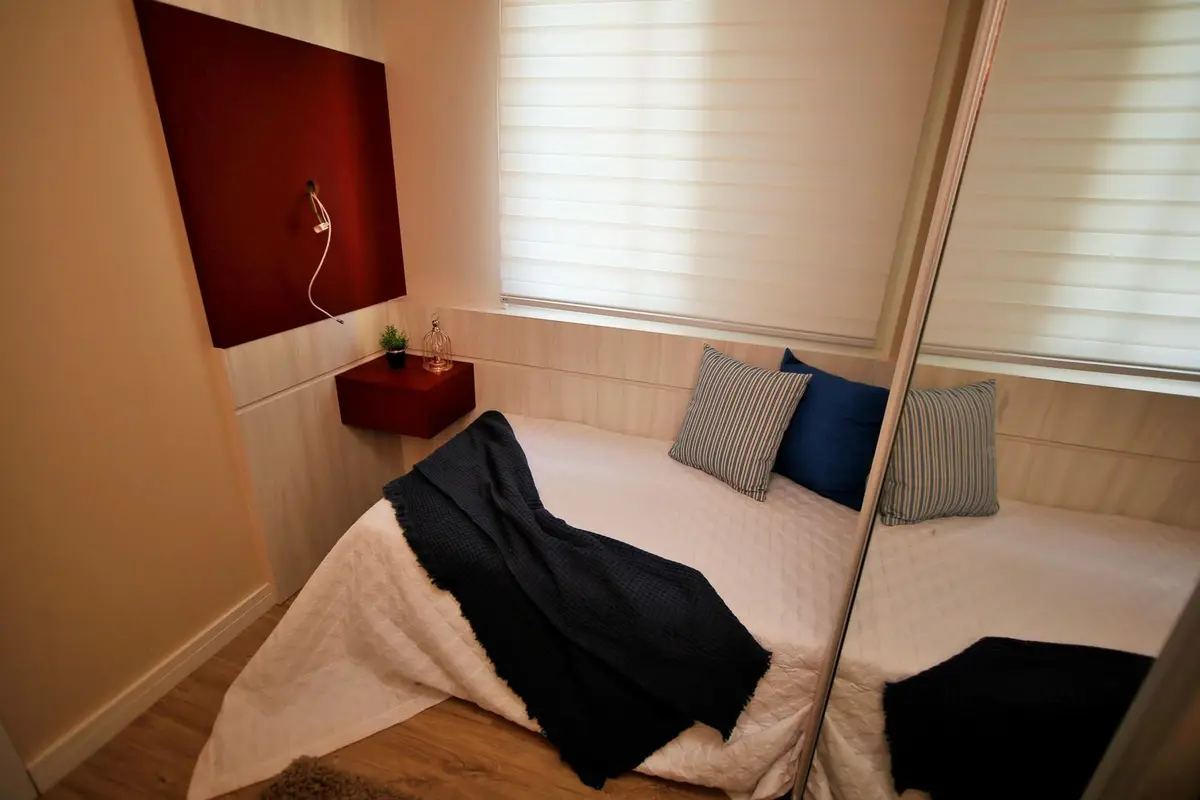
Open floor under the nightstand makes the room look less crowded, and it’s quicker to vacuum. It also leaves a spot to slide in a basket for slippers or the next book on your list.
If you’d rather not drill, choose a slim freestanding nightstand with one drawer. A drawer hides what piles up on an open shelf: lip balm, chargers, receipts and hair ties.
Mount a floating nightstand at about the height of the top of your mattress, so reaching for your glass at night isn’t a stretch. Measure from the floor to the mattress top before you mark the wall.
Use studs or anchors that suit the weight, and keep heavy stacks of books off it. A floating nightstand is made for a few light things, not a whole library, and it stays tidier that way too.
6. Swap table lamps for wall sconces
A table lamp can take up half of a small nightstand. Wall sconces, or plug-in swing-arm lights mounted beside the bed, give you reading light and free the whole nightstand top for the things you actually use.
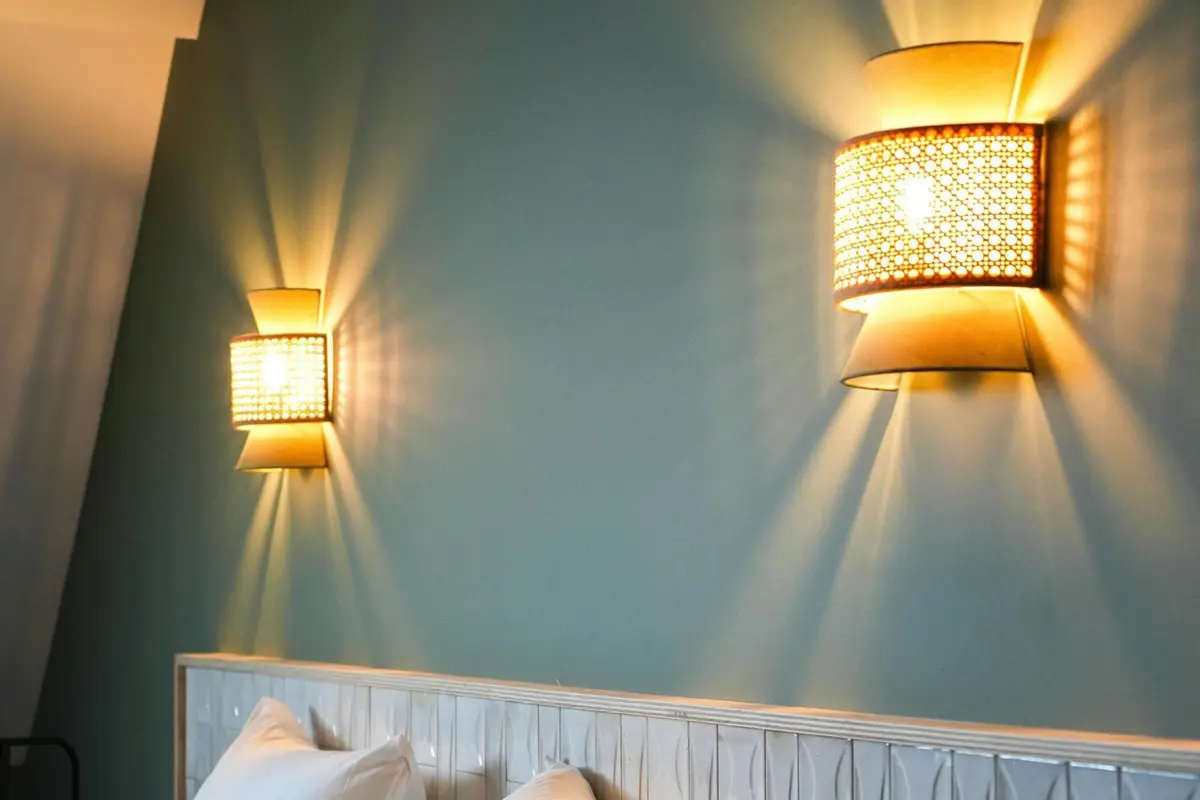
Plug-in sconces need no electrician: they mount with a couple of screws and plug into the nearest outlet. Run the cord straight down the wall in a cord cover, so it stays tidy and out of the way.
Keep cords out from under the rug, where they can be pinched or damaged without anyone noticing. Use bulbs that match the wattage marked on the fixture, and keep bedding, curtains and anything else that can burn away from the bulb.
Mount each light where it shines on your book, not in your eyes. Sit up in bed, hold the light against the wall and mark the spot that feels right before you drill.
A swing arm lets you pull the light closer to read and push it back when you’re done, which suits a bed shared by a night reader and an early sleeper.
7. Corral the nightstand with a tray
Even a small nightstand fills up fast: glasses, hand cream, a phone, a water glass and last night’s book. A small tray gives all of it one edge, so the top looks tidy and you can lift everything at once to dust.
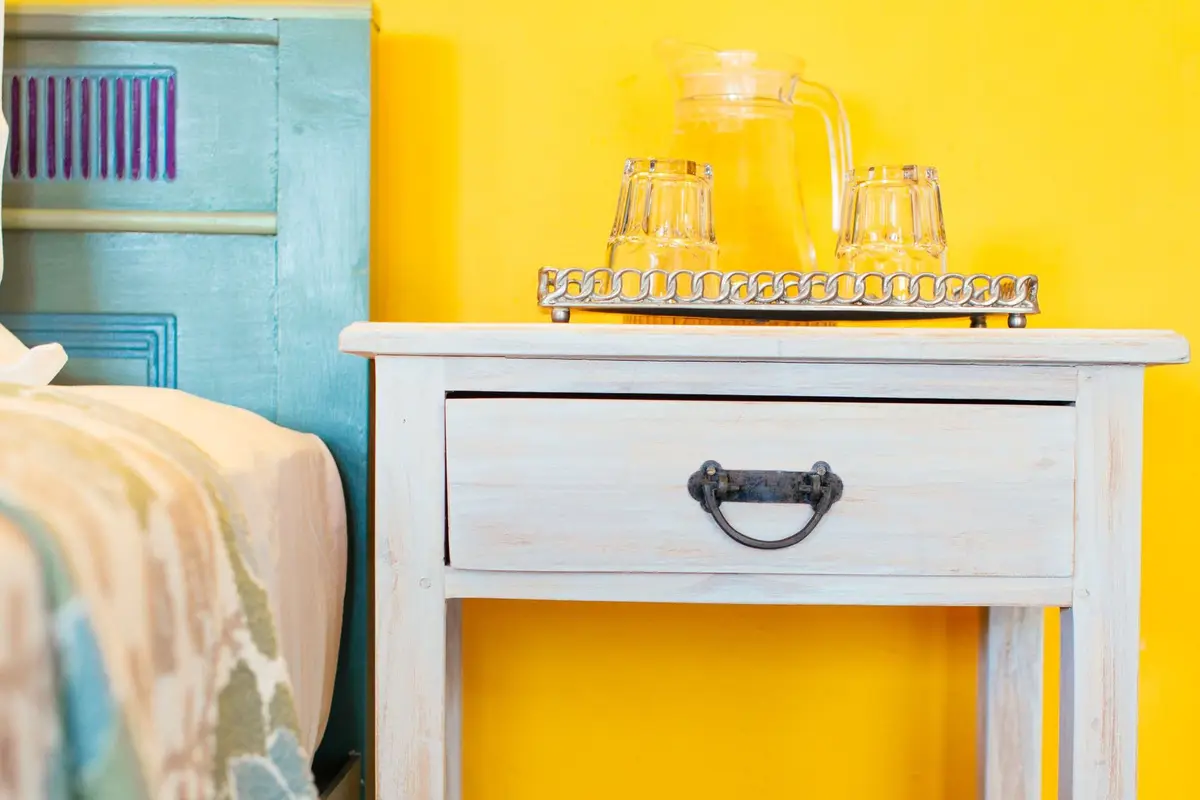
Choose a tray that leaves a little bare surface around it. If it covers the whole top, it just becomes a bigger landing spot for clutter.
Decide what earns a place on the tray: the things you use every night, and nothing else. Hand cream, lip balm, a glass and your glasses usually make the cut, while mail, receipts and loose change don’t.
Use the drawer for the next ring of things, like a charger, a notebook and a flashlight. A small divider or a few little boxes inside keep the drawer from turning into a jumble you have to dig through in the dark.
Clear the tray each morning when you make the bed. Carry the glass to the kitchen and put away anything that wandered in overnight, and the nightstand starts every day clean.
8. Add a bench at the foot of the bed
The floor at the foot of the bed is where clothes tend to land. A bench there, ideally one with a lift-up lid or a shelf underneath, gives those clothes a home and adds storage the room didn’t have.
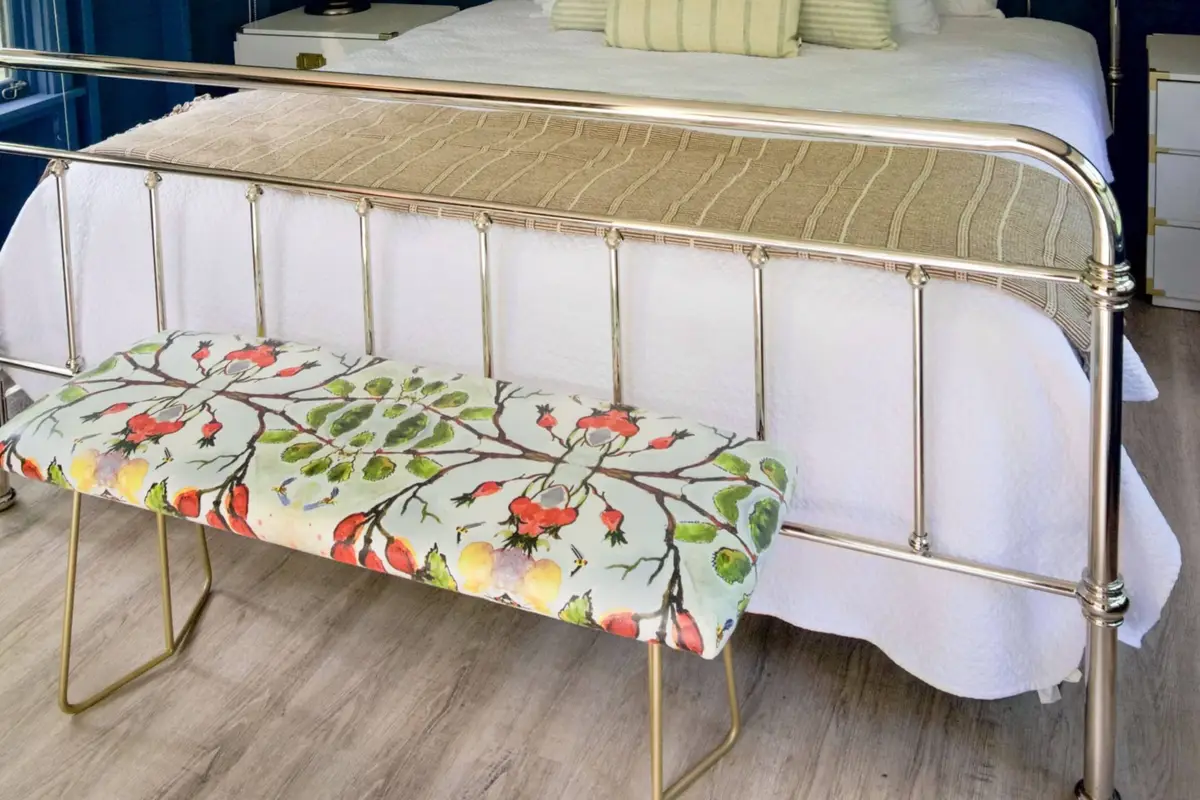
Use the inside of a storage bench for spare blankets, extra pillows or off-season sweaters. A bench with an open shelf below holds a pair of baskets for shoes or a folded laundry bag.
Measure the space between the end of the bed and the wall or dresser before you buy. Leave enough room to walk past comfortably and to open any drawers that face the bench.
Set one rule for the top: it’s for tomorrow’s outfit or a folded throw, never a pile. Clean clothes go back in the closet, and worn ones go in the hamper.
A slim bench fits in a room too tight for a chair, and it gives you a seat for putting on shoes in the morning. Choose one no wider than the bed, so it lines up neatly and doesn’t jut into the path to the closet.
9. Build shelves above the desk or dresser
In a small bedroom, the wall above the desk or dresser is prime storage. A row of shelves, or one long open shelf unit, holds books, baskets and the odds and ends you’d otherwise pile on the work surface.
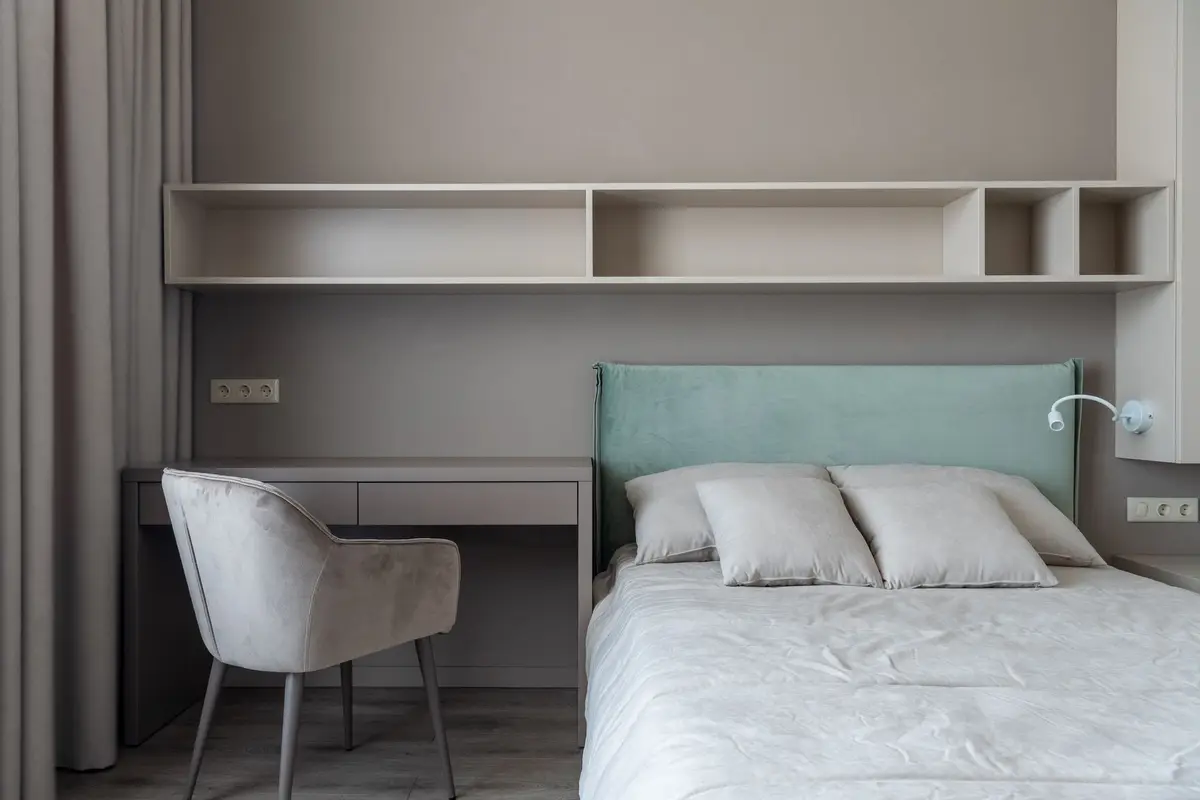
Go up rather than out. Shelves stacked up the wall use space that’s otherwise empty, while a wider piece of furniture would take floor the room can’t spare.
Keep the lowest shelf for what you use every day, like notebooks, a pen cup and a charger. Higher shelves are for things you reach for less, in lidded boxes or baskets so the wall looks calm instead of busy.
If the desk doubles as a dressing table, give one shelf to a small mirror and a tray for jewelry or makeup. The desk organization ideas help keep the work surface itself clear.
Mount the shelves into studs or with anchors rated for what they’ll hold, and keep heavier things on the lower shelves. Anything heavy up high is harder to lift down safely, and lighter baskets up top are easier to grab.
10. Use the back of the door
The back of the bedroom door is free storage that most rooms ignore. An over-the-door hook rack holds a robe, tomorrow’s outfit, a bag and a jacket, all off the floor and off the bed.
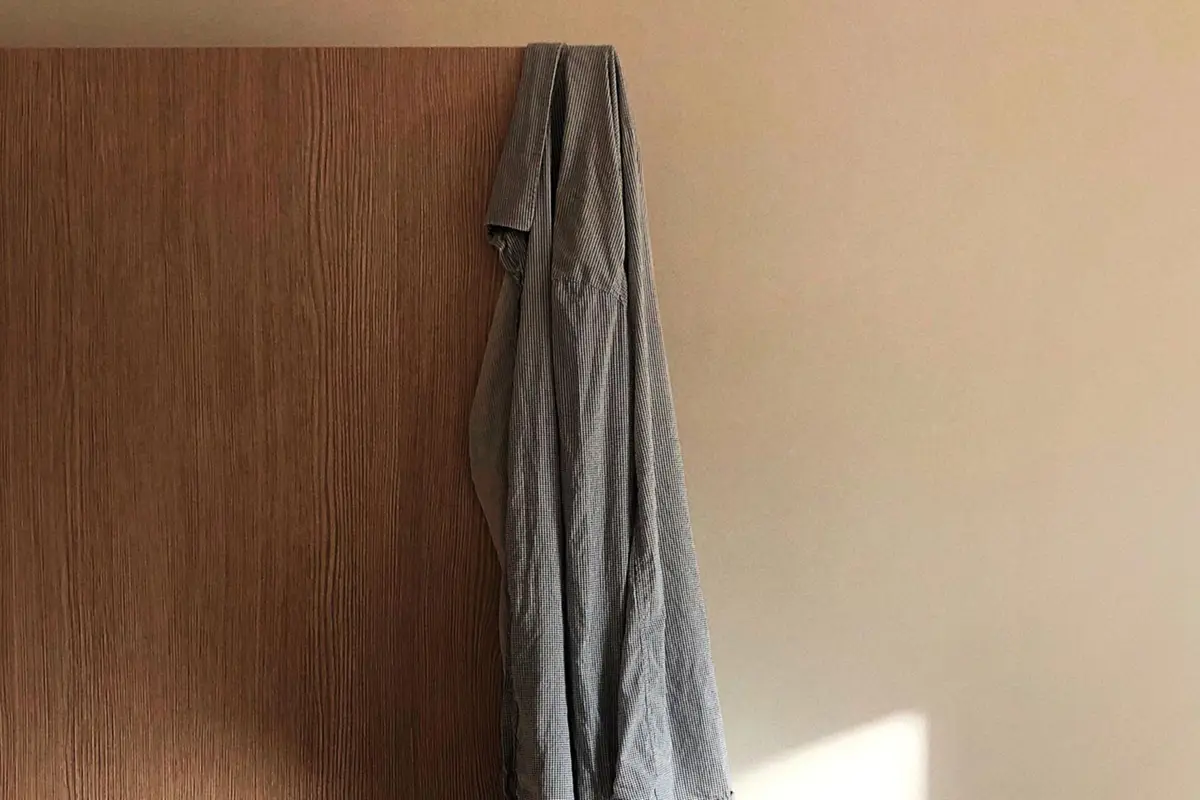
Over-the-door racks need no drilling, so they work well in a rental. Check that the door still closes fully with the rack in place, since some doors fit tight against the frame.
Give each hook one job: the robe, the gym bag, the outfit you’ve already picked. A hook that holds five things is just a pile that happens to hang on the door.
An over-the-door organizer with clear pockets suits the small things that otherwise sprawl across the dresser, like scarves, belts, socks or hair accessories. You can see every pocket at a glance.
Keep it light. Heavy bags and winter coats can strain the hinges, and a rack that bangs every time the door opens gets old fast. Adhesive hooks on the inside of the door are an even lighter option for a necklace or a sleep mask.
11. Double the hanging space in the closet
Most reach-in closets have one rod and a shelf, with empty space below the shirts. A second rod hung under the first doubles the hanging space for short clothes like shirts, skirts and folded pants.
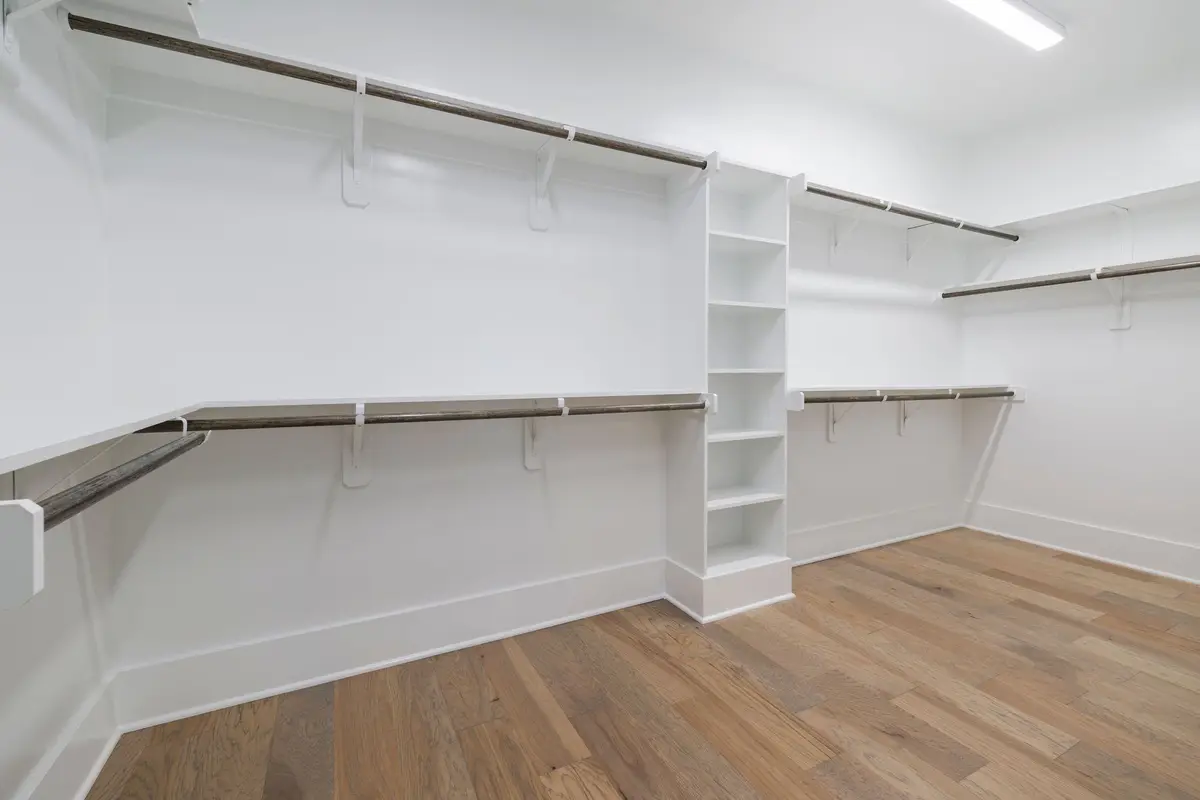
Hanging rods that hook over the top rod need no tools. Keep long dresses and coats at full length on one side, and double up the rest.
Switch to slim, matching hangers while you’re at it. They take up less of the rod than bulky ones, and clothes hang at an even height, so you can see everything at once.
Use the top shelf for light things in bins with handles, like off-season accessories or spare bedding, and the floor for a shoe rack or a lidded bin.
For a full plan, the small closet organization ideas go shelf by shelf through a reach-in closet.
Turn every hanger backward at the start of a season and flip each one the first time you wear what’s on it. At the end of the season, anything still backward is a good candidate for the donate bag.
12. Keep the floor clear with a hamper
Nothing makes a small bedroom feel crowded faster than clothes on the floor. A hamper in the spot where clothes usually land, often a corner by the closet or the bed, catches them before they spread.
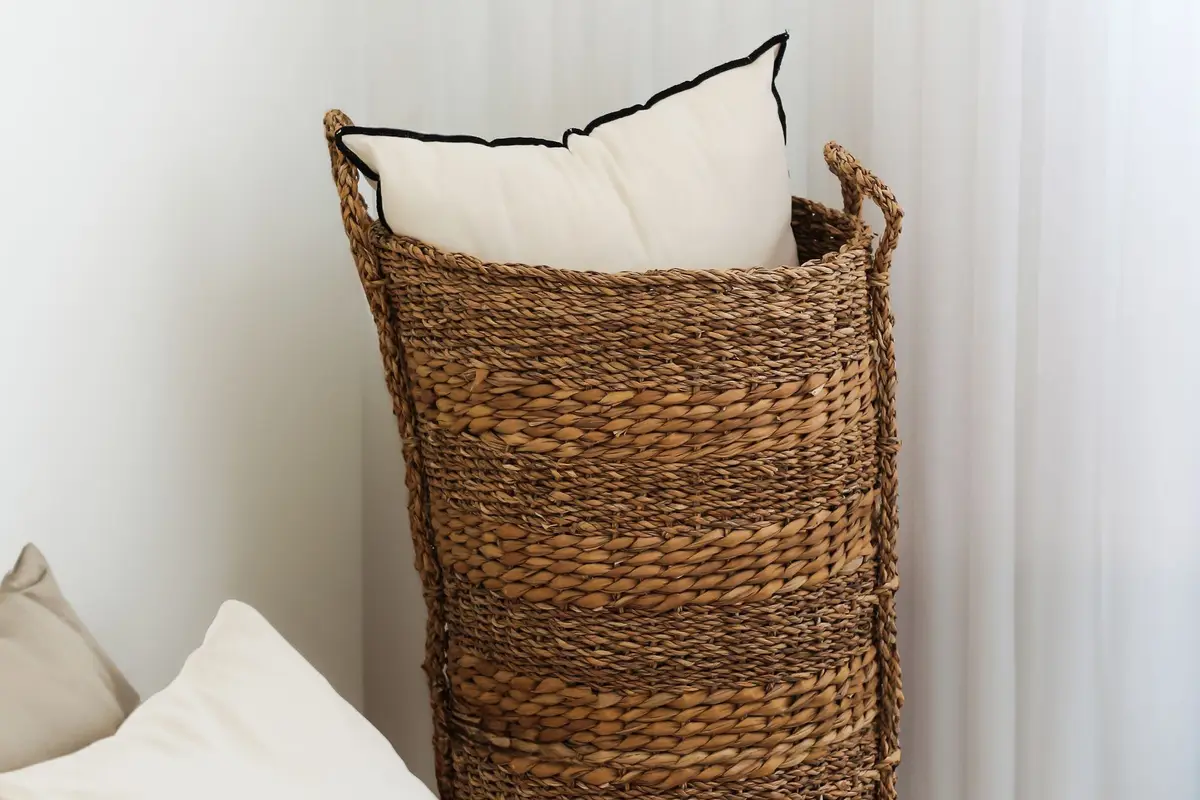
Choose a tall, narrow hamper over a wide, squat one, since it holds a full load on less floor. A lid or a liner bag hides what’s inside and makes carrying a load to the laundry easier.
A second small basket for clothes you’ve worn once but can wear again keeps them off the chair and the bench. Empty it back into the closet or the hamper every few days.
Make the floor rule simple: shoes go on the rack, bags go on the hook, and nothing else lives on the floor. A clear floor is also faster to vacuum, so cleaning the room takes less time.
Do a quick floor check before bed. Anything that landed there during the day goes back to its spot, which takes a minute or two and keeps the morning calm.
13. Do a weekly reset
A small bedroom slides back into clutter fast, because there’s so little room for things to drift into. A short weekly reset puts everything back in its spot before small piles grow into big ones.
Pick one time each week, like Sunday afternoon or laundry day, and do the same few jobs: change the sheets, empty the hamper, clear the nightstand tray, the bench and the door hooks, and put away anything that wandered in.
Check the under-bed bins and the closet about once a month. Anything you haven’t used in a season can move to storage, go to a friend or go in the donate bag.
The Sunday reset checklist puts the bedroom on the same list as the rest of the house, so the whole week starts tidy.
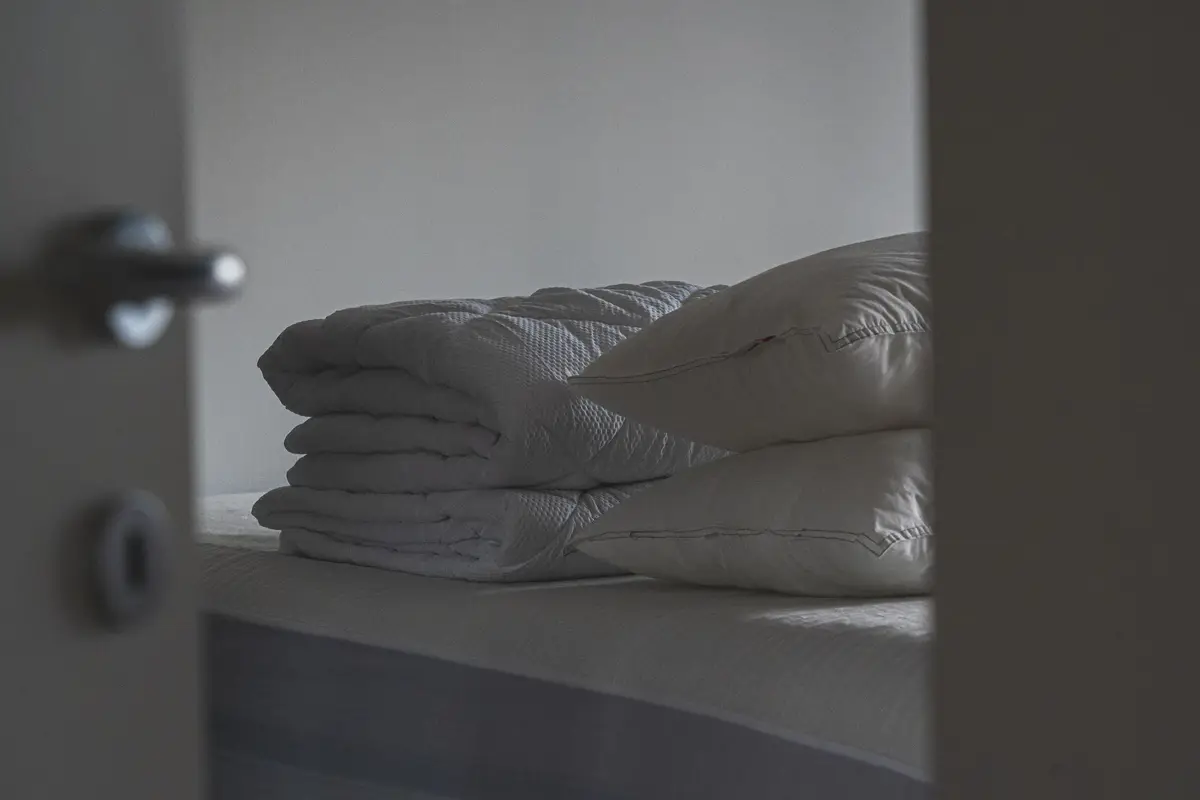
Keep each spare set of sheets folded together inside one of its own pillowcases. On reset day, the whole set is ready to grab in one go, and the linen shelf stays neat.
Save this for later
Pin it to a board so it's there when you're ready to start.
Save to Pinterest(opens in a new tab)Make it easier
Free printable
A room-by-room declutter checklist that tells you exactly what to look for, with four piles to sort into so nothing ends up back on the shelf.
Free tool
Enter the width, depth and height of a shelf, a drawer or a cube cubby, and see which standard bins and baskets fit, how many, and how they line up.
Frequently asked questions
How do I organize a small bedroom with no closet?
Give clothes a tall, narrow wardrobe or a slim clothing rack, then use the space under the bed for folded and off-season things. Hooks on the back of the door and a shelf above the dresser take care of bags, robes and accessories without using more floor.
What should I store under the bed?
Things you need now and then but not every day: off-season clothes, spare sheets and blankets, extra shoes and gift supplies. Use low bins with lids so dust stays out, and keep a strip near the head of the bed clear for slippers.
How do I make a small bedroom feel less cluttered?
Clear the floor and the nightstand first, since those are what you see from the door. Give every item a home, keep surfaces mostly bare, and do a short reset once a week so small piles never get the chance to grow.
Do I need to anchor a dresser in a small bedroom?
Yes. Furniture with drawers, doors or shelves can tip over, and anchoring it to the wall with a tip-over kit prevents that. Keep heavier things in the lower drawers and on lower shelves, and keep toys and remotes off the top so children aren't tempted to climb.