12 Sliding Door Closet Organization Ideas That Work Around Bypass Doors
Put daily clothes behind the door you open most, split the closet into a hanging side and a shelf side, and keep the middle and the track clear.

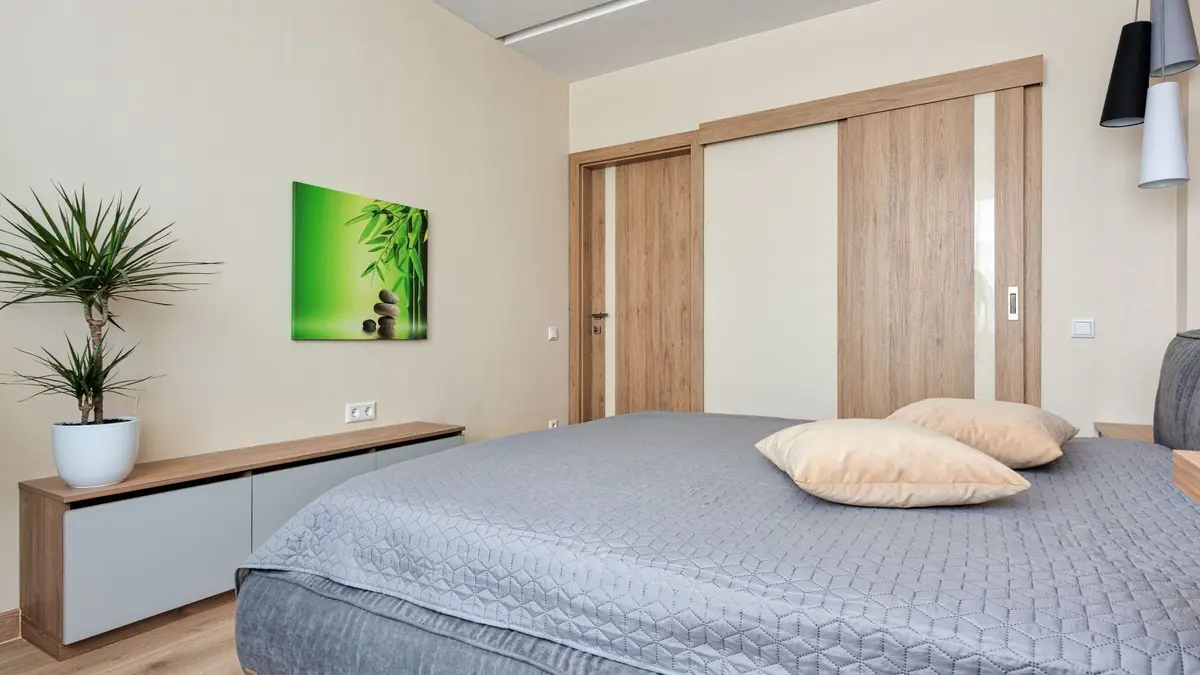
A sliding door closet works best when you plan it as two halves: the clothes you wear every day behind the door you open most, shelves or drawers behind the other, and nothing in the path of the doors. Keep the middle, where the panels overlap, for things you can reach from either side, and keep the floor track clear so the doors close all the way.
These 12 ideas are for a reach-in closet with sliding or bypass doors, from a small bedroom closet to a nursery. For a closet without sliding doors, the small closet organization ideas cover the basics like a second rod and the back of the door.
1. Put daily clothes behind the door you open most
Watch which door you slide open in the morning. If you reach for the same side every time, often the one closest to the bed or the bedroom door, that half should hold what you wear every week.
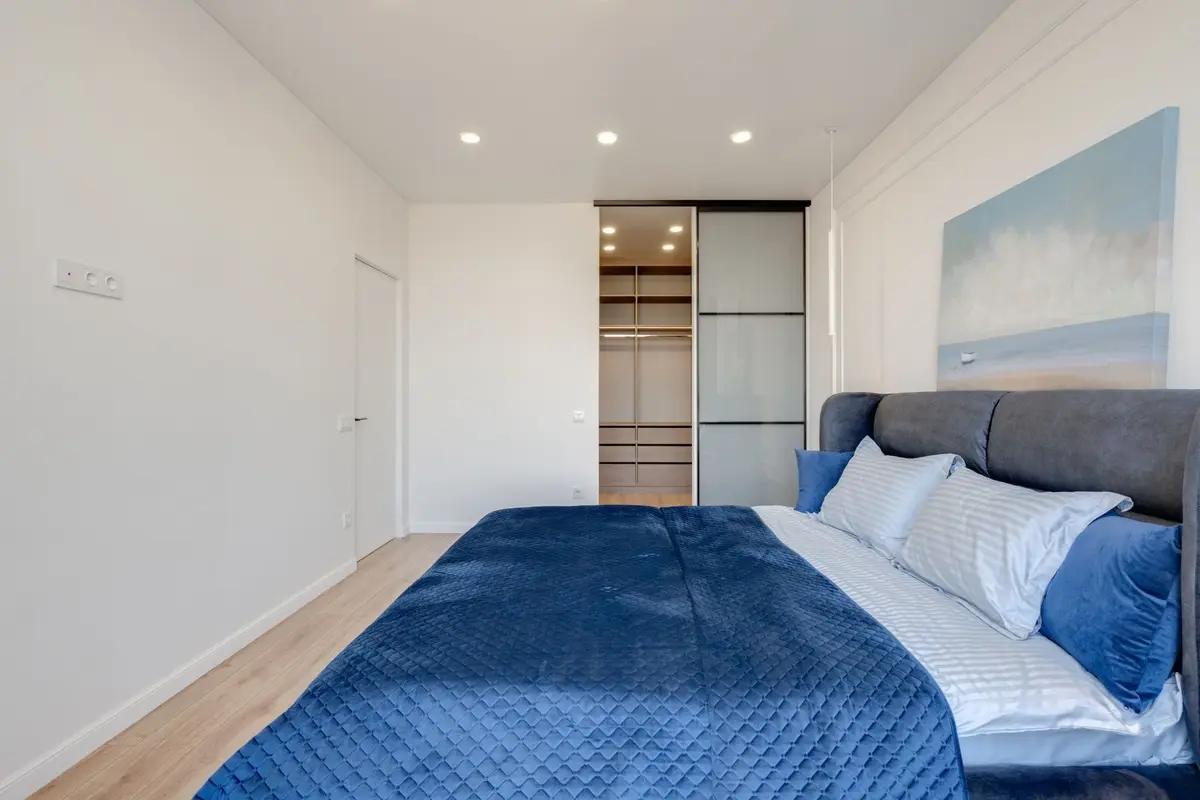
Move work clothes, school clothes and the jeans you live in to that side. Formal wear, off-season coats and the things you reach for once a month go behind the other door, where opening it now and then is no trouble.
If two people share the closet, give each person their own door instead of mixing clothes along one rod. Each of you opens your own side without waiting, and nobody’s sweaters creep into the other half.
Once the move is done, live with it for a week. If you keep sliding the second door open for the same few things, move those few things to the busy side, and swap something you didn’t touch back the other way.
2. Split the closet into a hanging side and a shelf side
A reach-in with bypass doors is easiest to use when each half has one job. Put long and short hanging on one side, and shelves, drawers or bins for folded clothes on the other.
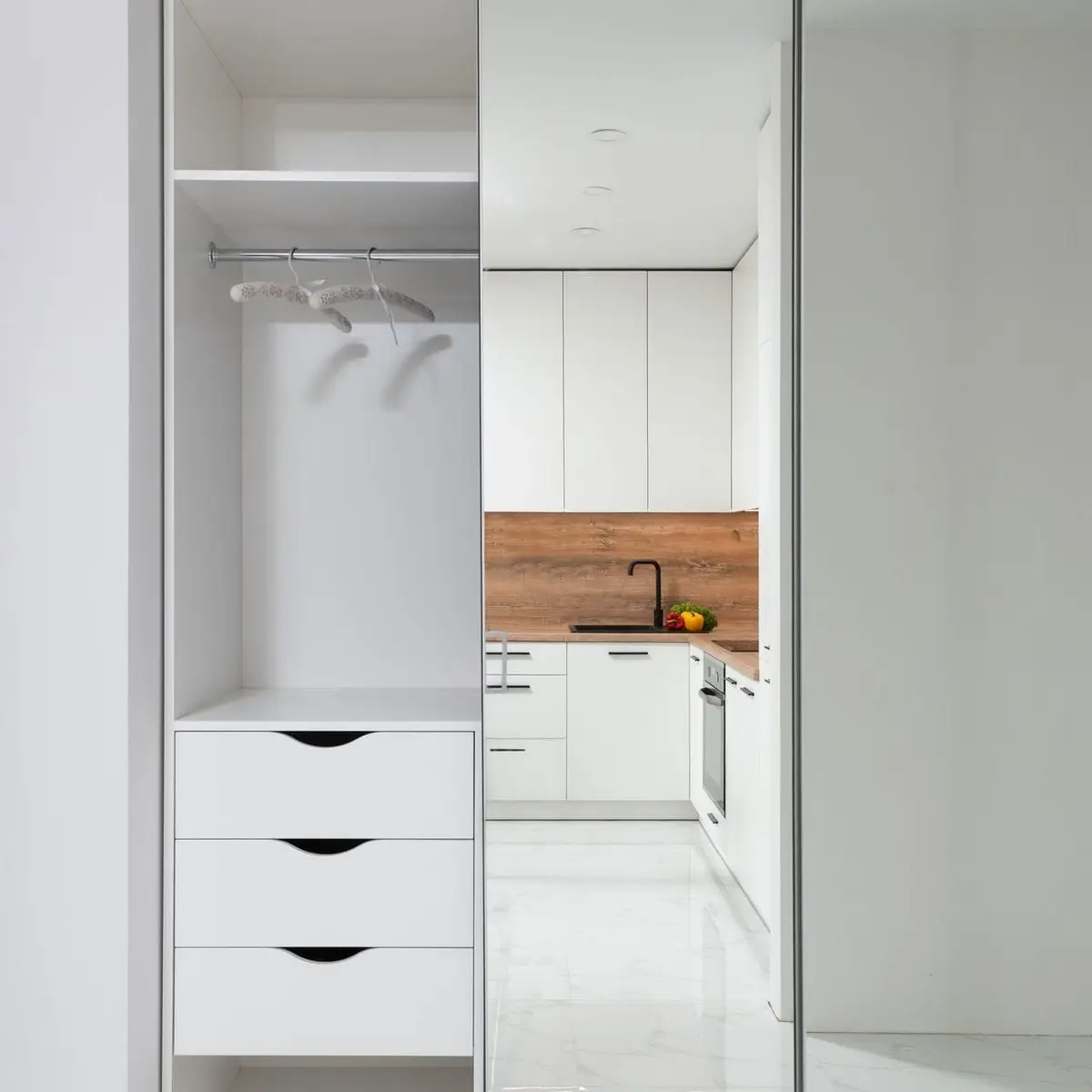
When everything shares one long rod, you end up sliding the doors back and forth to find a single shirt. Two clear zones mean you open one door for hanging clothes and the other for folded ones.
Pick the side for each zone by how you dress. If most of your clothes hang, give the hanging zone the busy door from the first idea; if you live in folded tees and leggings, give the shelves that side instead.
A shelf unit or a small set of drawers can sit under a shorter rod on the shelf side. Measure the depth first, from the back wall to the inside face of the door panel, so nothing stops the doors from sliding past.
3. Keep the middle clear of anything the doors can’t pass
Bypass doors run on two tracks, one panel in front of the other, so the panel at the back slides into the closet’s depth. Anything that sticks out too far, from a deep bin to a coat sleeve, catches the back panel and stops it short.
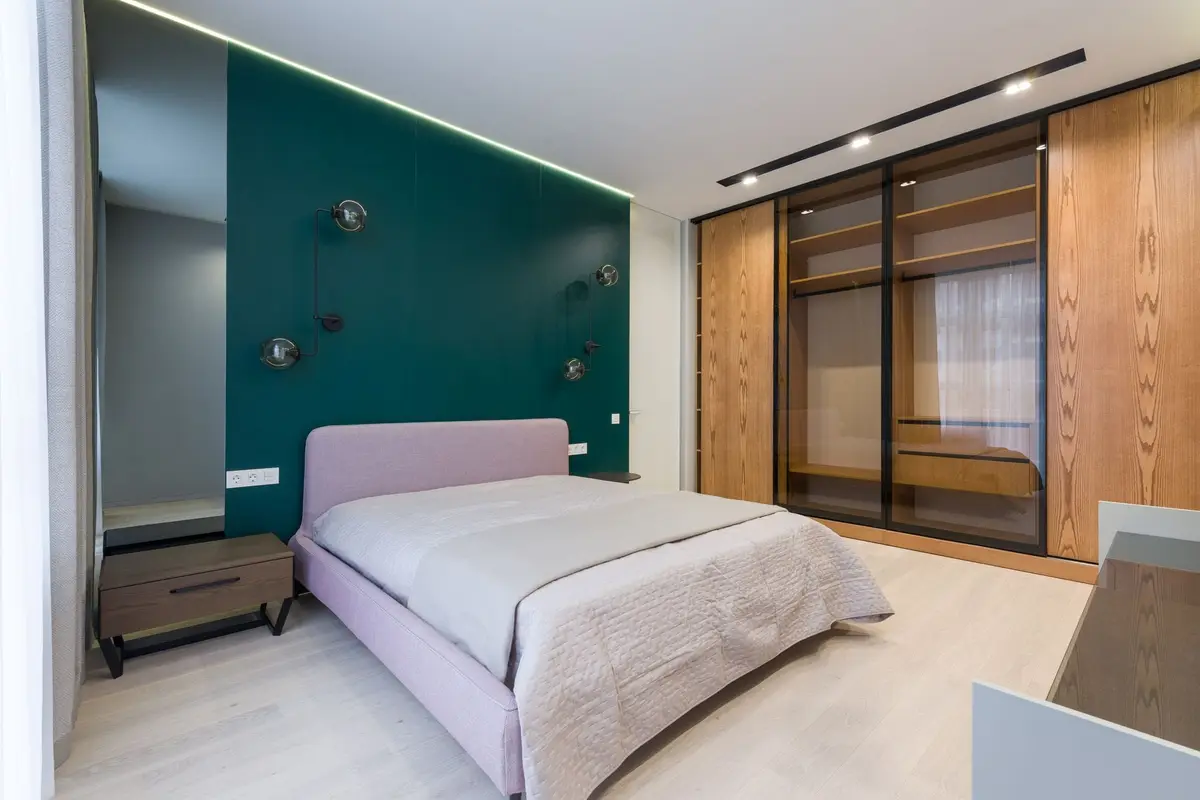
Stand in front of the closet and slide each door all the way to both ends. Every spot where a door bumps something or drags across fabric needs a fix.
Push hanging clothes back on the rod so sleeves don’t spill forward, and turn bulky coats so they hang straight. Choose bins and baskets that sit at least a little behind the edge of the shelf.
The center of the closet, where the two panels overlap, is the one spot you can reach no matter which door is open. Use it for the things both sides need, like a hamper, a laundry bag or a small step stool, and keep them low and slim.
4. Add a center shelf tower only if both doors can reach it
A tower of shelves in the middle of the closet looks tidy, but with bypass doors it can be a trap. When one door is open, the other panel covers half the tower, so you can only ever reach part of it.
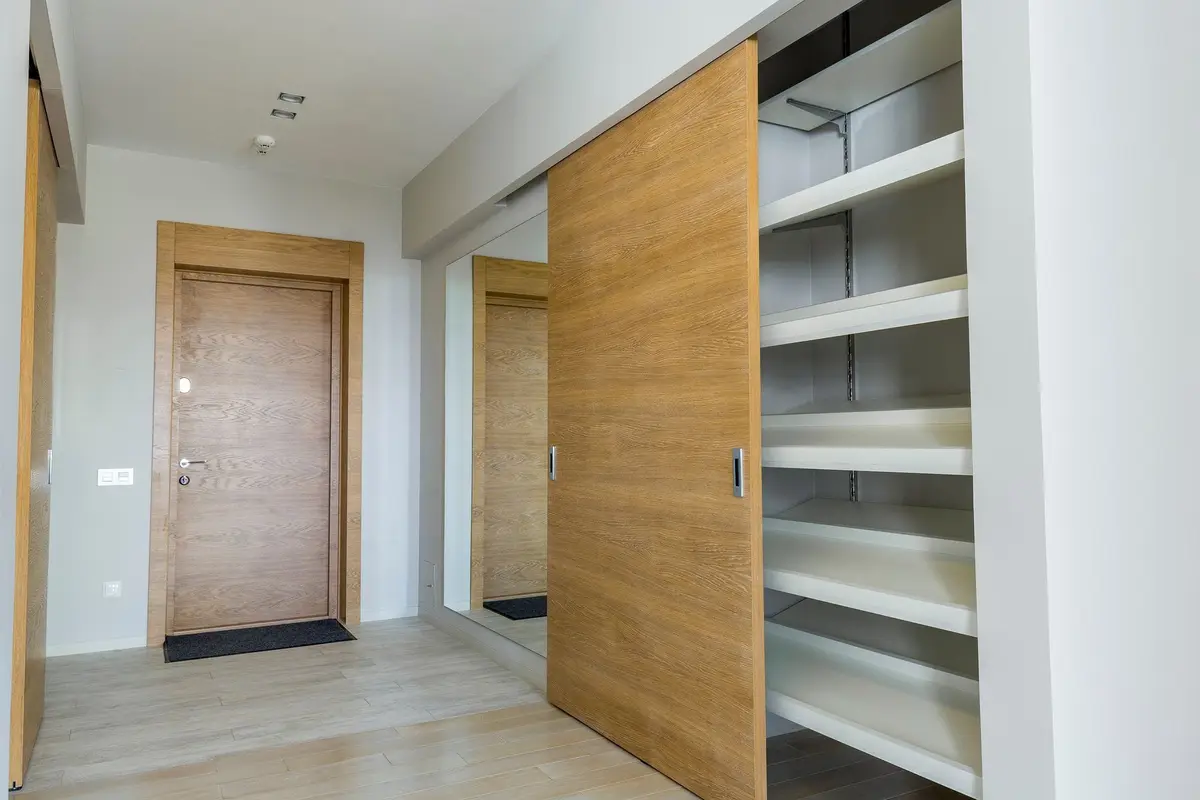
Measure before you buy. A center tower works when it’s narrow enough that sliding either door all the way open still uncovers the whole thing, which usually means a closet that’s wider than average.
In a standard bedroom closet, a tower at one end works better. Put it on the shelf side from the second idea, where one door slides away and shows every shelf at once.
Any shelf tower, dresser or drawer unit inside the closet needs to be anchored to the wall so it can’t tip over, which matters most in a home with kids who climb. Use the hardware made for it and fasten it into a stud or a wall anchor.
5. Hang double rods on one side
Shirts, skirts, folded pants and kids’ clothes are all short, so two rods stacked on one side of the closet hold about twice as much in the same width. Leave the other side as a single rod for dresses, coats and long pants.
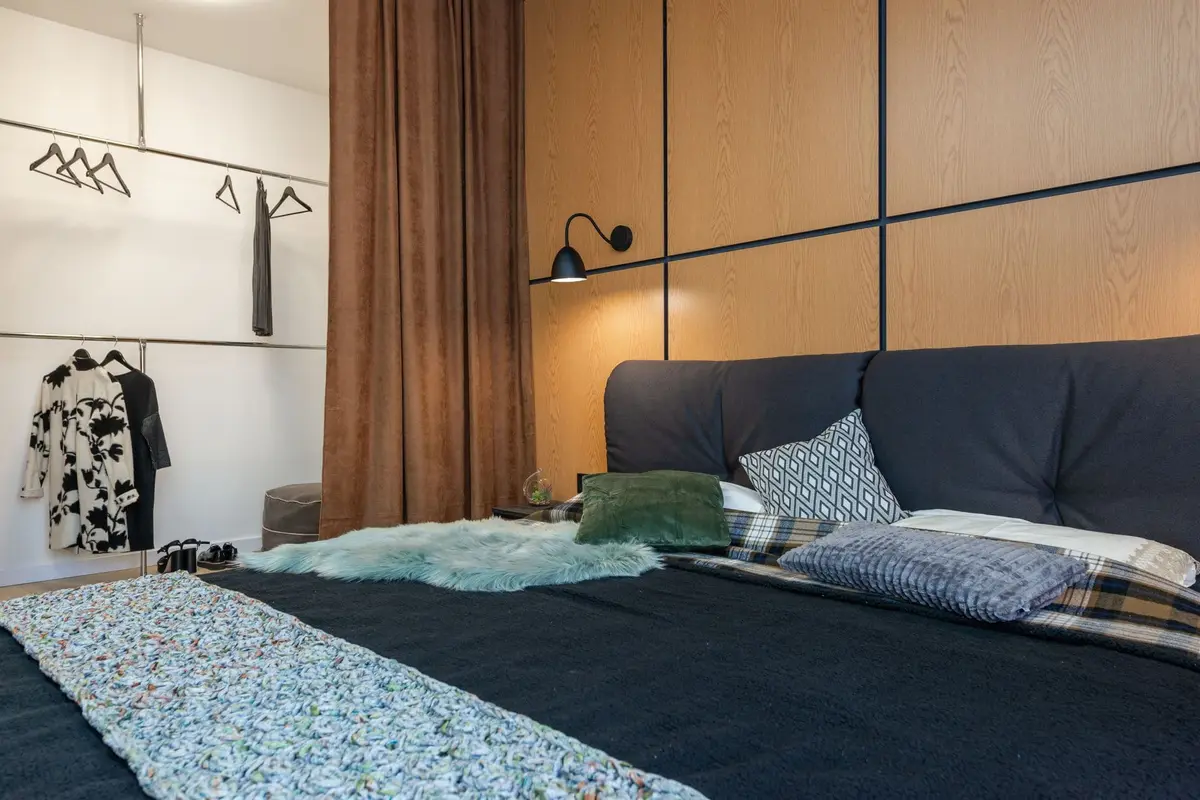
Put the double rods behind the door you open most if most of your clothes are short. Hang shirts on the top rod and pants or skirts on the bottom one, so an outfit is in one spot.
A hanging rod that hooks over the upper rod adds a lower one without drilling. Check that the lower rod sits high enough that clothes don’t brush the floor or a shoe row.
Keep the double rods in the end section of the closet, not in the overlap. That way each rod is fully visible when its door is open, and you never have to reach behind the other panel.
Before you add a rod, pull out anything you haven’t worn in a long while. A second rod is only a win if it holds clothes you actually wear.
6. Put bins on the top shelf at both ends
The top shelf of a sliding door closet runs the full width, but you can only reach the half behind the open door. Treat the shelf the same way you treat the rest of the closet: one set of bins at each end, and the middle left mostly clear.
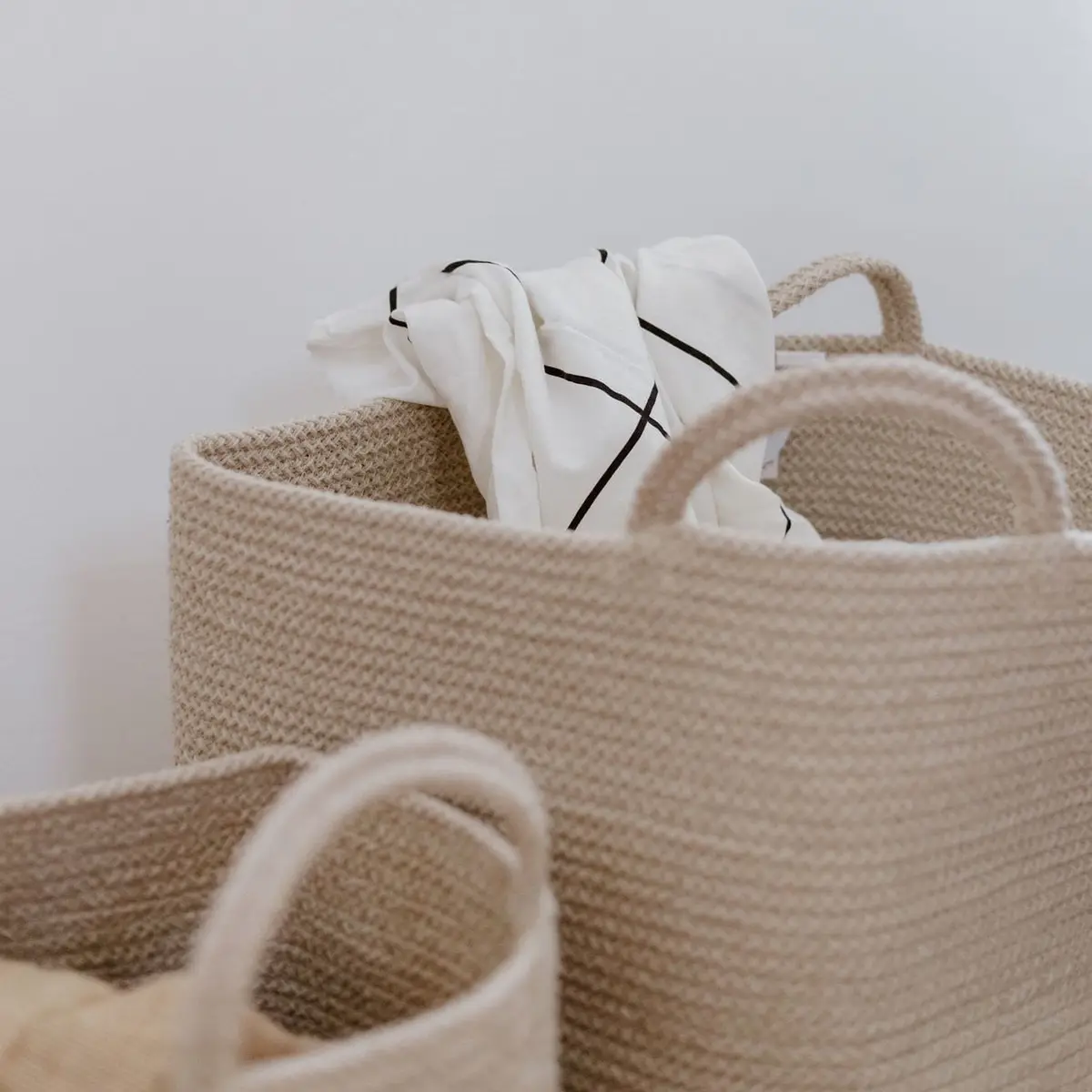
Choose bins with a handle or a cutout on the front, so you can pull them down without dragging. Label the front edge with what’s inside, like swimsuits, spare bedding or winter hats.
Keep light things up high and heavy things lower down. The things you use often belong on lower shelves, about waist high, where they’re easy and safe to reach.
For the top shelf, use a sturdy step stool with a bar to hold on to, and never stand on a chair. A slim stool fits in the middle of the closet, where both sides can reach it.
Measure the shelf before you shop, then use the bin size calculator to see how many bins fit at each end without leaving awkward gaps.
7. Keep shoes on a low rack that stays off the track
Shoes on the closet floor tend to creep forward until a toe sits right on the door track. Then the door jams, or a heel gets scuffed every time it slides past.
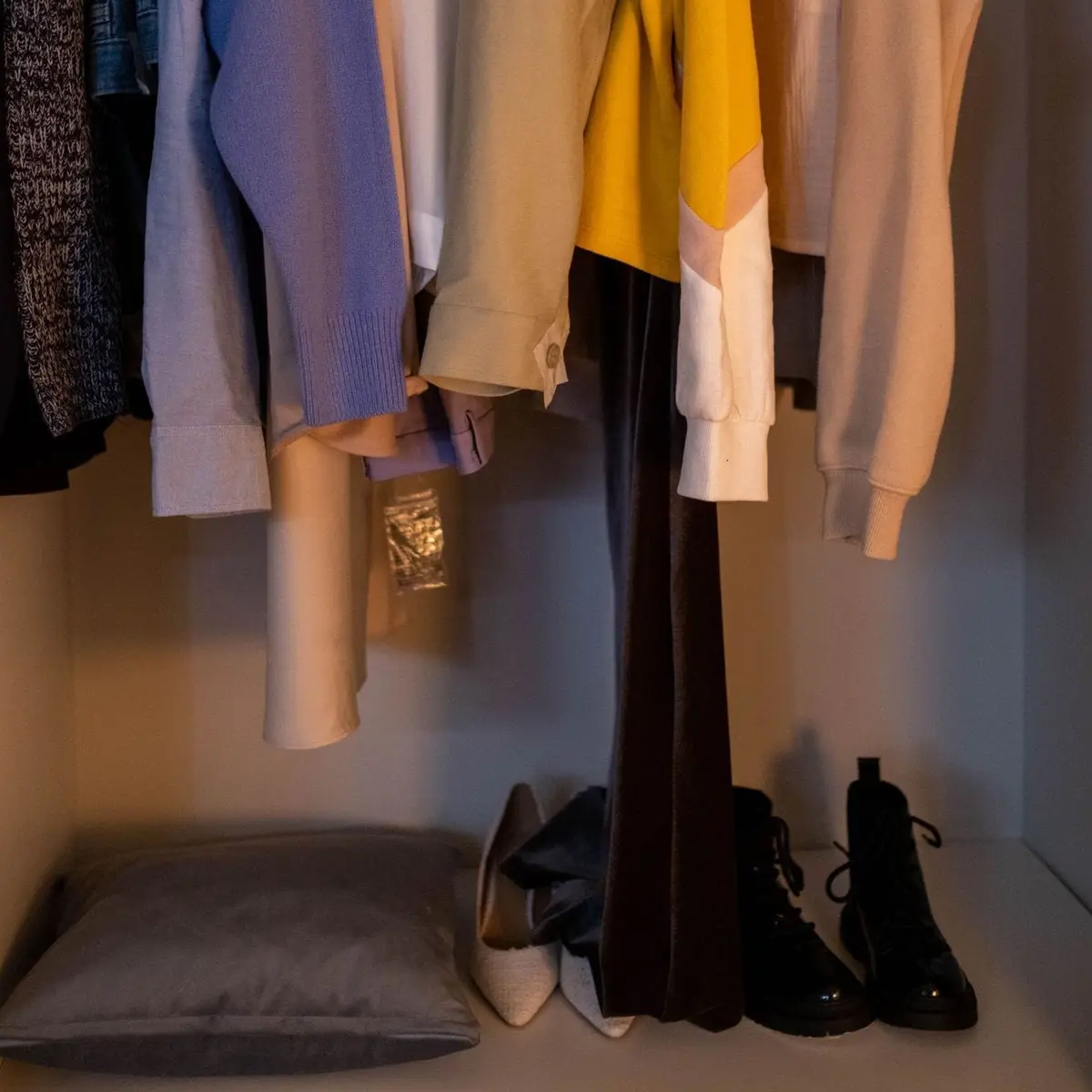
Give shoes a low rack or a shallow shelf set back from the front of the closet. Leave a clear strip in front of it, a little wider than the track, so nothing ever rests in the doors’ path.
Put the rack under the shortest hanging clothes, so pants and dresses don’t drag across the shoes. A double rod side from the fifth idea leaves a perfect gap for it under the bottom rod.
Keep the pairs you wear every week behind the busy door and the rest on the other side. Boots and bulky pairs can go in the corners at each end, where they’re out of the way.
For more ways to stand, stack and store shoes, these shoe storage ideas work in any closet. If the closet floor is already full, a rack in another room may be the better fix.
8. Clean the track so the doors glide
A sliding door that sticks or jumps usually has a dirty track, not a broken roller. Dust, hair, lint and grit collect in the floor guide and the top track, and the doors start to drag.
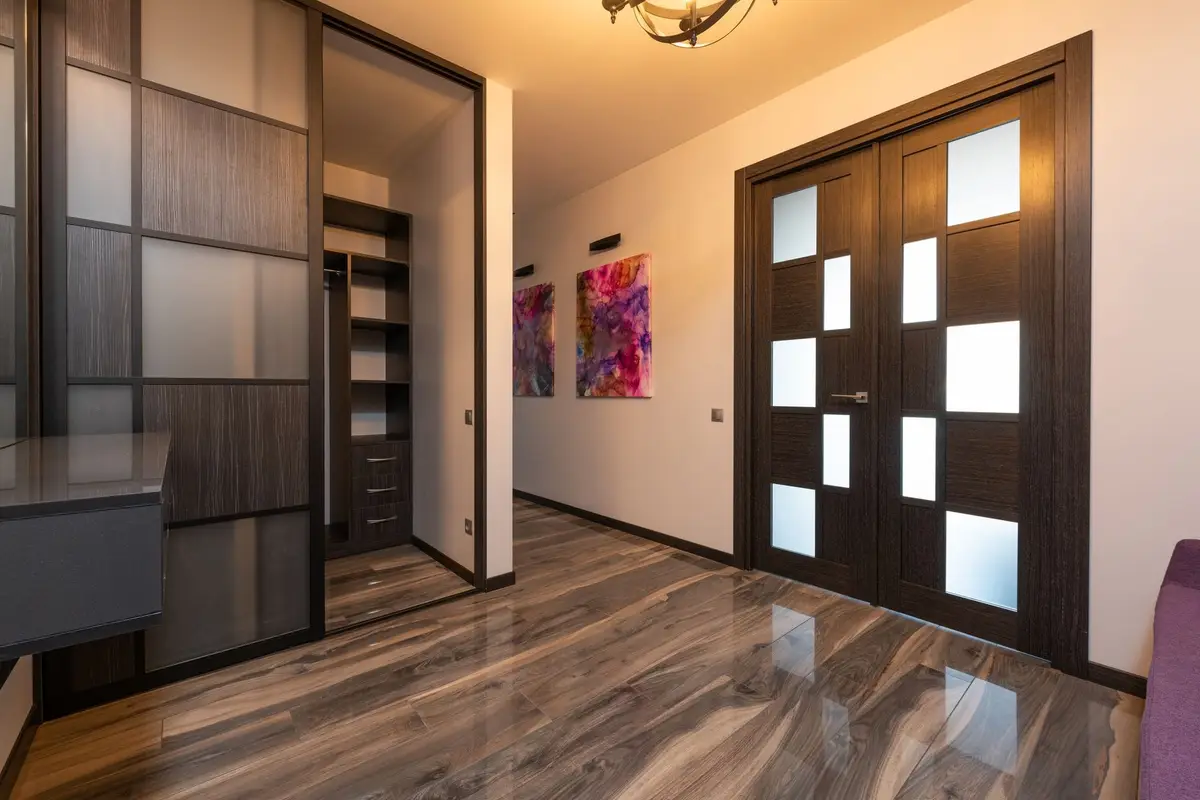
Slide both doors to one side and vacuum the floor track and the floor guide with a crevice tool. Then wipe the track with a damp cloth and let it dry before you slide the doors back.
Look at the small guide on the floor in the middle of the closet. It keeps the two doors in their own lanes, and if it has come loose or gone missing, the bottom of the doors will swing and bang.
Do the same for the other half, then run each door along its full length. If a door still drags, check that nothing inside the closet is touching it, then look at the rollers at the top.
Add the track to your weekly vacuuming. A few seconds each week keeps the doors gliding and the dust off the closet floor.
9. Swap the bypass doors for curtains
If the doors are always in the way, take them down. A curtain on a rod across the front of the closet lets you see the whole thing at once, with no track and no overlap.
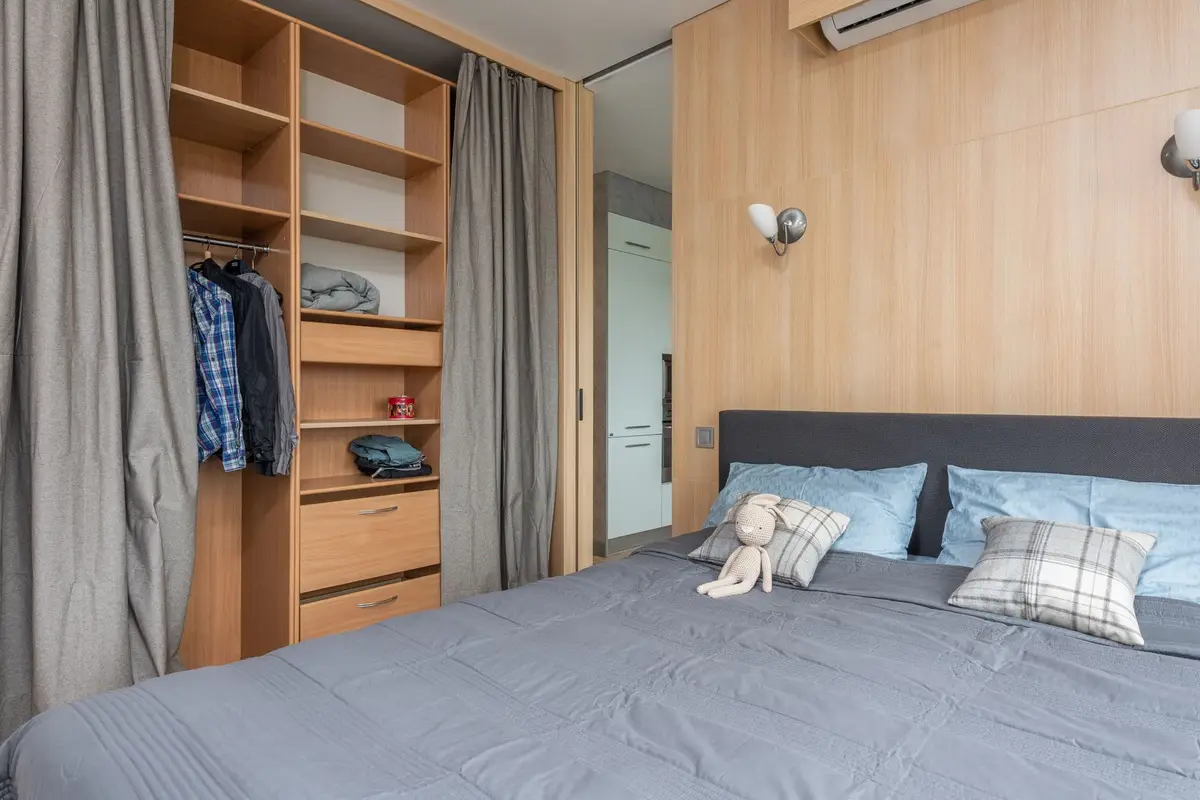
Mount the curtain rod on the wall above the closet opening or on the ceiling, and use panels that are a bit wider than the opening so they close with no gap. A heavier fabric hangs straighter and hides the closet better.
Many bypass doors come off by lifting each panel up into the top track and swinging the bottom out, but check how yours are hung before you start. Two people make the job much easier.
If you rent, ask before you take anything down. Wrap the panels and put the screws and the floor guide in a labeled bag, so the doors can go back up on the day you move out.
Curtains also work well in a nursery, where you’re in and out of the closet many times a day, often with a baby in one arm.
10. Make the most of mirror doors
Mirrored sliding doors give you a full-length mirror without using any wall, and they bounce light around a small bedroom. They also show every smudge, so a little care goes a long way.
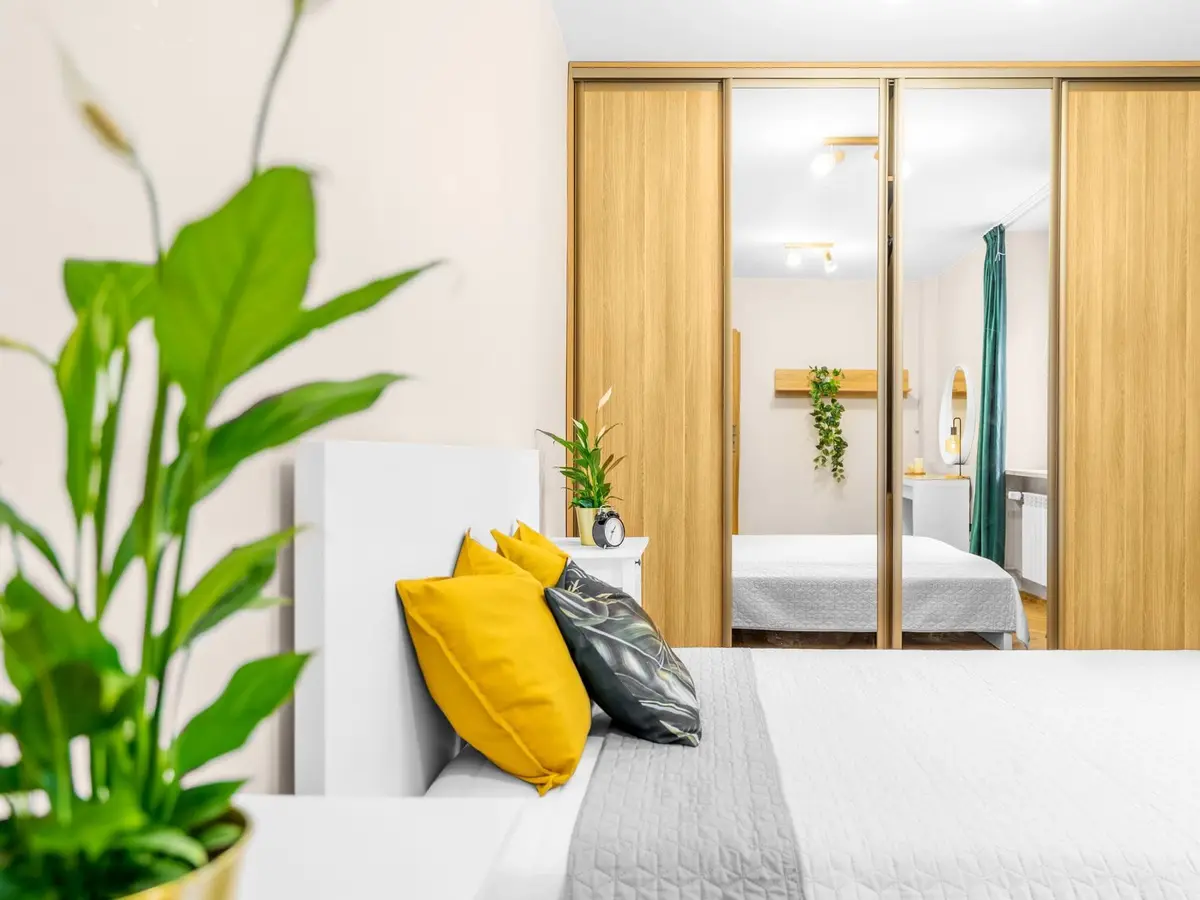
Clean them with a soft cloth and a little glass cleaner sprayed on the cloth, not straight onto the mirror, so no liquid runs into the frame. Wipe the edges where hands push the door every day.
Because you’ll stand in front of one panel to check an outfit, keep that panel’s side for everyday clothes. Then you dress, slide the door shut and check the result in one spot.
Keep the area in front of the mirror clear, too. A rug and a hook nearby for tomorrow’s outfit turn that strip of floor into a small dressing spot.
If a mirror panel ever cracks, keep kids and pets away from it and leave the door closed until the panel is replaced.
11. Use the side walls in a small sliding door closet
Bypass doors can’t hold an over-the-door rack, since the panels slide past each other. In a small sliding door closet, the side walls at each end take over that job instead.
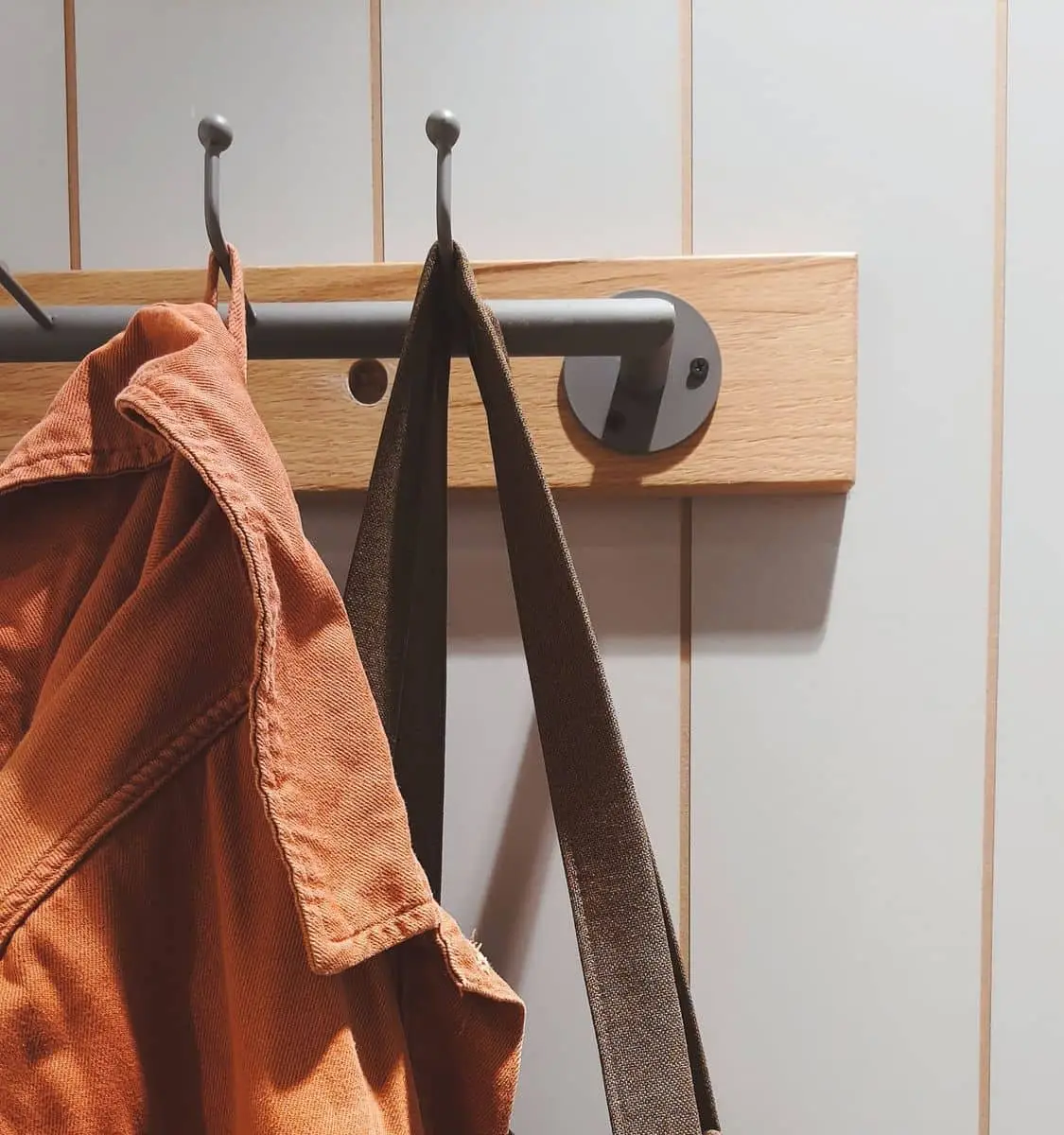
Screw a row of hooks to each side wall, just inside the opening. They hold bags, belts, scarves, robes and the jacket you wear every day, all visible the moment the door slides away.
Set the hooks back far enough that nothing hanging from them reaches the door’s path. A slim rail with S-hooks works the same way and lets you move things around.
Use the back wall above the rod for a narrow shelf if there’s room, but keep the top shelf from the sixth idea clear of anything that hangs down.
If the closet still overflows, the next step is rethinking what you store there. The tips for a small walk-in closet and a deep closet can help if your closet is bigger than it looks, and wire closet shelving has its own tricks if yours came with builder-grade shelves.
12. Sort a nursery closet with sliding doors by size
A nursery closet with sliding doors works well split by size: clothes that fit now behind the door you open most, and the next size up behind the other. Babies grow fast, so the line between the two moves every few months.
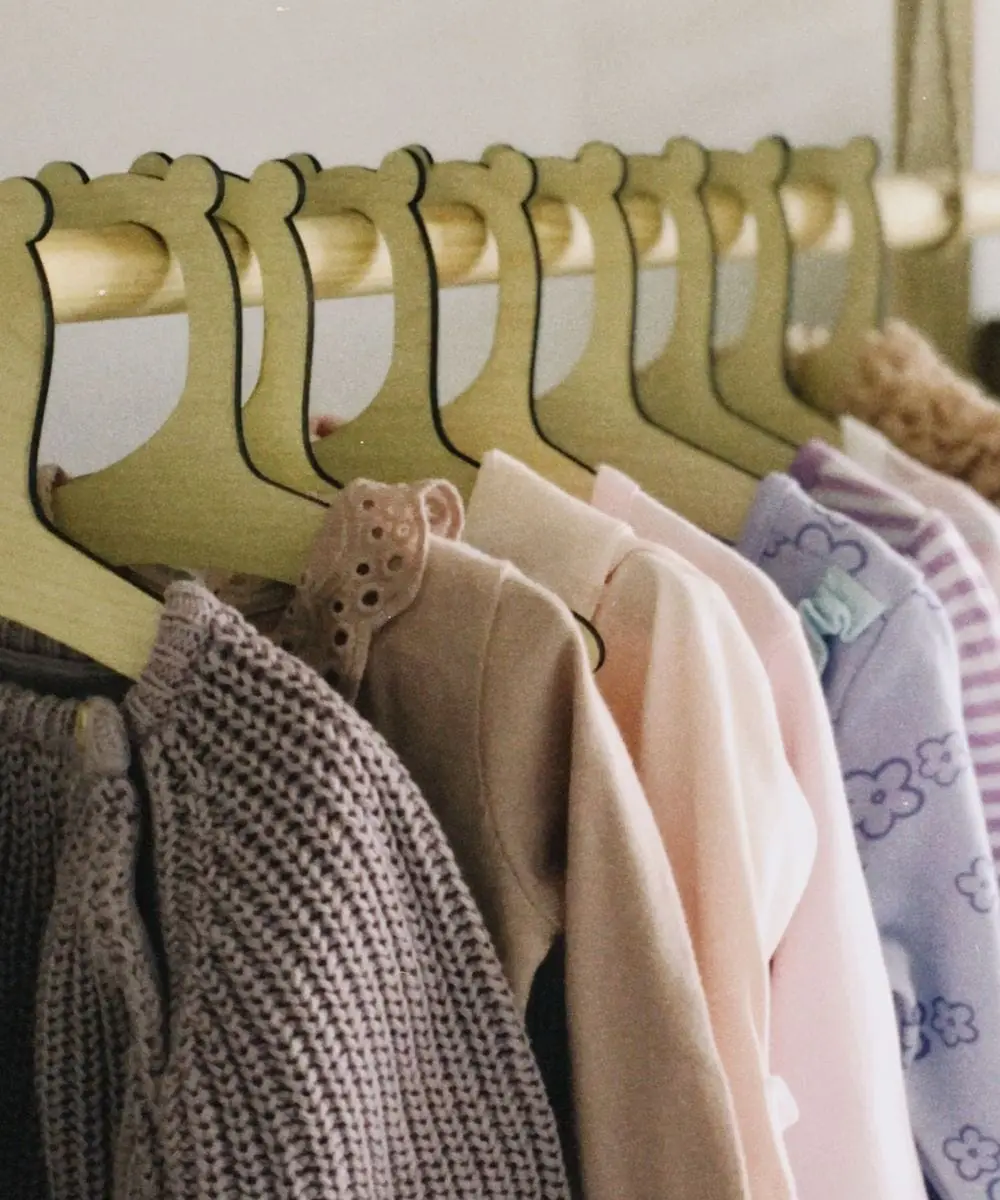
Hang small clothes on child-size hangers and add rod dividers you mark with each size. When a size runs out, slide the divider along and the closet stays sorted without starting over.
Use the shelf side for diapers, wipes, blankets and a bin of outgrown clothes. Wash outgrown clothes before you store them, then seal them in airtight bins and label each one with the size.
A small dresser in the closet adds drawers for socks and sleepers. Anchor it to the wall, since tip-overs are a real risk once babies start pulling up.
These nursery dresser organization ideas cover what goes inside those drawers.
Save this for later
Pin it to a board so it's there when you're ready to start.
Save to Pinterest(opens in a new tab)Make it easier
Free printable
30-Day Declutter Challenge Printable
A one-page declutter challenge for a month: one small spot to clear each day, easiest first, so the whole house gets a pass in short sessions.
Free tool
Enter the width, depth and height of a shelf, a drawer or a cube cubby, and see which standard bins and baskets fit, how many, and how they line up.
Frequently asked questions
How do I organize a closet with sliding doors?
Treat each half as its own zone: everyday hanging clothes behind the door you open most, and shelves, drawers or bins behind the other. Keep the middle, where the doors overlap, for things you can grab from either side, and keep anything tall or deep out of the path of the doors.
Can I put drawers inside a sliding door closet?
Yes, as long as the drawers can open fully without hitting the back of a door panel. Set a drawer unit at one end, check that both doors can slide past it, and anchor anything tall to the wall so it can't tip.
Should I replace my sliding closet doors with curtains?
Curtains let you see the whole closet at once and need no track, which suits a small bedroom or a nursery. If you rent, ask before you take the doors down, and store the panels and their hardware so they can go back up when you move.
Why won't my sliding closet doors close all the way?
Usually something inside is sticking out past the door line, like a shoe, a bin or a sleeve, or dirt is building up in the floor track. Clear the edge of the closet, vacuum the track and check that the small floor guide is still in place.