How to Clean a Dishwasher, From the Filter to the Door Seal
Pull out the bottom rack, rinse the filter, clear the spray arms, wipe the door seal and finish with a hot cycle using vinegar or a dishwasher cleaner.

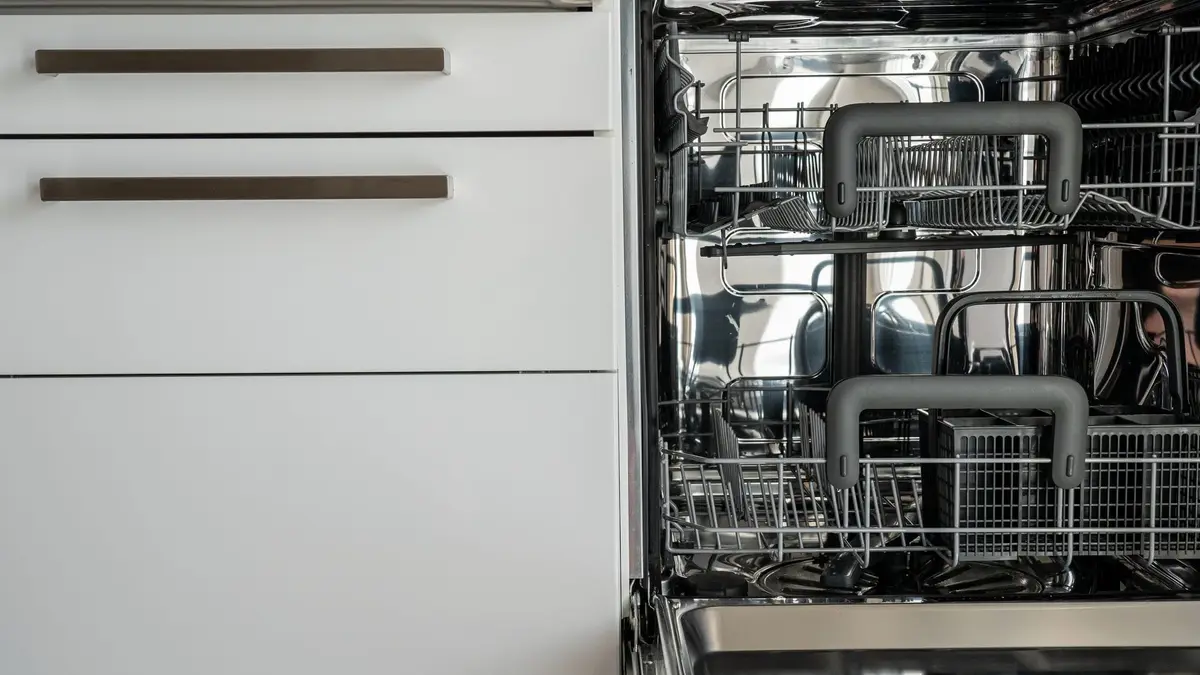
To clean a dishwasher, empty it, pull out the bottom rack and clean the filter, then clear the spray arms and wipe the door seal and edges. Finish with a hot cycle on an empty machine, using a dishwasher-safe cup of white vinegar or a dishwasher cleaner, whichever your manual recommends.
The whole job takes well under an hour, and most of it is waiting while the cycle runs. If your dishwasher smells, leaves grit on the dishes or has a white film inside, the steps below fix the usual causes.
What you need
- Your dishwasher’s manual, or its page on the maker’s website
- A soft brush, like an old toothbrush or a dish brush
- A toothpick or a wooden skewer
- A few soft cloths and some warm, soapy water
- White vinegar and a dishwasher-safe cup, or a dishwasher cleaner
- Baking soda, for an optional second cycle
- Rubber gloves and a flashlight
1. Empty it and pull out the bottom rack
Unload every dish, then slide the bottom rack all the way out. Many racks lift off their rails once they’re fully extended, which gives you room to reach the floor of the tub.
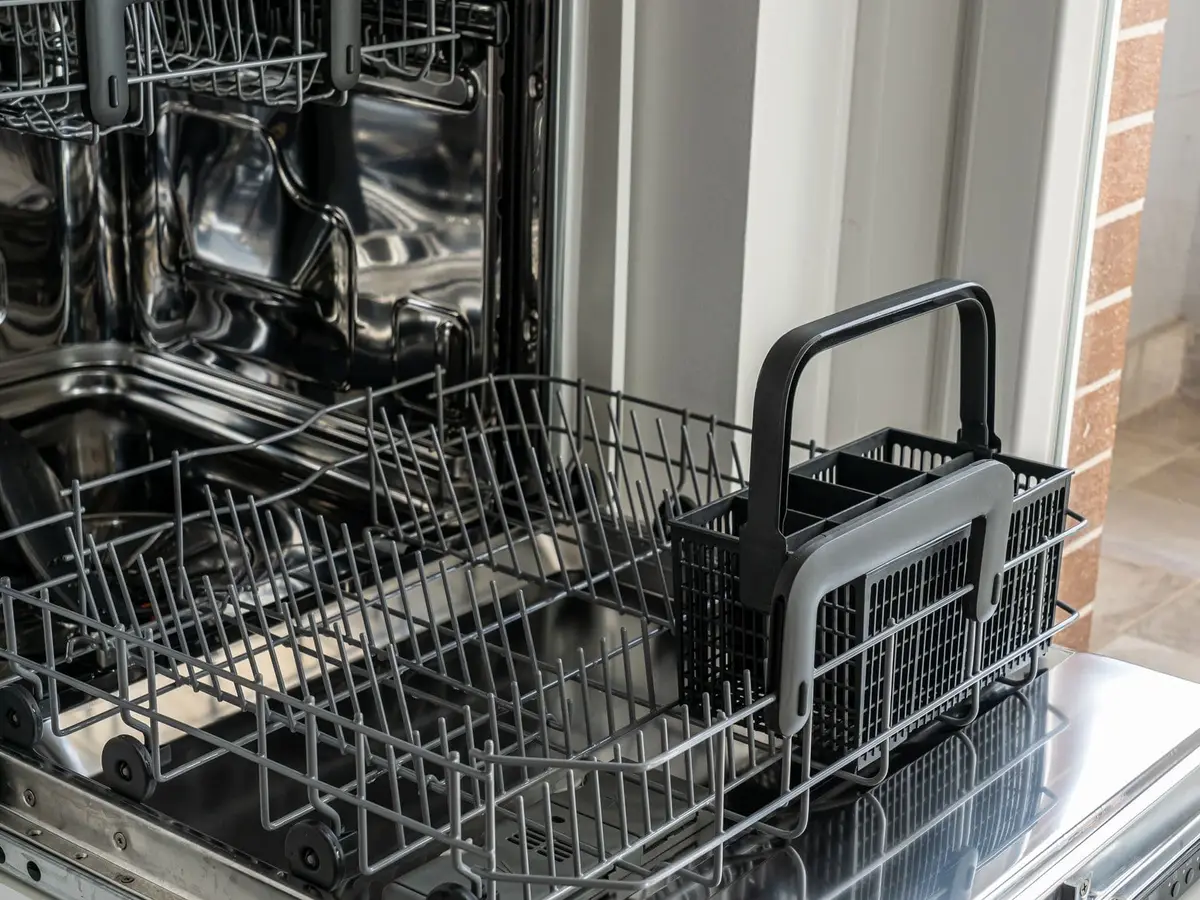
Take the cutlery basket out too. Shake it over the trash, then soak it in warm, soapy water while you work on the rest.
Look over the racks as they come out. Bits of food caught in the tines or the wheels go straight into the trash, and a rack with chipped coating and rust spots is worth noting for a repair later.
2. Switch it off before you reach inside
Most of the cleaning happens with the dishwasher simply off. If you plan to reach down into the drain area under the filter, though, turn off the power at the circuit breaker first; the control panel alone isn’t enough.
Put on rubber gloves for the next steps. Broken glass, toothpicks, seeds and labels all end up at the bottom of the tub, and a flashlight helps you spot them before your fingers do.
3. Clean the dishwasher filter
The filter sits on the floor of the tub, usually under the lower spray arm. On many machines you turn the top part a quarter turn counterclockwise and lift it out, then separate it from the flat screen around it, but check your manual, since every model is a little different.
Rinse each piece under warm running water until most of the food is gone. For anything stuck on, or for a chalky layer from hard water, scrub gently with a soft brush and a little warm, soapy water.

Never use a wire brush or a scouring pad on the filter. They can tear the fine mesh, and a torn filter lets grit back onto your dishes.
Before the filter goes back in, shine the flashlight into the opening below it and pick out anything that doesn’t belong. Then lock the filter firmly in place, because running the dishwasher without its filter properly installed can damage the machine.
If you can’t find a filter
Some dishwashers have a self-cleaning filter, with only a fixed grid or a ring of small holes at the bottom and nothing to twist out. These have no removable part to wash, so follow the manual’s care steps instead, which often means a regular cleaning cycle.
4. Clear the spray arms
The spray arms are the propellers that spin under each rack. Food and minerals can plug their small holes, so water can’t reach every dish and the dishes come out spotty.
Spin each arm by hand to make sure it turns freely. Then look closely at the holes along the top, and clear any that are blocked with a toothpick, pushing the bits out rather than deeper in.
If your manual shows how to remove the arms, take them off and rinse them under the tap, shaking out any loose debris. Snap them back in and give each one another spin before you move on.
5. Wipe the door seal, the edges and the racks
Grime collects where the water doesn’t reach: the rubber seal around the door, the bottom edge of the door, the hinges and the sides of the tub just inside the frame. A cloth dipped in warm, soapy water handles most of it.
Run the cloth along the full length of the seal, gently lifting its edge to reach underneath. Use a soft brush in the corners, then wipe everything with a clean, damp cloth so no soap is left behind.
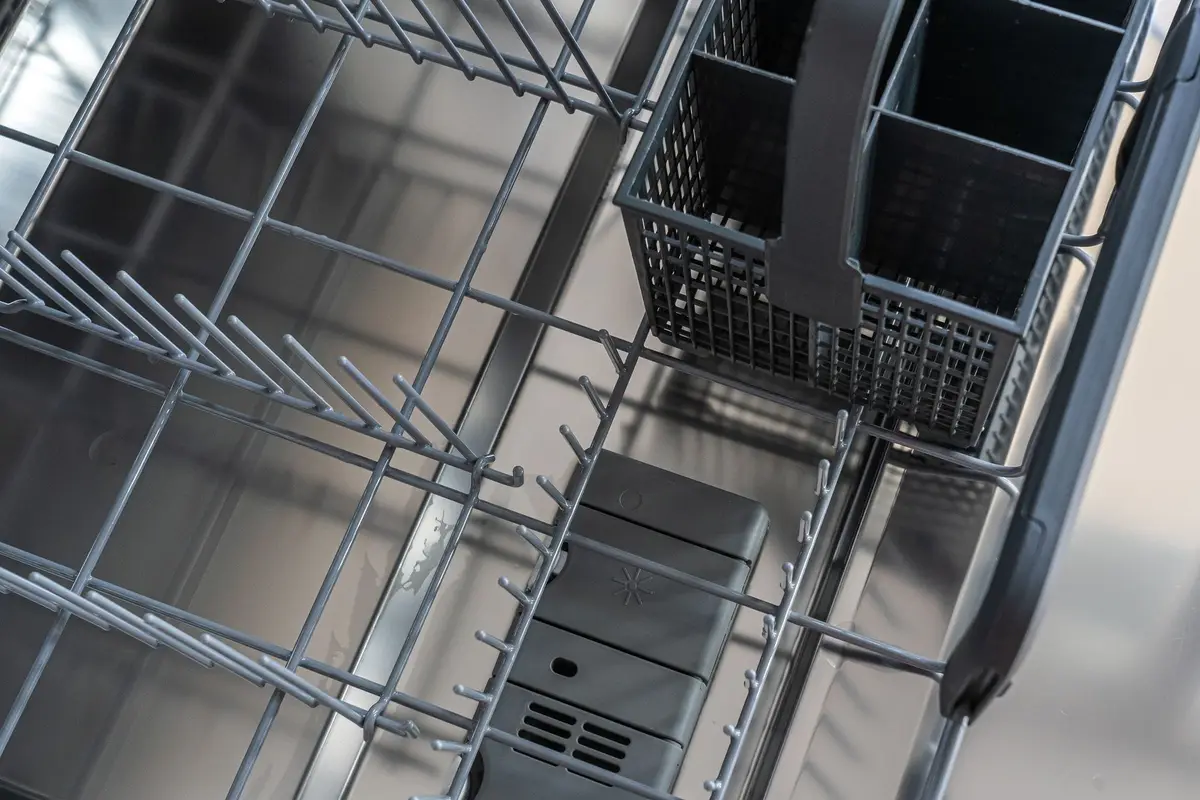
Wipe the rails, the rack wheels and the detergent dispenser too. Rinse the cutlery basket that has been soaking, scrub out any corners with the soft brush and set it back in place.
Put the bottom rack back on its rails. Leave the dishwasher empty for the cleaning cycle in the next step.
6. Run a hot cleaning cycle
With the filter, arms and seal clean, run the empty dishwasher on its hottest cycle with one of these, never both at once. First, run the hot water at the kitchen sink until it comes out hot, so the cycle starts with hot water rather than cold.
With white vinegar
Fill a dishwasher-safe cup with about a cup of plain white vinegar and set it upright on a rack, where your manual says, if it says. Run the hottest cycle with no detergent and no dishes; vinegar and detergent don’t go in the same cycle.
Check your manual before you use vinegar at all. Some makers name a dishwasher cleaner instead, and if yours advises against vinegar, follow it.
With a dishwasher cleaner
A dishwasher cleaner made for the job is the other choice, and some manuals name one for a monthly cleaning. Follow the directions on its label exactly, including where it goes and which cycle to use.
Never mix it with bleach
Don’t add bleach to a vinegar cycle, or use it right after one. Bleach mixed with vinegar or other acids gives off chlorine gas, and bleach mixed with ammonia gives off other toxic gases, so use one product at a time and only those your manual allows.
A baking soda finish
For a fresher smell, you can follow the vinegar cycle with a second one. Sprinkle about a cup of baking soda across the floor of the empty tub and run a short, hot cycle.
Run them as two separate cycles, one after the other, rather than putting both in the tub at once.
7. Fix a dishwasher that smells
A musty smell means food, moisture and warmth have been sitting together somewhere. The filter and the door seal are the usual culprits, so start with steps three and five if you skipped them.
If the smell comes back after a cleaning cycle, check the sink. Many dishwashers drain through the kitchen sink drain or the garbage disposal, and the smell may come from there, so clean the sink drain and the disposal as well.
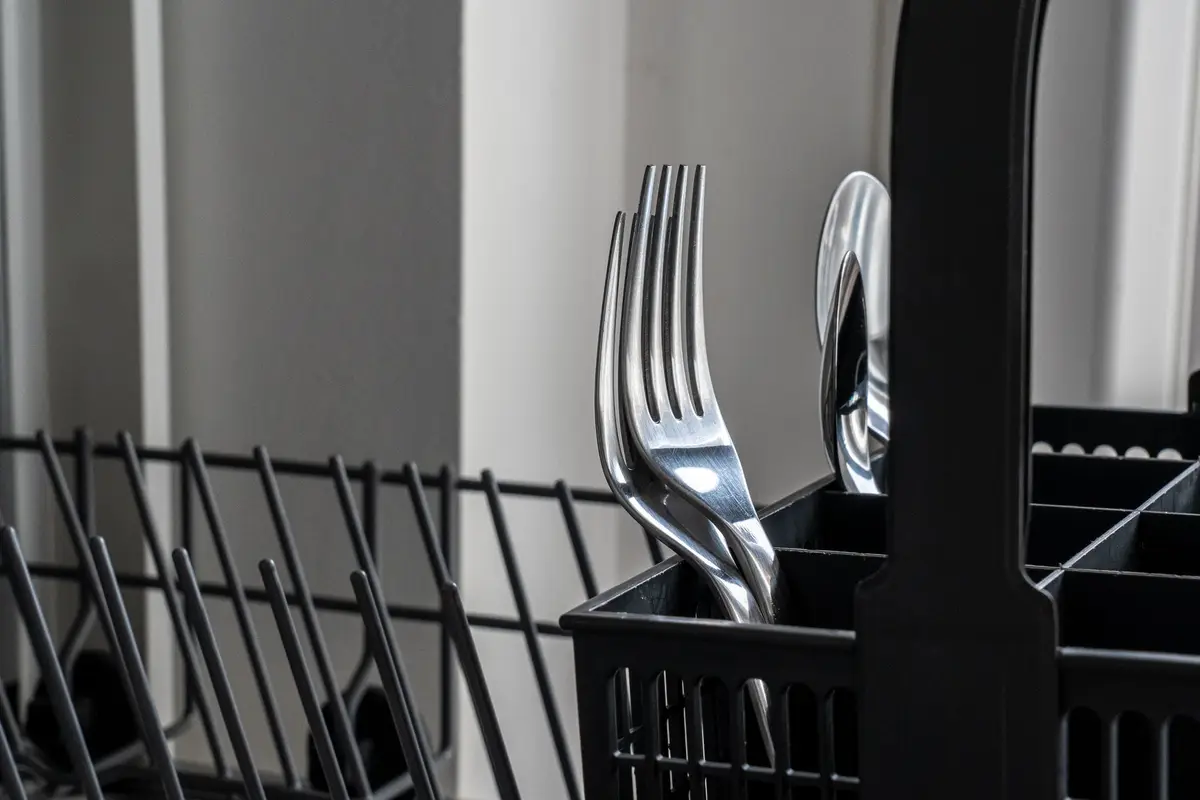
Between loads, leave the door open a little when the dishwasher is empty, so air can dry the inside. Scrape plates into the trash before loading, and run the rinse-only cycle if dirty dishes will sit for a day or more.
8. Lift hard-water buildup
A white, chalky film on the tub, the racks and your glasses is usually minerals from hard water. The vinegar cycle in step six dissolves much of it, and a soft brush on the filter takes care of the deposits there.
For heavy buildup, repeat the vinegar cycle the next week rather than scrubbing harder. Keep the rinse aid dispenser filled too, if your manual calls for rinse aid.
9. Clean the outside and the control panel
Wipe the front of the door with a soft cloth and warm, soapy water, then dry it. On stainless steel, wipe in the direction of the grain so streaks don’t show.
Spray any cleaner onto the cloth, never straight onto the control panel, so liquid can’t seep into the buttons. Finish with the handle and the top edge of the door, which pick up the most fingerprints.
While you’re there, the cabinet doors beside the dishwasher catch steam every time you open it mid-cycle. Our guide on how to clean kitchen cabinets covers wiping them down without damaging the finish.
What doesn’t go in the dishwasher
A clean dishwasher stays clean longer when the wrong things stay out. Cast iron is the big one: a dishwasher strips its seasoning and leaves it rusty, so wash it by hand instead, as our guide on how to clean a cast iron skillet shows.
Wooden spoons and boards, good knives and anything your manual or the item’s care label marks as hand wash only belong at the sink too.
How often to clean a dishwasher
Wipe the door seal and the edges once a week, and clean the filter about once a month or as often as your manual says, sooner if you run the dishwasher every day. A full cleaning cycle once a month keeps buildup and smells away.
A monthly reminder makes it automatic, and the monthly cleaning schedule has a spot for it. For more quick jobs around the sink, the stove and the counters, see our kitchen cleaning hacks.
Save this for later
Pin it to a board so it's there when you're ready to start.
Save to Pinterest(opens in a new tab)Make it easier
Free printable
A room-by-room deep cleaning checklist for the jobs a weekly clean skips, from the oven and the grout to the vents and baseboards.
Free printable
Monthly Cleaning Schedule Printable
A one-page monthly cleaning schedule: the daily and weekly basics at the top, then one deeper area for each week, so every corner of the house gets its turn without a cleaning weekend.
Frequently asked questions
How often should I clean my dishwasher filter?
Many makers suggest about once a month, and some say every other month or more often depending on how much you run the dishwasher. Clean it sooner if dishes come out gritty or the machine starts to smell.
Can I use bleach to clean my dishwasher?
Only if your manual says so, and never in the same cycle as vinegar or another cleaner. Bleach mixed with acids like vinegar gives off chlorine gas, so the vinegar cycle and a bleach product should never meet.
Does my dishwasher have a filter?
Most do. Look on the floor of the tub under the bottom rack for a round cup or a flat screen; if you see only a fixed grid with small holes, you may have a self-cleaning filter, and the manual will tell you how to care for it.
Why does my dishwasher smell even after cleaning?
The smell may be coming from the sink drain or the garbage disposal the dishwasher drains into, not the dishwasher itself. Clean the sink drain and the disposal, then leave the dishwasher door slightly open between loads so the inside dries.
Can I put vinegar and dish detergent in the same cycle?
No. Run a vinegar cycle with the dishwasher empty and no detergent, and save the detergent for your next regular load.