How to Clean Quartz Countertops, Stains and Water Spots Included
Wipe engineered stone with warm, soapy water and dry it, scrape dried food with plastic, lift stains with an approved cleaner and keep hot pans off the resin.


To clean quartz countertops, wipe them with warm water, a few drops of mild dish soap and a soft cloth, then dry them with a clean towel. Scrape dried-on food away with a plastic scraper, lift stains with a non-abrasive cleaner your countertop’s maker approves, and keep bleach, scouring pads and hot pans off the surface.
Quartz is engineered stone: crushed quartz bound together with resin. That makes it nonporous, so it never needs a sealer, but the resin is also the part that heat and harsh chemicals can damage. Natural stone plays by different rules, which our guide on how to clean granite countertops covers.
What you need
- Two or three soft cloths, microfiber or cotton
- Mild dish soap and a bowl of warm water
- Paper towels for blotting spills
- A plastic scraper or a plastic putty knife
- A non-abrasive cleaner your countertop’s care guide approves, for stains
- Trivets or closed-weave hot pads
1. Find your care guide and clear the counter
Quartz makers publish their own care instructions, and the fabricator who installed your counters often hands them over with the paperwork. Look for that sheet or the maker’s care page before you buy a new cleaner, since it lists what’s safe and what can damage the surface or void the warranty.
Then move the small appliances, the fruit bowl and the dish rack aside. A bare counter shows you every sticky patch, crumb line and water ring at once.
Before you try any product that’s new to this counter, test it on a hidden spot, like a corner behind the coffee maker. Wipe it on, rinse it off, dry it and look at the spot in good light.
2. Wipe it down with warm, soapy water
This is the everyday clean, and it’s all most quartz needs. Add a few drops of mild dish soap to a bowl of warm water, dip a soft cloth, and wring it out until it’s damp rather than dripping.
Wipe the counter in long, overlapping strokes, working from the back wall toward the edge. Brush the crumbs into your hand or a dustpan at the edge, so you don’t push them across the floor.
Skip oil soaps, furniture polish and other oily cleaners. They leave a thin film behind, and that film makes the surface more likely to pick up stains instead of shedding them.
3. Rinse and dry so no spots form
Soap left on quartz dries into a dull film, and tap water leaves minerals behind as it evaporates. Over time those minerals build up into chalky rings, especially near the sink.
Rinse your cloth in clean water, wring it out and wipe the counter once more to lift the soap. Then go over everything with a dry towel or paper towels until no wet streaks are left.
That last pass takes a minute, and it does more to prevent water spots than any cleaner. Dark quartz needs it most, since limescale and fingerprints show up more on a deep color than on a pale one.
4. Lift dried-on food with a plastic scraper
Dried batter, oatmeal, jam and melted cheese don’t come off with a single wipe. Lay a cloth dampened with warm water over the spot for several minutes to soften it first.
Then hold a plastic scraper or plastic putty knife at a low angle and push it gently under the softened bits. Wipe the area with a damp cloth, rinse and dry it.

Leave metal knives, razor blades and scouring pads in the drawer. Abrasives can dull the finish and the sheen of quartz, and a dull patch can’t be wiped back to shiny. The same goes for gum and dried nail polish: soften what you can, then scrape with plastic only.
5. Treat stains and water spots quickly
Quartz resists stains because liquids sit on top instead of soaking in, but a spill left overnight can still leave a shadow. Wipe spills as soon as you see them, blotting with a paper towel first so you don’t spread them.
Stubborn stains
For a mark that stays after soap and water, put a little non-abrasive cleaner from your care guide’s approved list on a soft cloth. Rub the spot gently in small circles, rinse with water and dry it.
Repeat once or twice if a faint mark is left. Patience beats pressure here: harder scrubbing only risks the finish.
Gray streaks from the bottoms of pots and pans are metal marks, not stains. Some care guides allow a gentle cleaning cream for spot cleaning them; follow yours exactly and rinse well.
Hard water spots
White rings near the faucet are mineral deposits. Start with warm, soapy water and a thorough drying, which lifts light spots and stops new ones from forming.
For heavier buildup, care guides differ. Some allow a diluted vinegar wipe that’s rinsed off and dried right away, while others rule out acidic cleaners entirely, so check yours before you try it, and never use vinegar in the same session as bleach.
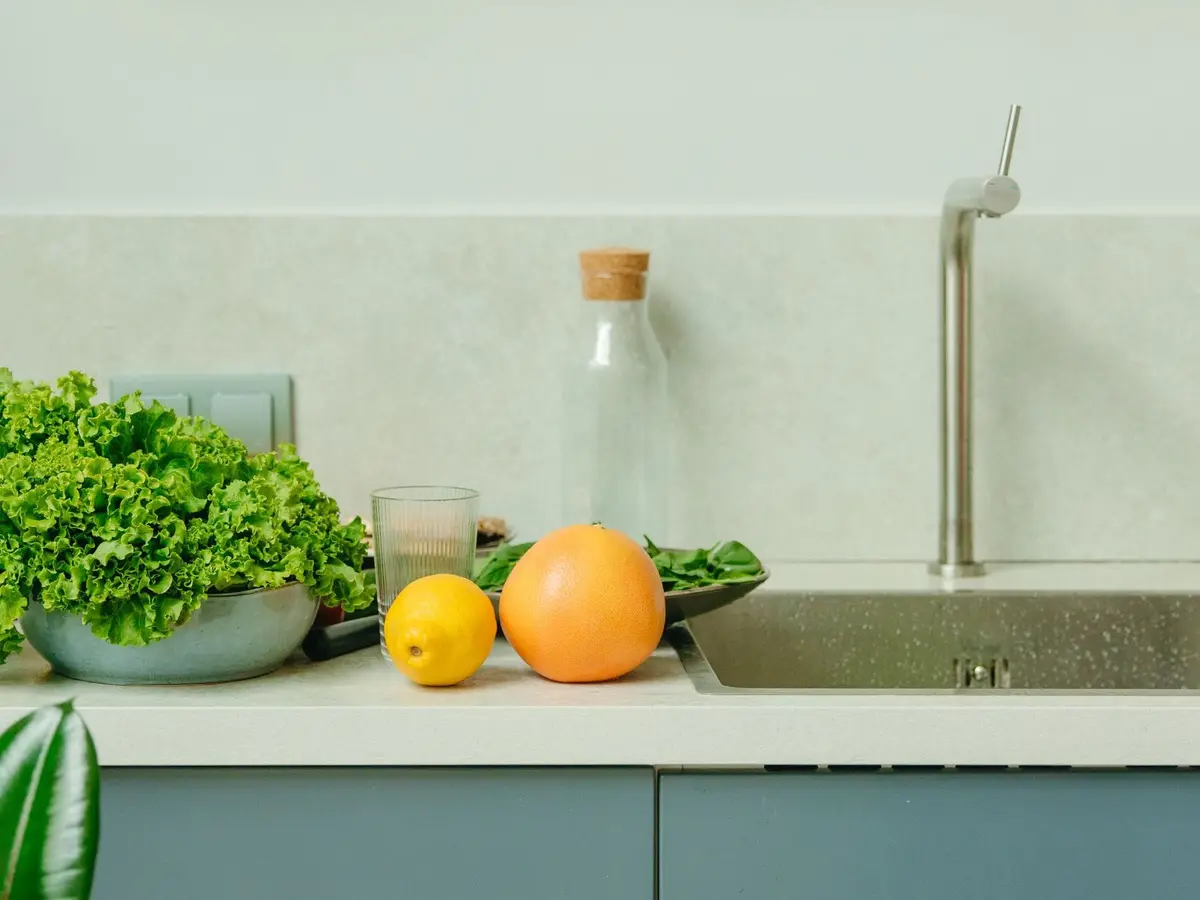
Mineral spots tend to start at the sink and faucet, then spread to the counter around them. Our sink cleaning hacks take care of the basin and the faucet base, so the drips stop at the source.
Greasy film near the stove
Cooking grease settles on the counter beside the range as a sticky, dull layer. Lay a cloth soaked in hot, soapy water over it for a minute, then wipe and rinse, repeating until the surface feels smooth.
Never reach for oven cleaner, even for baked-on grease. It’s one of the products quartz makers specifically warn against.
6. Keep white quartz bright
White and pale quartz show everything: coffee rings, red wine, tea, tomato sauce and the yellow of turmeric. The fix is speed. Wipe colored spills right away, before they have time to dry on the surface.

Prep strong-colored foods like turmeric, beets and berries on a cutting board, and set mugs and wine glasses on coasters or a small tray. A tray by the coffee maker catches the drips you’d otherwise find hours later.
Don’t try to whiten a pale counter with bleach. Bleach is on the list of products quartz makers tell you to avoid, so stick to soap, water and a cleaner your care guide approves.
7. Protect the resin from heat and knives
The resin that binds quartz can scorch when something hot sits on it. Set pots, pans and baking dishes on a trivet or a closed-weave hot pad, never straight on the counter, even for a moment.
Give appliances that run hot for a long time, like a slow cooker or an electric griddle, a trivet or a wooden board underneath too. Heat that builds up slowly in one spot is just as hard on the surface.
Cut on a cutting board every time. Quartz is tough, but a knife can still mark it, and the board protects your knife edges as well.
What not to use
These can dull, scratch, stain or damage quartz, so keep them off the counter:
- Scouring pads, steel wool and gritty cleansers. Abrasives wear down the polish. Use soft cloths and non-scratch sponges instead.
- Bleach. Several maker care guides list it among products that can damage the surface.
- Oven cleaner, paint remover and furniture stripper. Quartz makers list these harsh chemicals among the products to keep off the surface.
- Strongly alkaline or acidic cleaners, unless your care guide names them as safe.
- Sealers, waxes and oily polishes. Quartz doesn’t need them, and oily products leave a film that holds on to stains.
Never mix cleaning products of any kind. Bleach mixed with ammonia, vinegar or other cleaners releases gases that are dangerous to breathe, so use one product at a time, rinse between them and keep a window open.
Does quartz need sealing?
No. Engineered quartz is nonporous, so water, oil and wine can’t soak in the way they can with natural stone. There’s nothing to reseal, ever.
Disinfecting quartz safely
After raw meat or eggs touch the counter, clean comes first: wash the area with soap and water. Then, if you want to disinfect, choose a product your care guide allows and test it on a hidden spot before the first use.
Follow the label exactly, including how long the surface has to stay wet to work. Open a window while you use it, rinse the counter afterward if the label says to, and dry it so no residue is left behind.
How often to clean quartz countertops
Wipe the counters with warm, soapy water and dry them after cooking, or at least once a day. Deal with spills, especially colored ones, as they happen.
Once a week, give the whole counter a full clean: move everything, wash the backsplash edge and the corners, then dry it all. That weekly pass is a good time to work through the rest of the kitchen, and our fridge cleaning hacks make the next stop a quick one.
Save this for later
Pin it to a board so it's there when you're ready to start.
Save to Pinterest(opens in a new tab)Make it easier
Free printable
Weekly Cleaning Schedule Printable
A one-page weekly cleaning schedule: a few quick jobs every day, plus one focus area a day, so the whole house gets done without a cleaning marathon.
Free printable
A room-by-room deep cleaning checklist for the jobs a weekly clean skips, from the oven and the grout to the vents and baseboards.
Frequently asked questions
Can I use vinegar on quartz countertops?
It depends on your countertop's care guide. Some makers allow a diluted vinegar wipe that is rinsed off and dried right away, while others rule out acidic cleaners altogether, so check yours first and never use vinegar in the same session as bleach.
Can I put a hot pan directly on quartz?
No. The resin that binds quartz can scorch under a hot pot, so set pans, baking dishes and slow cookers on a trivet or a closed-weave hot pad every time.
How do I get a stain out of white quartz?
Blot up what you can, then rub the spot gently in small circles with a soft cloth and a non-abrasive cleaner your care guide approves. Rinse with water, dry it, and repeat if a shadow is left; skip bleach, which quartz makers warn against.
Do quartz countertops need to be sealed?
No. Engineered quartz is nonporous, so it never needs a sealer, wax or polish, and makers advise against putting them on it.
How do I disinfect quartz countertops safely?
Wash the counter with soap and water first, then use a disinfectant your care guide allows, following the label, including how long the surface has to stay wet. Open a window, and never mix the disinfectant with any other cleaner.