12 Desk Organization Ideas That Leave Room to Work
Clear the surface, lift the screen, divide the drawers and tame the cords: simple ways to turn any desk into a calm place to get work done.

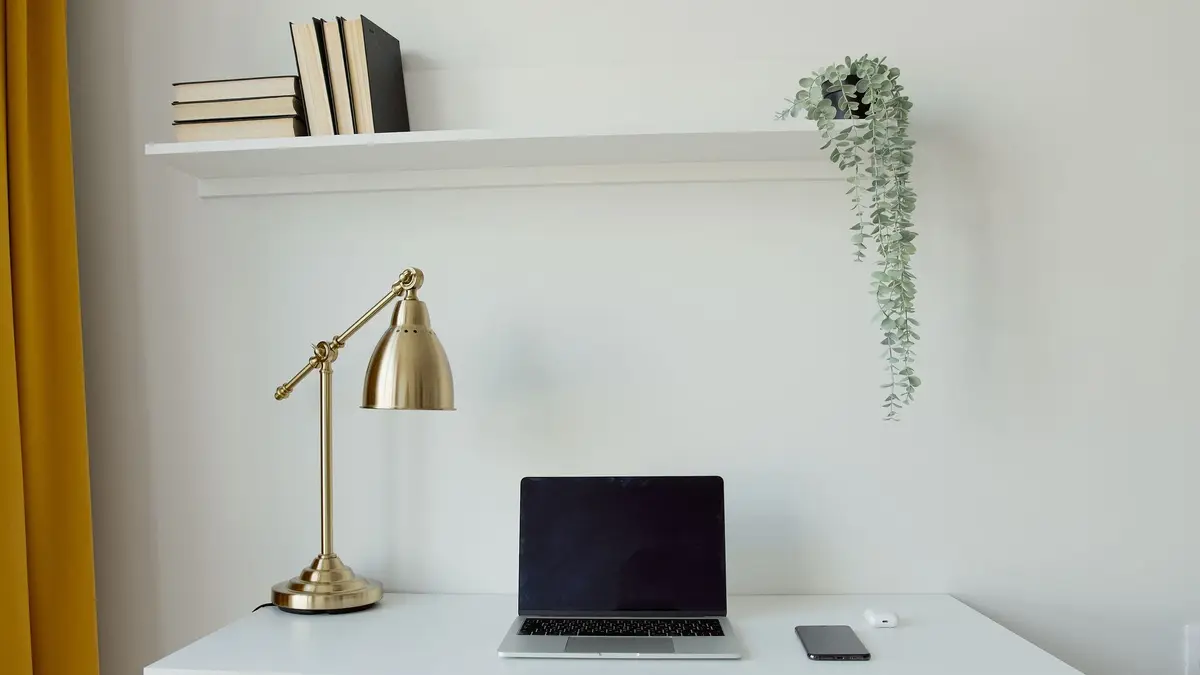
A desk stays organized when only your daily tools live on top: the computer, a lamp, a cup of pens and a notepad. Everything else gets a drawer, a tray or a shelf, the screen sits on a riser so the space under it works too, and the cords and paper each have one home.
These 12 ideas work on a small bedroom desk, a corner of the kitchen or a full home office. Start with the first one, since every idea after it is easier to plan once the desk is cleared.
1. Clear the surface down to daily tools
Take everything off the desk and sort it into three piles: what you use every day, what you use now and then, and what doesn’t belong at a desk at all. Only the first pile goes back on top.
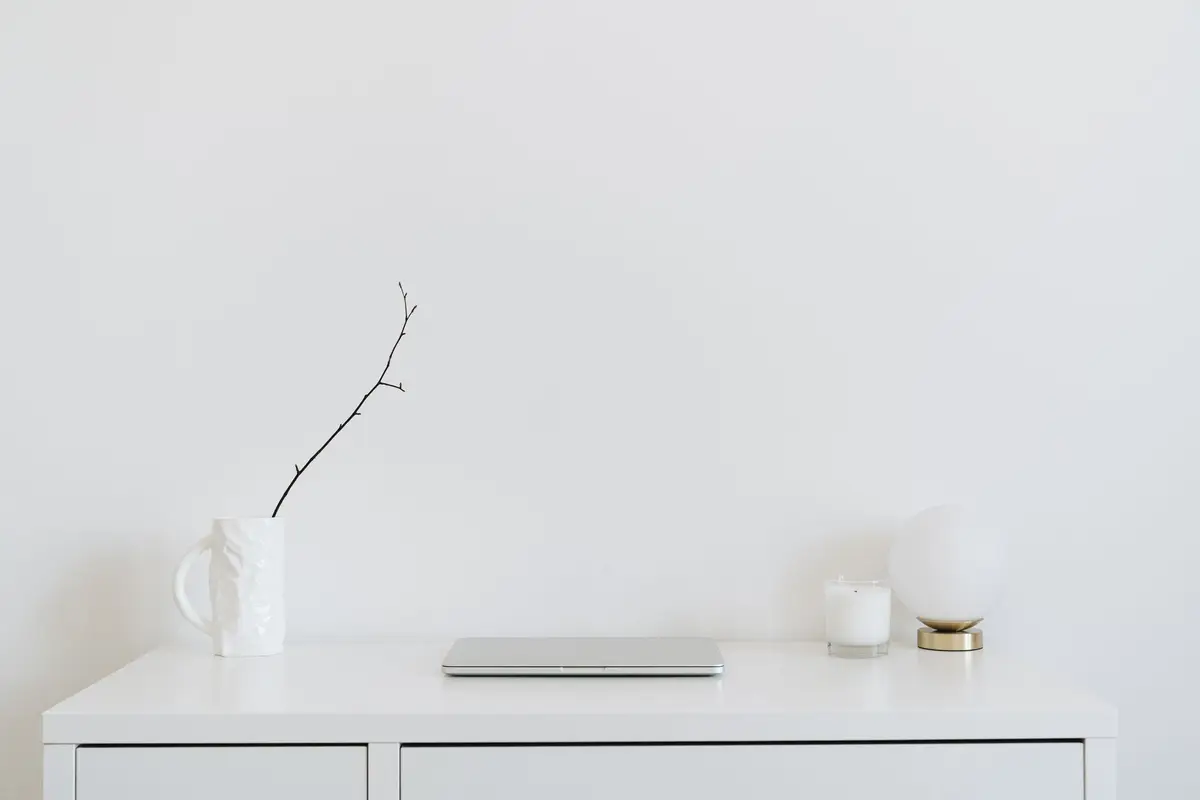
Daily tools are usually a short list: the computer, a pen or two, a notepad, a lamp and maybe a water glass. Things you reach for weekly, like the stapler, spare paper or the tape, go in a drawer or a tray close by.
The third pile is where clutter hides. Mugs go back to the kitchen, mail goes to its own spot, and the old receipts, loose sticky notes and odds and ends get sorted or tossed.
If the rest of the house needs the same treatment, the declutter checklist walks through every room one small job at a time.
Wipe the bare desk before anything goes back on it. A clean, empty surface shows you how much room you really have, and it makes every idea after this one easier to plan.
Live with the cleared desk for a few days before you buy anything. You’ll notice which items you actually reach for and which ones you never missed.
2. Lift the screen and use the space under it
A monitor riser, or a long shelf on short legs, raises the screen and frees the desk below it. The keyboard can slide underneath when you’re done for the day, and the gap holds a notebook, a tablet or a shallow tray.
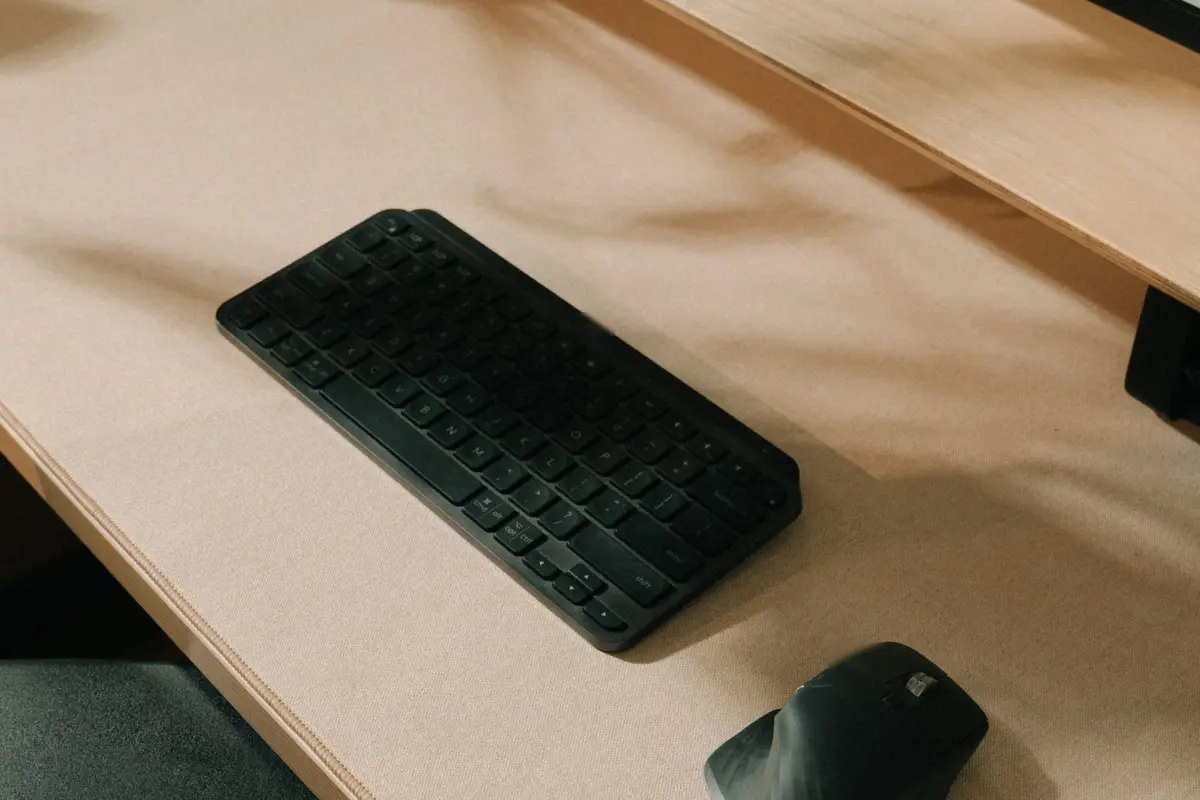
Raising the screen can help your neck too. Set it so the top of the screen sits at or slightly below eye level, directly in front of you and far enough back that you can read it without leaning in.
Measure the depth of the desk and the base of your screen before you buy a riser, so it fits without crowding the front edge. A riser that runs the full width of the desk gives you a whole second level.
If the riser has drawers or cubbies, keep them for flat things you use every day: sticky notes, a charging cable, earbuds or a small notepad.
No riser yet? A sturdy wooden box or a stack of large hardcover books works for now, as long as it’s stable and wide enough for the screen’s base. It’s an easy way to test the height before you spend anything.
3. Keep one pen cup and a small tray
Pens multiply on a desk. Keep one cup with only the pens that work and the few tools you grab every day, like a pencil, a highlighter and a pair of scissors.
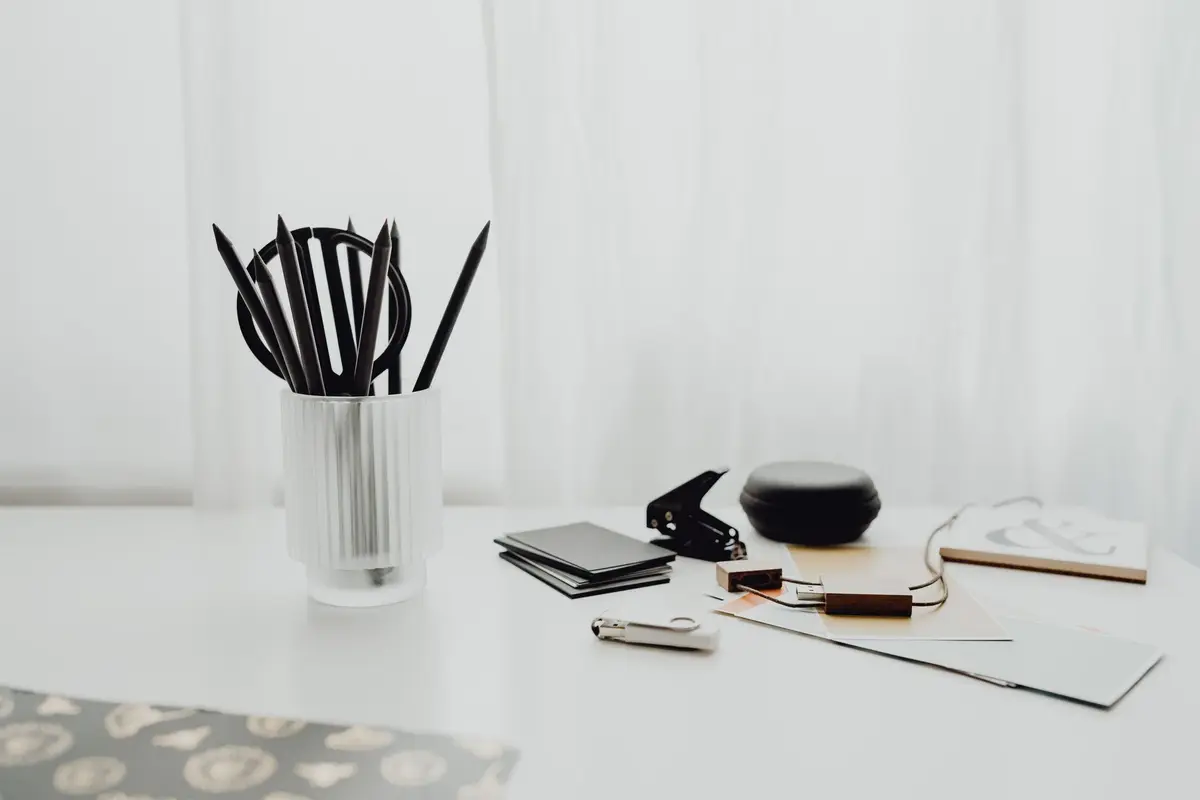
Test every pen before it goes back in the cup. Dried-out markers go in the trash, and extras go in a drawer as backups.
A small tray next to the cup catches the little things that otherwise scatter: paper clips, a flash drive, lip balm, a hair tie. When the tray overflows, it’s a sign to put things back where they belong.
Pick a cup and a tray in the same color or material, and the desk looks calmer right away. A glass jar, a mug that lost its saucer or a small bowl works just as well as anything new.
Keep both on the side of your writing hand, so you can reach a pen without stretching across the keyboard.
Once a month, empty the tray completely and wipe it out. Anything that has sat there for weeks without being used probably belongs in a drawer instead.
4. Divide the drawers
A desk drawer with no dividers turns into a junk drawer within a week. Small open bins or an adjustable divider tray give each type of supply its own spot, so nothing slides to the back.
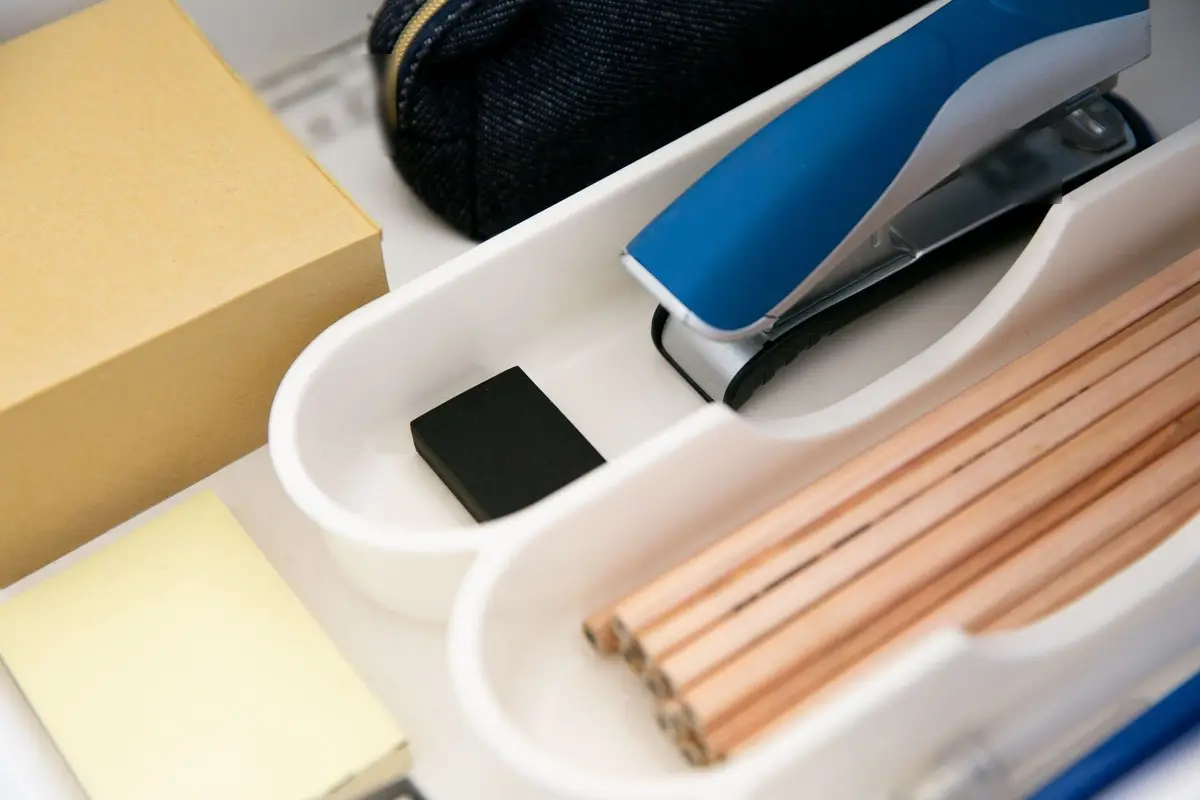
Group like with like: writing tools, sticky notes and pads, clips, tape and glue, chargers and cables. Put what you use most at the front of the drawer, where you see it first.
Measure the inside of the drawer, its width, depth and height, before you buy anything. The bin and basket size calculator shows which bin sizes fit and how many line up side by side.
Shallow drawers work best with low trays that leave room for the drawer to close. Deep drawers can hold taller bins, or files standing on end.
Use what you have first. Small boxes, clean food containers and shoe box lids make good dividers while you figure out which sizes you actually need.
When a section keeps overflowing, that’s your cue to declutter that category, not to buy a bigger bin.
5. Give paper an inbox and an outbox
Loose paper is the fastest way to bury a desk. Stacked letter trays give it a place to land: one tray for new papers that need attention, and one for papers that are done and ready to file, mail or hand off.
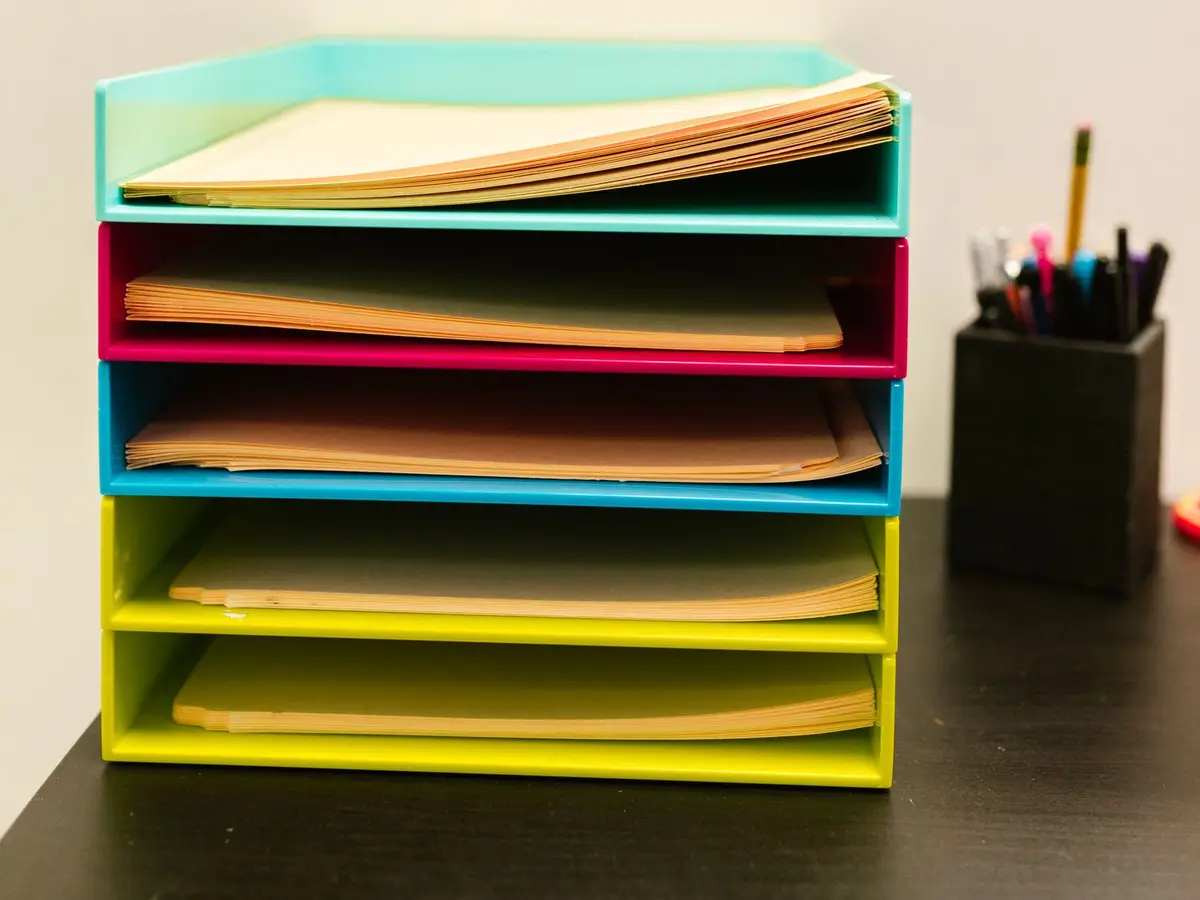
Everything that comes to the desk goes in the inbox first, not in a pile beside the keyboard. Go through it once a day or a few times a week, and make a decision on each paper: act on it, file it or recycle it.
A third tray can hold papers you’re waiting on, like a form someone else needs to sign or a bill due later in the month.
Label each tray so the system works for everyone in the house. A strip of masking tape and a marker is enough.
Keep the trays at a back corner of the desk or on a shelf above it. Stacked trays use very little desk space, because they grow up instead of out.
If the inbox fills faster than you empty it, set a short, regular time to clear it, the same way you’d set an appointment.
6. Tame the cords under the desk
Cords hanging behind a desk catch on feet, tangle with chair wheels and collect dust. A cord tray or a basket mounted under the back edge of the desk holds the power strip and the extra cord length up off the floor.
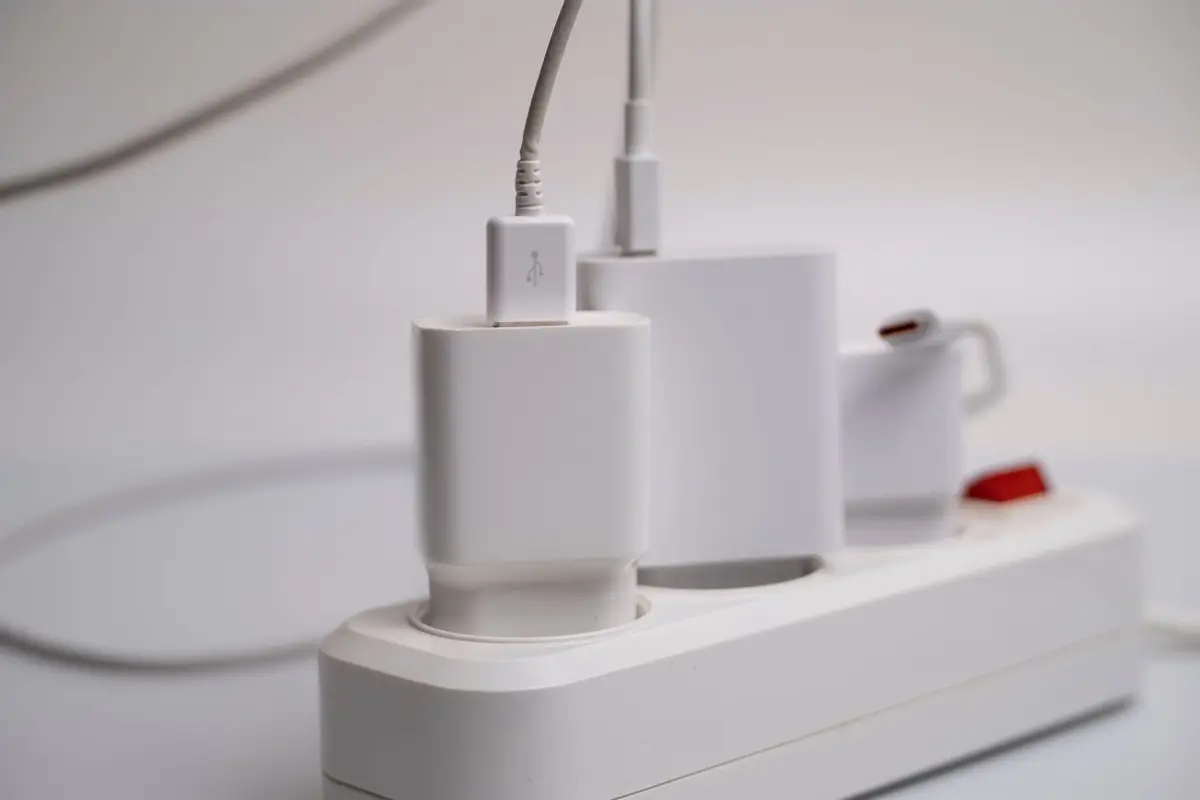
Adhesive cord clips along the back or the legs of the desk guide each cable to where it’s needed. Tag each plug with a label or a folded strip of tape, so you know which one to pull.
Keep cords where they can’t be pinched or damaged. Don’t run them under a rug, through a doorway or under furniture, and don’t plug in more than the power strip or the cord is rated for.
Choose a power strip with built-in overload protection, and replace any cord that’s cracked, frayed or worn. An extension cord is meant for temporary use, not as the permanent wiring for a desk.
Gather extra cord length loosely with a reusable tie, and leave a little slack so nothing pulls when you move the desk. Once a month, check that everything is still plugged in firmly and nothing is getting warm.
7. Put the wall above the desk to work
When the desk itself is small, the wall above it is free storage. A floating shelf holds books, a box of supplies and a plant, and a pegboard holds hooks, small baskets and a spare cup for pens.
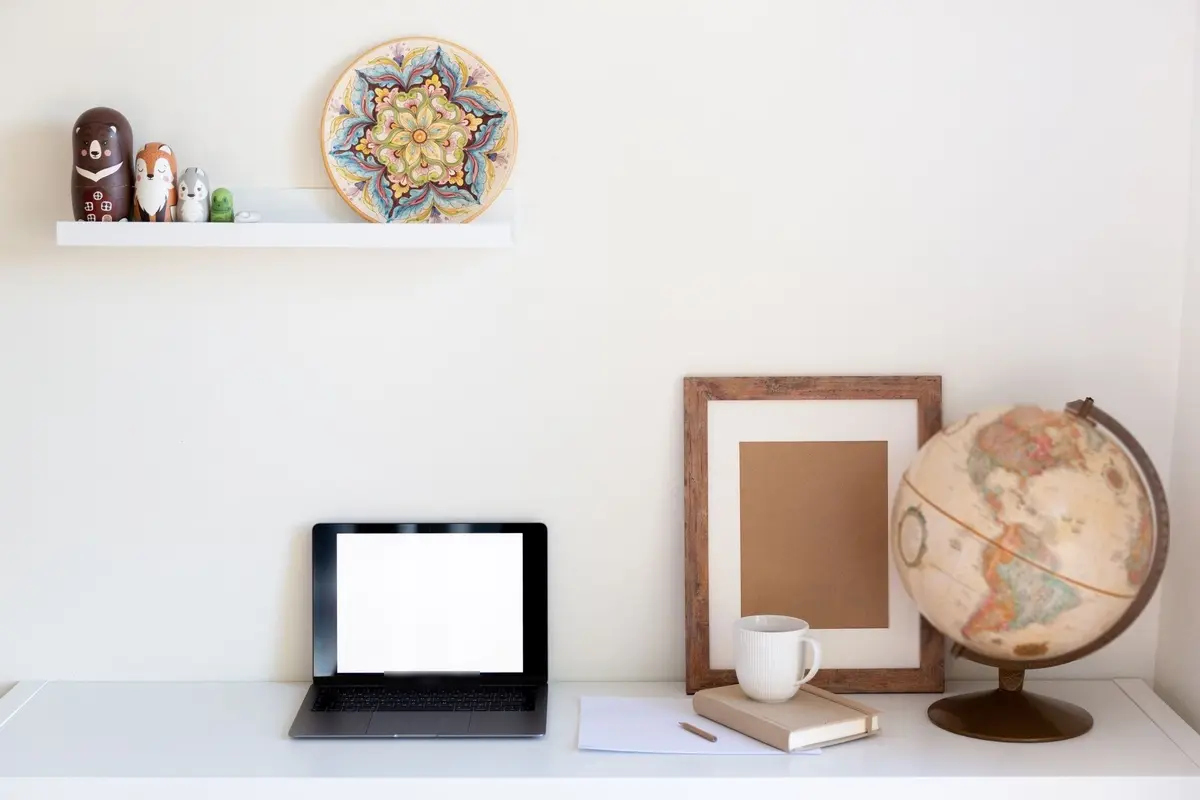
Keep the shelf for things you reach for a few times a week, not every few minutes. Daily tools belong on the desk; reference books, spare paper and binders can sit just above it.
Hang the shelf high enough that the screen and the lamp clear it, and low enough that you can reach it from your chair without standing up.
Find the studs before you drill, and use the anchors made for your wall when a stud isn’t where you need it. In a rental, adhesive hooks and a light rail hold a few small things without any holes.
A pegboard is easy to change as your work changes. Move the hooks and baskets around until the things you use most sit closest to your hand.
For more ways to use walls and doors in a small room, see these storage ideas for small spaces.
8. Keep a weekly planner on the desk
A planner on the desk keeps the week in sight, so appointments, deadlines and bills don’t live only in your head. Open it to the current week and leave it beside the keyboard.

Fill it in at the same time every week, like Sunday evening or Monday morning. Write down the fixed things first, such as work hours, school pickups and appointments, then fit the tasks into the open spaces.
A printable weekly planner works well if you like paper. Print a few weeks at a time and keep the stack in your inbox tray or a folder, so the next page is always ready.
Keep a pen clipped to the planner or sitting in the cup right beside it, so you can write down a change the moment it comes up.
At the end of the week, flip back and move anything unfinished to the new page. Seeing it a second time is often the push you need to get it done, or to drop it for good.
Keep the planner in the same spot every day. When it has a home, it’s the first thing you see when you sit down.
9. Write a short daily to-do list
A weekly plan shows the big picture, and a daily list tells you what to do next. Each morning, or at the end of the day before, write down the few tasks that matter most for the day ahead.
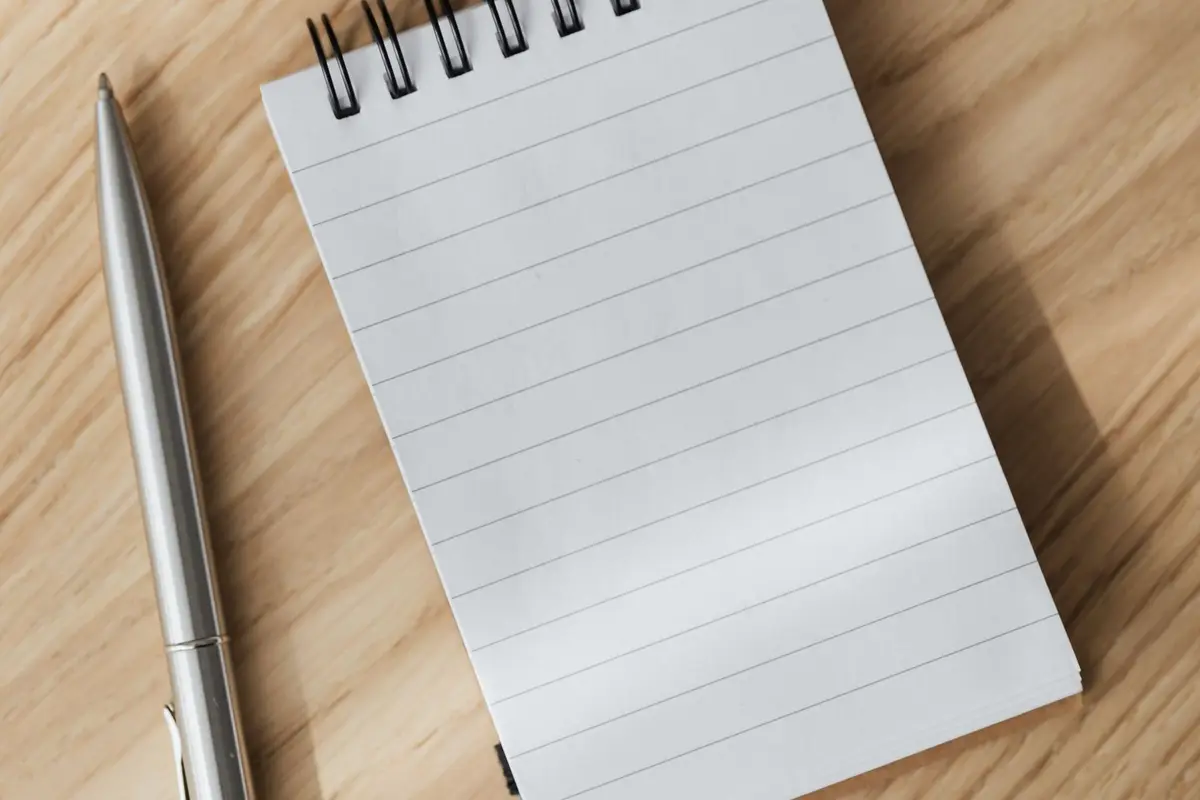
Keep the list short enough to finish. A handful of tasks you complete feels better than a long list that follows you from day to day.
A printable to-do list or a small notepad on the desk is easy to see while you work, and crossing things off with a pen is satisfying.
Put the list in the same spot every day, beside the keyboard or under the lamp, so you see it the moment you sit down.
Put the hardest or most important task at the top, and start there before email and messages pull you away.
Move anything you didn’t finish to tomorrow’s list or into the planner. Recycle the old page at the end of the day, so the desk doesn’t fill up with half-used lists.
10. Give the desk good light and a charging spot
A desk lamp lights the work in front of you, so you’re not squinting at paper in a dim corner. Place it on the side opposite your writing hand, so your hand doesn’t cast a shadow on the page.
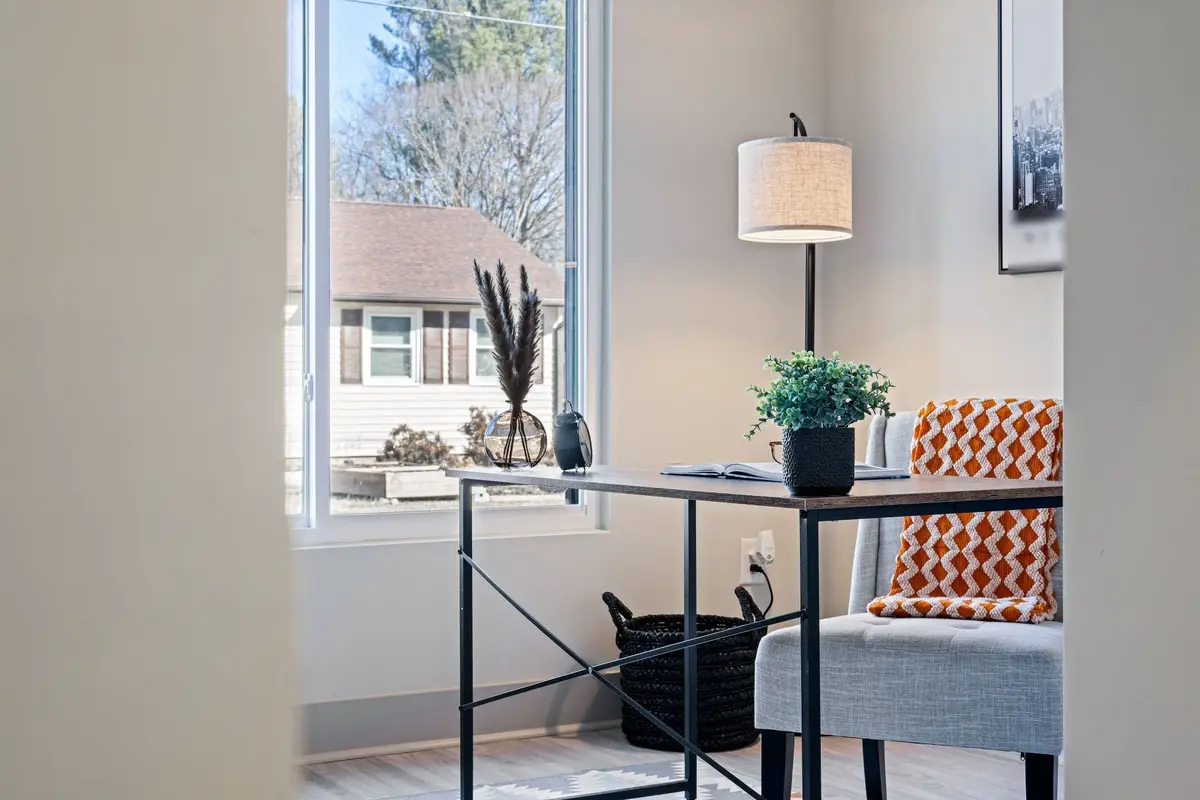
A floor lamp beside the desk frees the surface completely, which helps on a small desk. Keep any lamp away from papers, curtains and anything else that can burn, and use a bulb that matches the wattage the lamp calls for.
Pick one charging spot for the phone, earbuds and other gadgets, close to the outlet or the power strip, so cables don’t stretch across the desk. A small dish or tray marks the spot.
Plug chargers in fully, and don’t crowd a wall outlet with more plugs than it was built for.
Charging in one place also means you always know where the phone is. Set it there face down when you need to focus, and it stays out of the way until you’re ready.
11. Save one drawer for personal items
Shared desks and kitchen-table offices fill up with things that aren’t work: a wallet, keys, hand cream, headphones, a snack, a pair of glasses. Give them one drawer of their own, so they don’t spread across the surface.
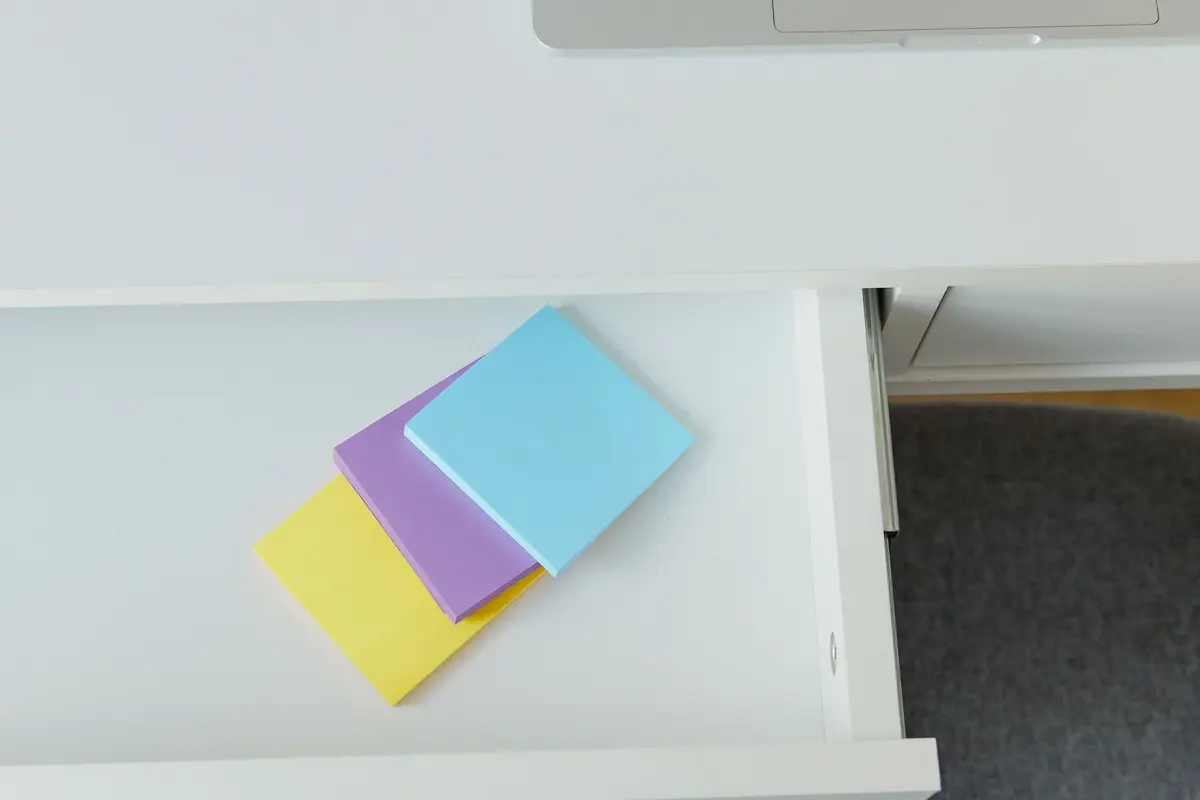
Keep the personal drawer separate from the supply drawers, and pick the one closest to your chair. Small things you grab without thinking should be the easiest to reach.
A shallow tray or a few small boxes inside the drawer keep the contents from mixing. Give the headphones and their cable a box of their own, so the cord doesn’t tangle around everything else.
If more than one person uses the desk, give each person a drawer or a bin. Nobody has to move someone else’s things to get to work, and nothing goes missing.
Empty the drawer every few weeks. Wrappers, old receipts and things that belong in another room collect in a personal drawer faster than anywhere else.
12. Reset the desk at the end of each day
A short reset before you leave the desk keeps all the other ideas working. Put pens back in the cup, papers in the inbox, supplies in their drawers, and carry mugs and plates back to the kitchen.
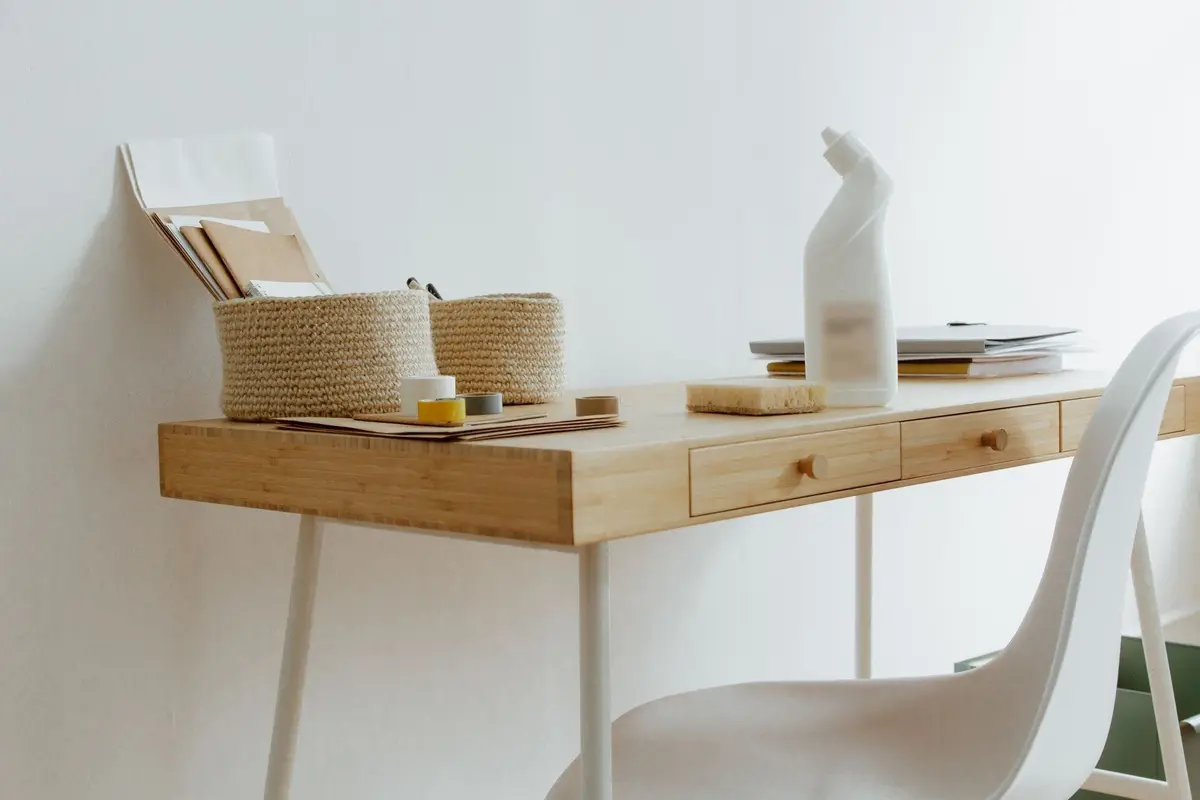
Then look at tomorrow: check the planner and write the next day’s to-do list, so you start the morning knowing what comes first.
Wipe the surface with a damp cloth once you’ve cleared it. Dust and crumbs build up quickly on a desk you use every day, and a clean surface makes the next morning feel easier.
Close the laptop or turn off the screen, push the chair in, and turn off the lamp. A desk that looks finished is easier to walk away from at the end of the day.
Once a week, add a slightly longer reset to your Sunday reset checklist: empty the paper trays, restock the supplies, sort the personal drawer and wipe down the keyboard and the lamp.
A few minutes each day is all it takes, and the desk stays ready for work every morning.
Save this for later
Pin it to a board so it's there when you're ready to start.
Save to Pinterest(opens in a new tab)Make it easier
Free printable
A simple one-page weekly planner with the week's top three priorities, a box for each day and room for notes.
Free printable
A one-page to-do list with today's top three at the top, plenty of lines to tick off underneath and a little room for notes.
Free tool
Enter the width, depth and height of a shelf, a drawer or a cube cubby, and see which standard bins and baskets fit, how many, and how they line up.
Frequently asked questions
What should I keep on top of my desk?
Only what you use every day: the computer, a lamp, a cup of pens, a notepad and your planner. Everything you use weekly or less goes in a drawer, a tray or on a shelf within reach.
How do I organize a desk with no drawers?
Use the space above and below the surface instead. A riser with cubbies, a wall shelf or pegboard, a rolling cart beside the chair and a small tray for loose things give you drawer space without drawers.
How can I make my desk look cute without adding clutter?
Pick one or two colors or materials and match the cup, the tray and the bins to them. Add a single plant or a small piece of art, and keep the rest of the surface clear so those few things stand out.
How often should I clean and reorganize my desk?
Reset the surface for a few minutes at the end of each workday, and wipe it down once a week. Go through the drawers and the paper trays every month or two, before they fill up again.