12 Walk-In Closet Organization Ideas That Give Every Wall a Job
Plan a walk-in closet wall by wall: long hanging, double rods and shelves, a fair split for two, a shoe wall, an island, good light and a valet rod.

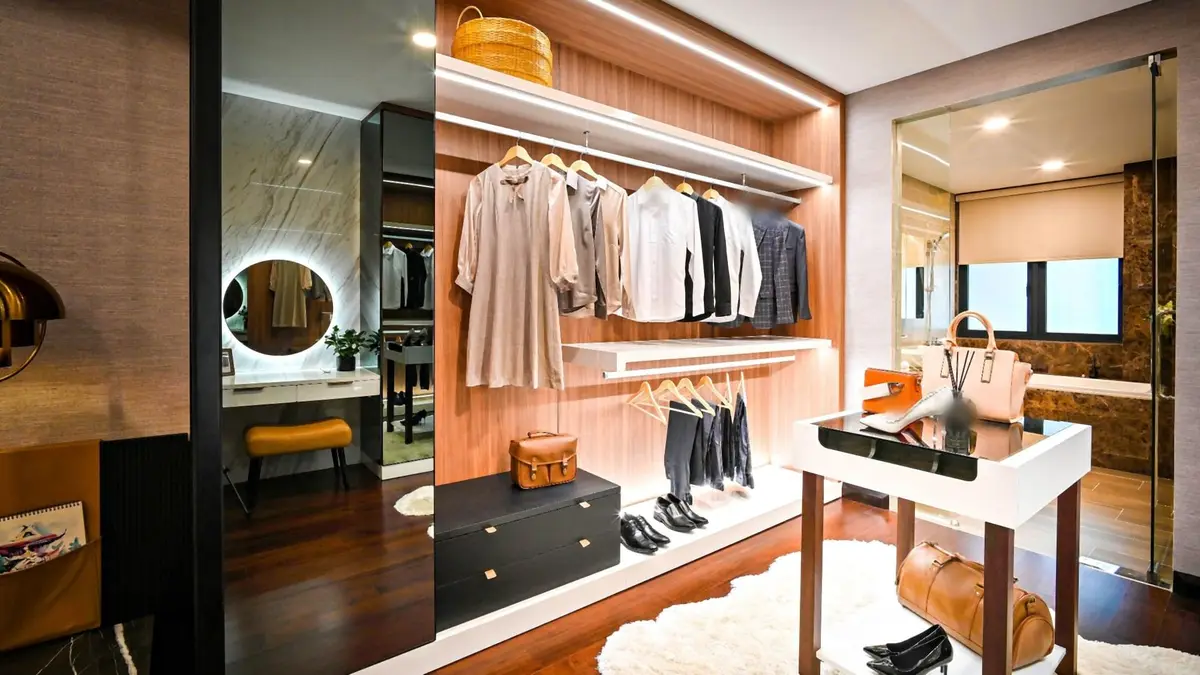
A walk-in closet stays organized when every wall has a job: long hanging on one wall, double rods on another, shelves and drawers on the third, and a clear path down the middle. Add a spot to fold, a spot to sort laundry and a spot for tomorrow’s outfit, and the closet starts to work like a small dressing room.
These 12 ideas are for a closet you can step into, whether it’s shared or yours alone. If yours is a reach-in behind a door, the small closet organization ideas fit it better.
1. Map each wall before you move anything
Stand in the doorway and give each wall one job. Long dresses, coats and trousers hung at full length need the tallest stretch of rod, so they usually take the back wall or the longest side.
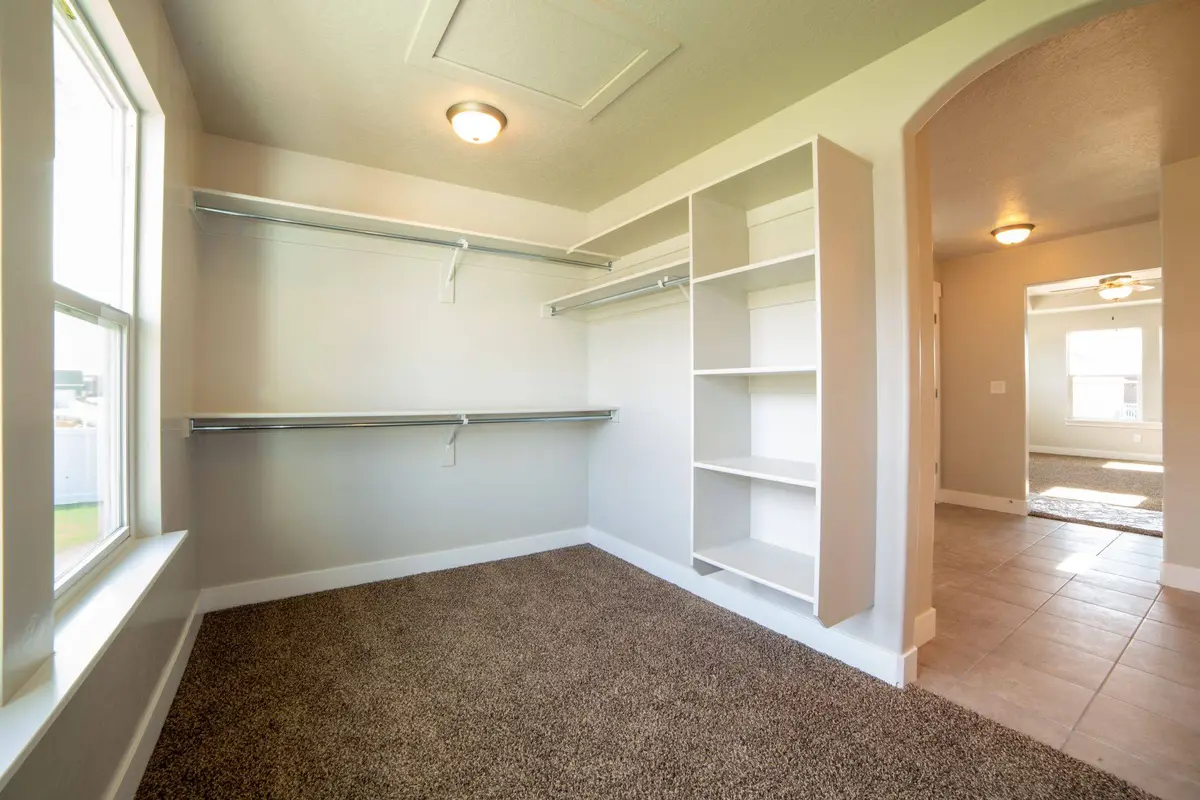
Put double rods on the wall that holds the most shirts, skirts and folded-over pants, since short clothes fit two rows in the same width. Shelves and drawers suit the wall you see first, because folded stacks look tidiest where they face you.
Measure each wall, the distance across to the opposite side and the height to the ceiling, then sketch the plan on paper. Mark the light switch, the vent and the swing of the door, so nothing you add blocks them.
Leave a clear path down the middle, wide enough to turn around with an armful of laundry. A walk-in that’s crowded at floor level feels smaller than it is.
Before anything goes back in, take every piece out and sort it. Clothes you no longer wear take up room on every wall, and the plan works best when it’s built around what you keep.
2. Split the closet fairly between two people
When two people share a walk-in, give each one a side or a wall instead of mixing clothes along the same rod. A clear line stops one wardrobe from slowly creeping into the other.
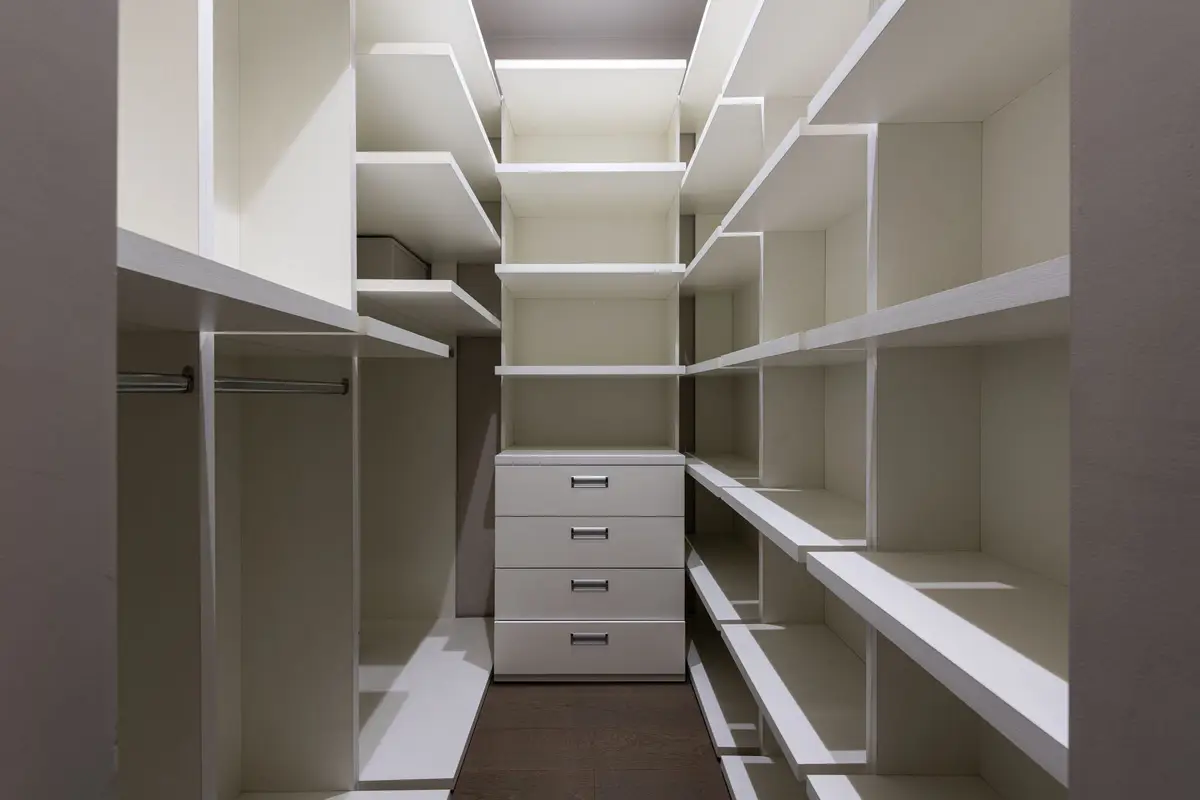
Split the space by how each person dresses, not just down the middle. Someone with suits and long dresses needs more long hanging, while someone who folds most things needs more shelves and drawers.
Shared things go in the middle: the hamper, the step stool, spare hangers, the iron and the luggage. Keep them where both people can reach them without crossing into the other side.
Use the same hangers and the same bins on both sides, so the closet looks like one room even with two styles in it. Labels on the bins and drawers help a lot when two people put the laundry away.
Give each person a donate bag of their own. Nobody likes having their clothes judged, and a private bag makes it easier to let things go on your own schedule.
3. Add an island or a dresser in the middle
If the closet is wide enough to walk around a piece of furniture, an island or a low dresser adds drawer space without using up any wall.
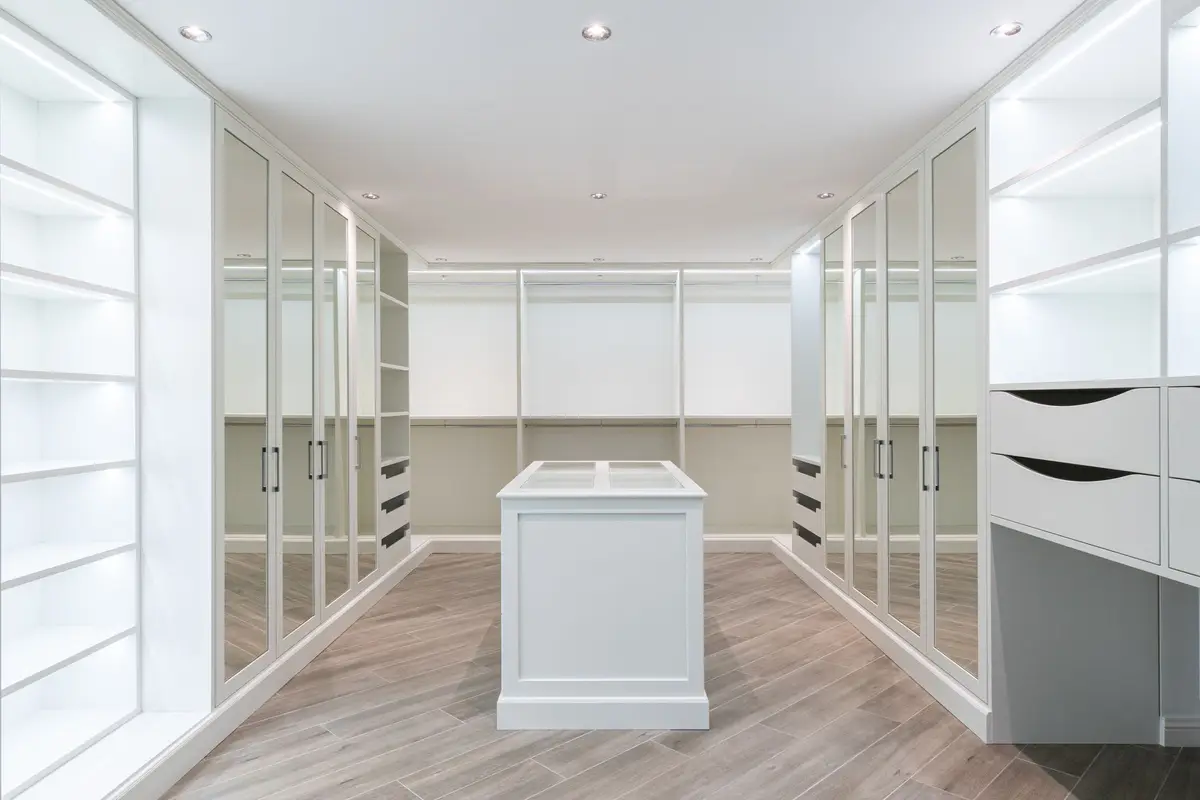
Measure the walkway on every side first. You need room to pull each drawer all the way out and still step past it, and to open any doors on the walls behind.
A dresser you already own can do the same job as a built-in island. Drawers in the middle suit the things you want close at hand: socks, underwear, workout clothes and pajamas.
Any dresser, chest or shelf unit with drawers or shelves needs to be anchored to the wall so it can’t tip over, which matters most in a home with kids who climb. A freestanding dresser in the middle of the floor has no wall to anchor to, so set it against a wall, or choose an island that’s built in and fixed in place.
The top of the island makes a handy surface for sorting jewelry, packing a bag or folding laundry, as long as it stays mostly clear.
4. Build a shoe wall
Shoes take over a closet floor fast. A wall of shoe shelves, from the floor up to about eye level, puts every pair in view and keeps them out of the walkway.
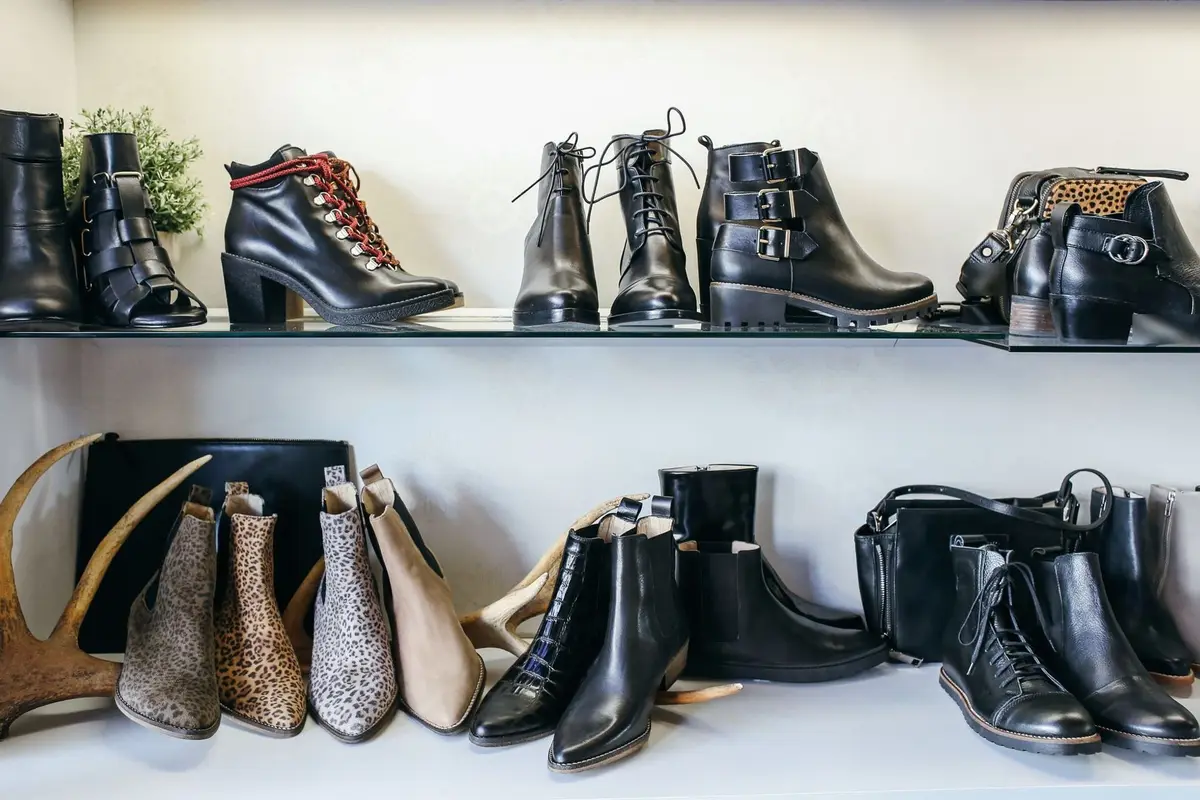
Shelves that tilt slightly forward show off heels and flats, while flat shelves suit boots and sneakers. Leave one taller section for tall boots, or lay them on their sides on a low shelf.
Keep the pairs you wear every week between your knees and your shoulders, where you can grab them without bending or stretching. Dress shoes and off-season pairs go higher or lower.
Give each pair its own spot and point them all the same way, toes out or heels out, across the whole wall. It looks calmer, and you can see at a glance which pair is missing.
These shoe storage ideas have more ways to fit boots, sneakers and sandals into a closet. Set a washable tray on the bottom shelf for wet or muddy pairs, so the dirt stays off everything above it.
5. Make a folding and staging surface
A walk-in works better with one flat surface at counter height. It’s where laundry gets folded, tomorrow’s clothes get laid out and a suitcase gets packed.
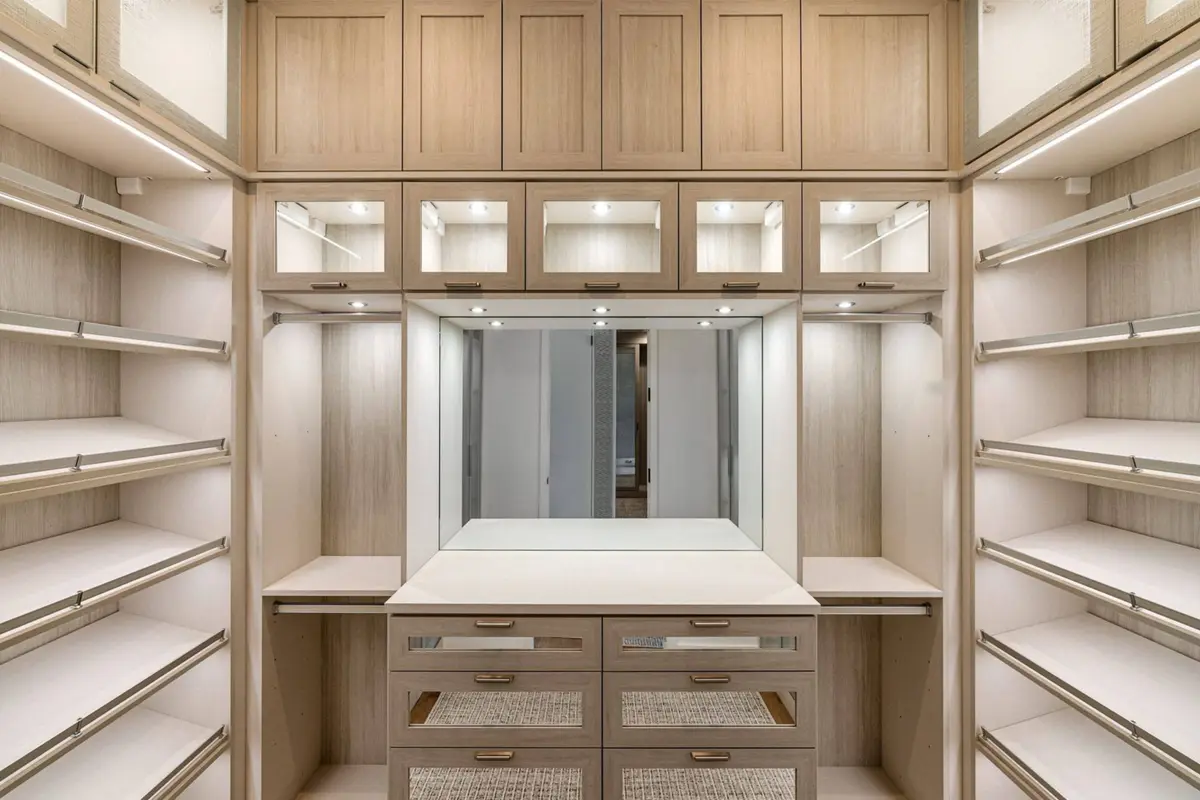
The top of a dresser, a built-in counter between two shelf towers, or a sturdy deep shelf at waist height all work. Keep it clear except for one small tray for things that are coming and going.
Fold clean laundry right there instead of on the bed. Each stack moves from the counter to its shelf in a few steps, and the bed stays a place to sleep.
Use the surface to stage what the week needs: a gym bag, a work outfit, things to return or mend. Once an item leaves, the space goes back to clear.
A weekly reset keeps the counter from turning into a drop zone. Add it to a routine like the Sunday reset checklist, which already covers the laundry and the bags for the week ahead, so the closet starts every Monday ready to use.
6. Store bags and hats up high
The shelves above the rods and the cabinets near the ceiling are the right spot for things you don’t reach for every day: dress bags, travel bags, hats and boxed keepsakes.
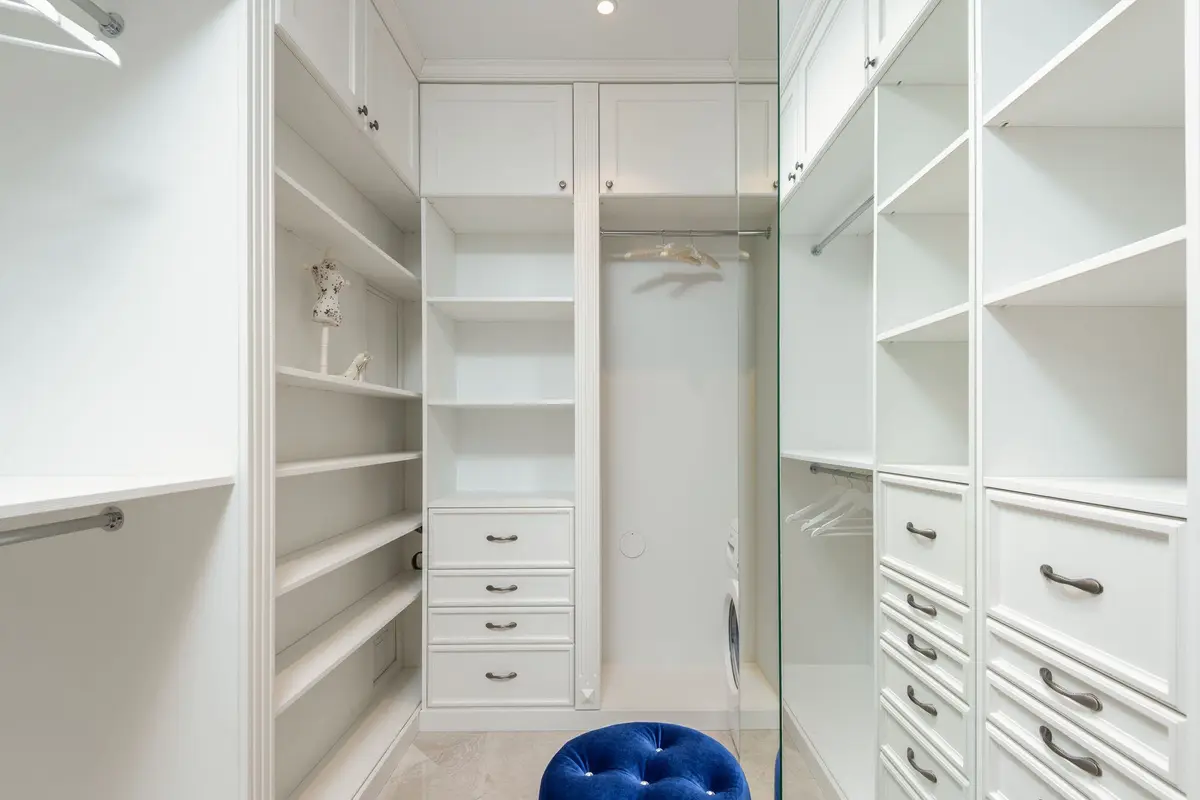
Stand bags upright in a row with a little space between them, so they keep their shape, and fill soft ones with tissue or a scarf. Keep hats in boxes, or stack them crown to crown so the brims stay flat.
Keep the things you use often on lower shelves, about waist high, so you aren’t climbing for them every day. Heavy things belong down low as well.
For the top shelves, use a sturdy step stool with a bar to hold on to, and never stand on a chair. A slim folding stool tucks into the gap beside the shoe wall.
Label the front edge of each high shelf or bin, so you can find the right bag without pulling down three others. These purse organization ideas cover the bags you carry every day.
7. Give accessories a lined drawer
Belts, watches, sunglasses and jewelry get lost on open shelves. One drawer just for accessories, with dividers inside, keeps every small thing visible and untangled.
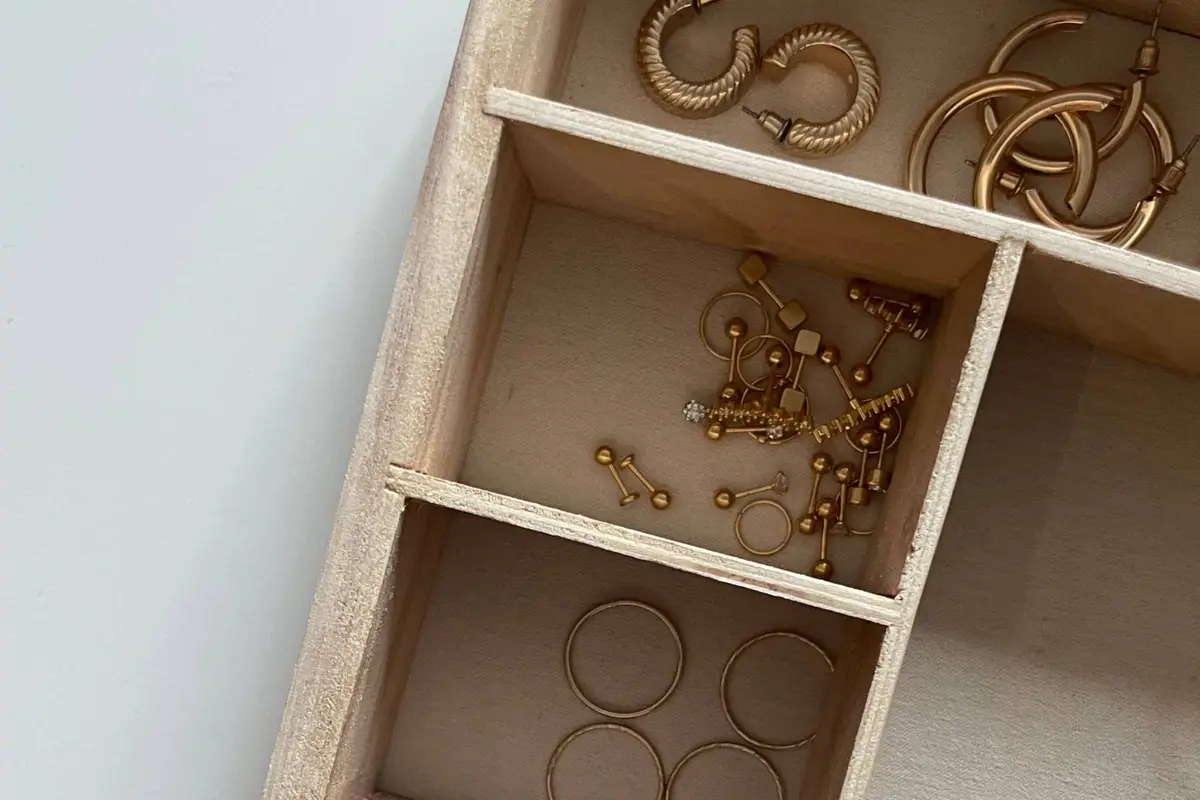
Use trays with small sections for earrings and rings, long sections for necklaces laid flat and a wide section for watches and sunglasses. A soft liner keeps metal from scratching and stops things from sliding when the drawer opens.
Roll belts and stand them in a row, or coil them into a tray of their own. Ties and scarves fold neatly into shallow sections too.
Measure the inside of the drawer, then use the bin size calculator to see which trays fit side by side without wasted gaps along the edges.
Keep this drawer close to the mirror or the counter, so getting ready happens in one spot. If the closet has an island, its top drawer is the natural home for accessories.
Sort the drawer whenever you put a piece back in the wrong section, and pass along any piece you never reach for.
8. Light every wall, not just the middle
A single ceiling light in a walk-in throws shadows across the rods, so dark clothes all look alike. Add light where you actually look: along the shelves, under the top shelf and over the rods.
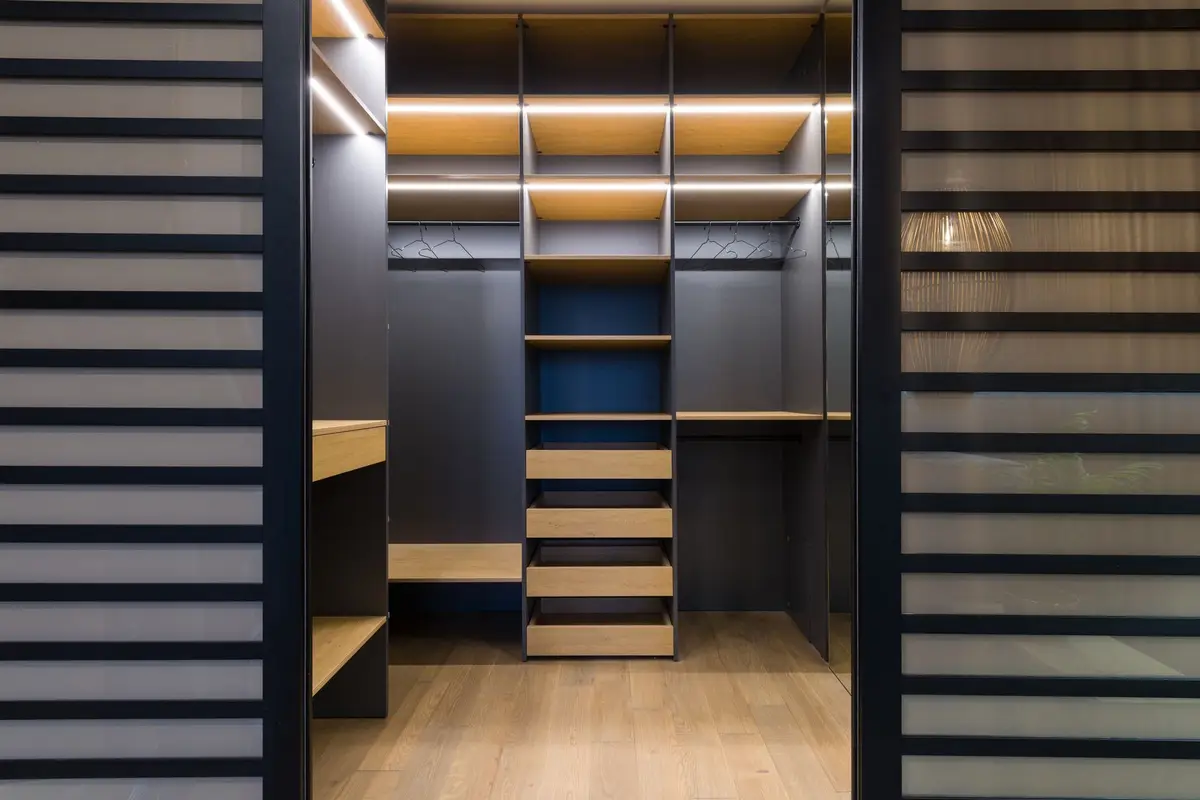
Battery or plug-in LED strip lights stick under shelves and need no wiring, which suits a rental. Motion-sensor lights turn on when you step in and off when you leave, so nobody leaves them burning.
Choose a warm white that shows colors clearly, so navy and black are easy to tell apart. Very blue light can make the closet feel cold and flat.
For a new ceiling fixture or lights wired into built-in shelving, hire a licensed electrician rather than doing it yourself.
Light the shoe wall and the deep corners first, since those are the spots where things get lost. A small lamp on the counter or the dresser adds a softer light for getting ready in the evening, and it makes a large closet feel more like a room.
9. Hang a full-length mirror
A full-length mirror in the closet means you check the whole outfit before you leave the room, not halfway down the hall.
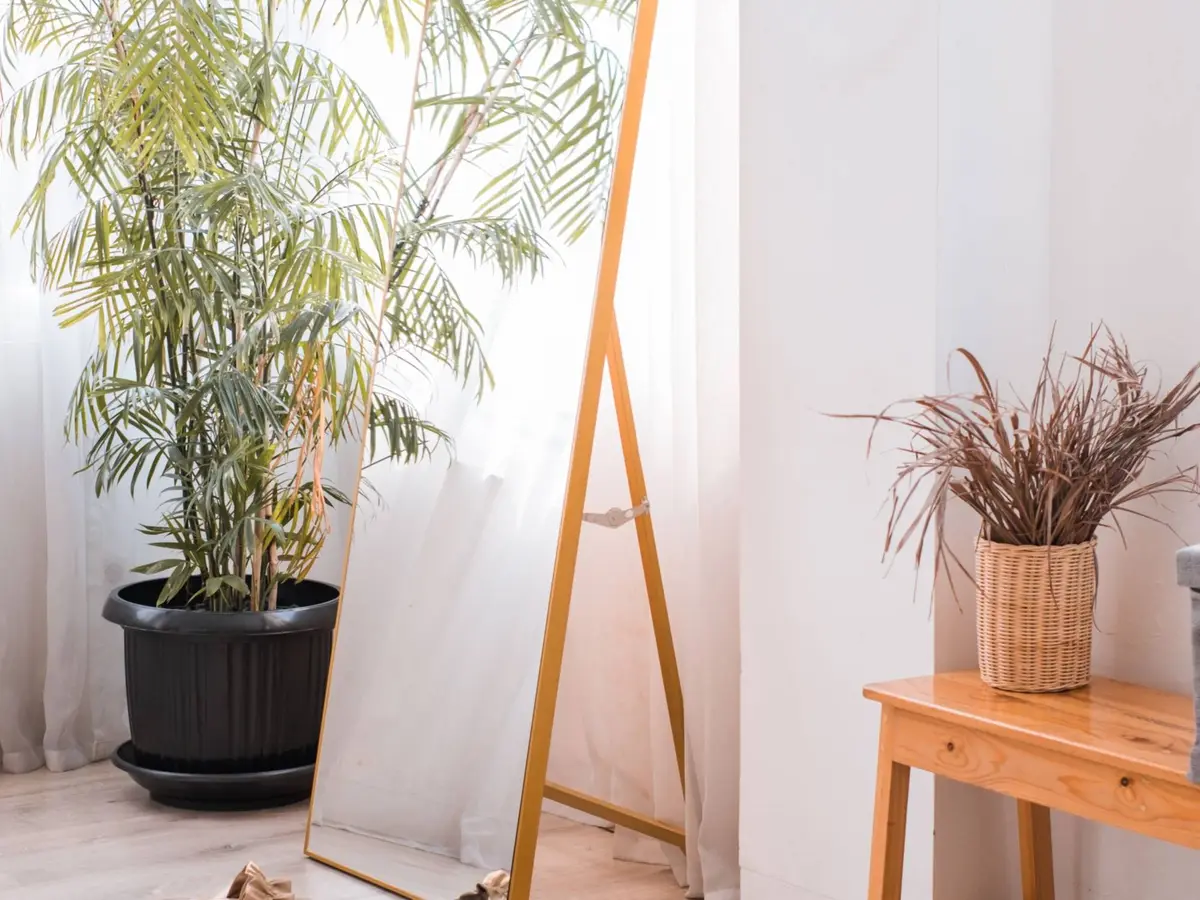
Mount it on the back of the door, on a narrow stretch of wall between sections, or at the far end of the walkway, where you can step back from it. The more room you have to step back, the more of the outfit you see.
A mirror also bounces light around, so a dark closet feels brighter and a little bigger.
Hang it with the hardware made for its weight, screwed into a stud or a wall anchor, instead of leaning a tall mirror where kids and pets run past. Check the fasteners now and then, especially on a door that gets opened and closed all day.
Keep the floor in front of the mirror clear. It’s a good spot for a small rug and a stool or bench for putting on shoes, and for a hook that holds the jacket or bag you’re about to grab on the way out.
10. Keep a hamper and a donate bin inside
Clothes come off in the closet, so the hamper belongs there too. A hamper by the door catches dirty clothes before they land on the floor or the bedroom chair.
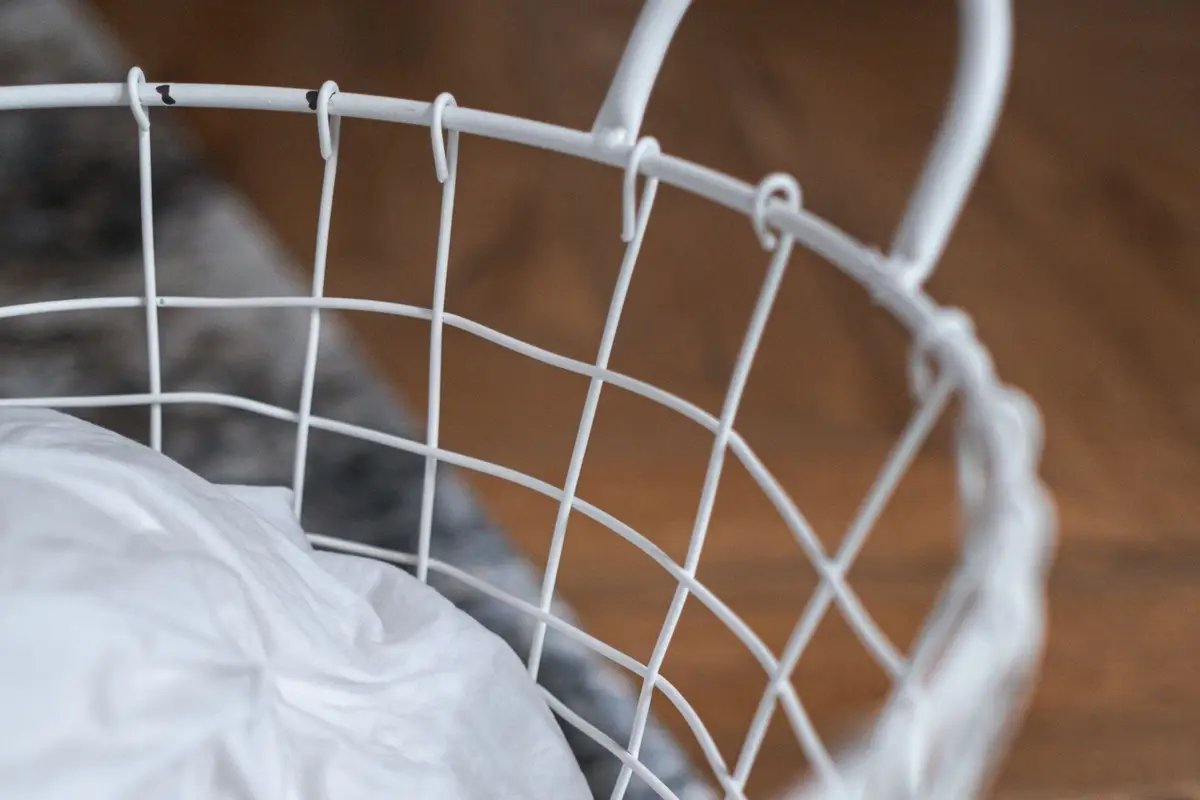
Use a divided hamper or two baskets to sort as you go: lights and darks, or one for each person. Laundry day then starts already sorted.
Next to it, keep a bin or a bag for clothes that are leaving. When something doesn’t fit, needs too much care or hasn’t been worn in a long time, it goes straight in.
When the bin fills, put it in the car the same day, so it actually leaves the house.
For a bigger clean-out, the month-long declutter challenge breaks the job into small daily tasks, so a large closet gets lighter without taking over a whole weekend.
Once a month, walk each wall and pull anything that drifted back in. A walk-in has room to hide things, so a quick look keeps it from filling up again.
11. Rotate clothes with the seasons
Even a large walk-in works better when it holds only the clothes for this season. Off-season pieces move to the high shelves or another room, and the prime spots go to what you wear right now.
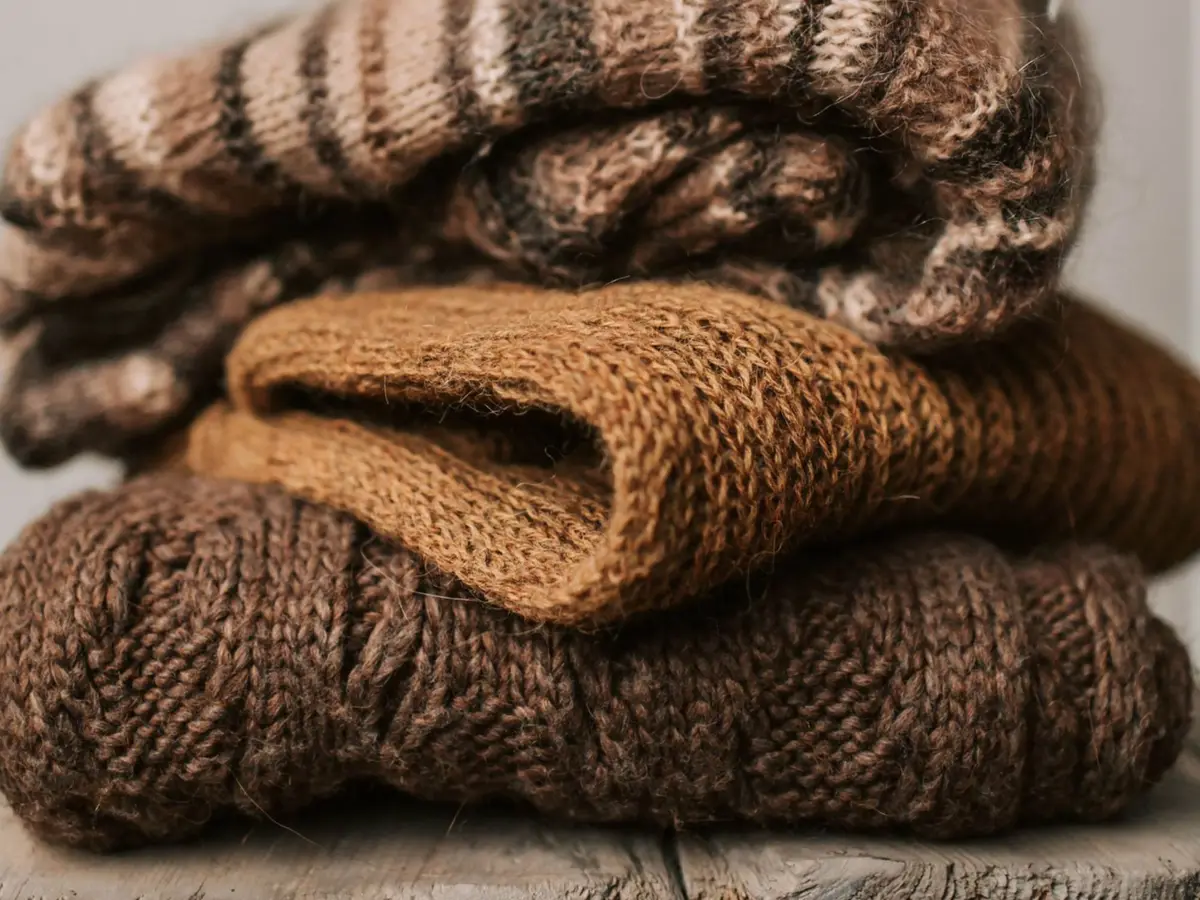
Clean everything before it goes into storage. Wool and other animal fibers attract clothes moths, and the best protection for stored pieces is to clean them first and then seal them in airtight containers.
Use clear lidded bins or zippered bags, label each one with the season and whose clothes are inside, and keep them on a top shelf or under a bench.
Swap twice a year: bring the stored bin down, try things on and pass along anything that no longer fits or that you didn’t miss. Then the outgoing season goes into the bin.
Keep a few in-between pieces, like a light jacket and a cardigan, on the rod all year, since the weather rarely changes on schedule.
12. Add a valet rod for tomorrow’s outfit
A valet rod is a short bar that pulls out from the side of a cabinet or the end of a shelf. It holds an outfit on its hanger, out in the open, then slides back out of the way.
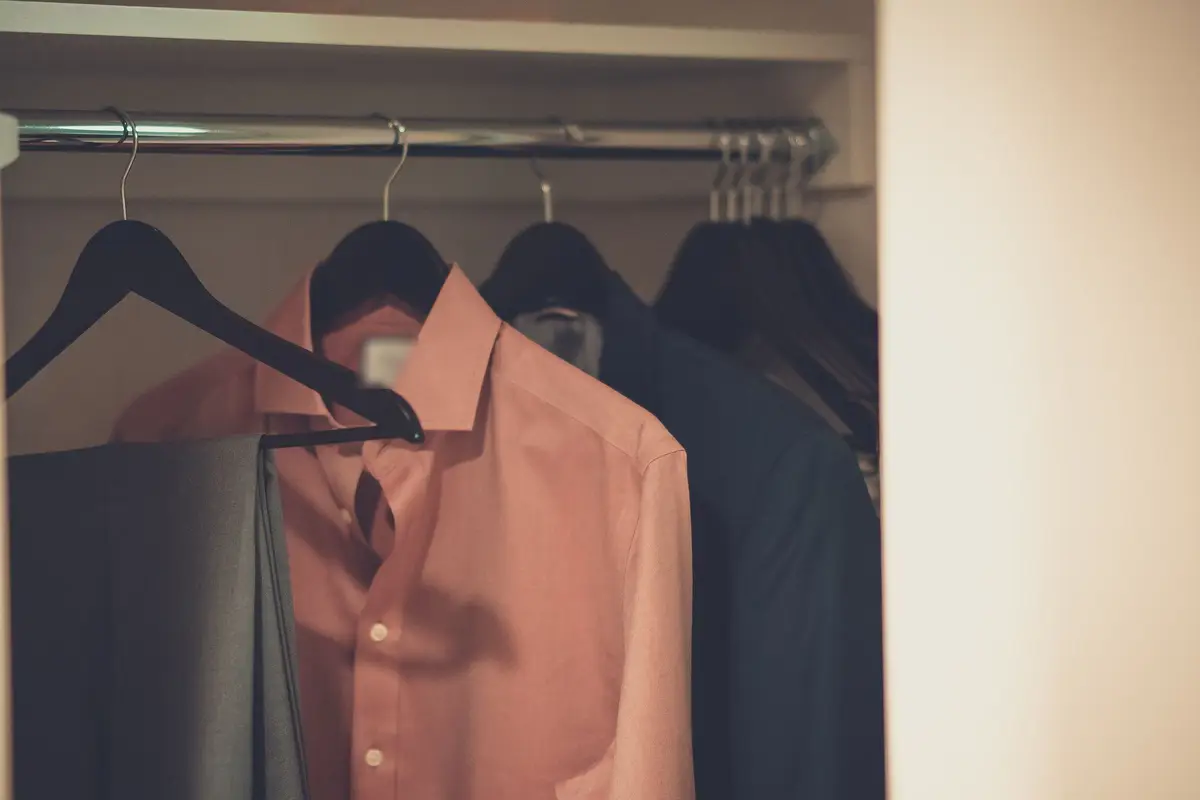
Use it to plan the next day’s clothes the night before: shirt, trousers, jacket and the bag that goes with them. One less decision on a busy morning makes a real difference.
It’s also a place to hang clothes fresh from the dryer while you sort the rest, or to air out a jacket before it goes back on the rod.
No room for a valet rod? A sturdy hook at shoulder height on the end of a shelf tower does the same job. Screw it into a stud or solid wood if it will hold anything heavy.
Clear it every morning as you get dressed, so it never turns into another rod of clothes. The staging counter and the valet rod work as a pair: lay things out on one and hang them on the other.
Save this for later
Pin it to a board so it's there when you're ready to start.
Save to Pinterest(opens in a new tab)Make it easier
Free printable
30-Day Declutter Challenge Printable
A one-page declutter challenge for a month: one small spot to clear each day, easiest first, so the whole house gets a pass in short sessions.
Free tool
Enter the width, depth and height of a shelf, a drawer or a cube cubby, and see which standard bins and baskets fit, how many, and how they line up.
Frequently asked questions
What is the best layout for a walk-in closet?
Give each wall one job: long hanging on one, double rods for shirts and pants on another, and shelves or drawers on the third. Keep a clear path down the middle, and keep the things you use every day between knee and shoulder height.
How do I share a walk-in closet with my partner?
Give each person a side or a wall, sized to how they dress rather than split exactly in half. Keep shared things like the hamper, the step stool and the luggage in the middle, where both of you can reach them.
Should I put a dresser in my walk-in closet?
If there's room to open the drawers fully and still walk past, yes, since it adds folded storage and a surface for folding. Set it against a wall and anchor it there, so it can't tip over.
How do I organize a walk-in closet on a budget?
Clear out what you don't wear first, then use what you already have: a spare dresser, bins from around the house and matching hangers bought a few at a time. Add shelves or a second rod only once you know which wall needs them.