How to Color Code Your Closet So Every Outfit Is Easy to Spot
Declutter, group clothes by category, then hang each group light to dark or in rainbow order and carry the same order into folded stacks and drawers.

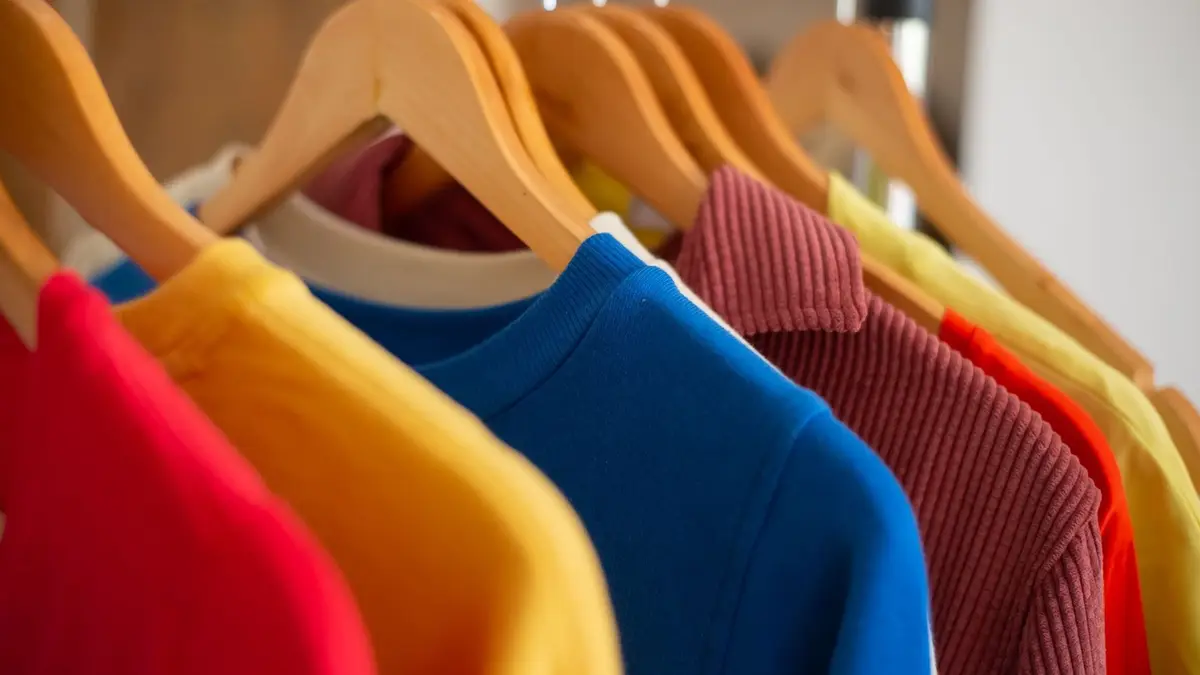
To color code your closet, clear out what you don’t wear, then group what’s left by category: shirts with shirts, pants with pants, dresses with dresses. Inside each group, hang everything in one color order, either light to dark or rainbow order with whites first and black last.
Then repeat that same order on the shelves and in the drawers, and switch to matching hangers so the colors are what you notice. The steps below take an afternoon for most closets, and they work in a reach-in, a walk-in, a kid’s closet or a rack with no doors at all.
What you need
- A clear bed or a clean stretch of floor to sort on
- Three bags or boxes: donate, repair and belongs somewhere else
- Matching hangers, if you plan to switch (step 6)
- Drawer dividers or small bins, for folded clothes (step 5)
- A roll of painter’s tape, to mark sections while you sort
1. Declutter before you sort anything
Color coding a crowded closet only makes the crowd look tidier for a week. Take everything out, rod, shelves, floor and hooks, and pile it on the bed so you can see it all at once.
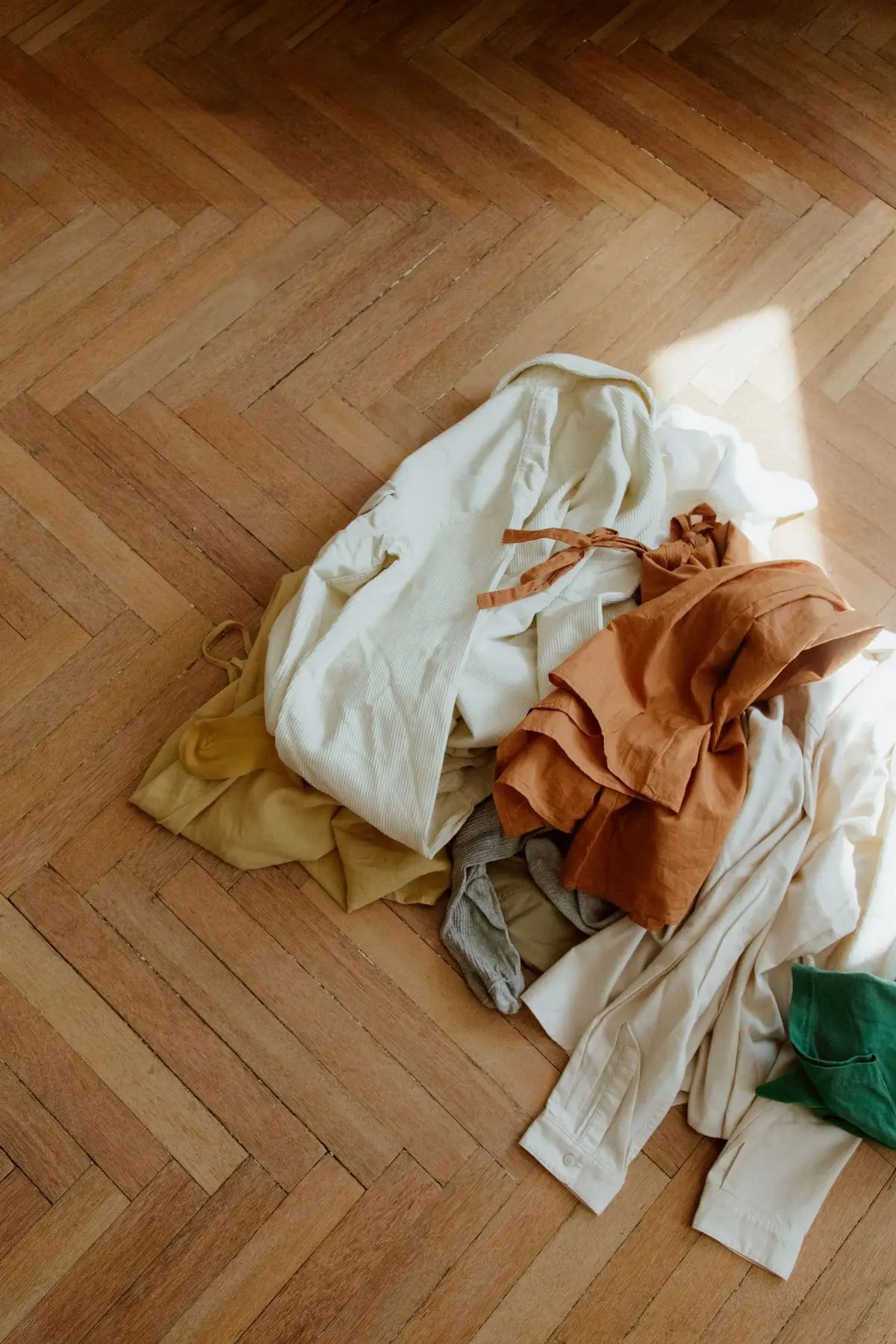
Pick up each piece and decide right away: keep, donate, repair or move to another room. Be strict with anything that doesn’t fit, needs a repair you’ve put off for months or hasn’t been worn through a full year of seasons.
The declutter checklist keeps the job moving if you tend to stall on the maybe pile. Bag the donations and put them in the car before you start sorting, so nothing drifts back onto the rod.
Wipe the shelves and vacuum the floor while the closet is empty. A clean, bare closet also shows you how much rod and shelf space you have to work with.
2. Sort by category first
Before color comes into it, sort the keep pile into categories. Common ones are tank tops, short-sleeve tops, long-sleeve tops, sweaters, dresses, skirts, pants, jeans and jackets, but use the groups that match how you get dressed.
Give each category its own stretch of rod or its own shelf. A strip of painter’s tape on the rod or the shelf edge marks where one group ends and the next begins while you work.
Order the categories by length on the rod, short to long, so the space under the shorter clothes stays open for shoes or a low drawer unit. In a closet with a double rod, tops go on top and folded-over pants or skirts go below.
Only once every category has its spot do you start on color. Sorting by color across the whole closet looks pretty on day one, but it makes you hunt for a black sweater among black pants and dresses every morning after that.
3. Choose one color order and stick to it
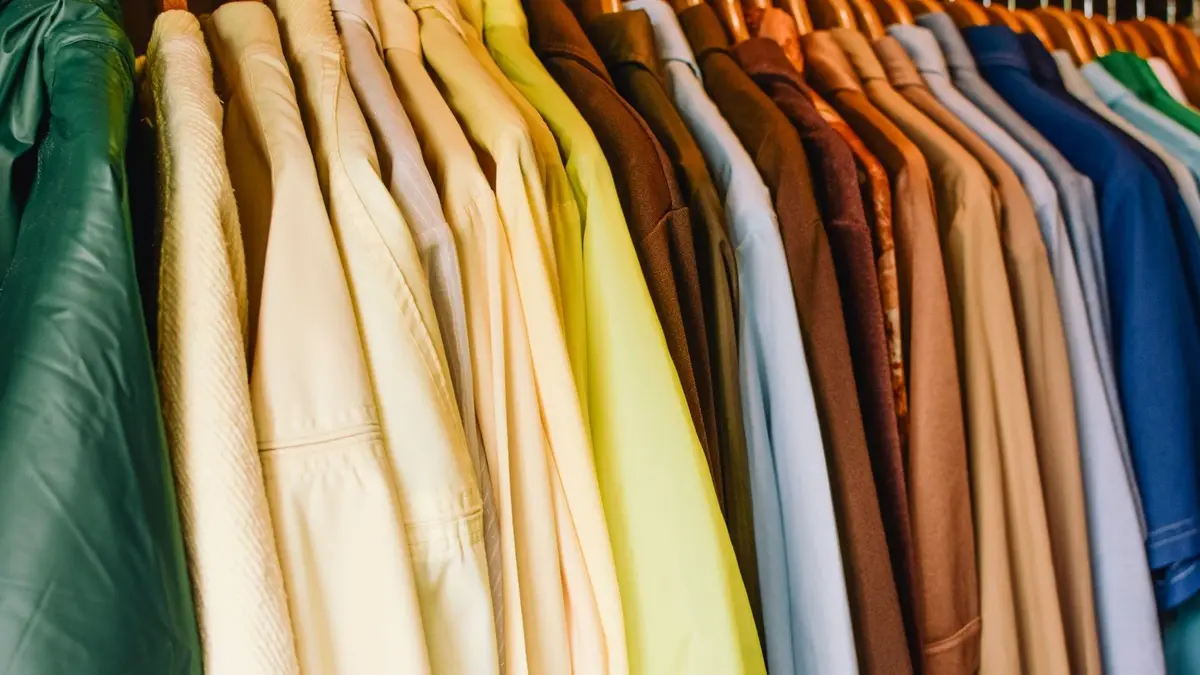
There are two orders that work well, and either is fine as long as you use it everywhere. Light to dark is the simplest: whites and creams first, then pale shades, mid tones and darks, ending with navy and black.
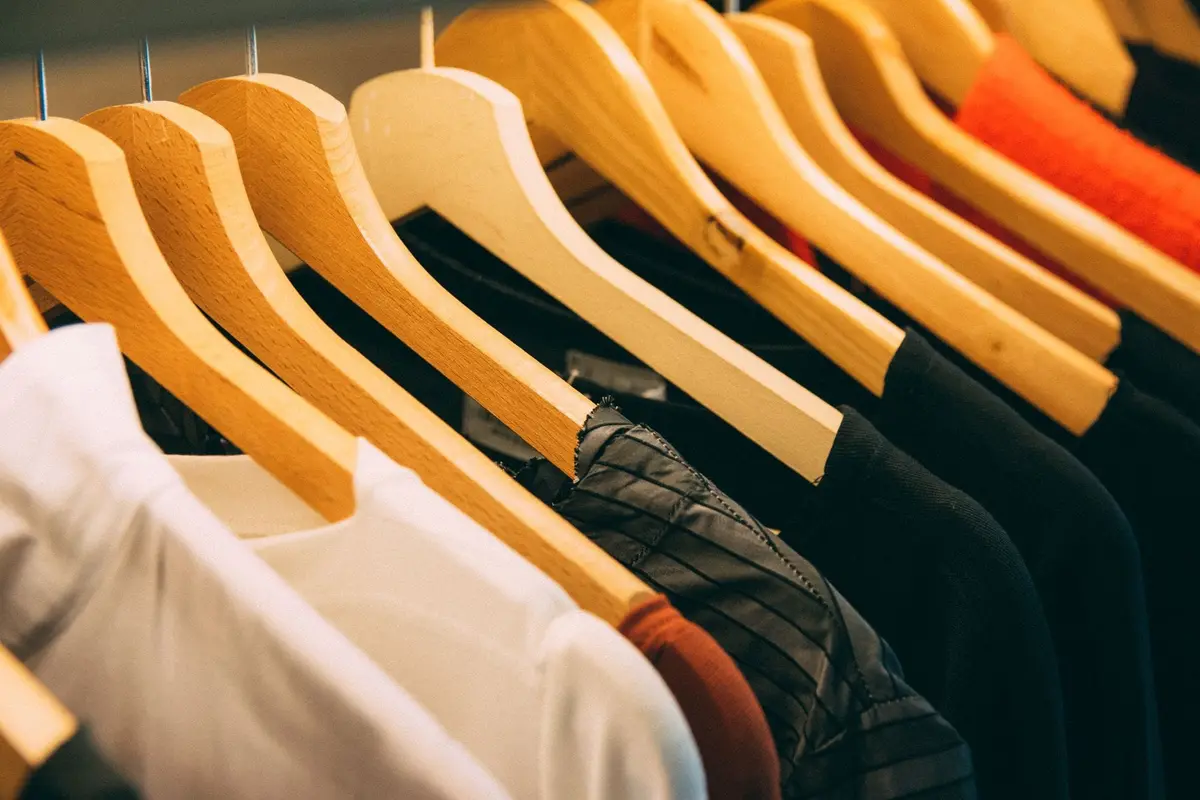
Rainbow order suits a closet with a lot of color. Start with whites and creams, then red, orange, yellow, green, blue and purple, then pinks, browns and grays, with black last.
Run the order the same direction in every category, left to right or front to back. When every group starts light and ends dark, your eye knows where to look before you even think about it.
If you share a closet, agree on one order so both sides read the same. It also makes it easy to see whose half is getting crowded.
4. Decide where neutrals, prints, stripes and denim go
The tricky pieces are the ones that aren’t one clear color. Make a rule for each kind once, and the whole closet stays consistent.

Neutrals like cream, beige, camel, gray and brown can sit in their own run between the colors and black, or slot in where they fall from light to dark. If most of your wardrobe is neutral, sort those by shade alone and skip the rainbow.
File a print or a stripe by the color you notice first from a few steps away, so a navy and white stripe goes with the navys. If you own a lot of patterns, give them a short section at the end of each category instead.
Denim is its own family. Keep jeans together, then order them light wash to dark wash, with black and gray jeans at the end. Chambray shirts and denim jackets can follow the same light to dark rule in their own categories.
5. Color code folded stacks and drawers
Folded clothes follow the same order as the rod. On a shelf, line stacks up from light on the left to dark on the right, or put the lightest piece on top of each stack and the darkest at the bottom.
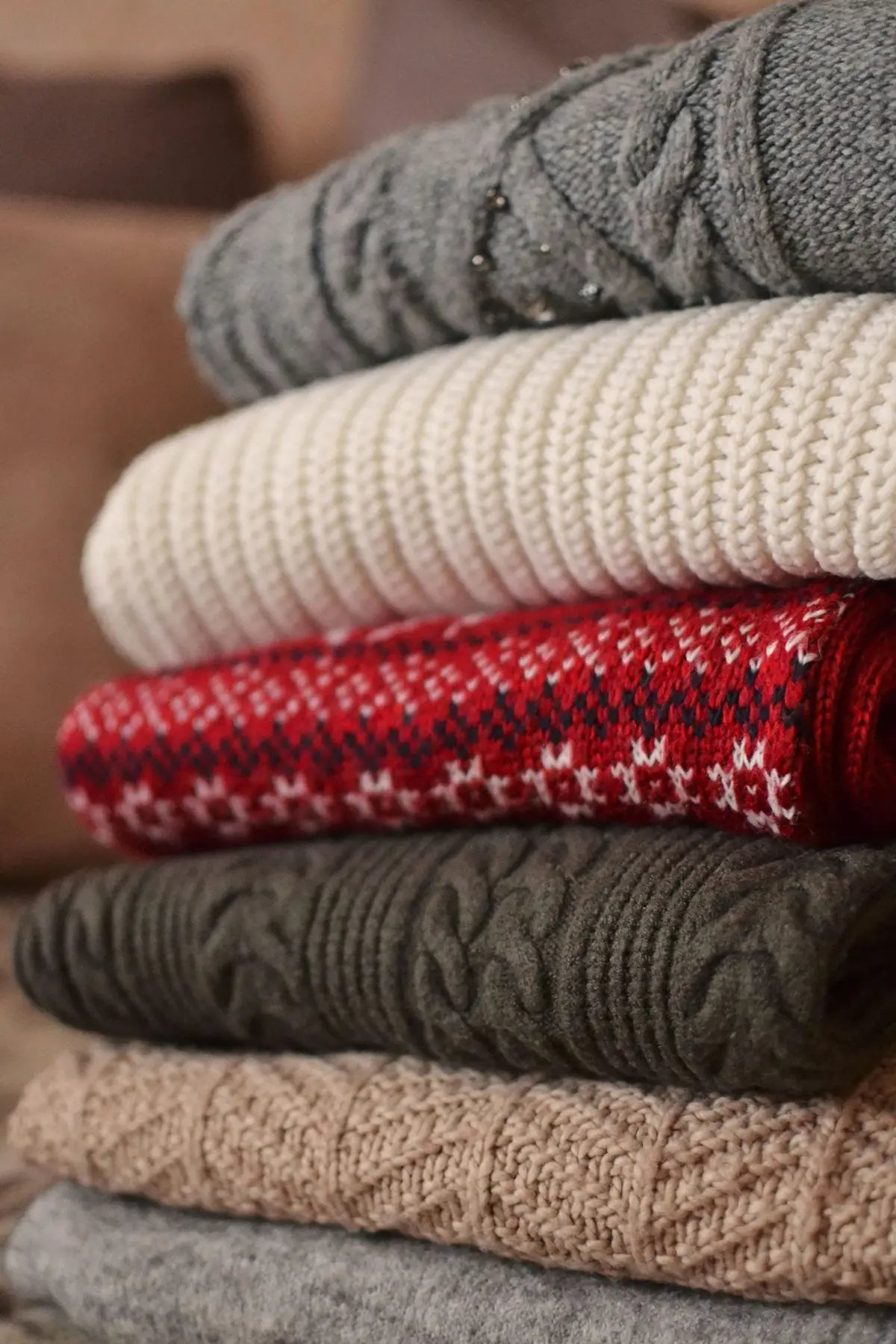
In drawers, file-fold tees and knits so they stand on edge in rows, and run each row from light to dark. You see every color at once when the drawer opens, and pulling one out doesn’t topple the rest.
Drawer dividers or small bins keep each category in its own lane. Measure the inside of the drawer first, and the bin size calculator shows which bin sizes fit and how many line up across it.
Small things get the same treatment. Socks, scarves and workout tops can each sit in a short row from light to dark, so the whole dresser matches the closet.
6. Switch to matching hangers so the color reads
Mismatched hangers fight with the clothes for attention. When every hanger is the same style and color, the hangers fade into the background and the color order is what you see.
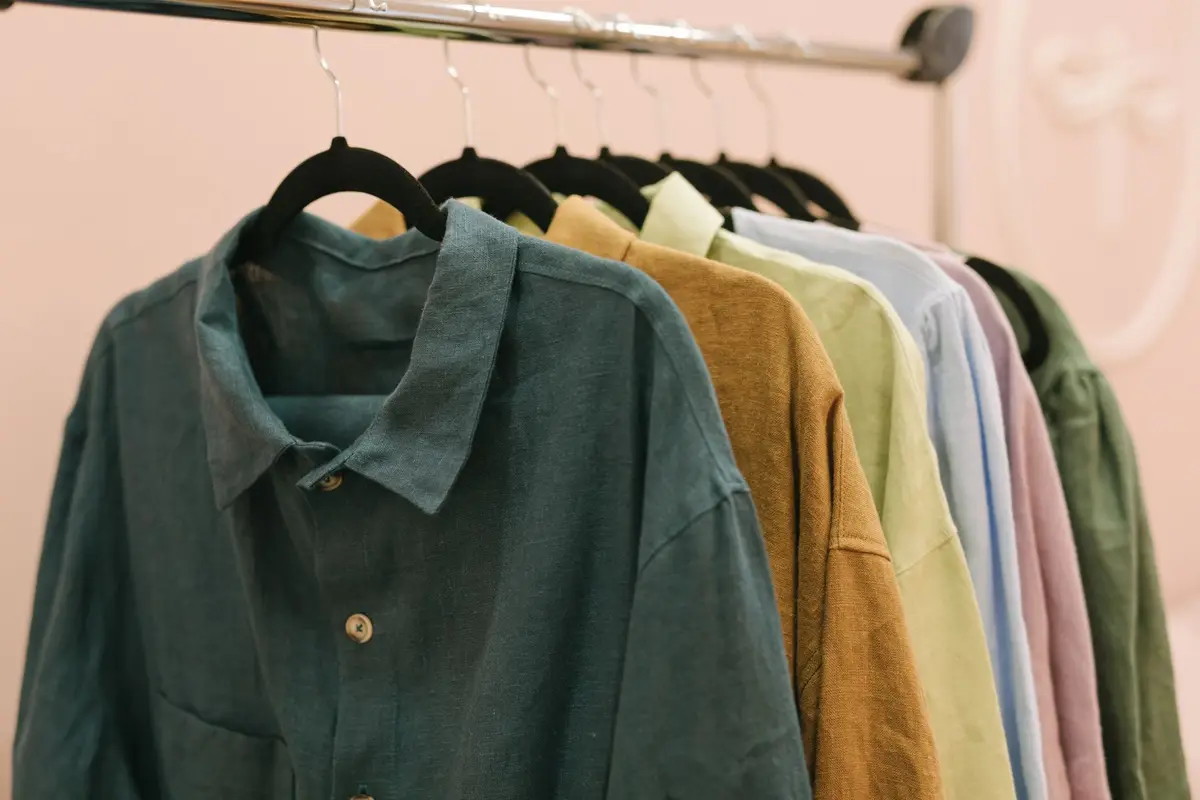
Choose one hanger color that suits the closet: wood or white in a light space, black or a dark finish if most of your clothes are dark. Velvet or flocked hangers grip slippery tops, while wooden ones with a bar suit jackets and pants.
Swap them in one category at a time, starting with the one you use most. Matching hangers also hang at an even height, which keeps the color line along the bottom of the clothes neat.
Slim hangers take up less of the rod, too, which makes them one of the simplest small closet organization ideas when space is tight. Leave a little space between hangers as you go. Clothes hung loosely get more air around them, which helps keep a closet from smelling musty in damp weather.
7. Set up kids’ closets by color or by outfit
Kids can use a color-coded closet too, and it often helps them dress on their own. Keep it simple with a few broad color groups instead of a full rainbow, and hang everything at a height they can reach.
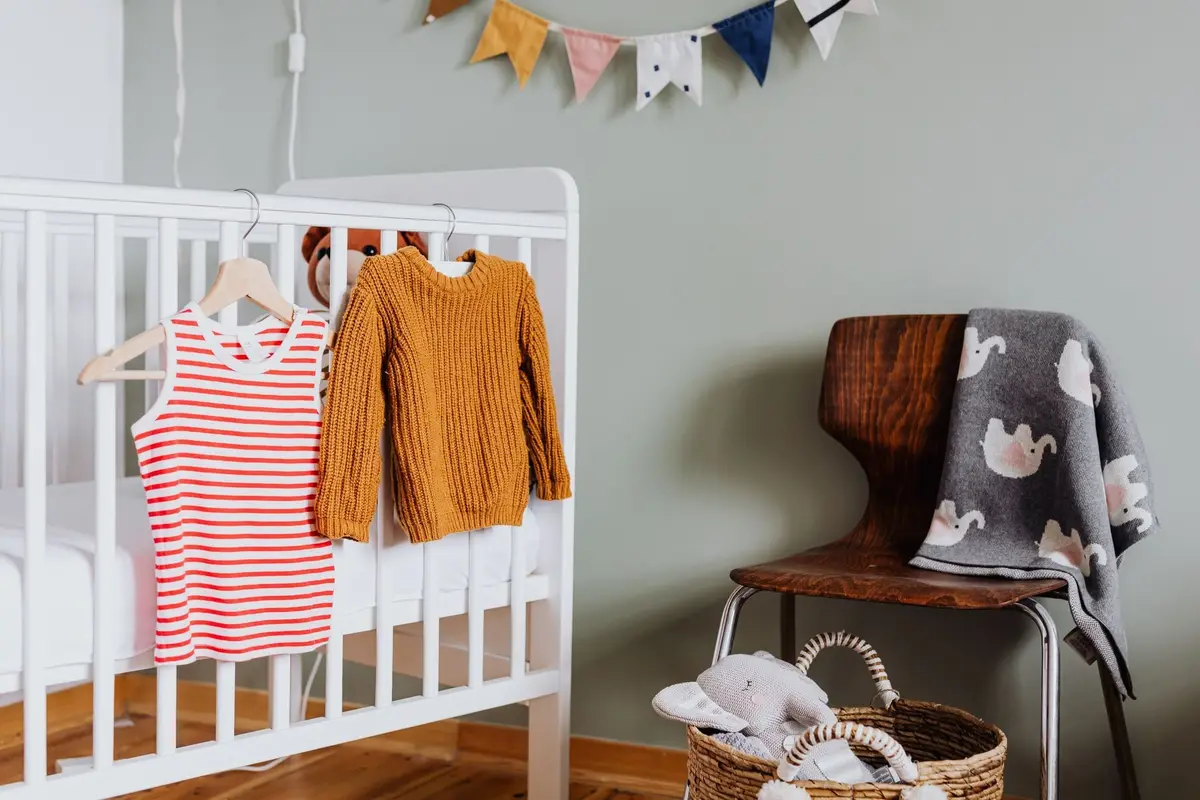
For younger kids, hanging complete outfits together can work better than color groups. Put a top and bottom on one hanger, or clip them together, and line the outfits up from light to dark so the rod still looks orderly.
Older kids can pick from color groups and mix their own outfits. Sort their folded clothes by category in labeled drawers, with a picture on the label for kids who don’t read yet.
Keep school clothes, play clothes and dress-up pieces in separate sections. Color coding inside each section is a bonus, not a must, so don’t worry if it slips during a busy week.
Color coding other kinds of closets
Color order matters most where the clothes are always on show. These open closet organization ideas cover clothing racks, wall rods and closets with the doors taken off, where a calm color run keeps the room from looking busy.
In a standard closet behind doors, use the color order on the stretch of rod you see first when the door opens. These reach-in closet organization ideas help you plan the rod, shelves and floor before you sort.
A corner closet bends the rod around a turn, so start the color order at the end you reach first and let it run around the corner. These ideas for small corner closet organization show how to use the hard-to-reach back corner.
Mistakes that undo the work
- Color coding before you declutter. A full closet in rainbow order is still a full closet, and it gets messy fast.
- Mixing categories. One long rainbow of every kind of clothing means you search the whole rod for one pair of pants.
- Changing the order between rods and drawers. If the rod runs light to dark and the drawers run dark to light, nothing feels automatic.
- Overstuffing the rod. When hangers are jammed together, you can’t see the colors or slide anything back into its gap.
Keep it color coded
The order lasts when laundry goes back into the gap it came from. Hang clean clothes by category and slide each one into its shade, which takes no longer than hanging it at the end of the rod.
Sort the laundry basket the same way you sort the closet: whites in one load and darks in another, with new or red pieces washed on their own at first, since they can bleed. Clean clothes then come back already grouped, and putting them away is quicker.
Once a week, glance along the rod and move anything out of place. When a season ends, swap the stored clothes in using the same order, and the closet never needs a full re-sort.
Save this for later
Pin it to a board so it's there when you're ready to start.
Save to Pinterest(opens in a new tab)Make it easier
Free printable
A room-by-room declutter checklist that tells you exactly what to look for, with four piles to sort into so nothing ends up back on the shelf.
Free tool
Enter the width, depth and height of a shelf, a drawer or a cube cubby, and see which standard bins and baskets fit, how many, and how they line up.
Frequently asked questions
Should I organize my closet by color or by type?
Do both, in that order. Group clothes by type first (shirts, pants, dresses, jackets), then arrange each group by color, so you can find a kind of clothing and then pick the shade you want.
What is the rainbow order for clothes in a closet?
Start with whites and creams, then red, orange, yellow, green, blue and purple, then pinks, browns and grays, with black last. Pick one version of the order and use it on every rod, shelf and drawer, so the whole closet reads the same way.
Where do patterned clothes go in a color-coded closet?
File a print or a stripe by the color you notice first from across the room. If you own a lot of patterns, give them their own short section at the end of each category instead.
Is a color-coded closet hard to keep up?
Not once the order is set. Clean laundry goes back into the gap where it came from, which takes about as long as hanging it anywhere, and a quick look along the rod once a week catches anything out of place.
How do I color code a kid's closet?
Use a few simple color groups at the child's height, or hang complete outfits together instead. Younger kids often find it easier to grab a whole outfit, while older kids can match pieces from color groups on their own.