12 Minimalist Closet Organization Ideas for a Calm Closet of Clothes You Love
Keep fewer, better-loved clothes: edit by category, use one hanger style, leave room on the rod and let one in, one out keep the closet calm all year.

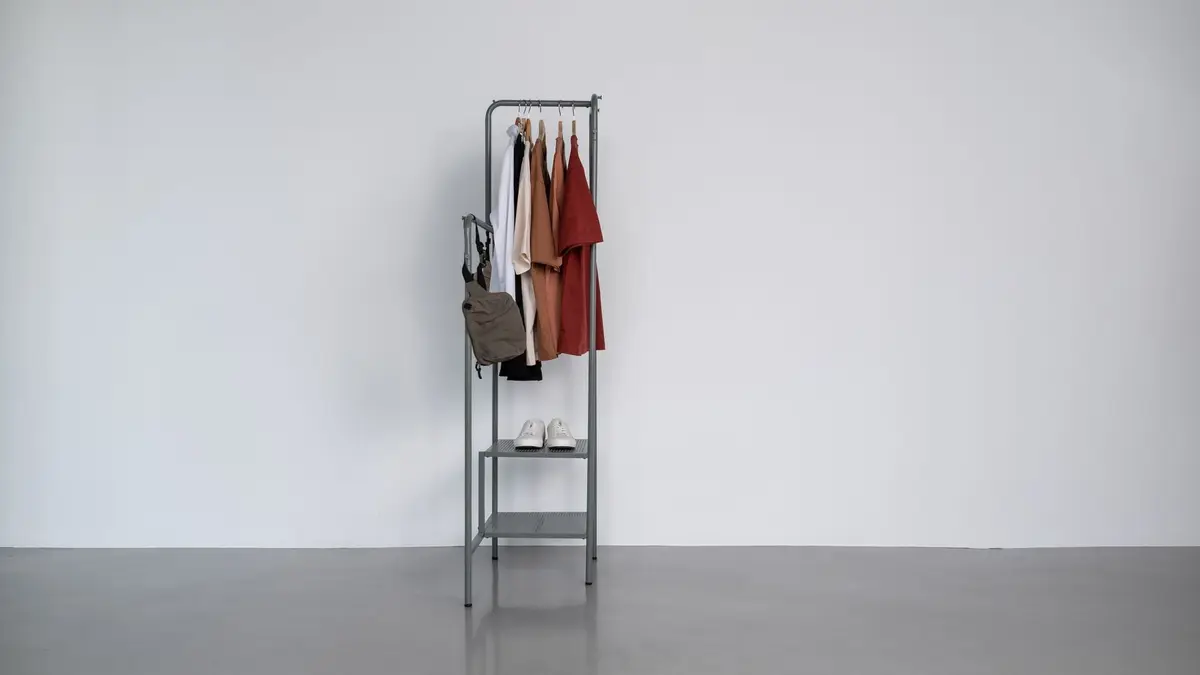
A minimalist closet stays organized because it holds less: only clothes that fit, get worn and go with each other. Edit one category at a time, then make the closet calm with one hanger style, space between pieces and plain storage for small things.
These 12 ideas start with the edit, since everything after it is easier with fewer clothes. The last few are habits that keep the closet from filling back up.
1. Edit one category at a time
Editing a whole closet at once is tiring, and tired decisions tend to be keep-everything decisions. Work through it one category at a time instead: tops, then pants, then dresses, knits, outerwear, shoes and accessories.

Take every piece in the category out, including the ones in the laundry and the spare room. Seeing all your black tees in one pile makes it clear how many you really need.
Keep the pieces that fit now, feel good to wear and go with at least a few other things you own. Pass along anything that’s uncomfortable, needs a repair you’ll never make or only works with one outfit.
A good guide is enough of each kind to get from one laundry day to the next, plus what your work and weather call for. The result is close to a capsule wardrobe without a strict number to hit.
If one sitting is too much, the 30-day declutter challenge breaks the job into small daily tasks.
2. Give the maybes a short trial
Every edit leaves a few pieces you can’t decide on. Don’t force the call, and don’t let them slip back in among the keepers either.
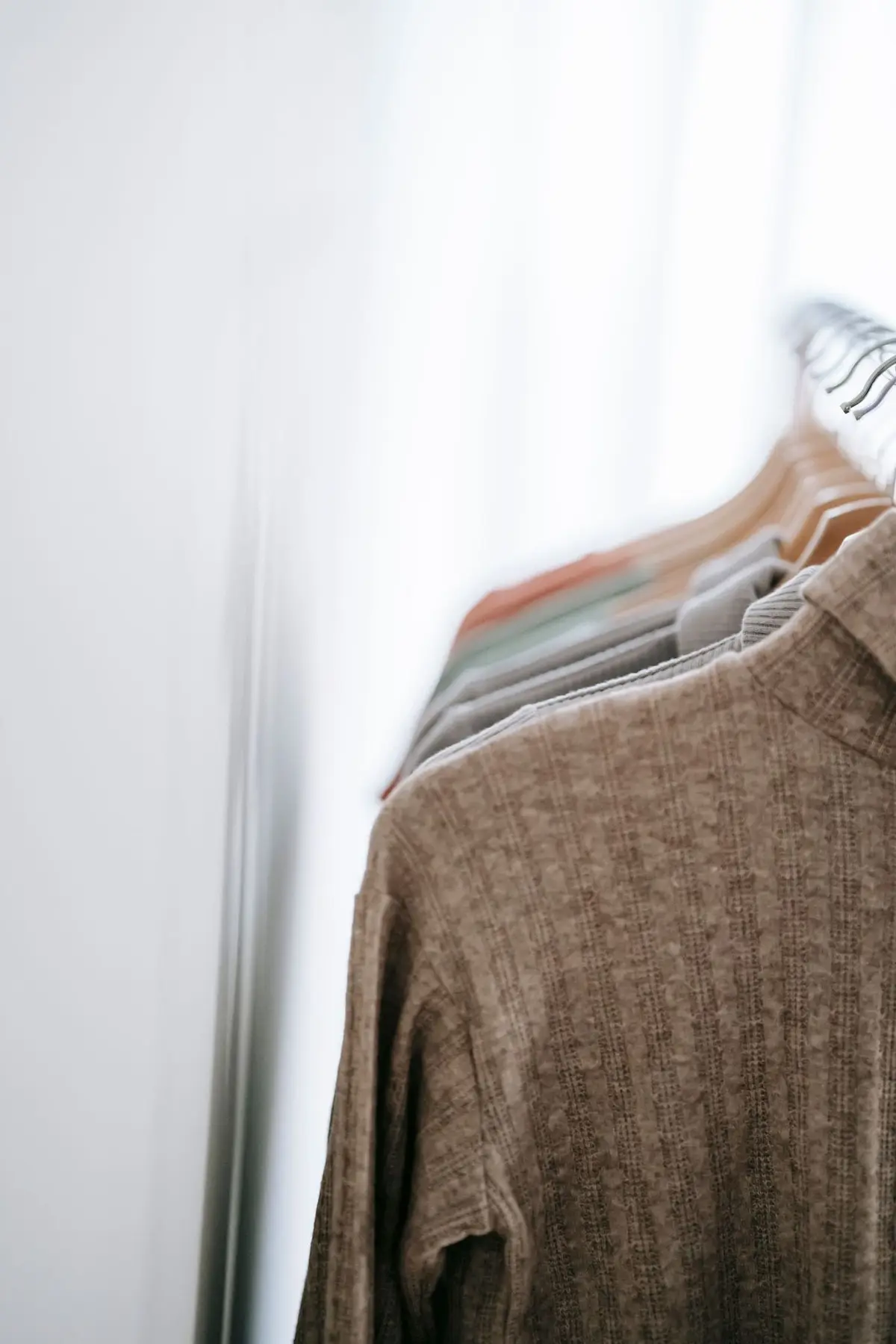
Hang the maybes together at one end of the rod, each hanger turned the opposite way from the rest. Put folded maybes in a single bin on a shelf.
Tape a note with an end date to the rod or the bin, a few weeks to a season away. During the trial, wear the maybes on purpose and turn each hanger the normal way once you’ve worn it.
On the end date, ask one question about every piece still turned around: would you buy this again today? If the answer is no, it goes to the donate basket.
Pieces you wore and liked move into the main closet. Pieces you wore and didn’t like go too, since you now know why.
The trial works because it’s short and limited to the unsure pieces. It never turns into a second closet.
3. Use one hanger style for everything
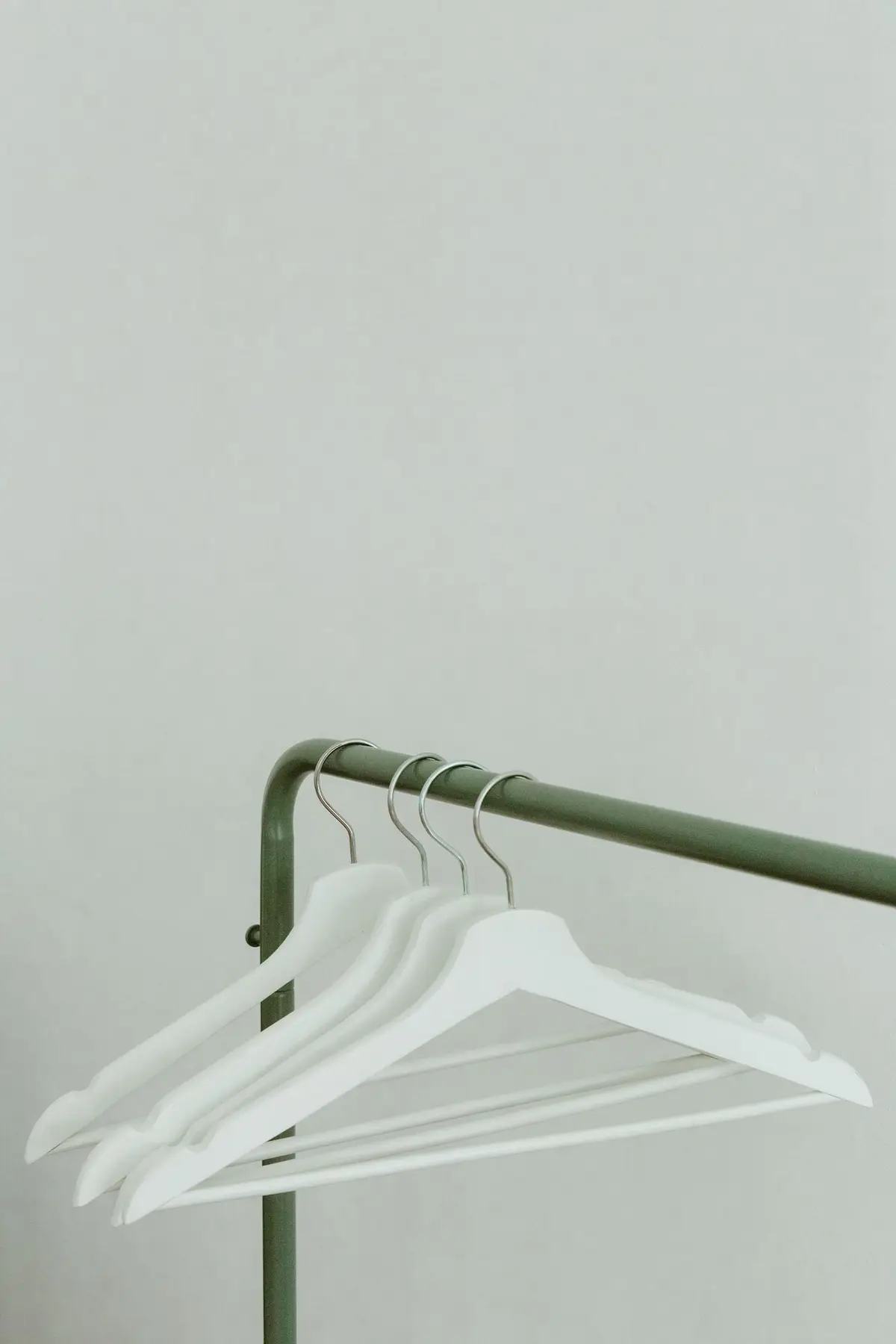
Once the edit is done, you know exactly what’s left to hang, which makes it the right moment to settle on a single hanger. One style throughout removes a layer of visual noise you stop noticing until it’s gone.
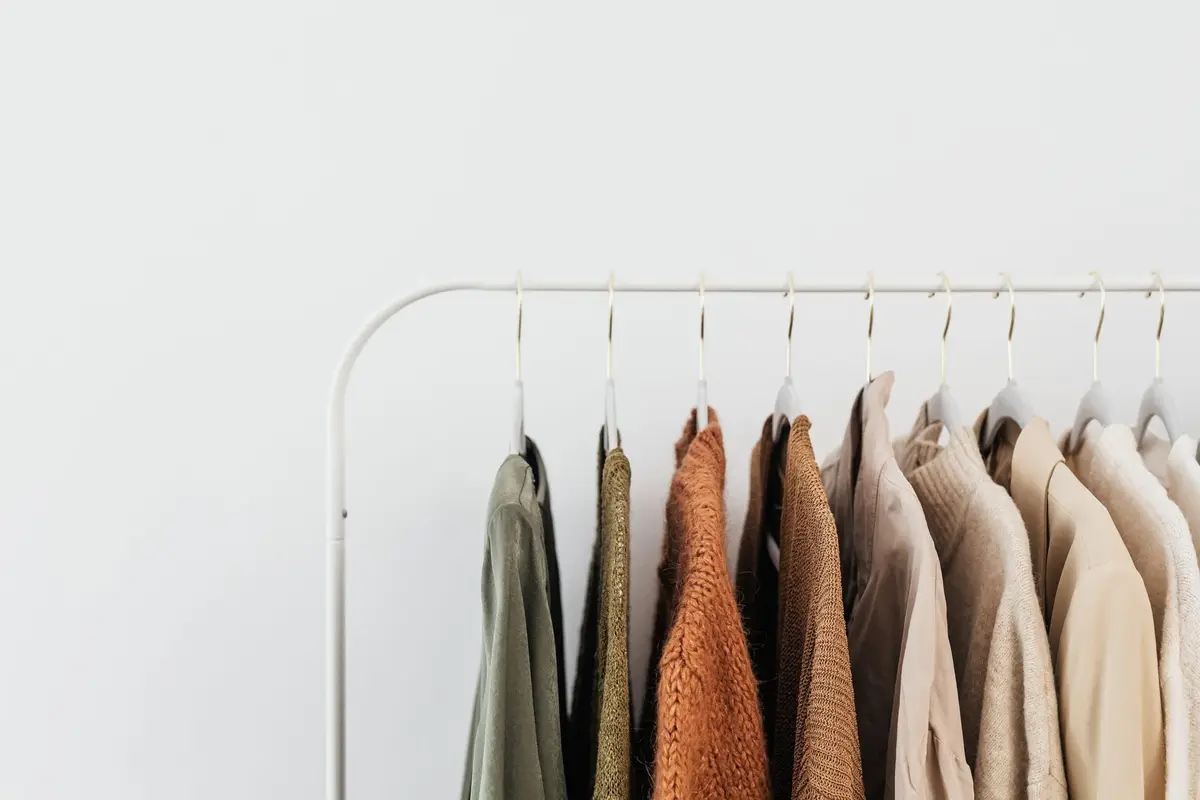
Before you commit, try one hanger with the two hardest pieces you own: your most slippery top and your heaviest jacket. Thin flocked hangers grip silk and save width, while shaped wooden ones support the shoulders of coats.
If no single hanger passes both tests, use two shapes in the same color and finish. Coats on the wide ones at one end, everything else on the slim ones.
Count the pieces you hang after the edit, and keep only that many hangers plus a few empties for clean laundry. Pass every other hanger along, since a drawer of spares quietly invites more clothes.
Replace the old hangers as pieces come out of the wash, so the switch takes a week or two of laundry instead of an afternoon.
4. Leave room to breathe on the rod
A minimalist rod isn’t full. You should be able to lift any piece off without the ones beside it coming along.
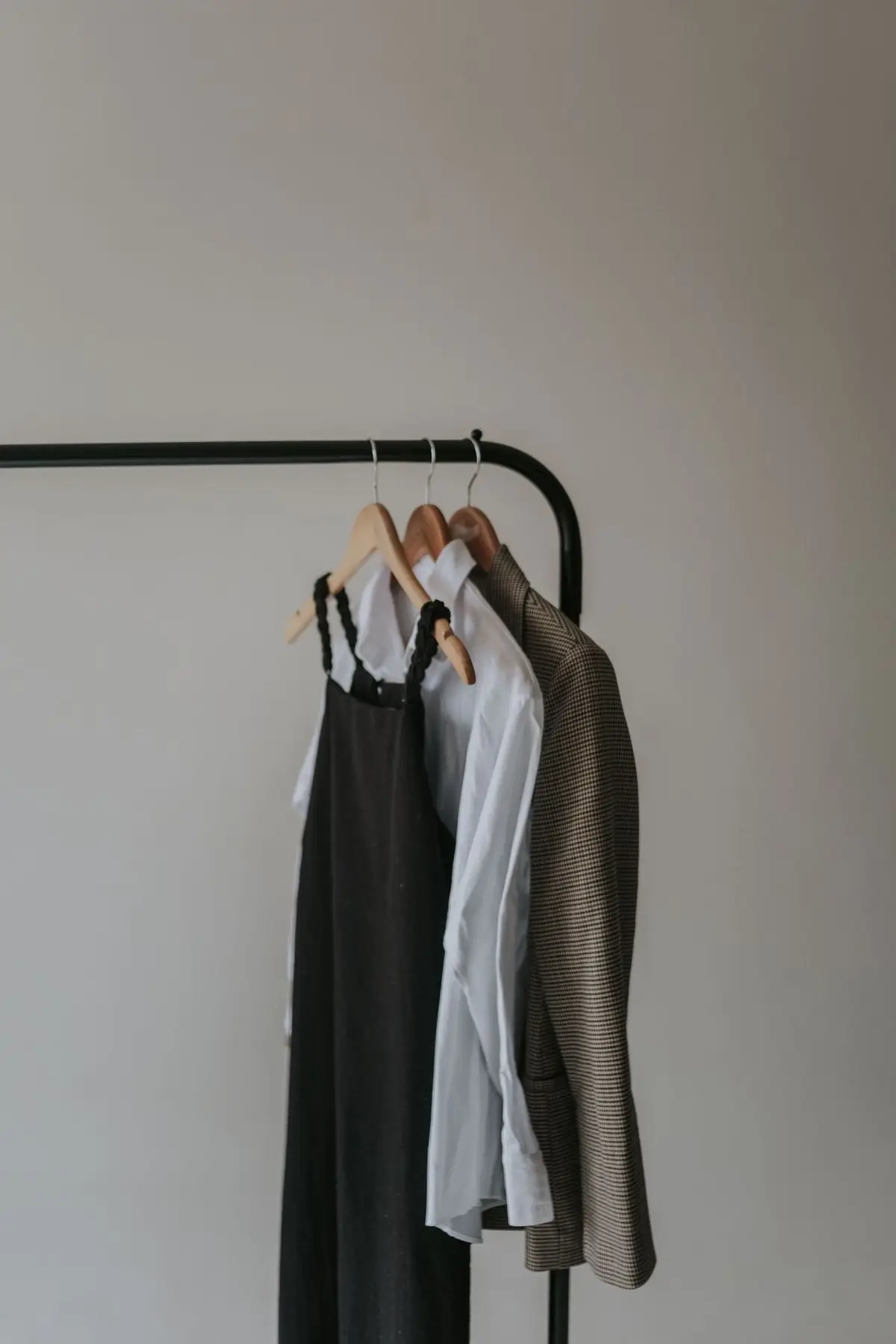
The space does real work. Pieces that aren’t pressed together keep their shape and need less ironing, and a packed rod holds damp air that can leave clothes smelling musty or spotted with mildew after a wet spell.
Leave an empty stretch at one end of the rod for clean laundry to land on. If that stretch disappears, the rod is full, and something has to go before anything new goes on.
Hang the pieces you wear most in the middle of the rod, where you can reach them without leaning. Special-event clothes go to the ends.
In a closet with doors at the front, the ends of the rod are often hard to reach. These reach-in closet organization ideas show how to use those corners without crowding the middle.
5. Fold a few stacks onto open shelves
Folded clothes on an open shelf are easy to see and easy to over-collect. Decide how many stacks each shelf holds before you fold a single thing.
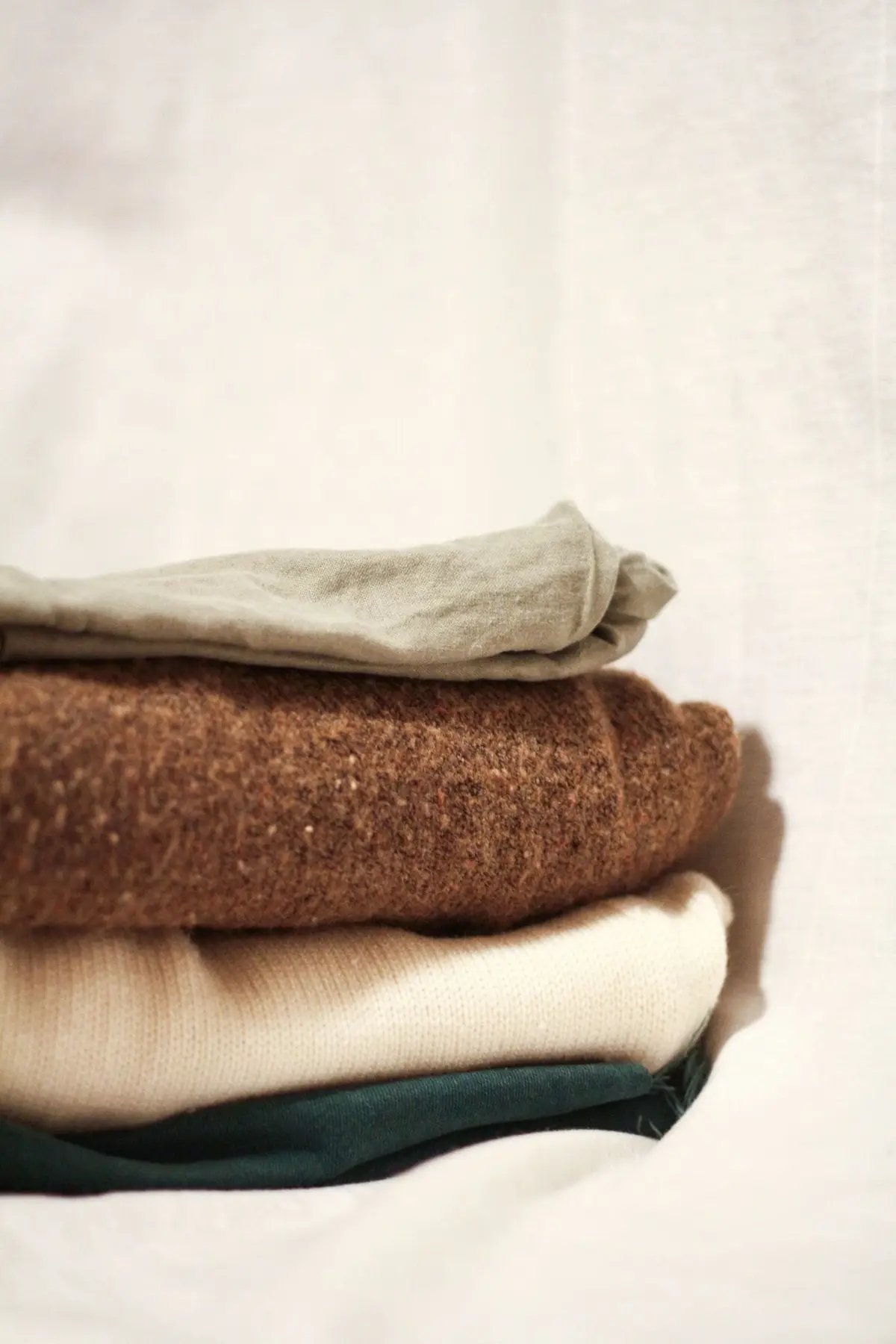
Measure the shelf width and divide it by the width of one folded sweater plus a hand’s width of space. That’s the number of stacks the shelf gets, and the gaps stay part of the plan.
Give each stack one kind of clothing, like knits, jeans or workout clothes, and keep it low enough to lift the top piece with one hand.
Put freshly washed pieces on the bottom of the stack and take from the top. Every piece gets its turn, and anything that never rises to the top in a season is worth a second look.
If a category won’t fit its share of the shelf, edit the category rather than adding a shelf. Open shelves are on show all day in a closet without doors, and these open closet organization ideas cover that kind of closet in detail.
6. Use plain bins only for small things
Bins hide things, and hidden clothes get forgotten. In a minimalist closet, a bin is the last resort, kept for pieces too small to hang or stack: tights, gloves, swim things, sunglasses and hair accessories.
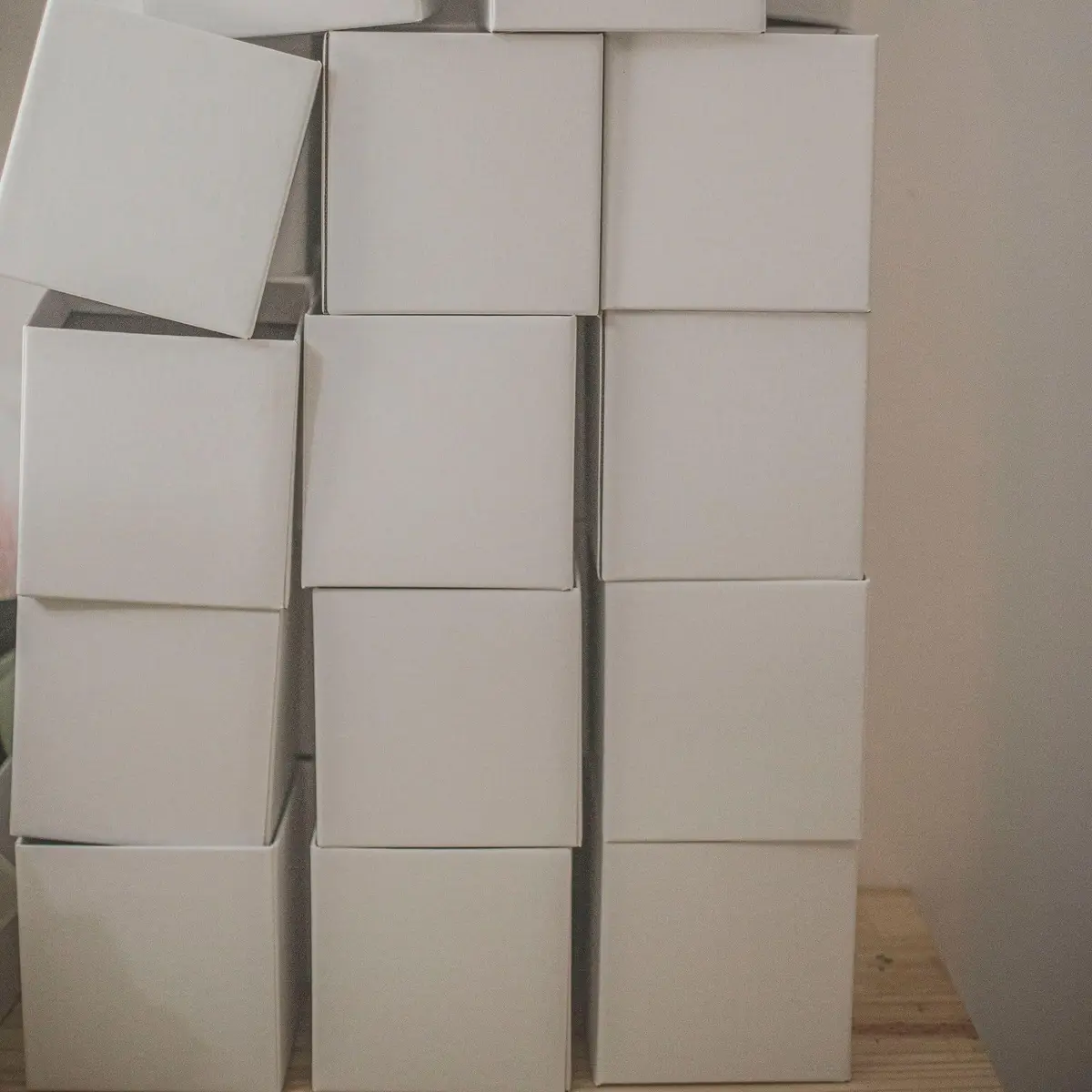
Size each bin to its category after the edit, not before. When the bin is full, the category is full, and the next new pair of gloves means an old pair goes.
Solid bins in a plain, light color keep the shelf quiet, since you don’t see the jumble inside. Put a small label on the inside of the lid or on the back, if you’d rather the front stay plain.
Measure the shelf before you buy, so the bins fit without overhang. The bin size calculator shows how many of a given size fit across it.
Socks and underwear may sit better in a dresser than a closet bin. These dresser organization ideas show how to split the drawers so small things stay sorted there.
7. Let one come in, one go out
A pared-down closet fills back up slowly, one new piece at a time. The simplest guard is a rule: when something new comes home, something already in the closet leaves.
Make the choice the same day the new piece arrives, while you can still compare them side by side. The piece that leaves goes straight into the donate basket.
The rule also changes how you shop. If nothing in the closet is ready to go, you probably don’t need the new piece.
Keep a short note on your phone of the gaps you’ve noticed: a warm coat that fits, plain black pants for work, rain boots. Buy from the list, and wait a few days on anything that isn’t on it.
Gifts and hand-me-downs count too. Thank the giver, keep what you’ll wear and pass the rest along kindly.
8. Plan outfits in sets
A minimalist closet works when its pieces go together. Fewer clothes can mean more outfits, as long as most pieces pair with several others.
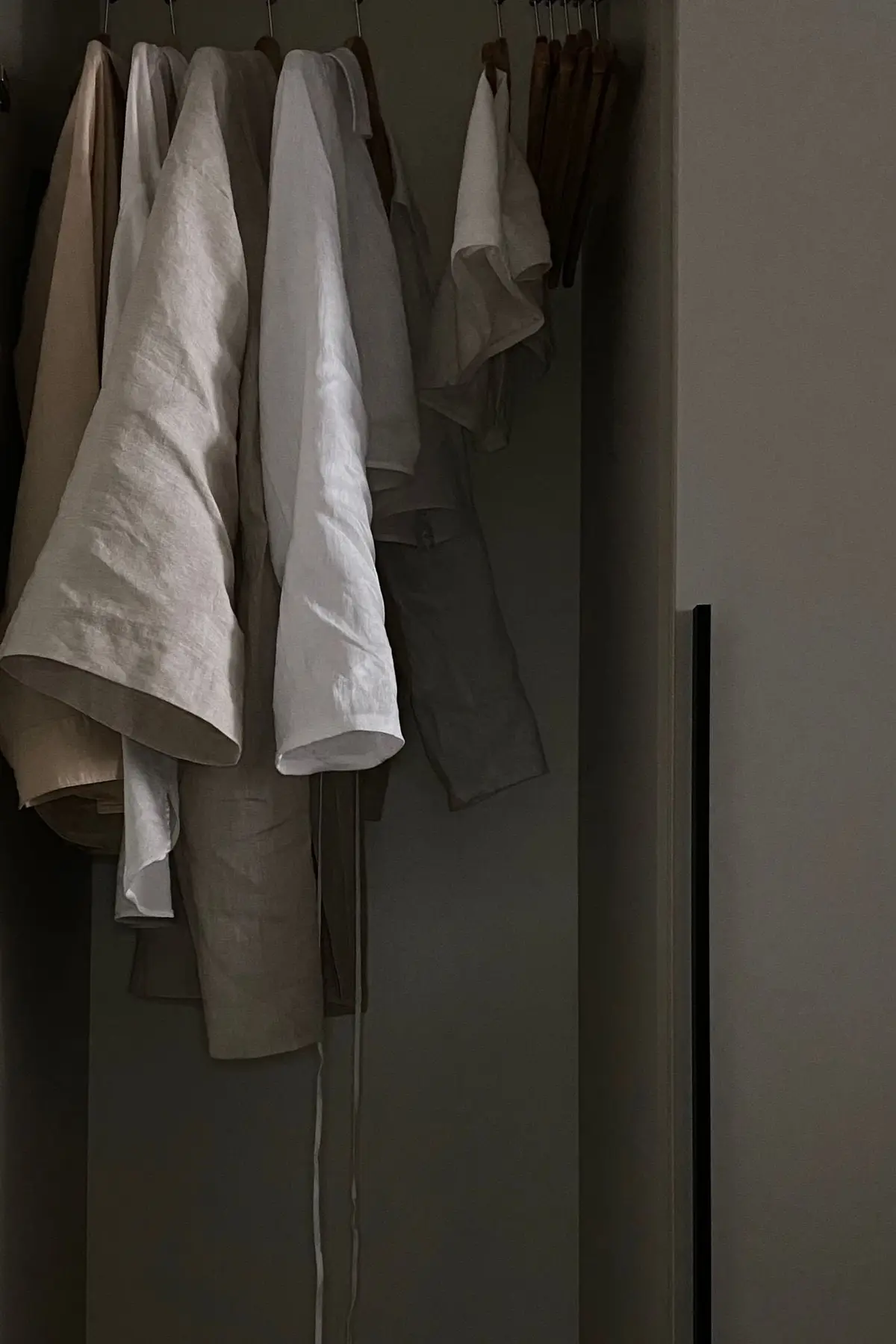
Pick a short palette: two or three base colors, like navy, gray or cream, and one or two colors you love as accents. Most new pieces should come from that palette.
Lay out the outfits you wear most and hang each one together on the rod, top beside bottom with the layer that goes over it. On busy mornings, you grab one set and go.
Write a short list of your go-to outfits and tape it inside the closet door. Any piece that doesn’t appear in a single outfit is a candidate for the maybe trial.
To see the palette at a glance, order the rod by color within each section. These tips to color code your closet show how to set it up so gaps and doubles stand out.
9. Keep one donate basket and a drop-off habit
A closet stays lean only if the things you let go actually leave the house. Give them one container and one routine.
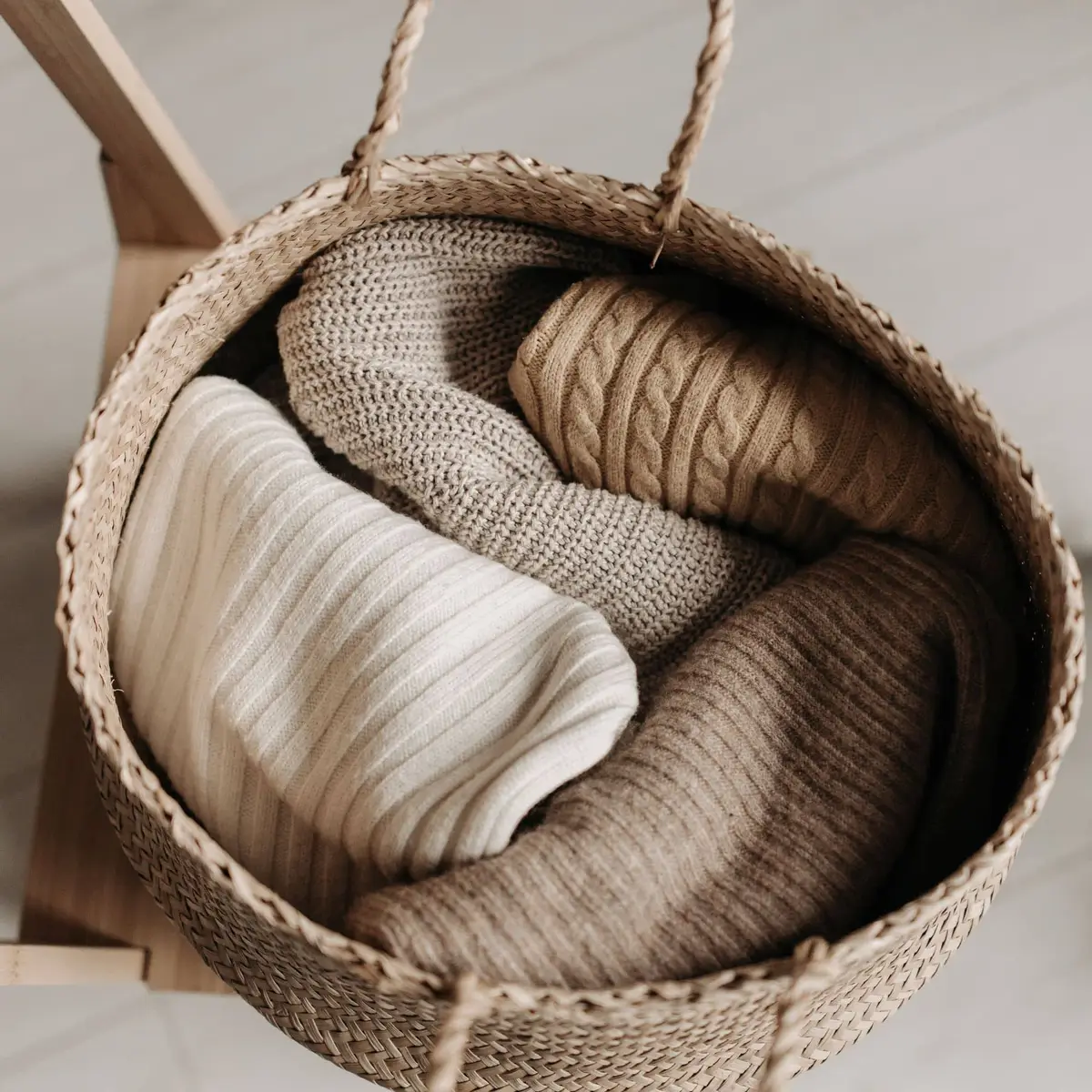
Set a single basket or bag on the closet floor or a low shelf. Everything leaving the closet goes in it: maybes that didn’t make it, the one-out pieces and anything you notice while getting dressed.
Decide in advance where the clothes will go, whether that’s a friend, a shelter, a school clothing closet or a donation center. Knowing the destination makes the drop-off easy.
When the basket is full, bag it up and put it in the car the same day. Drop it off on your next errand run, so it never sits in the hallway for weeks.
Wash or air out each piece first and pair up shoes, so everything is ready for its next owner. Keep just one basket, so letting go never becomes its own clutter.
10. Keep the closet floor clear
A clear floor makes a closet look twice as calm, and it’s the first place clutter settles. Give everything that drifts down there a home off the floor.
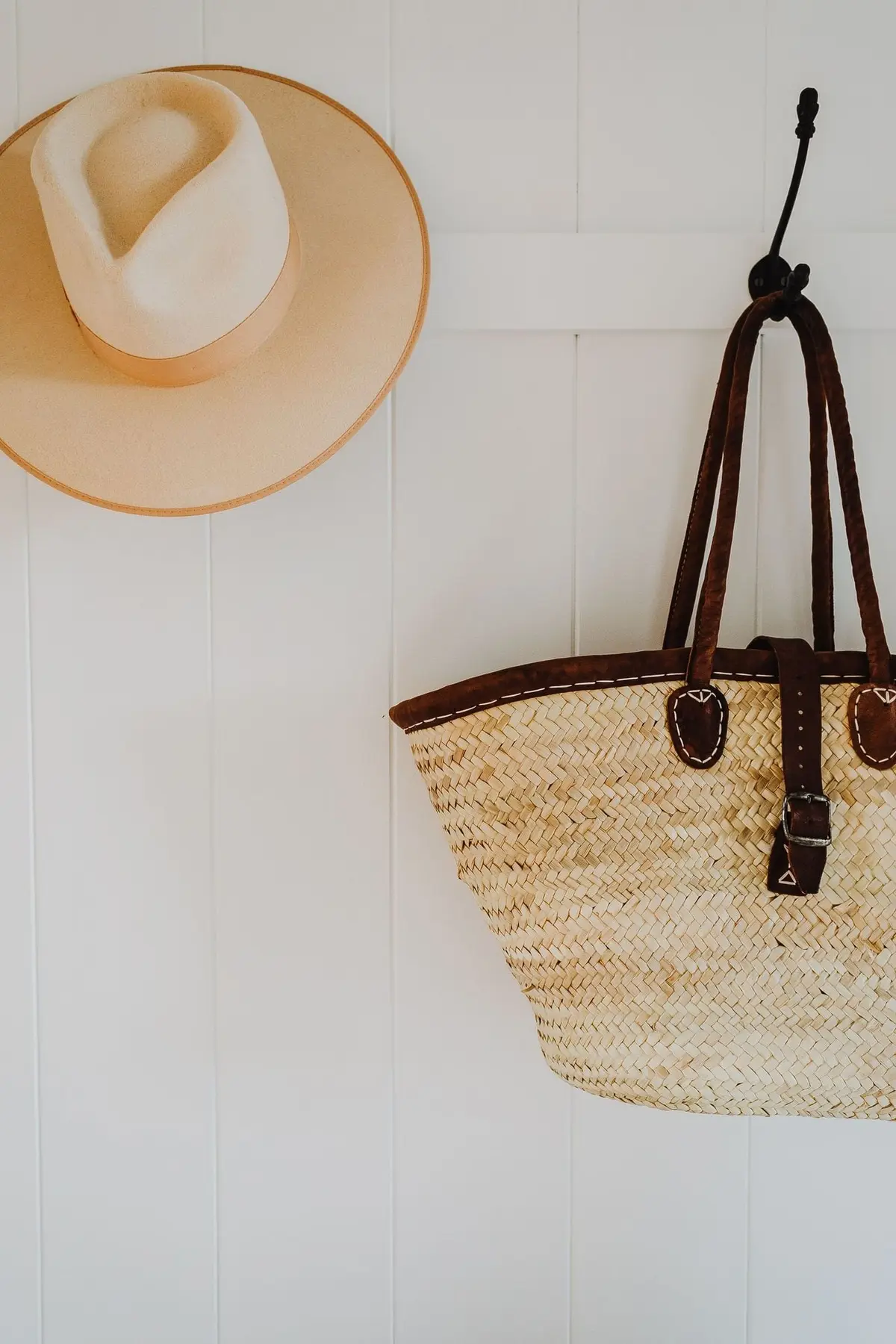
Put shoes on a shelf or a single low rack, one row only, and keep pairs you rarely wear in the space above the rod. Hang bags and hats on hooks on the side wall or the back of the door.
Keep the hamper outside the closet, or choose a slim one that tucks into a corner. A laundry pile on the closet floor hides everything behind it.
A clear floor is also quick to vacuum. Lint and hair left undisturbed in closets are where clothes moths breed, so a regular pass along the floor and baseboards protects your wool too.
When something lands on the floor, it’s a sign it has no home. Find it one, or let it go.
11. Reset the closet when the seasons change
A seasonal reset keeps a minimalist closet matched to how you live now. Twice a year, or at each change of season, give it an hour.
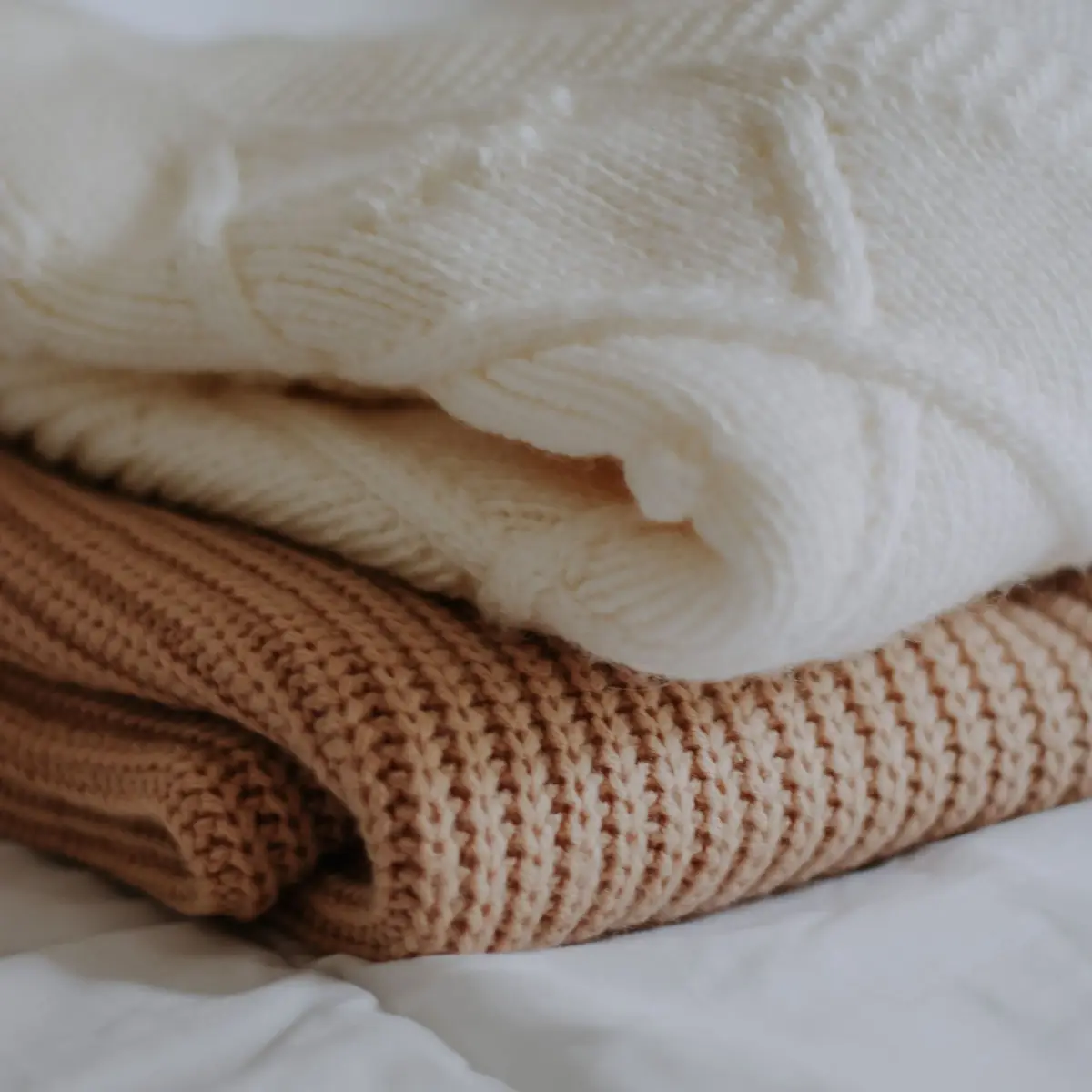
Empty one section at a time and wipe the shelf and rod. Look at what you didn’t wear last season and decide whether it stays, goes or joins the maybe trial.
Clean everything before it goes into storage. Clothes moths feed on wool and other animal fibers, so washed or dry-cleaned pieces in airtight containers are far better protected than ones put away after a few wears.
Store the off-season clothes out of the main closet if you can, so the rod only holds what you’ll wear now. Check on stored pieces once or twice during the season.
Then bring the new season’s clothes out, try them on and keep only what still fits and still feels right.
12. Give keepsake clothes a box of their own
Some clothes stay for their memories, not for wearing: a baby’s first outfit, a team jersey, a parent’s sweater. They deserve care, but they don’t belong on the everyday rod.
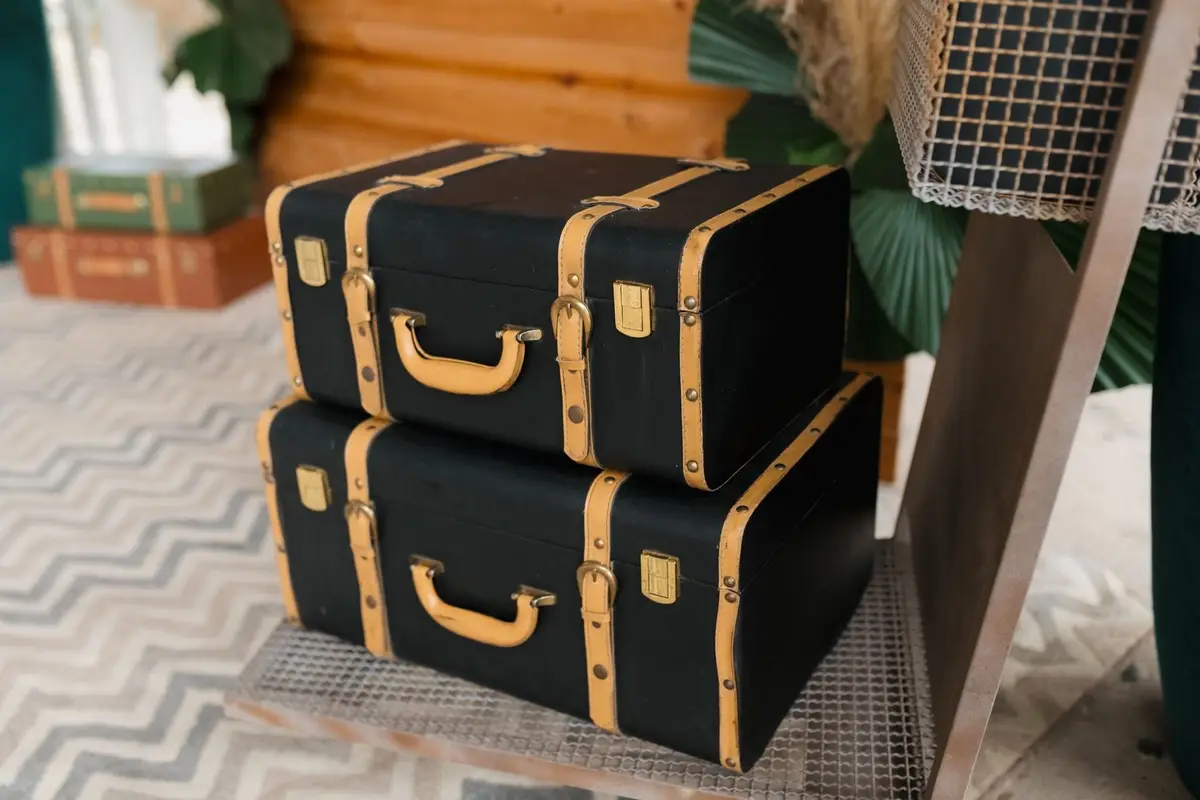
Choose one lidded box or trunk for keepsake clothes, and let its size set the limit. When it’s full, a new keepsake means choosing which one matters less.
Clean each piece before it goes in, and make sure it’s completely dry. Wrap delicate pieces in a clean cotton pillowcase or plain tissue, and keep the box sealed.
Store the box somewhere cool and dry outside the everyday closet, like a high shelf in another room or under a bed. Avoid damp basements and hot attics.
Open it once a year to air the pieces and check for damage. It’s also a good moment to ask whether each piece still means as much as it did.
Save this for later
Pin it to a board so it's there when you're ready to start.
Save to Pinterest(opens in a new tab)Make it easier
Free printable
30-Day Declutter Challenge Printable
A one-page declutter challenge for a month: one small spot to clear each day, easiest first, so the whole house gets a pass in short sessions.
Free tool
Enter the width, depth and height of a shelf, a drawer or a cube cubby, and see which standard bins and baskets fit, how many, and how they line up.
Frequently asked questions
How do I start a minimalist closet?
Pick one category, such as tops, and take every piece out at once. Keep what fits, feels good and goes with other things you own, set the unsure pieces aside for a short trial and pass the rest along, then move to the next category.
How many clothes should be in a minimalist closet?
There's no set number. A good guide is enough of each kind of clothing to get from one laundry day to the next, plus the pieces you need for work, weather and special events.
What do I do with clothes I'm not sure about?
Hang them together at one end of the rod with a dated note, and wear them during a short trial. Anything you skip by the end date, or wear and dislike, goes to the donate basket.
How do I keep a minimalist closet from filling back up?
Use one in, one out: when a new piece comes home, choose one to let go the same day. Keep a short note of what you truly need, and a seasonal reset will catch anything that slips through.