12 Wire Closet Organization Ideas for Builder-Grade Shelves
Line the shelves, add dividers made for wire, use the hanging spaces between brackets, add a second rod and hooks, and check the clips before loading up.

A wire closet works much better with a few small fixes: line the shelves so folded clothes sit flat, add dividers and baskets made for wire, use the hanging spaces between the brackets, and add hooks and a second rod where you need them. Then check the clips and keep the load within the shelf’s rating, so everything stays up.
These 12 ideas are for the builder-grade wire shelving found in so many bedrooms, hall closets and rentals, often behind a pair of sliding closet doors. Start with the liners and the hanging spaces, since every idea after them builds on a shelf that holds things flat and a rod that lets hangers move.
1. Line the shelves so stacks sit flat
Wire shelves have gaps between the wires, so folded clothes sink in, lean and tip over. Socks, belts and small things slip through, and soft sweaters come out with lines pressed into them.

A shelf liner fixes all three. Lay a sheet of clear or solid plastic liner made for wire shelves across each shelf, trim it with scissors so it sits just inside the edges, and the shelf becomes a flat surface.
Clear liners keep the light, open look and let light from the ceiling reach the shelves below. Solid liners hide whatever sits underneath and give the closet a calmer look.
If a liner slides around, hold it in place with a few small zip ties around the wires at the back corners. Snip the tails short, so they don’t snag sweaters.
Line the shelf above the rod first. It’s the one that holds the most folded clothes, and the one where things most often drop down onto the hanging clothes below.
2. Add shelf dividers made for wire shelves
Even on a lined shelf, tall stacks of folded clothes lean into each other until the whole row slumps. Dividers made for wire shelving clip or slide onto the wires and hold each stack upright.

Space the dividers to fit what you fold: wider for sweaters and jeans, narrower for tees and pajamas. Each section holds one kind of clothing, so you can pull a shirt from the middle of a stack without toppling the rest.
Keep stacks short enough that you can see the top item and lift it off without reaching. Two shorter stacks side by side stay tidier than one tall tower.
Dividers also stop folded clothes from sliding off the open ends of the shelf, which matters on a shelf that runs the full width of the closet with nothing to hold things in at the sides.
Put the clothes you wear most at the front edge near the closet opening, and the rest toward the far ends.
3. Put bins and baskets on the top shelf
The highest wire shelf is the right place for things you don’t use every day: spare bedding, off-season hats and scarves, swimsuits and keepsakes. Loose, they fall through the wires or tumble down; in a bin, they stay put.

Choose bins with solid bottoms, so nothing pokes through, and a handle or a cutout on the front, so you can pull them down easily. Lidded baskets keep dust off and stack neatly.
Measure the depth of the shelf and the space above it, then use the bin size calculator to see which bins fit side by side across the shelf.
Keep light things up high. The things you use often belong on lower shelves, about waist high, where they’re easy to reach.
To reach the top shelf, use a sturdy step stool with a bar to hold on to, and never stand on a chair. For more ways to sort what goes up there, these closet shelf organization ideas cover shelves of every kind.
4. Use the hanging spaces between the brackets
On many wire closet shelves, the hangers hang from the front lip of the shelf itself. The support brackets that hold the shelf up break that lip into sections, and hangers can’t slide past them.

That’s why clothes bunch up at the brackets while other stretches sit half empty. Instead of fighting it, treat each space between brackets as its own small section.
Give each section one category: work shirts in one, pants in the next, dresses where there’s room below for long hanging. When you need a shirt, you go straight to its section.
Leave a little room in every section, so hangers move freely and clothes don’t wrinkle. If one section is always packed, move a category to an emptier one rather than forcing more hangers in.
Matching hangers help here too, since they hang at the same height and take up the same width. A shelf that has a separate rod under it lets hangers slide the whole way, so if yours has one, use it for the clothes you flip through most.
5. Add a second rod with a hanging rod extender
Shirts, skirts, folded pants and kids’ clothes are short, so the space under them is often wasted. A hanging rod extender hooks over the existing rod or the shelf’s hanging lip and adds a second rod below it.

Put short clothes on both rods and you fit about twice as much in the same width, with no drilling. It’s a good fit for a rental, since it lifts off when you move.
Hang the extender in a section between brackets, so its hooks sit securely and don’t slide toward a bracket. Check that its hooks fit around the wire or rod snugly before you load it.
Keep long clothes like dresses, coats and long pants in a section of their own, with a single rod. A closet that’s all double rods leaves nowhere for anything long to hang straight.
Don’t overload the extender. Its weight hangs from the shelf above, so heavy coats on both levels add up quickly.
6. Clip hooks onto the wire
Wire shelving is easy to add hooks to, since anything with a curved end can grip the wires. Clip-on hooks and simple S-hooks hang from the front edge, the side or the underside of a shelf.

Use them for things that usually end up in a heap: bags, belts, hats, scarves and the robe you wear every morning. Each one hangs where you can see it.
A row of S-hooks along the end of a shelf turns a dead corner into storage for totes and purses. Hooks under the shelf hold lightweight things like caps or a laundry bag.
Keep heavy bags on the hooks closest to the wall brackets, where the shelf is strongest. Spread the weight out instead of hanging everything from one spot.
These closet organization hacks have more cheap ways to use what you already have, and the purse organization ideas cover the bags themselves.
7. Hang baskets over and under the shelf
The gap between a wire shelf and the clothes hanging below it often goes unused. Baskets made to hook over a shelf slide onto the wires and hang underneath, adding a drawer-like spot without any tools.
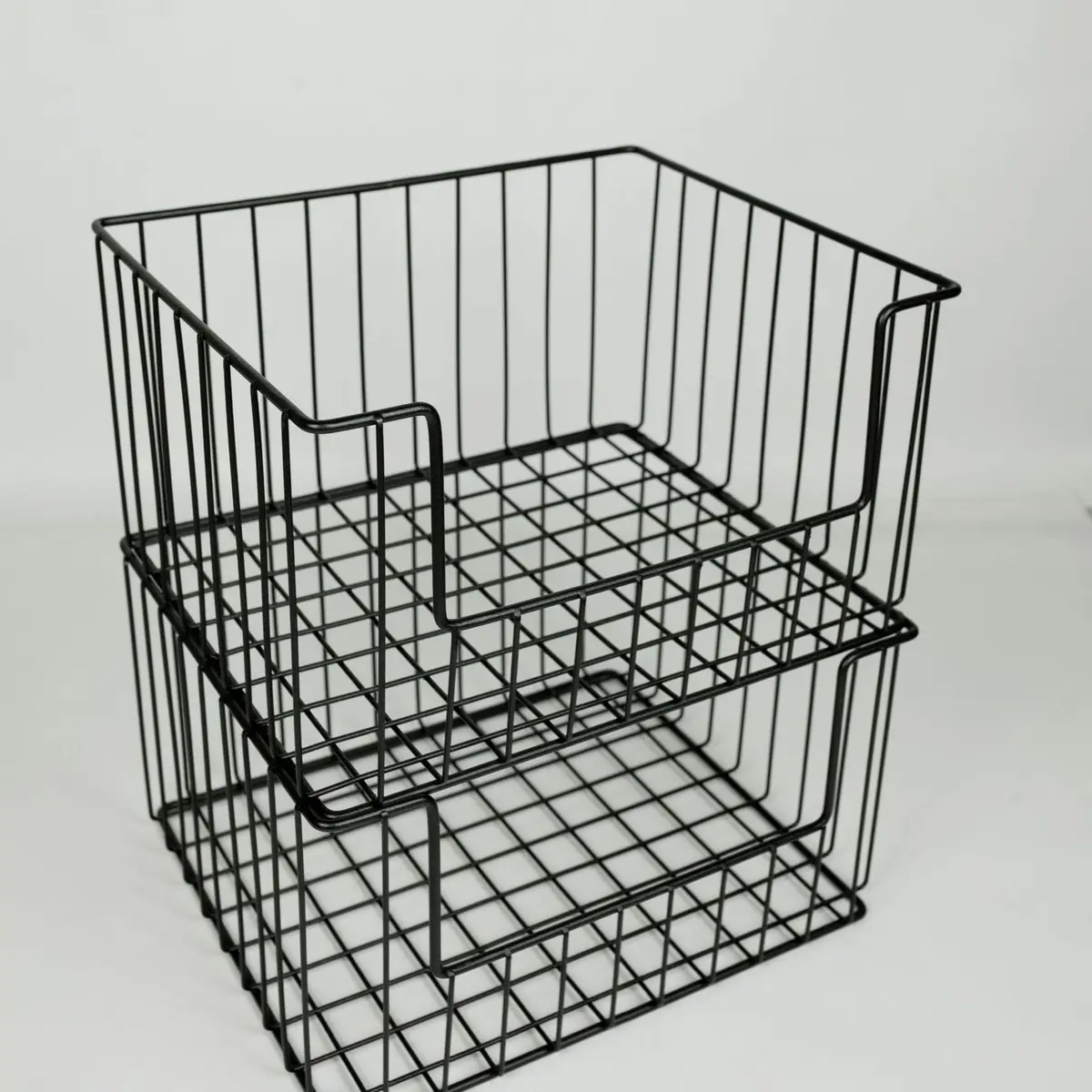
Use them for small, light things you grab often: rolled tees, socks, tank tops, scarves or a stack of folded leggings. Everything stays at eye level instead of buried on the top shelf.
Slide the basket on in a section where it won’t block hangers, and check that the clothes below still hang freely. A basket that crushes the shoulders of a shirt is in the wrong spot.
Wire baskets that stack on a shelf or on the closet floor work the same way, with an open front you can reach into without lifting anything off.
Keep these baskets light. They hang from the shelf’s wires, so books, shoes and heavy bins belong somewhere sturdier.
8. Put a shoe rack under the hanging clothes
In a wire closet, the floor under the hanging clothes collects shoes in a pile. A low shoe rack under the shortest clothes keeps pairs together and off the floor, so you can vacuum underneath.
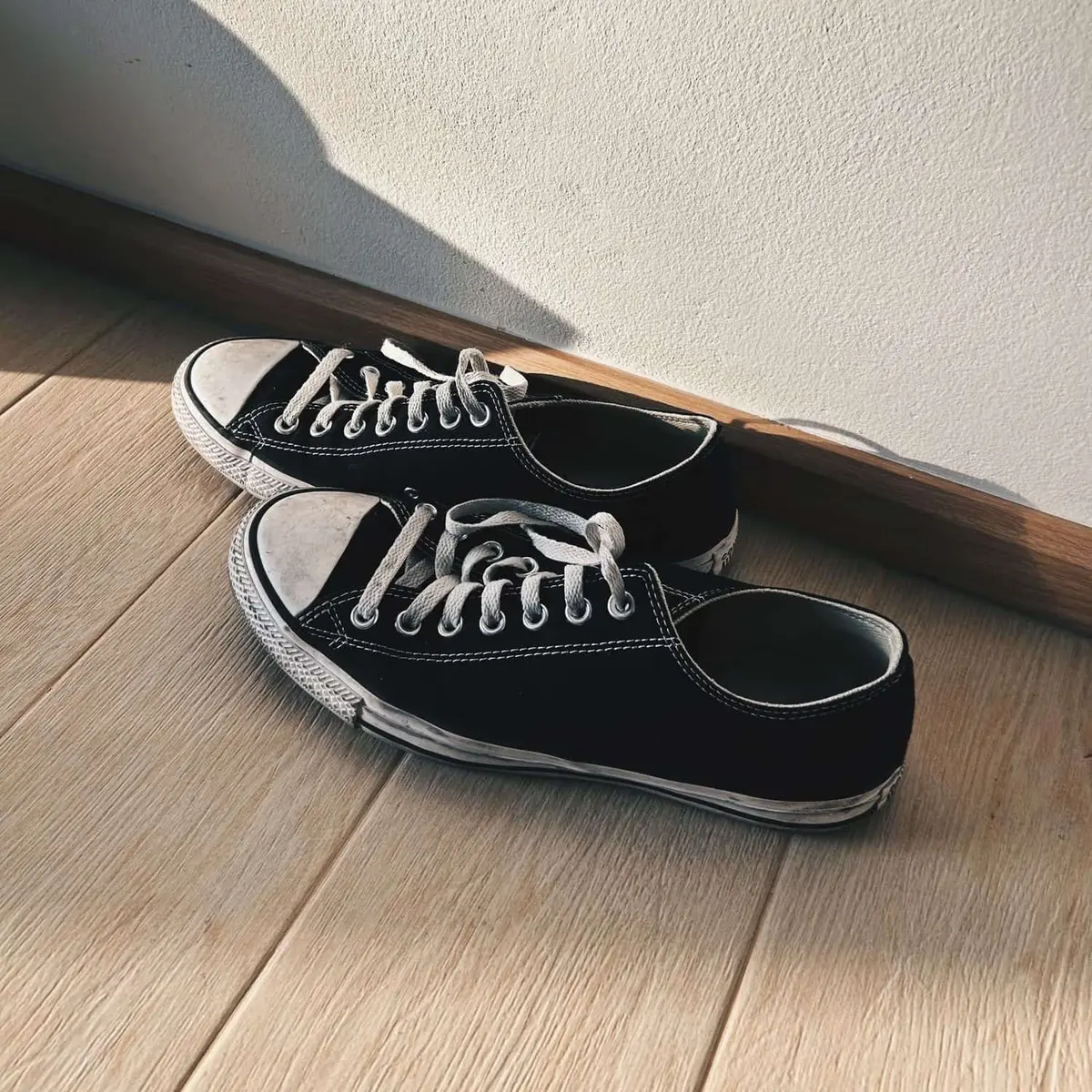
Pick a rack that fits the section below your double rods or short clothes. Measure the width between the side walls and the height to the bottom of the clothes, so nothing drags across the shoes.
Keep the pairs you wear most on the top tier, where they’re easy to grab. Dress shoes and off-season pairs go lower or toward the back.
Boots and tall shoes can stand on the floor in the long hanging section, where there’s room above them. A washable tray on the bottom tier catches dirt from wet or muddy pairs.
These shoe storage ideas have more ways to fit boots, sneakers and sandals into a closet, and the floor of a wire closet is one of the easiest places to start.
9. Label the shelf edge and the bins
Wire shelves are easy to label, since a tag can hang straight from the front wires. Labels tell everyone in the house where things go, which matters most when someone else puts the laundry away.

Tie a plain tag to the front edge of each section with a short string or a twist tie, or use clip-on label holders made for wire shelving. Write the category in large, clear letters.
Label the bins on the top shelf too, on the side that faces out. A bin you can identify from the floor is a bin you don’t have to pull down to check.
Keep labels simple: tees, sweaters, jeans, gym clothes, hats. If kids share the closet, add a small picture next to the word.
Update the labels when the closet changes. A label that says swimsuits on a shelf of winter scarves is worse than no label at all.
10. Check the support clips and don’t overload the shelves
Wire shelving is held up by clips along the back wall and brackets or braces at the front. Over time, clips can pull loose and shelves start to sag, especially when they hold more than they were made for.

Once or twice a year, empty each shelf and look at it closely. Check that every clip is tight against the wall, that the braces sit square and that the shelf is level from end to end.
Follow the maker’s weight rating and installation guide for your shelving. Spread heavy things along the shelf, keep them close to the wall and put the heaviest ones on the lowest shelves.
If a clip has pulled out of the drywall, fix it before you load the shelf again, using the hardware the shelving was made for. A shelf that’s pulling away will only get worse.
Watch for things that add weight slowly: stacks of jeans, boxes of papers and bins of shoes are heavier than they look.
11. Add a wire drawer unit
Folded clothes like socks, underwear and workout gear are easier to find in drawers than in stacks. A wire drawer unit adds them right inside the closet, under a shelf or below short hanging clothes.
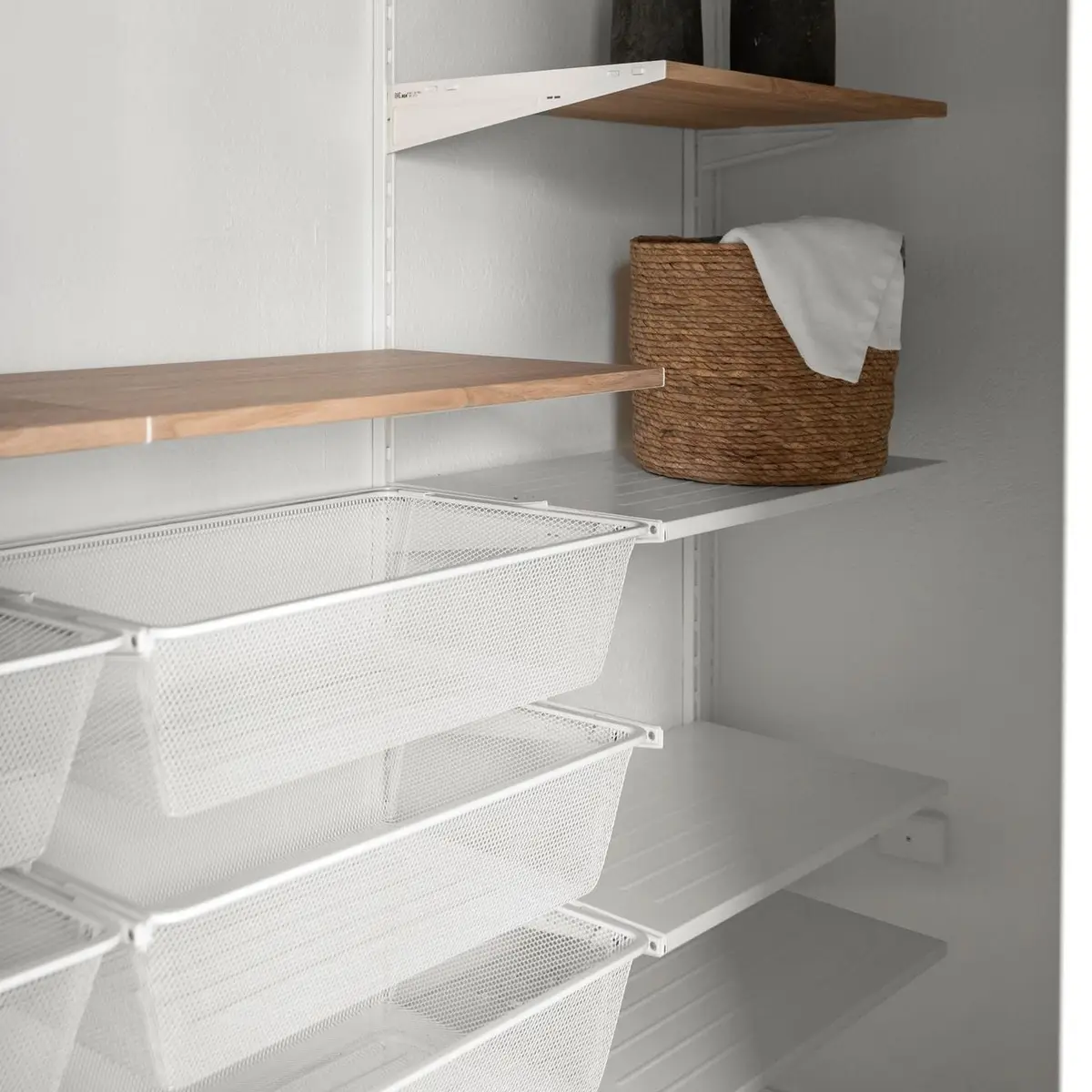
Mesh drawers let you see what’s inside without opening them, and they let air move around clothes. Look for a unit that matches the depth of your shelves, so the front lines up.
Measure the width and height of the space first, including the bottom of any clothes hanging above it. The drawers need room to slide all the way out.
Use a drawer per category, and keep the ones you open every day at waist height. Liners in the bottom of each drawer stop small things from slipping through the mesh.
Any tall unit with drawers needs to be anchored to the wall so it can’t tip over, which matters most in a home with kids who climb. Use the hardware made for it.
12. Paint or cover the wire for a finished look
Builder-grade wire shelving works, but it can look bare. You can soften the look without replacing anything, by covering the wire or painting it.
The quickest fix is covering: solid liners on every shelf, matching fabric bins on top and a row of the same hangers on the rod. The wire disappears behind them.
To paint, take the shelves down, clean and dry them, and use a paint made for metal. Paint outdoors or with plenty of fresh air, follow the label directions, and let the shelves dry fully before they go back up.
Painting the wall behind the shelving a soft color is another option. It makes the white wire look intentional, and it’s a small job in a reach-in closet.
Whichever you choose, clear the closet first. The declutter checklist walks you through what to keep before anything goes back on the shelves.
Save this for later
Pin it to a board so it's there when you're ready to start.
Save to Pinterest(opens in a new tab)Make it easier
Free printable
A room-by-room declutter checklist that tells you exactly what to look for, with four piles to sort into so nothing ends up back on the shelf.
Free tool
Enter the width, depth and height of a shelf, a drawer or a cube cubby, and see which standard bins and baskets fit, how many, and how they line up.
Frequently asked questions
How do I keep clothes from falling through wire closet shelves?
Cover each shelf with a liner cut to fit, so folded clothes sit flat and small things can't slip between the wires. A clear plastic liner keeps the look light, while a solid liner also stops the wire lines that show up on soft sweaters.
Why do my hangers bunch up on wire shelving?
On many wire shelves, the hangers hang from the front lip of the shelf and can't slide past the support brackets. Treat each space between brackets as its own section, give each one a category, and leave a little room so hangers move freely.
How much weight can a wire closet shelf hold?
It depends on the shelf, its length and how it's fastened to the wall, so check the maker's weight rating and installation guide. Spread heavy things along the shelf, keep them close to the wall and low down, and fix any clip that's pulling away before you load the shelf again.
Can I paint wire closet shelves?
Yes, with a paint made for metal. Take the shelves down, clean and dry them, paint them outdoors or with plenty of fresh air, follow the label, and let them dry fully before anything goes back on.