12 Kids Closet Organization Ideas That Help Kids Dress Themselves
Set up a closet your child can use: a lower rod, picture labels on bins, a week of outfits, an outgrown bin, a low shoe rack and a safe step stool.

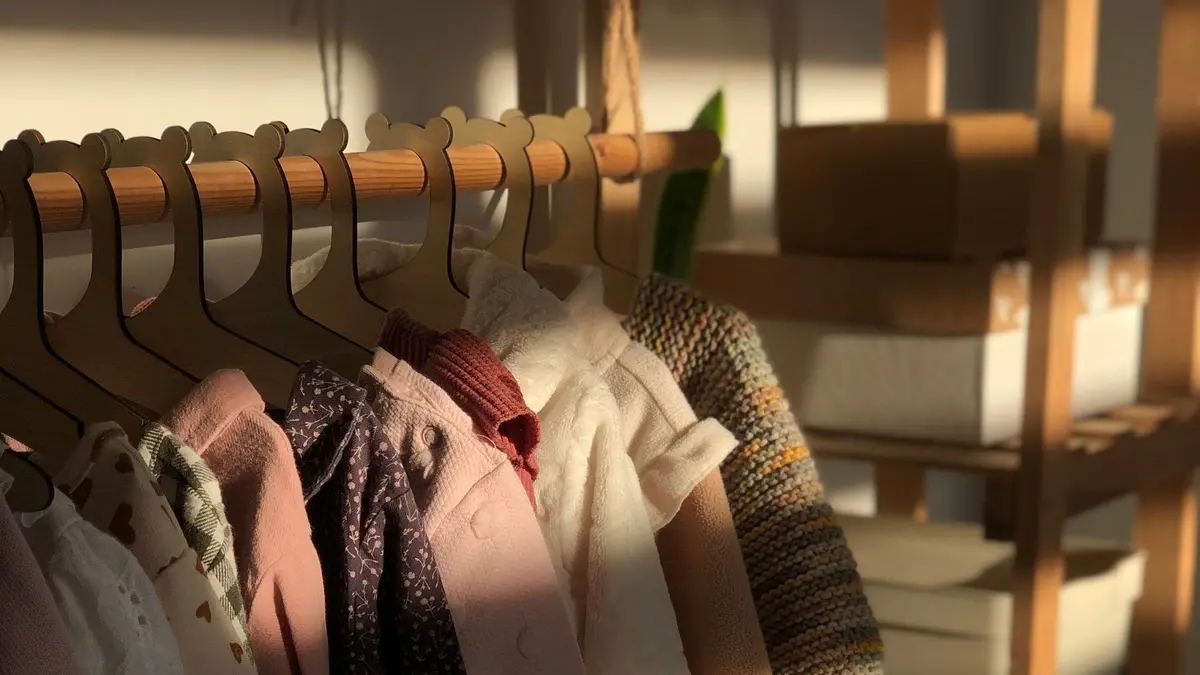
Kids closet organization works when the closet fits the child, not the grown-up: lower the rod, put everyday clothes and shoes at their height, and label bins with pictures they can match. Keep outgrown clothes moving out, and store off-season clothes and keepsakes up high, where only an adult reaches.
These 12 ideas work in a standard reach-in closet in a kid’s bedroom or a shared room. Start with the rod and the labels, since every idea after them depends on clothes your child can see and reach without help.
1. Lower the rod to their reach
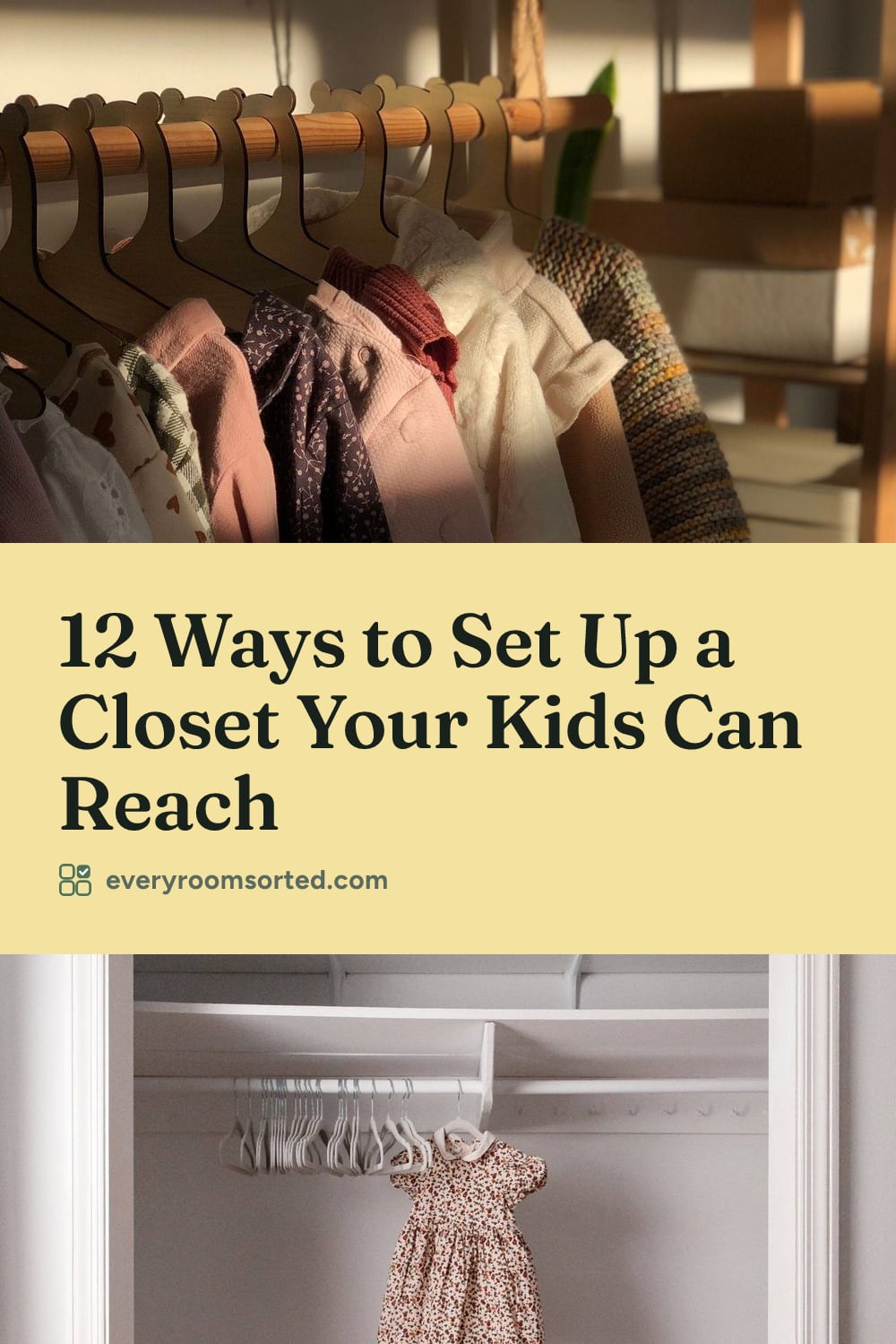
Most closet rods are hung for adults, so a young child stands under a row of sleeves they can’t touch. Bring the hanging space down to their level, and they can choose and put away their own clothes.
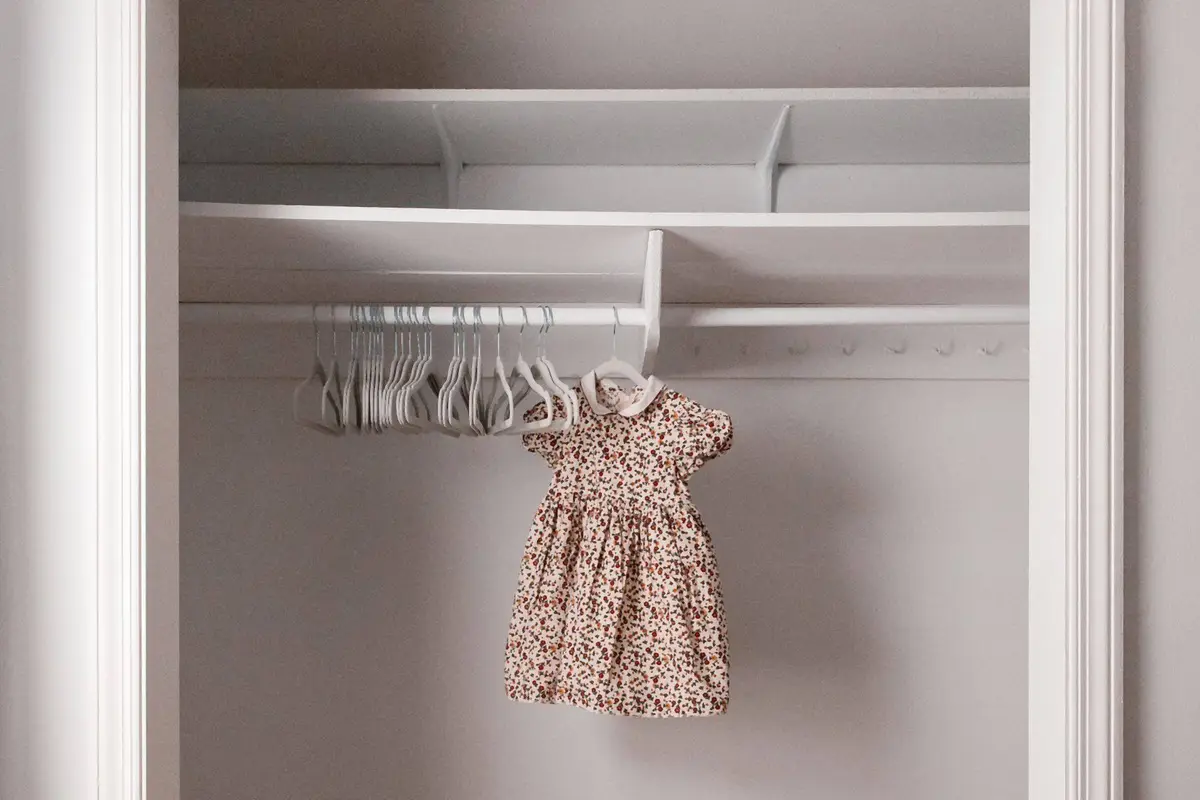
The simplest fix is a second rod that hooks over the first and hangs lower, with no tools and no holes in the wall. A tension rod between the side walls works too, and it moves up as your child grows.
Hang the low rod at about your child’s shoulder height, so they can lift a hanger off without stretching. Measure them standing in the closet, then check the height again each season.
Keep the original rod for longer pieces and things a grown-up manages, like dress clothes and a winter coat. Everyday shirts, pants and dresses go on the low rod.
Use kid-size hangers, since adult hangers stretch small necklines and poke out past the sleeves. Pick a style with notches or a nonslip finish, so clothes don’t slide off when a small hand tugs.
2. Put picture labels on every bin
Young kids can’t read a label that says socks, but they can match a picture. A small photo or drawing on the front of each bin shows them where things live and where they go back.
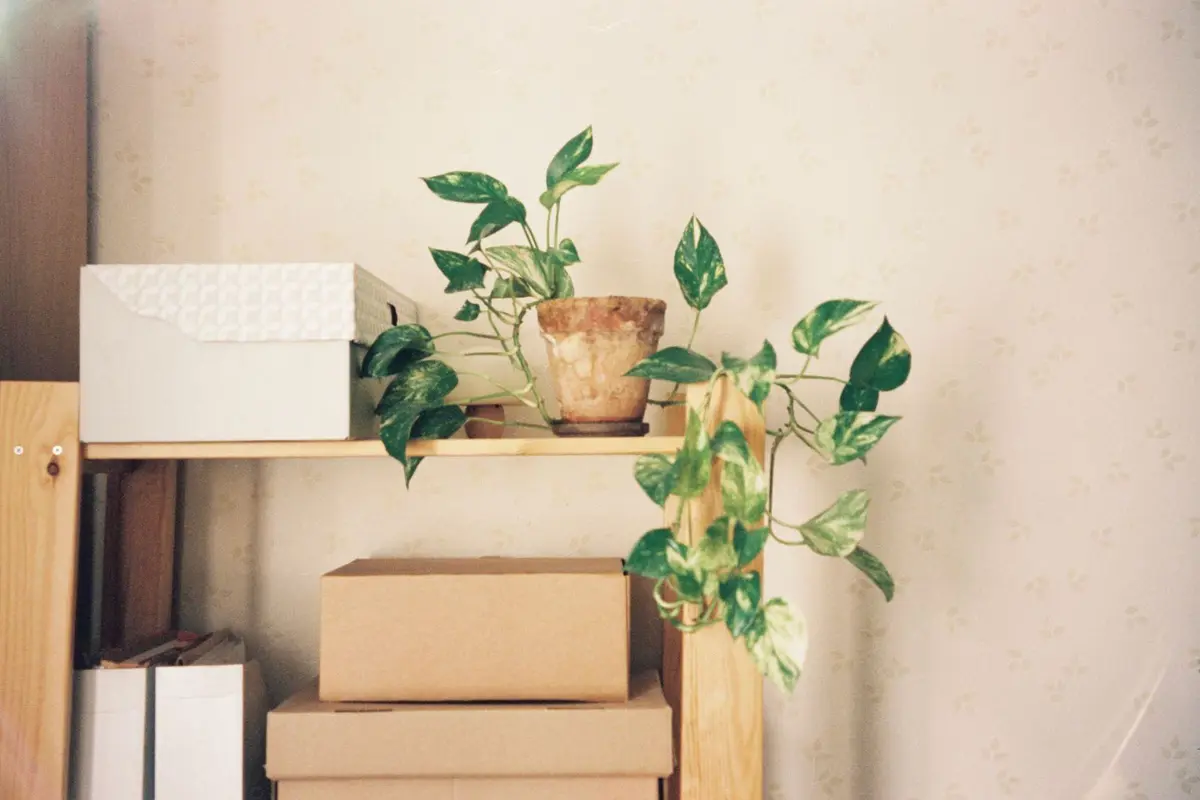
Give each bin one kind of thing: socks, underwear, pajamas, swimsuits, or hats and mittens. Take a photo of the real items, print it small and tape it to the front, or let your child draw the pictures.
Write the word under the picture too. Early readers start to connect the two, and older kids can switch to word labels when they’re ready.
Choose open bins without lids for anything used every day, since a lid is one more step a small child will skip. Keep the bins on low shelves or the closet floor, where they can pull one out with both hands.
Before you buy bins, measure the width, depth and height of each shelf. The bin and basket size calculator shows which bin sizes fit and how many line up side by side, so nothing hangs over the edge.
3. Hang a week of outfits in order
Mornings go faster when the choosing happens once a week instead of every day. Put together an outfit for each school day and keep each one together, so your child just takes the next one in line.
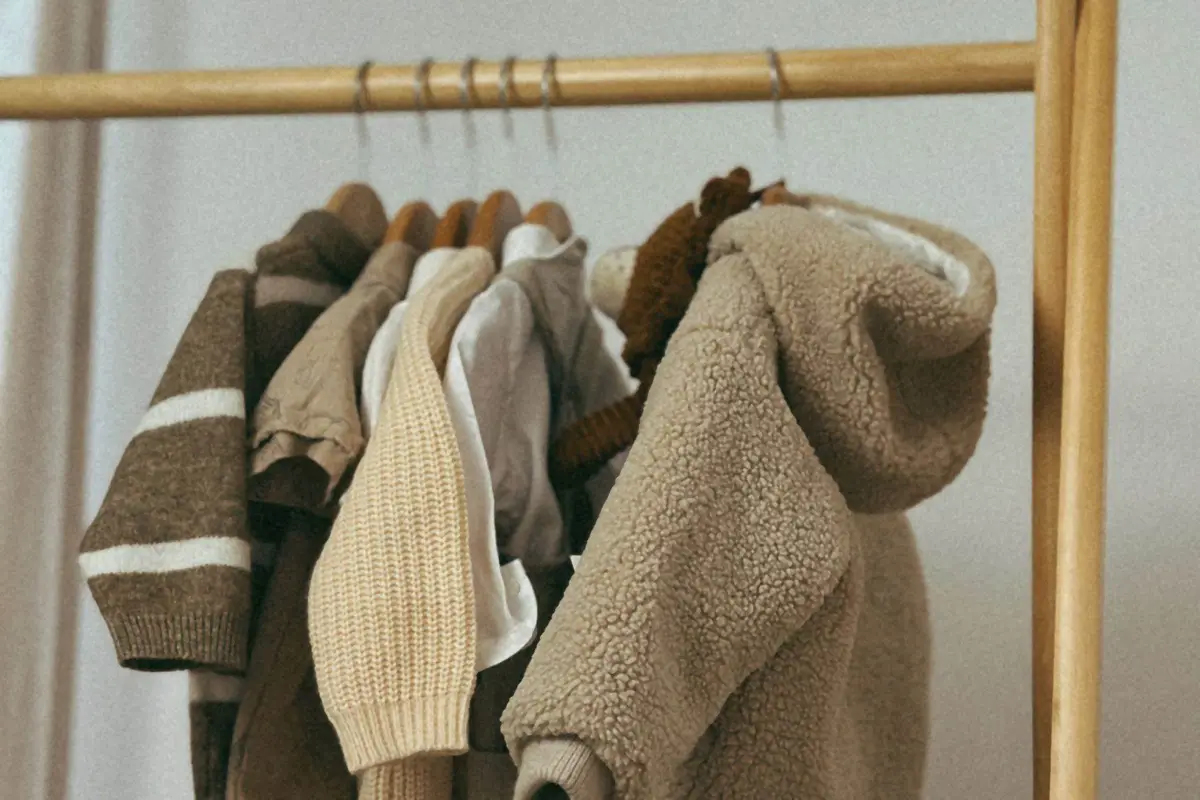
A hanging closet organizer with fabric shelves hooks over the rod and gives each day its own cubby. Fold a full outfit into each one, socks and underwear included, and label the shelves with the days of the week.
If there’s no room for an organizer, use one end of the low rod. Put the top and bottom on one hanger, clip a small bag of socks to the hook, and line the hangers up in order.
Plan the week together on the weekend while you put laundry away. Kids are more likely to wear what they helped choose, and any back-and-forth about clothes moves to a calmer time.
Leave room for the weather. Keep a sweater or a light jacket on a nearby hook, so a chilly morning doesn’t undo the whole plan.
4. Keep an outgrown bin and a grow-into bin
Kids outgrow clothes faster than any closet can keep up, and the outgrown pieces tend to stay on the rod. Two bins solve it: one for clothes that are now too small and one for clothes that are still too big.
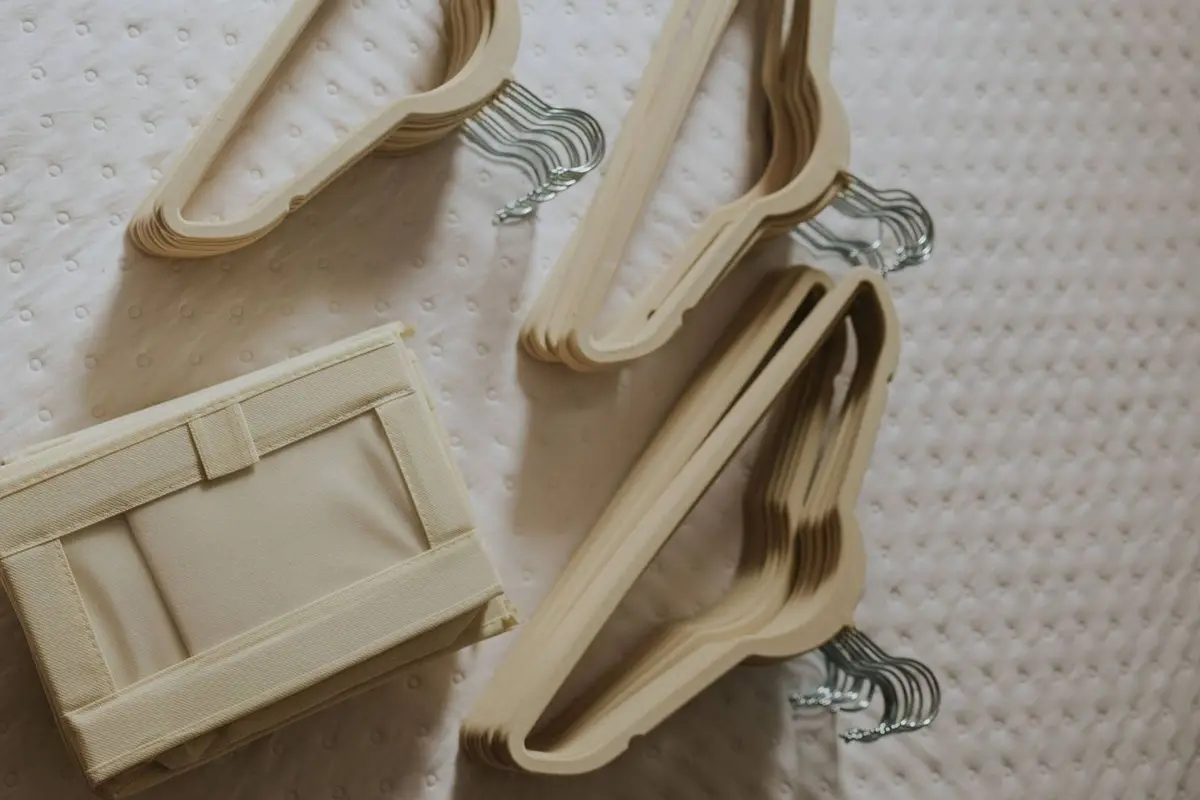
Keep the outgrown bin on the closet floor, where you can reach it while you help your child dress. The moment something is tight or short, it goes straight in, before it gets washed and put back.
When the bin is full, sort it into four piles: keep for a younger sibling, pass on to a friend, donate and toss. Label any clothes you keep with the size, and store them outside the everyday closet.
The grow-into bin holds hand-me-downs and gifts that are a size or two ahead. Write the size on the front, and check it at each change of season, so nothing waits in the bin until it’s already too small.
Keep both bins away from the daily clothes. The rod and the low bins should only hold what fits right now.
5. Line up shoes on a low rack
Shoes kicked into a pile on the closet floor are the reason nobody can find the other sneaker. A low rack or a single shelf on the floor gives every pair a spot your child can see.
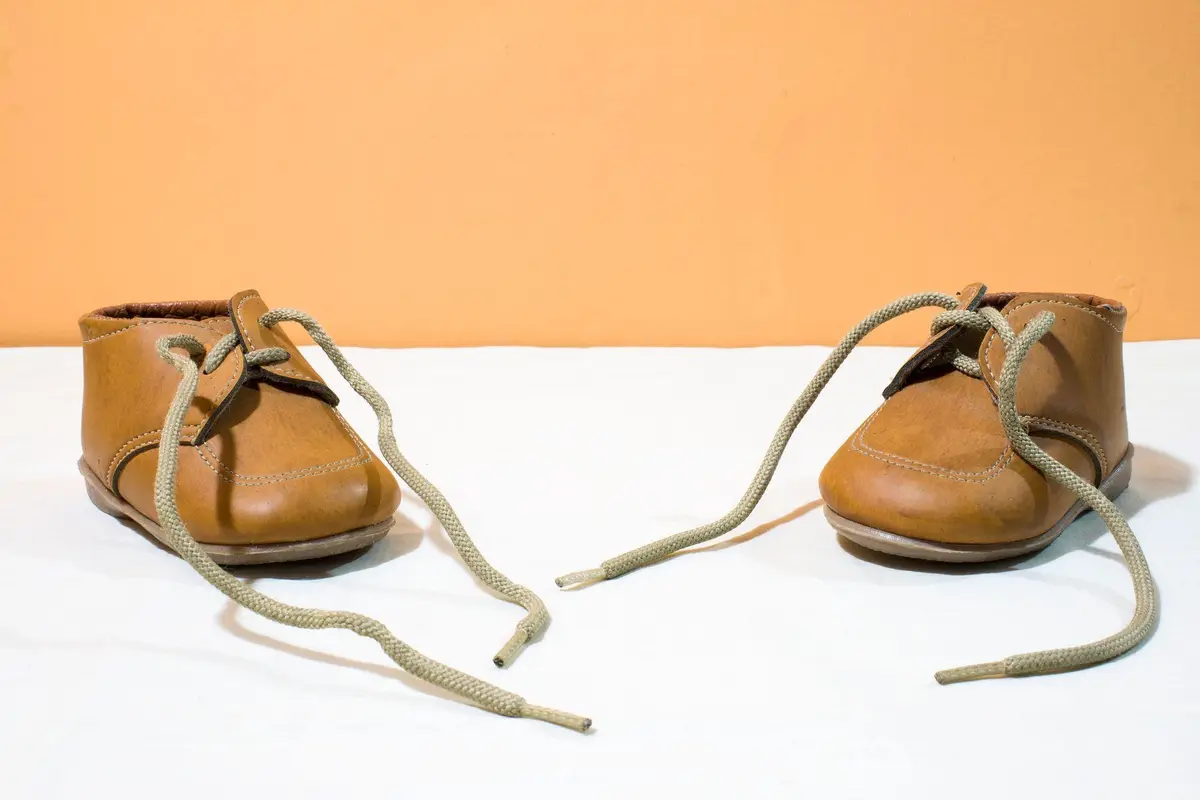
Keep the rack to one or two tiers, so a small child can reach the back and put shoes away without help. Each pair sits side by side, toes in or heels out, whichever is easier for them to grab.
Only the shoes in rotation belong here: school shoes, play sneakers, and sandals or boots for the season. Dress shoes and off-season pairs can wait in a bin higher up.
Set a washable tray or mat under rain boots and muddy sneakers, so the dirt stays off the closet floor and the clothes hanging above.
If the floor is already full, an over-the-door organizer with clear pockets holds small shoes well, as long as the door still closes. For more ways to store the whole family’s pairs, these shoe storage ideas cover entryways, cubbies and boots.
6. Split school clothes from play clothes
Kids don’t always know which clothes are for school and which are fine for paint, mud and the backyard. Give each kind its own place in the closet, and the morning choice gets simpler.
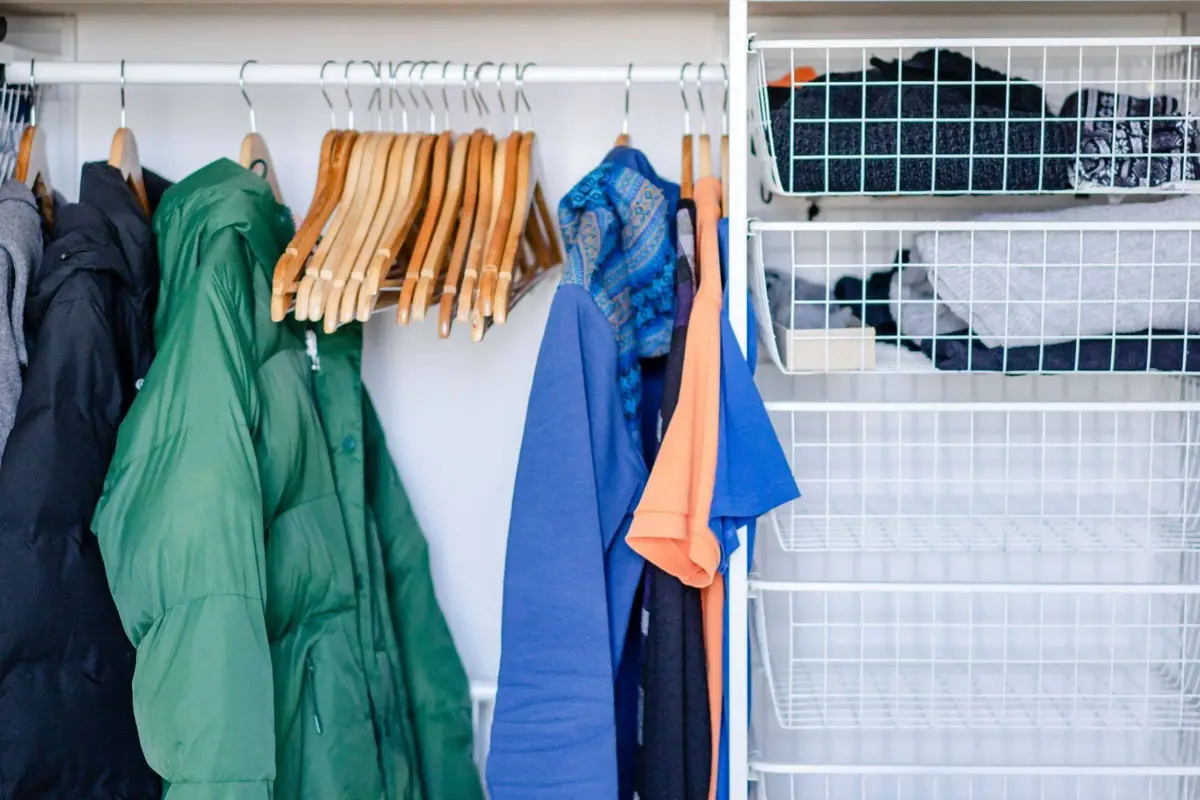
Hang school clothes on the low rod, where they stay neat. Fold play clothes into drawers or bins below, since they don’t need to stay wrinkle-free.
A small chest of drawers or a drawer unit inside the closet works well for play clothes, pajamas and underwear. Anchor any dresser or shelf unit to the wall, even a short one, so it can’t tip over if a child pulls on it or climbs it.
Store heavier things, like jeans and sweatshirts, in the lower drawers, and keep lighter pieces in the top ones. Don’t leave toys on top of the unit, where they tempt a child to climb up and reach.
Picture labels on the drawers help here too: a paint splash for play, a backpack for school. Your child learns the system without another rule to remember.
7. Put the hamper inside the closet
Dirty clothes land on the floor when the hamper lives in another room. Put one right in the closet, near the spot where your child gets dressed, and the trip from the floor to the hamper gets very short.
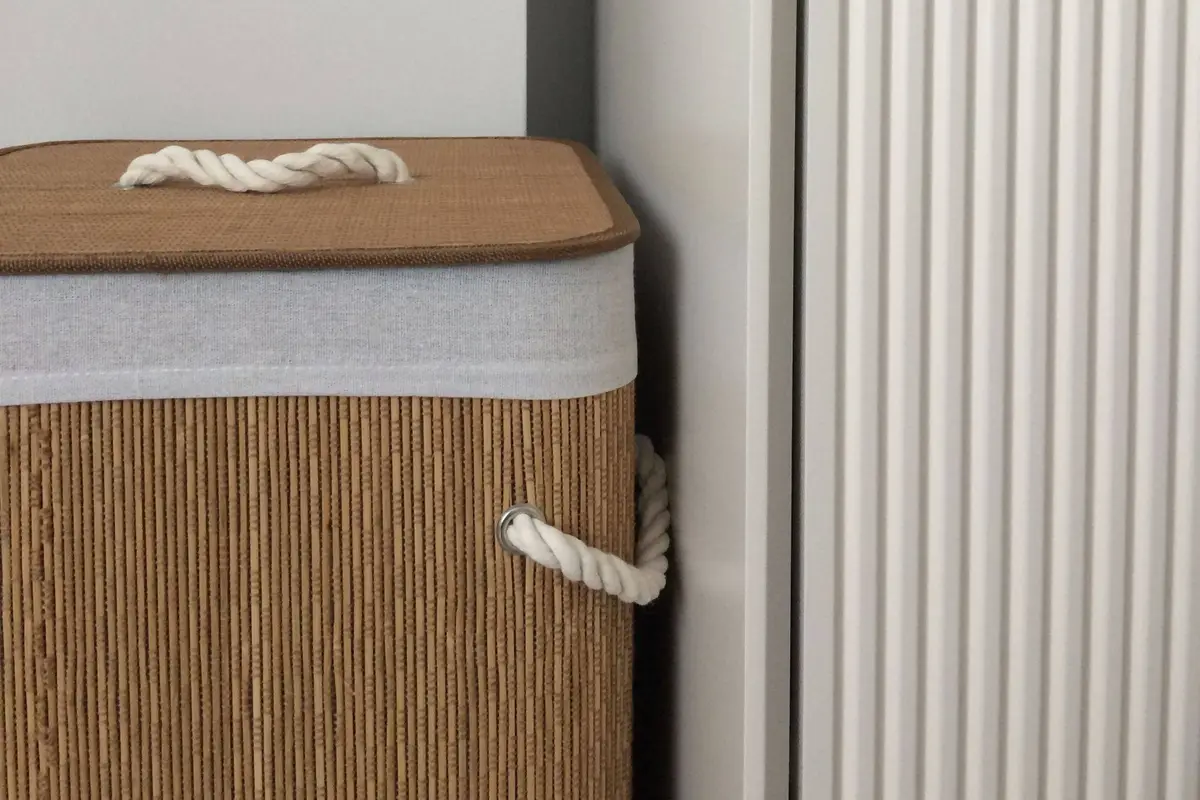
Choose a hamper they can use on their own: light enough to drag to the laundry room, with handles they can grip. A lid keeps the closet looking tidy, but little kids use an open hamper or a lid that flips back easily far more often.
Measure the floor space before you buy, so the hamper doesn’t block the door or the shoe rack. A tall, narrow hamper fits beside the hanging clothes, and a short, wide one slides under the low rod.
Two hampers, one for lights and one for darks, turn sorting into a small job kids can do. A colored tag on each one makes the rule easy to follow.
Make emptying the hamper one of their weekly jobs. The kids chore chart gives each child a printable spot for laundry day and the rest of their routine.
8. Add hooks for tomorrow’s outfit
A row of hooks inside the closet, at your child’s height, gives tomorrow’s outfit a home. Hang it up the night before, and the morning starts with one decision already made.
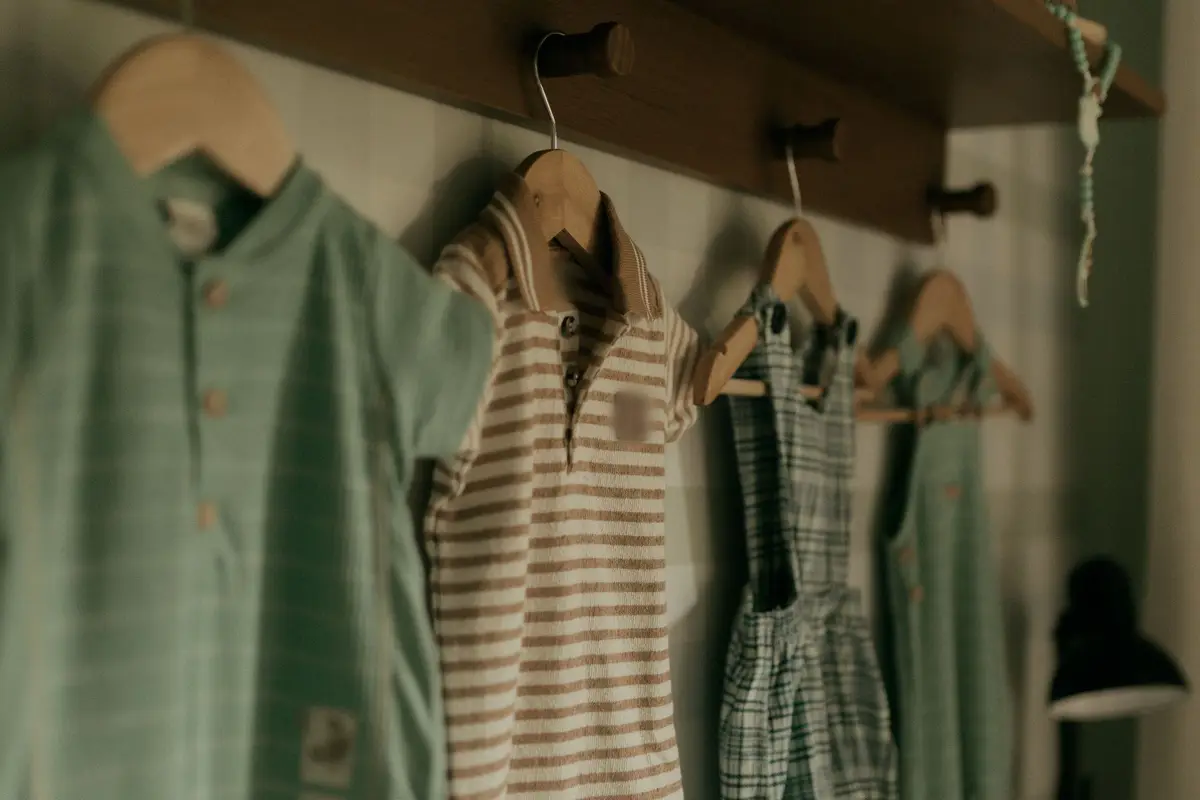
A peg rail or a few sturdy hooks on the side wall of the closet works well. In a shared closet, give each child a hook of their own, so outfits don’t get mixed up.
Hang the whole outfit on one hanger, then hang the hanger on the hook. Add a small cloth bag for socks, hair clips or a belt, so nothing goes missing at the last minute.
Choose rounded pegs or hooks rather than sharp ones, since kids move fast in a small closet. Screw them into a stud or use wall anchors, and keep the load to clothes and light bags.
Hooks also catch the clothes that get worn again before a wash, like a sweatshirt or pajamas. They stay off the floor and away from the clean clothes on the rod.
9. Save the top shelf for off-season clothes and keepsakes
The shelf above the rod is too high for kids, which makes it the right spot for things they don’t need every day. Off-season clothes, special-occasion outfits and keepsakes can all wait up there.
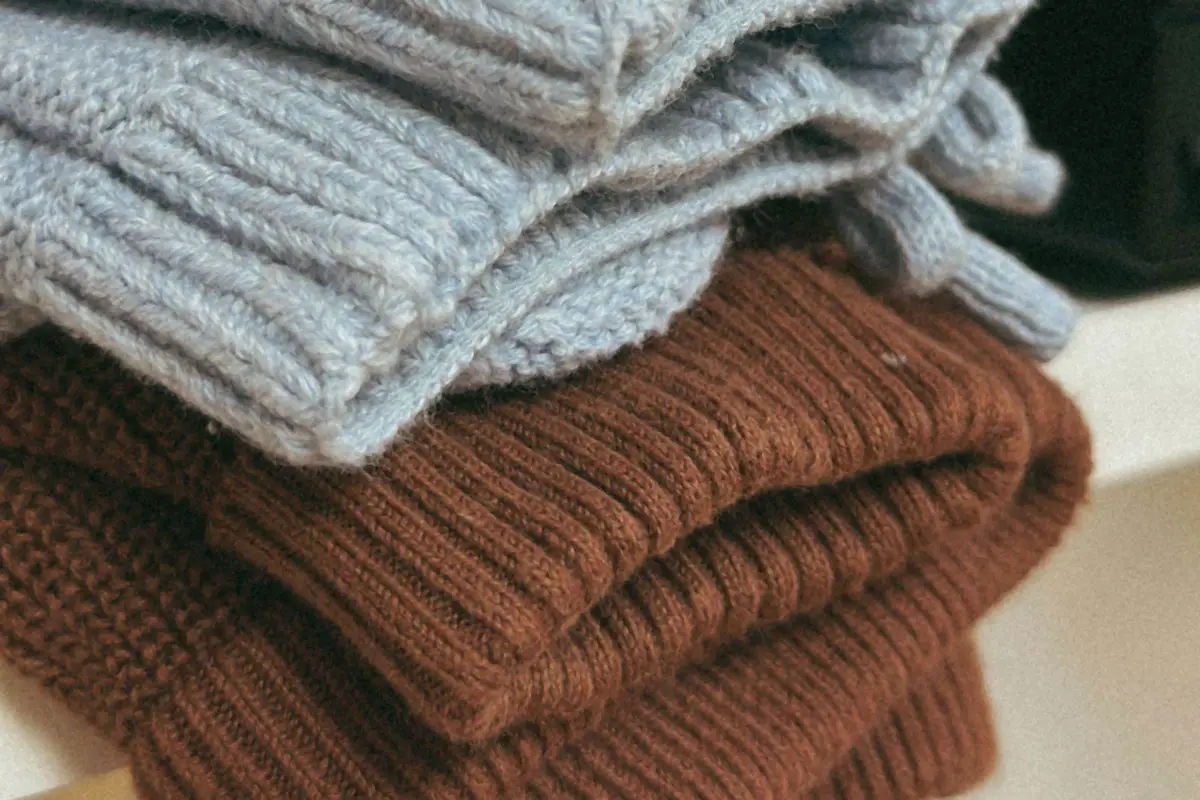
Fold off-season clothes into lidded bins or fabric boxes, and label each one with the season and the size. When the weather turns, swap the bins and pull anything that no longer fits.
Keepsakes need a home too: a first pair of shoes, a favorite blanket, artwork you can’t part with. Give each child one box, and when it’s full, choose together what stays.
Keep only light things on the top shelf. Heavier items belong on lower shelves, where they’re easier to lift and won’t fall on anyone.
Don’t store anything up there that your child wants, like toys or treats, or the shelves turn into a ladder. If the space above the rod is still crowded, these small closet organization ideas cover shelf risers, bins and other ways to use it.
10. Keep a sturdy step stool for grown-up jobs
A step stool belongs near the closet for the jobs that need a little height. Grown-ups use it to reach the top shelf, and older kids can use it to reach the main rod instead of climbing the shelves.
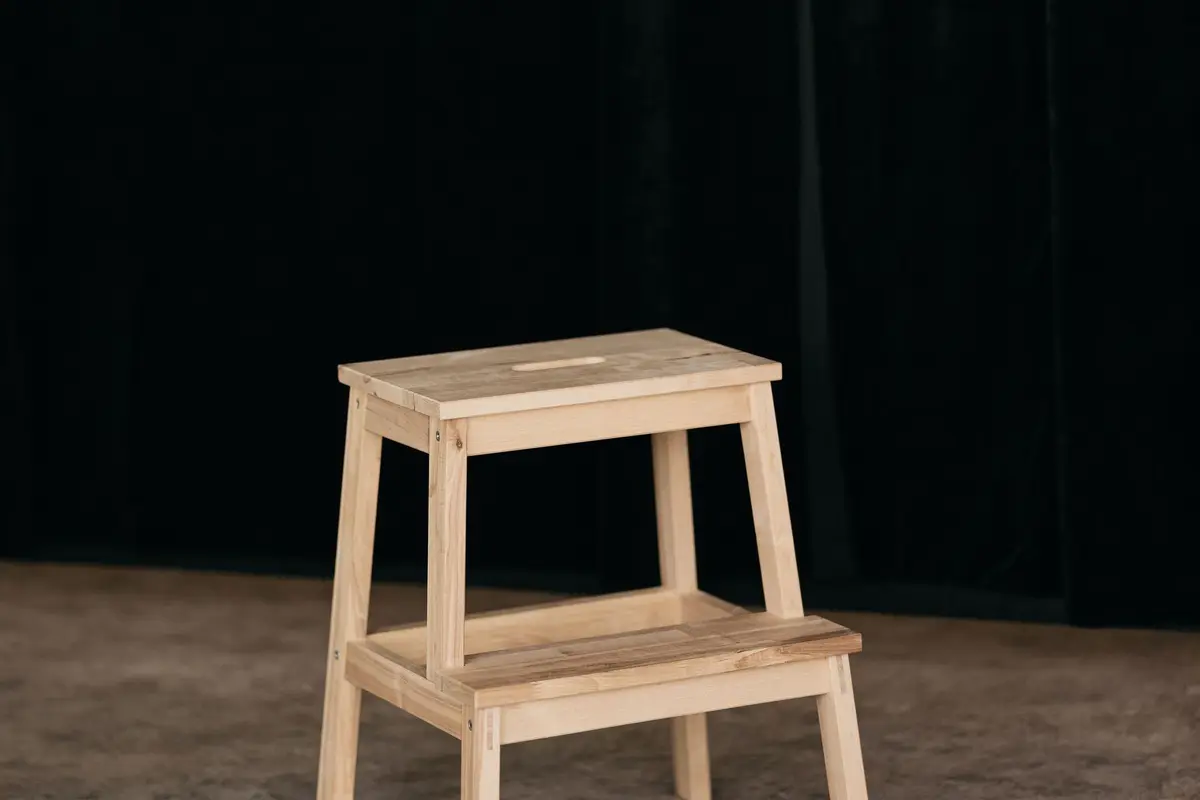
Look for a wide base, nonslip feet and a top step that doesn’t wobble. A stool with a handhold is easy to carry and easy to tuck beside the shoe rack.
Teach the closet rule early: feet go on the stool or the floor, never on shelves, drawers or the rod. Open drawers make a tempting ladder, and a dresser that isn’t anchored can tip over.
Put the stool back in the same spot every time, so nobody grabs a chair instead. A chair seat is less steady than a step, and a rolling desk chair is worse.
For small children, the stool is something they use with you nearby. Stay close until they can step up and down with confidence, then let them reach their own hangers.
11. Give dress-up clothes their own bin
Costumes, capes, tutus and play hats spread across a kid’s room in no time. Give them one bin of their own, low in the closet, and dress-up turns into a game with a clear cleanup.
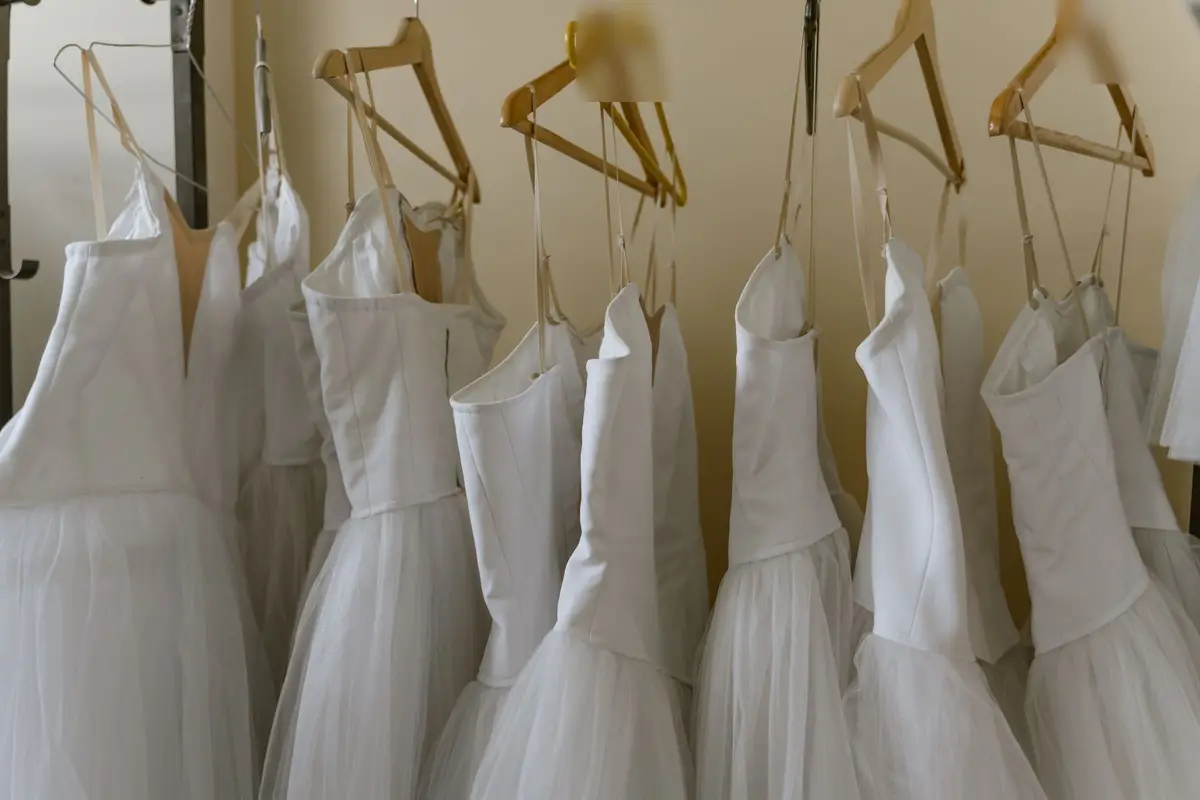
A wide, open basket or toy bin is the easiest for kids to dig through and fill back up. Open bins are simpler for small kids to use than a chest with a heavy lid.
Hang the few pieces that wrinkle or crush, like a tulle skirt or a long cape, on a low hook or at the end of the low rod. Everything else, from scarves to crowns, can go straight in the bin.
Keep the collection to what fits. When the bin overflows, have your child choose a few things to pass on, which keeps the favorites easy to find.
Wash dress-up clothes now and then, since they get worn over everyday clothes and dragged across the floor. A mesh laundry bag keeps small pieces together in the wash. For toys, books and backpacks outside the closet, these kids organization hacks cover the rest of the room.
12. Do a monthly closet check together
A kid’s closet changes every month: something gets too short, a new gift arrives, a shirt gets a stain that won’t come out. A quick closet check with your child keeps the whole system working.
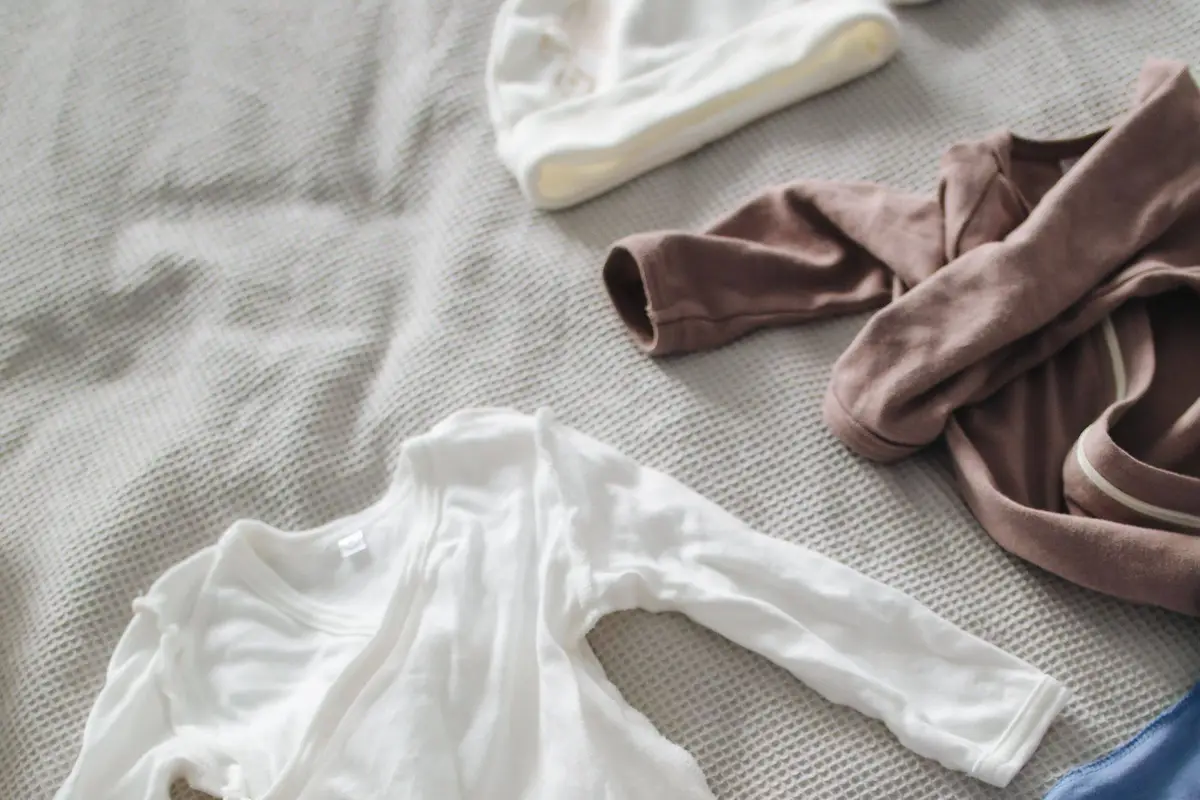
Pick a regular day, like the first weekend of the month, and keep it short. Pull out anything that’s too small, worn out or never worn, and let your child try on the pieces you’re not sure about.
Ask them what’s hard to reach or what never gets put back. Their answers show you which bin needs a new picture or which hook should move lower.
Then put the clothes that stay back in their homes, and move the outgrown pile into its bin. Pair the check with the declutter checklist, so the closet gets sorted along with the rest of the house.
A closet that only holds what fits, at a height kids can reach, is one they can keep tidy on their own.
Save this for later
Pin it to a board so it's there when you're ready to start.
Save to Pinterest(opens in a new tab)Make it easier
Free printable
A free kids chore chart with a box to tick for every day of the week. Print it as it is, or add your child's name and their own chores first.
Free tool
Enter the width, depth and height of a shelf, a drawer or a cube cubby, and see which standard bins and baskets fit, how many, and how they line up.
Frequently asked questions
How do I organize my kid's closet so they can use it on their own?
Bring the hanging space down with a second rod at their height, put everyday clothes and shoes on the low shelves and the floor, and label bins with pictures. Keep off-season clothes and keepsakes on the top shelf, where only a grown-up reaches.
How high should a kids closet rod be?
Hang it where your child can lift a hanger off without stretching, around their shoulder height. A hook-on or adjustable rod can move up as they grow, so check the height at each change of season.
What should go on the top shelf of a kid's closet?
Light things your child doesn't need every day, like off-season clothes, special-occasion outfits, keepsakes and the grow-into bin. Keep heavy items lower, and keep toys and anything else they want within reach, so they're never tempted to climb.
How often should I clean out my child's closet?
A quick check once a month catches clothes that no longer fit, and a bigger sort at each change of season keeps the closet from overflowing. Pull outgrown clothes as soon as you notice them, so they never go back on the rod.