12 Toy Organization Ideas That Clear the Playroom Floor
Sort toys by how kids play, give each group one bin with a picture label, rotate the rest, and keep puzzles, art supplies and outdoor gear in their own spots.

The toy organization ideas that last sort toys by the way kids play, give each group one bin with a picture on the front, and keep only part of the collection out at a time. When every toy has a single home that small hands can reach, cleanup takes minutes instead of an afternoon.
These 12 ideas fit a dedicated playroom as easily as a toy corner in the family room. Start with sorting, since every bin, shelf and rotation after it depends on knowing what you actually have.
1. Sort toys by the way kids play
Before you buy a single bin, pull every toy into one spot and sort by type of play rather than by size or color. Building toys go together, pretend play goes together, and so do vehicles, figures, music makers and puzzles.
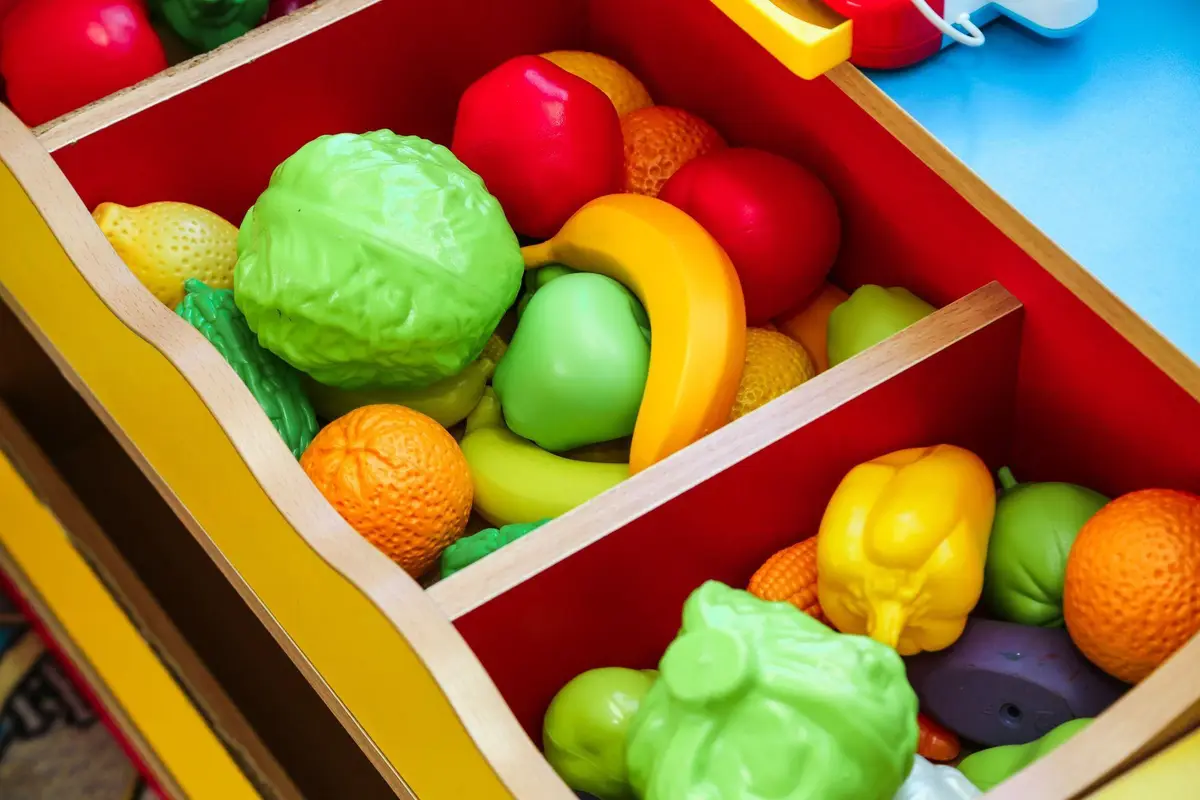
Kids look for toys by what they want to do next. A child who wants to play store goes looking for the play food, the basket and the pretend register, so those things belong side by side.
As you sort, set aside anything broken, anything missing too many pieces and anything nobody has touched in a long time. Those piles decide what goes back, what gets fixed and what moves on to another home.
Count the groups when you’re done. That number tells you how many bins or shelf spots you need, so you don’t come home with storage that doesn’t match the toys.
If the whole collection feels like too much for one afternoon, sort one room or one toy box at a time. The declutter checklist breaks the rest of the house into the same small, doable steps.
2. Give each category one bin with a picture label
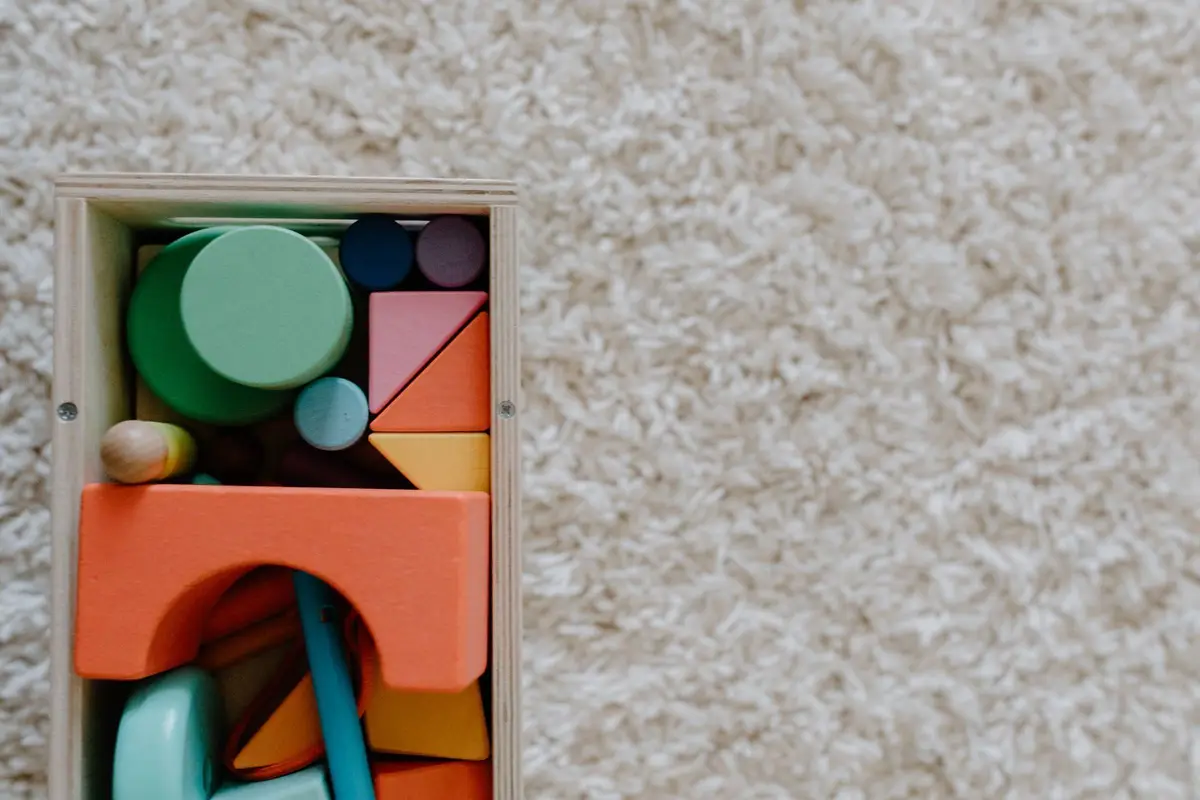
Once the toys are sorted, each group gets a container of its own: one for blocks, one for vehicles, one for play food. A bin that holds a single category is quick to fill and quick to check, since anything that doesn’t belong stands out.
Tape a picture of what goes inside to the front of every bin. A photo of the actual toys works better than a drawing, because kids who can’t read yet simply match what they see.
Print the photos on plain paper and cover them with clear packing tape so they wipe clean. Clip-on label holders make it easy to swap a picture when a category changes.
Choose the bin from the toys, not the other way around: big trucks need a deep, wide bin, finger puppets a small one. Measure the shelf first, and the bin and basket size calculator shows which standard sizes fit and how many line up in a row.
Anchor the shelf that holds the bins to the wall, and keep favorite toys off the top of it so nobody is tempted to climb up for them.
3. Set up a toy rotation closet
A room with every toy out is hard to clean and hard to play in. A rotation closet keeps most of the collection out of sight and sends a small set back to the play area every week or two.
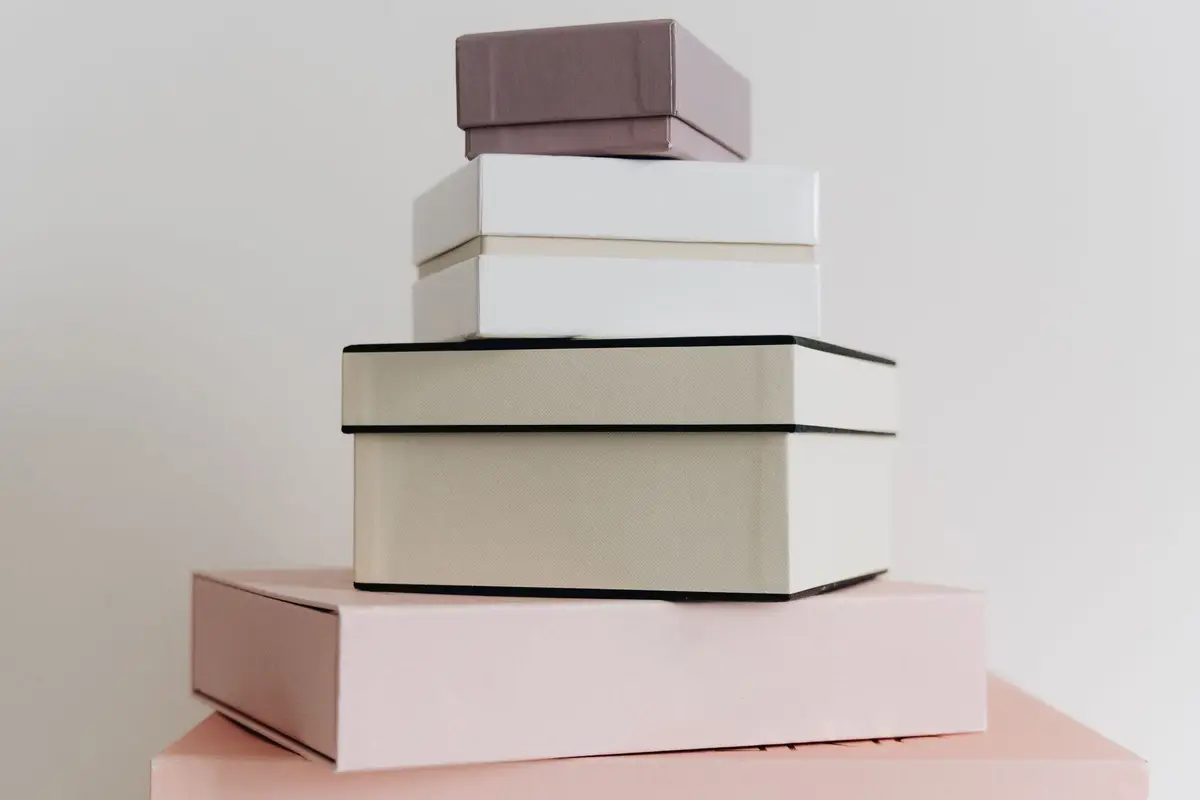
Pick one closet shelf, a high cabinet or the top of a wardrobe. Pack the stored toys into lidded boxes that stack, and give each box a mix of categories rather than one kind, so every swap brings something different.
Label the end of each box with a short list or a quick photo of what’s inside. Then you can pull the right box down without opening all of them.
To rotate, bring one box down, send a matching amount of toys up, and leave everything else alone. Toys that come back after a break feel new again, and kids often play with them longer than when they were out every day.
Keep the closet for toys that are complete and in good shape. A broken toy in storage is just a broken toy that comes back later.
4. Keep small pieces in lidded containers
Beads, tiny figures, marbles, game tokens and building bricks scatter fast and disappear under furniture. They need containers with lids that close tight, so a tipped box doesn’t turn into a floor covered in pieces.
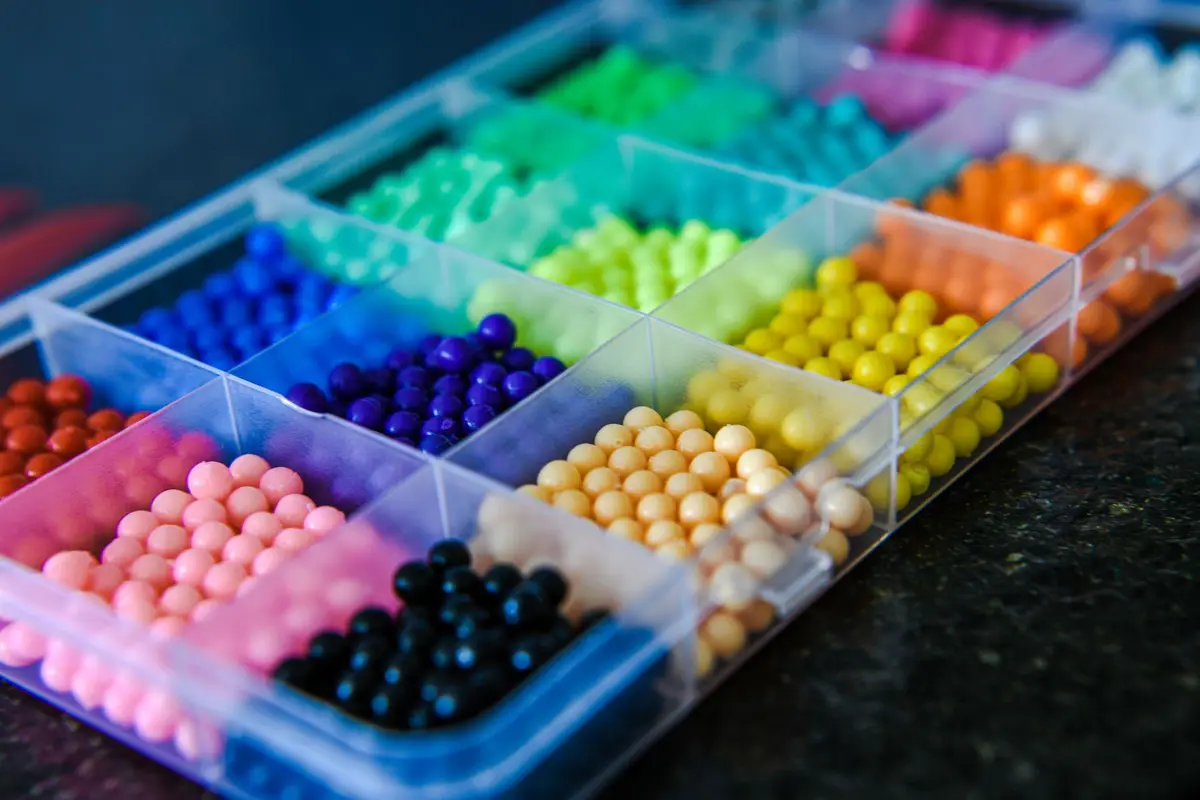
Clear boxes with built-in compartments work well for beads and other craft pieces. For building bricks, a shallow container with a snap lid lets kids spread out what they need without dumping everything at once.
Small parts are a choking hazard for children under three. If a baby or toddler lives in the house, store these sets on a high shelf or in an older child’s room, and bring them down only for play you can watch.
Do a quick floor check after every session with small pieces. A sweep under the table or a pass with a lint roller over the rug catches what eyes miss.
Give each set its own container instead of mixing several kits together. Sets stay complete, and putting one away never means sorting three.
5. Give puzzles and games their own shelf
Puzzles and board games lose pieces when they’re stacked in a tower that topples every time someone pulls a box from the bottom. One shelf just for them, with short stacks or boxes standing on their sides like books, stops that.
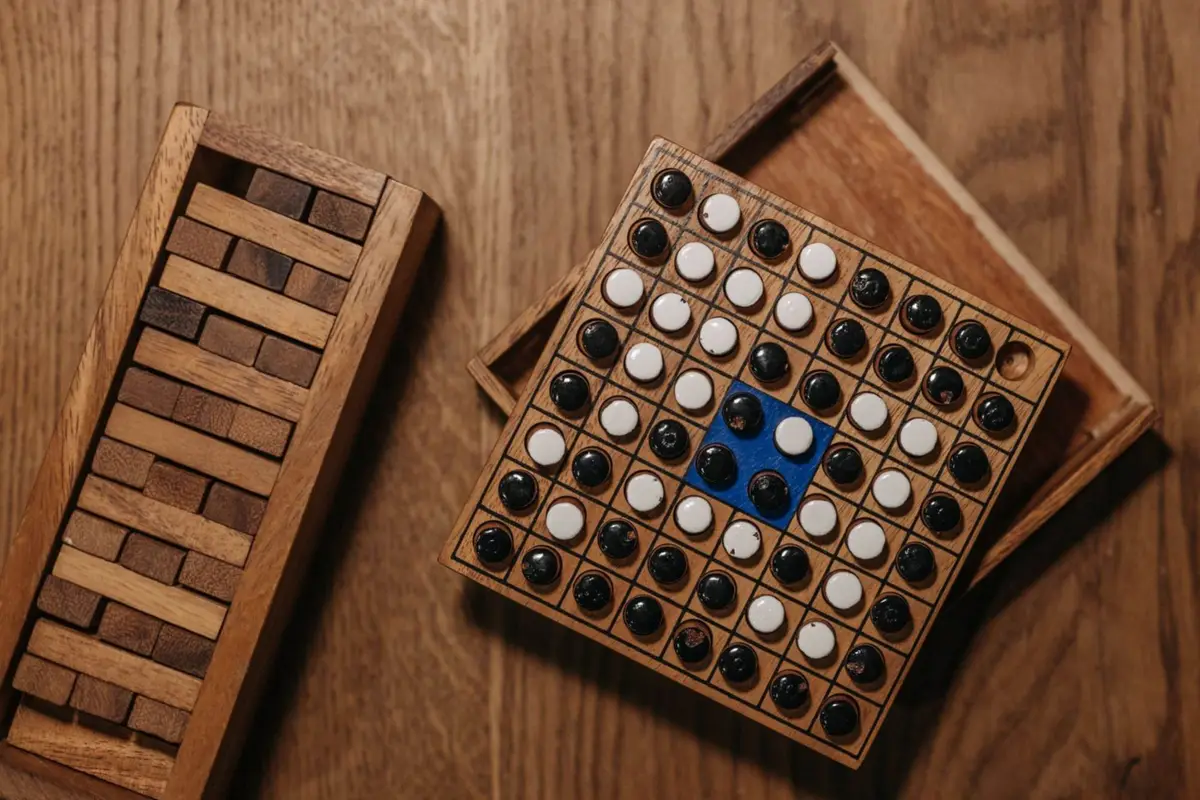
Stand boxes on their sides with the name facing out when the shelf is deep enough, so one slides out without moving the rest. Flat stacks work too, as long as they stay short.
Worn boxes with split corners let pieces escape. Move those games into zip-top bags or slim lidded containers, and tape the picture from the old lid on the front so kids still know which is which.
Keep games with small pieces and tricky rules up high, and simple puzzles low, where younger kids can choose one on their own.
Make it a house rule that a game goes back in its box, every piece accounted for, before the next one comes out. A small bowl on the shelf catches stray pieces found later, so they can rejoin their set.
6. Corral stuffed animals in a hanging net or a big bin
Stuffed animals take up a lot of room for how light they are. A hanging net in a corner or one large open bin on the floor holds a whole collection without eating shelf space.
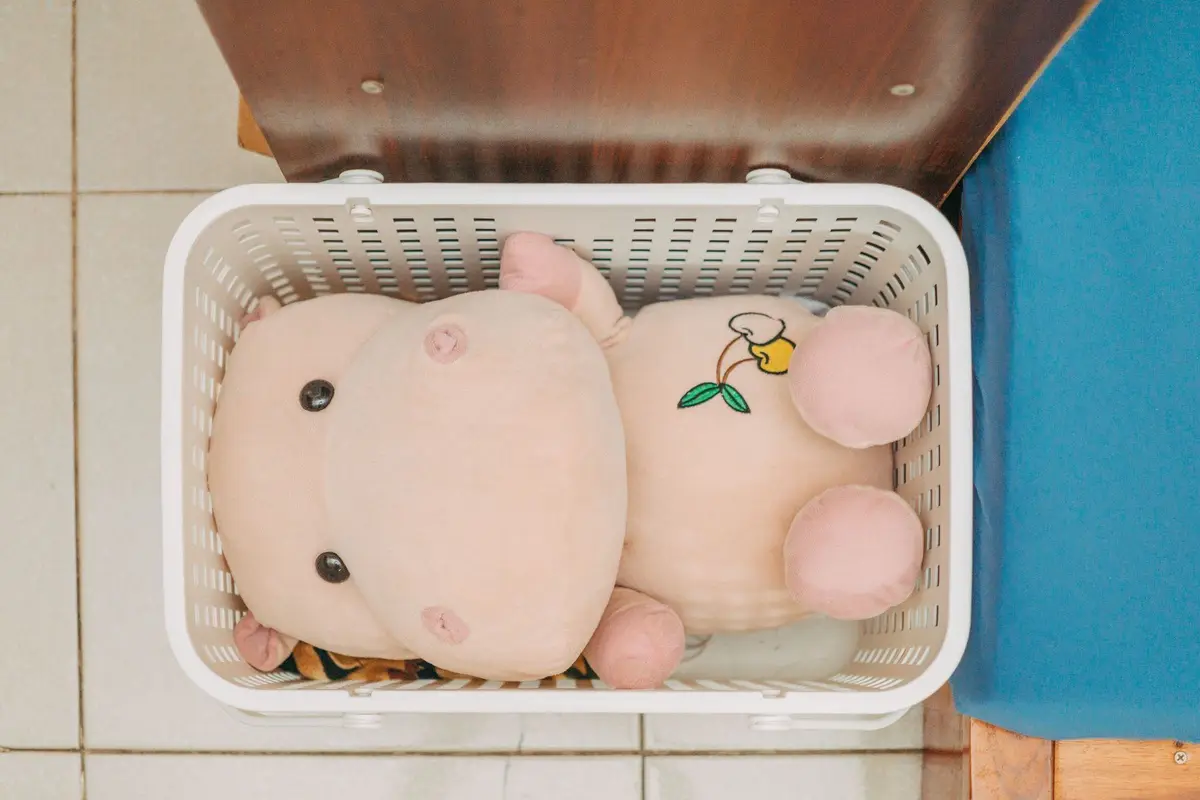
A corner net hangs from hooks on two walls and keeps plush toys up and out of the way while they stay in sight. Screw the hooks into studs or use anchors made for your wall, and hang the net low enough for kids to reach the bottom.
A tall basket or an open hamper with handles is even simpler. Kids can toss animals in from across the room, and the whole bin can travel to a sleepover.
If a toy chest is part of the plan, choose one with a lid support that holds the lid open in any position and no latch that locks it. Keep its air holes clear of the wall and the floor.
Let each child keep a few favorites on the bed and store the rest. When the net or bin overflows, that’s the cue to choose a few to pass along.
7. Keep art supplies in a carry caddy
Crayons, markers, glue sticks and kid scissors get used at a table, not on a shelf. A caddy with a handle carries them to wherever kids want to draw and brings them back to their spot when they’re done.
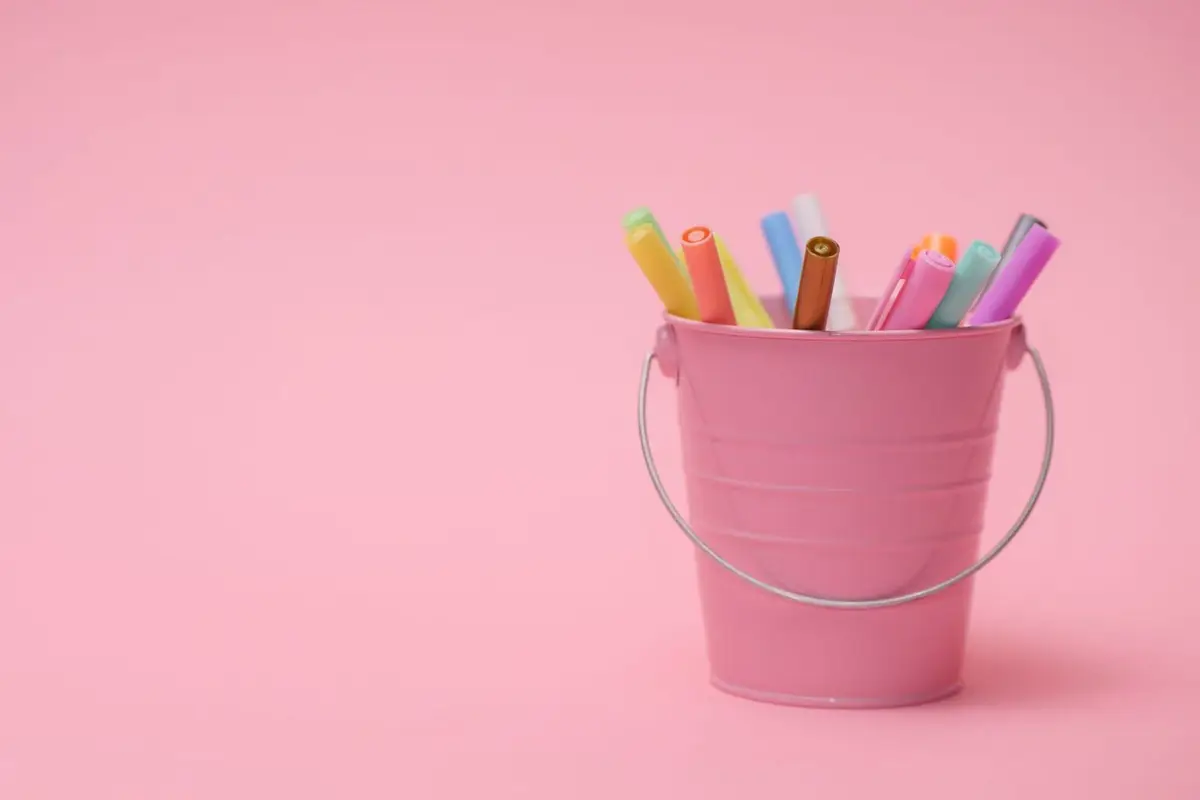
Pick a caddy with a few compartments, or set small cups inside a bucket. Markers stand upright, crayons get a cup of their own, and scissors and glue sit apart so tips and caps don’t get crushed.
Stock the caddy with only what kids can use without help. Paint, glitter and anything that needs a grown-up can live up high in a separate box that comes down for projects.
Test the markers every so often and toss the dry ones. A caddy full of pens that don’t work gets ignored, and the good ones get lost among them.
Keep paper flat nearby in a tray or a file box, so the caddy and the paper come out together. If you also keep supplies for your own projects, the craft room organization ideas cover the grown-up side.
8. Park ride-on and large toys in one spot
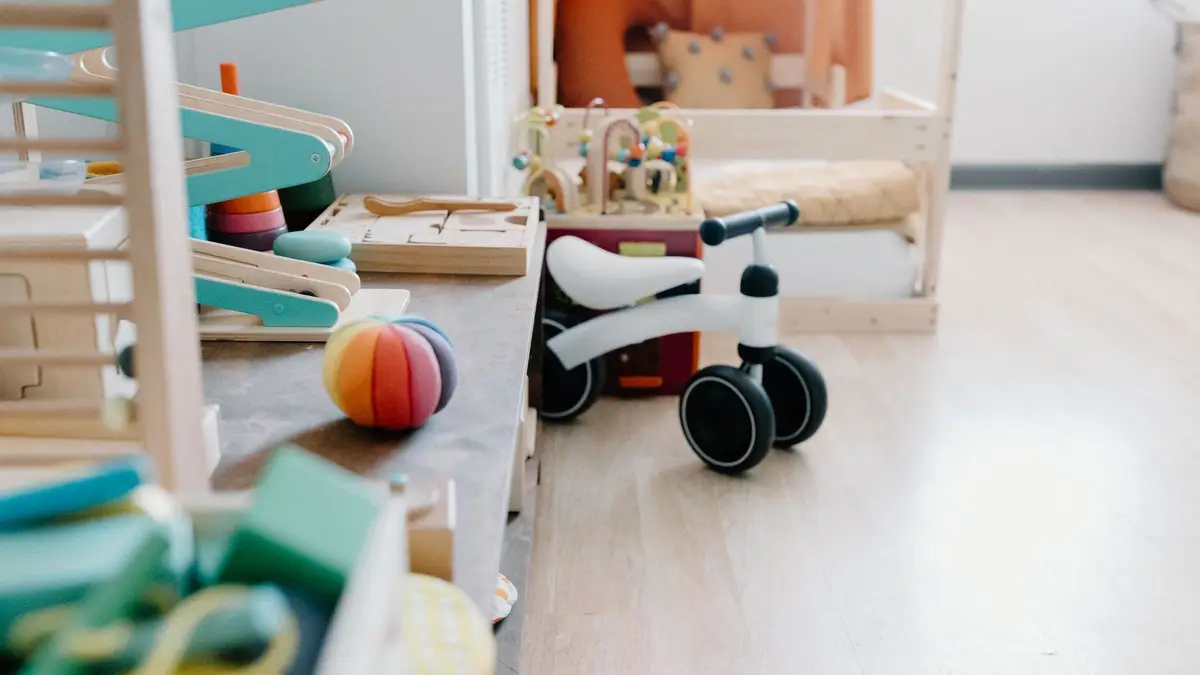
Rocking horses, balance bikes, ride-on cars, play kitchens and dollhouses don’t fit in any bin. Give each of them a parking spot along a wall or in a corner, so they stop drifting into the middle of the room.
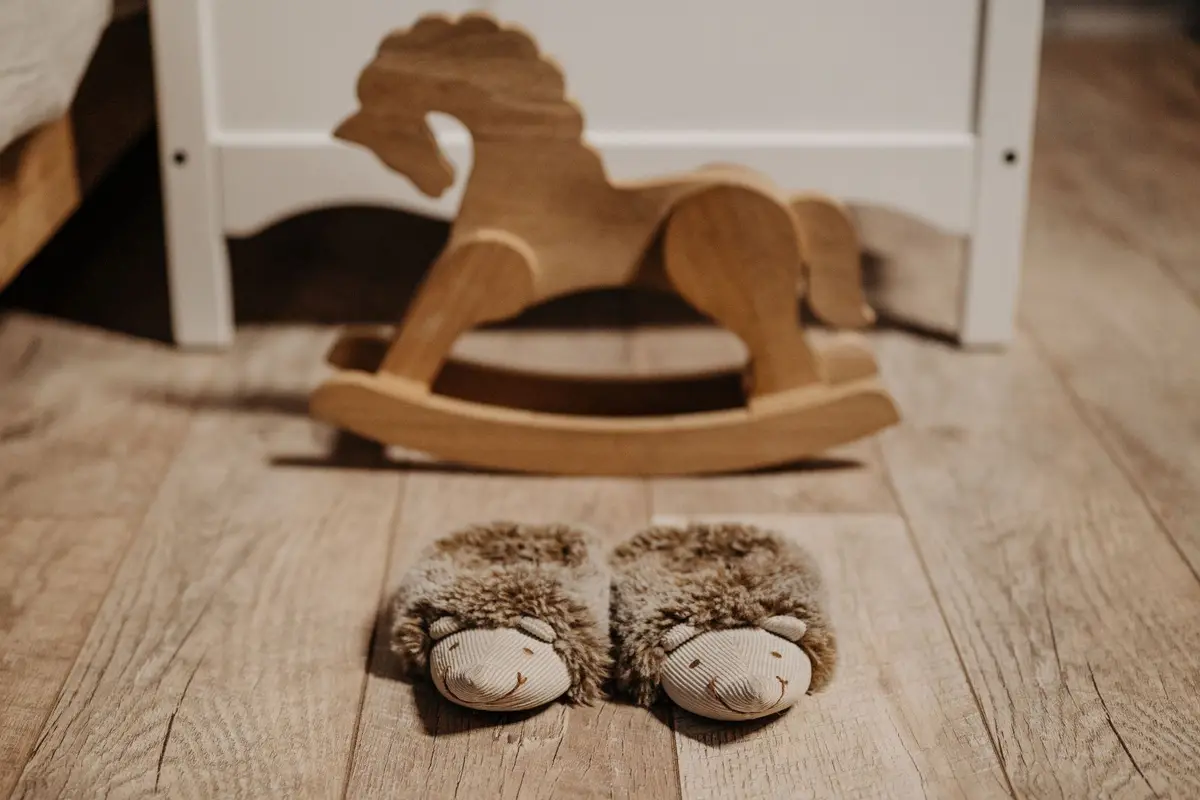
Mark the spot if it helps. A small rug, a strip of painter’s tape on the floor or a corner that belongs only to the big toys shows kids exactly where to return them.
Choose spots that don’t block doors, closets or the path to the bed in the dark. Rockers and ride-ons are easy to trip over, so keep them out of the walking route.
Tall play furniture, like a play kitchen or a dollhouse with shelves, can tip when kids climb on it or pull on a door. Anchor it to the wall the same way you’d anchor a bookcase or a dresser.
If big toys are taking over the room, keep only one or two out and store the rest. A play kitchen and a rocking horse can take turns in the rotation, just like smaller toys.
9. Store outdoor toys by the back door
Balls, sand toys, bubble wands and sidewalk chalk belong outside, and they track in less mess when they live right by the door they go out of. A bin or a few hooks just inside or outside the back door keeps them from wandering into bedrooms.
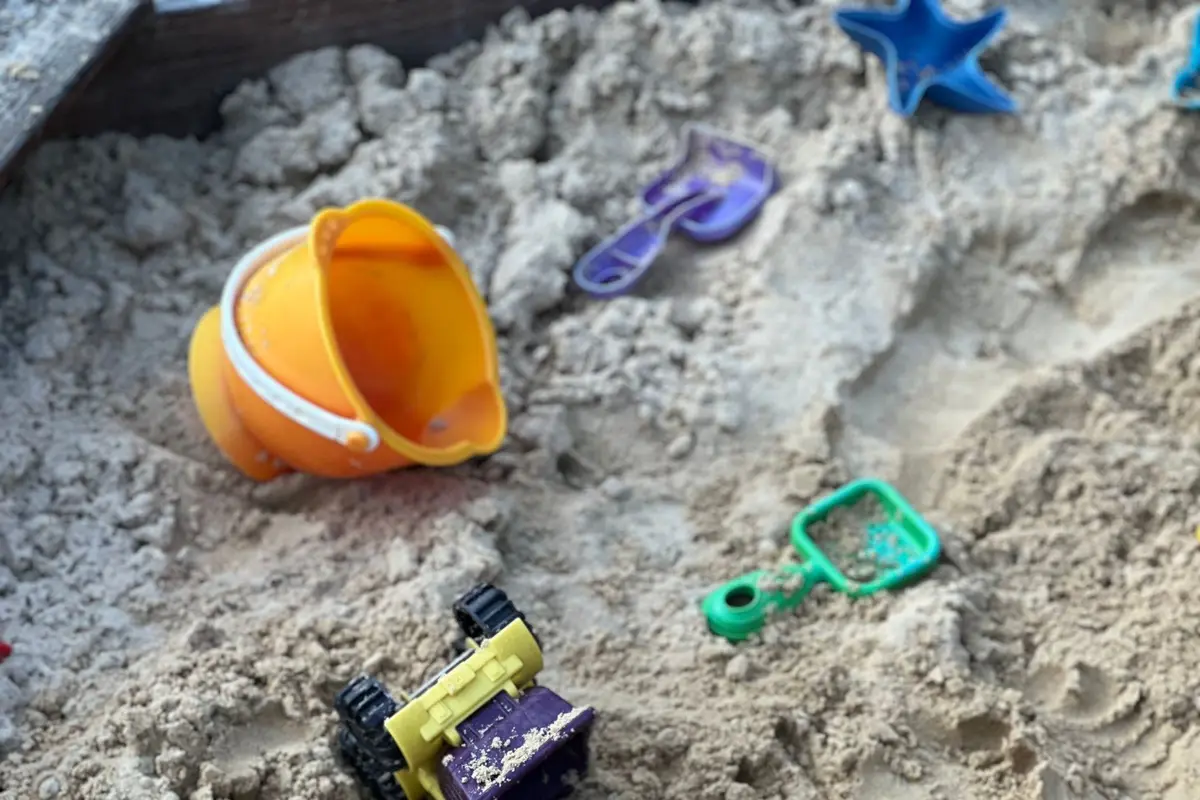
Use a container with drainage holes or a mesh bag for sand and water toys, so they drip dry instead of growing mildew. Shake the sand off before they go back in.
A tall basket holds balls and bats, and a wall rack or a few sturdy hooks takes care of scooters and helmets.
If the back door opens into a mudroom or a garage, put a low shelf there so kids can reach the bins themselves. The garage organization ideas cover bikes, wagons and the bigger gear.
Bring outdoor toys in at the end of the day and do a quick sweep of the yard. Toys left out in sun and rain fade, crack and break much sooner.
10. Turn the ten-minute pickup into a song
A daily pickup keeps toy clutter from growing into a weekend project. Choose one or two songs that mean cleanup time, and when the music starts, everyone puts toys away until it ends.
Kids respond to a signal faster than to a reminder. The same song every day becomes a cue, and after a while they start tidying before anyone asks.
Make it a game. Call out a color and have everyone hunt for toys that match, race to fill one bin before the chorus, or let the youngest choose which category goes next.
Pickup goes fastest when the bins are already set up, since kids only have to match a toy to a picture. If something has no home, set it aside and find it one later rather than stuffing it anywhere.
A kids chore chart puts the pickup into the daily routine, with a box to tick when it’s done. Together with picture bins and a song, it turns cleanup into a job kids can mostly handle on their own.
11. Use a one-in-one-out rule for birthdays
Birthdays and other gift days bring a wave of new toys, and every one of them needs a place to go. A one-in-one-out rule keeps the collection the same size: for each new toy that stays, an older one leaves.
Talk about the rule before the party, not after. Kids find it easier to choose when the decision isn’t happening in front of a pile of brand-new gifts.
Let your child pick what goes. They know better than anyone which toys they’ve outgrown, and choosing gives them a say in their own space.
Give new toys a home right away. Decide which bin each one belongs in, add a picture to the label if it’s a new category, or send it straight to the rotation closet if the play area is full.
When relatives ask for gift ideas, it helps to have a few ready: an outing together, books, art supplies that get used up, or one bigger toy that can replace several small ones.
12. Donate outgrown toys a few times a year
Kids move past toys faster than anyone expects. A few times a year, go through the bins together and pull out what nobody plays with anymore, especially baby toys and anything too young for every child in the house.
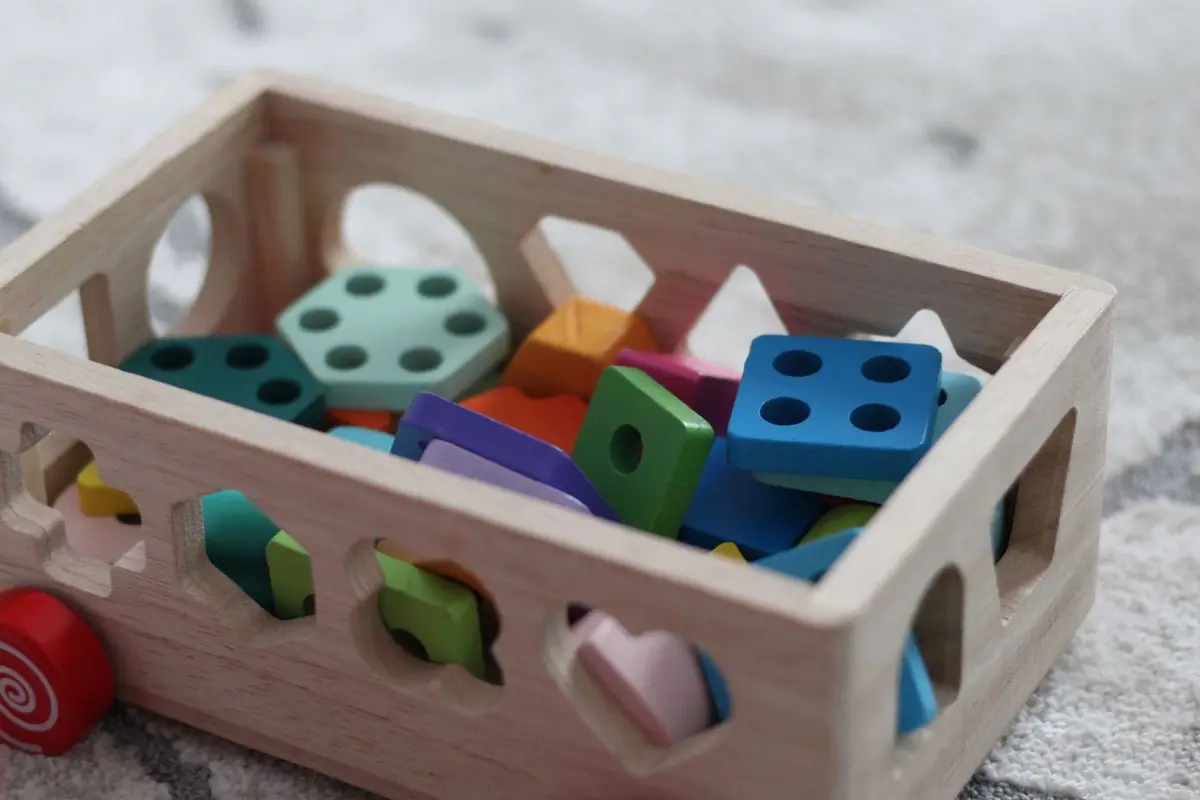
Check each toy before it goes. It should be clean, working and complete, with every piece of a set or puzzle back in its box. Anything broken or missing parts belongs in the trash or the recycling, not the donation bag.
Make sure older toys haven’t been recalled before you pass them on. Charities and resale shops have to follow product safety rules too, and a recalled toy shouldn’t go to another family unless it was fixed under the recall.
Keep a donation bag in the rotation closet so toys can go in whenever you notice them. When it’s full, drop it off or hand it to a family with younger kids.
If the toys are part of a bigger kids room clear-out, the kids organization hacks cover clothes, school things and the rest of the room.
Save this for later
Pin it to a board so it's there when you're ready to start.
Save to Pinterest(opens in a new tab)Make it easier
Free printable
A free kids chore chart with a box to tick for every day of the week. Print it as it is, or add your child's name and their own chores first.
Free tool
Enter the width, depth and height of a shelf, a drawer or a cube cubby, and see which standard bins and baskets fit, how many, and how they line up.
Frequently asked questions
How do I organize toys without a playroom?
Pick one wall or corner in the living room or a bedroom and give it a low shelf with a few bins. Keep only a small set of toys there and store the rest in a closet for rotation, so the toy corner never spills into the rest of the room.
What's the best way to store toys with lots of small pieces?
Give each set its own container with a lid that closes tight, so a tipped box doesn't scatter pieces across the floor. Keep sets with small parts up high or in an older child's room whenever a baby or toddler lives in the house.
How do I get my kids to help put toys away?
Make it simple and make it a habit: one bin per kind of toy, a picture on each bin, and the same cleanup song at the same time every day. Do it with them at first, then step back a little at a time as they learn where things go.
How often should I declutter my kids' toys?
A quick check every time you rotate toys catches broken and outgrown ones early. A bigger sort a few times a year, and right after birthdays, keeps the collection from growing faster than the storage.