12 Small Walk-In Closet Organization Ideas That Keep a Path to Turn Around In
Make a walk-in you can barely step into hold more: edit first, double the rods, run shelves up high, use the door and keep a clear path down the middle.

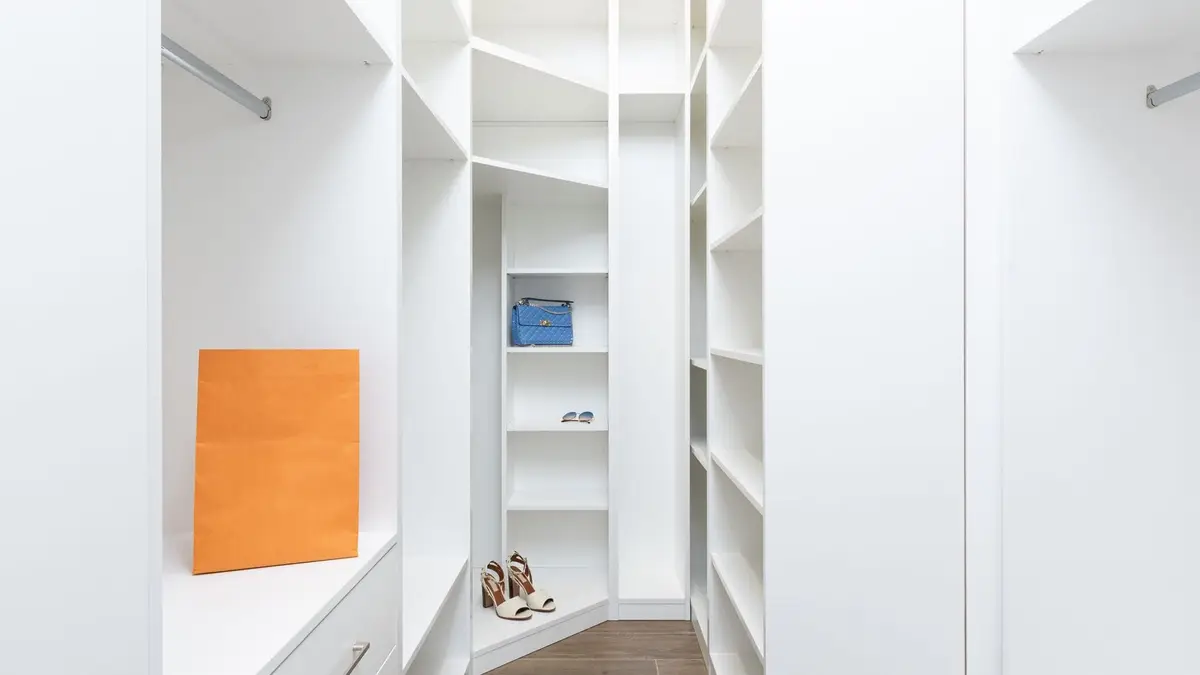
A small walk-in closet stays organized when it holds only what you wear, every wall has one job and a clear path runs down the middle. Double the rods for short clothes, use the space up to the ceiling for things you rarely need, and put hooks on the door and the end walls.
These 12 ideas are for a walk-in that’s barely big enough to step into. If yours has room for an island or a whole shoe wall, the walk-in closet organization ideas cover those bigger layouts.
1. Edit before you organize anything
In a small walk-in, every piece you keep takes space from something else. Take everything out, wipe the shelves and floor, and only then decide what goes back.
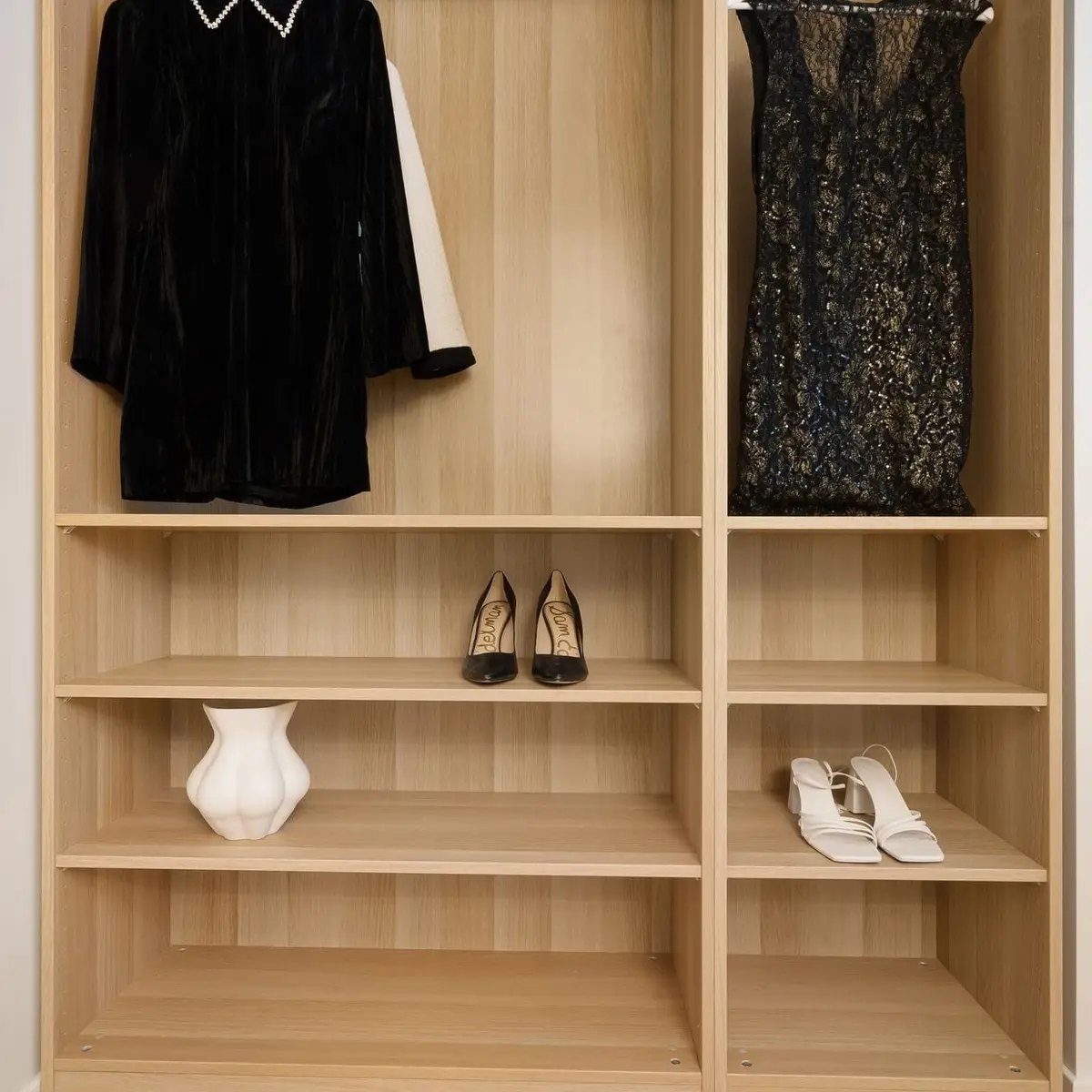
Sort into three piles: keep, donate and doesn’t belong here. The third pile is often the biggest, because a small walk-in collects luggage, gift wrap, paperwork and the vacuum.
Be honest about clothes that don’t fit, need mending you’ll never do or haven’t been worn in a full year of seasons. Bag them up and put the bag in the car the same day.
Find a new home for anything that isn’t clothing before you plan the closet. The declutter checklist walks through each room, so the things you move out of the closet don’t just pile up somewhere else.
What’s left is the wardrobe you’re organizing for. Plan the space around it, not around the clothes you might wear someday.
2. Plan the layout around a clear path
Before you buy anything, stand in the doorway and decide which walls get storage. A small walk-in usually takes one of three layouts: one long wall, an L along two walls or a U around three.
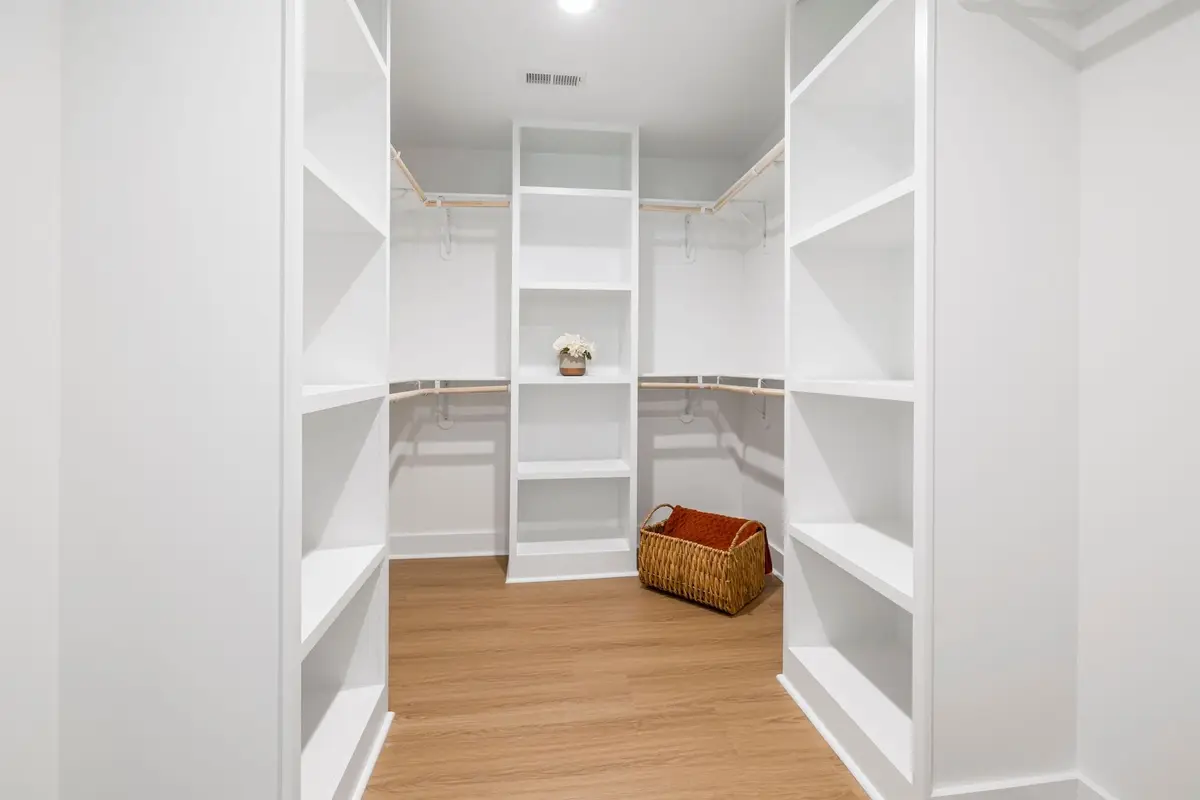
Hanging clothes stick out from the wall about as far as a hanger is wide, so each wall of rods eats a good share of the floor. Shelves for folded clothes can be shallower, which is why a U often pairs one wall of hanging with shallower shelves on the others.
Whatever you choose, keep a path wide enough to turn around with an armful of laundry. If you can only step in sideways, take one wall of storage away.
Measure the width, the depth and the height to the ceiling, and sketch the plan on paper. If your walk-in is long and narrow, more like a closet you reach into than a room, these deep closet organization ideas suit that shape better.
3. Double the hanging space with a second rod
Most of a wardrobe is short: shirts, blouses, skirts, folded trousers and jackets. Hang a second rod below the first, and the same width of wall holds two rows of clothes.
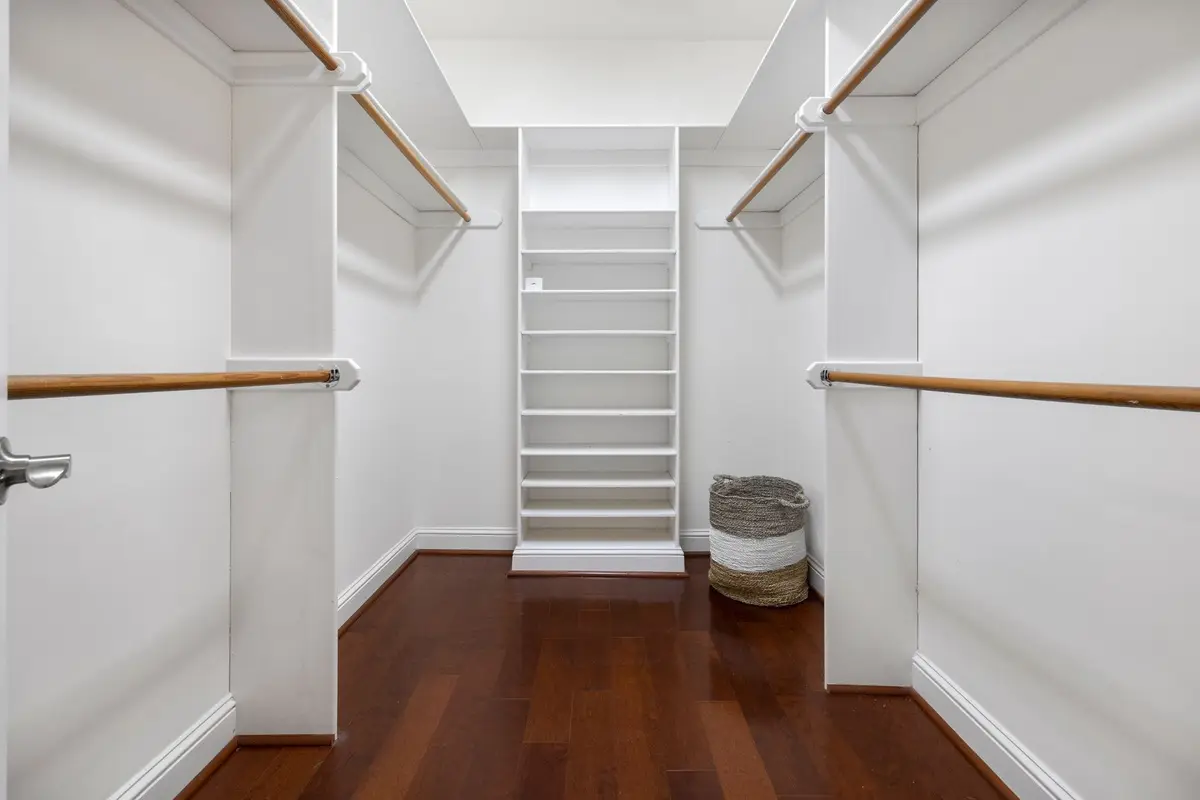
Keep one short stretch of single rod for dresses, coats and anything that needs to hang at full length. Everything else goes on the double rods.
The upper rod suits the things you wear less often, like dressier shirts and jackets. The lower rod sits at an easy height for everyday tops, and it’s low enough for kids to reach their own clothes in a shared family closet.
No room to install a new rod? A hanging rod that hooks over the existing one does the same job without tools, which suits a rental.
Hang the clothes on each rod in the same order every time, by type and then by color. In a tight space, an orderly rod is faster to scan than a crowded one, so you find the shirt you want without pulling out three others.
4. Switch to slim, matching hangers
Bulky hangers take up a surprising amount of rod. Thin, matching hangers hold the same clothes in noticeably less space, which matters most when the rod is short.
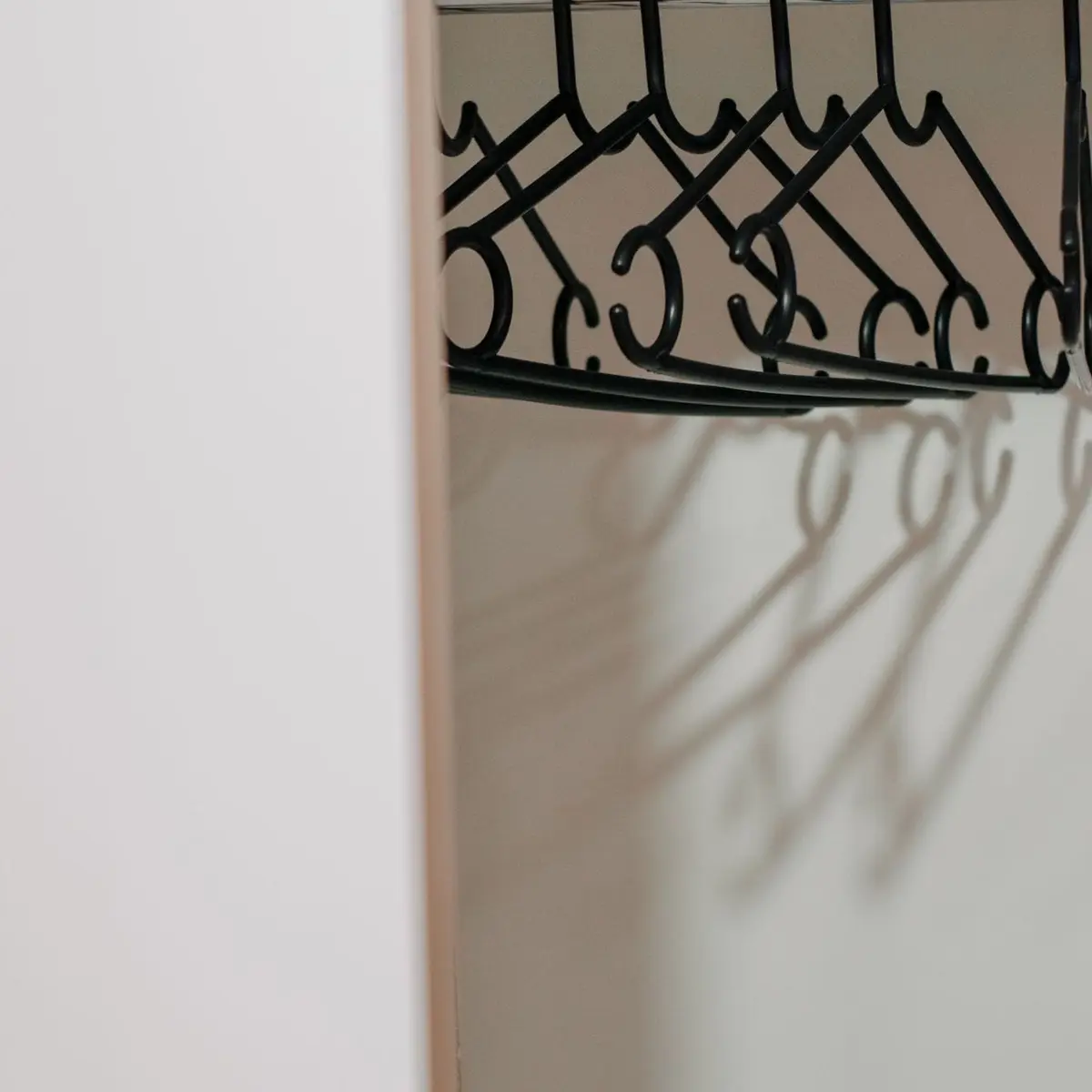
Hangers with a velvet or rubber finish keep silky tops and wide necklines from sliding off. They also hold clothes at the same height, so the line along the bottom of the rod looks even and calm.
Swap hangers a few at a time if buying a whole set at once doesn’t fit the budget. Start with the rod you use every day, since that’s where the extra space shows first.
Keep a few sturdy wooden hangers for coats and heavy jackets, since slim ones can bend under the weight.
Leave a little room between garments when you hang them. If you have to force a shirt onto the rod, the rod is too full, and that’s the signal to pass something along.
5. Run shelves up toward the ceiling
The space above the top rod is the most wasted space in most small walk-ins. One shelf there is standard, but there’s often room for a second or third shelf above it.
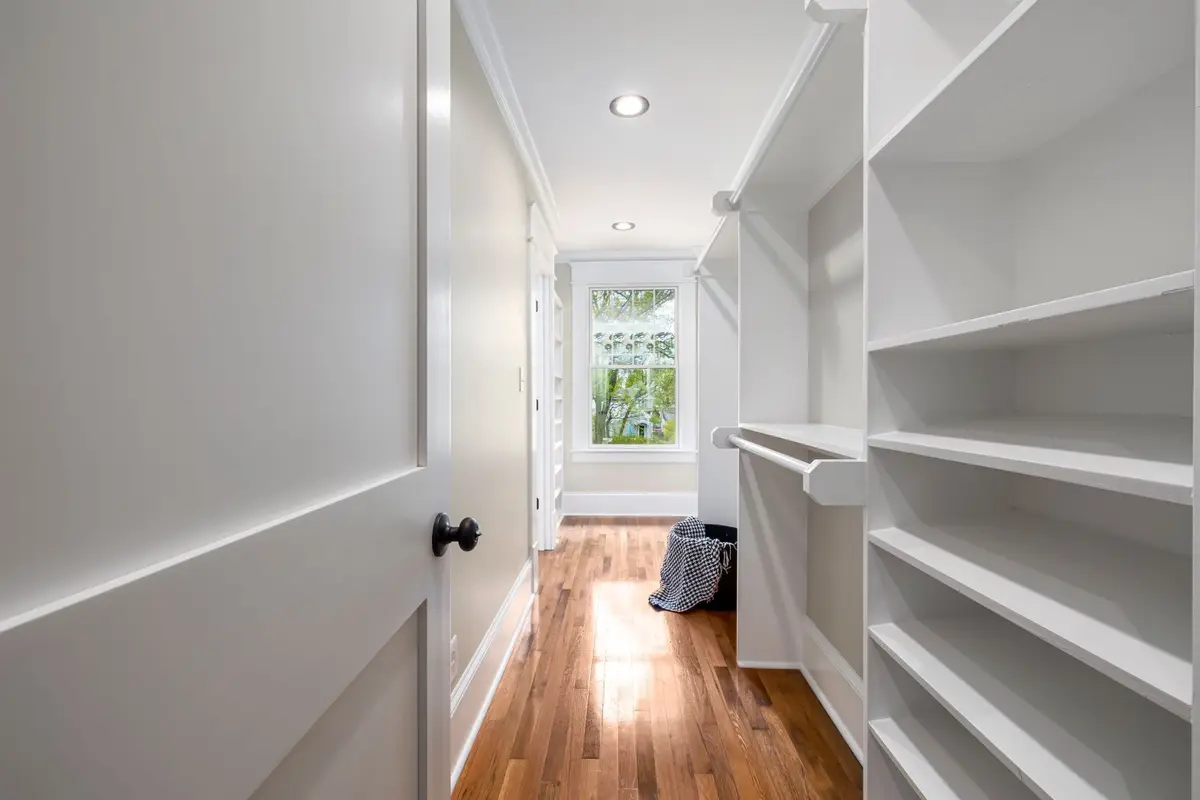
Use the highest shelves for things you need a few times a year: spare bedding, luggage, keepsake boxes and off-season shoes. Keep the shelf nearest the rod for things you reach for weekly.
Adjustable shelving on wall tracks makes this easy, since you can move each shelf to fit what’s on it. Screw the tracks into studs, because a shelf full of folded clothes is heavier than it looks.
Fold sweaters and jeans into stacks of the same size, and keep the stacks short enough that pulling one piece out doesn’t topple the rest. Shelf dividers keep tall stacks upright.
These closet shelf organization ideas cover stacking, dividers and bins for every shelf in the closet, from the one above the rod to the very top.
6. Give shoes a narrow shelf of their own
Shoes on the floor of a small walk-in block the path and get kicked into a pile. A narrow shelf unit, or a set of slim shelves at the end of one wall, gets them up and in view.
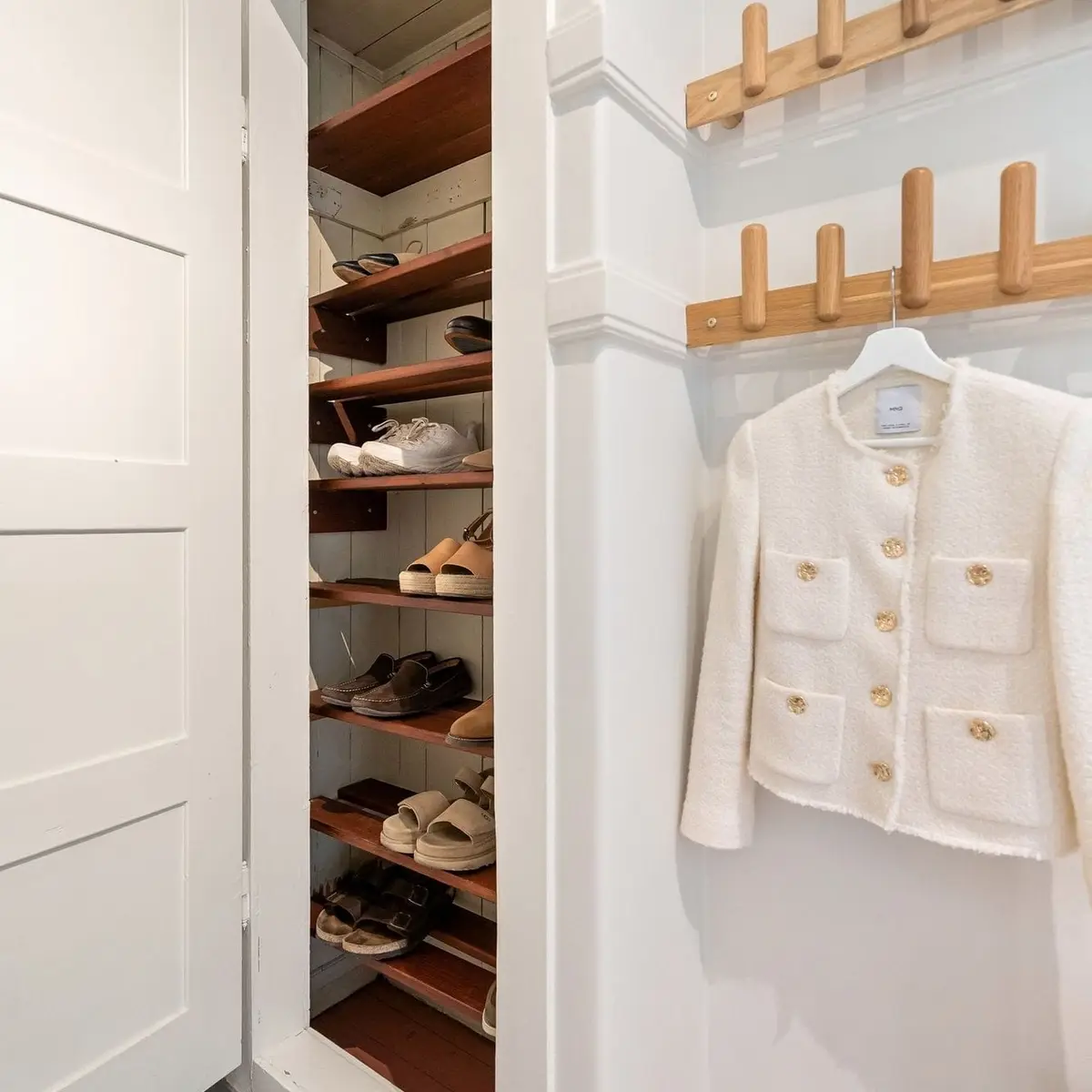
Look for an unused strip of wall: beside the door, at the end of a rod or in the gap where two walls meet. Shoe shelves only need to be about as deep as your longest pair.
Set pairs side by side, or nest them heel to toe to fit two pairs in the space of one and a half. Keep everyday shoes between your knees and your shoulders.
Boots can lie on their side on the lowest shelf, or stand on the floor beneath the shelves if there’s a clear corner.
A washable tray on the bottom shelf keeps dirt from wet or muddy pairs off the rest. For more ways to store sneakers, sandals and boots, see these shoe storage ideas.
7. Put the door and the end walls to work with hooks
The back of the door and the short end walls are free storage in a small walk-in. Hooks there hold the things that don’t fold or hang neatly on a rod: bags, robes, belts, scarves and hats.
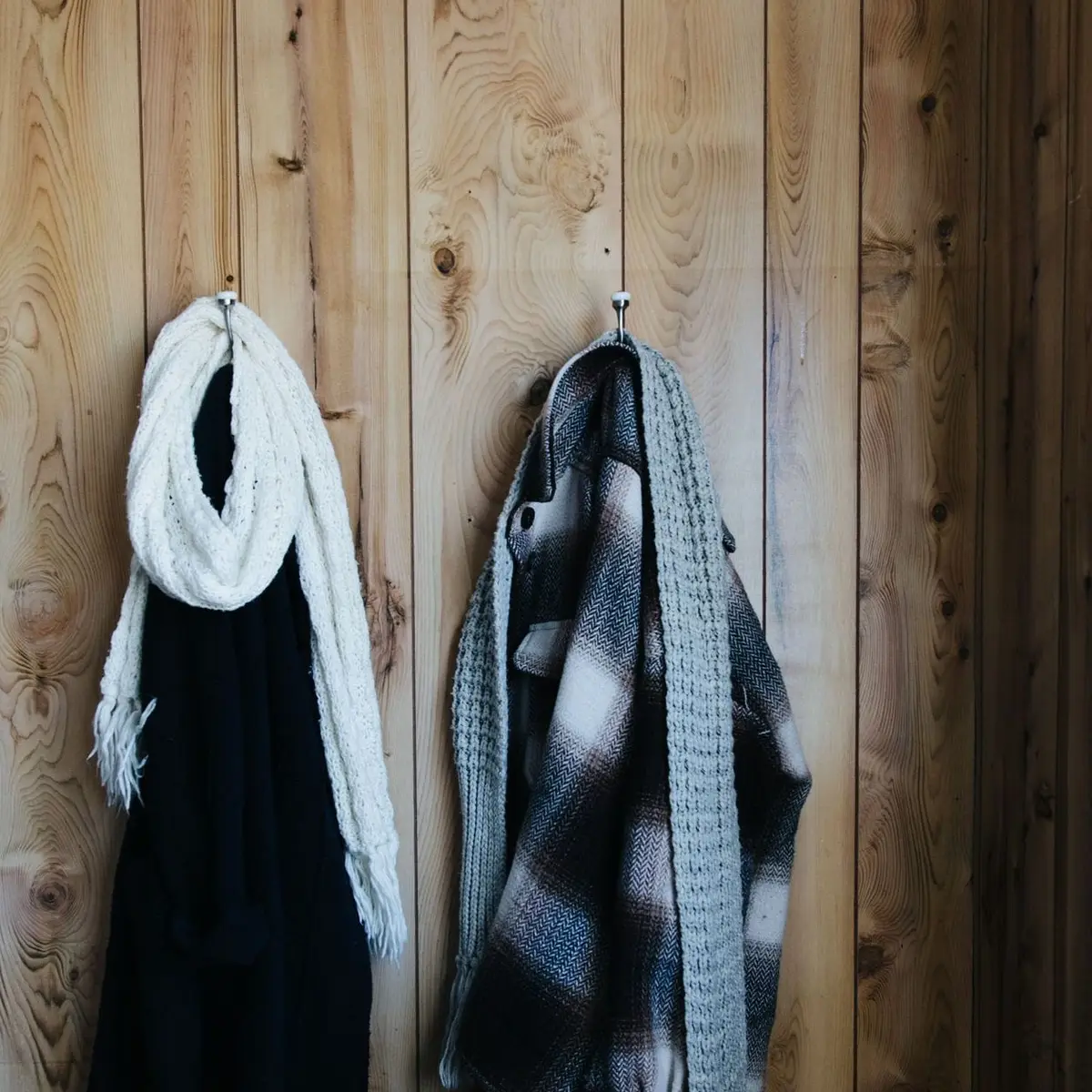
An over-the-door rack with a row of hooks needs no tools and comes down without a mark. Check that the door still closes fully, and that nothing hanging there brushes the clothes on the rod beside it.
On a wall, a row of sturdy hooks at shoulder height holds a robe, a daily bag and tomorrow’s jacket. Screw them into studs or use anchors rated for the weight.
Give each hook one job, like the robe hook or the gym bag hook. A hook with three things on it turns into a pile.
Hang bags by their handles, not their straps, so they don’t stretch. Fill soft bags with a scarf so they keep their shape while they hang.
8. Store bins on the high shelves and label them
High shelves are perfect for things you don’t need often, but only if you can find them. Matching bins or lidded boxes hold small, loose things that would otherwise slide off a shelf.
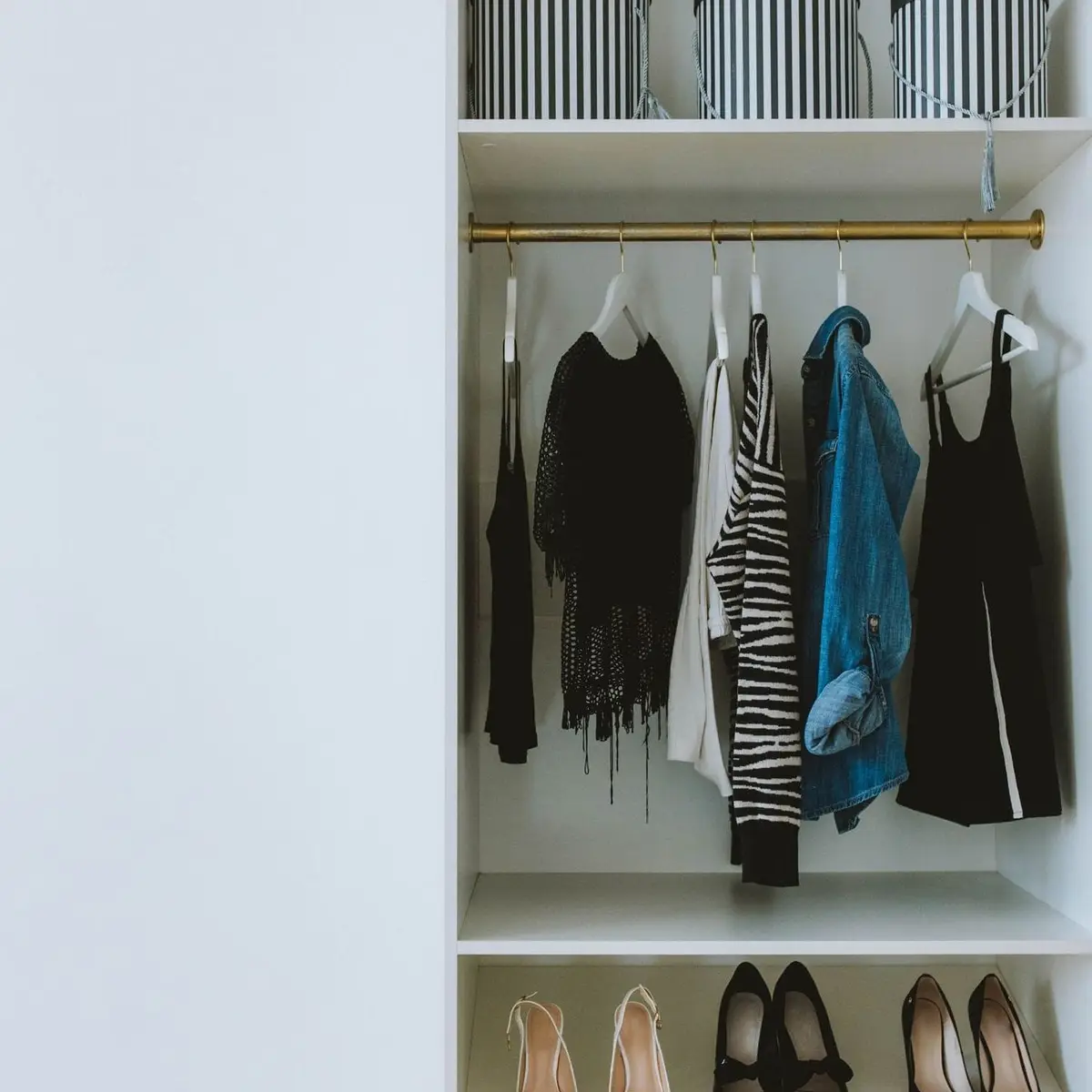
Sort by category: swimsuits, workout gear, belts, travel bits, spare buttons and sewing things. Give each category its own bin, and label the side that faces you.
Measure the shelf before you buy, then use the bin size calculator to see which bins fit side by side without wasted gaps along the edges.
Pick bins with handles you can grab from below, and keep the heaviest bins on the lowest of the high shelves. Lighter things like hats and scarves can go higher.
To reach the top shelf, use a sturdy step stool with a bar to hold on to, and never stand on a chair. A slim folding stool hangs on a hook or tucks beside the shoe shelf.
9. Add a small drawer unit only if the path stays clear
A small dresser or drawer unit adds folded storage for socks, underwear and workout clothes. In a small walk-in, though, it only works if the drawers can open all the way and you can still step past.
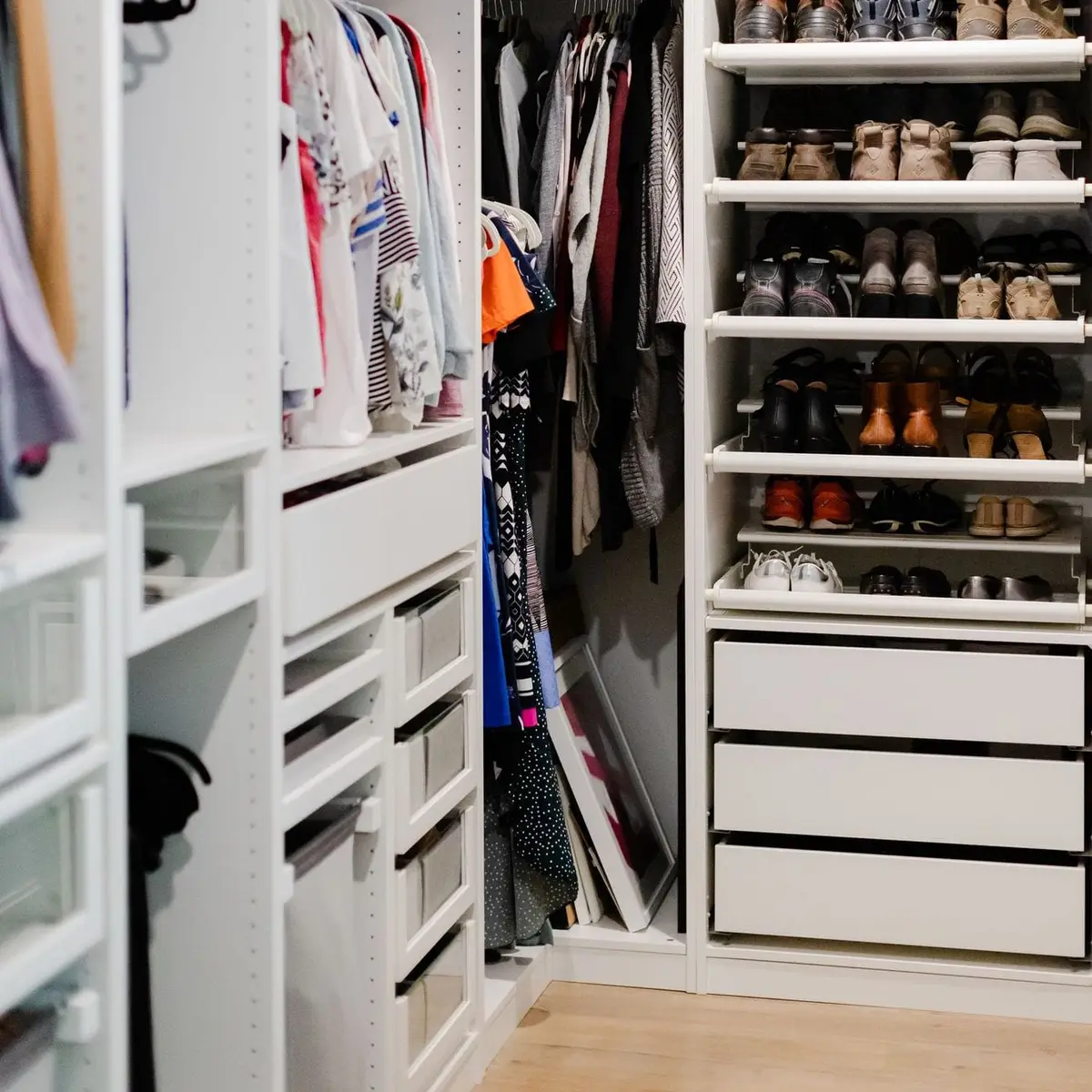
Look for the spot under a short rod, at the end of a wall or below a shoe shelf. A narrow unit tucked under hanging shirts uses space that would otherwise be empty.
Measure the depth of the unit plus a fully open drawer, then check the path that’s left. If it’s too tight, a slim set of drawers on wheels that slides out of the way may fit better.
Any dresser or unit with drawers needs to be anchored to the wall so it can’t tip over, which matters most in a home with kids who climb. Anchor it before you fill it.
Keep the top clear for folding or for laying out tomorrow’s outfit, rather than turning it into another shelf.
10. Light every corner and add a mirror
A single ceiling bulb leaves the back of a small walk-in in shadow. Add light where you look: under the top shelf, along the rods and inside the shoe shelves.
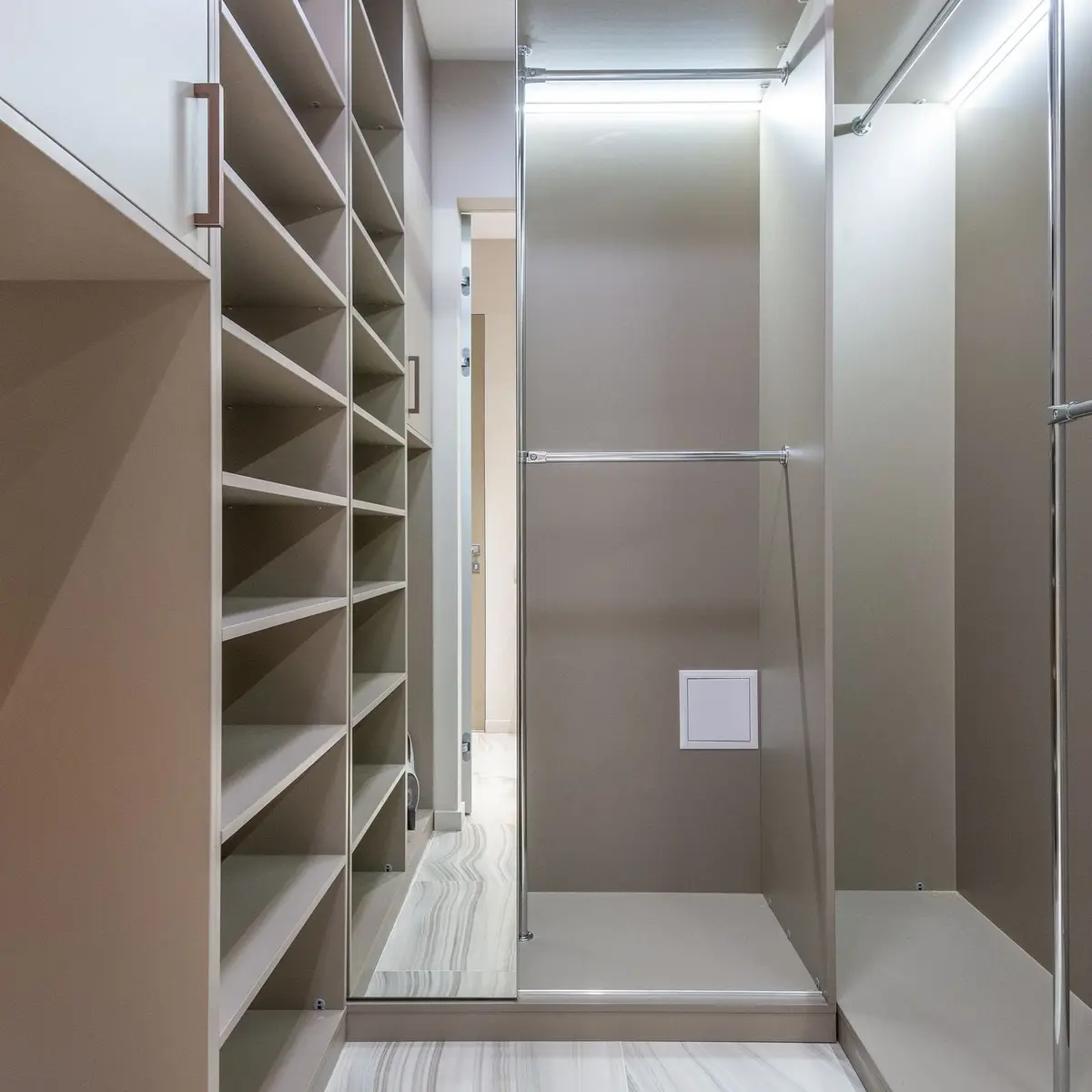
Battery or plug-in LED strips stick under shelves and need no wiring, which suits a rental. Motion-sensor lights switch on when you step in, so your hands stay free for an armful of clothes.
Choose a warm white that shows colors clearly, so navy and black are easy to tell apart. For a new fixture or lights wired into shelving, hire a licensed electrician.
A mirror makes a small walk-in feel brighter and bigger. Mount a slim one on the back of the door or on the end wall, hung with hardware made for its weight, rather than leaning it where it can be knocked over.
Together, good light and a mirror turn a tight closet into a place to get dressed, not just a place to grab clothes.
11. Build a budget DIY version
You don’t need a custom system to organize a small walk-in. A few simple pieces, added in the right order, do most of the work.
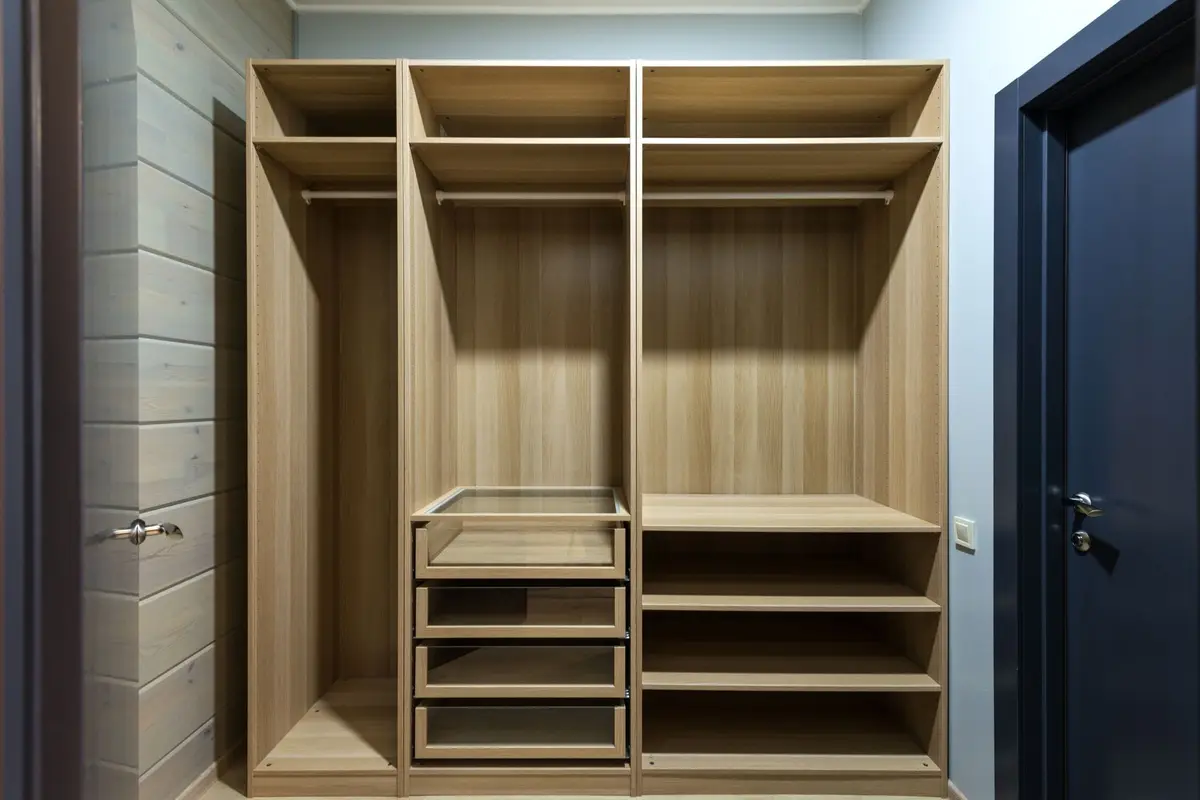
Start with matching slim hangers, then a hanging rod that hooks onto the existing rod for short clothes. Those two changes alone free up a lot of rod.
Next, add a shelf unit you already own, or a freestanding closet frame with shelves and a rod, against the wall that has the most empty space. Freestanding pieces move with you, which helps if you rent.
Use bins, baskets and boxes from around the house for the high shelves before buying new ones. Paint or line mismatched boxes so they look like a set.
Add hooks and an over-the-door rack last, once you know which things still need a home. These closet organization hacks have more low-cost tricks for squeezing space out of any closet.
12. Swap clothes with the seasons
A small walk-in can’t hold every season at once. Keep this season’s clothes on the rods and shelves, and move the rest up high or out of the closet altogether.
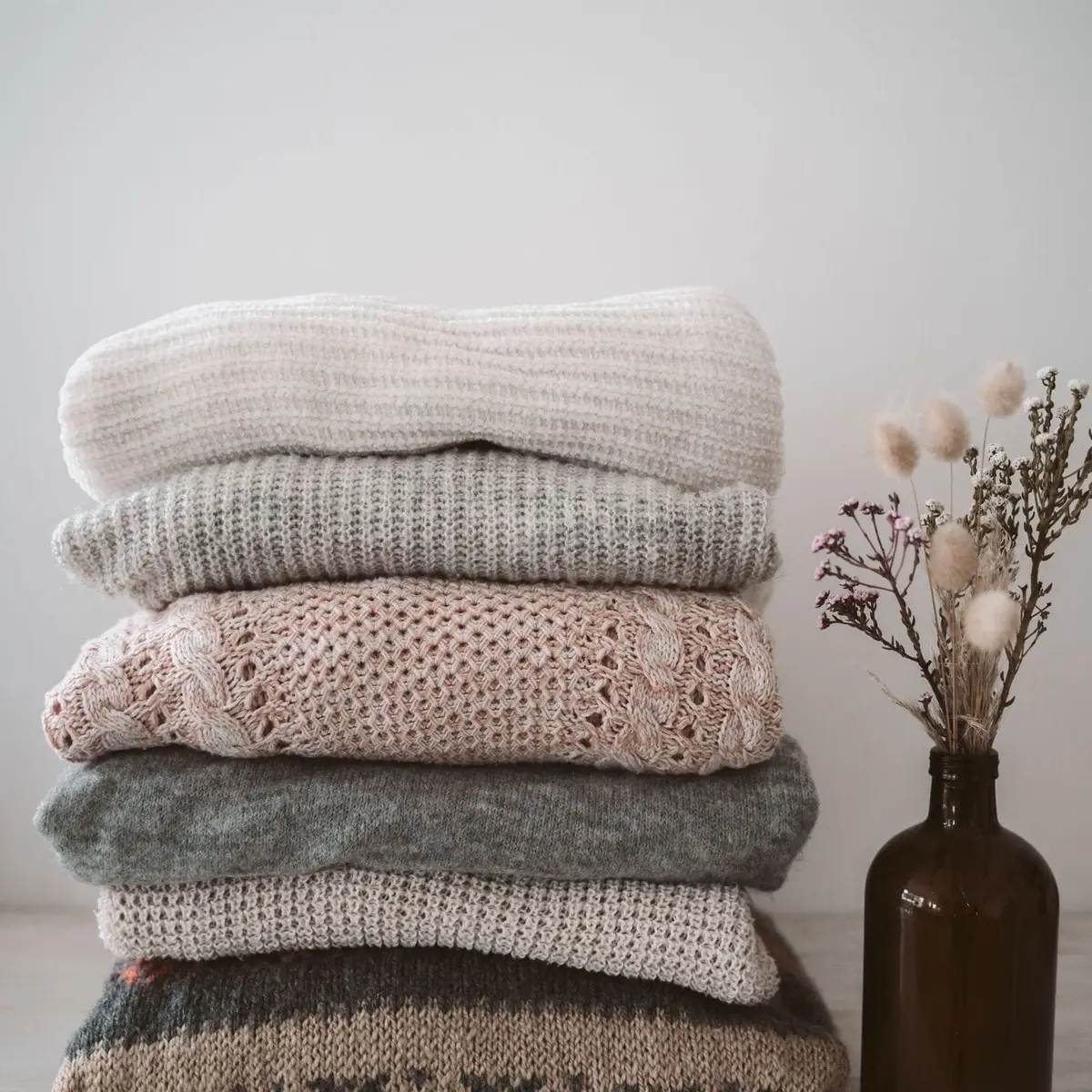
Clean everything before it goes into storage. Clothes moths feed on wool and other animal fibers, so wash or dry-clean those pieces and seal them in airtight containers.
Label each bin with the season and what’s inside, and store it on the top shelf or under a bed in another room.
Swap twice a year as the weather turns. Bring the stored bin down, try things on and pass along anything that no longer fits or that you didn’t miss.
Keep a few in-between pieces, like a light jacket and a cardigan, on the rod all year. The swap is also a good moment to wipe the shelves, check the hooks and do a quick edit, so the closet starts each season with room to spare.
Save this for later
Pin it to a board so it's there when you're ready to start.
Save to Pinterest(opens in a new tab)Make it easier
Free printable
A room-by-room declutter checklist that tells you exactly what to look for, with four piles to sort into so nothing ends up back on the shelf.
Free tool
Enter the width, depth and height of a shelf, a drawer or a cube cubby, and see which standard bins and baskets fit, how many, and how they line up.
Frequently asked questions
How do I organize a small walk-in closet?
Take everything out and keep only what you wear, then plan which wall holds hanging, which holds shelves and where the path runs. Double the rods for short clothes, use the space up to the ceiling for things you rarely need, and put hooks on the door and the end walls.
Should a small walk-in closet use one wall, two or three?
Use as many walls as you can while keeping a path wide enough to turn around with an armful of clothes. A very narrow walk-in often works best with storage on one long wall, while a squarer one can take an L or a U.
Can I put a dresser in a small walk-in closet?
Only if the drawers can open all the way and you can still step past them. Choose a narrow, shallow unit, push it against a wall and anchor it there so it can't tip over.
What's the cheapest way to add storage to a small walk-in closet?
Start with matching slim hangers and a hanging rod that hooks onto the existing one to double the space for short clothes. Add a few wall hooks and bins you already own before buying any shelving.