12 Small Bathroom Organization Ideas From the Toilet to the Tub
Make a tight bathroom hold more: shelves over the toilet, a slim rolling cart, door hooks, a shower caddy, bins under the sink and a clear floor.

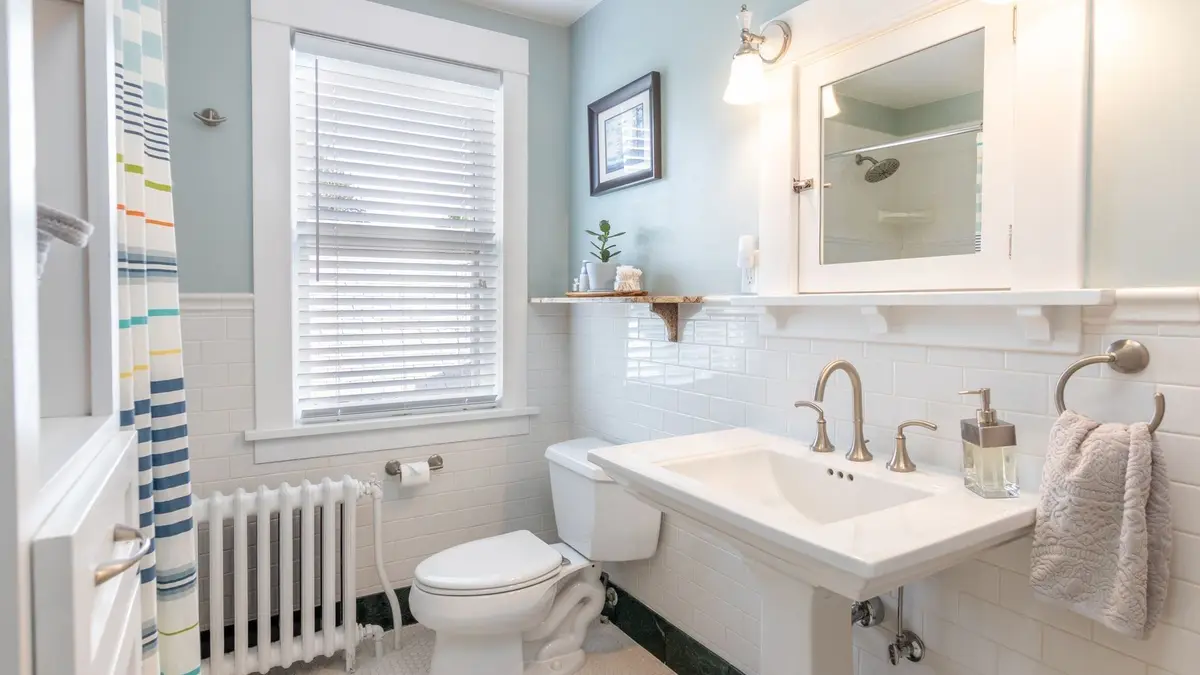
A small bathroom holds more when you clear out what you don’t use, then build up instead of out: shelves above the toilet, hooks on the door, a caddy in the shower and bins under the sink. Keep the floor as clear as you can, so the room is easy to clean and feels bigger than it is.
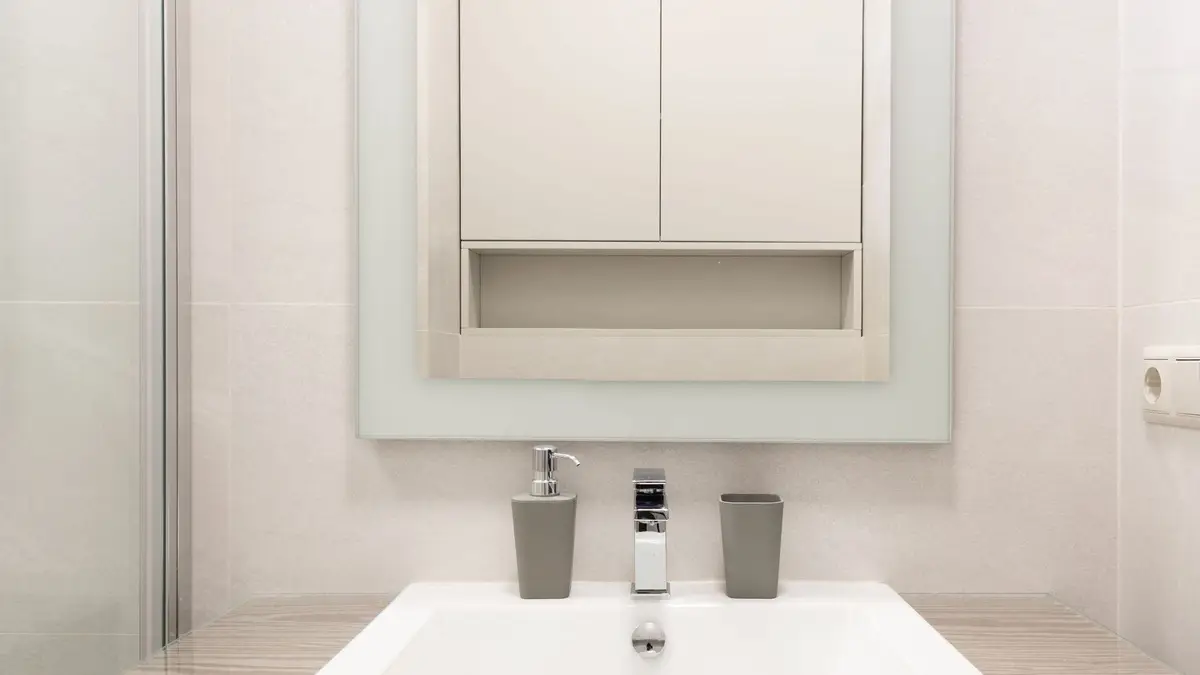
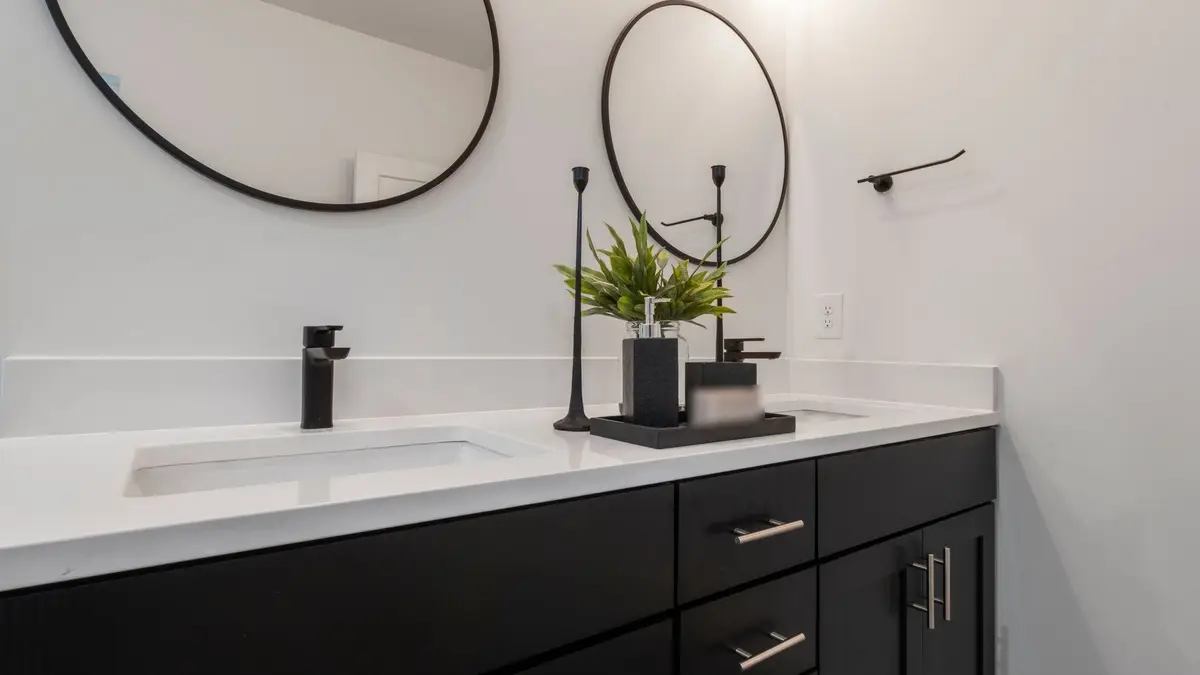
These 12 ideas work in a full bath, a half bath or a shared hall bathroom in an apartment. They leave the vanity top and the medicine cabinet for their own guides and focus on the walls, the door, the shower and the space around the toilet. For tight corners in the rest of the home, see these storage ideas for small spaces.
1. Clear out products before you add storage
Pull everything out of the shower, the cabinet and every basket, and set it on a towel on the floor. Group like with like: hair care, skin care, shaving, first aid, cleaning supplies and spare toiletries.
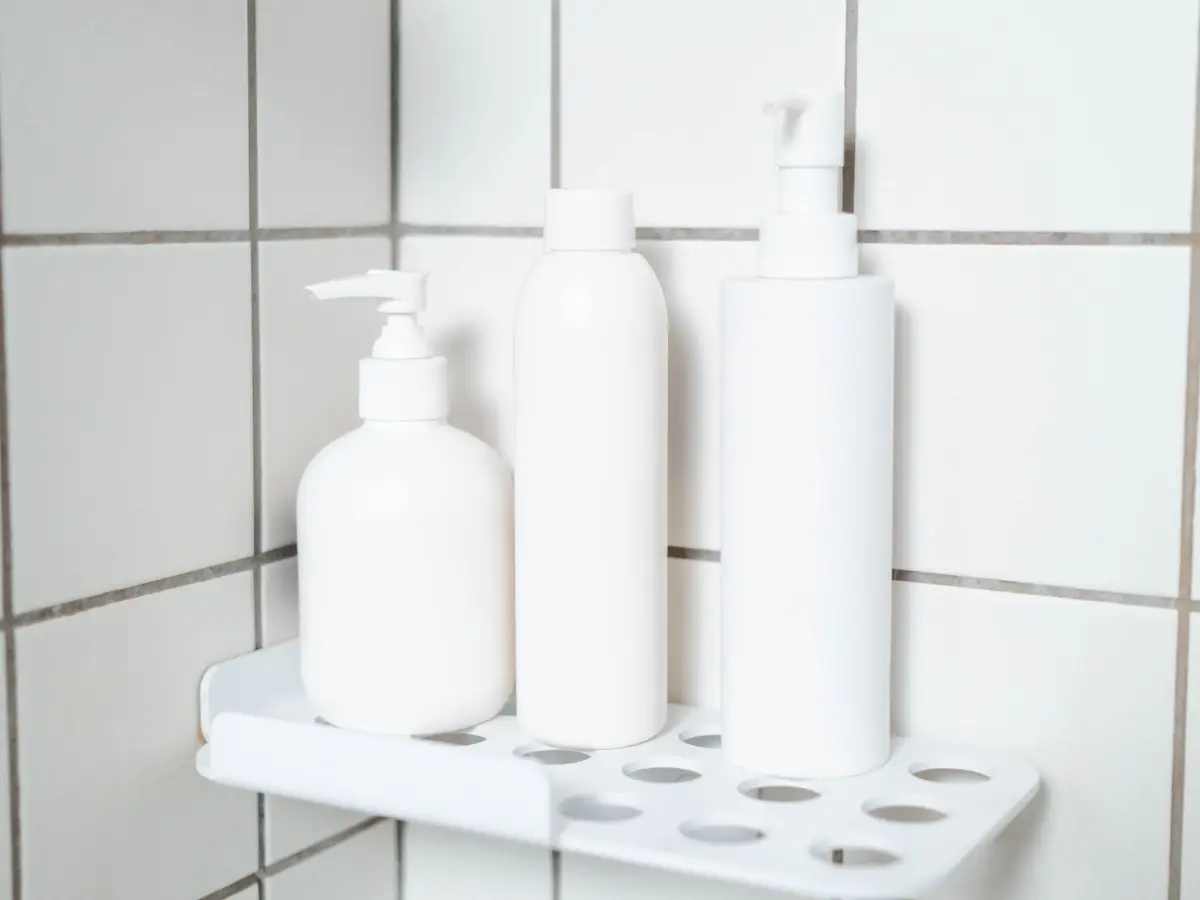
Toss anything empty, dried out, separated or past its date. Let go of the products you tried once and didn’t like, the travel bottles you never pack and the duplicates that crept in over time.
Keep only what each person uses right now, plus one backup of the things you run through fast. Everything else is taking space your towels could use.
Wipe down every shelf and the inside of the cabinet while they’re empty. Then you can see how much room the bathroom really has before you buy a single bin.
The declutter checklist walks through the bathroom and every other room the same way. Repeat this edit every few months, since half-used bottles pile up faster in a bathroom than almost anywhere else in the home.
2. Put shelves above the toilet
The wall above the toilet is often the biggest empty space in a small bathroom. Open shelves, a wall cabinet or a freestanding unit that straddles the toilet turns it into storage without using any floor.
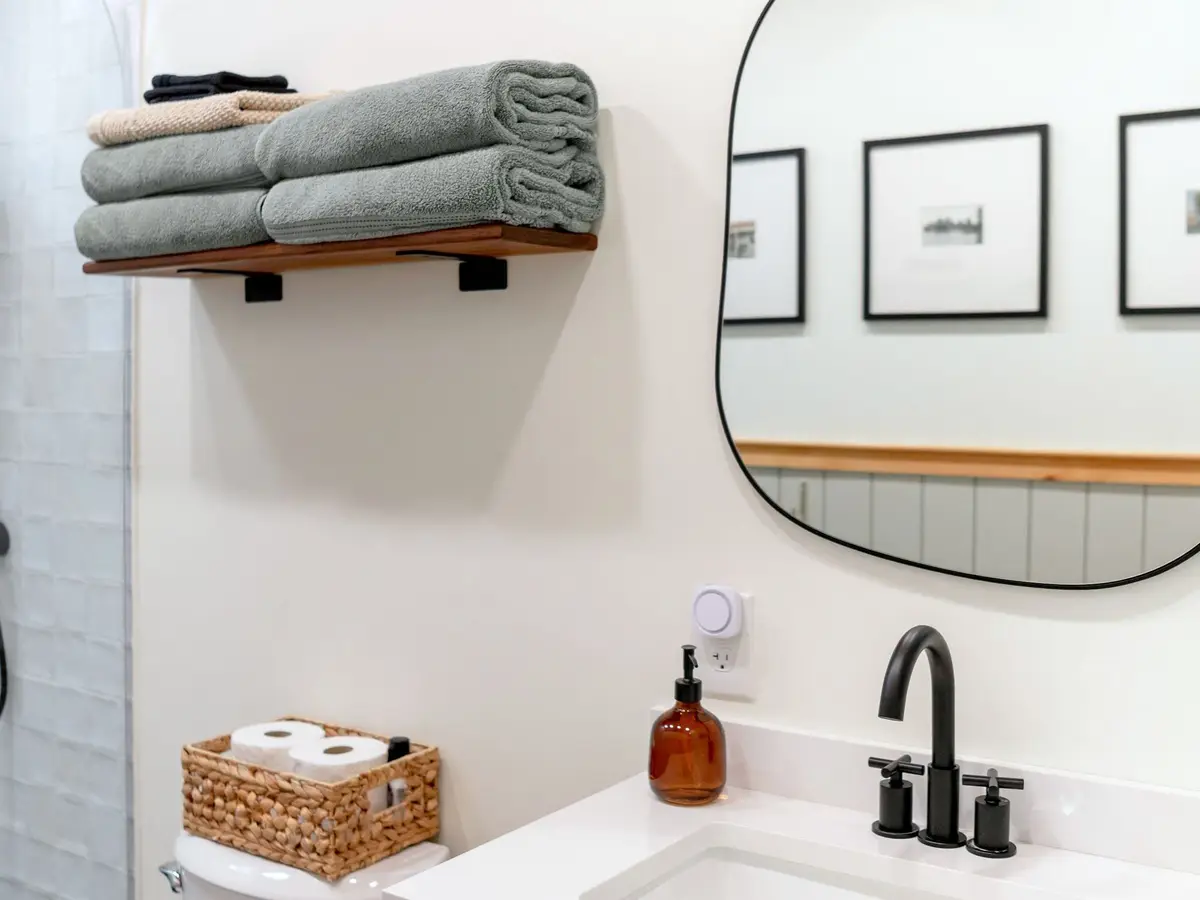
Hang the lowest shelf high enough that nobody bumps it while using the toilet, and leave room to lift the tank lid. Measure the width between the walls or fixtures before you shop.
Use the shelves for things that don’t mind being seen: folded hand towels, spare washcloths, a jar of cotton swabs or a small plant. Put loose items in a basket or a lidded box, so the wall reads as tidy instead of busy.
A closed wall cabinet is a better pick for medicines, spare razors and anything you’d rather keep out of sight. Keep heavy things on the bottom shelf, closest to your hands.
If you can’t drill, an over-the-toilet unit stands on the floor behind the toilet and needs no screws at all. Look for one with feet that sit flat and a frame that doesn’t wobble.
3. Slide a slim rolling cart beside the toilet
The gap between the toilet and the wall, or between the toilet and the vanity, is often too narrow for a cabinet. A slim rolling cart fits there and holds a surprising amount for its size.
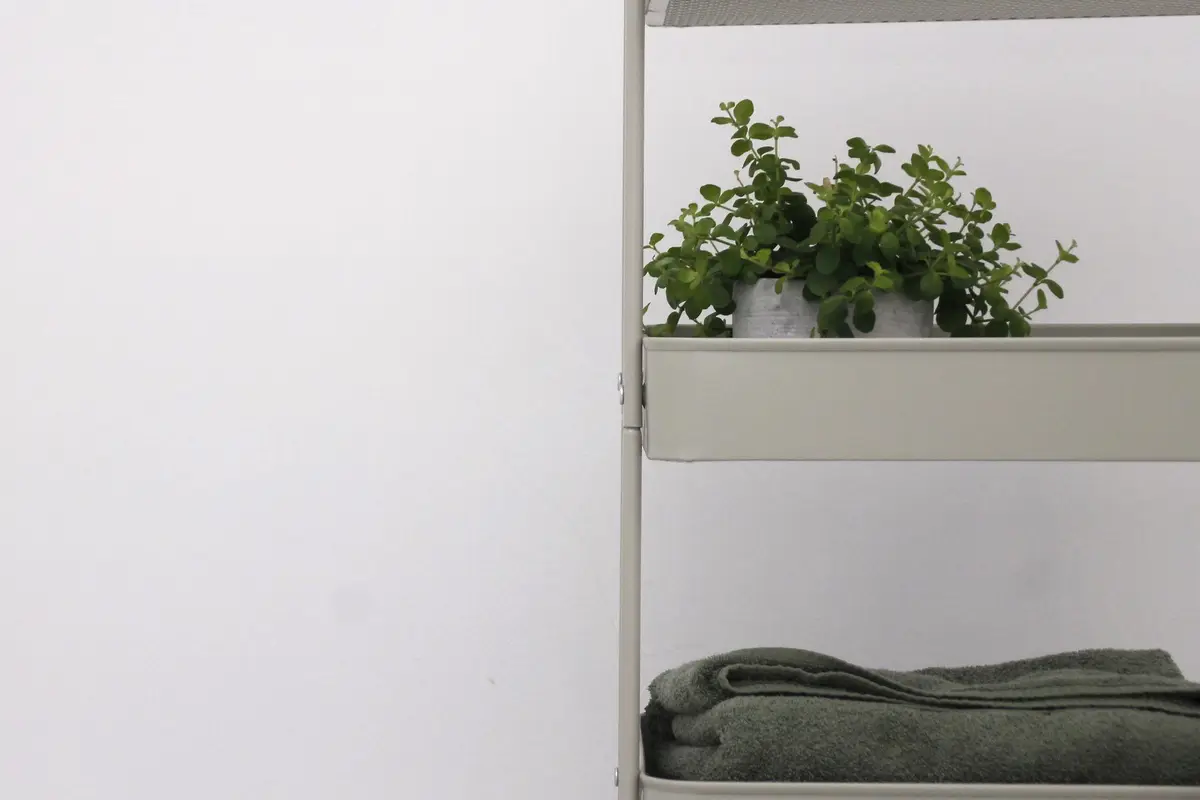
Measure the gap at the floor and again at the height of the toilet tank, since baseboards and pipes can narrow it. Leave a little room on each side so the cart rolls in and out without scraping.
Give each tier one job. Toilet paper on the bottom, extra towels or washcloths in the middle and daily items on top is a simple setup that works for most families.
Wheels let you pull the cart out to clean behind it, then roll it right back. Some carts also fit beside a washing machine or a bed, so it can move rooms later if your needs change.
Lock the wheels if the floor slopes toward a drain. Keep the top tier light, so the cart doesn’t tip when someone grabs a towel in a hurry.
4. Give toilet paper its own spot
Running out mid-visit is a small problem that feels big, so keep a few spare rolls within reach of the toilet. A wall holder for the roll in use and a basket for backups covers it.
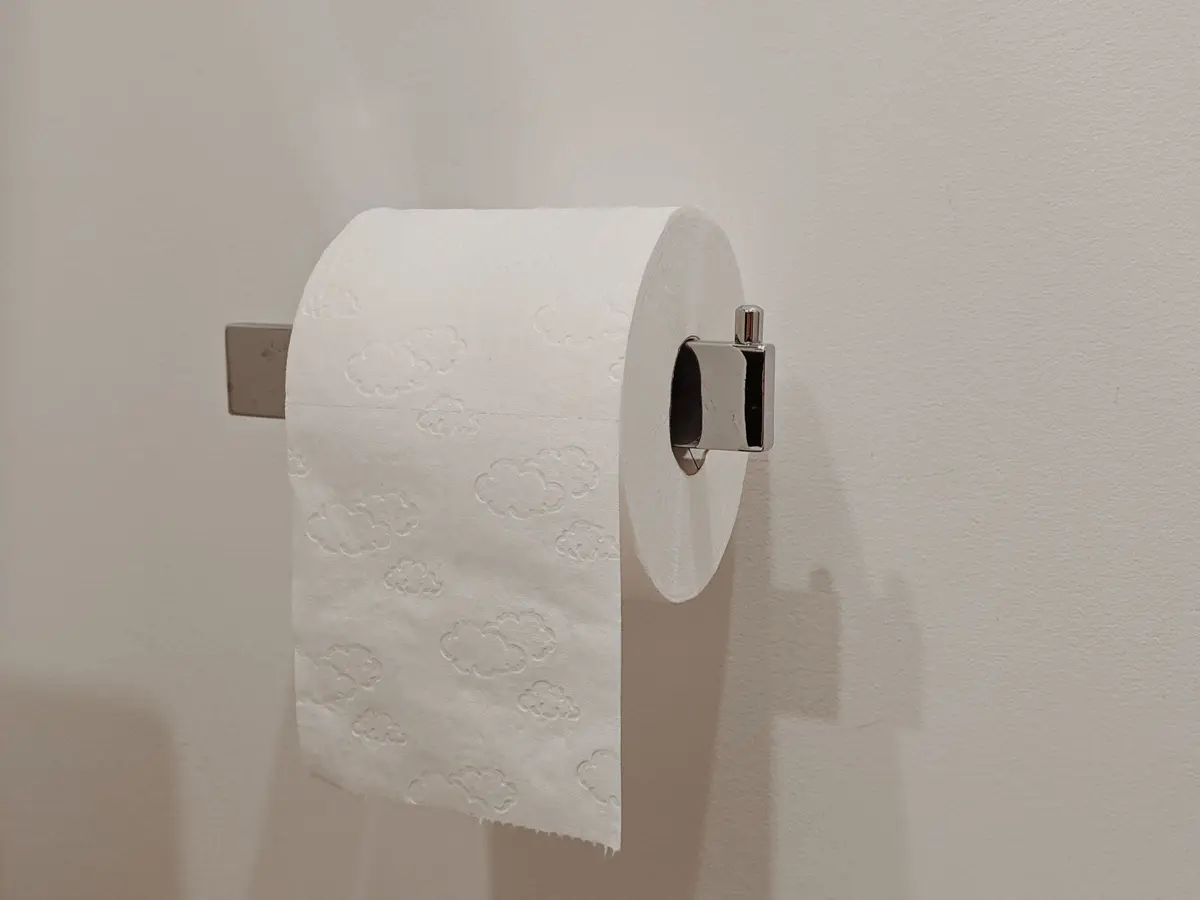
A lidded basket on the tank, a freestanding stand that holds a short stack or a shelf above the toilet all work. Pick one spot and use it every time, so guests and kids know exactly where to look.
Keep only a few rolls in the bathroom. Store the rest of a big pack in a hall closet, a high garage shelf or under a bed, where it doesn’t crowd the small room.
If the holder sits too far from the seat, an adhesive or freestanding holder can move it closer without patching holes. Check that it’s within easy reach while sitting.
Put toilet paper on the shopping list when you open the last backup in the bathroom, not when the closet runs dry. That one habit means you’ll never have to hunt for a roll again.
5. Hang hooks on the back of the door
The back of the bathroom door is wall space most people forget about. Hooks there hold bath towels, robes and pajamas without taking up an inch of floor.
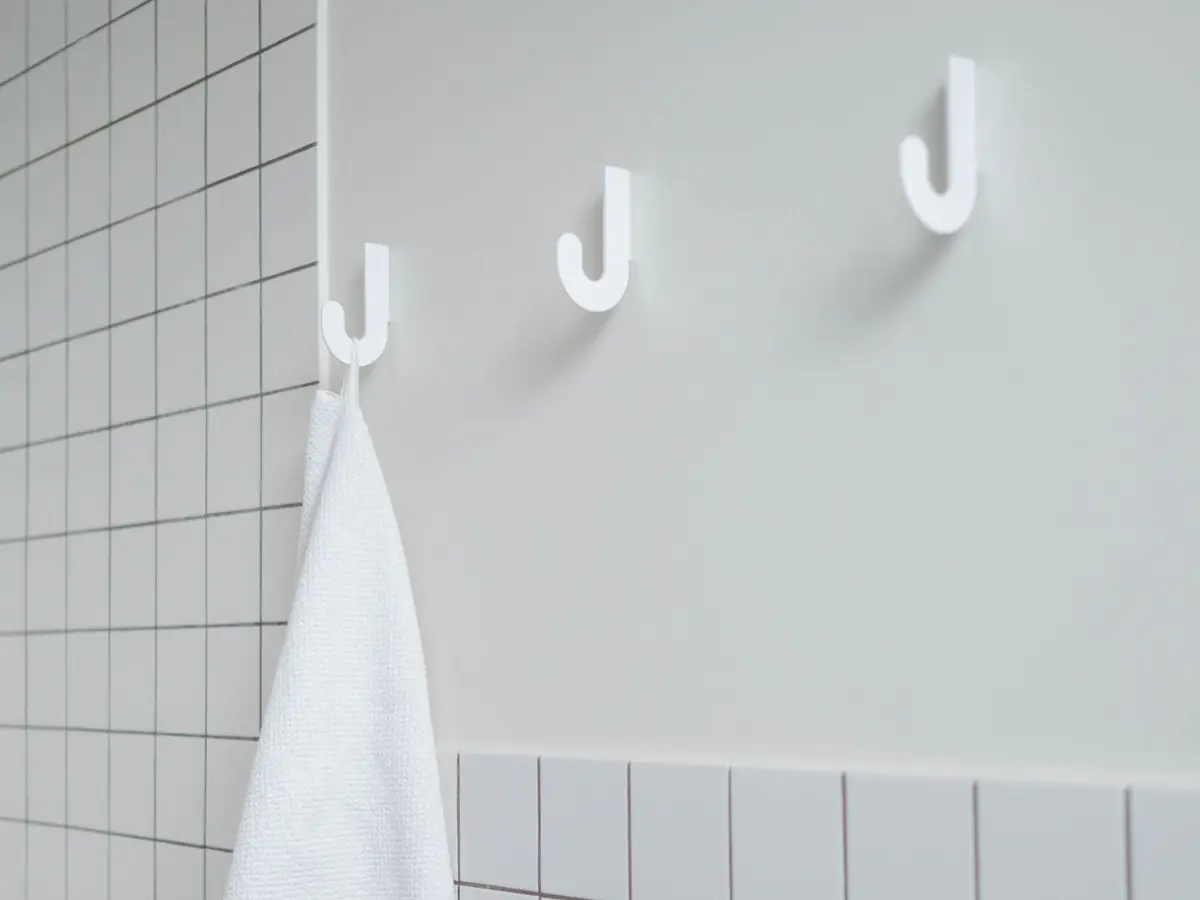
An over-the-door rack needs no drilling and lifts off when you move. Check that the door still closes with the rack in place, since a thick bracket can rub at the top of the frame.
Hooks screwed into the door or adhesive hooks on its face work too. Space them far enough apart that towels hang flat and dry instead of bunching together.
Towels dry faster on a hook when they hang spread out, not folded double. In a busy bathroom, give each person their own hook, so wet towels stop landing on the floor.
Add a low hook for kids at their reach. It turns hanging up a towel into something they can do on their own, which is a small habit worth building early.
Use one hook on the door for a robe or the next day’s clothes. Leave the rest for towels, and keep the hooks clear of the doorknob so nothing catches.
6. Add a towel bar beside the vanity
The narrow wall between the vanity and the shower, or at the side of the vanity, is often just wide enough for a towel bar. It keeps the hand towel next to the sink and frees the counter.
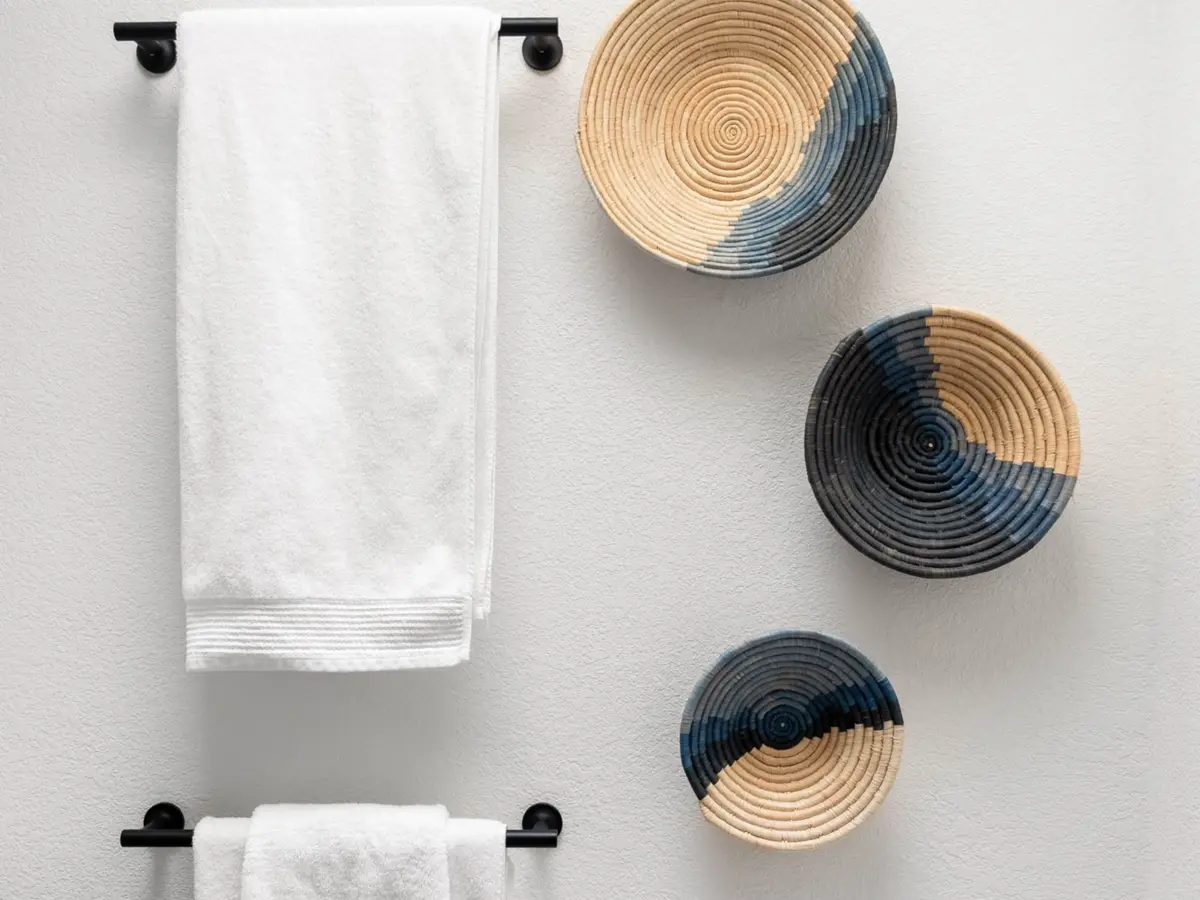
If one bar isn’t enough, stack two on the same wall, one above the other. Bath towels go on the top bar and hand towels or washcloths on the lower one.
Measure the wall before you buy, and pick a bar short enough to clear the door swing and the light switch. A towel ring is a smaller option for a very tight wall.
Mount the bar into a stud or with anchors made for the wall type, since a wet towel weighs more than a dry one. Follow the weight limit on the package.
A bar that hangs over the side of the vanity cabinet works where there’s no free wall at all. Keep it low enough for kids to reach, so they can use it too.
7. Corral shower bottles in a caddy
Bottles lined up along the edge of the tub fall over, collect grime underneath and make the shower feel crowded. One caddy pulls them all into a single spot.
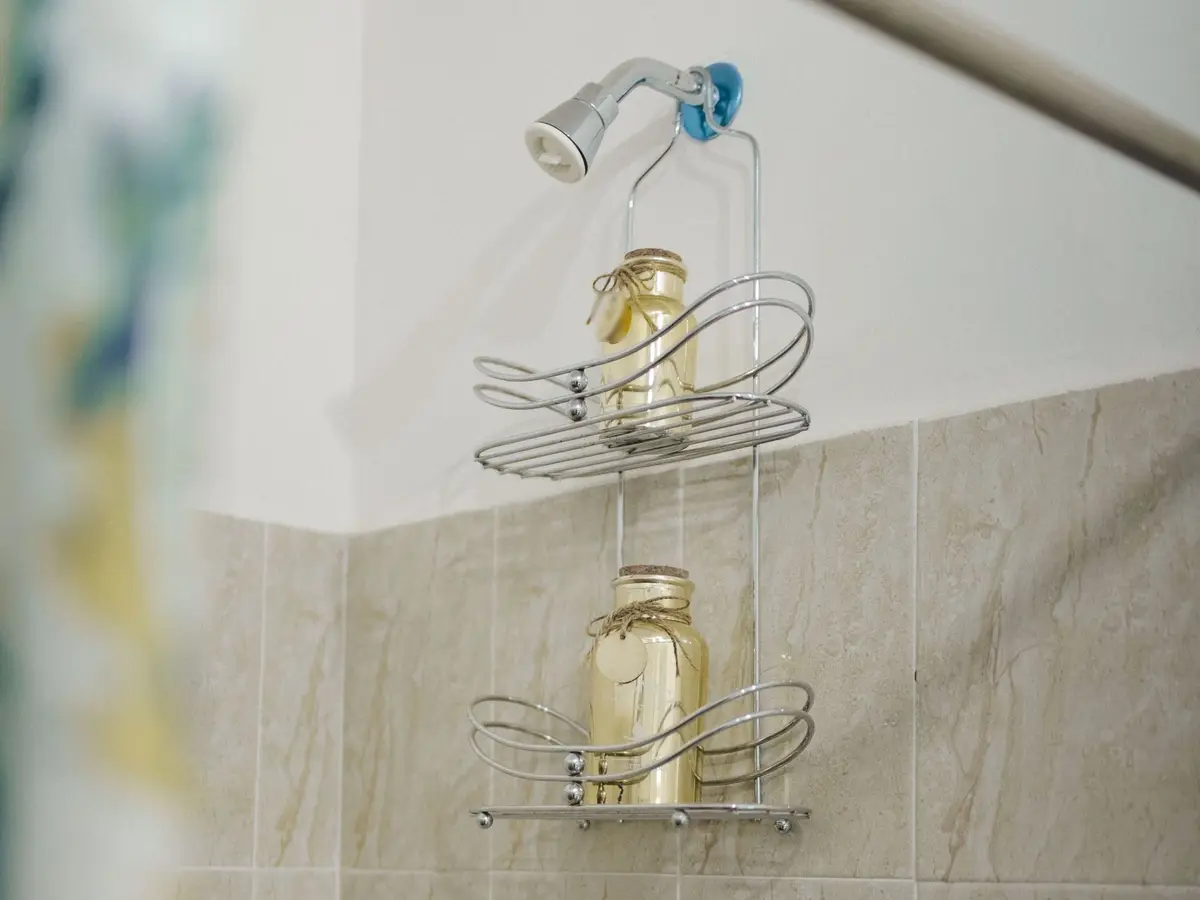
A caddy that hangs from the shower head or clips onto the riser pole needs no tools. A corner caddy on a pole or a set of corner shelves fits a shower stall with no ledge at all.
Pick one with open bottoms or drain holes, so water runs through instead of pooling under bottles. Rinse it and let it dry when you clean the shower.
Before you load it, look at what you actually use each week. Keep one shampoo, one conditioner and one body wash per person, and move backups to the cabinet.
Pour products into matching refillable pump bottles if you like a calmer look. Label them so nobody washes their hair with body wash, and refill from the big bottles you store elsewhere.
8. Use a tension rod for a second caddy
A spring-loaded tension rod fits between the walls of a tub or shower alcove with no drilling. Set one up high, out of the way of the shower curtain, and it becomes a hanging spot for more storage.
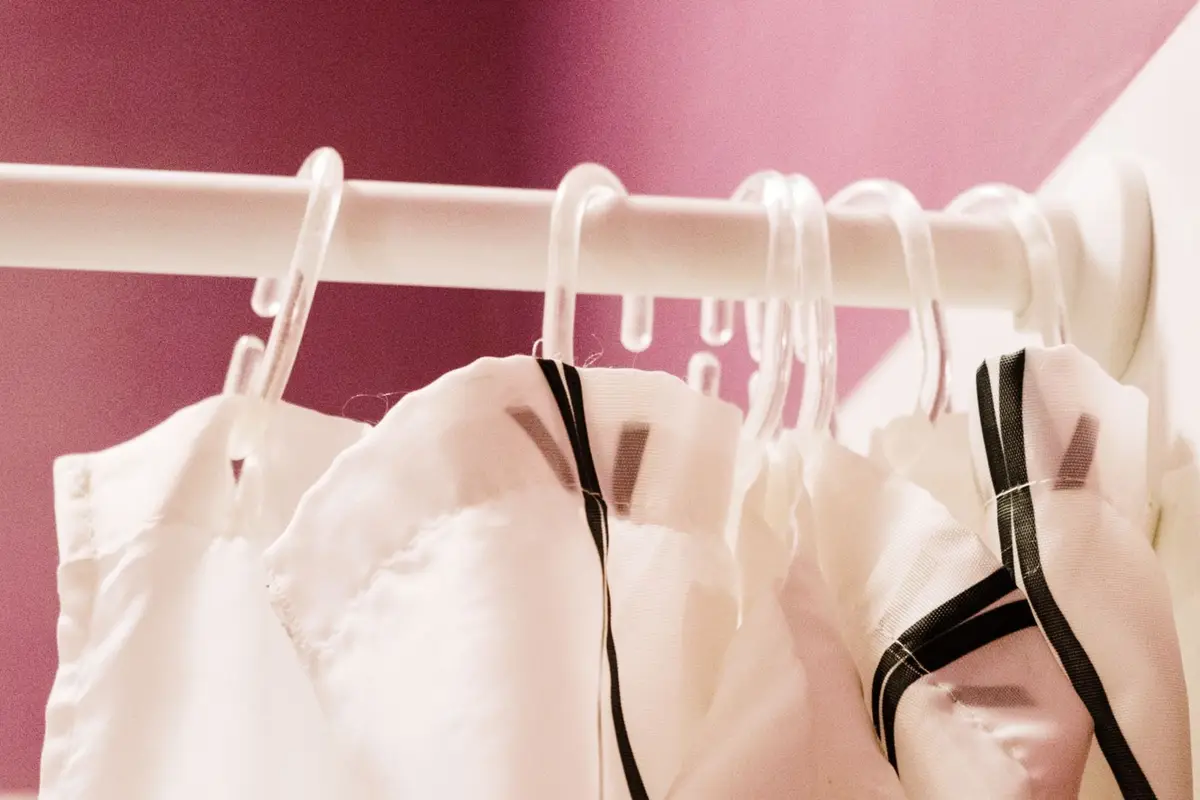
Hang a second caddy, a mesh bag of bath toys or a few S-hooks for loofahs and washcloths from the rod. Everything drips dry above the tub instead of sitting on the ledge.
Measure the width of the alcove before you buy, and pick a rod rated for that span. Twist it until it’s snug, then test it by hand before you hang anything on it.
Keep the load light: a rod held by pressure isn’t made for heavy bottles. Put the full-size bottles in the main caddy and the lighter items on the rod.
A second tension rod set low inside the shower can hold a kid’s caddy at their height. It’s easy to move up as they grow, and it comes down without leaving a mark.
9. Sort under the sink with bins
The cabinet under the sink is deep, dark and split by a drain pipe, so things pushed to the back get lost. Bins and pull-out drawers turn it into space you can actually use.
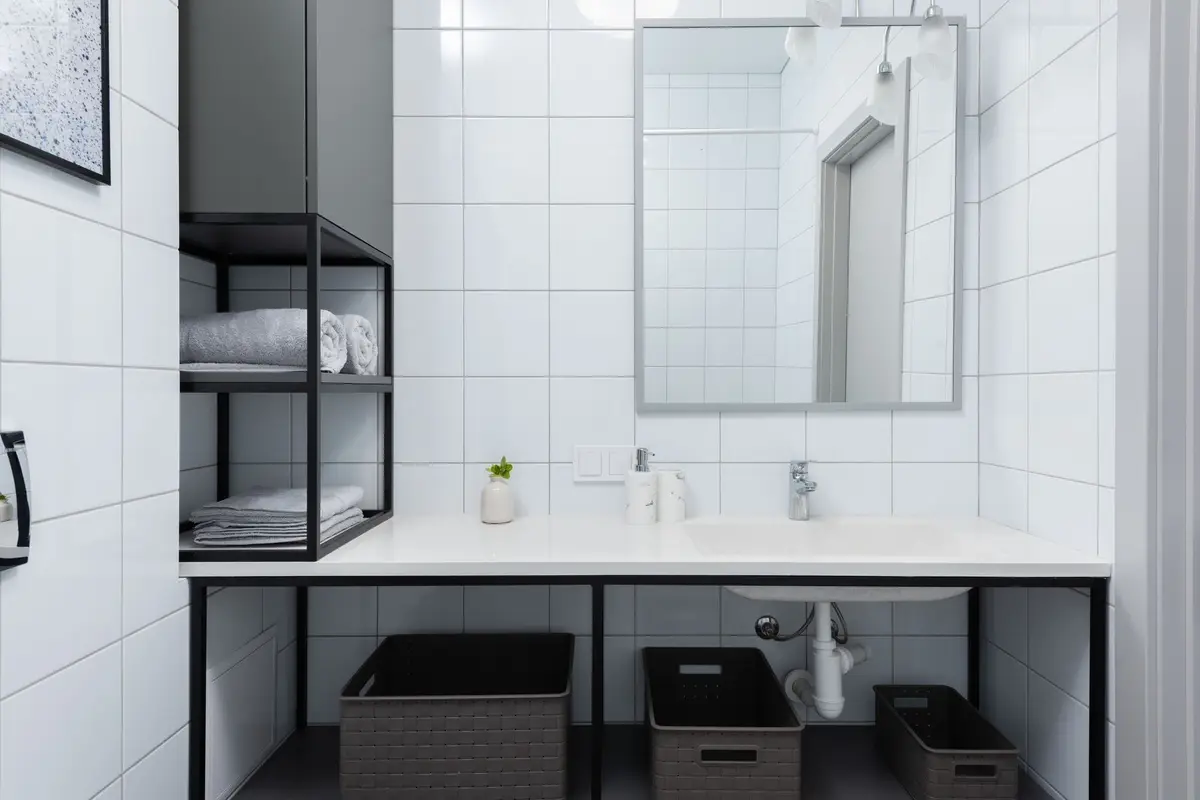
Measure the width, depth and height of the cabinet, and around the pipes, before you buy. The bin and basket size calculator shows which bin sizes fit and how many line up side by side.
Give each bin one category: hair tools, extra toiletries, first aid or cleaning supplies. Bins with handles slide out like drawers, and a small stacking shelf can use the height beside the pipe.
Keep cleaning products and medicines out of children’s reach. If little ones live with you or visit, store them in a locked cabinet or a locking box, in their original containers, instead of loose under the sink.
Check the floor of the cabinet for drips each time you reach in. A slow leak under a sink is easy to miss, and catching it early saves the cabinet and keeps mold away.
Put a washable mat or tray on the cabinet floor. It catches spills and wipes clean in seconds.
10. Lean a narrow ladder shelf on the wall
A ladder shelf takes up very little floor space and holds towels on its rungs or shelves. It suits the narrow strip of wall beside a tub, at the end of a vanity or behind the door.
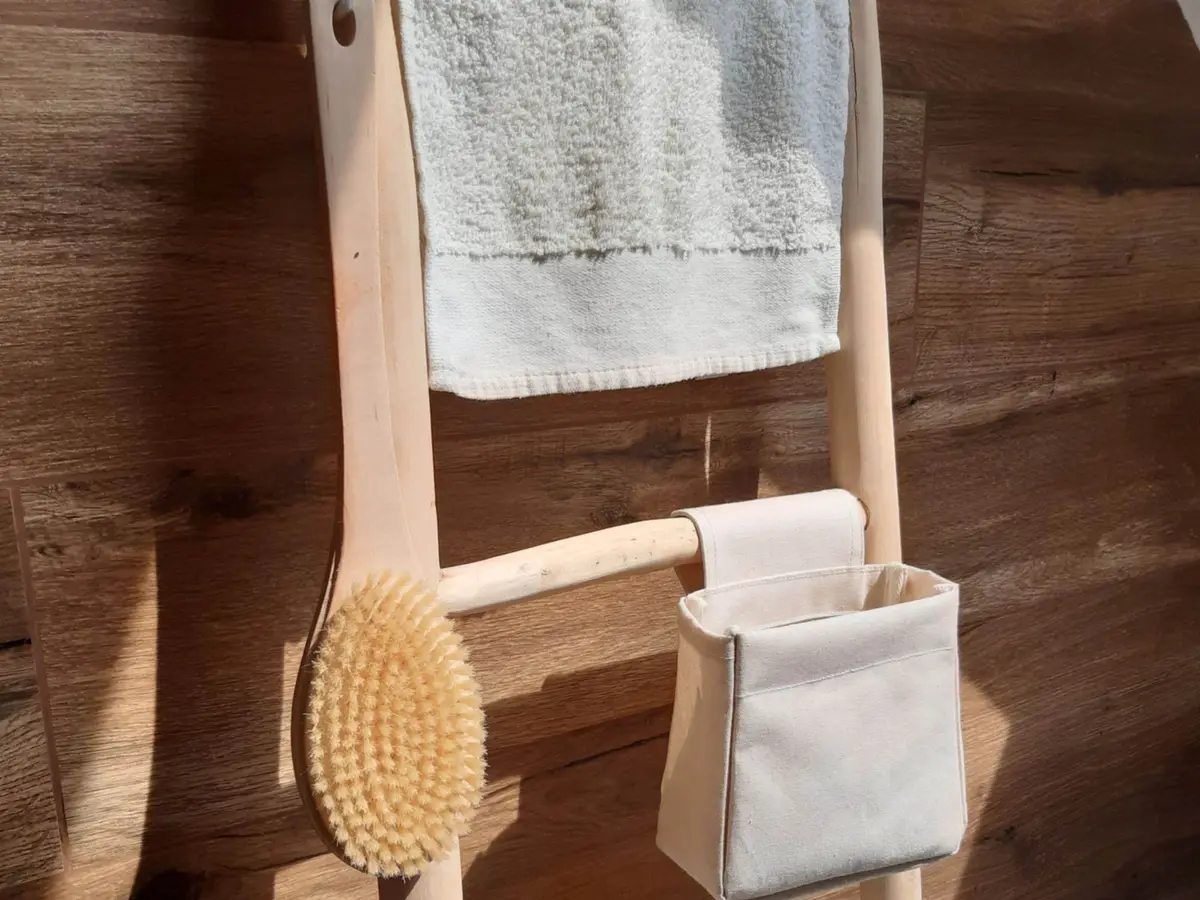
Drape bath towels over the rungs, where they dry between uses, or fold spares on the shelves of a ladder-style unit. A small fabric pouch on a rung holds washcloths or a hair brush.
Pick one that’s no deeper than you need. A slim ladder shelf leaves room to walk past, which matters in a narrow bathroom where every step counts.
Anchor a tall shelf to the wall, especially if young children live in the home, so it can’t tip over when someone pulls on it. Most ladder shelves come with a bracket for this; use it.
Keep only the towels you use each week on the ladder. Store the extras in a linen closet or another room, so the shelf looks calm instead of crowded.
11. Give everyone their own spot
When several people share one small bathroom, mixed-up bottles and towels cause most of the clutter. One basket, bin or hook per person ends the question of whose things are whose.
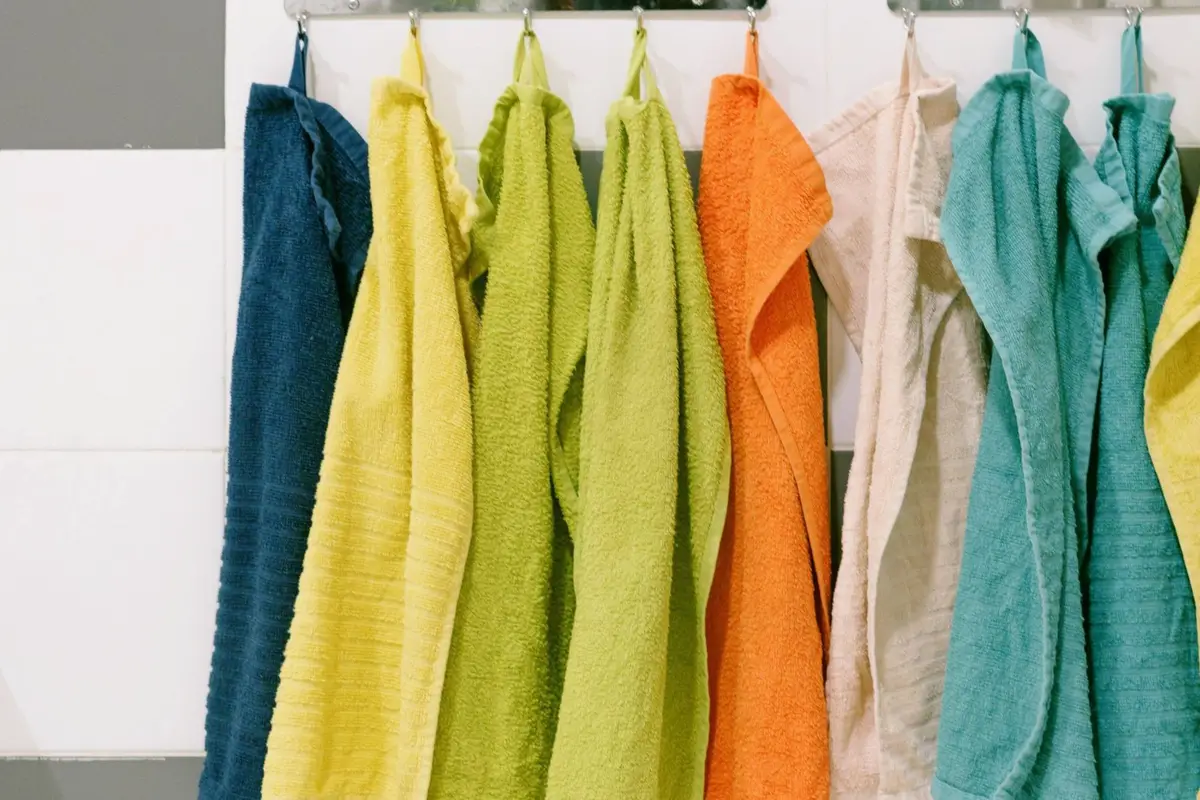
Pick a color for each person and match their towel, toothbrush and basket to it. Even young kids can find their own things by color, before they can read a label.
Keep each basket small enough to fit on a shelf or slide into the under-sink cabinet. Each person carries theirs to the sink when they need it and puts it back when they’re done.
For a guest bath, a single basket of spare toothbrushes, travel bottles and a clean washcloth makes visitors feel welcome. Restock it after each stay.
Make putting things back part of the bedtime routine. A line on the kids chore chart for hanging up towels and returning the basket helps the habit stick without daily reminders.
Swap the baskets when someone moves out or grows up. Since each one holds only one person’s things, the change takes minutes instead of a full clean-out.
12. Keep the floor clear and the room dry
A clear floor makes a small bathroom feel bigger and turns a quick clean into a few minutes of wiping. Move whatever sits on the floor up onto the walls, the door or a cart.
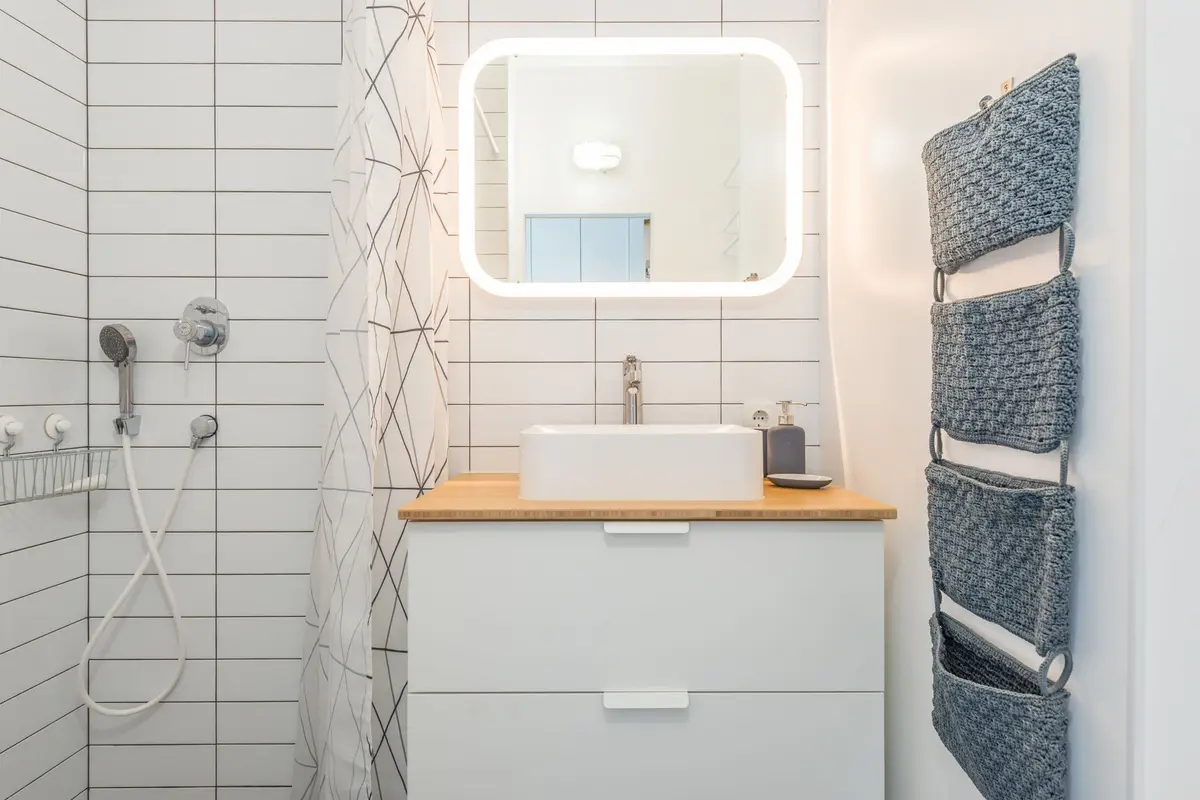
Hanging pockets or a wall rack can hold hair tools, magazines or spare rolls, and a hamper with a lid can live in the bedroom instead. The floor should hold only the bath mat and the trash can.
Keep the room dry while you’re at it. Run the exhaust fan or open a window when you shower, wipe up water on the floor and fix drips as soon as you see them, since damp corners are where mold starts.
Hang the bath mat to dry after each use, and wash it with the towels. A mat that stays wet is one of the first things to smell musty.
Fold a quick bathroom pass into the weekly cleaning schedule, and use the deep cleaning checklist a few times a year to reach behind the toilet, under the cabinet and along the baseboards.
A few minutes of putting things back each night keeps all of this working. When the floor is clear, the rest of the bathroom stays easy to keep up with.
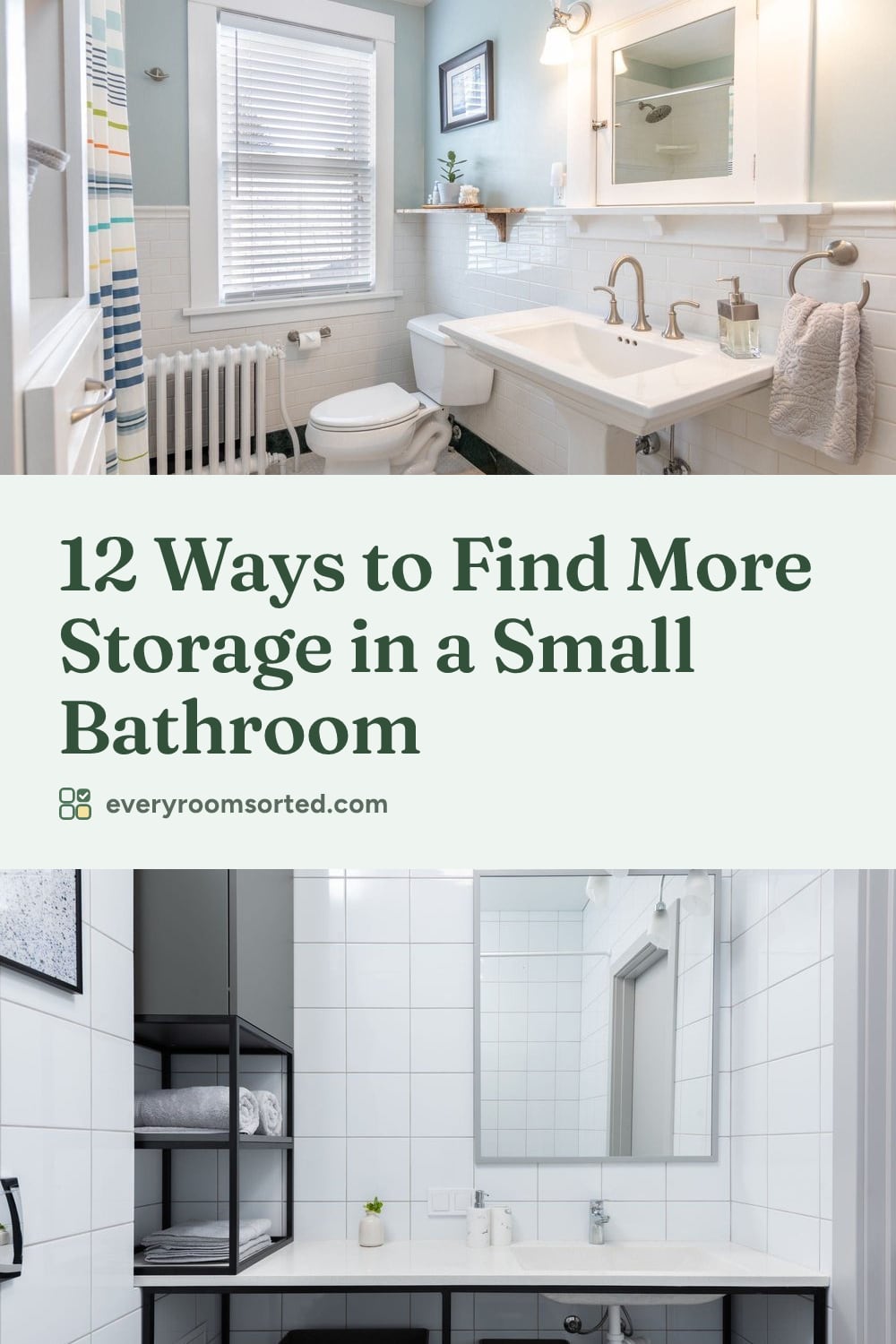
Save this for later
Pin it to a board so it's there when you're ready to start.
Save to Pinterest(opens in a new tab)Make it easier
Free printable
A room-by-room deep cleaning checklist for the jobs a weekly clean skips, from the oven and the grout to the vents and baseboards.
Free tool
Enter the width, depth and height of a shelf, a drawer or a cube cubby, and see which standard bins and baskets fit, how many, and how they line up.
Frequently asked questions
How do I organize a small bathroom with no storage?
Go up and go vertical: a shelf or cabinet above the toilet, hooks on the back of the door and a caddy in the shower add storage without taking floor space. A slim rolling cart beside the toilet or the vanity covers whatever still needs a home.
Where should I keep extra toilet paper in a small bathroom?
Keep a few rolls within reach of the toilet, in a lidded basket on the tank, a slim stand beside it or a shelf above it. Store the rest of the pack in a hall closet or another room, so backups don't crowd a small bathroom.
How do I keep a small bathroom from getting moldy?
Run the exhaust fan or open a window while you shower and for a while after, and hang towels spread out so they dry. Fix drips and leaks as soon as you find them, and wipe up standing water so damp spots don't linger.
Is it safe to keep cleaning products under the bathroom sink?
Only if young children can't get to them. A locked cabinet or a locking box is the safest spot, with every product in its original container, and medicines belong locked up and out of reach too.