12 Nursery Closet Organization Ideas That Keep Every Size in Its Place
Plan the nursery closet as one system: zones, a rod set for short clothes, size dividers, diaper backstock, next-size bins, a keepsake box and a working door.

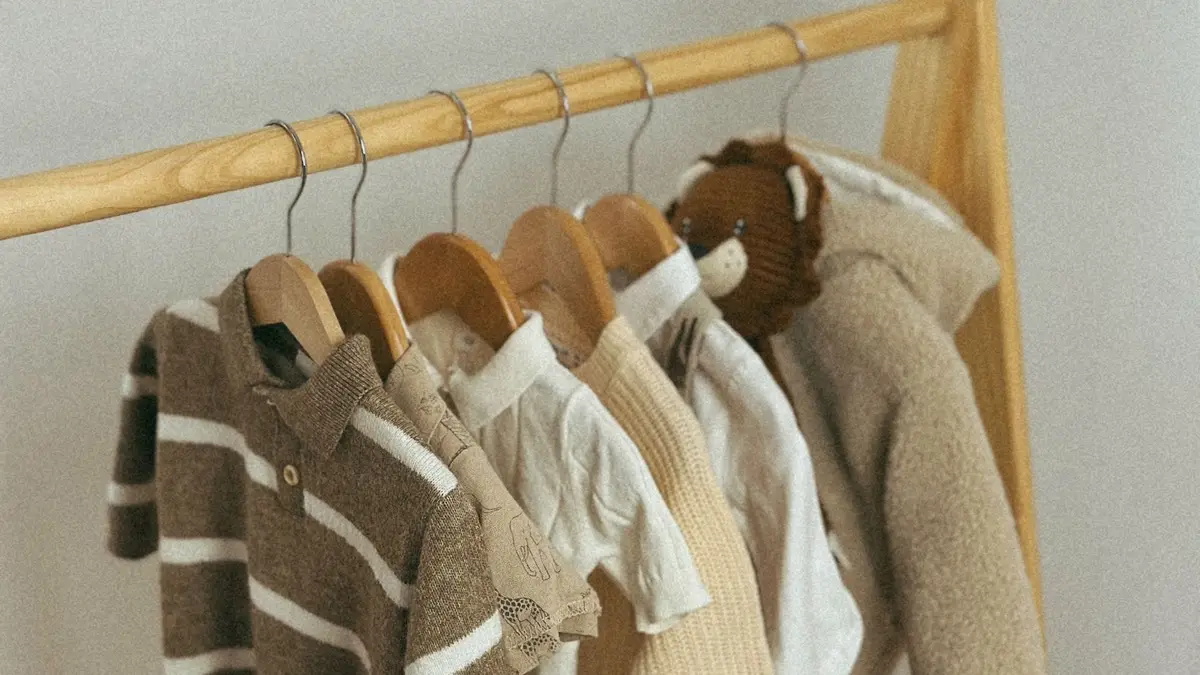
Nursery closet organization works best when you plan the closet as one system. Hanging clothes take the middle at a height that suits short baby clothes, supplies and bedding go on the shelves, the next size and the outgrown pile get their own bins, and small things live on the door.
Heavy things stay low, light things go up high, and anything with drawers is anchored to the wall. These 12 ideas take a reach-in or walk-in nursery closet from empty to finished.
If the closet is tight, the small nursery closet organization ideas squeeze the same system into less space. For the changing station, the crib and the rest of the room, see these nursery organization ideas.
1. Empty the closet and sketch the zones
Start with an empty closet, even if it only holds a few gift bags right now. Take everything out, wipe the shelves and the floor, and look at the space as it really is.
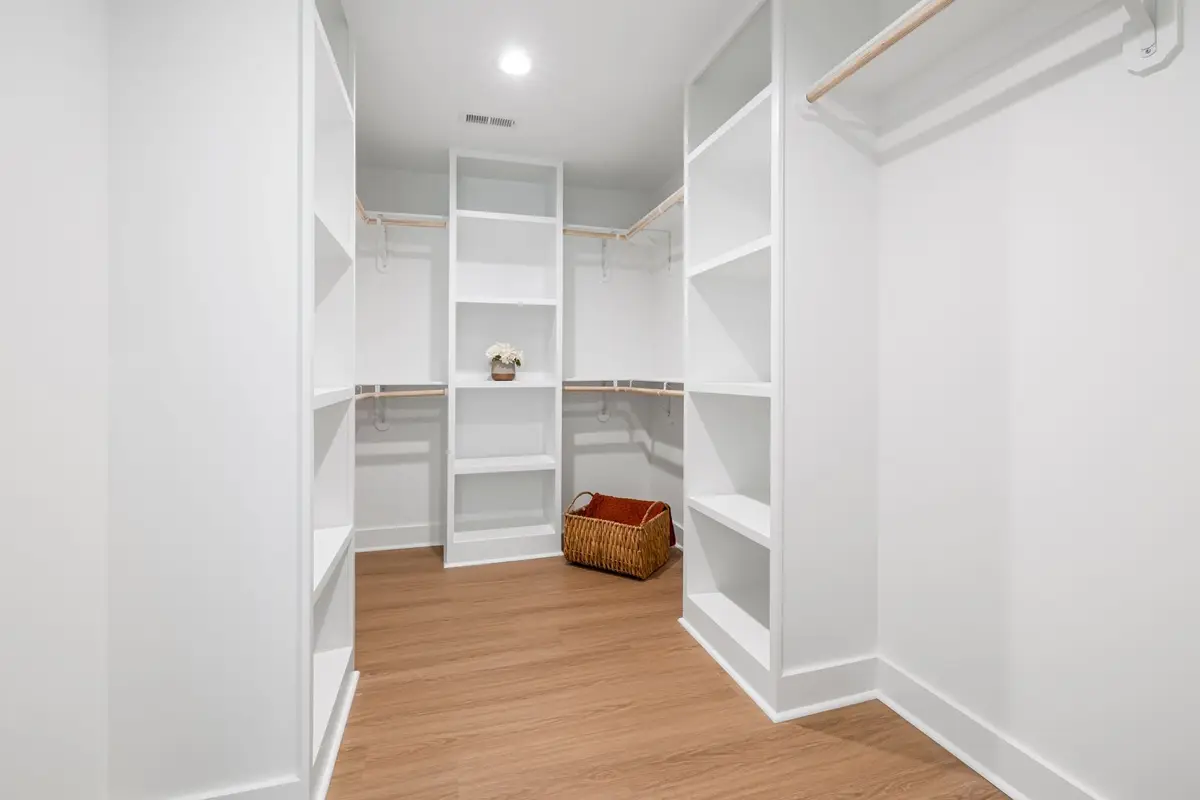
Measure the width, the depth and the height up to the rod and the shelf. Note any outlet, light switch or vent, since those decide where a hamper or a drawer unit can stand.
Then sketch four zones on paper: hanging clothes, supplies, bedding and storage for other sizes. The hanging zone takes the middle, where you can reach without bending or stretching.
Give the floor to heavy things like boxes of diapers and the hamper. Keep the top shelf for light things you rarely need, so nothing heavy is ever over your head while you hold a baby.
If the closet already holds adult coats or holiday boxes, the declutter checklist helps you decide what moves out to make room.
2. Set a lower rod for short baby clothes
Hang a row of baby clothes on an adult-height rod and most of the closet’s height sits empty under the hems. A second, lower rod puts that space to work.
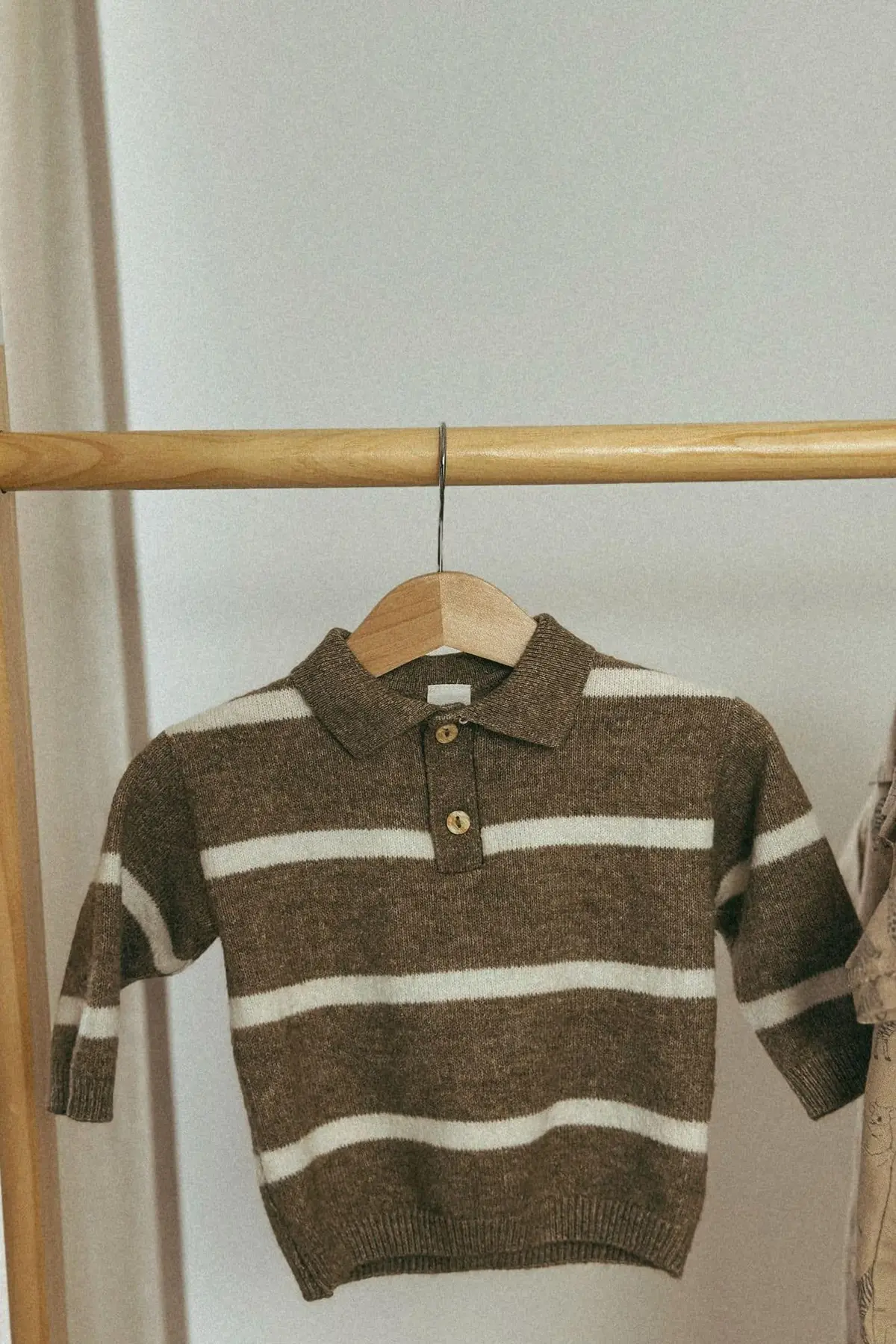
Hang everything you own on the existing rod first and look at where the longest piece ends. That line tells you how low the second rod can go without the two rows overlapping.
Fix the lower rod to the side walls, or to a wood cleat screwed into the studs, so it carries a full load without drooping in the middle. Keep the upper rod for the next size, jackets and outfits saved for a special day.
Set the lower rod at a height you can reach with a baby on one hip. Everyday outfits hang there, and you can grab one without setting anyone down.
Leave the floor under the lower rod open for the hamper or a low bin. When your child grows into longer clothes, raise the rod or take it down and patch the screw holes.
3. Mark each size with rod dividers
Size dividers are flat rings or tabs that slip over the rod between groups of clothes. They turn a long row of tiny outfits into sections you can read at a glance.

Order the sections from the door inward, with the current size closest to your hand and the next size behind it. Within each size, hang by type, so sleepers, rompers and dresses each sit together.
Sizes vary from one maker to the next, so go by fit rather than by the tag. Write your own divider labels with a marker if the printed ones don’t match how the clothes actually fit.
Move the dividers, not the clothes, as your baby grows. When the front section is outgrown and cleared, the next size simply becomes the front.
Make the check part of putting laundry away. Anything that went on tight this week comes off the rod right then, before it can sneak back into rotation.
4. Pick hangers made for baby clothes
Adult hangers stretch tiny necklines and poke out through the shoulders of a newborn outfit. Infant hangers are shorter, so the garment hangs flat and keeps its shape.
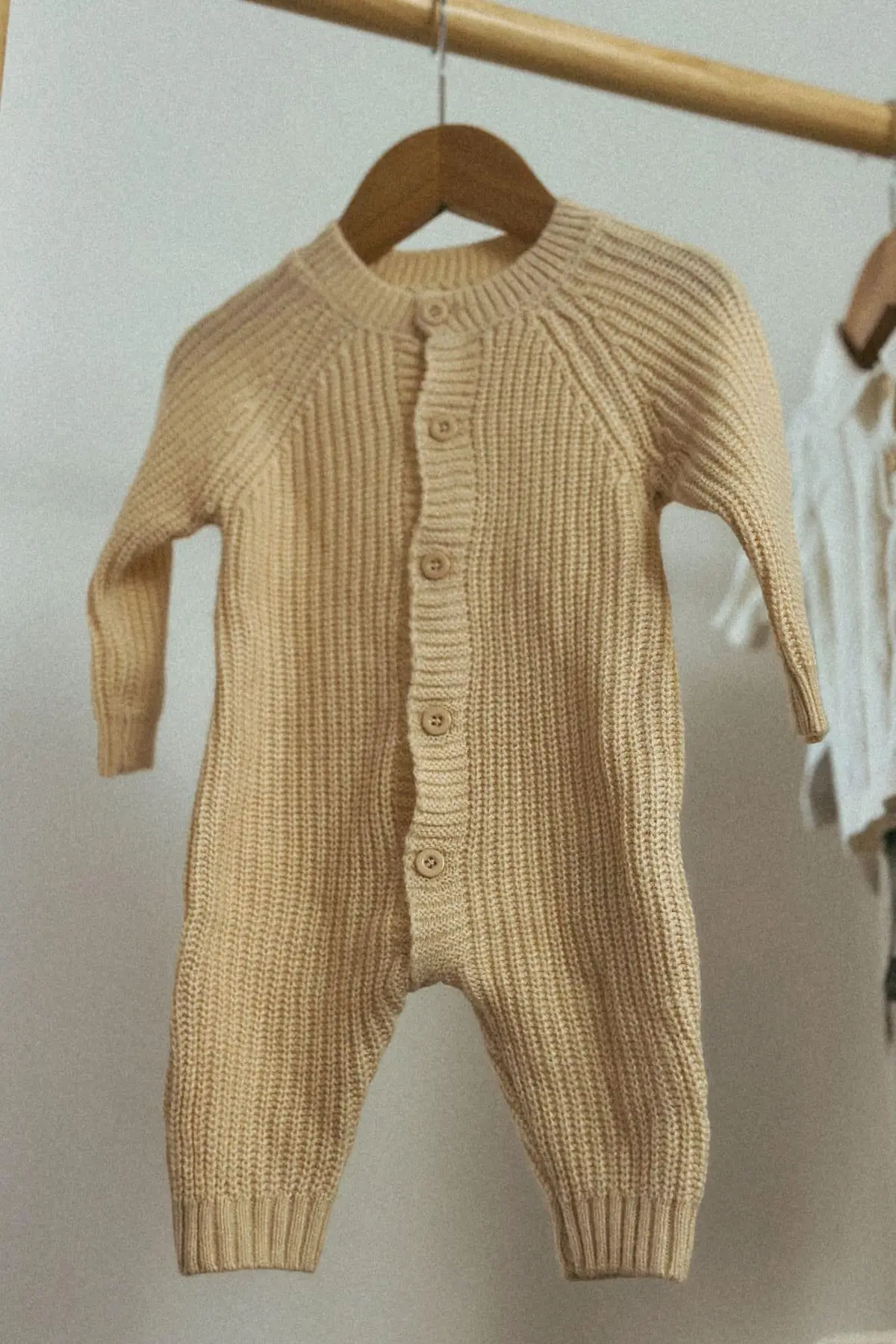
Choose one style for the whole closet. Matching hangers sit at the same height, which keeps the row even and makes every size divider easy to spot.
Wood hangers suit knits and little jackets, while thin velvet ones grip slippery fabrics and take up less rod space. Hangers with notches at the shoulders hold dresses and overalls by their straps.
Toddler clothes need a wider hanger, so add a small set of the next hanger size once the first toddler outfits arrive. Mixing the two sizes on one rod is fine as long as each section stays together.
Leave a couple of empty hangers at the end of each size section. A clean outfit from the laundry then goes straight back to its spot instead of onto a chair.
5. Stock diapers and wipes on a backstock shelf
The changing station only needs a day or two of supplies. The closet is where the rest waits: unopened packs of diapers, refills of wipes, spare cream and the next diaper size.
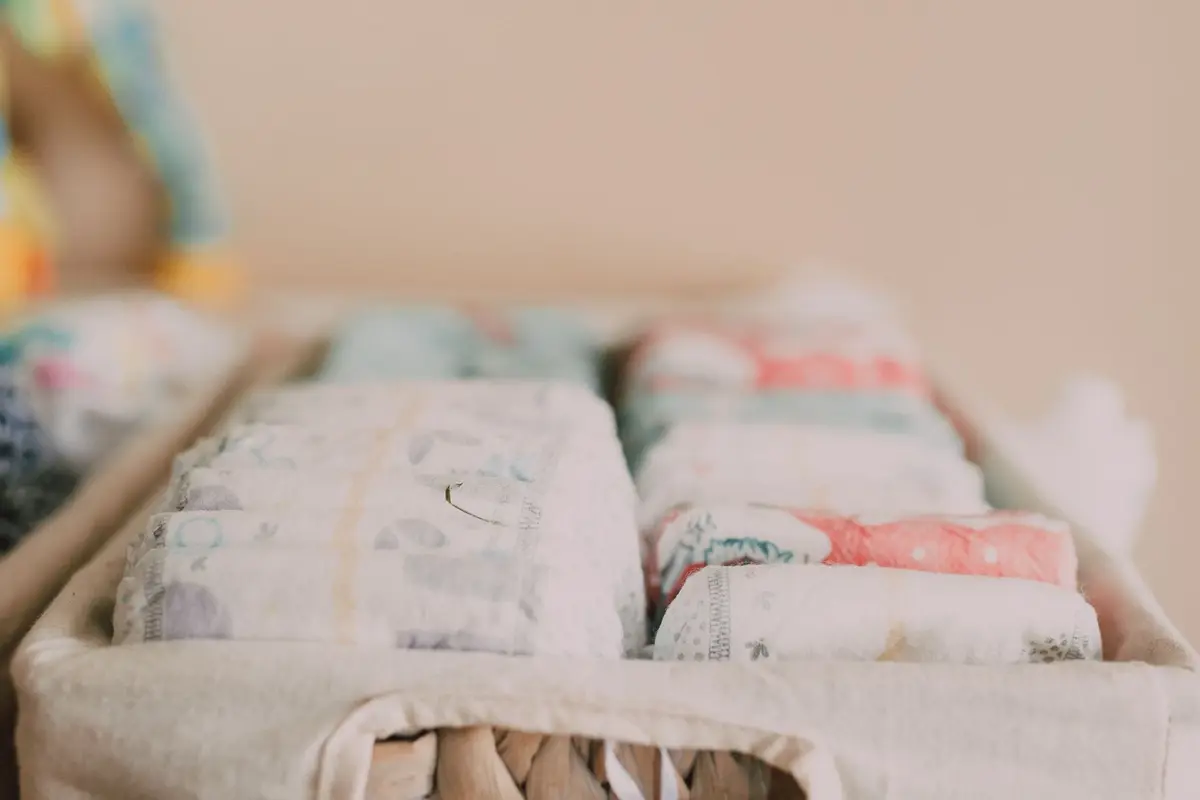
Give backstock one shelf at about waist height, or the closet floor if the packs are heavy. Group by type and size, and keep the next diaper size at one end, ready for the day the current size stops fitting.
If you unpack diapers to save space, stand them in rows in a lined basket. You can count what’s left at a glance and grab a handful to refill the changing station.
Tape a simple restock rule to the shelf edge: when you open the last pack, add diapers to the shopping list. That one habit saves a late-night run to the store.
Keep creams, ointments and anything in a tube or a small bottle on a shelf your baby can’t reach, even inside the closet. Small objects and baby products belong out of reach once crawling starts.
6. Give the next size and the outgrown clothes their own bins
Two bins keep a growing wardrobe from piling up on the rod: one for the size that comes next and one for clothes your baby has outgrown.
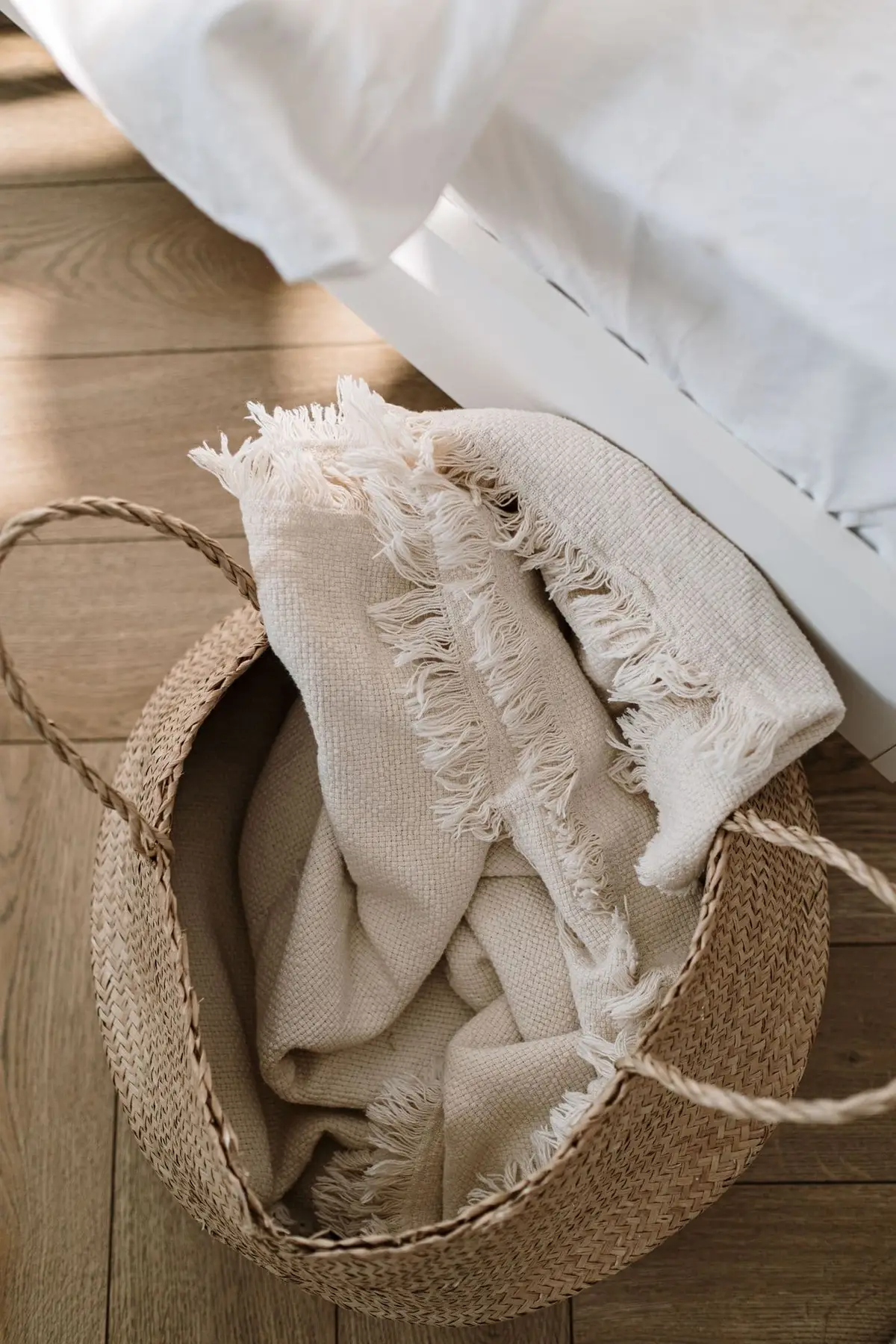
Label the next-size bin with the size and, if you know it, the season it will fit. Gifts and hand-me-downs in that size go straight in, so they don’t crowd the rod months early.
Keep the outgrown bin open and low, under the lower rod, where a too-small sleeper drops in with one hand on the way to the hamper. A lidded box that needs two hands won’t get used.
When the outgrown bin is full, decide what each piece is for: a younger sibling, a friend, a donation or the rag bag. Wash and dry everything before long-term storage, since clean, dry fabric resists mildew, and seal wool pieces in airtight containers to keep clothes moths out.
Measure the shelf and the floor space before you buy bins. The bin size calculator shows which sizes fit side by side, and the baby clothes organization guide covers sorting the clothes themselves.
7. Save one keepsake box for the firsts
Some baby things are worth keeping long after they fit: the coming-home outfit, the first shoes, a hospital blanket or a hand-knit hat. Give them one box, and only one.
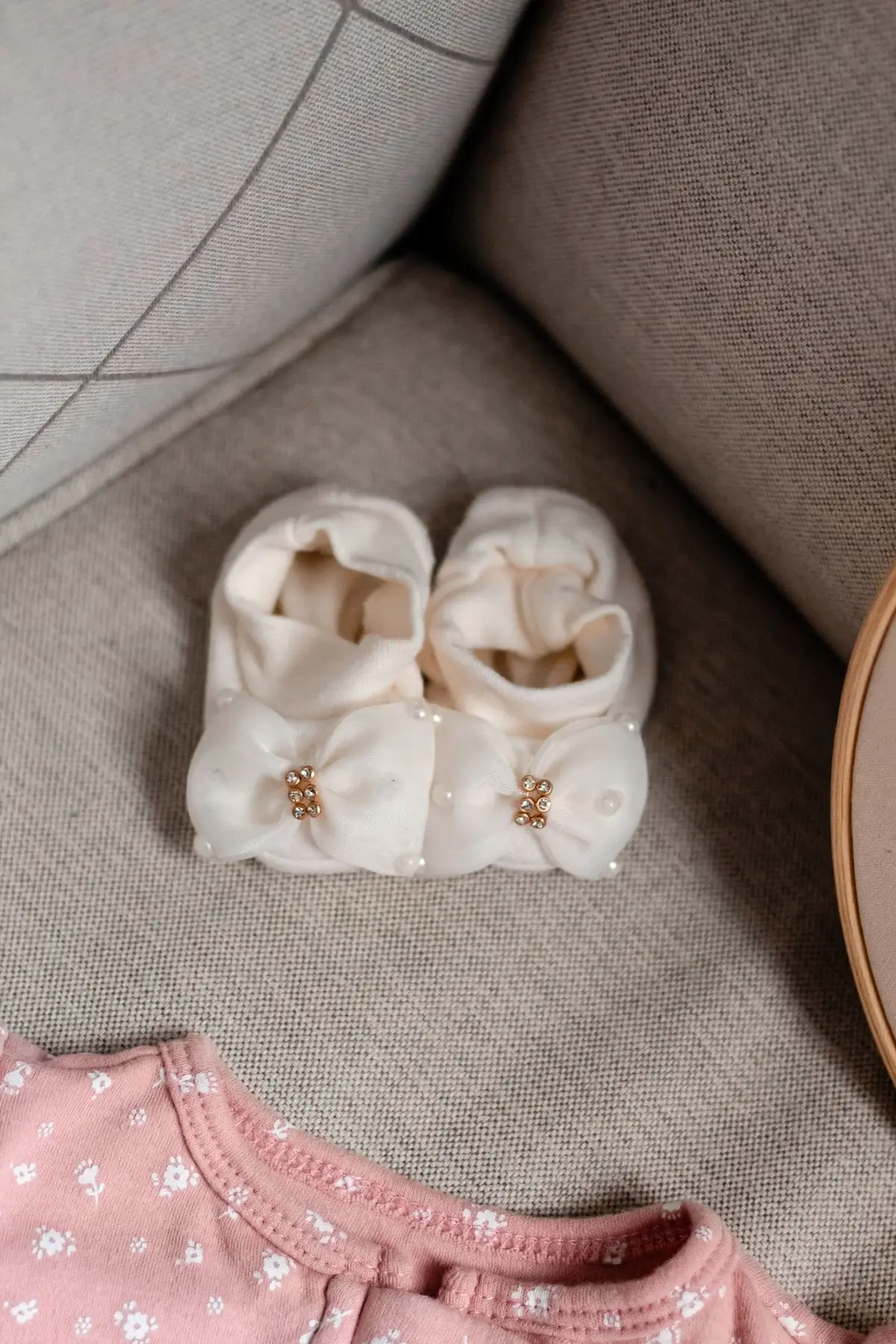
Choose a box with a lid that fits the top shelf. A single box sets a natural limit, so you keep the pieces that mean the most instead of every cute outfit.
Wash and dry each piece before it goes in, and wrap delicate ones in a clean cotton pillowcase. Keep the box away from damp spots, like the floor of a closet on a cold outside wall.
Tuck a card inside with the date and a line about why each piece mattered. Years later, the note tells the story the outfit can’t.
Since the box is light and opened only a few times a year, it can live on the highest shelf. Write a plain label on the end that faces you, so nobody mistakes it for the donate box.
8. Shelve blankets and crib sheets by the set
Blankets, swaddles and crib sheets pile up fast, and a toppled stack is hard to fix with one hand. Rolled or folded into a basket, they stay easy to grab and easy to put back.
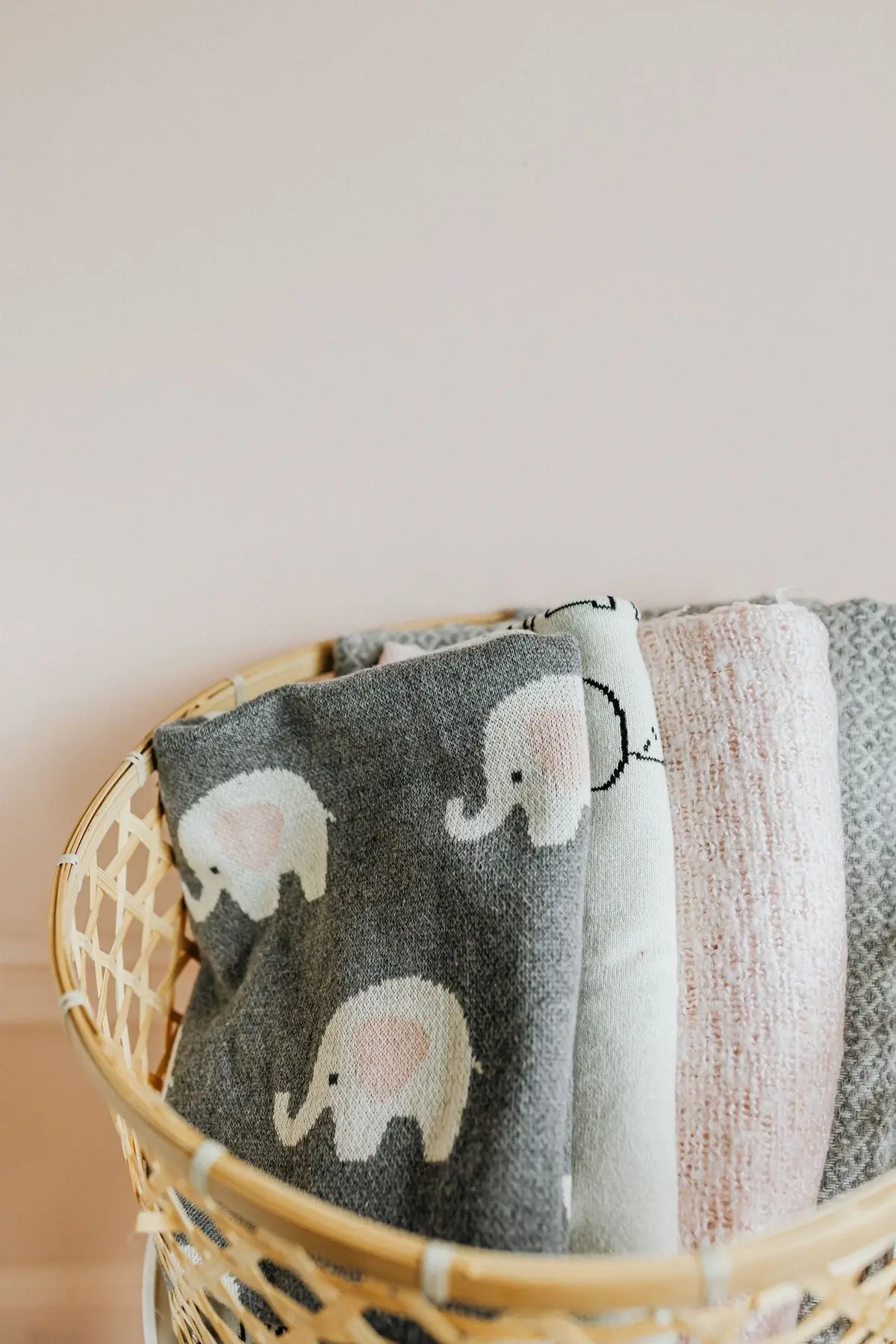
Fold each crib sheet together with a waterproof mattress cover and keep the pair as one set. A middle-of-the-night change becomes one grab instead of two searches.
Keep at least two complete sets on hand, one on the crib and one ready on the shelf, plus a third for the weeks when laundry falls behind.
The closet is also where gift blankets and quilts belong. A safe crib holds only a fitted sheet on a firm mattress, so blankets are for floor time and cuddles in your arms, never for the crib.
Put the sheets on a shelf you can reach without a stool, since crib changes happen at odd hours. Heirloom quilts you rarely use can go higher, in a bin with a label.
9. Tuck a lidded hamper into the closet floor
A hamper on the closet floor catches outfits right where the clean ones come from, and the closet door hides it from view.
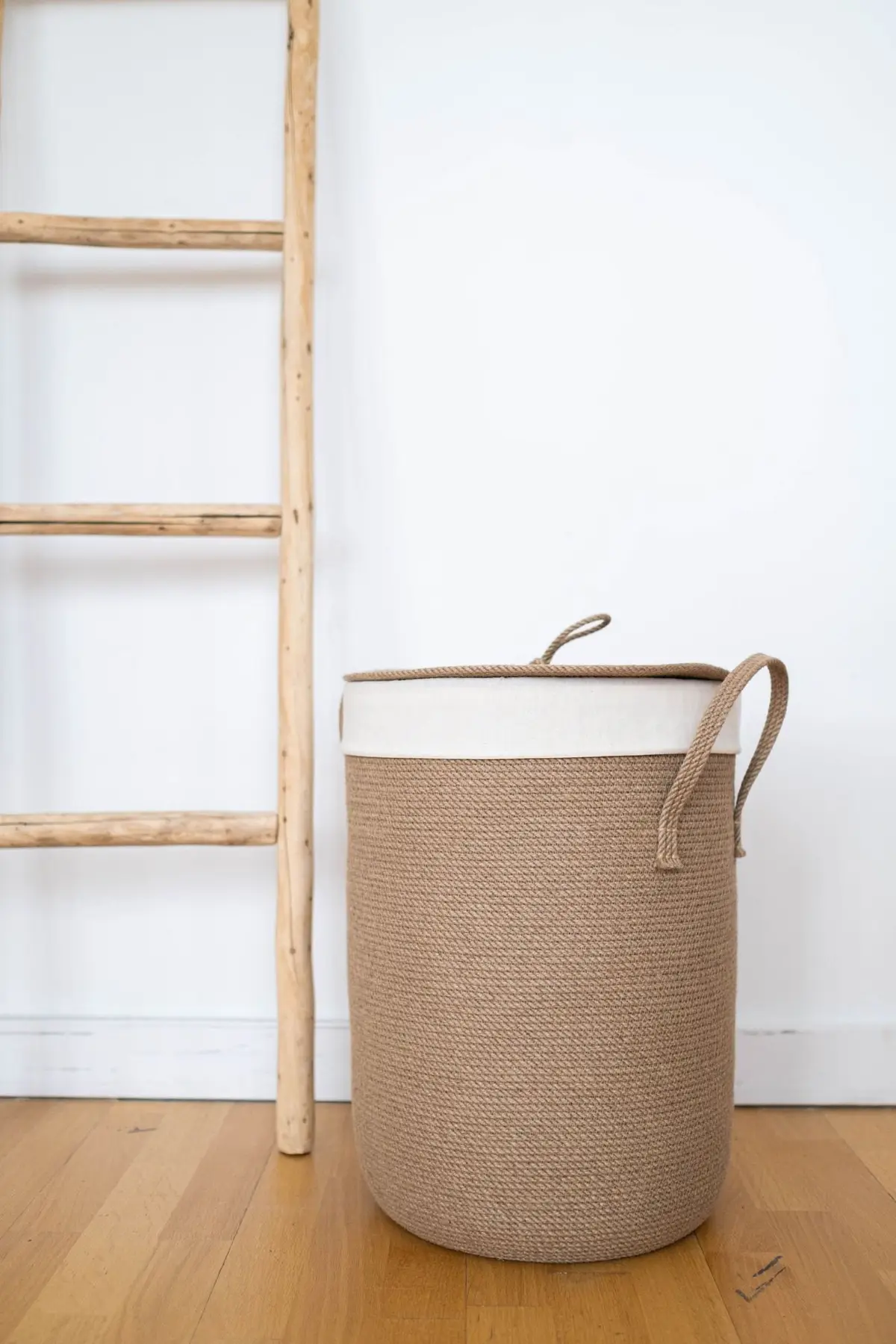
Measure the floor space under the lower rod before you choose one. A tall, slim hamper fits beside a drawer unit, while a short, wide one slides under the hanging clothes.
Pick one with a lid that stays shut when a crawling baby bumps it, and a liner you can lift out and carry to the washer. Rope and fabric hampers are light enough to carry with one hand.
Set a small zippered mesh bag inside for socks. Tiny socks vanish in the wash, and a bag keeps pairs together from hamper to drawer.
Keep the path to the hamper clear. If you have to move a box to reach it, the laundry ends up on the floor in front of the closet instead.
10. Organize the nursery closet door for small things
The back of a hinged closet door is free storage for small, light things: socks, bibs, hats, hair bows and spare pacifiers. An over-the-door organizer with clear pockets shows what’s inside without opening anything.
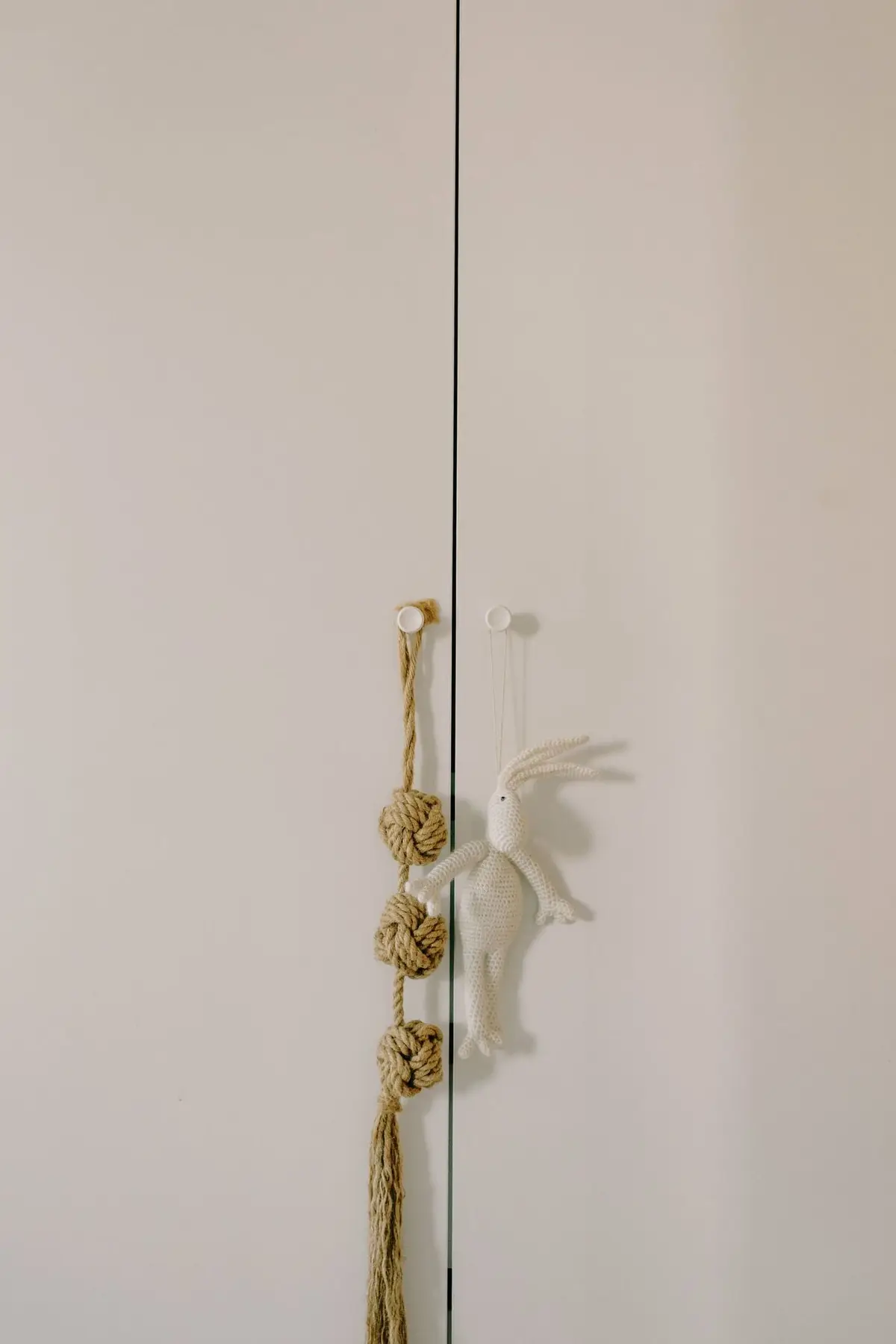
Hang it so the lowest pockets sit above your baby’s reach once crawling and pulling up start. Small objects are a choking risk, so tiny things always go in the top rows.
Check that the door still closes all the way and that the organizer doesn’t press on the clothes behind it. A slim strip of hooks works on a door that’s too tight for pockets.
Bifold and sliding doors can’t hold an over-the-door organizer. Use the strip of wall just inside the door frame instead, with a short column of hooks or a slim pocket panel.
Give each pocket one kind of thing and keep it that way. When the bibs live in the same pocket every day, anyone helping out can find them.
11. Hang the diaper bag and baby carrier on hooks
The gear you grab on the way out needs a spot near the closet door: the diaper bag, the baby carrier, a wrap and a light jacket. Sturdy hooks inside the closet keep them off the floor and ready to go.

Screw the hooks into studs, or use wall anchors made for the load, since a packed diaper bag is heavier than it looks. Place them at shoulder height, so you lift a bag off without bending.
Restock the diaper bag each time you hang it up: diapers, wipes, a change of clothes and a spare burp cloth. A short list taped inside the door makes the restock quick.
Keep the hooks above crawling height and loop long straps up, not down. Cords and straps of any kind are best kept out of a baby’s reach.
If the closet has no free wall, a row of hooks on the nursery wall beside the closet door works the same way. The point is one home for the bag, every time.
12. Turn a walk-in nursery closet into a station
A walk-in closet has room for more than clothes. Line one wall with hanging and the other with shelves, and the floor between them can hold a dresser or a small cozy corner.
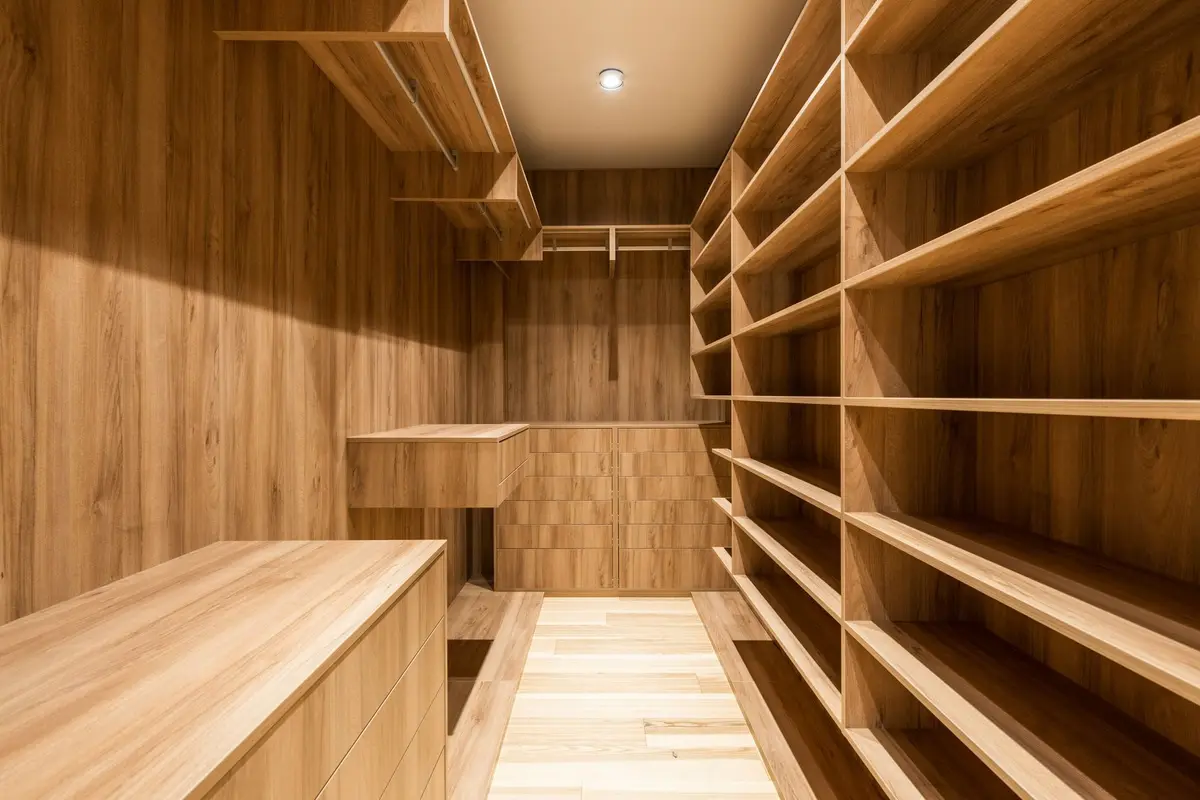
A dresser with a changing pad on top can turn a walk-in into a changing station, as long as there’s room to stand beside it. Keep supplies within your reach but out of your baby’s, and never step away while your baby is on the pad.
A reading nook works too: a small chair, a soft lamp with its cord run behind the furniture and a basket of board books. Leave the closet door open whenever your baby is inside with you.
Whatever you add, anchor anything with drawers, doors or shelves to the wall, since furniture can tip over onto a climbing child. Keep the path clear, so you can walk in with a baby in your arms.
For the things that never fit in a closet, these baby organization ideas cover the rest of your baby’s gear around the house.
Save this for later
Pin it to a board so it's there when you're ready to start.
Save to Pinterest(opens in a new tab)Make it easier
Free printable
A room-by-room declutter checklist that tells you exactly what to look for, with four piles to sort into so nothing ends up back on the shelf.
Free tool
Enter the width, depth and height of a shelf, a drawer or a cube cubby, and see which standard bins and baskets fit, how many, and how they line up.
Frequently asked questions
How do you organize a nursery closet?
Empty it, then plan zones: hanging clothes in the middle, supplies and bedding on the shelves, heavy boxes on the floor and light, rarely used things up top. Add a lower rod for short baby clothes, size dividers on the rod and separate bins for the next size and for outgrown clothes.
How do I organize baby clothes in a closet by size?
Hang the current size closest to the door and the next size behind it, with a size divider on the rod between them. Keep larger sizes in a labeled bin on a shelf, and move anything outgrown to its own bin as soon as it feels snug.
What can go on the back of a nursery closet door?
Small, light things you reach for often: socks, bibs, hats, burp cloths and spare pacifiers in an over-the-door pocket organizer, or a few hooks. Keep small items in the top pockets, above the reach of a baby who crawls and pulls up.
Can a walk-in nursery closet hold a changing station?
Yes, if there's room to stand beside it and the dresser or changing table is sturdy and anchored to the wall. Keep supplies within your reach but out of your baby's, and never step away while your baby is on the changing pad.