11 Open Pantry Shelving Ideas With Matching Jars and Hidden Backstock
Keep everyday food in view and the clutter out of sight: decant staples into clear jars, tuck packaging into lidded baskets and wipe the shelves weekly.

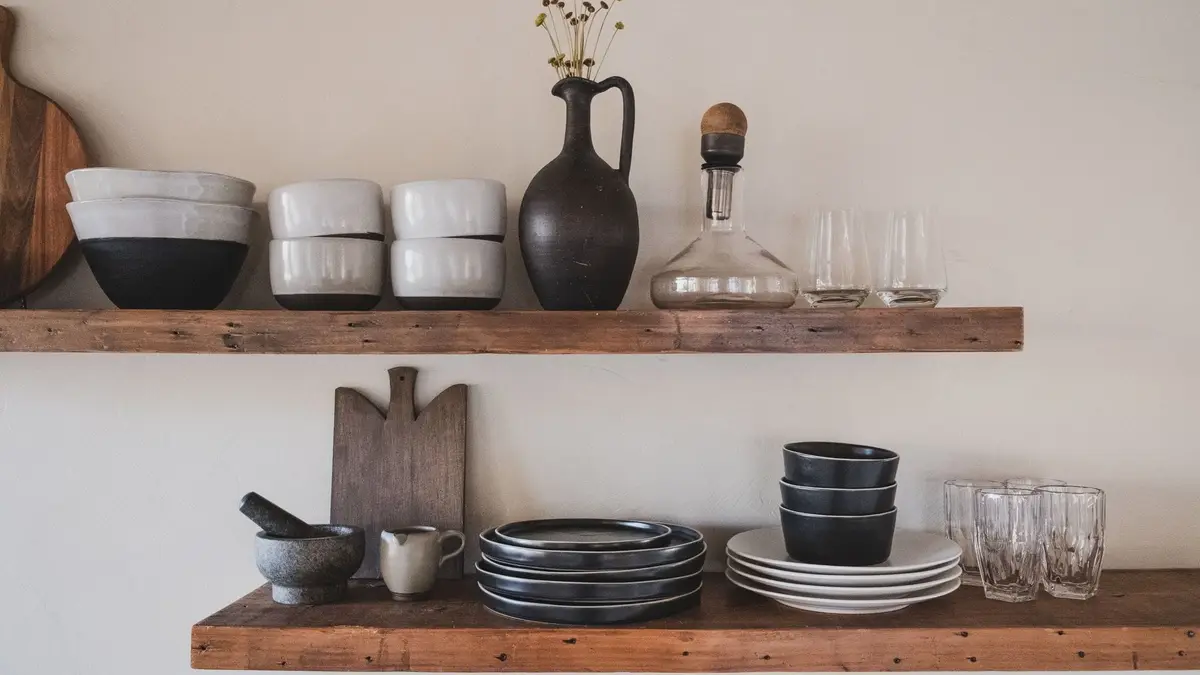
Open pantry shelving works best when it holds only what you use often, in matching containers, with everything else hidden in lidded baskets. Keep the shelves shallow and well anchored, put heavy things low, leave some breathing room and wipe the shelves every week so dust and grease never settle in.
These 11 open pantry shelving ideas are about the shelves that stay on show. For choosing and hanging pantry shelves in general, see our pantry shelving ideas.
1. Keep everyday things on the open shelves
Open shelves are prime real estate. Whatever sits on them is the first thing you see and the easiest thing to grab, so give them to the food and dishes you use every day.
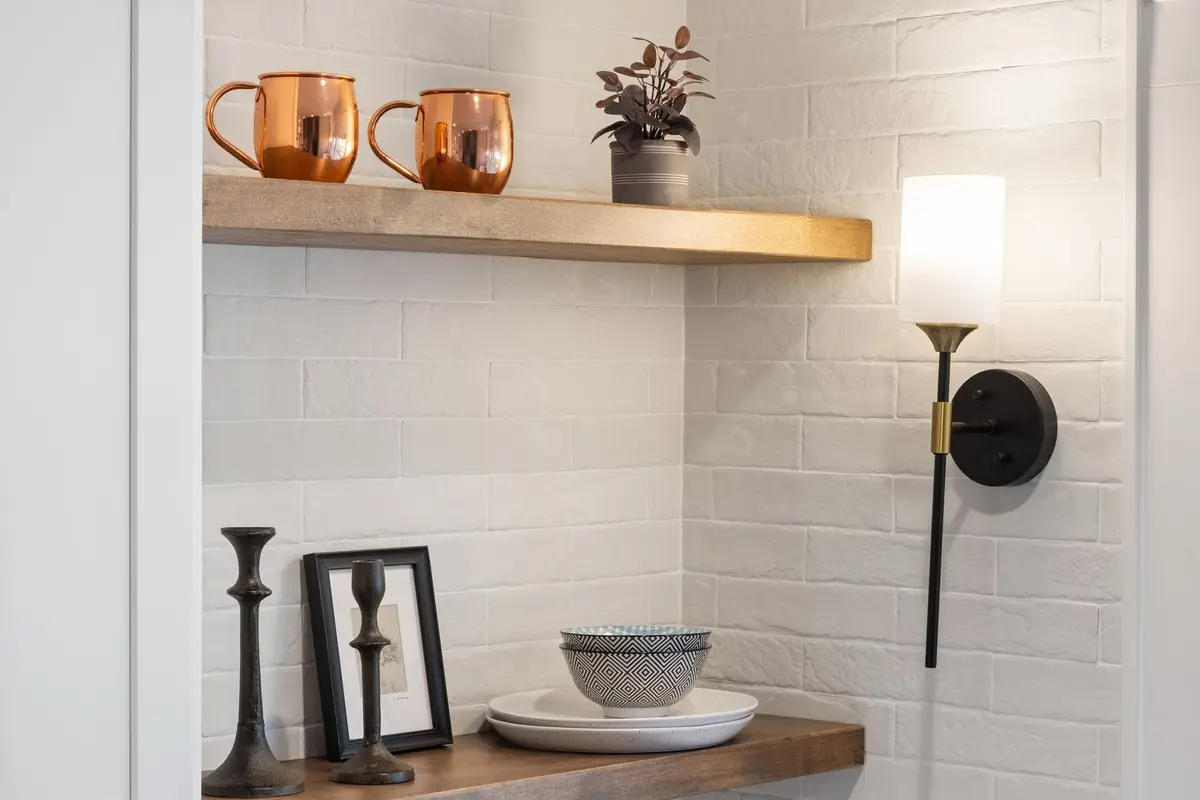
Good candidates are staples like oats, rice, pasta and coffee, the mugs and bowls you reach for each morning, and a few oils and spices near where you cook. Things you use once a month belong in a cabinet or a basket.
Leave some empty space on every shelf. A shelf packed edge to edge looks cluttered even when it’s organized, while a little gap between groups makes each one easy to see and lift down.
Group by use rather than by type. A breakfast shelf with oats, cereal, honey and bowls saves more steps than a shelf of every jar in the house, and the gaps between groups show you where each thing goes back.
2. Decant staples into matching clear jars
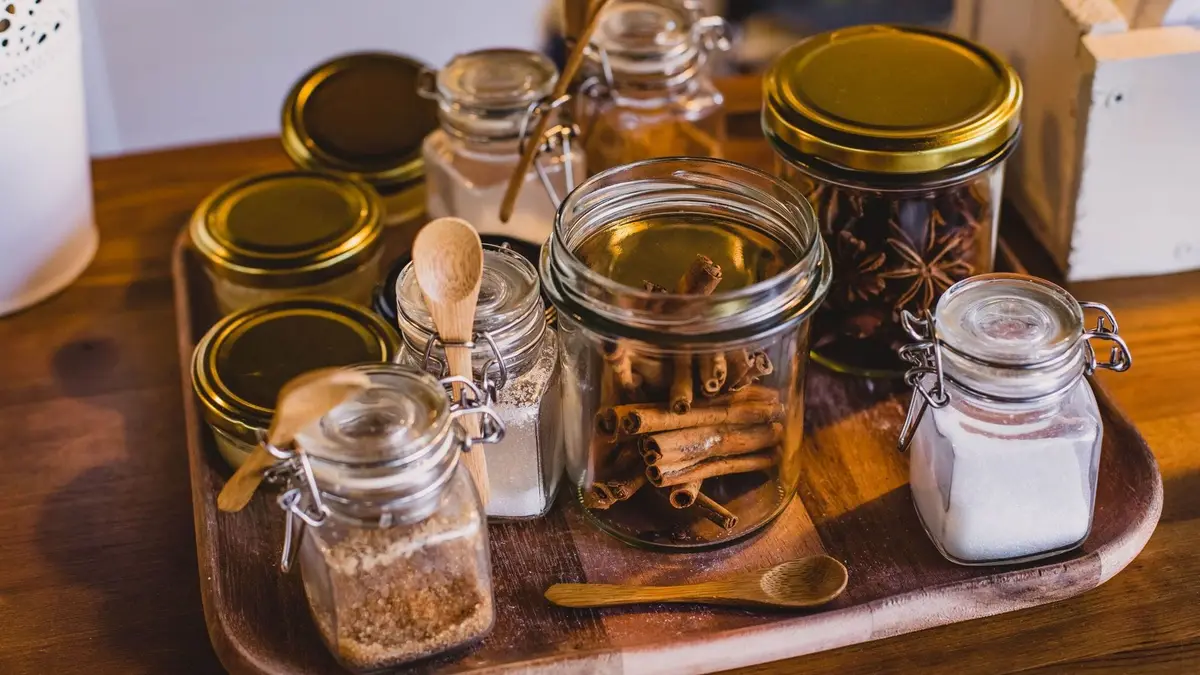
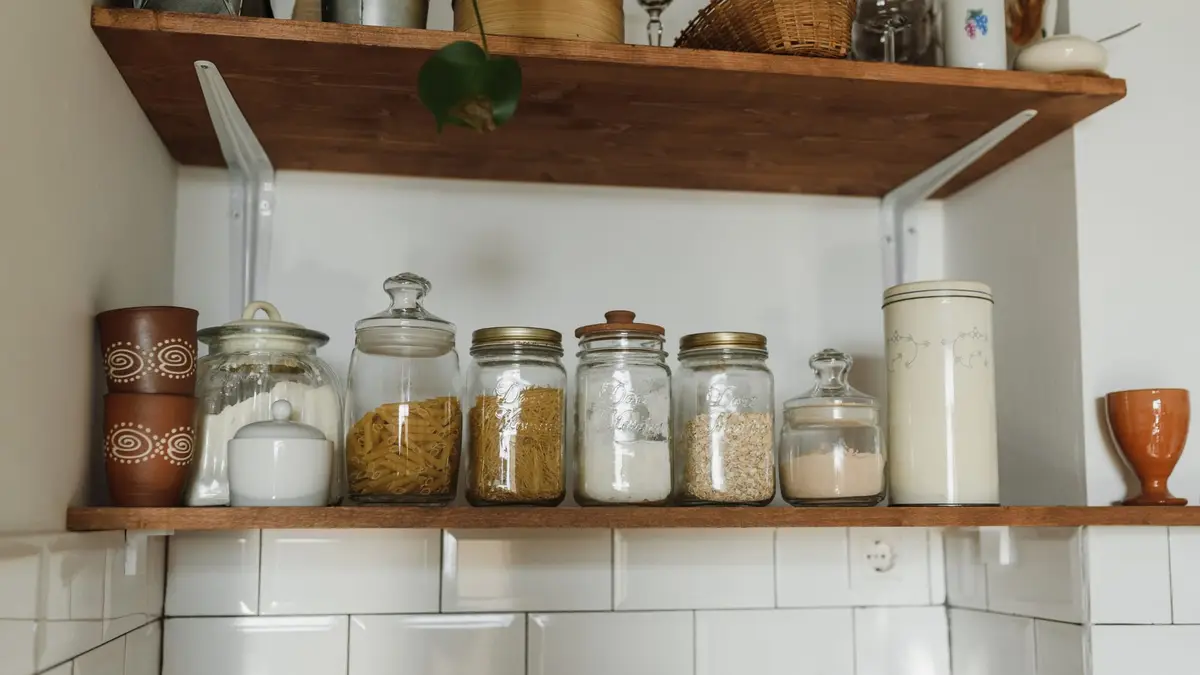
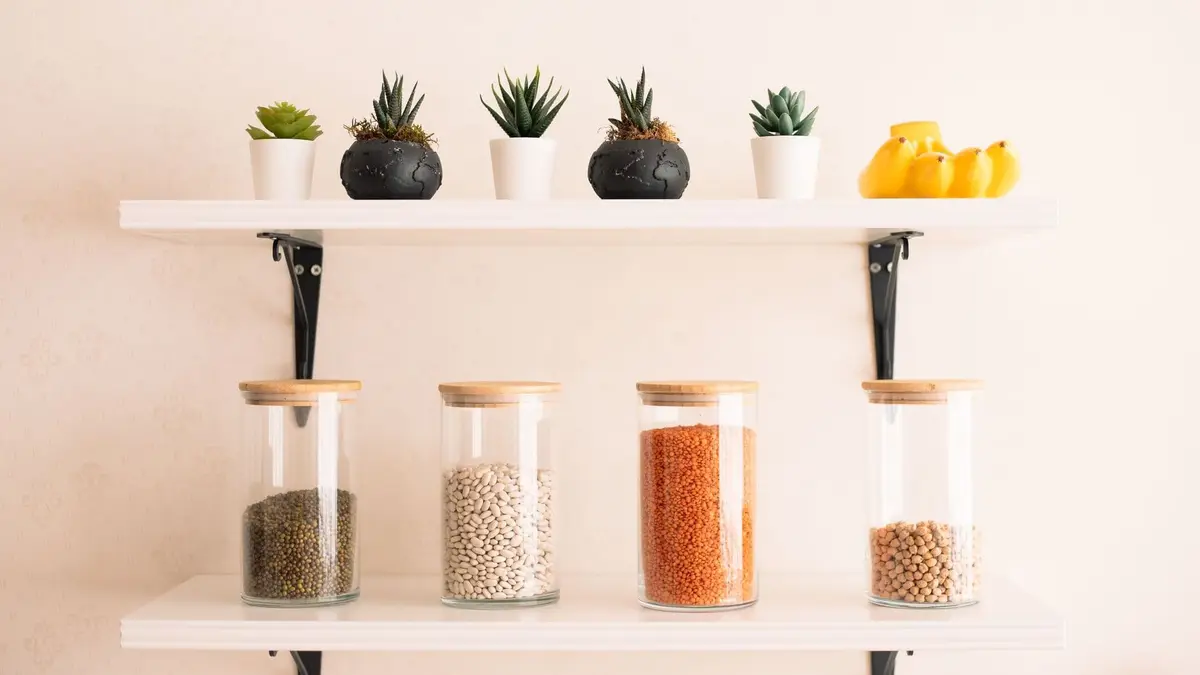
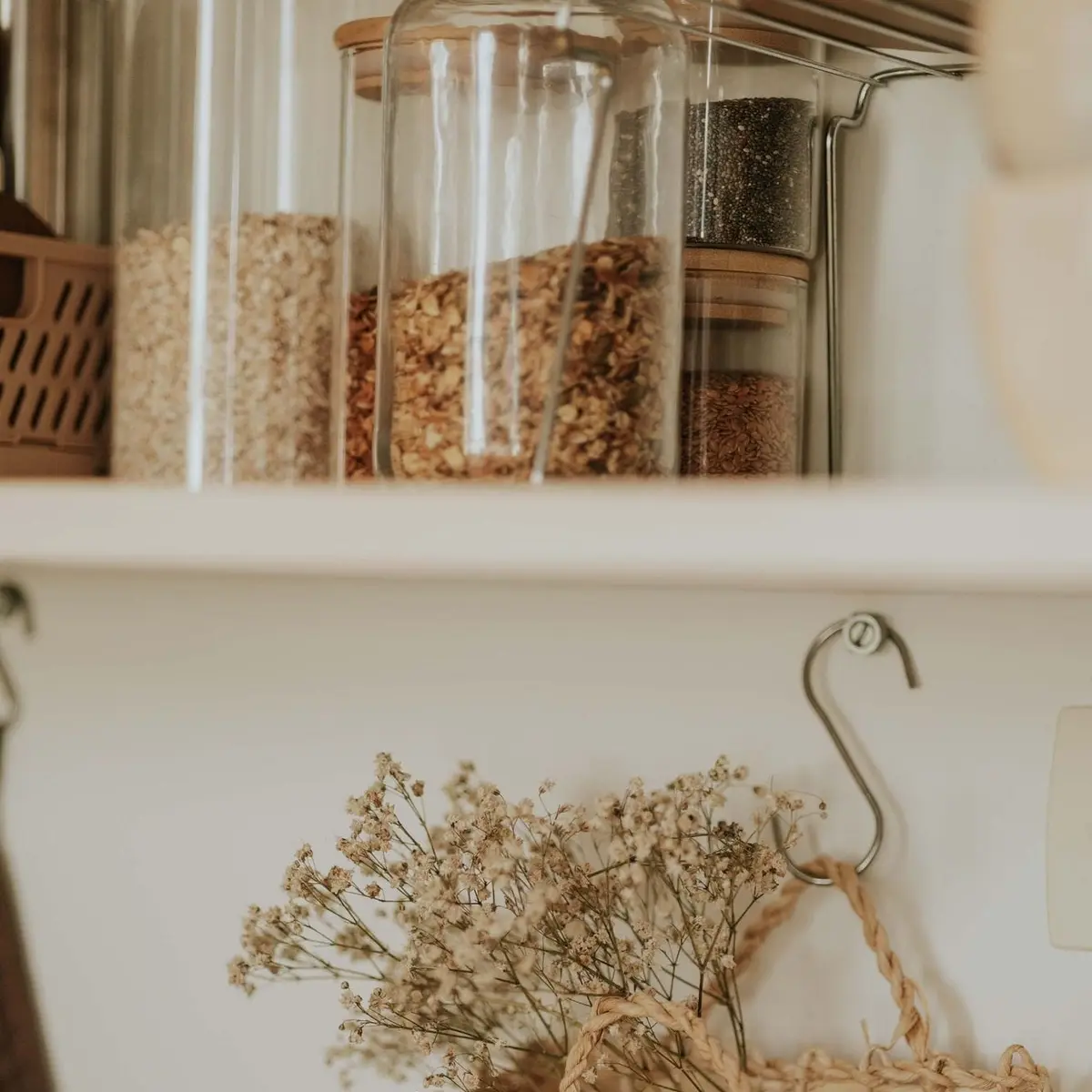
Clear jars are what make open pantry shelving look calm. When flour, sugar, rice, beans and pasta all sit in the same kind of container, the shelf reads as one tidy row instead of a wall of packaging.
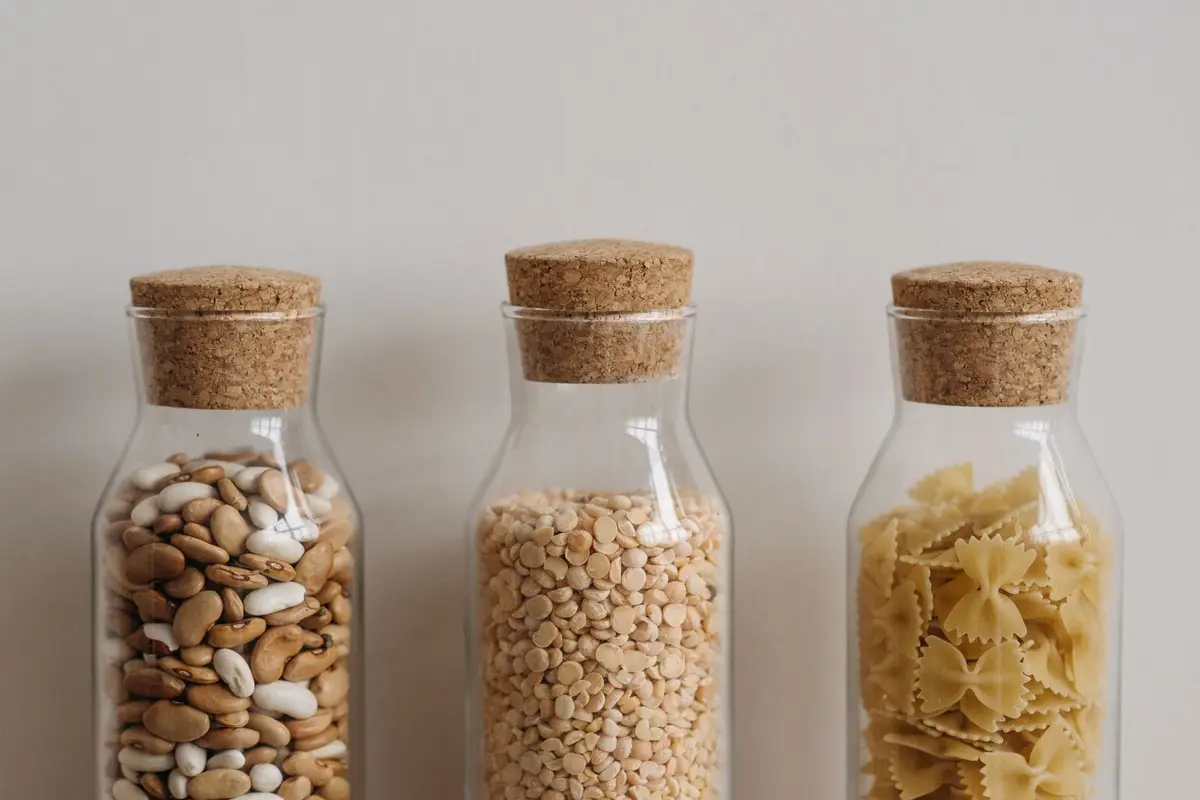
They’re practical too. You can see at a glance when something is running low, and tightly sealed glass, metal or rigid plastic containers help reduce the chance of pantry insects getting into food.
Choose one or two jar shapes and buy them in a few sizes, so tall jars hold pasta and shorter ones hold spices and seeds. Square or rectangular containers waste less shelf space than round ones.
Before you decant, measure the shelf depth and the gap above it, so the jars fit with room to lift them out. Keep the cooking directions and the best-by date by cutting them from the bag and taping them to the bottom or the back of the jar.
3. Hide packaging in lidded baskets
Not everything belongs in a jar. Snack packs, bags of chips, bulk boxes and anything with bright packaging look busy on an open shelf, and decanting them isn’t worth the effort.
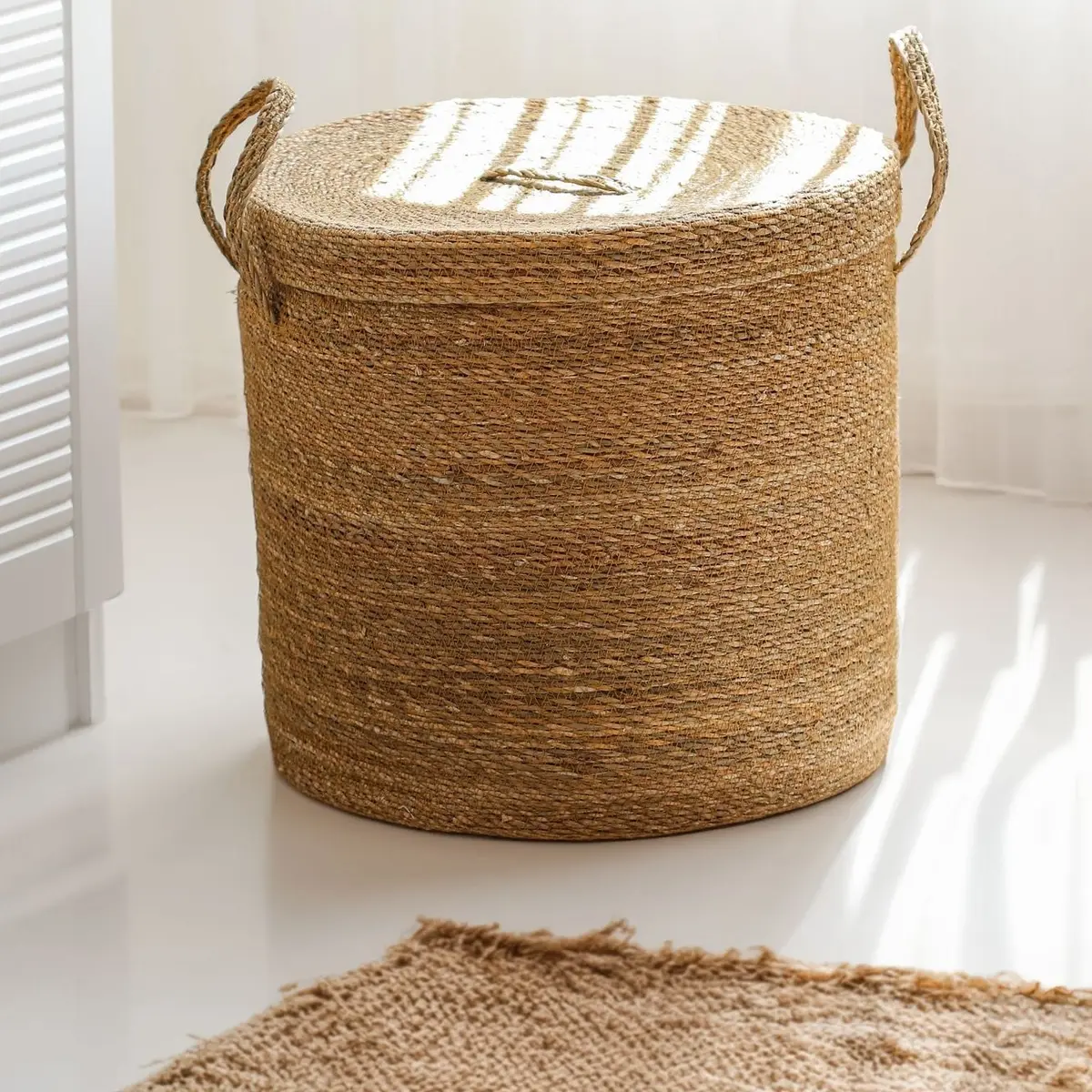
Lidded baskets solve that. The food stays in its packaging, the lid hides it, and the shelf still looks calm from across the room. Lids also keep dust off whatever is inside.
Give each basket one job, such as snacks, baking extras, drink mixes or backups of the things in your jars. Then you know which basket to open, and you can lift a whole category down at once.
Choose baskets that fit the shelf with a little room on each side and above the lid, so you can slide them out without tilting. Woven, wood and fabric baskets all work, as long as they match each other and are easy to wipe or brush clean.
4. Line the bottom shelf with baskets
The lowest shelf is the hardest to keep tidy, because it sits close to the floor and collects whatever doesn’t have a home. A row of matching baskets turns it into neat, easy storage.
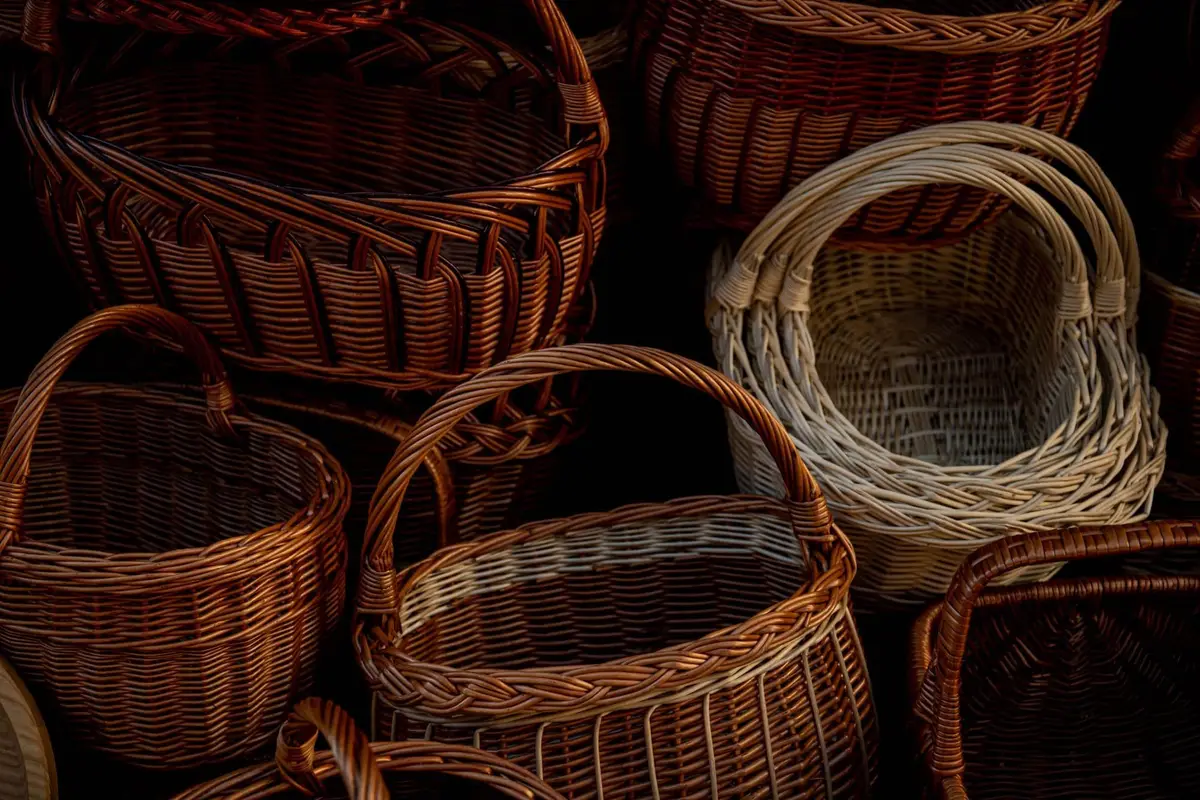
Baskets with handles suit this shelf best. You can pull one out with a finger, carry it to the counter and slide it back, without kneeling down to dig through loose items.
This is a good spot for bulk bags, extra paper towels, a basket of potatoes and onions, and small appliances you use now and then. Kids can reach it too, so it’s a natural home for a snack basket they can serve themselves from.
Keep the baskets the same height and width so the line looks even. Measure the shelf first and leave a little room around each one, and the bottom shelf looks finished instead of crowded.
5. Keep shelves shallow and space them to fit
Open shelves don’t need to be deep. Most jars, cans and dishes fit on a shelf that holds one or two rows, and a shallow shelf keeps everything in view and stops it from sticking out into the room.
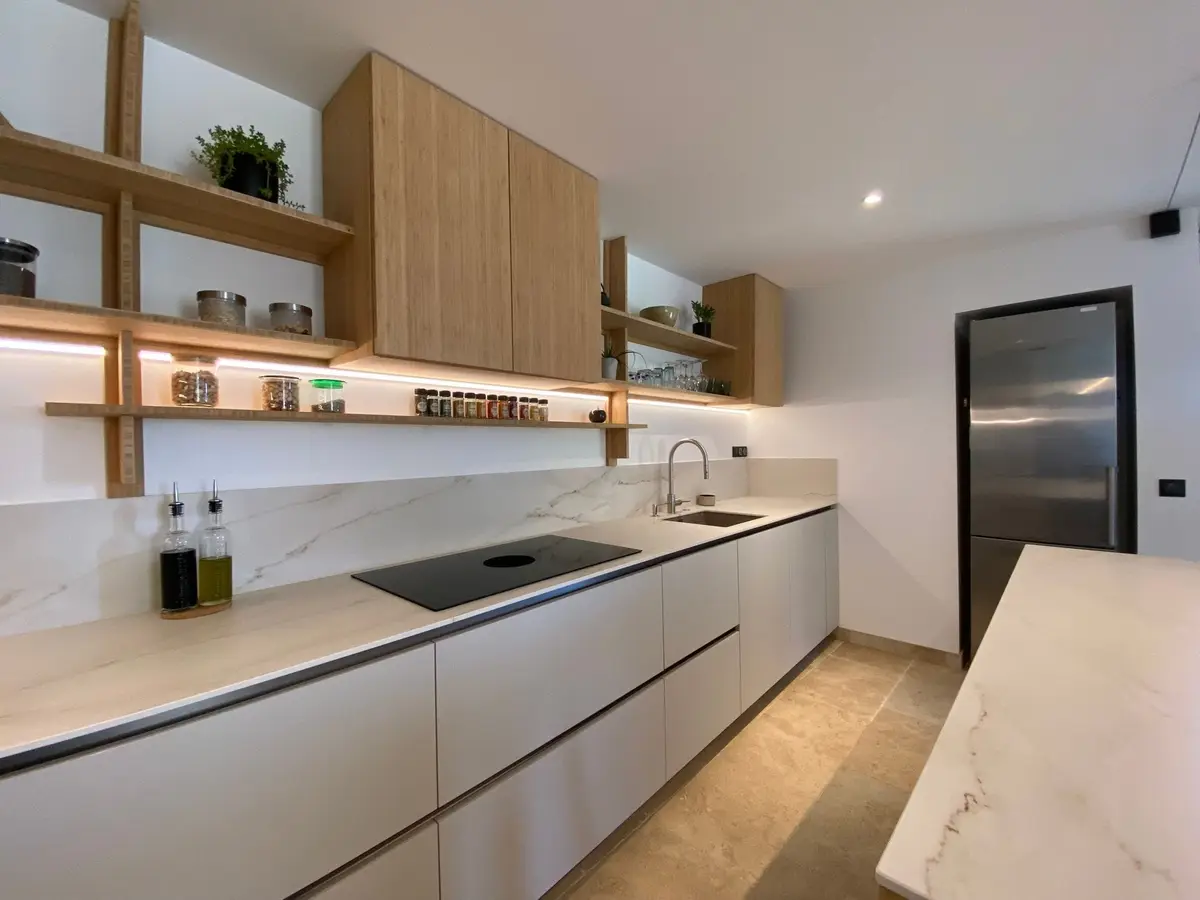
A very narrow shelf, just deep enough for one row of small jars, is handy for spices and oils. It sits closer to the wall, so you can hang it lower without bumping your head.
Space the shelves to fit what goes on them. Measure your tallest jar or bottle and leave a little room above it, then set the shelves for small jars closer together, so no space is wasted above short items.
The same rules work for any open shelf in the house. Our closet shelf organization ideas use the same measuring and spacing on the shelf above a closet rod.
6. Lay out a small pantry wall in an L or U shape
A small pantry with open shelving often has no room to walk in. In that case, think of it as a wall of shelves you stand in front of, and use every bit of that wall and any corner next to it.
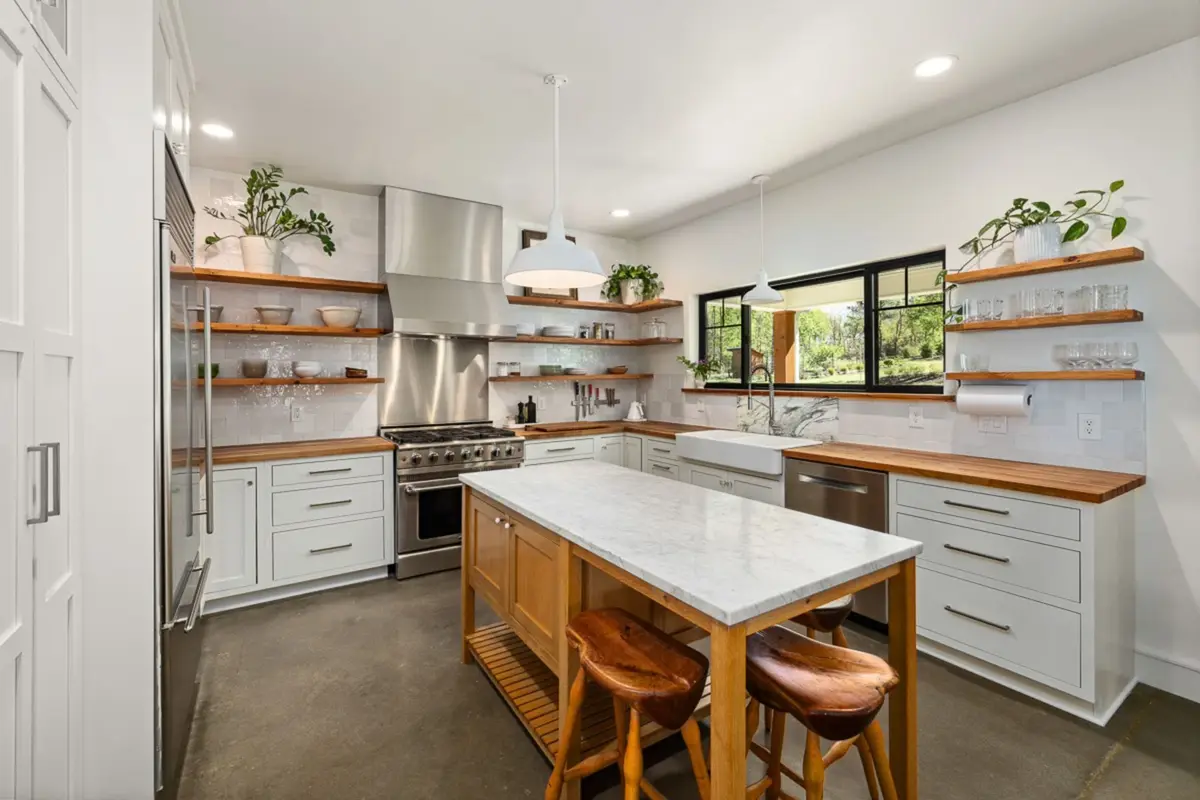
Running shelves along one wall and around a corner, in an L shape, adds storage without adding depth. If you have a narrow nook with three walls, a U shape gives you shelves on every side within arm’s reach.
Keep every shelf shallow, especially in a U shape, so you can still turn around and reach the back wall. Deep shelves on all three sides swallow food and close in the space.
Put everyday food at eye level on the main wall, heavier things on the lowest shelves and backups on the top shelf. If your only spare space is under a staircase, our understairs pantry shelving ideas cover shelves that follow the slope.
7. Choose brackets that hold the load and suit the room
On open shelves, the brackets are on show, so they shape the look as much as the shelf does. Black iron brackets look classic, wood brackets look warm, and hidden floating supports give a clean line with nothing visible under the shelf.
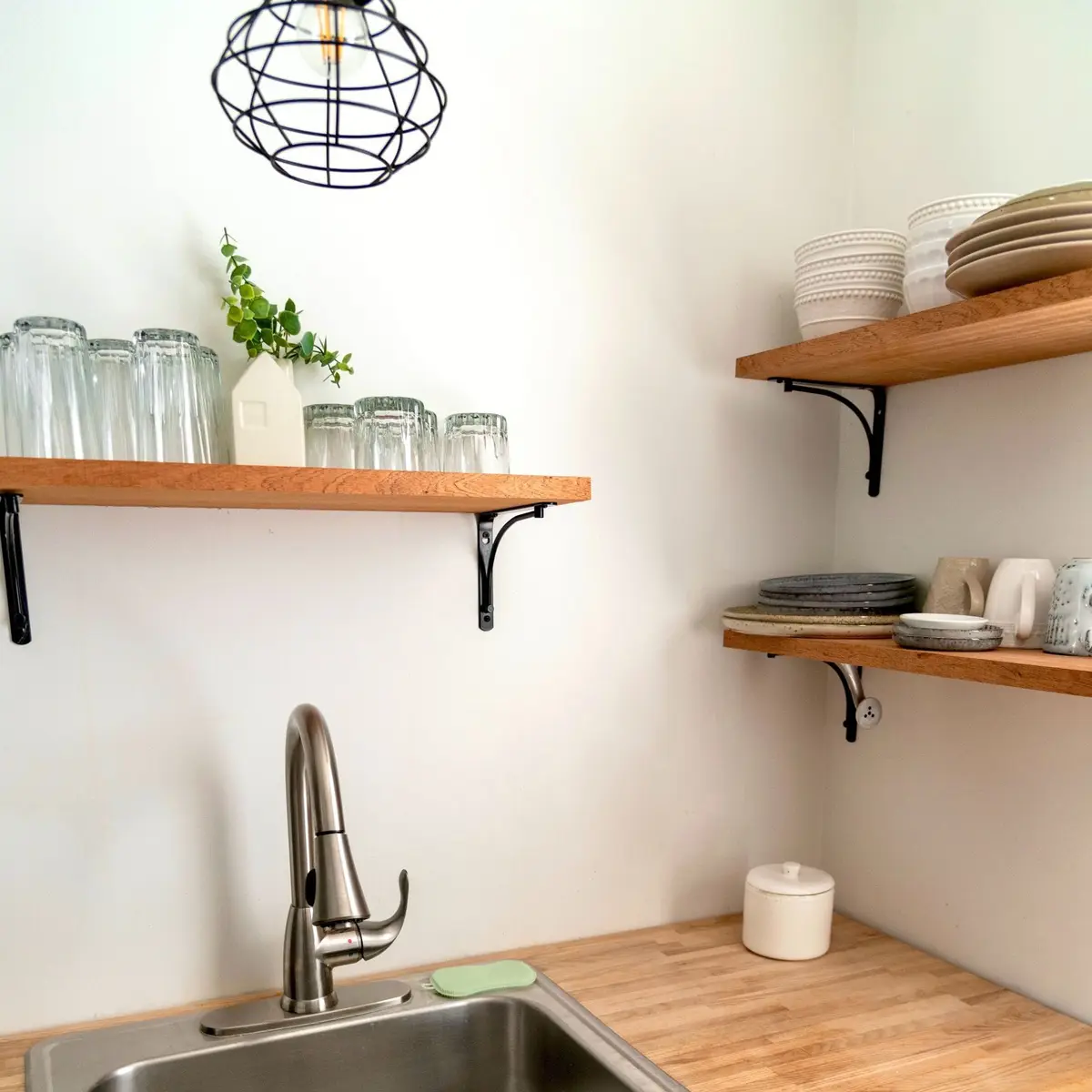
Whatever the style, the bracket has to carry the weight. Check the weight rating on the package, stay well under it and screw each bracket into a wall stud, since jars, cans and dishes get heavy fast.
Floating shelves need extra care. Their support hides inside the shelf, so they depend completely on the studs, and they suit lighter loads unless the hardware is rated for more.
Keep the heaviest things on the lowest shelves and secure the shelves firmly to the wall, especially if you live where earthquakes happen. A thin rail or lip along the front edge also helps keep jars from sliding off.
8. Pick wood or metal shelves
Wood and metal both work for open pantry shelving. The choice comes down to the look you want, what you store and how much cleaning you’re willing to do.
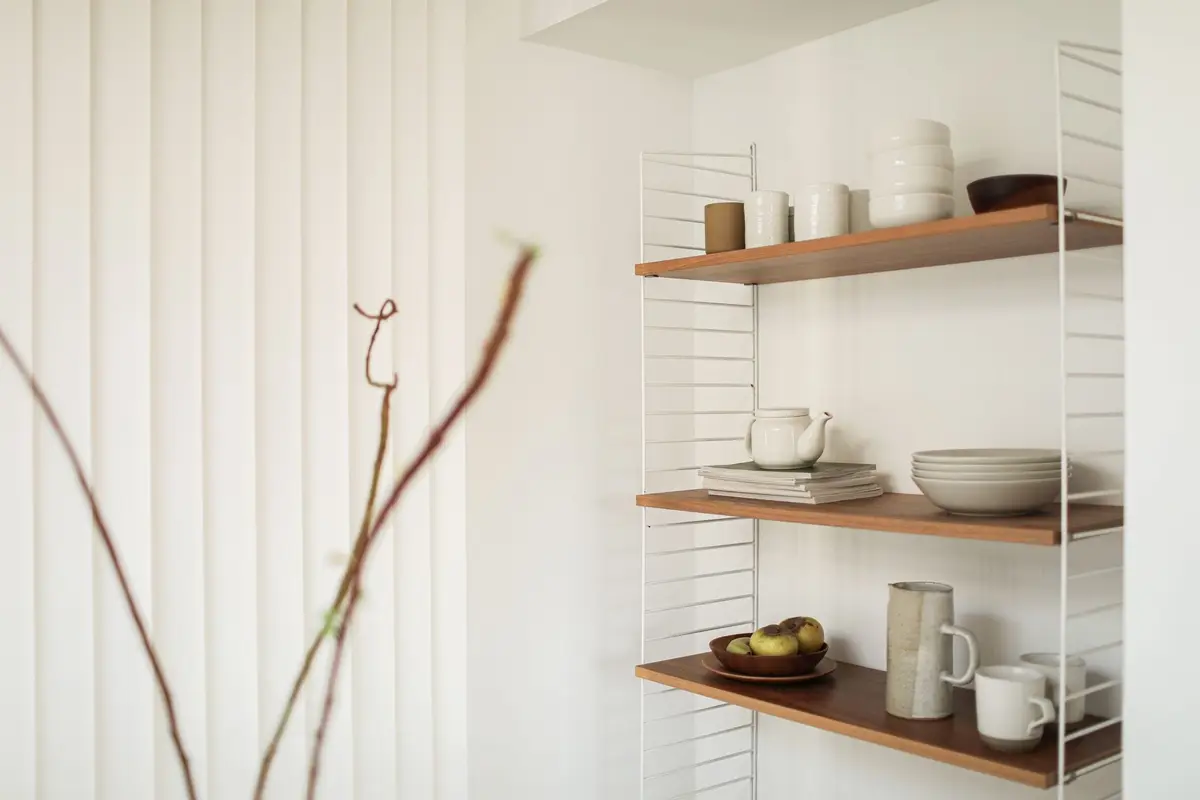
Wood looks warm and gives jars and dishes a flat, steady surface. Seal or paint it before it goes up, so spills and oil wipe off instead of soaking in, and choose boards thick enough for the span, so they don’t bow under a full load.
Metal shelving is strong and easy to wipe down, and wall-mounted metal ladders or rails let you move shelves up and down later. Solid metal shelves suit jars, while wire shelves need a liner so small items don’t tip.
Mixing the two often looks best, like wood shelves on metal brackets or rails. If you buy a freestanding shelving unit instead of wall shelves, anchor it to the wall, since anchoring furniture with shelves prevents tip-overs.
9. Keep shelves away from the stove and wipe them weekly
Dust settles on open shelves, and near the stove it mixes with cooking grease into a sticky film. A little planning and a short weekly routine keep the shelves clean.
Put open pantry shelves away from the stove and oven if you can. Food keeps best in a cool, dry place, and storage near ranges, hot water pipes and heating ducts loses quality faster because of the heat and moisture.
Keep food in lidded jars and baskets, so dust only lands on the outside. Then, once a week, lift things off one shelf at a time, wipe the shelf and the jar lids with a damp cloth and put everything back.
Once a season, take everything down and wash the shelves with warm, soapy water. It’s also a good time to check dates, wipe up crumbs and look for any sign of pantry insects in the corners.
10. Label the jars and the shelf edges
Matching jars look tidy, but they also look alike. Labels tell everyone at home what’s inside and where it goes back, so the shelves stay organized after a grocery run.

Label the front of each jar with what’s in it, and add the date you filled it if the food doesn’t keep long. Simple, readable labels in one style look calmer than a mix of handwriting and stickers.
Label the shelf edges too. A small tag on the shelf itself, like “baking” or “breakfast,” shows where a whole group lives, even when the jars are moved around or used up.
Hanging tags work well on baskets, and you can write on them and swap them out when the contents change. For spices, our printable spice jar labels give a row of small jars a matching look.
11. Keep a shop-the-shelf restock list
Open shelves show you exactly what’s running low, which makes them a built-in shopping list. All you need is a habit for writing it down before you head to the store.
Keep a list near the pantry, on the inside of a cabinet door or on the side of the fridge. When a jar drops below about a quarter full, add it to the list before you forget.
Once a week, before you shop, stand in front of the shelves and scan each row. Note what’s low, what’s missing and what’s been sitting unused, so you buy only what the shelves need.
When the groceries come home, refill the jars, move the older food to the front and put the backups in their baskets. Our printable grocery list has room for pantry staples, so the restock list and the shopping list become the same page.
Save this for later
Pin it to a board so it's there when you're ready to start.
Save to Pinterest(opens in a new tab)Make it easier
Free printable
A one-page grocery list sorted by store section, with a box to tick for every item, so you write the list once and shop the store in one loop.
Free printable
Free printable spice jar labels to cut out and stick on. Print the ready sheet of common spices, or type your own list and download labels made for your shelf.
Free tool
Enter the width, depth and height of a shelf, a drawer or a cube cubby, and see which standard bins and baskets fit, how many, and how they line up.
Frequently asked questions
Is open shelving a good idea for a pantry?
It works well for food you use often and like to see, such as staples in clear jars and everyday dishes. It works less well for bulk packs and colorful packaging, so pair open shelves with baskets or a closed cabinet for those.
How do I keep open pantry shelves from looking cluttered?
Limit the shelves to everyday items, decant staples into matching containers and hide the rest in lidded baskets. Leave a little empty space on each shelf, and reset the shelves after each grocery trip.
How often should I clean open pantry shelves?
A quick wipe once a week keeps dust from building up, and shelves near the cooking area may need it more often because of grease. Once a season, take everything down, wash the shelves and check dates.
What's the best layout for a small pantry with open shelving?
Run shelves along one wall, or in an L or U shape if you have a corner, and keep them shallow so the walkway stays clear. Put everyday food at eye level, heavier things low and backups on the top shelf.
Do food storage jars keep pantry bugs out?
Tightly sealed glass, metal or rigid plastic containers help reduce the chance of pantry insects getting into food. Check new bags of flour, grains and cereal before decanting, and wipe up spills quickly.