11 Pots and Pans Organization Ideas That Stop the Cabinet Clatter
Sort cookware into deep drawers, upright racks and a rail by the stove, give lids one home, protect nonstick pans and keep heavy cast iron down low.

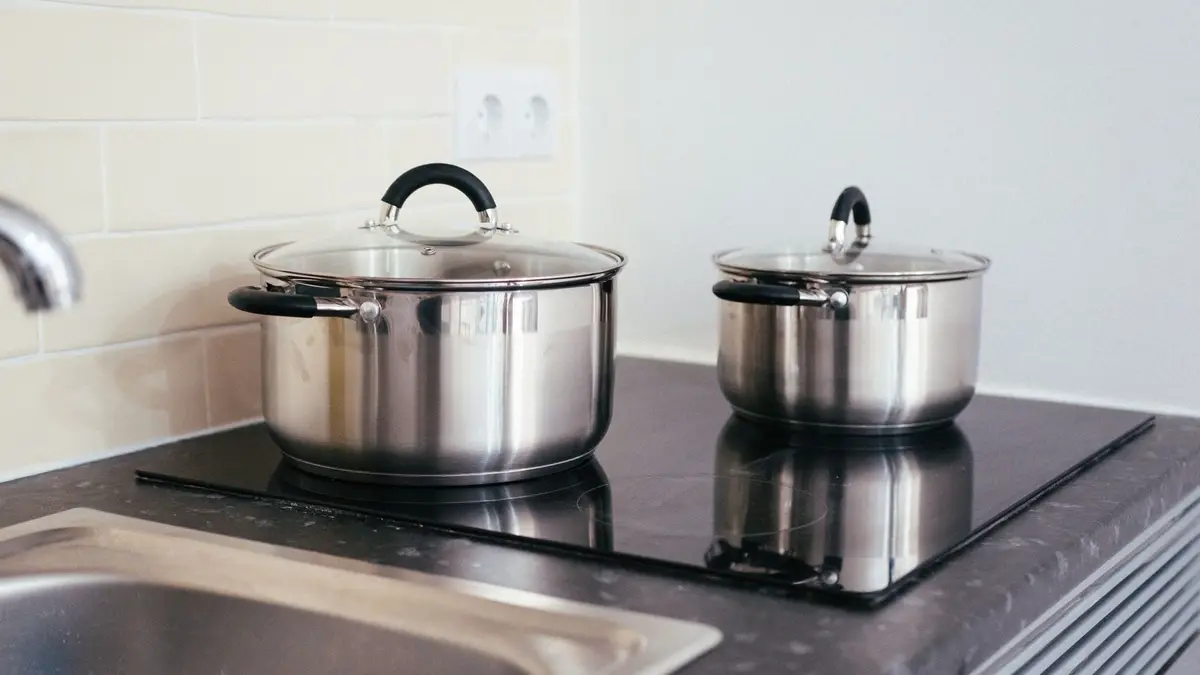
Pots and pans organization comes down to keeping fewer pieces, storing them as close to the stove as you can and giving each kind its own spot: deep drawers for pots stacked by size, an upright rack for skillets, one home for lids and a low shelf for the heavy pieces. Protect the nonstick surfaces, and the clatter stops.
These 11 ideas start with editing the set, then move through drawers, cabinets, racks and the wall. Most of them use what you already have, and the rest need little more than a simple rack or a few hooks.
1. Keep only the pots and pans you cook with
Take every pot, pan, lid and baking dish out of the cabinets and set them on the counter or the table. Seeing the whole collection at once shows you how much of it never leaves the shelf.
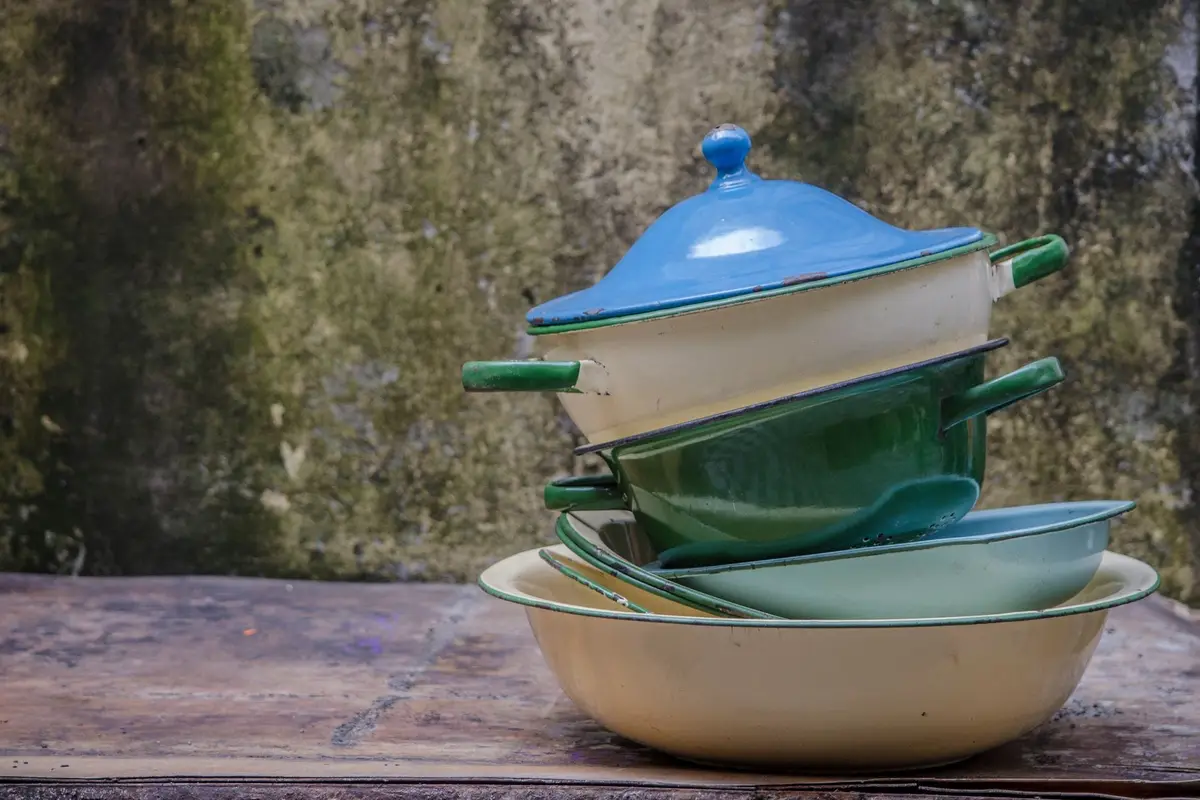
Let go of pans that rock on the burner because the bottom has warped, handles that stay loose no matter how often you tighten them, and nonstick pans whose coating is peeling or that food sticks to every time. Those pieces cost you time at every meal.
Look for duplicates next. An everyday set can be as simple as a large and a small skillet, a couple of saucepans, one big pot for pasta or soup and a sheet pan or two, so a third medium saucepan may well be a spare.
Match every lid to a pot. A lid without a partner only takes up room, and a pot without a lid can often go too.
Donate pieces that are in good shape, and put the rest out with the trash or the metal recycling where your area takes it. The declutter checklist walks the rest of the kitchen the same way, one cabinet at a time.
2. Store cookware within reach of the stove
Pots and pans belong in the drawers and cabinets on either side of the stove, so you can grab a pan, set it on the burner and start cooking without crossing the kitchen. Putting them away after washing becomes a short trip, too.
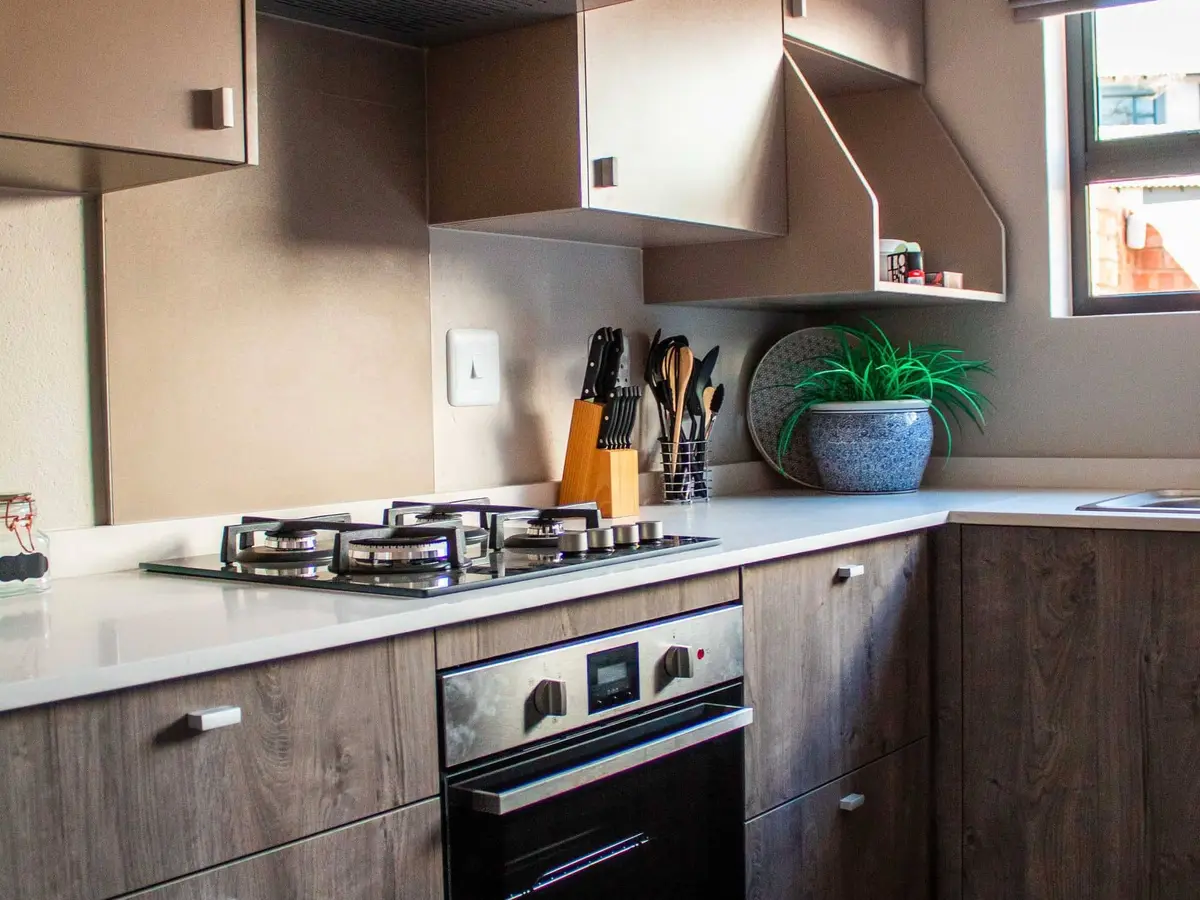
Give the closest drawer or cabinet to the pieces you use every day, like the everyday skillet and the saucepan that makes oatmeal and rice. The big roasting pan and the canning pot can move farther away or to a higher shelf.
Keep the cooking zone for cooking. The kettle, mugs and coffee things work better in their own corner, and these coffee station organization ideas show how to set one up away from the burners.
If the cabinet beside the stove is narrow, use it for flat things like skillets, sheet pans and cutting boards standing on edge. Bulky pots can go in the wider cabinet under the counter next to it.
When there’s no storage near the stove at all, a rolling cart or a wall rail beside the range can hold the pans you reach for most. Idea nine covers the rail.
3. Use deep drawers and pull-out shelves for pots
Deep drawers are the easiest place to keep pots, because you pull the drawer open and look down at everything at once. No more kneeling on the floor and reaching past three pans to find the one at the back.
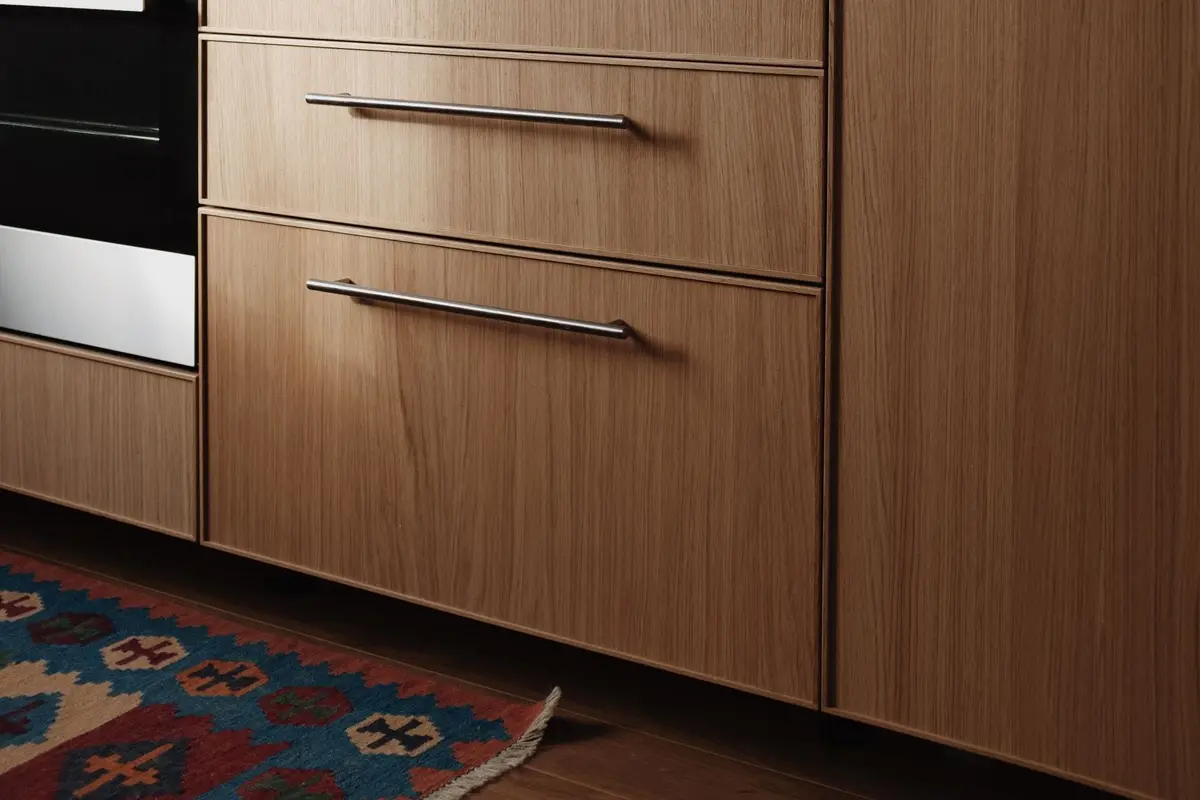
Line the pots up by size, with the largest at the back or along one side. Measure the inside height of the drawer before you move them in, so the tallest pot and its handles clear the counter when the drawer closes.
If your kitchen has only base cabinets with fixed shelves, pull-out shelves or sliding wire baskets turn them into drawers. In a rental, freestanding sliding organizers do the same job with no screws, and the bin and basket size calculator helps you pick a size that fits the cabinet opening.
A blind corner cabinet works well for the big stockpot, the slow cooker insert and roasting pans. A sturdy turntable on the cabinet floor brings the back of the corner to the front with one spin.
Put a non-slip liner in the bottom of each drawer, so pots don’t slide and bang every time the drawer opens. It also protects the drawer from scratches and drips.
4. Nest pots by size and flip the lids
Saucepans, soup pots and mixing bowls that come in graduated sizes take up the space of one pot when they nest. Put the largest on the bottom, set the next size inside it and keep going.
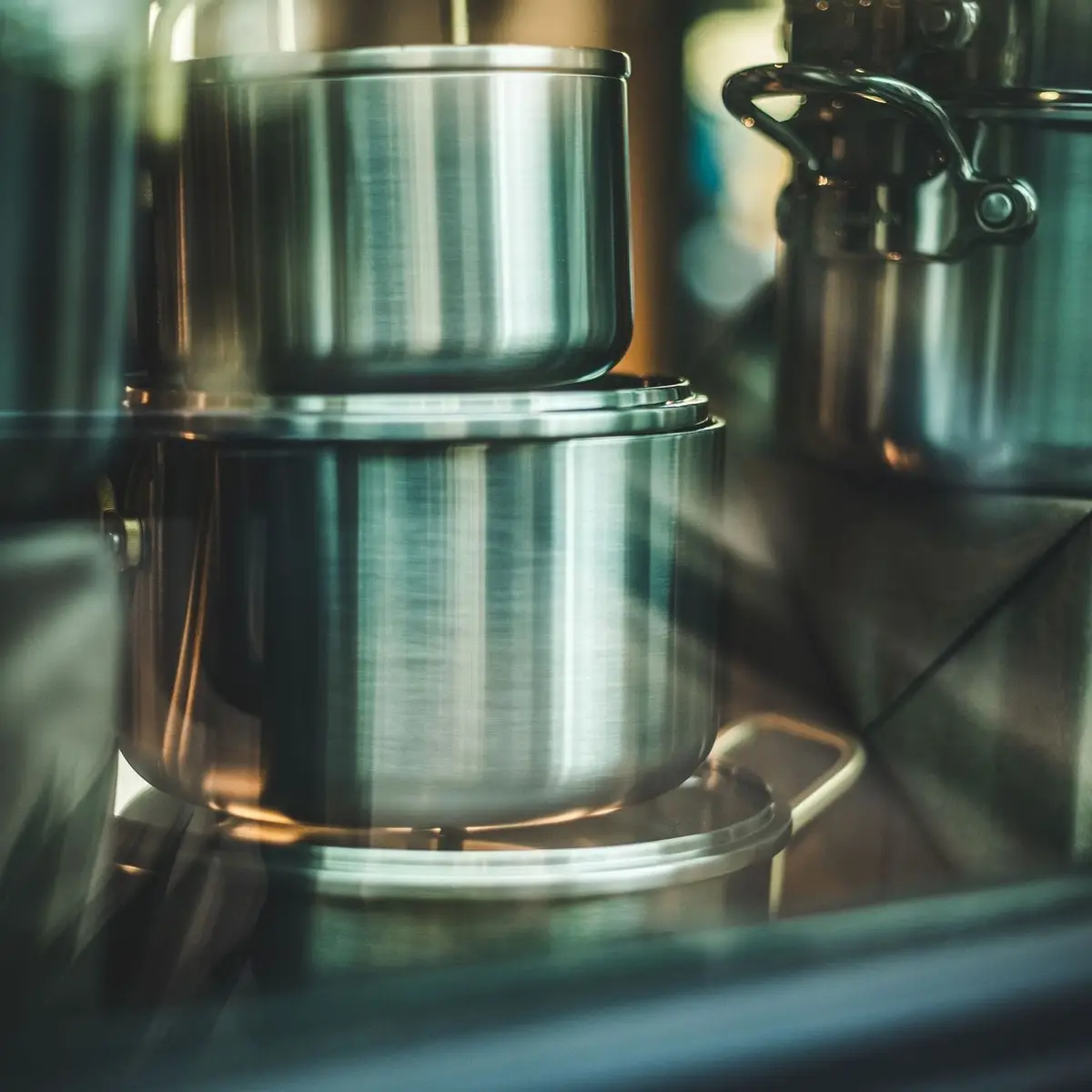
Keep stacks short, two or three pots high, so you can lift off the top one without unloading the whole pile. A tall tower tips over and hides the pot you need at the bottom.
Turn the handles all the same way, so the stack sits flat and the handles don’t hook on each other. Long handles can point toward the back of the cabinet or the side of the drawer.
For lids, either flip each lid upside down on top of its own pot, knob inside, or store them separately, which comes up in idea seven. Flipped lids only work when pots stand in a single layer.
Use the space inside the biggest pot. A stockpot can hold its steamer basket, a colander or a pasta insert, as long as you can still lift it out easily.
5. Protect nonstick pans when you stack them
Nonstick pans scratch easily, and stacking them bare lets the bottom of one pan rub the cooking surface of the one below. A barrier between them keeps the coating smooth for longer.
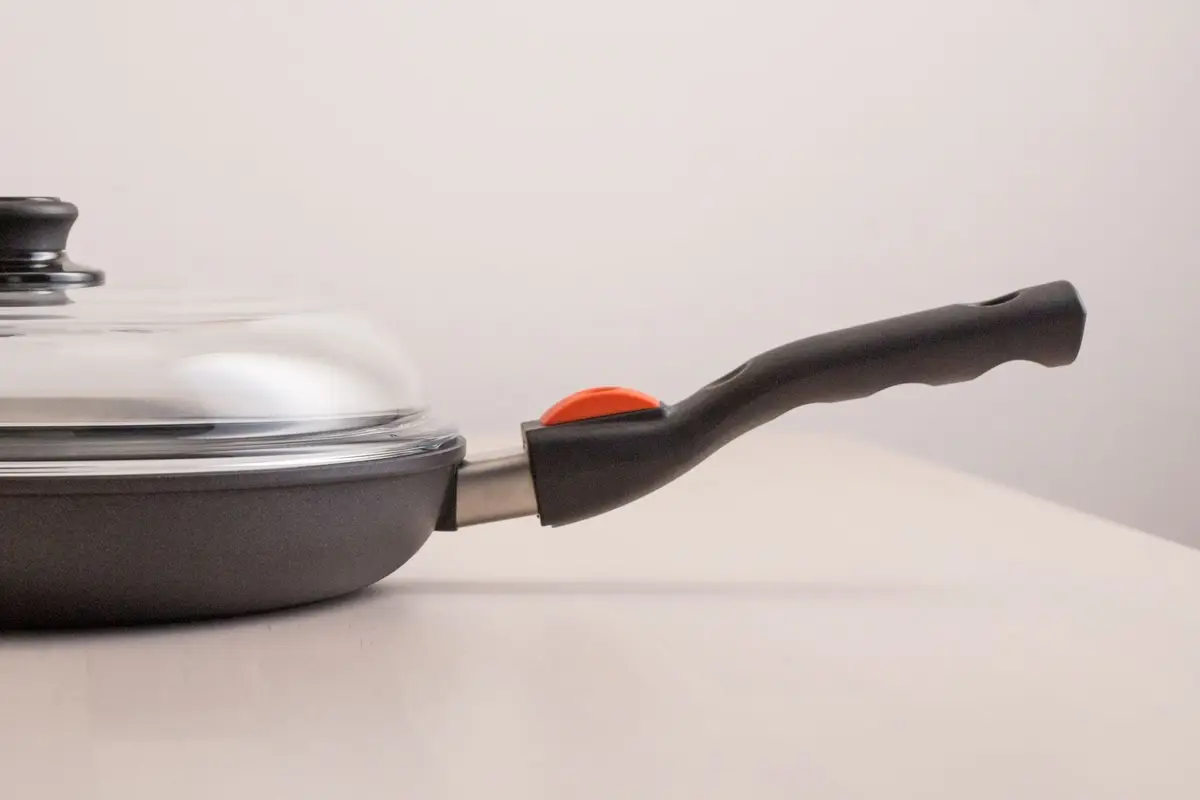
Felt or quilted pan protectors are made for this, but a folded dish towel, a paper towel or a paper plate works the same way. Lay it in the pan before you set the next one inside.
Make sure every pan is completely dry before it goes away. A damp pan in a stack stays damp, and a wet towel between pans takes a long time to dry.
Keep heavy pans off the top of a nonstick stack. A cast iron skillet or a stainless pot pressing down grinds whatever sits beneath it.
If you have room, skip stacking nonstick pans entirely and stand them upright in a rack, the next idea. Pans that never touch never scratch each other.
6. File skillets upright in a rack
Skillets, griddles and shallow pans take far less room standing on edge, like files in a drawer. You slide out the one you want without lifting every pan stacked on top of it.
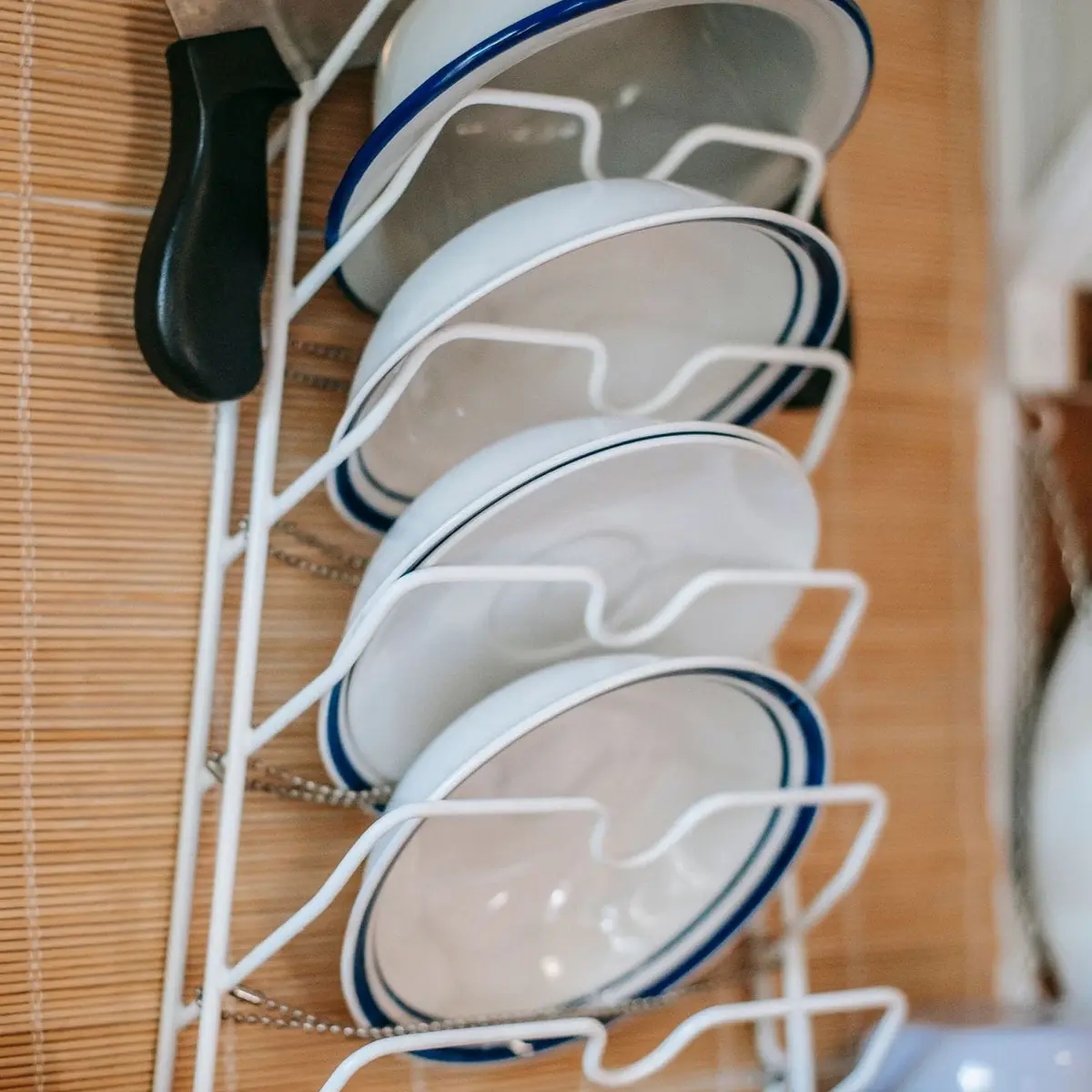
An upright pan organizer has slots for each pan and sits on the cabinet floor or in a deep drawer. Some adjust to fit pans of different thickness, and many stand either upright or on their sides.
For a do-it-yourself version, a sturdy wire file sorter from the office aisle holds lightweight skillets, lids and sheet pans. Spring-loaded tension rods set upright between the cabinet floor and the shelf above make a row of slots for flat pans and cutting boards.
Put the pans you use most at the front of the rack and the rarely used griddle at the back. Heavy pans need a rack that won’t tip, so test it with your heaviest skillet before you fill it.
Filing pans upright fits right in with the rest of the cabinet. These kitchen cabinet organization ideas cover the shelves, risers and pull-out bins around it.
7. Give pot lids one home
Lids cause most of the clatter in a pots and pans cabinet. They don’t stack, they slide off pans and they end up scattered across three shelves.
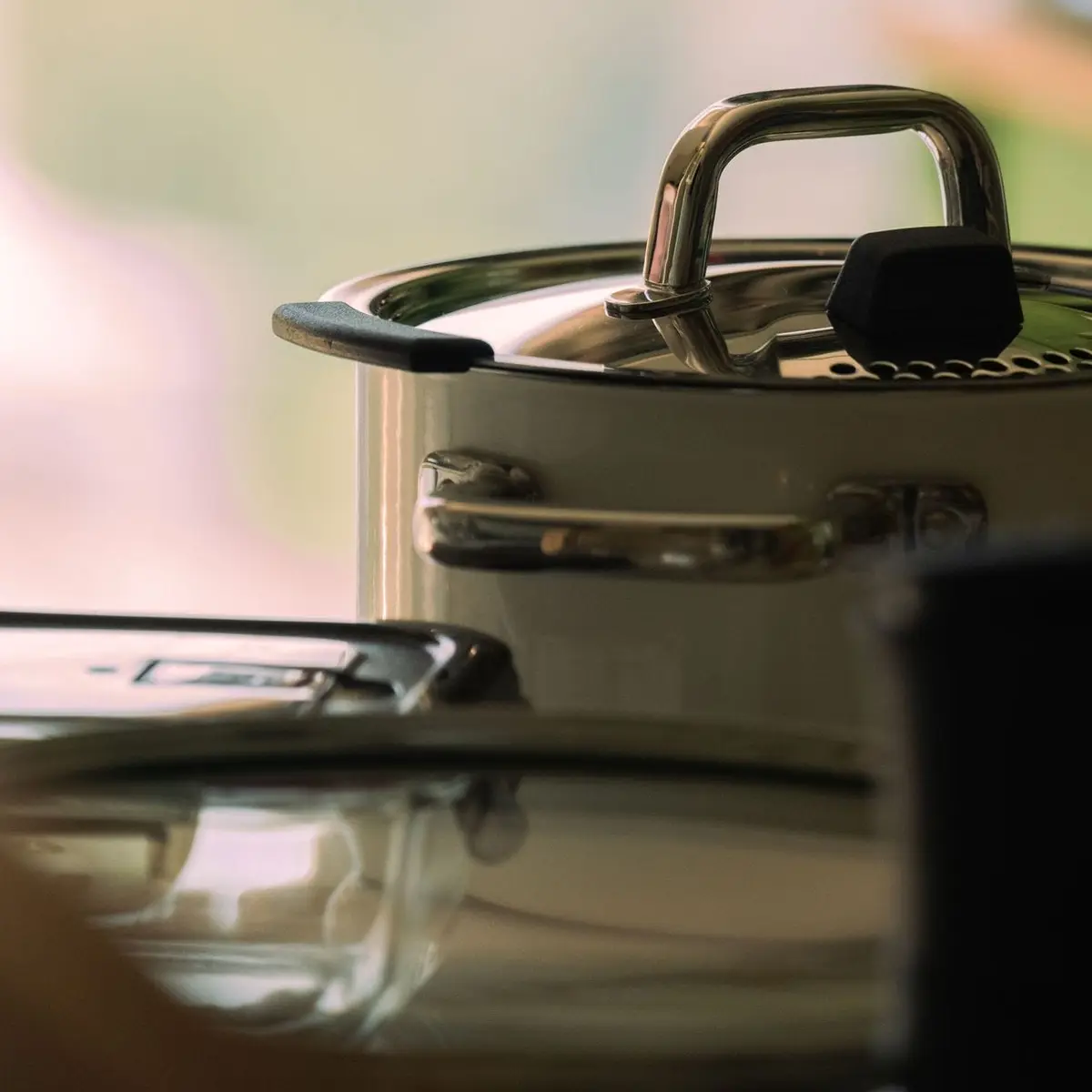
Pick one home for all of them. A lid rack on the inside of a cabinet door keeps them off the shelf, as long as it clears the shelves when the door closes, so measure that gap first.
A lid organizer in a drawer stands lids on edge in a row, knobs up, so you read their sizes at a glance. A slot or two in your upright pan rack works too, and so does a shallow basket that holds lids on their sides.
Order the lids by size, small to large, or in the same order as the pots they fit. Glass lids with metal rims can chip when they knock together, so give them a little space.
Lids that hang can go on a rail with the pans, idea nine. Wherever they live, keep only lids that match a pot you still own.
8. Leave the everyday pan on the stove
The skillet you use every morning can live right on the stove, on a back burner, with its lid on. It saves a trip to the cabinet several times a day and frees up a slot in the drawer.
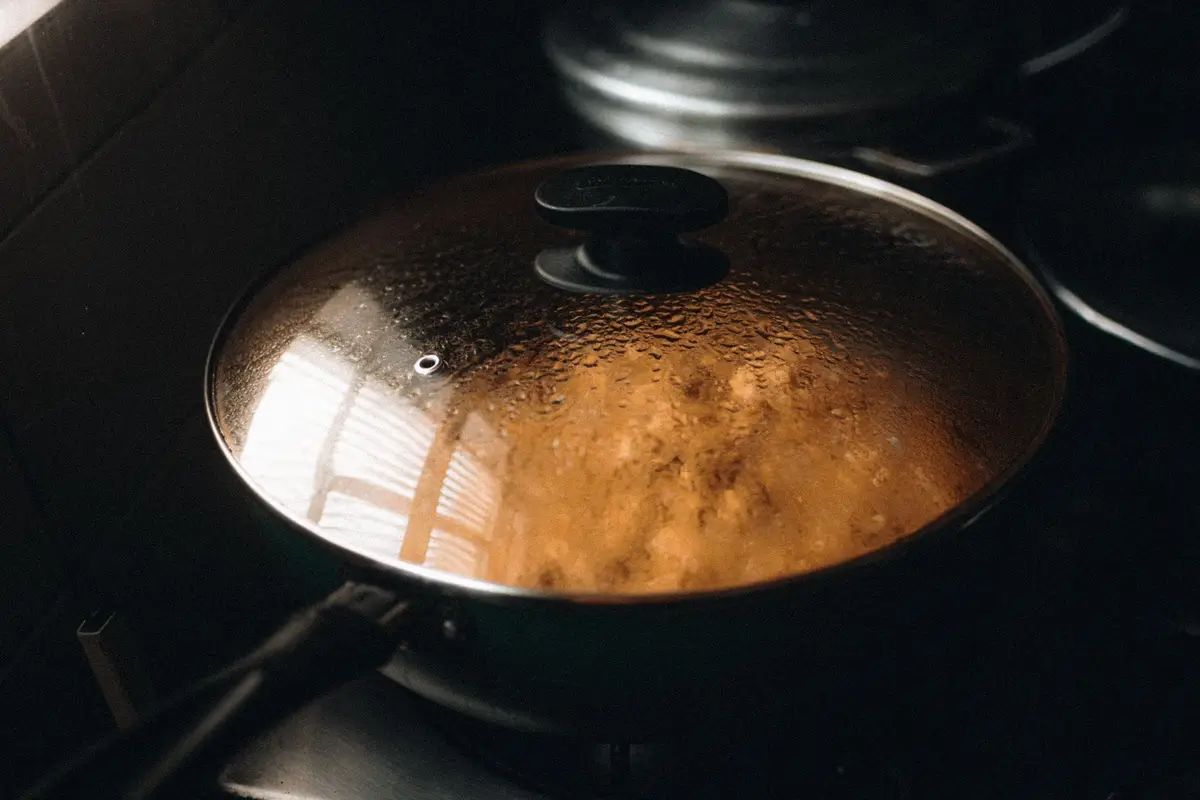
Choose one pan only, the one that’s on the stove more than it’s off it. A cluttered cooktop makes it harder to cook and to wipe down.
Keep the area around the burners clear of anything that can catch fire, such as dish towels, oven mitts, paper towels and wooden spoons. That’s also why a utensil crock or towel bar right beside a burner is a poor spot.
Spices and oils tend to collect next to the stove too, and that’s handy as long as they stay away from the heat. These spice organization ideas suggest a drawer or a shelf close by instead of the stovetop itself.
At the end of the day, wash the pan, dry it and set it back in its spot. The stove looks tidy, and breakfast starts without opening a single cabinet.
9. Hang pans on a rail or pot rack
A rail on the wall with S-hooks holds skillets, saucepans and lids within arm’s reach of the stove. The pans hang in a single row, so you see every one and nothing scratches.
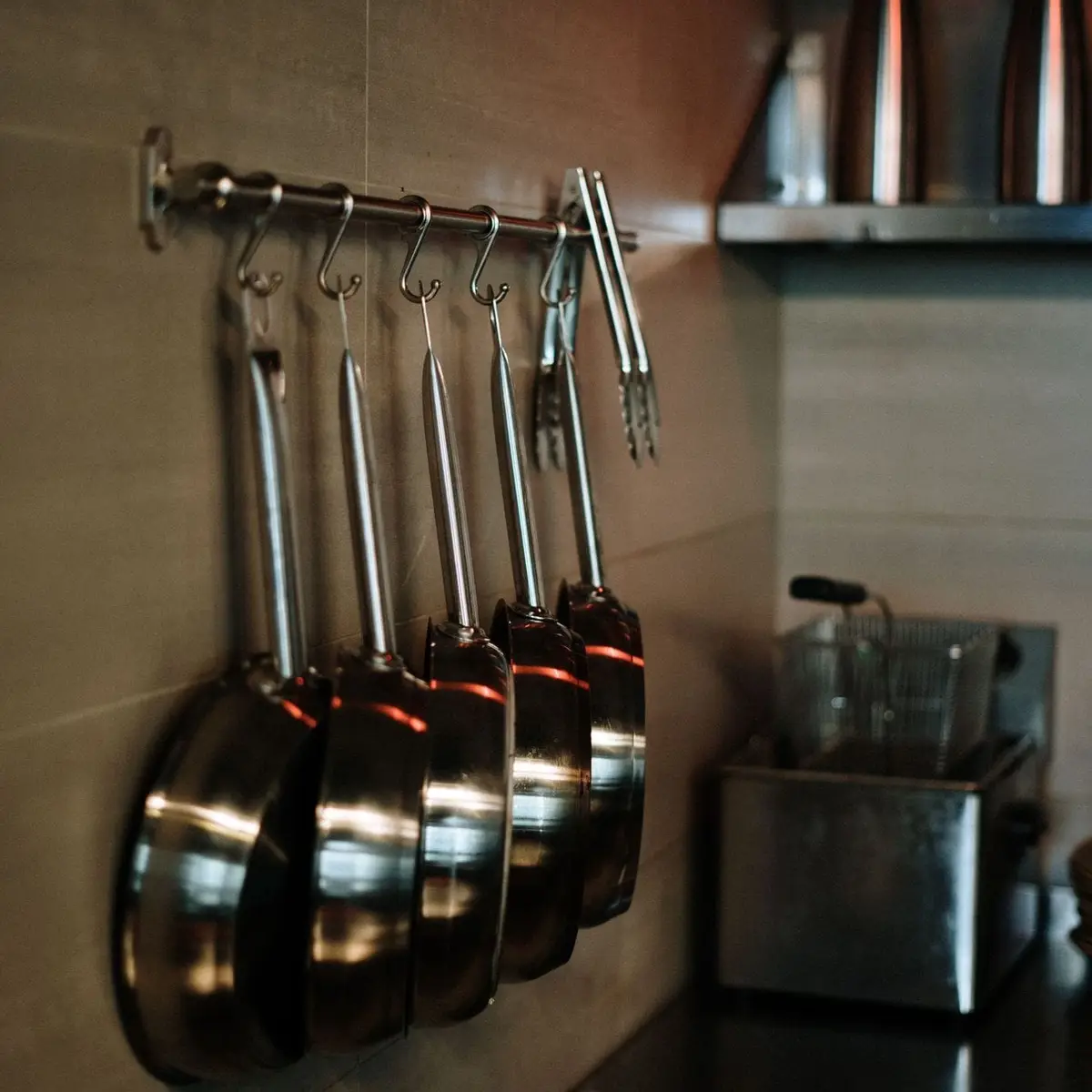
Look for pans with a hole or loop at the end of the handle, which hang straight from an S-hook. Heavier pans need a sturdy rail screwed into wall studs or anchors rated for the weight, never a rail held up only by adhesive.
A ceiling pot rack over an island holds even more. Mount it securely into the ceiling framing, and hang it high enough that nobody bumps their head on the pans.
Hang only pans you use often. Pans that hang untouched for weeks gather dust and kitchen grease and need washing before you cook with them.
Keep oven mitts and towels on hooks away from the burners rather than on the rail right above them. For more ways to use the empty wall, see these kitchen wall organization ideas.
10. Stand sheet pans and baking dishes on edge
Sheet pans, cooling racks, muffin tins and cutting boards are flat, so they store best standing up, like books on a shelf. A narrow cabinet next to the oven is a natural home for them, close to where you use them.
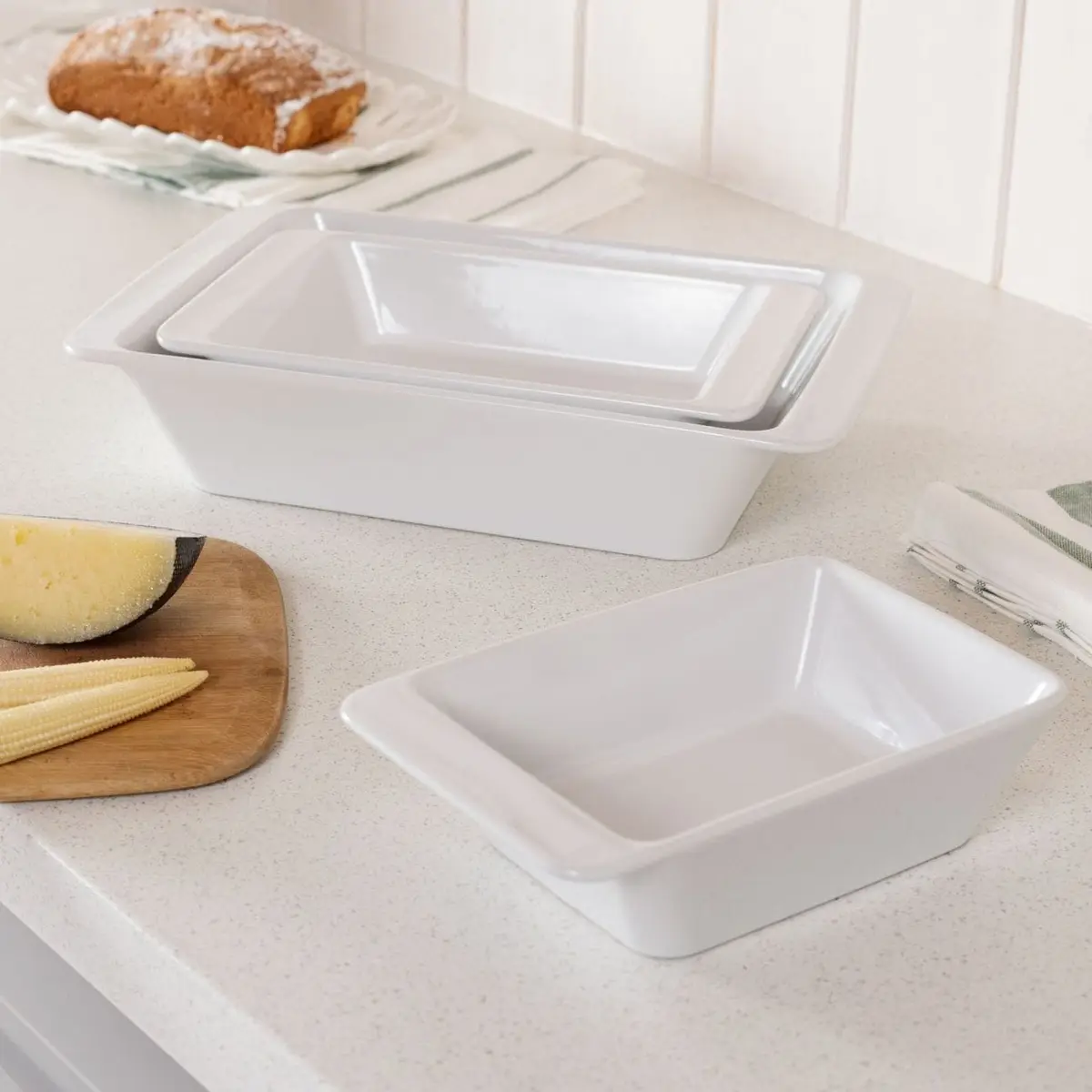
Divide the cabinet with an upright rack or a couple of tension rods, so the pans stay straight and slide out one at a time. Put the sheet pans you use most at the front.
Baking dishes nest well when they come in matching shapes. Stack the rectangles together and the rounds together, largest on the bottom, and keep their plastic lids in a separate bin nearby.
Many ranges have a drawer under the oven. On some it’s plain storage that suits sheet pans and a roasting pan, while on others it’s a warming drawer or a broiler that heats up, so check the manual for your range before you put anything in it.
Keep the oven itself empty. Pans stored inside are easy to forget, and they’re in the way the next time someone preheats it.
11. Keep cast iron and heavy pots down low
Cast iron skillets, enameled Dutch ovens and big stockpots are heavy, so give them the lowest shelf or the bottom drawer. Keep the pieces you use often at about waist height, where you can lift them without stretching or bending all the way down.
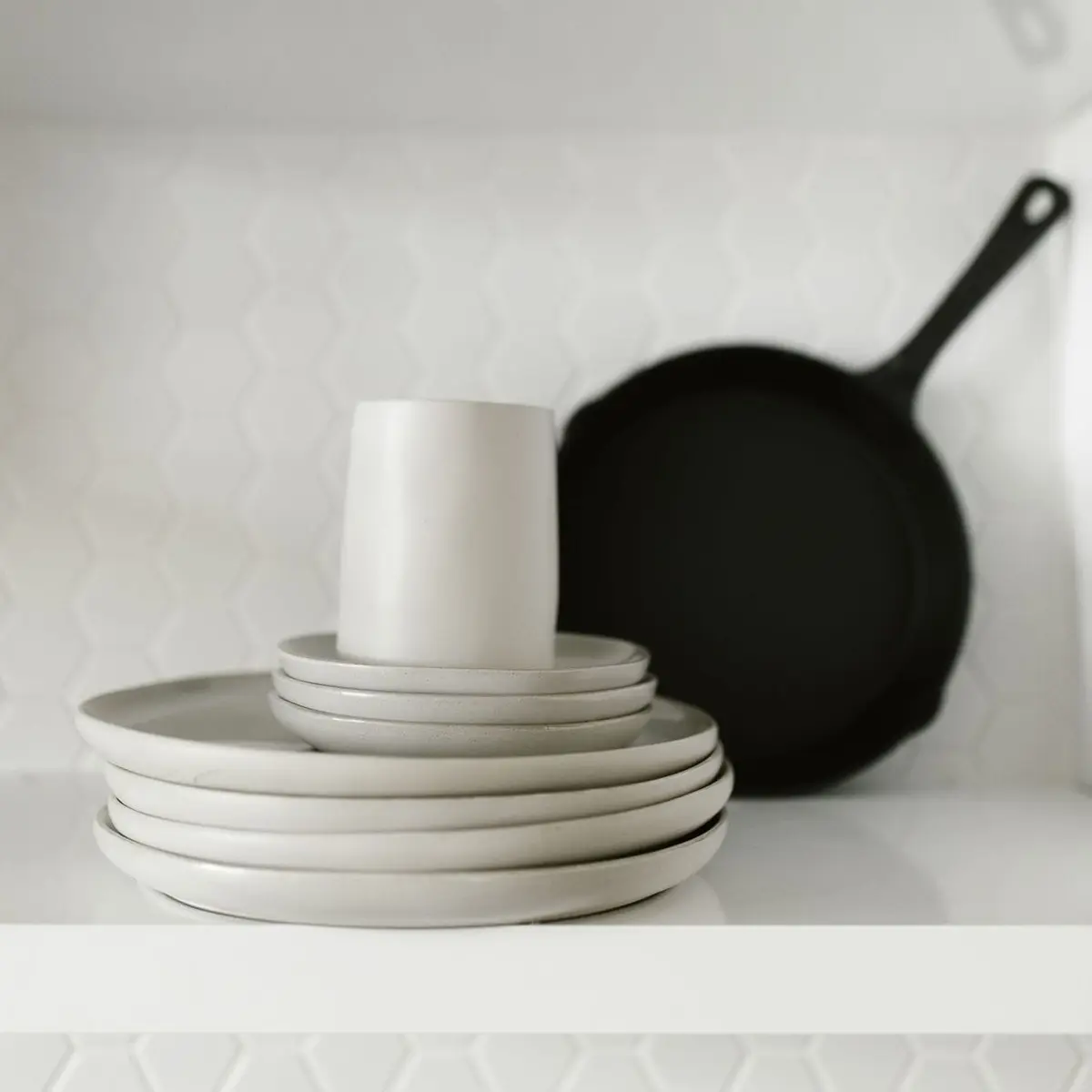
Never store a heavy pan above your head. A cast iron skillet pulled down from a high shelf is hard to control, and dropping it can hurt you or crack the counter.
Dry cast iron completely after washing, by hand with a towel or over low heat on the stove, and wipe on a thin coat of oil before you put it away. Moisture left on the pan is what leads to rust.
If you stack cast iron, lay a paper towel between the pans to protect the seasoning. Store a Dutch oven with its lid set slightly off-center, so air can reach the inside.
Once every piece has a home, put it back there each time you unload the dishwasher or dry the dishes. A quick look at the drawers once a month catches any pan that has wandered.
Save this for later
Pin it to a board so it's there when you're ready to start.
Save to Pinterest(opens in a new tab)Make it easier
Free printable
A room-by-room declutter checklist that tells you exactly what to look for, with four piles to sort into so nothing ends up back on the shelf.
Free tool
Enter the width, depth and height of a shelf, a drawer or a cube cubby, and see which standard bins and baskets fit, how many, and how they line up.
Frequently asked questions
Is it better to store pots and pans in drawers or cabinets?
Deep drawers usually win, because you pull the drawer out and see every pot from above instead of kneeling to dig through a dark shelf. If your kitchen only has cabinets, pull-out shelves or sliding baskets give you most of the same benefit.
How do I store nonstick pans without scratching them?
Stand them upright in a rack so they never touch, or put a felt pan protector, a folded dish towel or a paper towel between each pan when you stack them. Let them dry completely first and keep heavy pans off the top of the stack.
Where should I keep cast iron skillets?
Keep cast iron on a low shelf or in a bottom drawer, where you lift it at about waist height instead of pulling it down from overhead. Dry it completely after washing, wipe on a thin coat of oil and give it a spot where air can reach it.
Can I store pans in the drawer under the oven?
Sometimes. On some ranges that drawer is plain storage, but on others it's a warming drawer or a broiler that gets hot, so check the manual for your range before you put anything in it.
What's the best way to store pot lids?
Give every lid one home: a rack on the inside of a cabinet door, lids standing on edge in a drawer, or a slot in an upright pan rack. Keep only the lids that fit a pot you still own.