11 Small Kitchen Organization Ideas That Make Room to Cook
Make a tiny or apartment kitchen work harder: keep only what you use, store by zone, go up the walls, add a slim cart and keep a small fridge tidy.

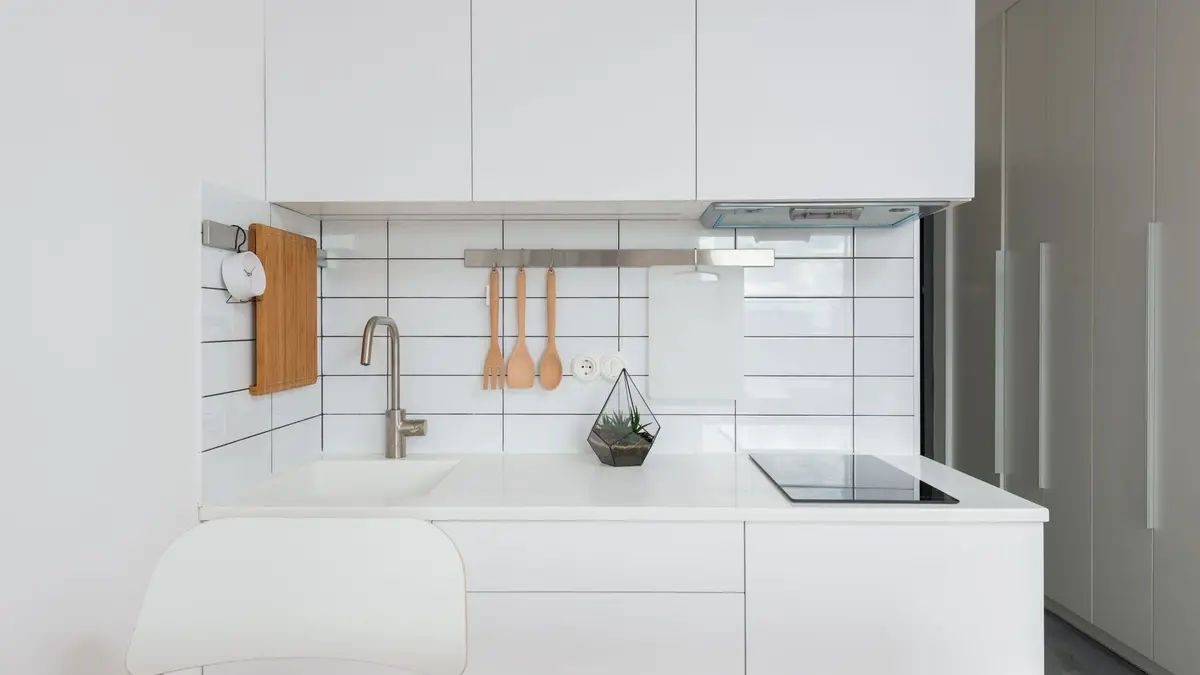
Small kitchen organization starts with owning less: keep the tools, dishes and food you use every week, store each one where you use it and move everything else out. Then build up instead of out, with shelves, hooks, racks inside doors and a slim cart, so the counter stays clear for cooking.
These 11 ideas work in a galley kitchen, a studio kitchenette and a rental you can’t remodel. Most of them cost little or nothing, and every one helps more once the first idea is done.
1. Edit down to what you actually use
A small kitchen can’t hold backups of everything, so the first job is subtraction. Empty one cabinet or drawer at a time, set everything on the table and keep only what you’ve used in the last few months.
Look hard at duplicates. Most homes need one good chef’s knife, one cutting board for raw meat and one for everything else, two or three spatulas and a single set of measuring cups.
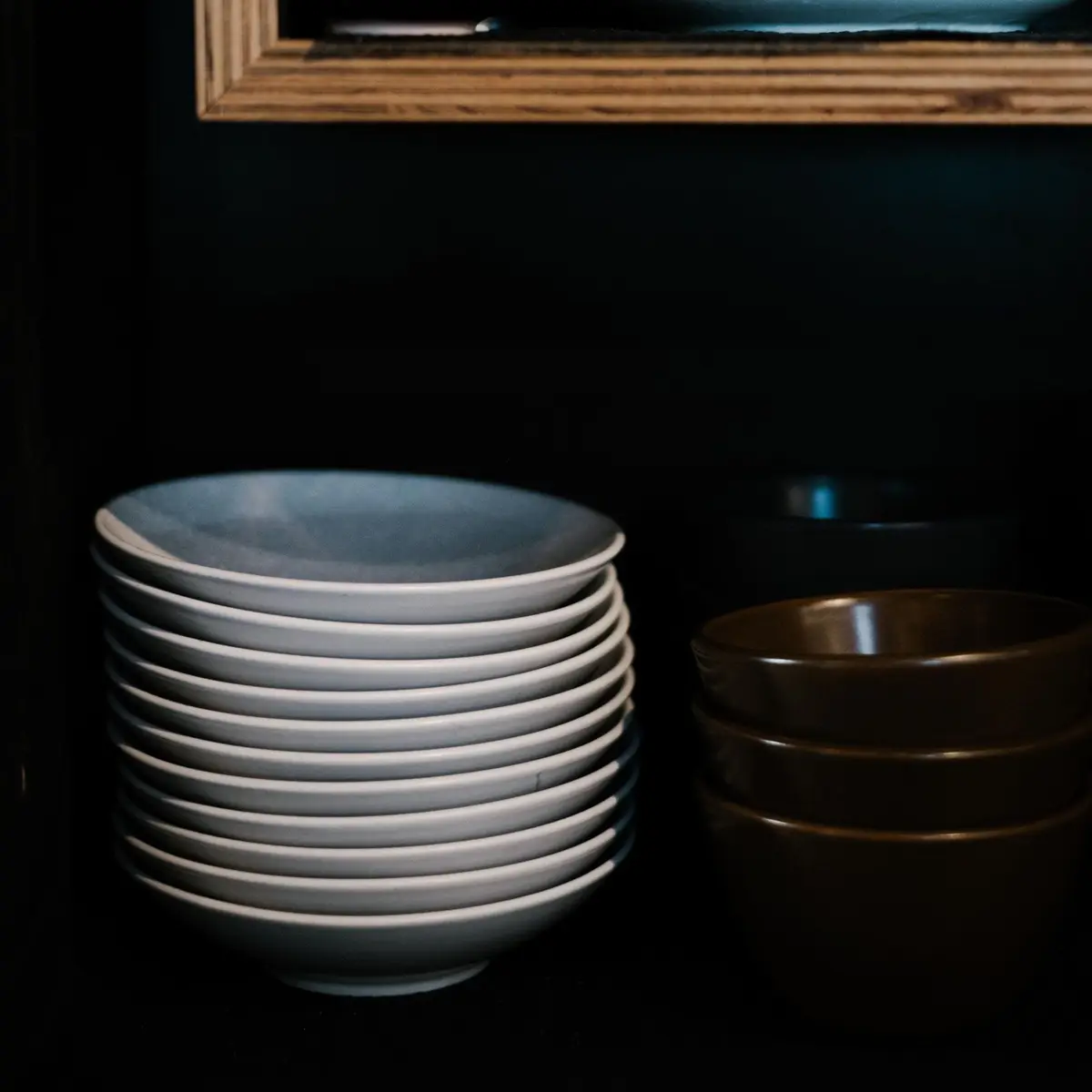
Count your everyday dishes against the people in your house. A family of four rarely needs twenty bowls in the kitchen, and the extras can live somewhere else until you have a crowd.
Bulky things you use a few times a year, like a roasting pan, a big stockpot or party platters, don’t need prime space either. Put them in a labeled bin in a hall closet, under a bed or on a high shelf.
Our declutter checklist walks through the kitchen shelf by shelf if you’d rather follow a list. Donate what still works and recycle what doesn’t.
2. Store everything by zone
Once you know what’s staying, put each thing where you use it. Small kitchens have short distances, so a few steps saved each time adds up fast.
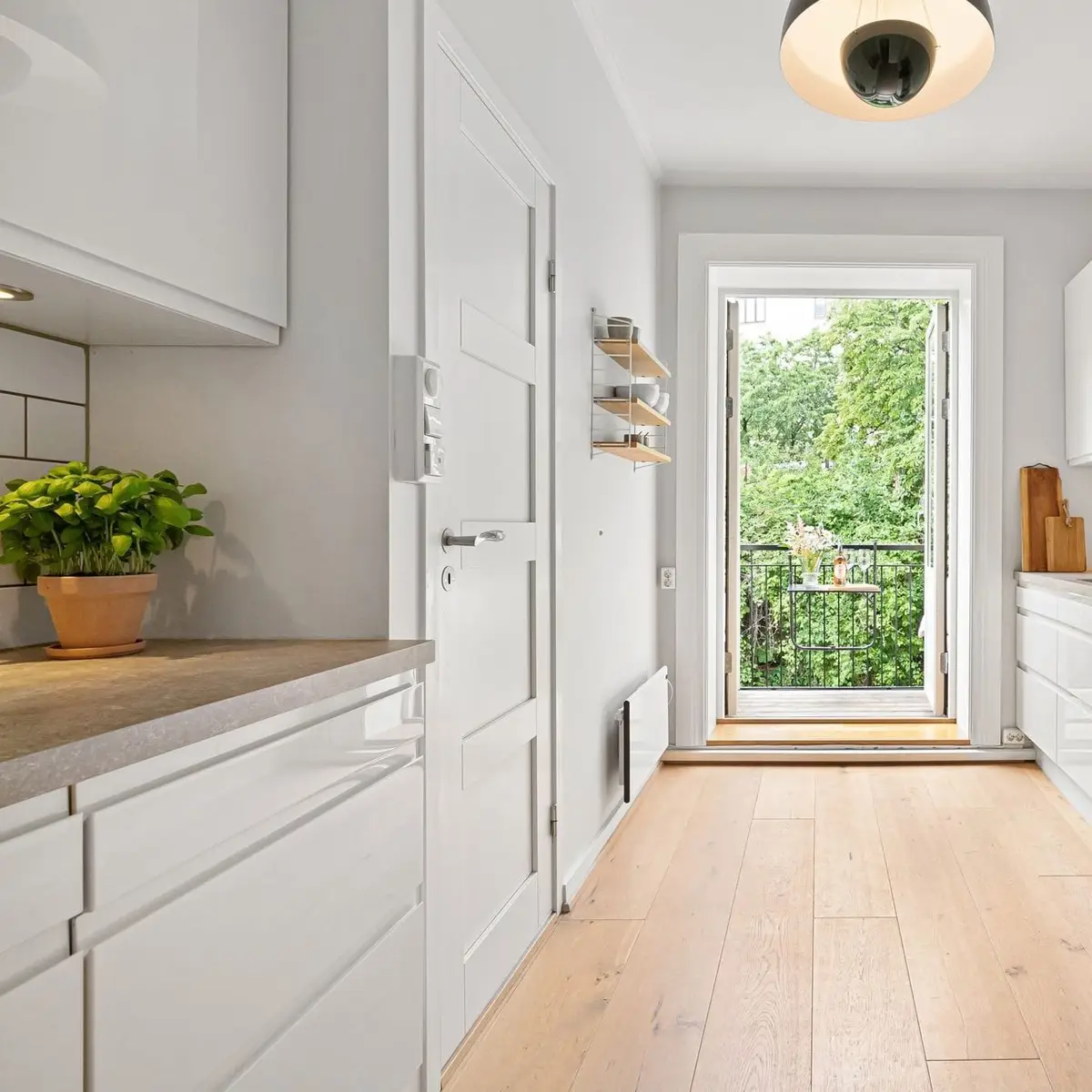
Think in three main zones. Prep tools like knives, boards and mixing bowls go beside the longest stretch of counter, cooking tools and pans go next to the stove, and dishes and glasses go near the sink or the dishwasher.
Food storage containers and wraps belong near the spot where you pack leftovers. Cleaning supplies stay under the sink, and coffee or tea things sit together in one corner.
In a galley kitchen, the two sides can split the work: prep and cooking on one side, washing and serving on the other. That keeps two people from bumping into each other at dinner time.
Inside each zone, give drawers clear jobs too. A divided drawer by the stove for spatulas and tongs is worth more than three mixed drawers, and these kitchen drawer organization ideas show how to set one up.
3. Put a shelf above the counter
The wall between the counter and the upper cabinets is often bare, and in a small kitchen it’s some of the most useful space you have. A single sturdy shelf there holds glasses, jars or the things you reach for while you cook.
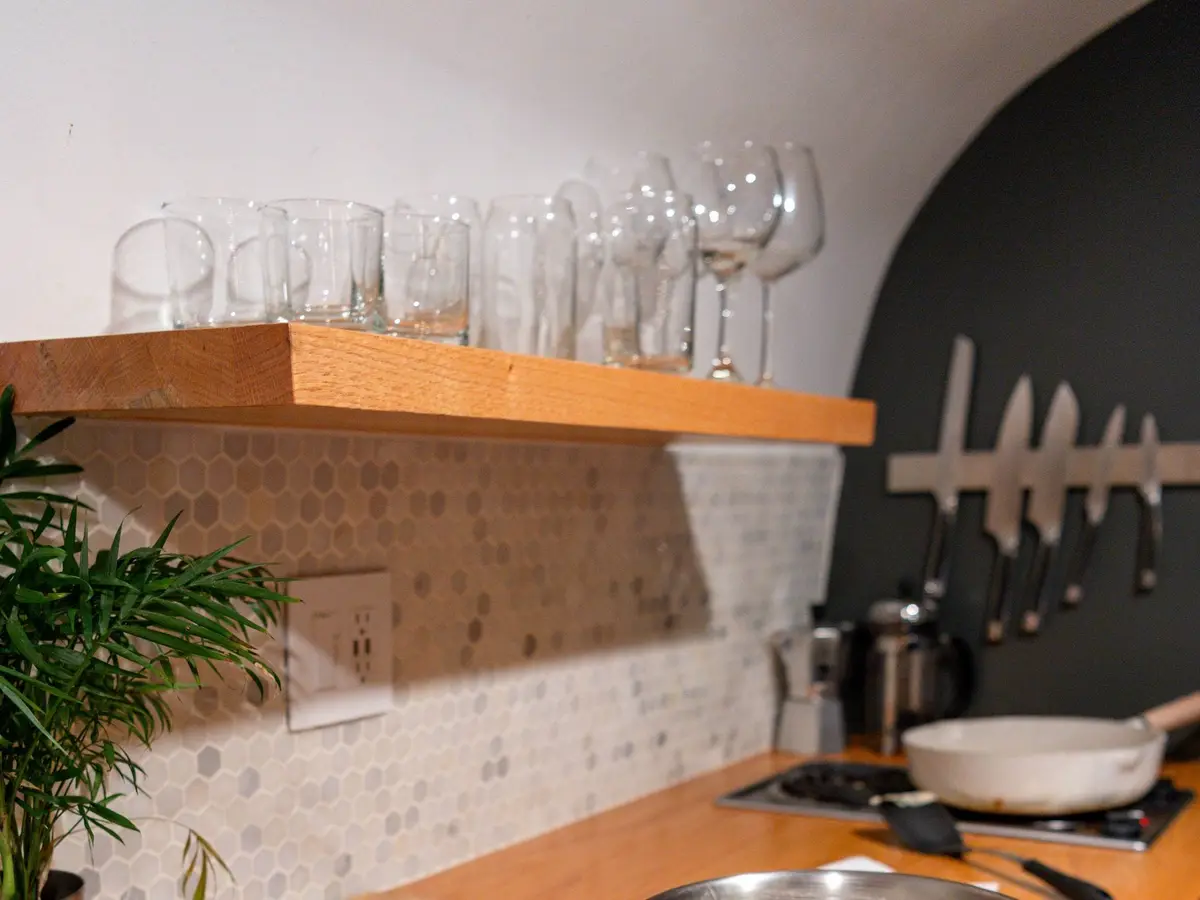
Keep the shelf shallow so it doesn’t crowd your head while you work at the counter. Mount it high enough that a tall pot or the coffee maker still fits underneath.
Put light, everyday things up there: drinking glasses, a few spice jars, a small stack of bowls. Heavier things belong on the lower shelves.
A magnetic strip beside the stove holds knives off the counter and out of a crowded drawer. A rail with S-hooks does the same for ladles, whisks and a colander.
Anchor every shelf and rail into studs or with anchors rated for the weight, and follow the hardware’s instructions. If you rent, check the lease first, or use a freestanding shelf that sits on the counter against the wall.
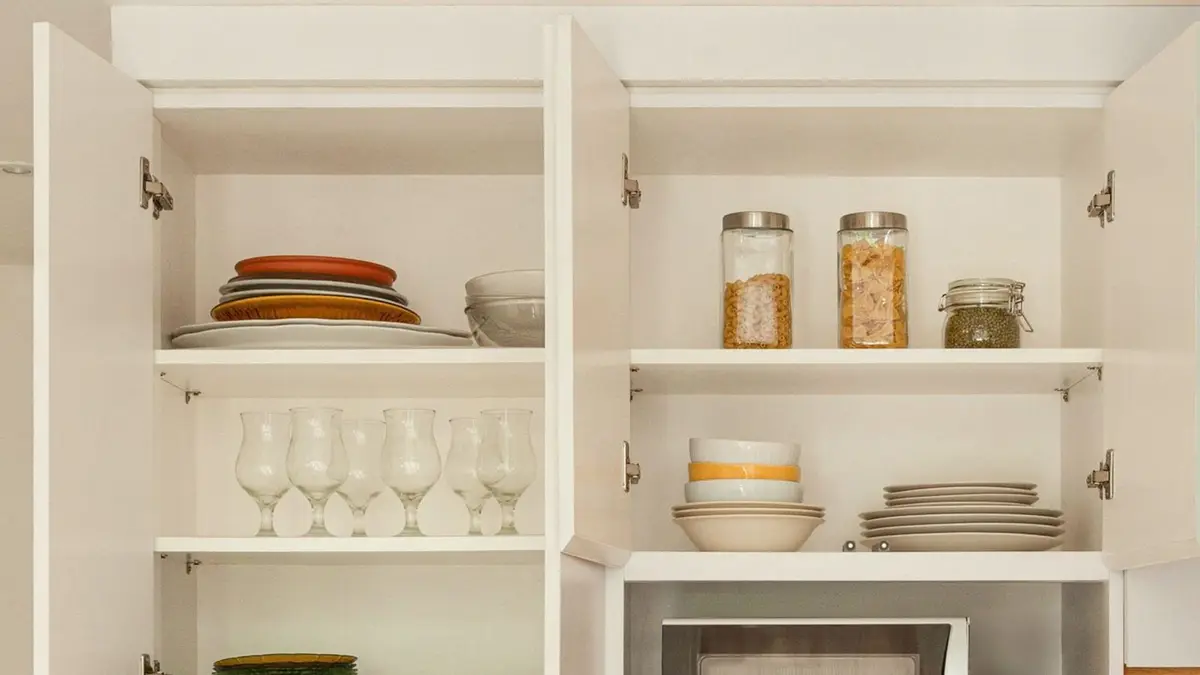
4. Keep everyday dishes on open shelves
Open shelves hold dishes in less depth than a cabinet, and you can see at a glance what’s clean and what’s running low. In a tiny kitchen, swapping one upper cabinet for open shelves can also make the room feel wider.
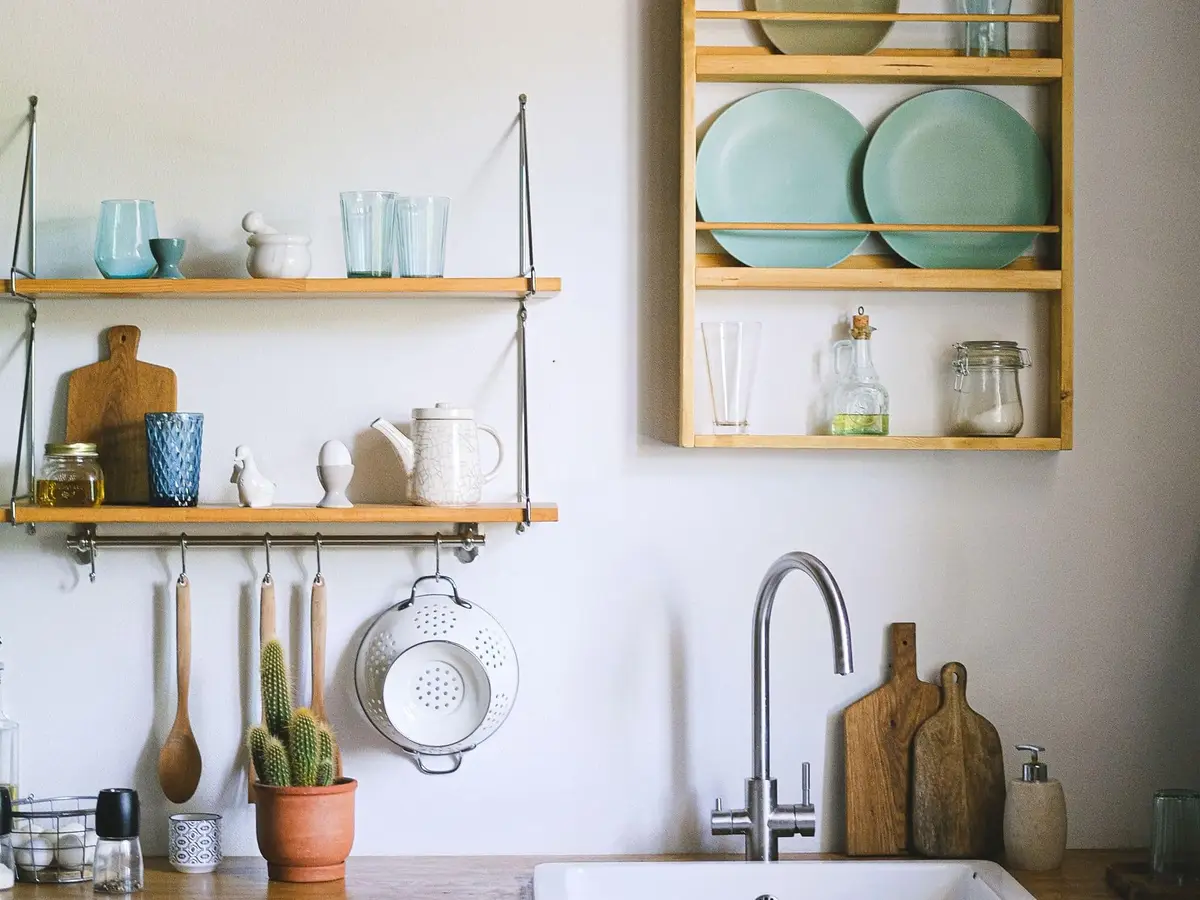
Limit the shelves to the dishes you use every day. Plates, bowls and glasses that get washed and put away daily don’t sit long enough to gather dust.
A wall-mounted plate rack stands plates on edge, so you lift one out without unstacking the whole pile. It also lets plates dry if you put them away a little damp.
Group like with like: plates together, bowls together, glasses in one row. Leave a little space between groups so the shelf looks calm instead of crammed.
Keep the lowest open shelf at a height everyone can reach, including kids who set the table. Save the top shelf for light things you only use now and then, like a serving bowl or a cake stand.
5. Hang mugs from hooks under a shelf
The underside of a shelf or an upper cabinet is empty space in almost every kitchen. A row of small cup hooks turns it into storage for mugs, measuring cups or a small strainer.
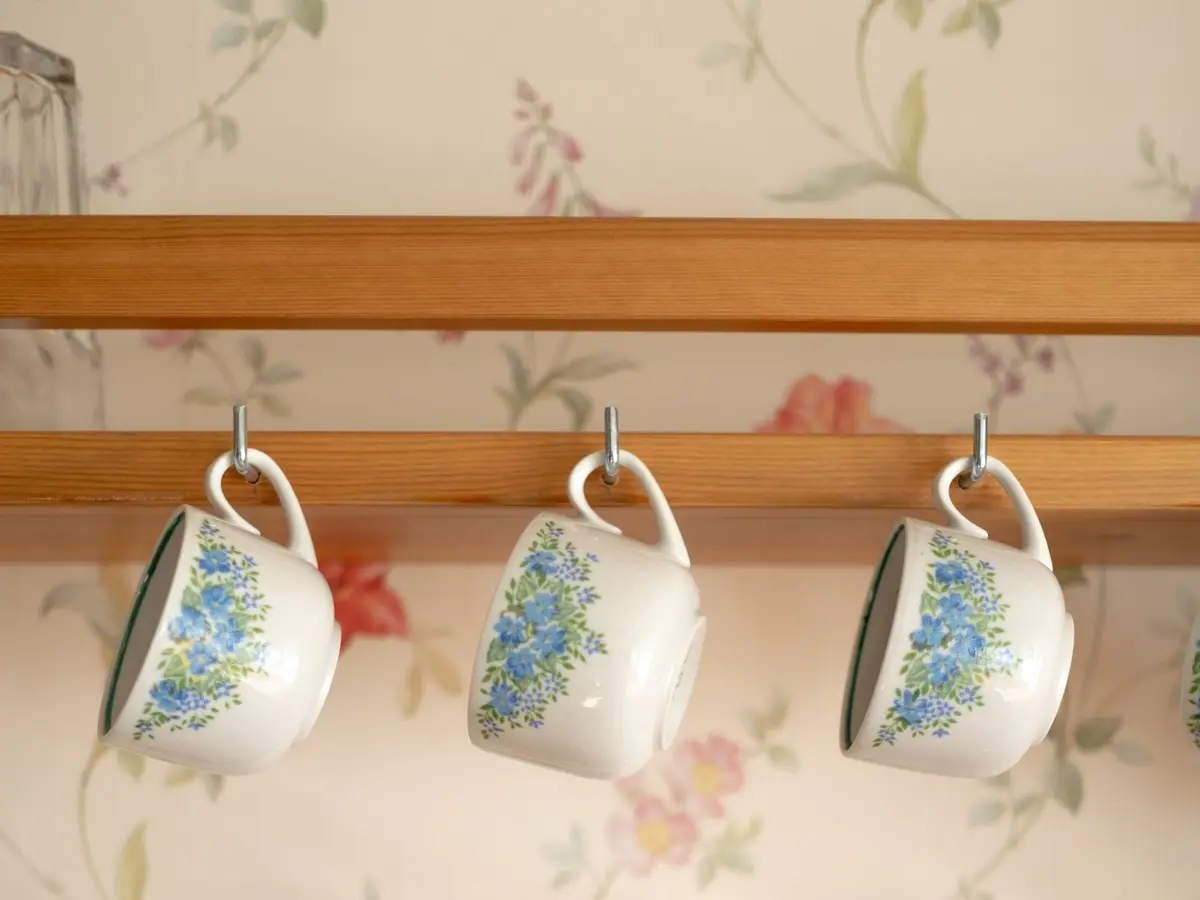
Mugs are awkward to stack and waste a lot of shelf height, so hanging them frees a surprising amount of cabinet room. They also dry well on hooks after you wash them.
Screw-in cup hooks work under wooden shelves. For cabinets you can’t drill, an under-shelf rack slides onto the shelf above and holds mugs below it.
Space the hooks so the mugs don’t knock together, about a mug’s width apart. Hang the ones you use daily closest to the coffee maker or the kettle.
If tea and its mugs keep spreading across the counter, these tea organization ideas give them one tidy spot. Keep only as many mugs as fit on the hooks and in one small stack, and the collection can’t grow back.
6. Use the space above the fridge and cabinets
The gap between the top of the cabinets and the ceiling, and the space over the refrigerator, often holds nothing but dust. With a few baskets, it can hold the things you use only a few times a year.
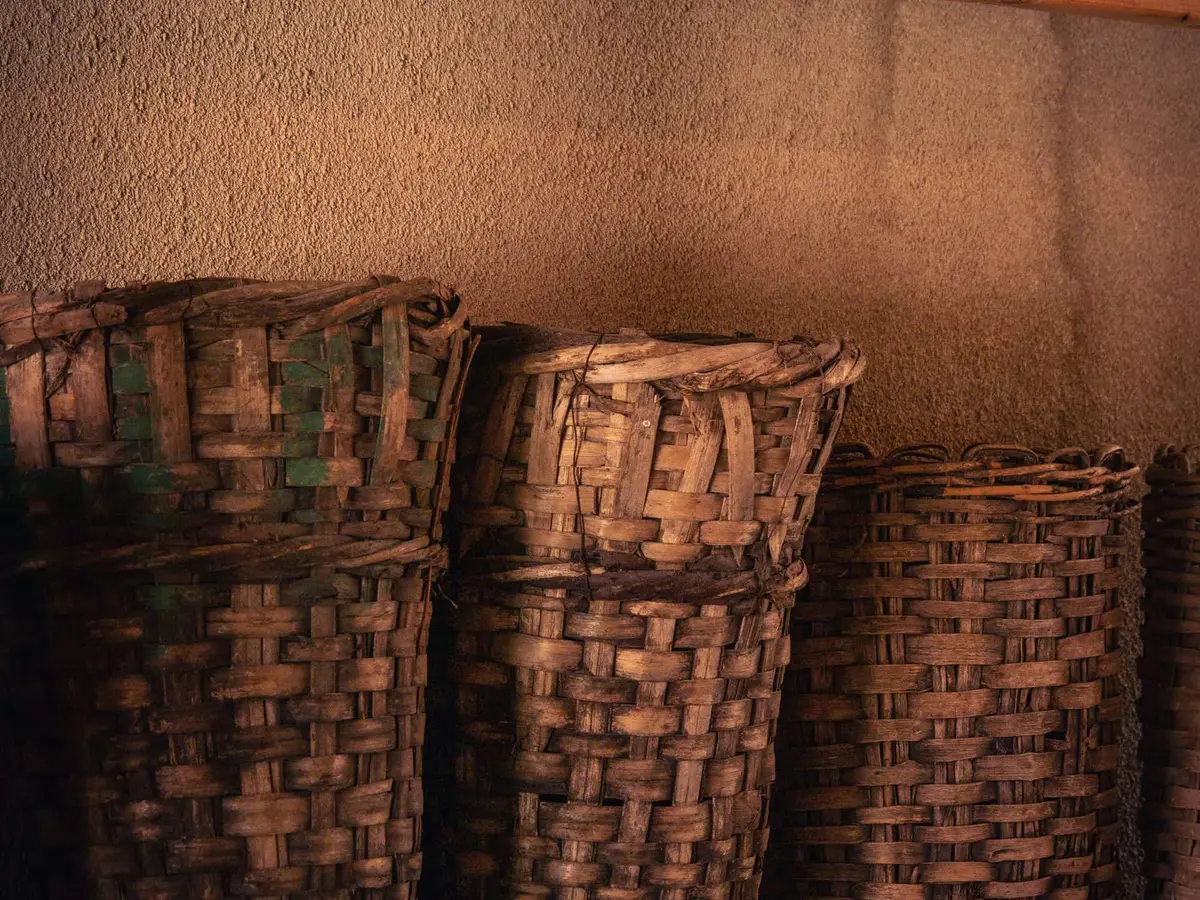
Choose baskets or bins with handles at the front, so you can pull them down without reaching over the top. Measure the height and depth of the space first, and the bin and basket size calculator shows which sizes fit side by side.
Fill them with light things: extra paper towels, picnic supplies, cookie cutters, seasonal serving pieces or a spare set of dish towels. Label each basket on the front so you know what’s inside from the floor.
Keep heavy things and anything breakable down low. Use a sturdy step stool with a bar to hold on to when you reach up there, never a chair.
Check the fridge’s manual for how much open space it needs around it, and keep that space clear.
7. Work the inside of cabinet doors
Every cabinet door has a flat back that stays hidden when it’s closed. Adhesive hooks, a slim rack or a small pegboard panel turn that into storage for flat or light things.
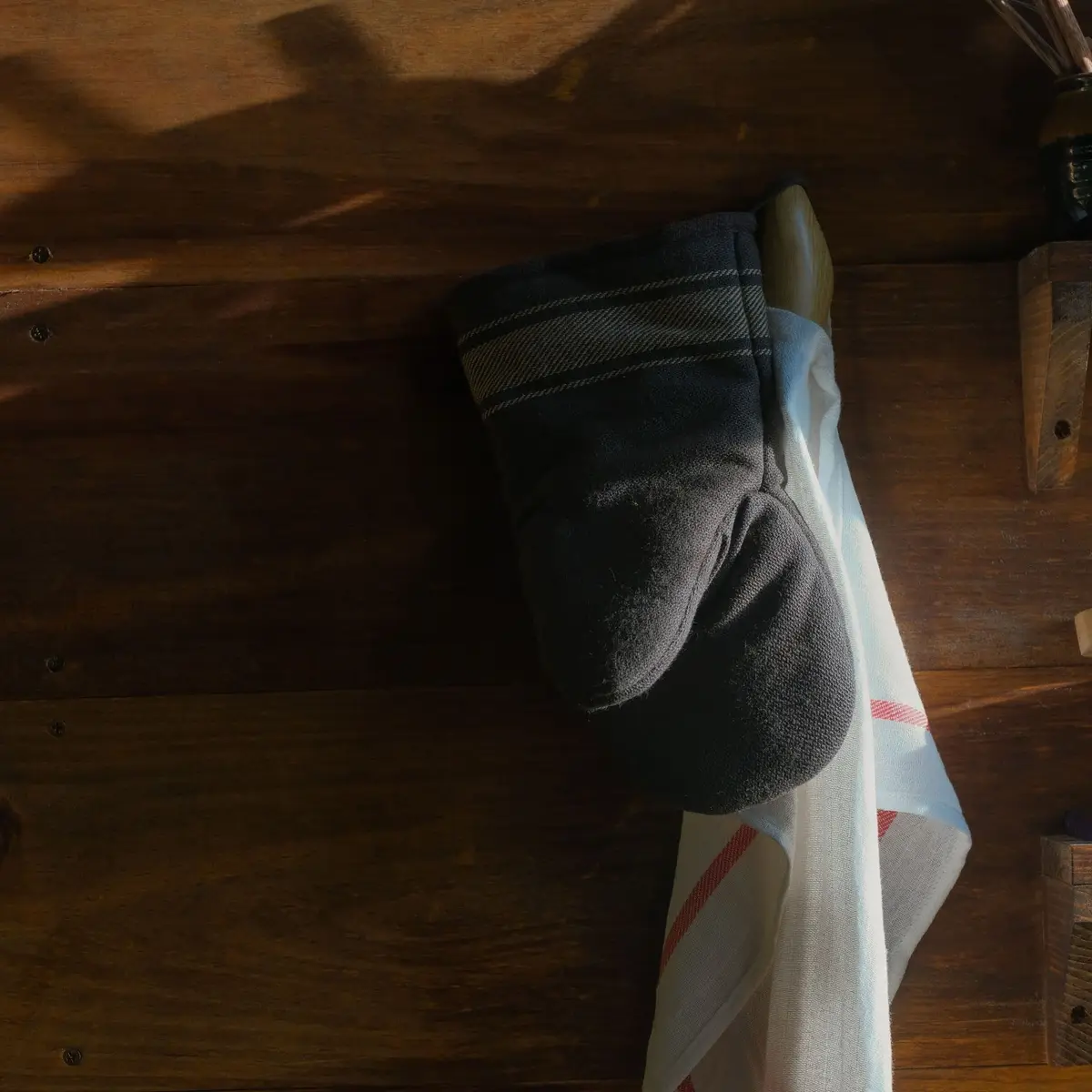
Hang oven mitts and pot holders inside the door closest to the stove, so they’re handy without hanging on the oven handle. Measuring spoons and cups can hang inside the baking cabinet.
The door under the sink can hold a rack for sponges, a scrub brush and a pair of rubber gloves. A small hook there keeps a dish towel off the counter while it dries.
Before you add anything, close the door slowly and check that the rack clears the shelves inside. Many cabinets leave only a little room between the door and the shelf edge.
Choose removable hooks and racks in a rental, and test them with a light load first. More cheap fixes like this one are in our kitchen organization hacks.
8. Make prep space that folds away
When the counter is short, borrow space that you can put away after dinner. A cutting board sized to sit across the sink gives you a spot to chop right where the scraps get rinsed away.
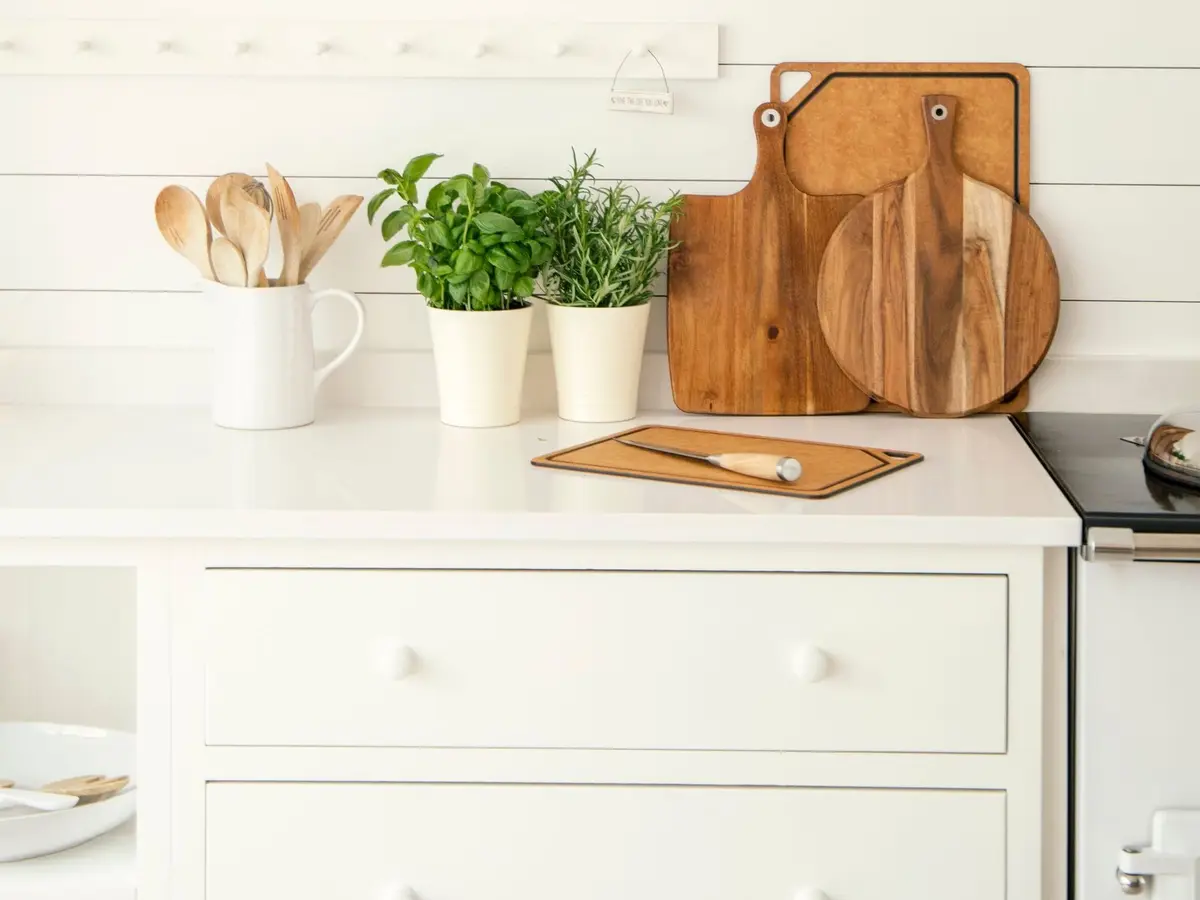
A flat cover over the stove adds a little more counter, but only while every burner is off and cool. Take it off before you cook, and keep towels, boards and paper well away from the stovetop while anything is on.
A pull-out board that slides out from under the counter, or a fold-down table on the wall, gives you a second work surface that disappears when you’re done. A small table on wheels can do the same job.
Store the boards on edge in a narrow slot or a rack, so they take no more space than a cookbook. Large boards can also hang from a hook by their handle.
Keep this extra space clear the same way you keep the counter clear. It’s for chopping and plating, not for the mail.
9. Roll a slim cart into a gap
Many small kitchens have a narrow gap beside the fridge, between the counter and the wall or at the end of a run of cabinets. A slim rolling cart turns that gap into shelves.
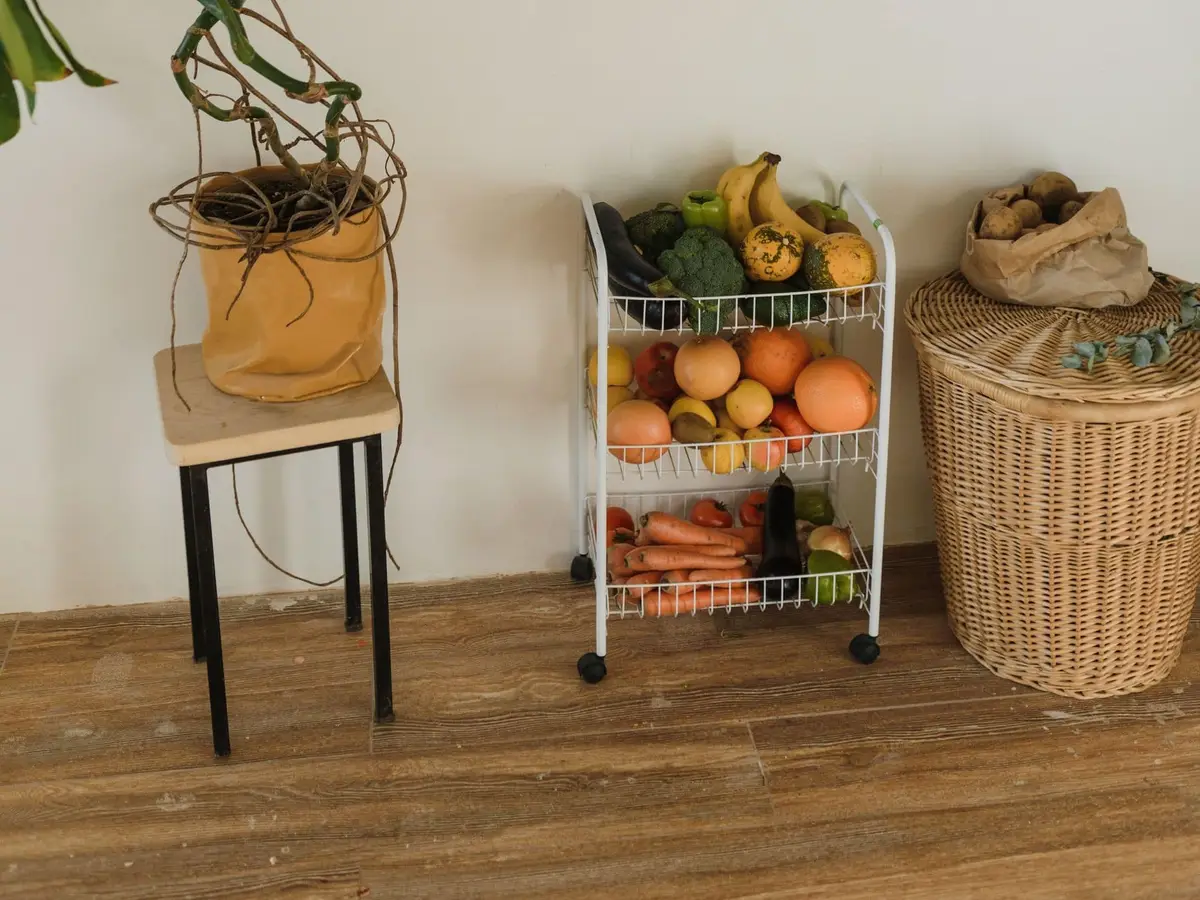
Measure the gap’s width and depth before you shop, and leave a little space on each side so the cart slides in and out without scraping. Wire shelves keep produce like onions, potatoes and fruit in the open air.
A cart also works as a mini pantry for oils, cans and jars. Roll it out while you cook, then push it back when you’re done.
Set one shelf aside for grab-and-go food at kid height, and everyone can help themselves without opening every cabinet. These snack organization ideas cover how to stock it.
Pick a cart with locking wheels if your floor slopes or it sits near the stove. Put the heaviest things on the bottom shelf, so it rolls steadily and doesn’t tip.
10. Choose cookware that nests
Pots and pans eat cabinet space faster than anything else. A set that nests, with each pot sitting inside the next one, takes up the footprint of the largest pot alone.
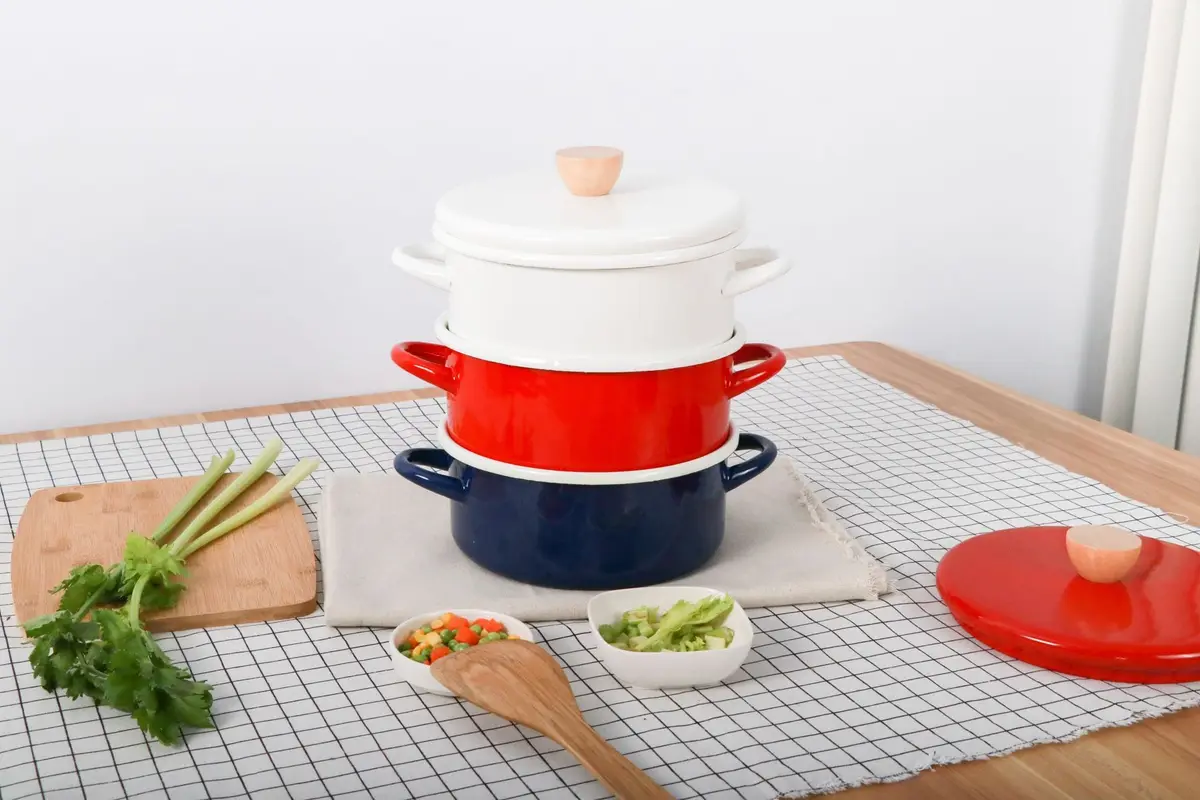
Before you buy anything, check what you already own. Many mixing bowls, measuring cups and food storage containers already nest if you put them away in size order.
Lids are the awkward part. Stand them on edge in a slim rack or a file sorter next to the pots, or flip each lid upside down on its own pot so the handle sits inside.
Put a paper towel or a soft cloth between nonstick pans as you stack them, so the cooking surfaces don’t scratch. Keep the stack in the lower cabinet closest to the stove.
Count how many pots you really cook with in a normal week. Two saucepans, a skillet and a stockpot cover most meals, and anything else can join the bulky things you store outside the kitchen.
11. Keep a small fridge tidy
A small refrigerator gets crowded quickly, and a crowded fridge is hard to search and wastes food. Clear bins and a few simple habits keep it working.
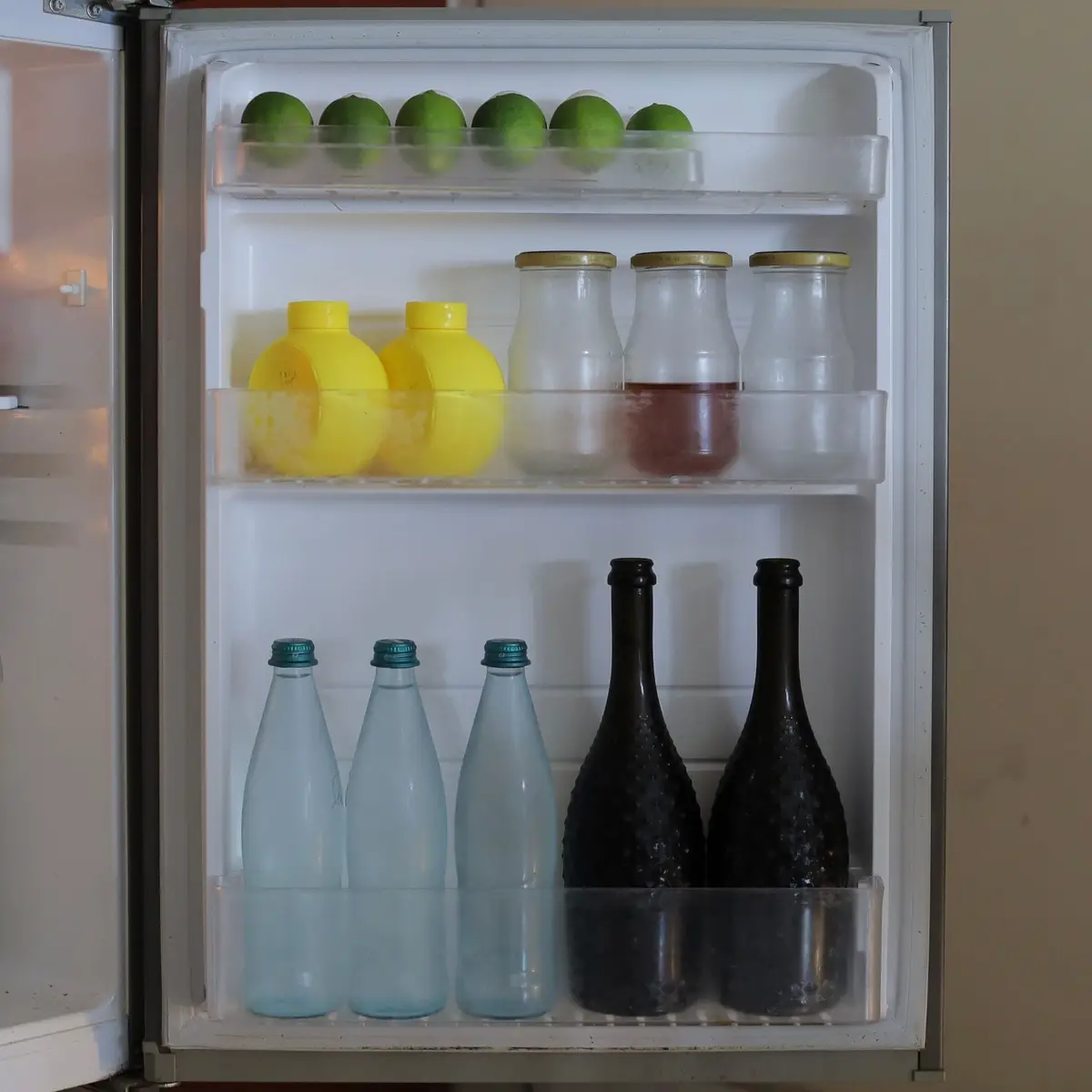
Group food the same way every time: dairy on one shelf, leftovers on another, drinks and condiments on the door. A shallow bin for small jars and opened packages stops them from falling to the back.
Leave some space between things. Cold air has to move around food to keep it chilled, so a fridge packed tight from wall to wall doesn’t cool evenly.
Keep the fridge at forty degrees Fahrenheit or colder, and put an appliance thermometer inside to check it now and then. Many fridge dials don’t show the real temperature.
Before each grocery trip, check what’s already there and use up what’s open first. Add only what’s missing to your printable grocery list, and the small fridge won’t fill with duplicates.
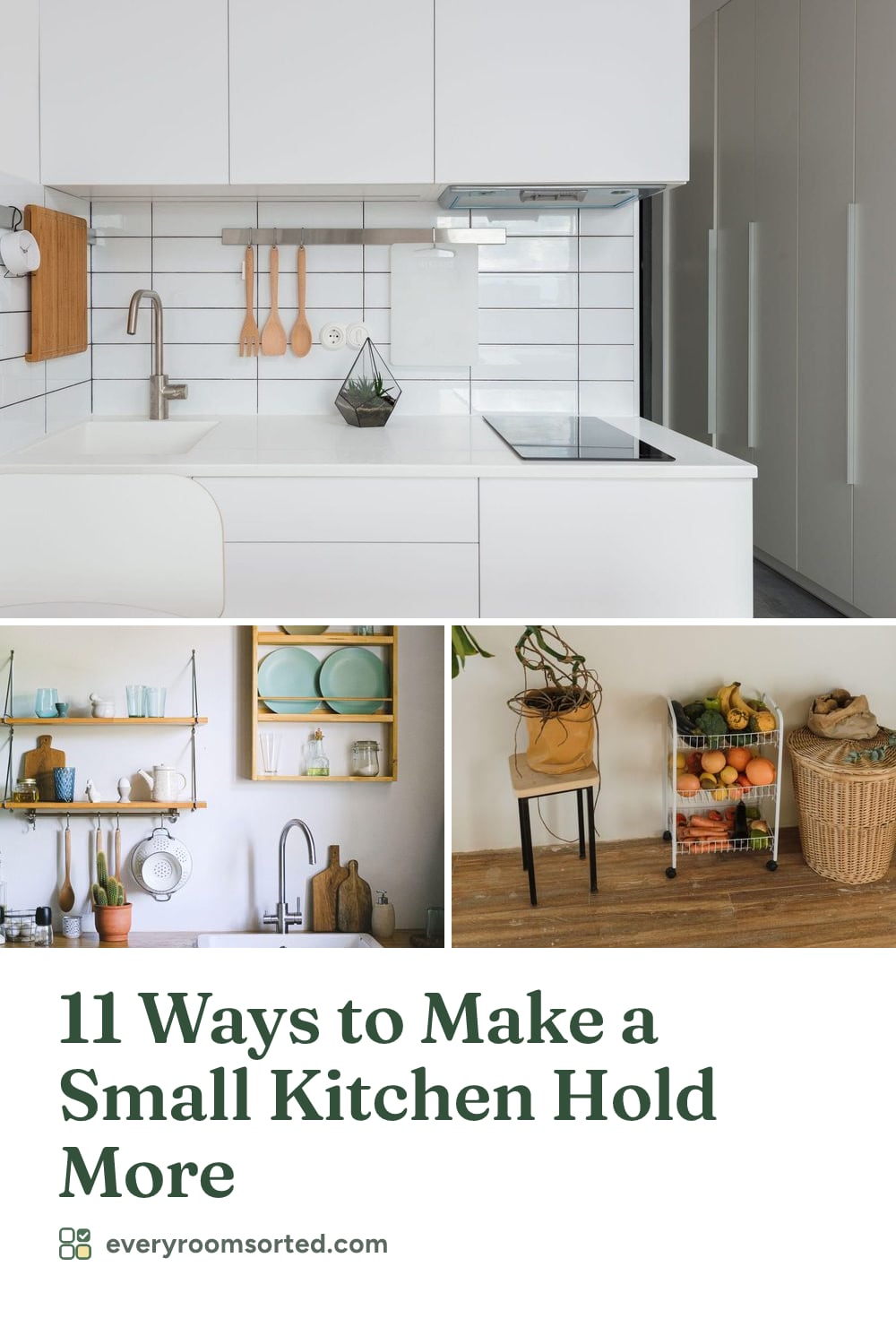
Save this for later
Pin it to a board so it's there when you're ready to start.
Save to Pinterest(opens in a new tab)Make it easier
Free printable
A room-by-room declutter checklist that tells you exactly what to look for, with four piles to sort into so nothing ends up back on the shelf.
Free printable
A one-page grocery list sorted by store section, with a box to tick for every item, so you write the list once and shop the store in one loop.
Free tool
Enter the width, depth and height of a shelf, a drawer or a cube cubby, and see which standard bins and baskets fit, how many, and how they line up.
Frequently asked questions
How do I organize a small kitchen with very little cabinet space?
Start by cutting the contents down to what you cook with every week, then move up: a shelf above the counter, hooks under it and racks inside the cabinet doors. A slim cart in a gap between the counter and the wall adds a pantry's worth of shelves without a remodel.
What should stay on the counter in a small kitchen?
Only the things you use every day, like the coffee maker, a utensil crock and a cutting board. Everything else goes on a shelf, in a cabinet or on a cart, so the counter stays clear enough to chop, mix and plate a meal.
Where do pots and pans go in a tiny kitchen?
Pick a set that nests, keep it in the lower cabinet closest to the stove and stand the lids on edge beside it. A pan or two you use daily can hang on a rail or hooks, which frees a whole shelf.
How do I organize a small apartment kitchen I can't change?
Stick to things that come out cleanly when you move: tension rods, over-the-door racks, freestanding shelves, a rolling cart and removable hooks. Check your lease before you drill, and take photos of the walls and cabinets before you add anything.
How often should I declutter a small kitchen?
A quick pass every season keeps it from filling back up. Pull out anything you haven't used in the last few months, find it a home outside the kitchen or let it go, and wipe the shelves while they're empty.